


For years, European fines on CO₂ emissions have been seen as a theoretical threat by carmakers. In 2026, they are beginning to take on a whole new dimension. According to a new study by Dataforce, Stellantis has already accumulated a penalty risk of almost 1.25 billion euros over the first sixteen months of the new European regulatory cycle. A colossal figure which illustrates the extent to which the electric transition is now becoming a question of financial survival for the major historic automotive groups.
A few months earlier, we announced that Stellantis had already narrowly escaped a penalty estimated at over 800 million euros. on the Italian market alone, thanks to the temporary relaxation of European rules. But this breathing space granted by Brussels has not solved anything in substance. It merely postponed the problem.
Regulations that have become a trap for historic manufacturers
Since 2025, European CAFE regulations have imposed particularly stringent average CO₂ emissions on automakers. For the period 2025-2027, the average threshold is set at 93.6 g/km. Every gram over the target entails a penalty of 95 euros per vehicle sold.
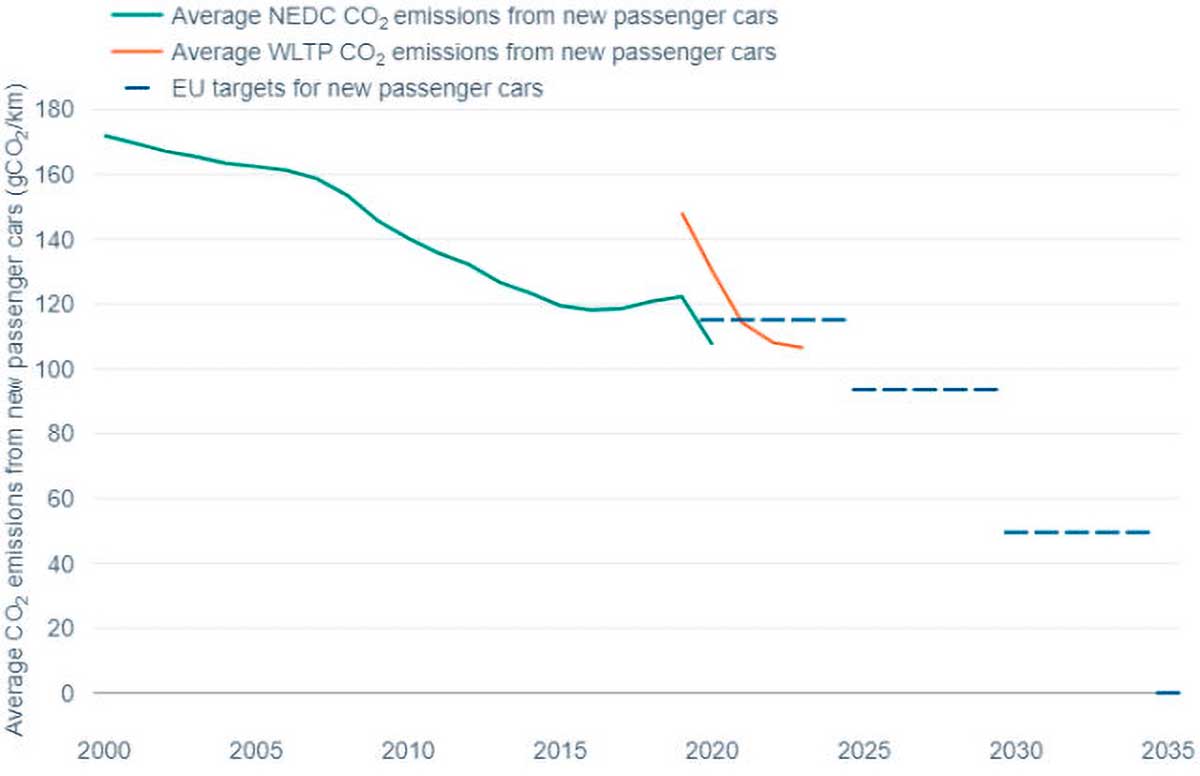
On paper, the mechanism looks simple. In reality, it is explosive. According to calculations by Dataforce, between January 2025 and April 2026, the European automotive industry will have already accumulated almost 12.8 billion euros in theoretical emissions-related debts, compared with 9.7 billion euros in credits generated by the most virtuous manufacturers. The balance therefore remains largely negative. And the biggest losers are the historic European automakers, still heavily dependent on combustion and hybrid models.
Volkswagen remains the most exposed... but Stellantis is close behind
The most troubled carmaker today would be the Volkswagen Group, with a theoretical risk estimated at 2.3 billion euros. Despite massive investment in electric vehicles since dieselgate, the German automaker still posts average emissions of 100.7 g/km, well above its target of 94.6 g/km.
But Stellantis is not far behind. The group headed by Antonio Filosa is said to have already registered almost 2.3 million vehicles in Europe over the period studied, with average emissions of 102.1 g/km, against a target of 96.2 g/km. The result: a theoretical exposure of around 1.25 billion euros.
This figure confirms a trend already visible in Italy at the beginning of the year. At the time, Fiat appeared to be the group's main weak point, with emissions well below European targets. Peugeot, Jeep, Citroën, Opel and even Alfa Romeo were also major contributors to the problem. The real danger for Stellantis is therefore structural: despite its progress in electrification, the Group still sells a huge number of combustion and hybrid vehicles, notably via Fiat, Peugeot and Citroën. And it is precisely these volumes that are causing CAFE's calculations to explode.
Tesla and Chinese brands recoup European billions
The other major finding of the Dataforce study is even more politically sensitive. The European system risks provoking a gigantic financial transfer from European manufacturers to groups already specializing in electric vehicles, mainly Tesla and several Chinese manufacturers.
Tesla would today be the big winner in the system, with around 2.3 billion euros in theoretical CO₂ credits accumulated. Behind the American brand, Chinese groups are progressing at an impressive rate. BYD is said to have already accumulated 1.6 billion euros in credits, while Geely is said to have exceeded 1.4 billion. XPeng is said to be approaching 250 million. The logic of the system is therefore very clear: the more electric vehicles a manufacturer sells, the more credits it accumulates, which it can use or resell to groups in difficulty.
Leapmotor becomes a financial weapon for Stellantis
For several months now, the partnership between Stellantis and Leapmotor has been taking on considerable importance. The Chinese manufacturer, of which Stellantis owns 19 % in China and 51 % internationally, could become one of the main levers enabling the European group to avoid billions of euros in penalties over the next few years.
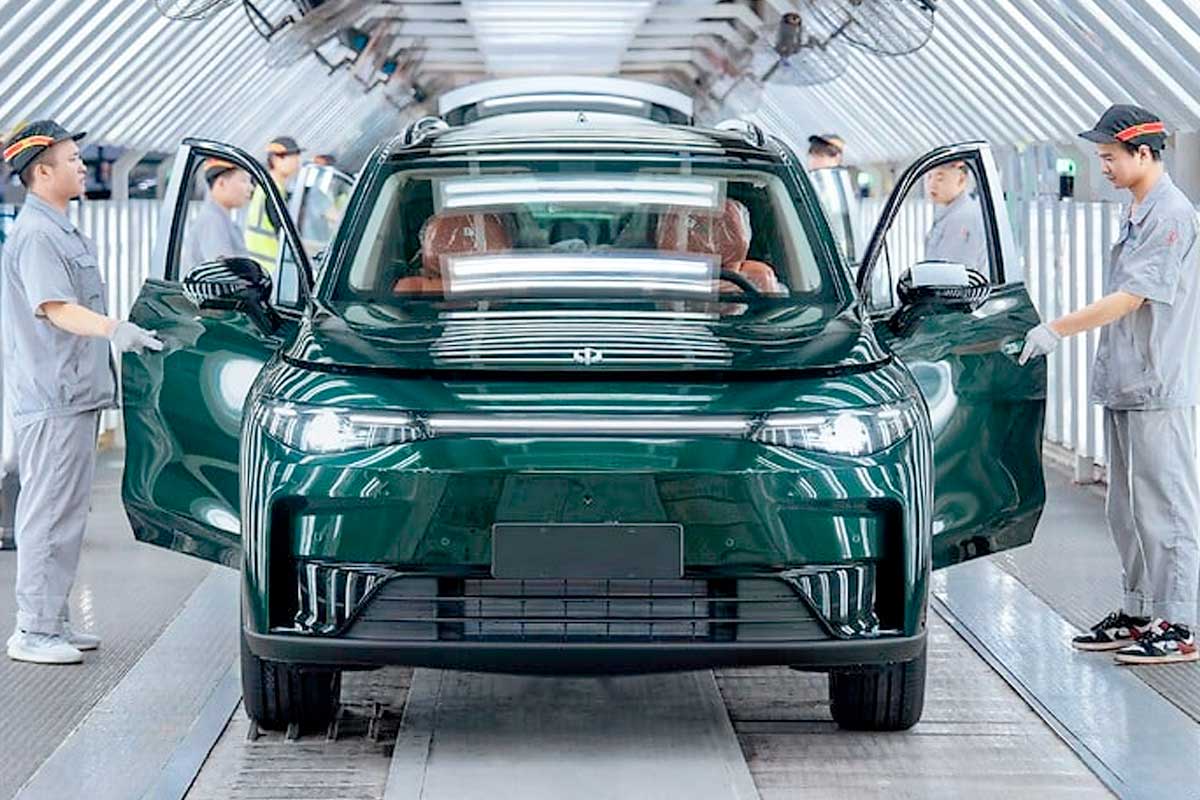
According to Dataforce, Leapmotor has already accumulated more than half a billion euros in theoretical credits with just 57,000 cars registered over the period studied. An impressive figure that shows just how strategic every electric vehicle sold becomes in European calculations.
It's probably no coincidence that Stellantis recently strengthened its alliance with the Chinese brand. The group now sees this partnership as one of the pillars of its new European industrial strategy. The aim is simple: to rapidly increase the share of zero-emission vehicles in European sales in order to artificially lower the group's average CO₂.
In this logic, Leapmotor is no longer just about selling low-cost electric cars. The brand also becomes a financial tool for avoiding potentially gigantic penalties.
 English
  French
  Italian
  Spanish
  German
  Japanese
  Dutch
Dutch
It's not for lack of having announced the rules early on! As far as I know, Toyota won't be fined him🤔
What's more, Toyota manufactures these real hybrid cars in France...
The willing find their way.
Stellantis prepares real HEV GMPs.
The correction (of the error) is underway.
What's more, even Renault seems to be doing better! In short, once again, it's not necessarily all-electricity that's the problem, but the fact that we haven't banked on the right hybrid systems? When you see the difference between a 500 hybrid (well, it doesn't even deserve the name) and an Aygo...
Renault has been investing in electronics for at least ten years and has a real hybrid car.
Renault has a long-term strategy and can rely on nissan, a pioneer in electronics with the Leaf, and Mitsubishi, which was one of the first to create the plug-in hybrid vehicle.
You have to choose your allies carefully.
I bought my 2nd electric car, and I won't name the brand... I used to be a fan of combustion engines, but today these motors are outdated in terms of simplicity, performance, comfort and smoothness. No service has been done on the EV, at least not with this brand. And the price of recharging at home is unbeatable. I wish Alfa, Maserati and Lancia all the best in finding the right electric path, because this is the premium car of the 21st century, no matter what anyone says. Fiat can stay with combustion engines, but they're not selling anything in Europe anyway.
FIAT doesn't give a damn about the EU (and rightly so), and it's electric cars that are outdated because it's impossible to recycle batteries. Important parts that cost a fortune to replace (as demonstrated by the insurance companies who want to inflate prices because of electric cars), back to the massacre of the planet for 3 pieces of pebble and after 10 years your car is good for the garbage can!
It doesn't look like the future at all, but rather a step backwards.
MDR, in July-August, 1 to 3 h waiting time to access the charging point on the freeway at weekends, then you have to add the charging time! 😂😂😂
« « A colossal figure that illustrates the extent to which the electric transition is now becoming a question of financial survival for the major historical automotive groups. » »
Except that no one wants electric cars, so it's a sure death sentence for European automakers.
Geef onze Europese auto bouwers nog wat meer boetes dan is de weg helemaal vrij voor de chinese auto's het lijkt erop dat in Europa niemand nog is geintreseerd in onze eigen industrie en zorgen er zo voor dat we binnen enkele decennia een derde wereld continent worden