

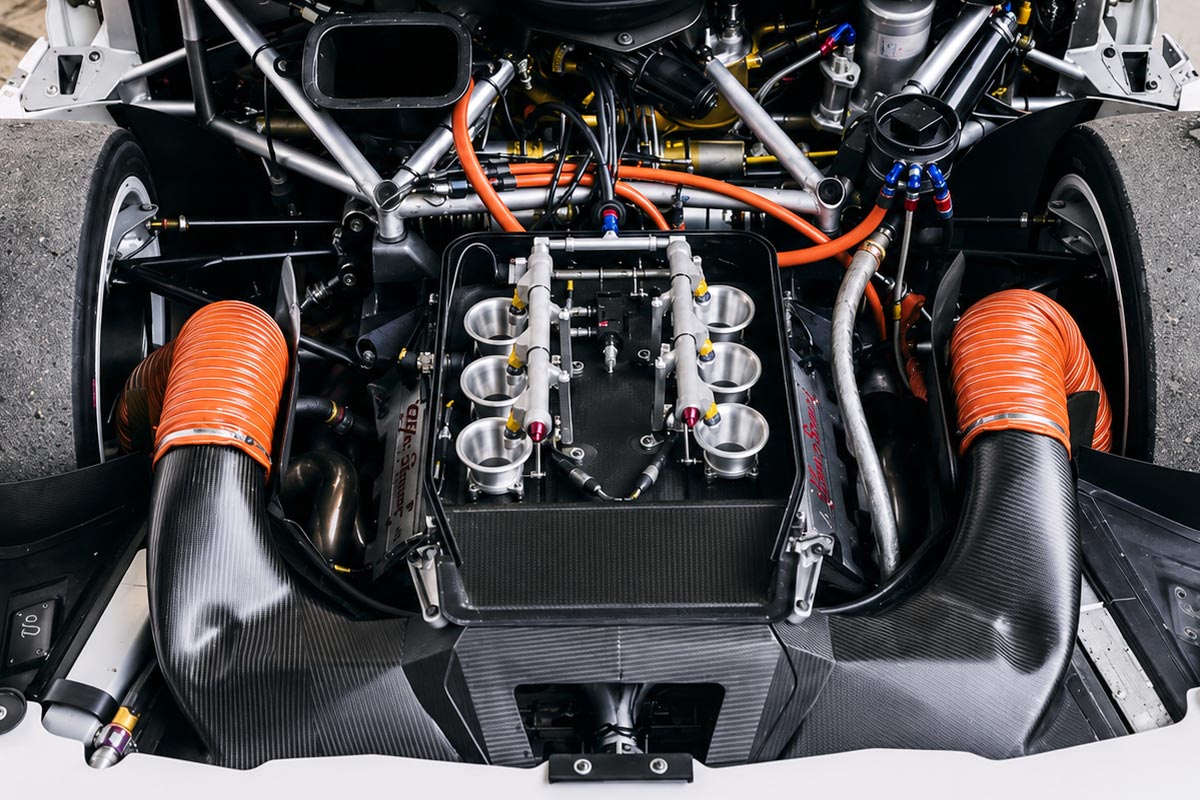
On October 30, a chapter in European automotive history will come to a definitive close. Stellantis will shut down its plant in Douvrin, in the Pas-de-Calais region—an industrial site that has produced tens of millions of engines since it opened in 1969 under the name of French Society of Mechanics.
In recent years, Douvrin was best known for assembling the 1.2 PureTech engines, as well as the 1.5 BlueHDi and, previously, the 1.6 THP. The last internal combustion engine to roll off the assembly lines will, in fact, be a 1.2 PureTech (renamed Turbo 100), before production is permanently halted and the plant closes in the fall. At its peak, the plant employed nearly 5,800 people. Today, only about 100 remain, while some of the employees have been transferred to the nearby ACC gigafactory, which specializes in batteries.
Long before the PureTech, the era of the PRV V6
To reduce Douvrin to just PureTech, however, would be to overlook an exceptional legacy. In its more than fifty years of operation, the plant has manufactured over 40 million engines, including the X engines for the Peugeot 104 and 205, the D engines for the Renault Clio and Twingo, and, above all, the legendary PRV V6, developed jointly by Peugeot, Renault, and Volvo.
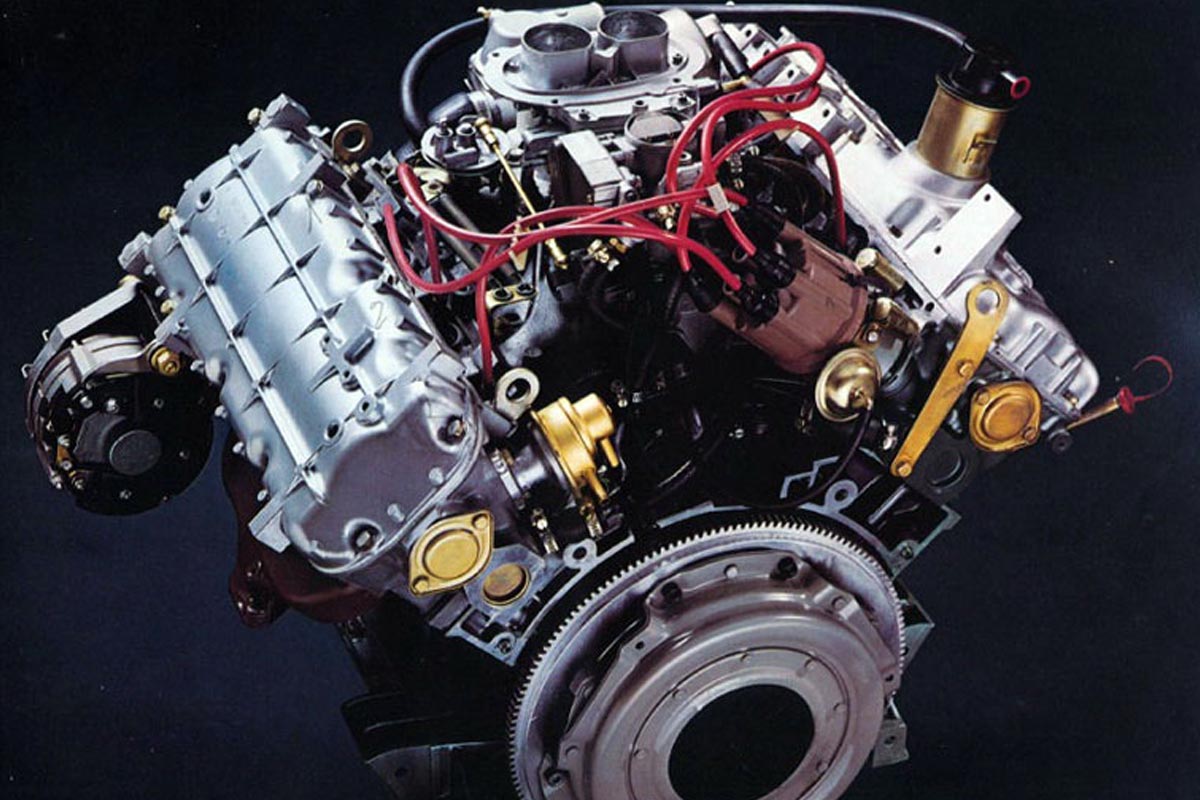
It was this engine that powered the legendary DeLorean DMC-12, immortalized in the trilogy Back to the Future. Although long criticized for its lack of character in its production version, the PRV would go on to enjoy a surprisingly successful career, taking on very different forms depending on the tuners and manufacturers.
When a French engine ended up in an Alfa Romeo race car
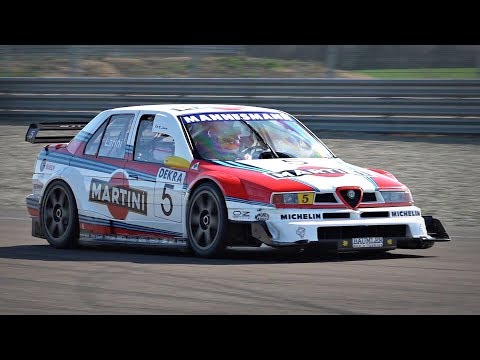
One of the most unlikely stories involving this V6 leads straight to Alfa Romeo. In 1996, to further develop the spectacular 155 V6 TI competing in the DTM and ITC, Alfa Romeo needed a 90° V6, in accordance with the technical regulations. However, the brand did not have a mass-produced engine in its lineup that truly met this architectural requirement.
The solution came… from the Lancia Thema. The large Italian sedan was, in fact, powered by the PRV V6, manufactured in Douvrin. Since Fiat’s acquisition of Alfa Romeo in 1986, the industrial ties between Alfa and Lancia made it possible to use this engine as the basis for homologation. Alfa Corse engineers then developed a completely redesigned V6 race engine, of which only the angle between the cylinder banks and their center distance remained unchanged—as permitted by the regulations.


Officially, Alfa Romeo remained very tight-lipped about this French origin. It was more flattering to let people think that the engine was entirely «in-house» than to acknowledge that it was derived from an engine designed by Peugeot, Renault, and Volvo. We had dedicated an article to it here.
The End of an Industrial Icon
The closure of the Douvrin plant perfectly illustrates the transformation of the European automotive industry. After producing some of the continent’s most famous internal combustion engines—from Renault engines to Stellantis’ PureTech engines and the PRV V6—the plant is being phased out in favor of battery production for electric vehicles. With it goes a facility that powered everything from popular city cars to vehicles that have achieved cult status… and even, quite unexpectedly, one of the most fascinating Alfa Romeo race cars in history.
 English
  French
  Italian
  Spanish
  German
  Japanese
  Dutch
Dutch
But which engine is the first one?.
All that was required was the technical specification of the 90-degree cylinder layout, since the regulations stipulated that the angle and bore must be those of a production engine, but nothing more.
However, the French version of the engine was based on the Alfa Romeo F1 engine, minus four of its ten cylinders.
Redesigned and assembled by Abarth.
Saluti
The V6 engine in the Alfa 155 DTM had NOTHING in common with the PRV engine except for the cylinder bank angle. Otherwise, it was completely redesigned and was entirely an Alfa Romeo product.
Unfortunately, incorrect information on this subject is often found.
Stellantis could take this opportunity to halt production of the PureTech at all its plants, in order to finally shake off its bad reputation.
That's surely holding back sales.
It’s a shame—a creeping process—and, unfortunately, it’s leading the automotive industry to the guillotine. I’ve been an Alfaisti ever since I was old enough to drive, and I love my 10-year-old Stelvio quattro Martino.
We won't miss these trash cans
The Douvrin (Pas-de-Calais) plant, which is closing permanently, marks the end of production for the second-generation EB2 engine (wet timing belt), which is being phased out sporadically in certain markets.
Since 2023, it has been gradually replaced by the third generation (timing chain + 70% new parts). This engine, which is now installed in nearly all new vehicles, is also produced in France (at the Trémery plant in Moselle).
There are now quite a few vehicles that have been equipped with this feature for the past three years. And, at first glance, reliability seems to be better… Stay tuned.
Thank you, ChatGPT.
False.
We don't need that.
Knowledge and writing—that’s my HI (Human Intelligence) in its purest form.