

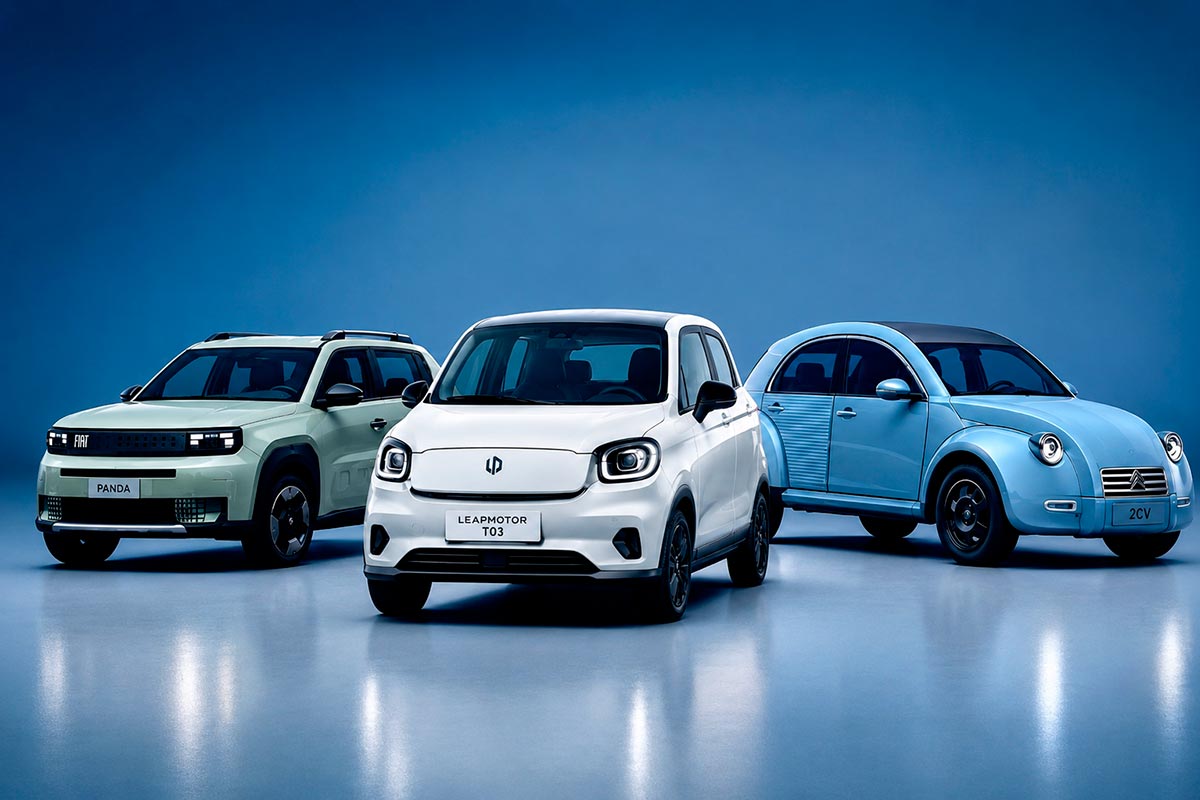
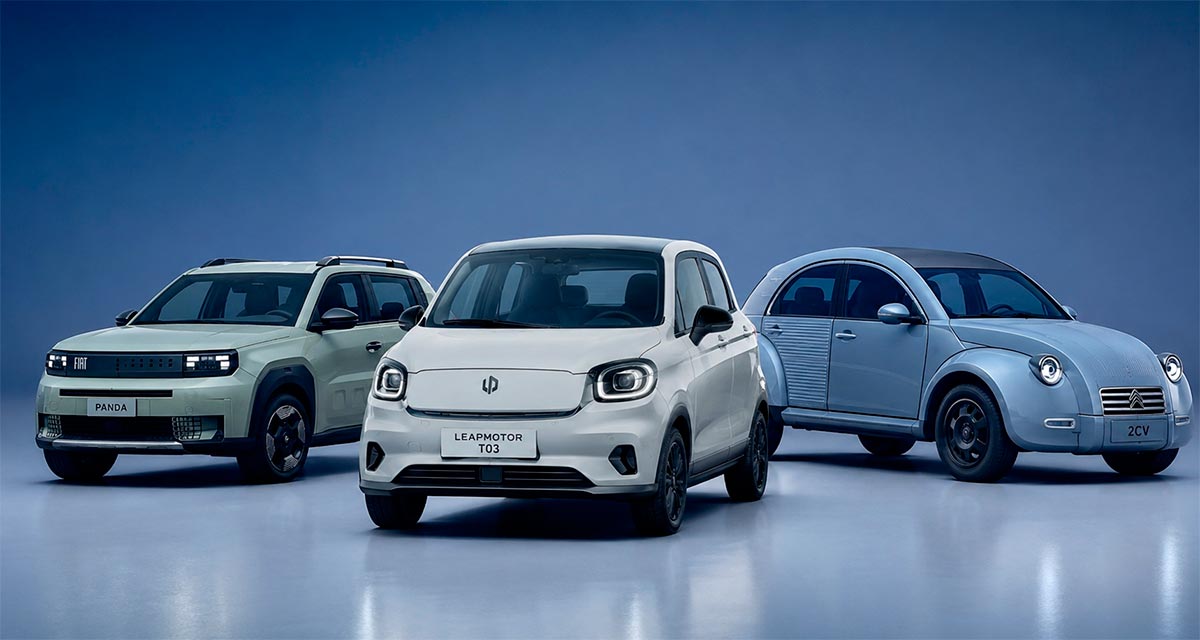
A few weeks ago, we mentioned a hypothesis which was gaining momentum: the future affordable small electric cars from Stellantis, including the new Citroën 2CV and the upcoming Fiat Panda (or Pandina, or Koala), could use a technical platform developed by Leapmotor. This possibility was merely mentioned by Tianshu Xin, CEO of Leapmotor International, who explained that this solution was one of «the opportunities currently being explored.».
Since then, new evidence has emerged to support this theory. According to the latest reports from *Journal de l’Auto*, this is no longer just a hypothesis: the Leapmotor T03 will indeed serve as the technical foundation for Stellantis’s future E-Car models. This strategic decision could enable the group to succeed where many European automakers have failed for several years: offering a genuine new electric car priced under €15,000.
A Leapmotor T03 manufactured in Italy… alongside Fiats and Citroëns
Today, the Leapmotor T03 is already on the market in Europe with a starting price of around €16,900. This small 3.62-meter electric city car was even assembled for a few months at the Stellantis plant in Tychy, Poland. But the next step is set to be much more ambitious.
Like as we mentioned a few weeks ago, starting in 2028, a new version of the T03 would be produced in Italy, at the Pomigliano d’Arco plant, alongside the future Citroën 2CV and Fiat Pandina. This is important news for the future of this industrial site, which must, in particular, compensate for the end of production of the current Fiat Panda and the planned discontinuation of the Alfa Romeo Tonale. For Stellantis, the benefit is clear: instead of developing an entirely new European platform from scratch for a segment where margins are extremely low, the group could leverage the expertise of Leapmotor, a Chinese automaker in which it holds a 51% stake in the international joint venture.
Does it have similar features to the Chinese city car?
The future Fiat and Citroën models should obviously not be mere copies of the current T03. The body styles, designs, and philosophies will be unique to each brand. Citroën, for example, is developing a car inspired by the spirit of the original 2CV: simple, lightweight, and affordable—but not a high-end neo-retro reinterpretation like the Mini or the Renault 5.
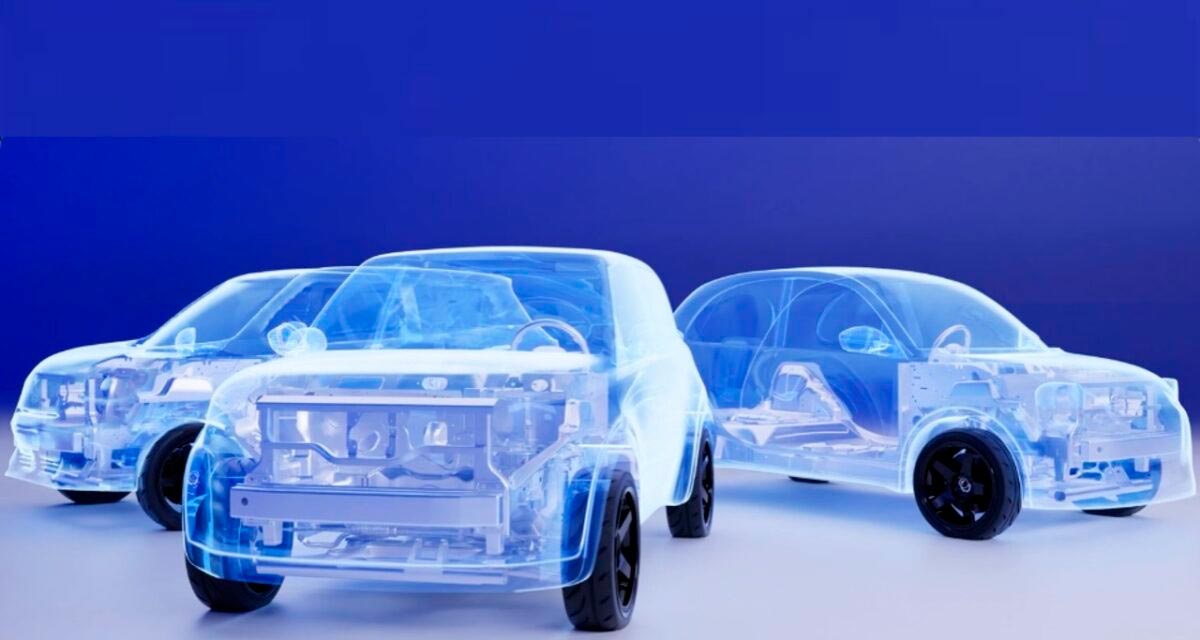

On the other hand, to reduce costs, many of the technical components could be shared. The current Leapmotor T03 already offers some clues: a compact length, an architecture designed for city driving, and a top speed of 130 km/h. This is an interesting figure, since Xavier Chardon, CEO of Citroën, confirmed to Top Gear that the future electric 2CV will indeed be capable of reaching 130 km/h. «You’ll be able to drive at 130 km/h, but you’ll have to take your time,» he explained, noting that this car will, above all, embody the philosophy of simplicity found in the original 2CV.
Stellantis Wants to Compete with Chinese Cars… Using Chinese Technology
The irony is striking: to better combat the massive influx of Chinese automakers into Europe, Stellantis might ultimately have to rely on one of them. But in a market where affordable small cars have all but disappeared due to development costs and regulations, this alliance could become a major advantage.
The battery capacity is expected to be kept deliberately moderate in order to limit weight and cost. The goal isn’t to offer a car with a 500 km range, but rather an electric city car capable of handling daily commutes, with a projected range of around 250 km… much like the current Leapmotor T03. Citroën has already confirmed that the 2CV will be manufactured in Europe using a high proportion of local components. Fiat will also be joining the lineup with a model smaller than the current Grande Panda, which could capture the spirit of the historic Panda.
After a long search for a way to revive the popular European compact car, Stellantis seems to have found its answer: a French icon, an Italian icon… and a Chinese platform from Leapmotor, made in Italy.
 English
  French
  Italian
  Spanish
  German
  Japanese
  Dutch
Dutch
Partnerships with other automakers in this now-defunct segment are nothing new; we’ve seen the Citroën C2, the Peugeot 108, and the Toyota Aygo.
We also had the Twingo and the Smart FourFour.
There's no choice in this segment, and Chinese automakers are being demonized.
To believe that it will be made in Italy is just an unlikely guess.
Do you think it will be made in Italy? Stellantis has officially announced that there will be three electric cars in Pomigliano. This isn't speculation.
As far as we know, the current Panda is indeed manufactured in Italy—and in Pomigliano, no less. It has been officially confirmed that its successor will be produced there, as will the future 2CV. The future T03 from Leapmotors will therefore also be produced there.
By the way, what about Pomigliano’s future ownership? Because of all the partnerships announced by Stellantis with Leapmotors, the plan was for the sites dedicated to producing Leapmotors models to be transferred to the LPMI joint venture—specifically Zaragoza and Madrid. The plants aren’t closing, as Stellantis promised, but they are changing hands. So while Stellantis does own 51% of LPMI, what does the future hold?
Pomigliano will certainly remain part of Stellantis. The group is certainly not going to sell all of its plants to the Chinese.
I'm just as surprised that these future «affordable» cars are being made in Italy! Or maybe these are just empty promises... especially since there aren't even any prototypes of these cars yet. To think they'll be ready in two years!??
It’s a factory that already produces the Fiat Panda, so they presumably know how to make inexpensive cars. But be careful—you have to read between the lines: these are E-car models that fall under a new European category. I wouldn’t be surprised if there were a European subsidy for each car sold behind that price.
With very tight profit margins, labor, tax, and energy costs must be low. None of that is the case in Italy when compared to the Stellantis Group’s other low-cost plants.
Maybe the Chinese platform has already started to pay for itself financially?
Has anyone ever tried or heard of this Leap Motor?
I'm definitely going to buy a 2CV Electric as soon as it's available. .
If that's the case, then yes, a subsidy could reduce costs… just as less stringent regulations for electric cars (crash tests, sensors of all kinds) could.
The current Panda is manufactured there.
We'll believe it when we see it.
Over the past 4 years, nothing but government funding (6 BILLION!) and the divestiture of Italian plants.
Manufactured in Morocco—but with the Italian flag on the body—as well as in Serbia, Poland, etc.
At least they'll have a real, RELIABLE base!
Rescinding and rebadging Leapmotor vehicles makes the most sense. The Leapmotor Bo5 would be the new Vauxhall Astra, with its own Vauxhall—not Opel—look. Bring back the "V" nose—Vauxhall is a superior brand to Opel.
B10: A NEW SMALL FAMILY MPV
The C10 could be a new VX4/90, which is a much better name than Grandland.