

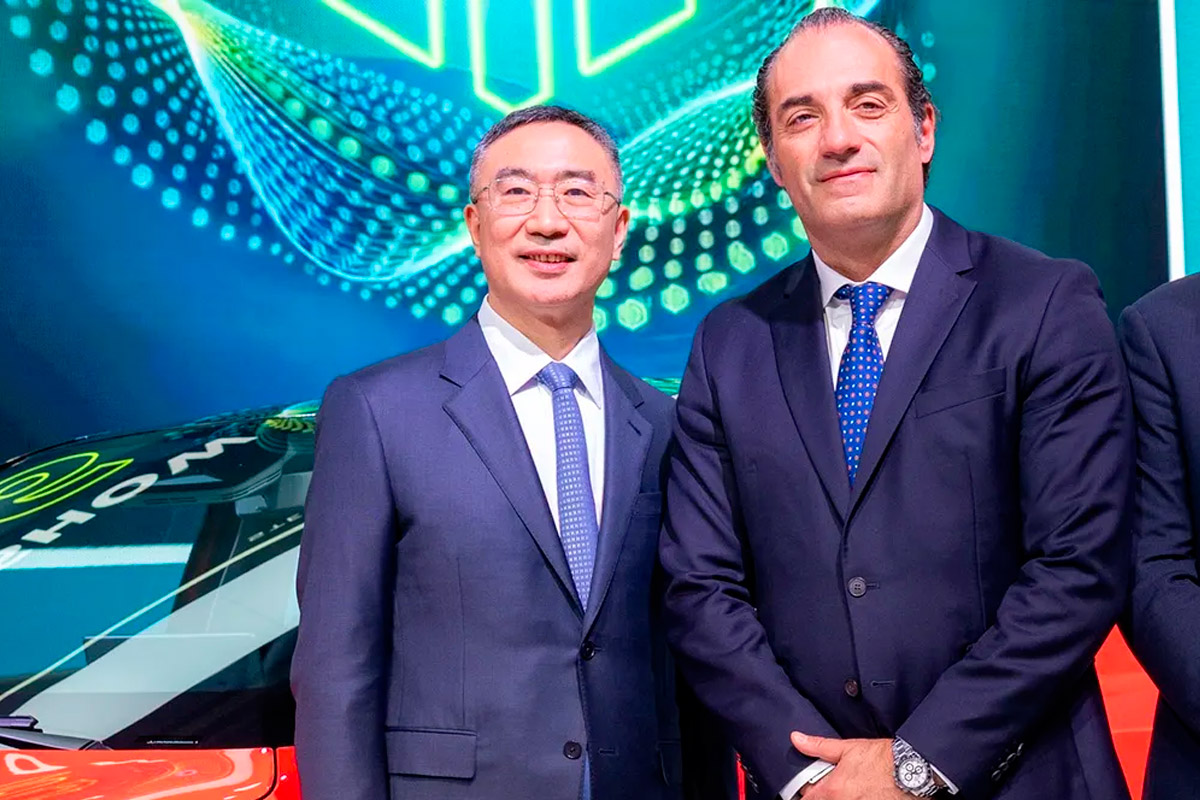
After turning to Chinese technology to develop its future small electric cars and train its employees in battery manufacturing, Stellantis now wants to take its collaboration with China even further. On November 12, 2026, Antonio Filosa, the group’s CEO, confirmed his intention to expand the partnership with Leapmotor to include several European plants, including one in Italy. And that’s not all: Maserati could also benefit from new industrial alliances.
Leapmotor could set up operations at several European plants
It was during the ANFIA meeting, held in Milan, that Antonio Filosa outlined his ambitions. «We already have a fruitful partnership with Leapmotor, which we want to expand to other areas, as it will support us in our European plants, including one in Italy,» the executive said.
So it's not just an Italian factory. Several of Stellantis' European plants could benefit from the Chinese automaker's technologies, particularly to develop new electrical and electronic solutions. Why this shift toward openness? Antonio Filosa explains that partnerships make it possible to bring vehicles into the factories that Stellantis would not have produced on its own, in order to increase production volumes and make better use of manufacturing capacity.
But he also acknowledges a deeper problem: these alliances help «accelerate technological innovation, particularly in areas where European manufacturers have fallen behind their Asian competitors.».
Pomigliano: The First Italian Plant to Be Affected?
Although Antonio Filosa has not officially named the Italian plant, all eyes are on Pomigliano d’Arco, near Naples. As we explained a month ago, Stellantis and Leapmotor are already collaborating on the E-Car program, designed to produce affordable small electric cars starting in 2028. Among the models being considered are a future electric Citroën 2CV and a small Fiat that will succeed the Panda. European engineers are working closely with their Chinese counterparts at Mirafiori in Turin to learn how to develop a car in just two years.
European cars, manufactured in Italy but using technologies developed in partnership with Leapmotor: this is now becoming an increasingly realistic prospect.
Maserati could also turn to Chinese partners
And the collaboration shouldn't stop at small electric cars. Antonio Filosa also mentioned an upcoming partnership with the Chinese automaker, before announcing that On December 10, 2026, in Modena, Stellantis will announce which partners Maserati will work with in the future.
For several weeks now, reports have been circulating, particularly regarding possible partnerships with Huawei and JAC Motors. However, no definitive agreement has been confirmed. The executive also promised significant investments in the Cassino plant, where Stellantis hopes to develop new products with its partners. For Maserati, the stakes are high: restoring production volumes while preserving Italian design and engineering.
Following CATL and Leapmotor, Stellantis is drawing ever closer to China
This strategy confirms a trend we have been observing for several months. In September, we explained that Leapmotor offered technology «kits» including batteries, motors, and electronics to reduce development costs.
In October, we also reported that the first Spanish employees at the Stellantis-CATL gigafactory had been sent to China to learn how to make LFP batteries.
Stellantis now plans to expand these collaborations to several European plants, while other partnerships could involve Maserati. The paradox is striking: To continue producing European cars in its own factories, Stellantis appears to be increasingly reliant on Chinese expertise.
 English
 French
 Italian
 Spanish
 German
 Japanese
 Dutch