

The plant Stellantis The Termoli plant will have to wait a little longer before returning to normal operations. As the Italian plant prepares to begin production of new transmissions for hybrid vehicles (eDCT), management and the unions have just signed a new solidarity agreement that will support 1,721 employees for nearly another year.
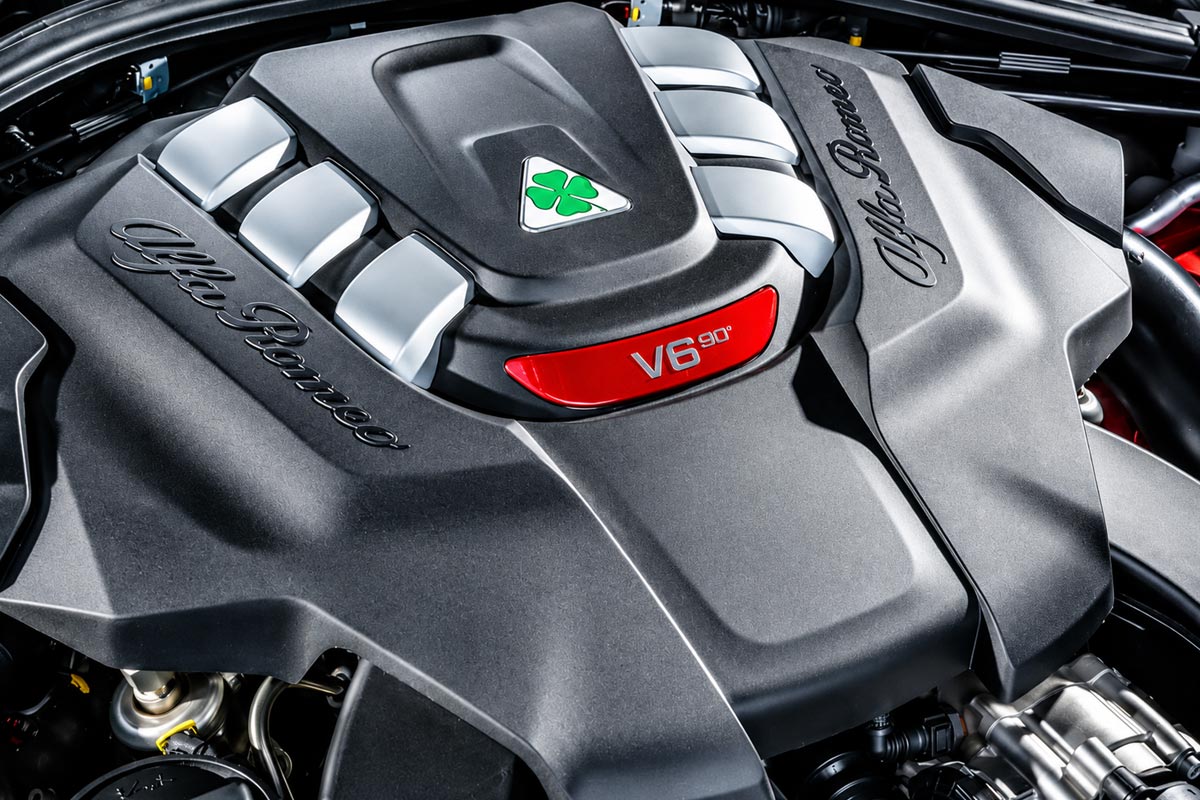
The program will take effect on August 31, 2026, and will continue through August 29, 2027. It will apply to employees working on the various engine families produced in Termoli, including the V6 (Alfa Romeo and Maserati), GSE, and GME 2.0 T4.
In Italy, the solidarity contract allows for a temporary reduction in working hours in order to spread the decline in business across employees and avoid layoffs. This form of short-time work is, unfortunately, becoming all too familiar at the Termoli plant.
A situation that was supposed to be temporary
This new agreement effectively builds on the program established in 2025, which at the time covered 1,823 employees. One year later, the number of employees affected has dropped to 1,721—a decrease of 102 people. For the unions, extending the solidarity contract remains preferable to larger workforce reductions. The agreement also stipulates that employees will continue to accrue their entitlements—including vacation time and the thirteenth-month bonus—regardless of the number of days actually worked.
But behind this social safety net lies a much less reassuring industrial reality: Termoli still does not have sufficient production volume to employ all of its workers full-time. Francesco Guida, secretary of the Uilm Campobasso-Termoli union, believes that the plant cannot continue to survive indefinitely on social safety nets and is calling for new production lines to enable the site to return to its normal operating rhythm.
New productions are not yet enough
The situation is all the more paradoxical given that Stellantis is currently preparing to launch a new operation in Termoli. Production of the eDCT transmission for hybrid cars is set to begin on September 15, 2026. The automaker has announced an investment of 41 million euros, with a capacity of up to approximately 300,000 transmissions per year once production is fully operational. This new operation is expected to employ approximately 288 workers.
Added to this is the future of the GSE engine, which must be adapted to meet the Euro 7 standard and continue to power several of the group's key models, including the Fiat Pandina and Fiat 500. These projects had been presented as two pillars of Termoli’s industrial future after the abandonment of the battery gigafactory project initially planned for the site. But their growth clearly is not yet sufficient to offset the decline in traditional operations. The V6 is suffering in particular from low Maserati production volumes, while the GME 2.0 T4 is heavily dependent on Alfa Romeo sales in the U.S. market and remains exposed to uncertainties regarding demand and tariffs.
Termoli: Between Two Eras
The plant thus finds itself in the midst of Stellantis’ industrial transformation: older engine models are gradually losing ground, while new hybrid production lines are not yet generating sufficient volume. For now, the solidarity agreement is helping to preserve jobs and avoid a more drastic restructuring. But its extension through the summer of 2027 also indicates that the transition will take longer than expected.
 English
  French
  Italian
  Spanish
  German
  Japanese
  Dutch
Dutch
Wasting your time. Chain-driven cars are the future!
Check out the Zeeker 8x
The only cars they make that are any good are Alfas and Dodges; the rest are junk!!!!
You have no idea
HET Auto Group. Anyone?
.Hi to everyone who loves cars—we need to stick with hybrid diesel engines; they're the eco-friendly future. Diesel isn't as polluting as they say, because electric cars are eco-friendly my ass—their batteries are very polluting to manufacture and very expensive. See you later, friends.
Now that's network pollution, though. Unreadable. Probably just a troll 🤣
What are the engine specifications for the V-6 in Article I? I believe their diesel engines should be developed in smaller displacement versions with hydrostatic drive, shifting toward low-consumption yet high-performance vehicles. A variable-RPM engine driving an on-demand electric generator could vary the engine RPM while maintaining the generator's constant output, coupled through a variable transmission.
I wouldn't want to trade places with the factory workers. An uncertain future.
Is Stellantis still reeling from the impact «Carlos» had?
American Chrysler has a long and challenging road ahead of it.
ACM