

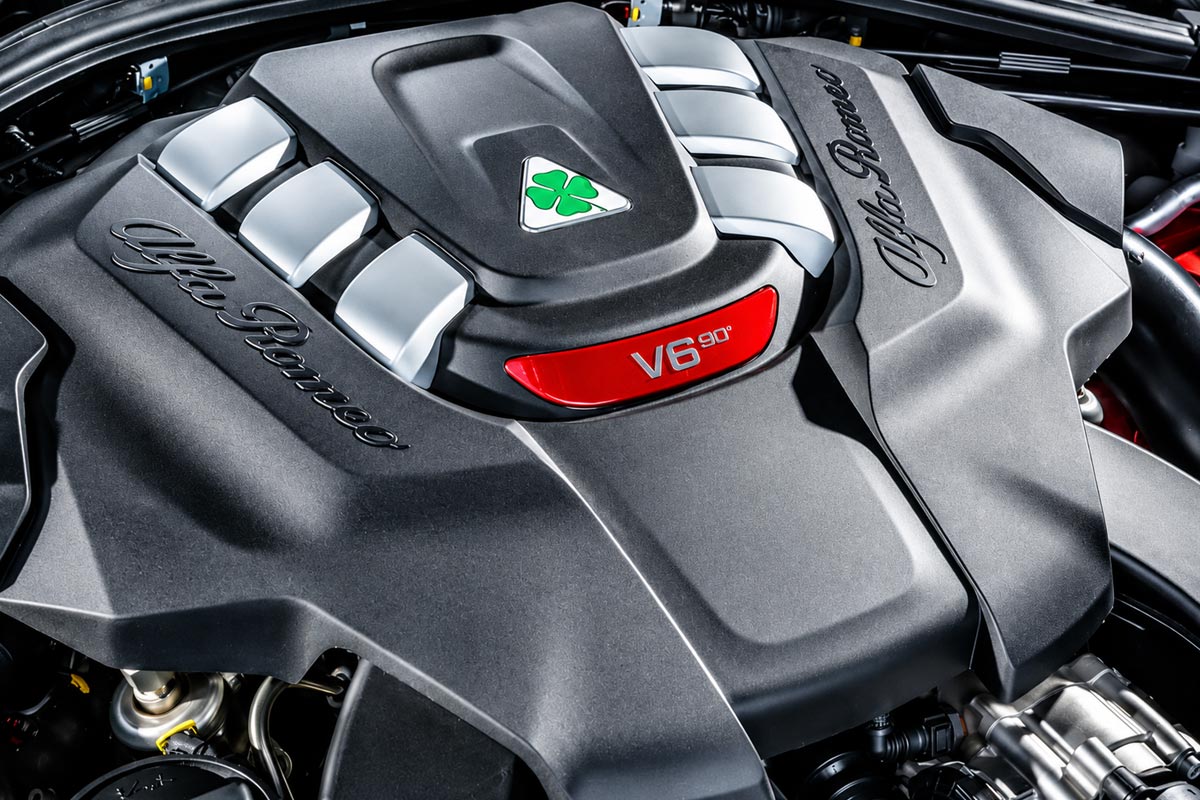
For several years now, the factory Stellantis The Termoli plant seems to be caught in a never-ending transition. The plant, best known for producing the V6 engines used in the Alfa Romeo Quadrifoglio and Maserati models, was originally set to undergo a major transformation with the construction of a massive battery factory. With that project now abandoned, Stellantis has since announced new investments. But for the unions, it’s still not enough: the very future of the plant is now said to be in jeopardy.
On September 22, national representatives of Italy’s major labor unions traveled to Termoli to meet with the employees. And the assessment made following the meetings is particularly troubling: while the announced new production projects are a start, they would still not be enough to guarantee a future for the site’s more than 1,700 employees.
From the Gigafactory to a Return to Engines
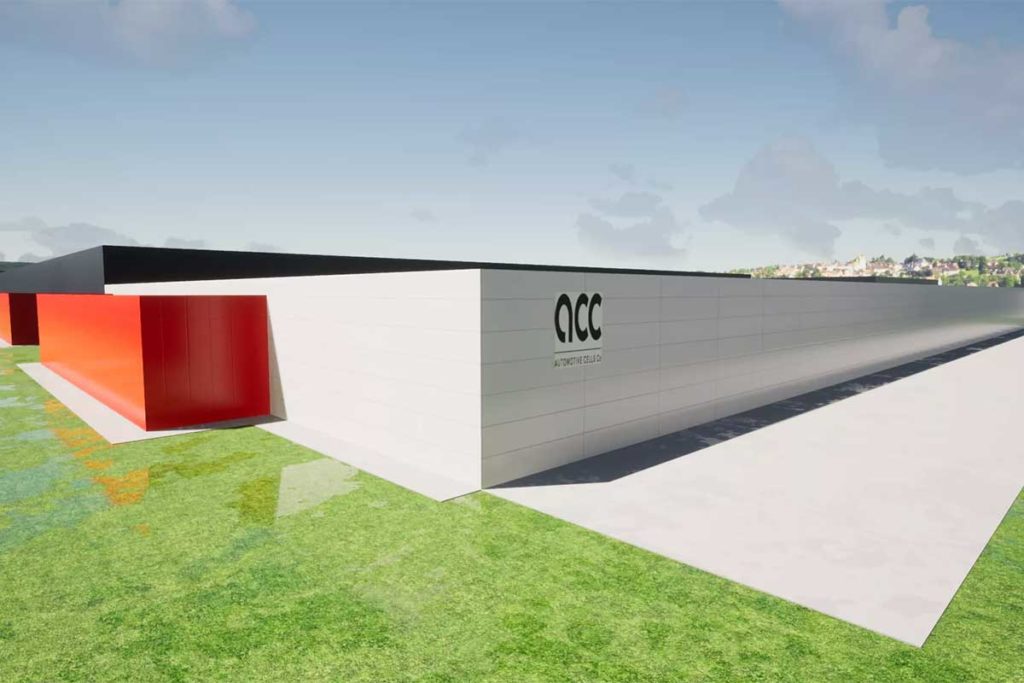
To understand this latest alert, we need to go back a few years. Termoli was set to become one of the symbols of Stellantis’s electric transformation in Europe with the construction of an ACC Gigafactory. But The project was initially put on hold, before it was finally abandoned.
Stellantis then changed course. Last March, the group confirmed a 41-million-euro investment to set up production in Termoli of eDCT transmissions for hybrid cars. The GSE engine is also set to remain in production, while the GME engines—and especially the famous V6—will continue to be produced on-site.
Production of the eDCT is now set to begin in mid-October, with an announced eventual capacity of approximately 300,000 transmissions per year. This might seem like good news. However, just a few weeks after the extension of short-time work for 1,721 employees Through August 2027, the unions are once again sounding the alarm.
«The factory is in danger»
Stefano Boschini, general secretary of Fim-Cisl, is no longer hiding his concern. In his view, Termoli is, along with Cassino, one of Stellantis’s two industrial sites in Italy facing the greatest difficulties. Above all, he believes that since the failure of the Gigafactory, no new project of sufficient scale has been assigned to the plant to ensure it has a genuine industrial future.
The unions are therefore now calling for a much more ambitious response from Stellantis. Gianluca Ficco, national secretary of the Uilm union, is specifically calling for Termoli to be awarded the contract to produce a new engine for future Alfa Romeo and Maserati models. This is a particularly symbolic request for this plant, which already manufactures the V6 engine for both Italian brands.
Antonio Spera of the UGL goes a step further: in his view, both the transmission production lines would need to be doubled and a new engine secured to truly revitalize the plant. Termoli has gone from about 3,500 employees in the past to just over 1,700 today. About 150 employees are even working temporarily at other Stellantis plants, mainly in Turin (Mirafiori).
After the engines, what does the future hold for Termoli?
The issue therefore goes beyond the mere survival of internal combustion engines. The unions want to know what Stellantis’s true industrial plans are for Termoli over the coming decades. They are also calling for production related to electric vehicles: components, propulsion technologies, and parts for electrified powertrains.
The situation is urgent: 1,721 employees are still covered by the solidarity contract through August 29, 2027, down from 1,823 employees the previous year. Following the abandoned Gigafactory, the 41 million euros invested in the eDCT, and the promise to continue producing the engines, Termoli is still waiting to find out what will actually become of it. The unions are now demanding that the town’s industrial future be treated as a priority: because this time, it’s no longer just about saving a V6 engine, but rather the plant that manufactures it.
Termoli cannot rely solely on short-time work for years on end. Stellantis must decide what industrial role it intends to assign to this plant, which—following the cancellation of the Gigafactory project—is still awaiting a genuine restructuring.
 English
  French
  Italian
  Spanish
  German
  Japanese
  Dutch
Dutch