

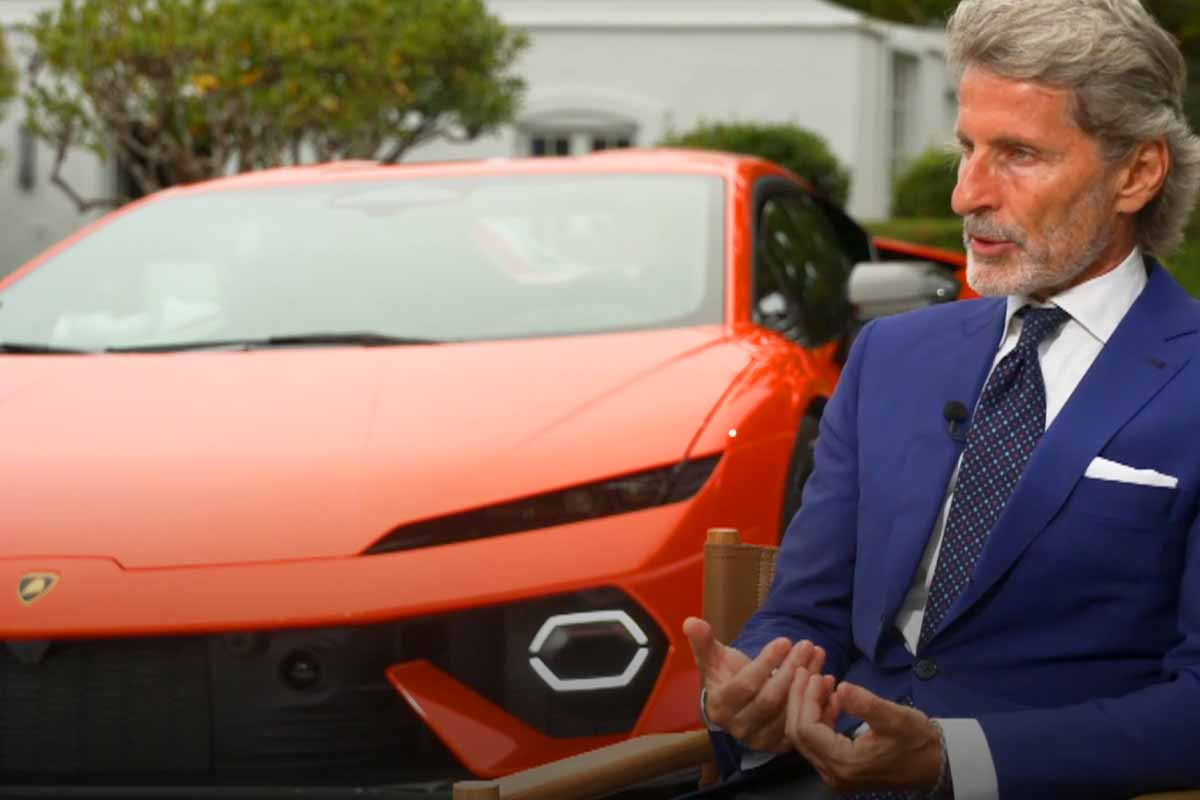
While Ferrari has unveiled its very first 100 % electric car, the Ferrari Luce, which has sparked much debate, the CEO of Lamborghini, Stephan Winkelmann, offered a particularly interesting analysis of the future of electrification in the luxury supercar segment.
In a lengthy interview with Autocar, the German executive never directly mentioned Ferrari when criticizing its electric vehicle project. But his comments leave little room for doubt: in his view, launching an all-electric Ferrari 100 % is a particularly bold move for a brand whose identity is based above all on the thrill of driving.
«We don't just sell modes of transportation»
For several years now, Lamborghini has been pursuing a cautious strategy regarding electric vehicles. The brand has already introduced hybrid versions of its entire sports car lineup with the new Lamborghini Revuelto and Lamborghini Temerario, but it recently postponed its plans for a fourth 100 % electric model, even though it had been announced through The Lamborghini Lanzador Concept.
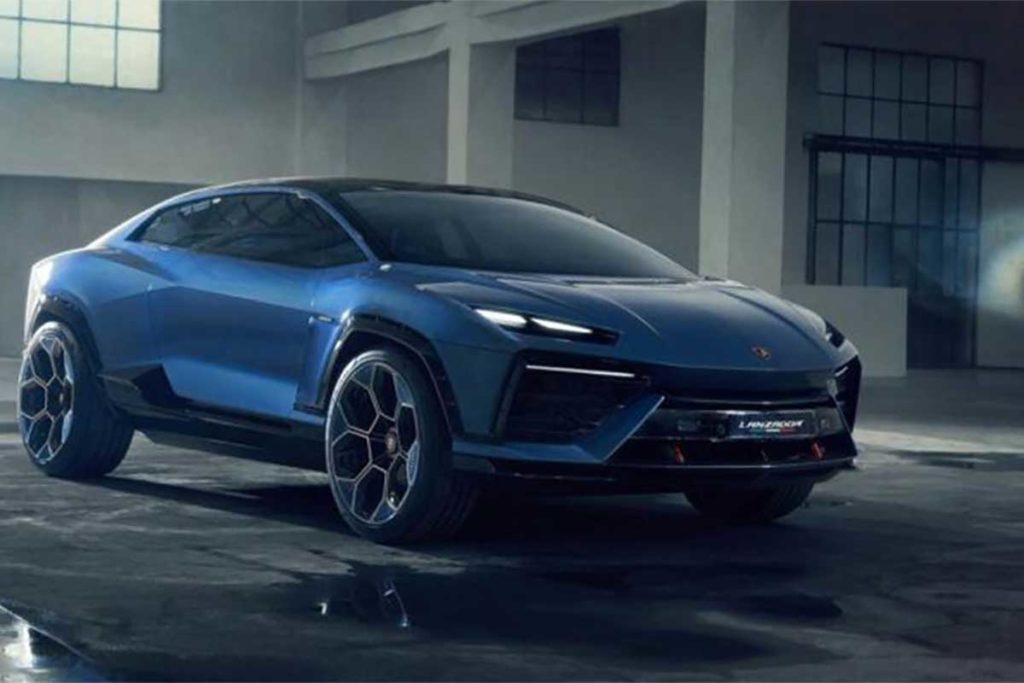
For Stephan Winkelmann, the reason is simple: Lamborghini customers don’t buy a car simply as a means of transportation. «At the end of the day, we don’t sell mobility,» he explains. This statement perfectly sums up his vision of the luxury automotive market. According to him, most Lamborghini customers already have several cars in their garages. Above all, they’re looking for an experience, an emotion, and a dream rather than a transportation solution. This philosophy explains why Lamborghini prefers to wait before taking the plunge into the electric vehicle market, unlike Ferrari.
The risk of losing the excitement that drives supercar sales
For the head of Lamborghini, the main challenge isn't a technological one. Carmakers today have the expertise needed to develop high-performance electric vehicles. The real issue lies elsewhere: emotion.
Stephan Winkelmann points out that a car’s performance isn’t limited to acceleration figures or top speed. The sensations provided by an internal combustion engine—the vibrations, the handling coming out of a turn, the way the driver uses the pedals, and even the sound—play a fundamental role in the driving experience.
According to him, removing these elements amounts to taking a significant risk. While the technology is impressive, if customers no longer feel that emotional connection with their car, the product loses part of its raison d’être. This line of thinking certainly resonates with Ferrari’s project, as its future electric car will need to win over a clientele accustomed to naturally aspirated or twin-turbo V8 and V12 engines.
Lamborghini prefers to wait for the right moment
Unlike some competitors who are accelerating their transition to electric vehicles, Lamborghini is taking a pragmatic approach. The brand continues to work on the technologies needed for a future electric sports car, but refuses to rush things.
«It’s essential to be ready when the time comes,» says Stephan Winkelmann. However, he believes that the market has not yet demonstrated sufficient demand for this type of product in the highly specialized world of luxury supercars. This caution is also driven by economic realities. Lamborghini remains a relatively small manufacturer compared to some of the industry’s giants. Every investment must be thoroughly justified.
It’s essential to be ready when the time comes. What I’ve noticed today is that when it comes to performance, certain aspects can be expressed in numbers: acceleration, top speed, lap time. But there’s also the emotional aspect. And it’s this emotional dimension that makes all the difference for our customers. It’s the vibrations, the way you approach and exit corners, the way you use the pedals, and then the sound. If you overlook all of that, you’re taking a big risk. If you’re a major brand, you can afford to take more risks. But for us, every euro we spend must be spent wisely.
A remark that could also be interpreted as an indirect reference to Ferrari, whose financial resources and brand strength allow it to take on more ambitious projects.
 English
  French
  Italian
  Spanish
  German
  Japanese
  Dutch
Dutch
But there's also a risk in getting in too late. Ferrari will learn from the Luce experience.