

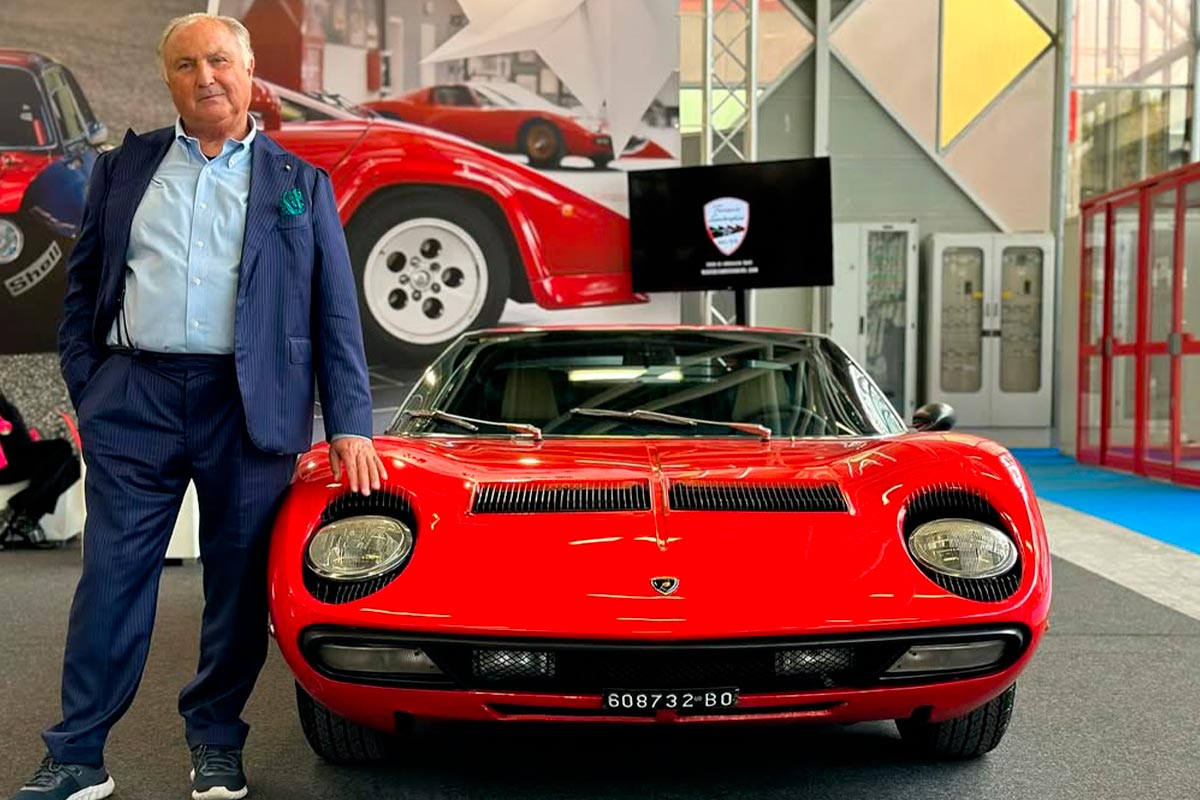
When a name like Lamborghini industry listens. And this time, the words of Tonino Lamborghini, son of the legendary Ferruccio, are likely to provoke a reaction. Going against the grain of the prevailing discourse, the Italian businessman questions the idea that electric cars are necessarily more environmentally friendly.
«Let's not pretend it's green»
Tonino Lamborghini shared his vision of the current automotive market at the Automotoretró show in Parma. While he admits to appreciating electric cars, he is very skeptical about their real environmental impact.
In his view, the problem is not limited to vehicle use, but concerns the entire production chain. Battery manufacture, energy costs, recycling that's still imperfect... these are all factors that, in his view, strongly qualify the green message. «Let's not say it's green, because today it's not,» he asserts bluntly.
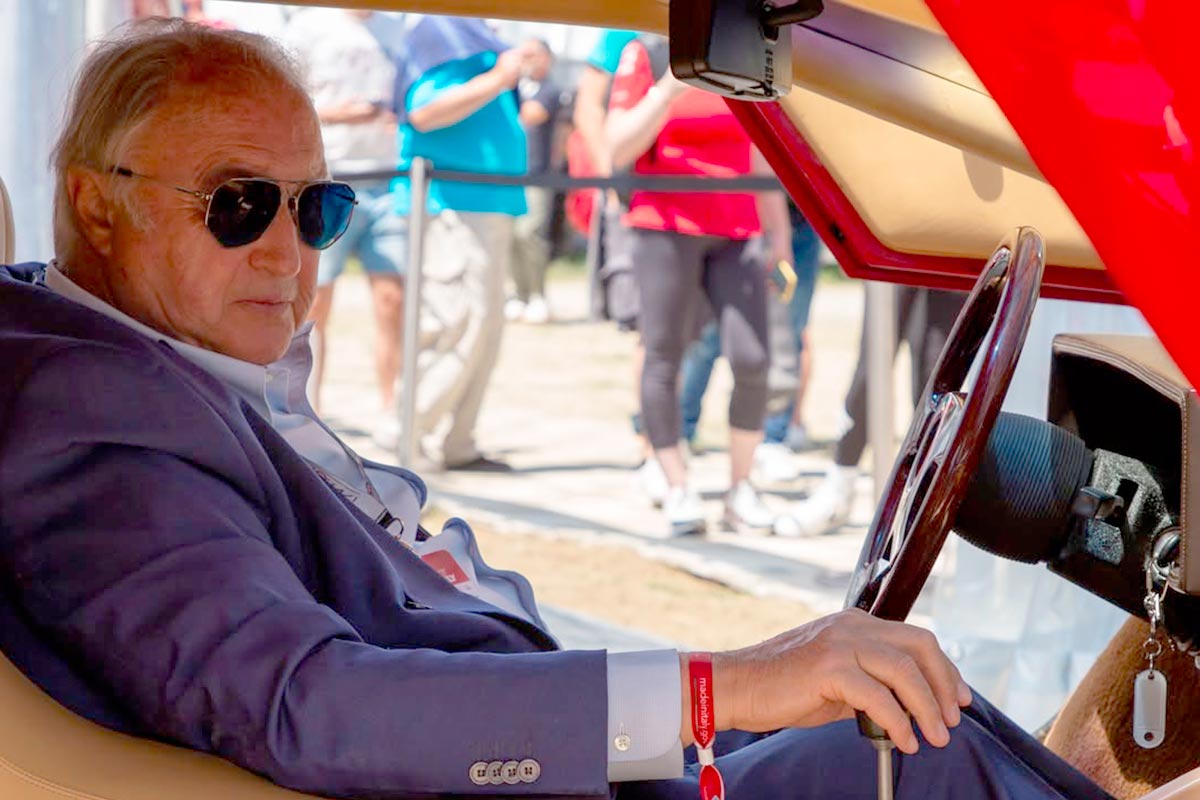
What's more, he goes so far as to defend a provocative idea: continuing to use existing cars could, in some cases, be less polluting than mass-producing new electric vehicles. «We pollute less with old engines», he sums up.
A different view of the automotive market
This position is part of a broader reflection on the evolution of the industry. Tonino Lamborghini believes that the European market, and the Italian market in particular, is in dire straits today, going so far as to describe it as «almost dead». He proposes a very pragmatic approach: produce elsewhere, sell elsewhere, and adapt to the accelerating globalization of the automotive sector.
His view of electrification is far from ideological. He does not reject the technology, but rather criticizes the way it is presented to the general public, often as a miracle solution.
The rise of Chinese manufacturers
Paradoxically, the man who criticizes the discourse surrounding electric vehicles is quick to hail another major phenomenon: the meteoric rise of Chinese automakers. Tonino Lamborghini openly acknowledges their impressive progress, both in terms of technology and value for money. «Today, they make beautiful, competitive and highly advanced cars,» he explains, far from the clichés of yesteryear.
Even to the point of personally considering buying one. «I'll probably go for a Chinese hybrid,» he confides, reminding us once again that these technologies should not be idealized in ecological terms. One month ago, he said, taking off his hat in front of those brands capable of competing with the incumbent European manufacturers.
An electric future... but without enthusiasm
Alongside him, Italian engineer Gian Paolo Dallara offers a slightly different, but equally lucid vision. In his view, the future will indeed be electric, even if this doesn't necessarily arouse enthusiasm. He imagines a world where cars will be autonomous, perhaps shared, and often produced in China. A development that would profoundly transform our relationship with the automobile. But not everything will disappear. Both Dallara and Lamborghini agree on one essential point: the passion car will survive. «There will always be room for supercars,» insists Dallara.
 English
  French
  Italian
  Spanish
  German
  Japanese
  Dutch
Dutch
Studies show that an electric car is 3 to 4 times cleaner than a combustion-powered car over its life cycle (mineral extraction, battery manufacture, car manufacture, use and recycling).
The carbon debt of its manufacture is repaid after around 40,000 km, and twice as much in countries with carbon-intensive electricity like China. After that, every kilometer is much less carbon-intensive than a combustion engine.
And at the end of its life, a battery can be recycled at more than 90%. Can he remind us if the oil burned in his thermals is recyclable? 💩
Forse non è chiaro ma l'olio esausto è tutto riciclato da anni e le auto elettriche raggiungono il pareggio dopo 80000 km . Quindi chi acquista un'auto elettrica lo fa sapendo che ha già percorso quello che probabilmente non lo raggiungerà nei prossimi 10 anni.
Per produrre batterie c'è bisogno di minerali e di inquinare nazioni come Cambogia Vietnam ecc ecc .. dove ad oggi vengono prodotte e dove già si sta inquinando l'ambiente. La barzelletta delle auto elettriche è stata inventata dagli USA e la EU deve OBBEDIRE... Prima di parlare informatevi
Those who think that electric cars don't pollute are forgetting many things: the manufacture of batteries using rare earths, the excessive weight of electric cars, recycling, and even the lifespan of these cars and their batteries. Low-pollution internal combustion engines running on synthetic fuels represent an alternative solution, if governments understand this.
Nobody seriously believes that an electric car doesn't pollute, but it's quite clear that it pollutes less than a combustion engine, all other things being equal. The efficiency of motors is incomparable, and there's still plenty of room for manoeuvre: firstly, there are no rare earths in batteries; secondly, sodium-ion chemistry is very promising in terms of durability (LFP chemistry is already very robust); and thirdly, motors without rare earths or magnets also exist, for example at Renault and BMW. It should also be remembered that rare earths are already used in thermal models to clean up emissions.
Too funny, and synthetic fuels are just chemistry... The fact is that cars pollute, and the more of them there are, the more they pollute. After all, the amount of pollution is less with an EV (which has been widely proven, especially now that we know that batteries can last 20 years), that's all.
Whether electric car batteries will last for 20 years remains to be proven, but it's purely hypothetical. Well-maintained combustion-powered cars, on the other hand, are durable, and are still running after several decades and hundreds of thousands of kilometers.
Electric cars don't emit CO2, but for the rest we don't have enough experience.
Certo che l'olio bruciato nei motori viene riciclato e quasi da sempre.
Inoltre, provato e calcolato, l'auto elettrica inquina di più se il conto vien fatto da prima della culla alla stazione fin di vita.
E per chiudere: tutti i materiali per per produrre le batterie sono in mano cinese. E allora dove vuoi andare?
perché il Sig. Lamborghini non si chiude in box con la sua auto a combustione accesa? poi ci dice per quanto sopravvive ..... poi potrebbe pensare di fare la stessa cosa con una macchina elettrica... il problema dei motori termici è che producono un inquinamento che si dissolve nell'aria e si immagazzina nei nostri polmoni. Le batterie scariche che sono lo scarto delle auto elettriche è riclabile o al massimo immagazinabile in un posto più sicuro dei nostri polmoni
Come chiedere a un macellaio cosa ne pensa della verdura o a un vegano cosa ne pensa di un buon BBQ.
Dall'ara per lo meno è stato più onesto e concreto: le supercar termiche resteranno per le emozioni che danno e probabilmente solo in pista, così come oggi si va ad equitazione per il gusto di andare a cavallov(ma nel bosco o al maneggio, non più per strada)