
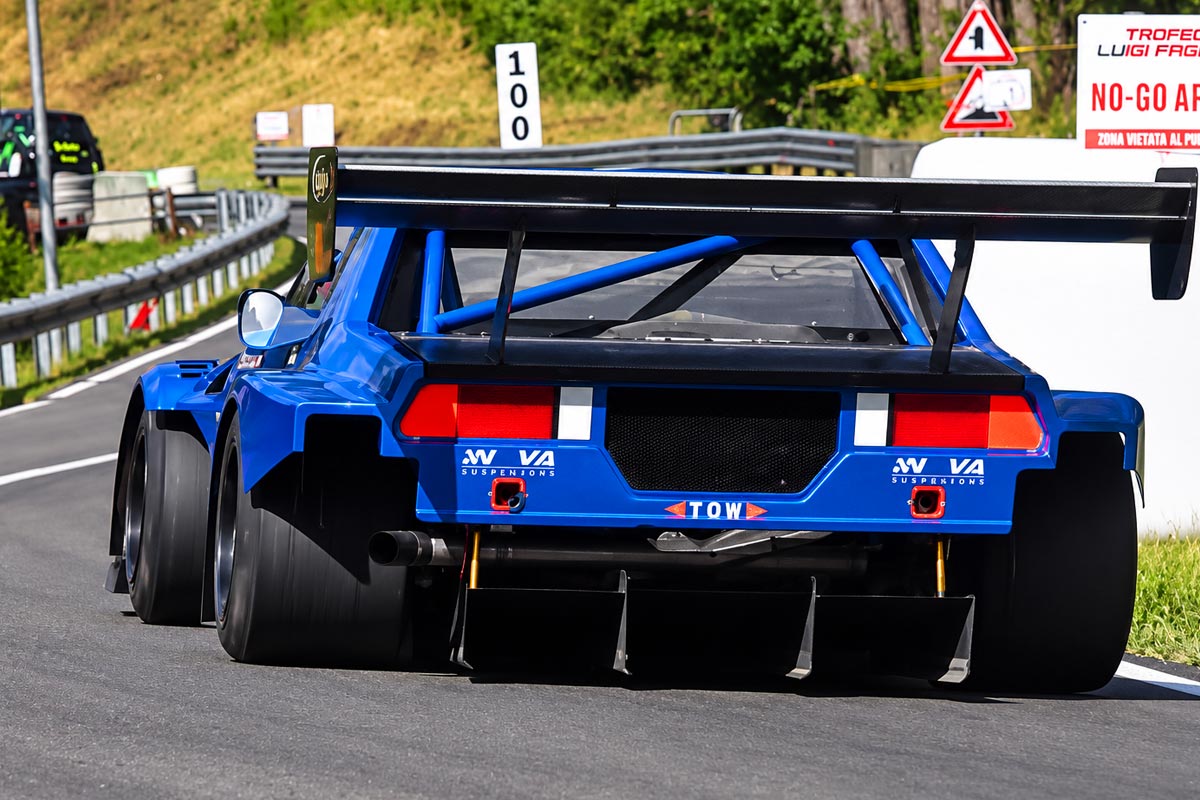
Hill climbing is undoubtedly the last type of motorsport championship where the passion and ingenuity of mechanical artisans and wizards can still run wild, producing one-of-a-kind prototypes. Unveiled in Turin in 1972 as a small, mid-engine targa sports car, the Fiat X1/9 was intended to be a relatively affordable car for driving pleasure. More than fifty years later, Manuel Dondi’s car is a formidable competition prototype in hillclimb races across Italy and Europe. It is the result of a long history, but also a family saga for this car, nicknamed “Barra9”.
When driver Manuel Dondi or the tuners Leo and Fabio Cavallini—father and son—talk about their X1/9-based monster, they very often call it «La Barra9» or «Miss X,» but be careful not to confuse it with that other nickname…)
An early career in slalom
The first thing that sets Dondi’s X1/9 apart is its racing history. Although it has been associated with hill climbs for about a decade, its racing career goes back even further. The Dondi family has been using it in slalom races for a long time, since the early 2000s. In 2001, Manuel Dondi won the Italian Under-23 junior title, the Prototipi class title in 2004, and then the Italian Open Slalom Championship in 2005.
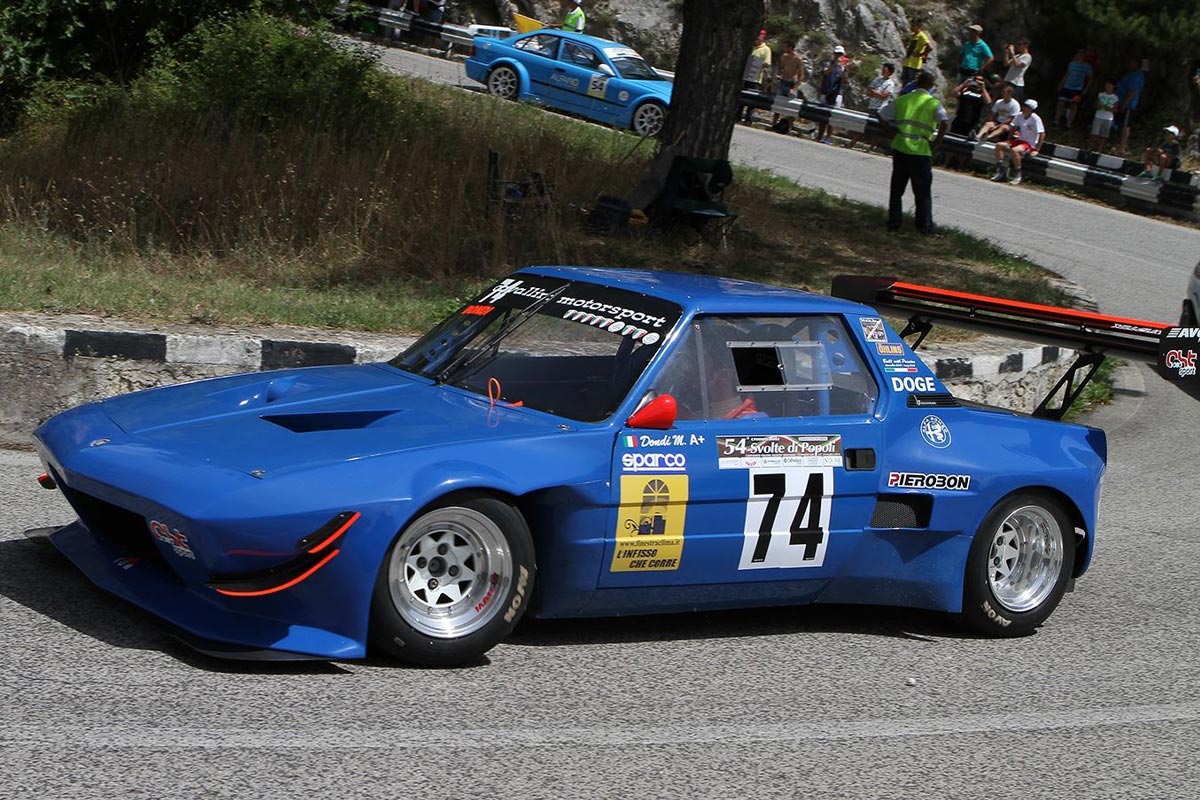
One event would play a significant role in this development. In 2008, Dondi discovered the Lima-Abetone climb behind the wheel of a Predator (small prototypes powered by motorcycle engines, very popular in Italy) and realized that he now wanted to take on the mountains. Slalom racing would prove useful to him, as this «driving at the limit» training—made possible by the light weight and responsiveness of a single-seater—would allow him to develop an aggressive and precise driving style.
In 2014, Manuel found himself faced with a choice: continue racing the X1/9 in slaloms or take on the challenge of the Italian Hill Climb Championship. Initially, the plan was to enter the Barra9 in the classic historic championship, but Leo Cavallini advised him to try his hand at the modern championship. The idea seemed almost unreasonable at the time. The E2SH class featured much newer cars—turbocharged, all-wheel-drive vehicles with massive power and backed by substantial budgets—such as the former DTM Alfa Romeo 155 V6s that had been repurposed for hillclimbing. His reasoning, however, is simple: the X1/9 has enough power, very little weight, and, above all, remarkable chassis balance.
A heavily modified X1/9
The car is often called the «Fiat X1/9 Dallara» because the famous manufacturer, known for its single-seaters, did in fact develop a spectacular X1/9 race car in 1975, l'Icsunonove, intended for Group 5. But Dondi's car isn't just an old Dallara Icsunonove pulled out of a museum.
The Barra9 is built on a specialized compact chassis that has been extensively modified over the years. Dondi built a significant portion of the car, including its roll cage. The original central structure of the X1/9, which lacked a continuous roof, did not inspire enough confidence for modern competition. He therefore built a particularly robust roll cage, using the maximum dimensions allowed by the regulations.
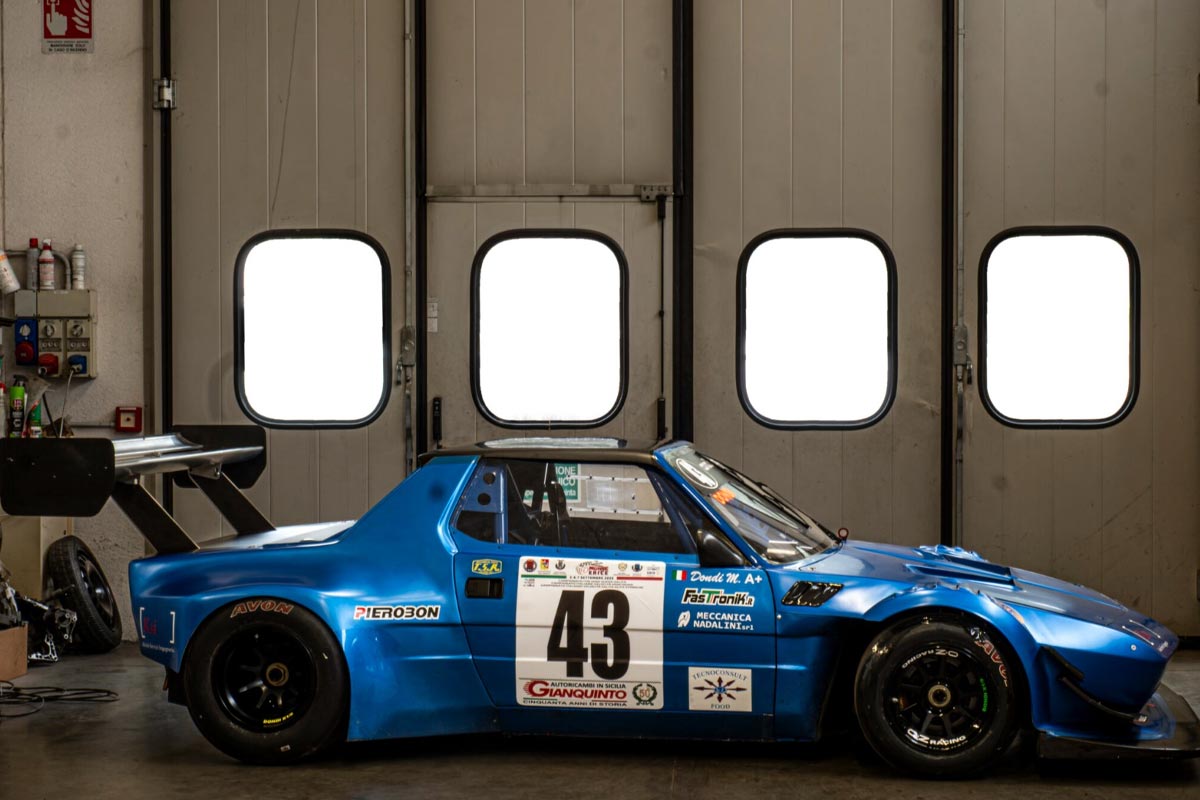
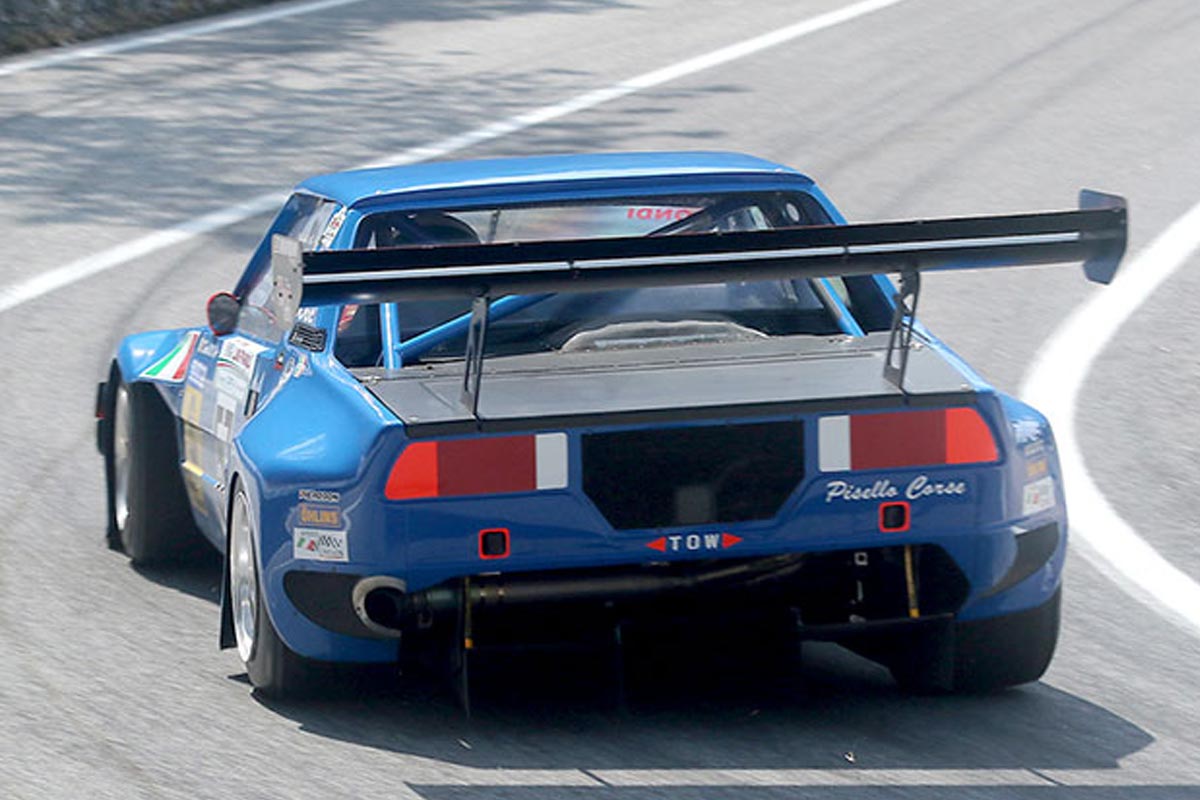
The car retains the fundamental philosophy of the X1/9, with a transversely mounted mid-rear engine and rear-wheel drive, which allows the weight to be concentrated in the center of the car and maintains great agility through slow-speed sequences. The body has little in common with that of a street-legal X1/9. The fenders have been significantly widened, the aerodynamics, underbody, and diffuser have been upgraded, and the car features a large rear wing. Long made of metal, the body has recently incorporated carbon fiber components to further reduce weight. Depending on the configuration and regulations, this weight ranges from 600 to 670 kg for European FIA races, with additional ballast compared to its Italian configuration.
The heart of the Barra9: an Alfa Romeo race engine!
The original X1/9 had a 1.4L Fiat engine, as did the Icsunonove by Dallara. The Dondi still uses a 4-cylinder engine, but one with a more distinguished pedigree: it’s a naturally aspirated 2-liter Alfa Romeo D2 Superturismo engine, which powered, in the 1990s, Alfa Romeo 155 and above all Alfa Romeo 156 in the 2-liter supertouring class.
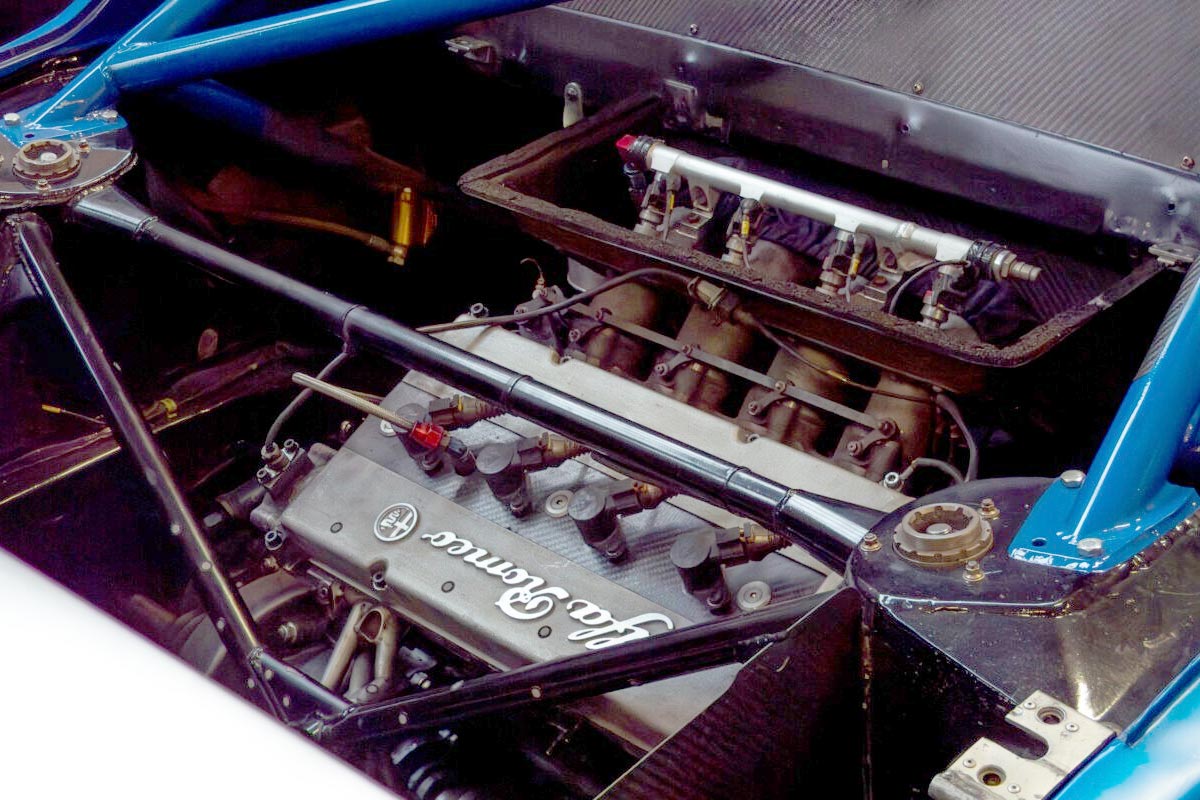
The official Alfa Romeo 156 Superturismo, which triumphed in the European, Italian, and Spanish championships, was powered by a 2.0-liter Twin Spark four-cylinder engine with a specially designed 16-valve cylinder head. The race version produced approximately 310 ch at 8,250 rpm, with a dry sump system and a sequential transmission. The Barra9 uses an evolution of this architecture, with power output remaining around 300 to 320 ch, but a maximum rpm close to 9,000 tr/min.
While the engine hasn’t gained any power, it was specifically tuned by Léo Cavallini’s workshop, founded in 1978 in Poggio Rusco. Cavallini has extensive experience with Alfa Romeo engines spanning half a century. The work focused on maximum power but, above all, on how that power is delivered. Over the course of its development, the engine has undergone various overhauls, intake optimizations, and fine-tuning.
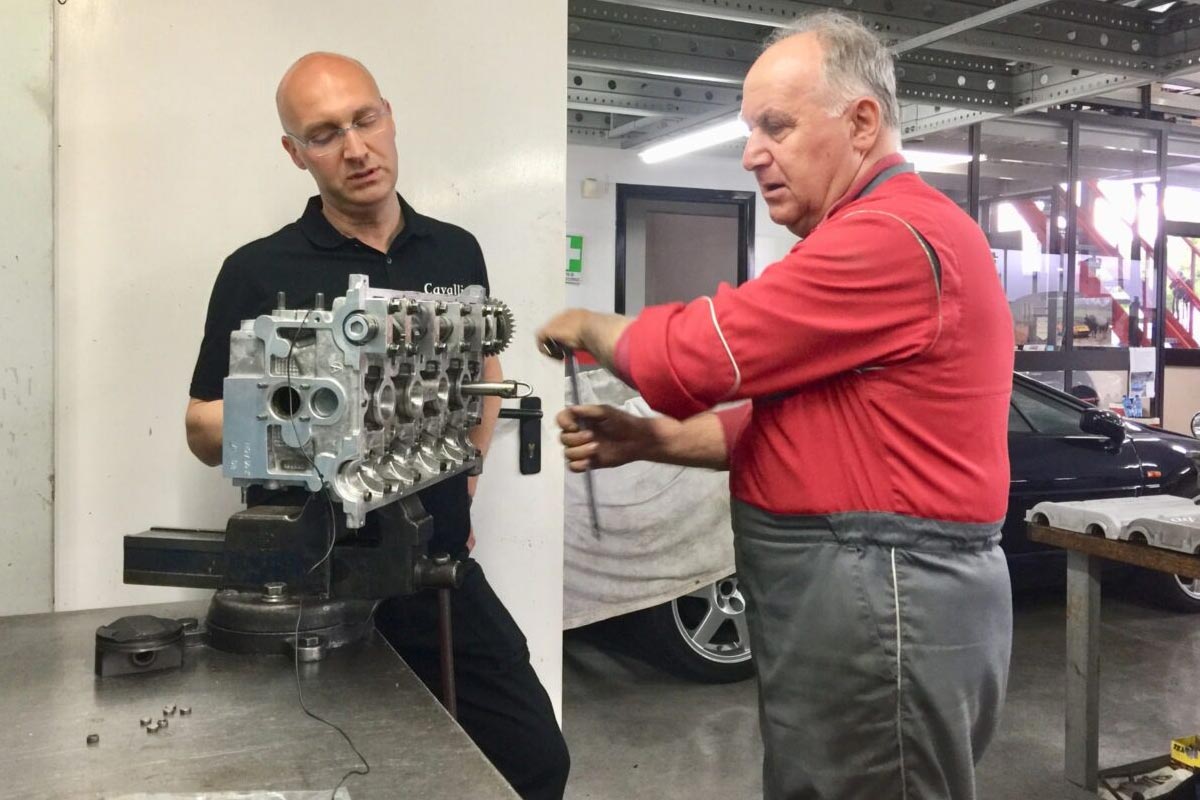
In 2021, following an engine problem at Vallecamonica, a second D2 engine was prepared as a replacement. In 2022, the Cavallinis thus had two Alfa D2 engines that were virtually identical.
A Successful Transition to Mountain Life
The transition to hill climbs took place around 2015, with appearances in the E2-SH 2000 class, which allowed for the entry of “silhouette” prototypes. 2016 marked the real turning point. In its first full season in the CIVM, the X1/9 immediately became a benchmark, securing six class victories and the Italian championship title. This performance validated the car’s philosophy: it didn’t need extravagant power to beat much more modern machines. The X1/9’s agility, its light weight, and Dondi’s ability to quickly adapt the setup to each track became its main strengths.
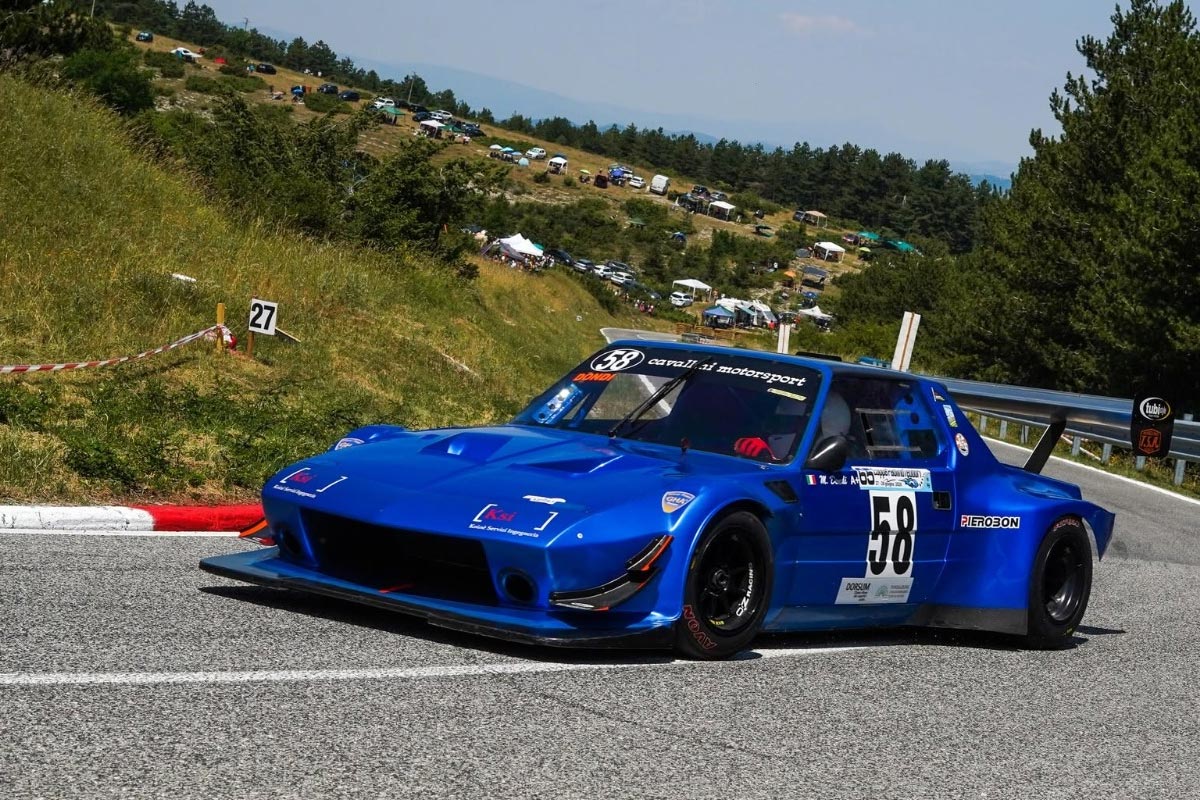
In 2017, his dominance continued. Dondi won the Verzegnis-Sella Chianzutan, then the Morano-Campotenese, and most notably the Trento-Bondone. In his first appearance in this legendary 17.3-kilometer climb, he won the E2SH and finished fourteenth overall. The season ended with a second consecutive Italian title. He followed that up in 2018, securing his third consecutive Italian title after the Monte Erice climb.
A legendary feat in the world of hill climbing
The 2019 season saw Barra9 achieve its most famous feat during the renowned Trento-Bondone climb, which is part of the European Championship. After two races that hadn’t fully satisfied Dondi, the team arrived with a thoroughly overhauled car. The work focused on the wheels, aerodynamics, brakes, suspension settings, and the engine. In particular, new center nuts improved rear-end handling, while the brake air intakes were enlarged. The Alfa D2 engine has been retuned and is now more responsive. The rear wing was also modified before the race.
The result is spectacular. Dondi clocked 10’13”68, which is about 24 seconds faster than his 2017 time. He also broke the record for covered cars in his class, which had previously been held by the late Georg Plasa, a legendary figure in European hill climbing. The German had set that record with a 600-horsepower BMW 320 Judd V8 prototype!
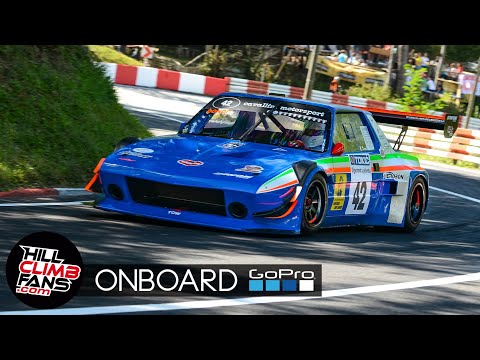
Agility: His Secret Weapon
The race itself was also memorable. A violent thunderstorm broke out after the first cars had passed. Dondi, who had started before the rain began, thus benefited from a dry track, while many competitors had to contend with the downpour. This completely shook up the overall standings. The king of Italian hill climbing, Simone Faggioli, won the race in 9’56”19, but Dondi finished second overall, ahead of a host of prototypes and much more powerful cars.
After a 2020 season disrupted by COVID-19 and a 2021 season cut short due to mechanical issues, 2022 marks a new chapter with participation in several rounds of the European Hillclimb Championship. The car must therefore be adapted to comply with FIA regulations and be fitted with ballast, bringing its weight to 670 kg. Despite this disadvantage, it remains extremely competitive.
At the 2022 Trento-Bondone race, the data shows that the car is at times traveling at a faster pace than its 2019 record. The top speed remains below 210 km/h, but it compensates for its relatively low top speed with its agility and efficiency on winding sections. In some European races, Dondi even manages to beat significantly more powerful cars in the closed-body car categories.
An elderly woman who refuses to lay down her arms
The Barra9 isn’t in full-time competition every season; Dondi alternates between periods of racing and development. In 2023, its return to the CIVM was marked by an appearance in the Trofeo Fagioli practice sessions, while another X1/9—driven by Gianluca Ticci—began competing in the E2SH series.
In 2024, she returned to winning ways in Gubbio and then at the Trofeo Fagioli, winning the E2SH ahead of the usual contenders in the group. At Monte Erice, the final round of the 2025 season, Manuel Dondi once again clinched the Italian title—his fourth Italian mountain title, following those in 2016, 2017, and 2018.
What's most striking is that the competition has changed dramatically since the Barra9 first debuted. The E2SH now features models such as the’Alfa Romeo 4C Marco Gramenzi’s MG-AR Furore or Rosario Iaquinta’s Lamborghini Huracán ST Evo. Yet the little Fiat continues to hold its own at the front of the pack.
In 2026, the X1/9 is still going strong. Manuel Dondi crushed the competition with a string of outright victories at the Coppa Selva di Fasano, the Coppa Paolino Teodori, the Trofeo Luigi Fagioli, and finally at the legendary Coppa Nissena in Sicily, held in early September, where he won by more than 14 seconds over the competition. Dondi won the E2SH class with a time of 2’24”58, ahead of Marco Gramenzi and his MG-AR 4C, which appears less reliable and less agile, but also ahead of Kadija MOURTAJI’s Ferrari 296 Challenge, which was competing in a different category and posted a time of 2’25″08.
A car that never stops evolving
What's even more incredible is that the car continues to evolve technologically, 25 years after its debut! Tubi Style, an Italian exhaust specialist based in Maranello, has partnered with tuning firm Cavallini to develop a new complete exhaust system and headers designed to reduce weight and optimize performance. Two manifold configurations are available: a 4-2-1 design, which prioritizes a fuller torque curve at mid-range RPMs, and a 4-1 design, intended to maximize power at high RPMs. They are made of Inconel, an aerospace-grade material used in F1 for exhaust systems. The goal is not to gain horsepower at any cost, as the naturally aspirated engine is near its technical limit. The team is therefore focusing on the details: weight, aerodynamics, exhaust, balance, suspension, cooling, and overall efficiency.
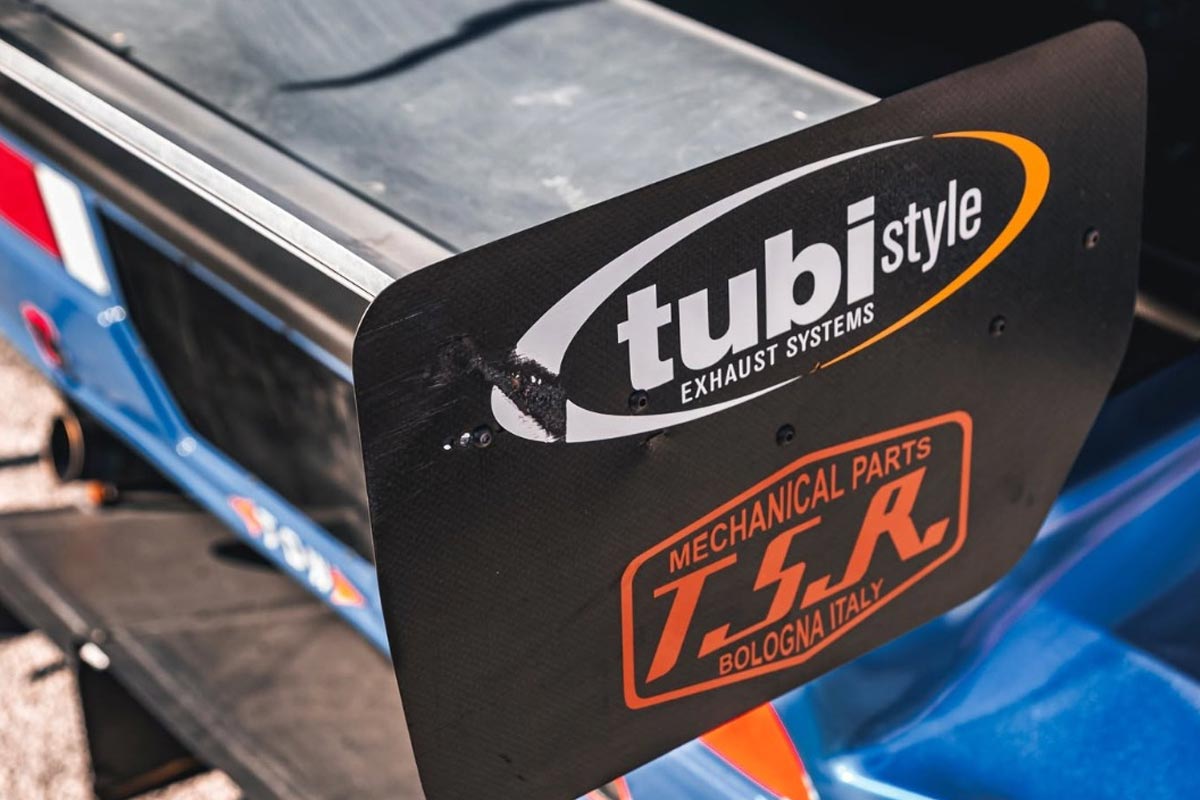
Looking back on this quarter-century of competition, the record is exceptional: Italian slalom titles, four Italian hill climb titles in the E2SH class, numerous class victories, successes on the most prestigious CIVM courses, a record at the Trento-Bondone, and even an overall second-place finish in the 2019 edition. Beneath this now-legendary silhouette, designed over 50 years ago, lies a transformed machine: a race car weighing barely a few hundred kilograms, powered by an Alfa Romeo four-cylinder engine capable of revving to nearly 9,000 rpm, which made history in 1990s supertouring. In short, this Barra9 is the epitome of Italian craftsmanship!

 English
  French
  Italian
  Spanish
  German
  Japanese
  Dutch
Dutch