

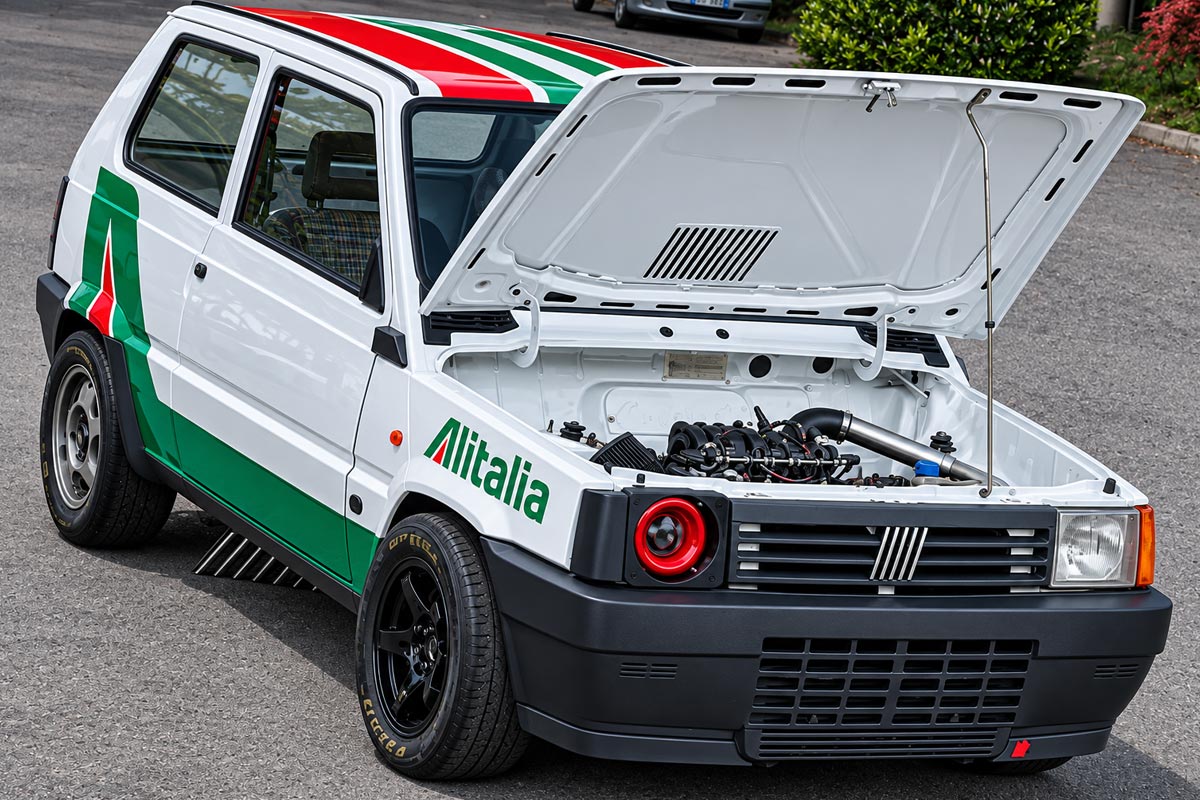
Behind this transformation is Concret3, an Italian content creator with a passion for mechanics and car tuning. The Pandoro has become one of his signature projects—a mechanical adventure followed episode by episode by a community of enthusiasts.
A little Panda with plenty of ambition
The starting point is a first-generation Fiat Panda, a popular car whose mechanical simplicity and light weight are tremendous assets for anyone looking to build a small sports car. But rather than performing an «engine swap» to something completely outlandish, Concret3 retained an engine from the iconic FIRE family as the mechanical foundation, while thoroughly transforming it.
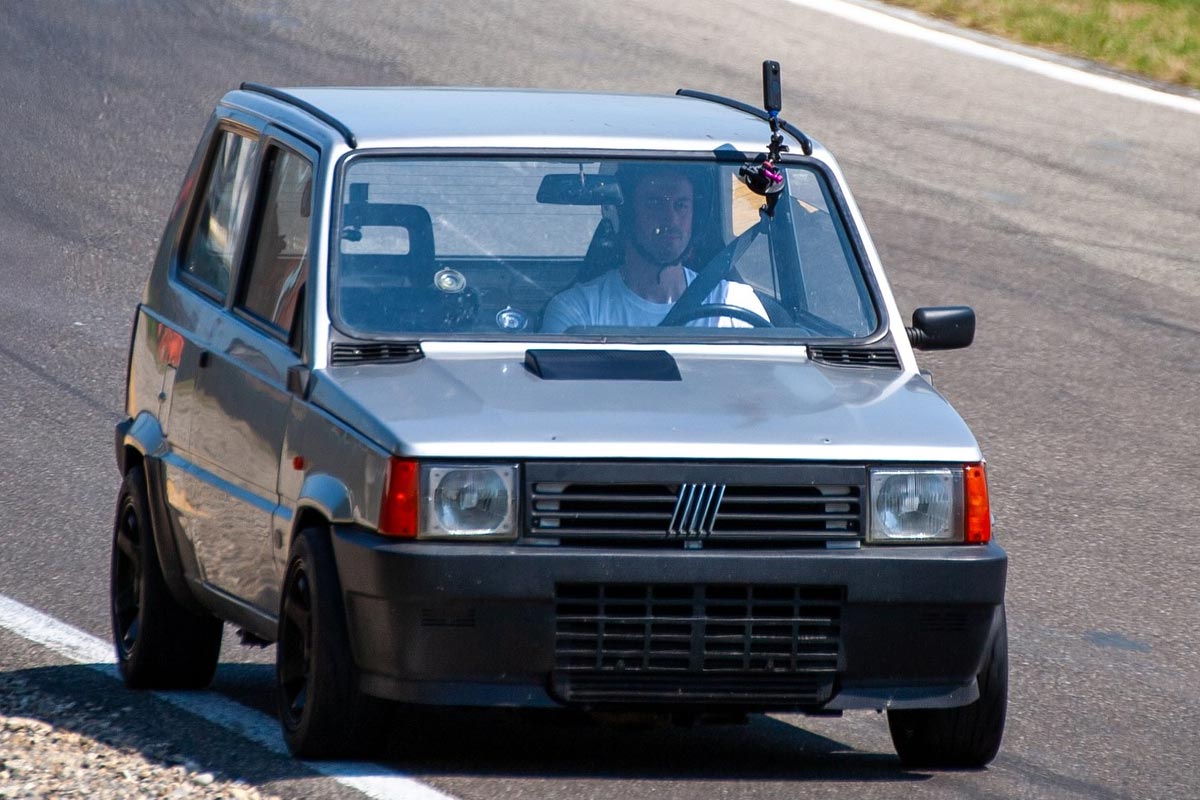
The engine is a 1.4-liter, 8-valve FIRE engine from the Fiat Grande Punto, in its naturally aspirated configuration with a displacement of 1,368 cm³ and 77 HP. This is therefore not the turbocharged T-Jet engine found in certain sport versions of the Fiat group, but rather a mass-produced naturally aspirated engine, completely redesigned to accommodate forced induction. The choice may seem surprising, but the idea is to build a custom powertrain by intelligently leveraging the Italian manufacturer’s parts inventory and, above all, by keeping a small engine that stays true to the spirit of the Panda.
A 1.4L ‘FIRE’ engine that’s unrecognizable
Since this engine had to withstand high boost pressure while maintaining a relatively simple design, significant modifications were obviously necessary. The initial tests were very difficult, with the engine refusing to start for dozens of cumulative hours of testing, draining several batteries due to complex ignition settings in the programmable engine management system. The constant pursuit of performance put the engine through its paces, leading in particular to engine failure (loss of compression in three cylinders) as well as heavy smoke emissions during the first test runs, forcing a redesign of the turbocharger and exhaust systems.
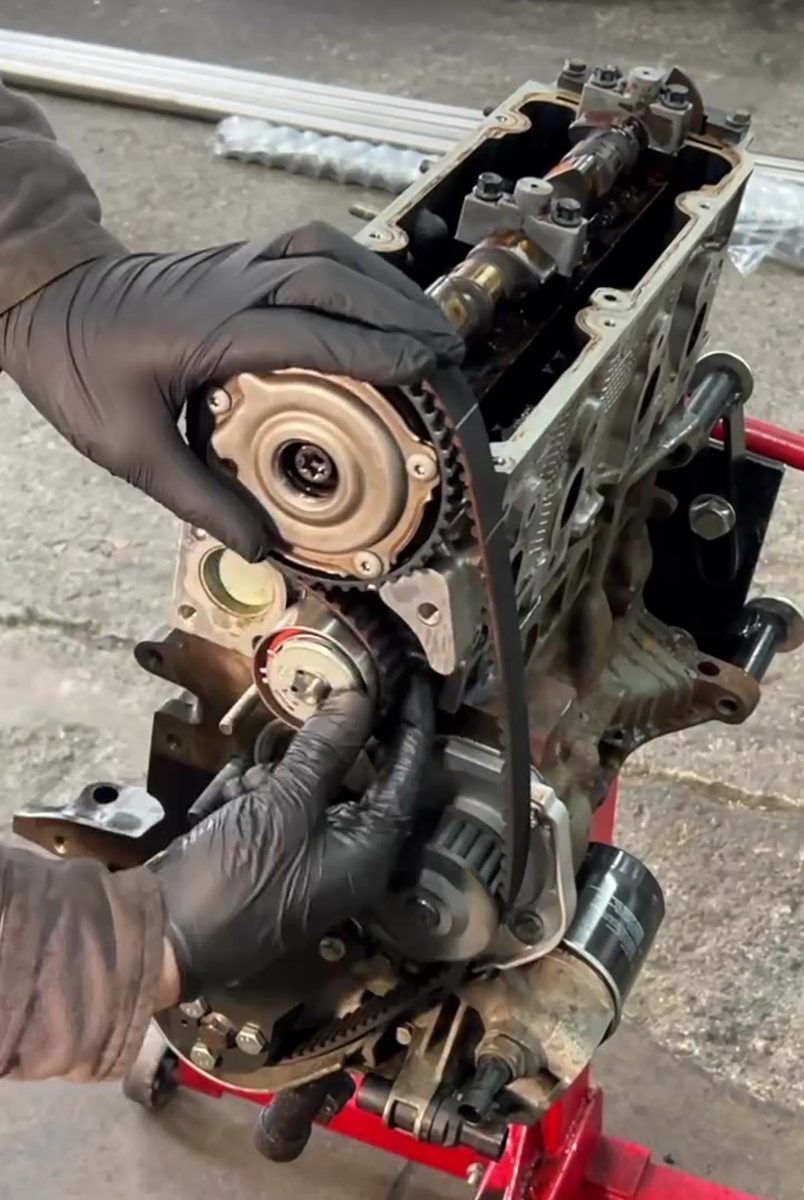
The limitations of the original naturally aspirated engine quickly became apparent, leading Concret3 to reinforce the internal components using parts from the 1.4 T-Jet. The pistons and connecting rods from this turbocharged engine were thus used to rebuild the lower half of the engine, with specialized machining to adapt them to the geometry of the FIRE 8-valve engine.
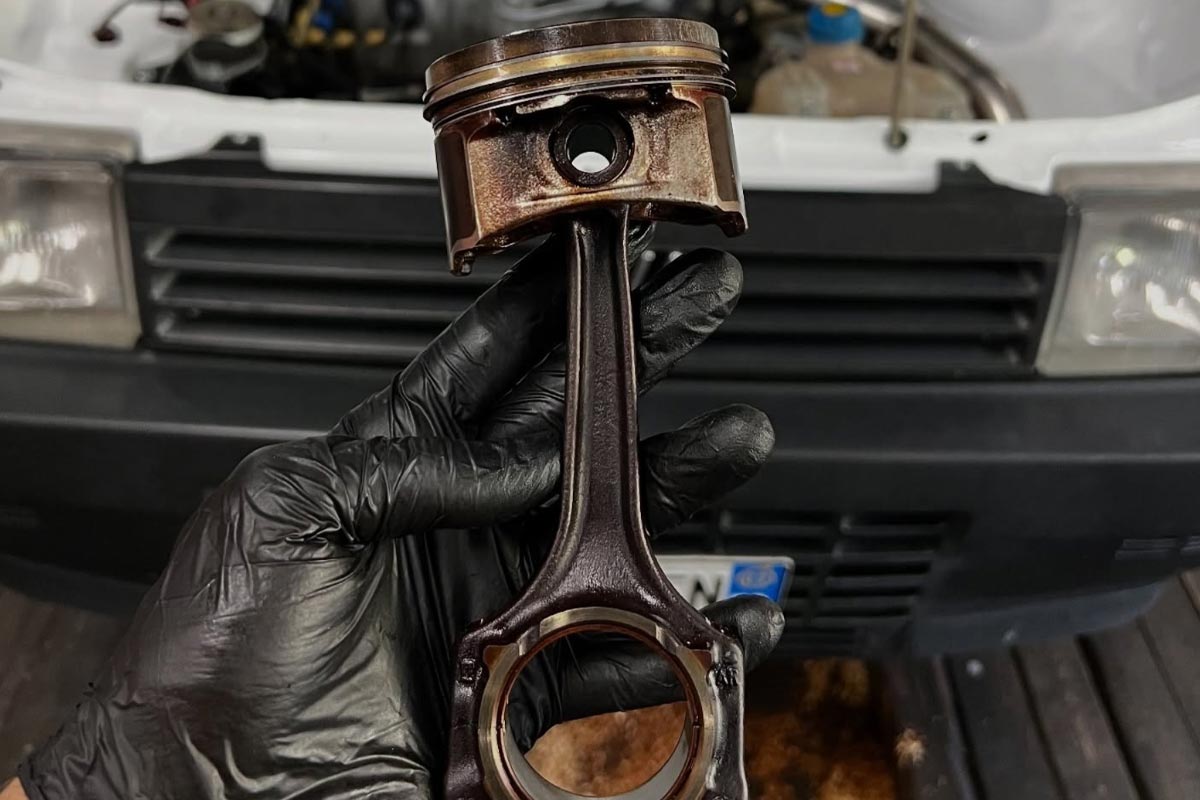
Another key parameter for converting from naturally aspirated to turbocharged: the compression ratio. The Grande Punto’s FIRE 1.4 engine originally had a compression ratio of 11:1. Concret3 explains that they lowered it slightly to about 10:1. This modification is intended to make the engine’s operation more compatible with high boost pressures, particularly by limiting the risk of knocking. The original eight-valve cylinder head, meanwhile, was retained, with extensive work done on the intake and exhaust ports, the valves, and the adjustments necessary to optimize airflow.
A Garrett to give the little four-cylinder a boost
To provide turbocharging, Concret3 selected a Garrett GBC20-300 turbocharger from the manufacturer’s Boost Club Line. This compact model has an operating range specified by Garrett that aligns well with the project’s goals.
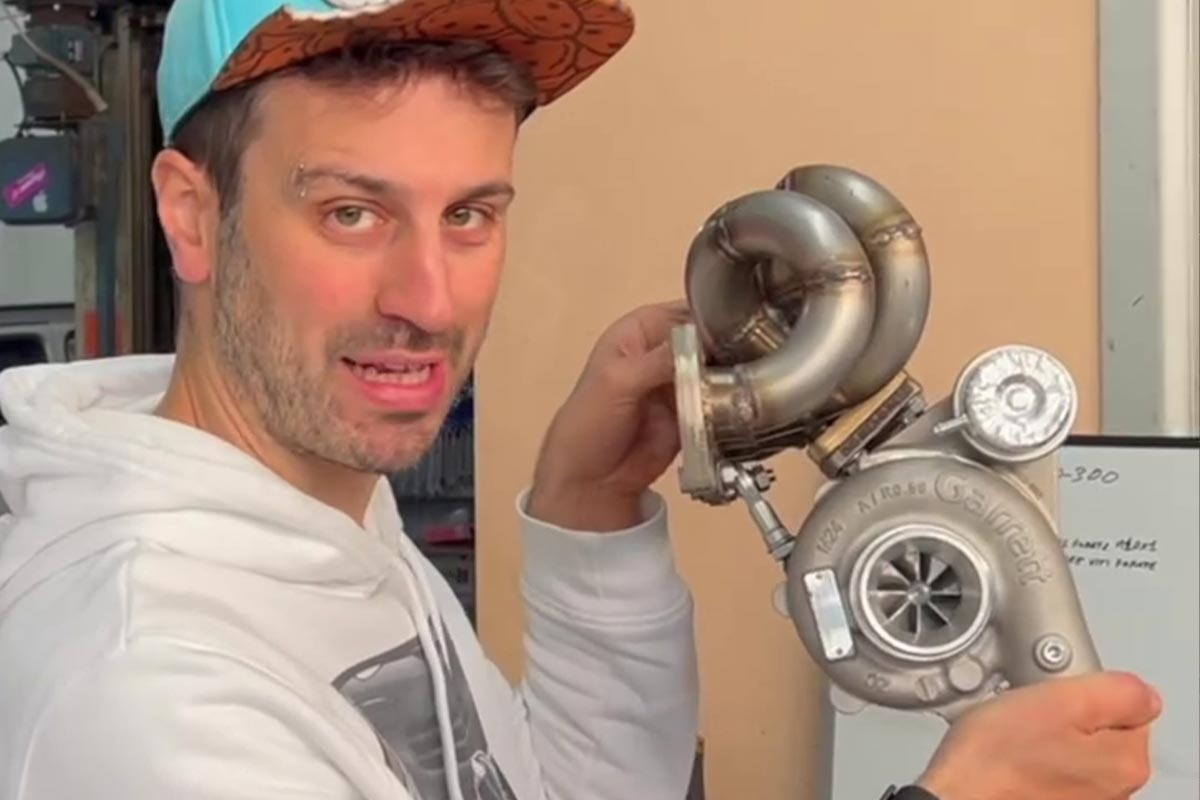
Installing it required the fabrication of a custom tubular exhaust manifold made of stainless steel. The exhaust system and downpipe were also designed specifically for the car. The ignition system uses coils from BMW.
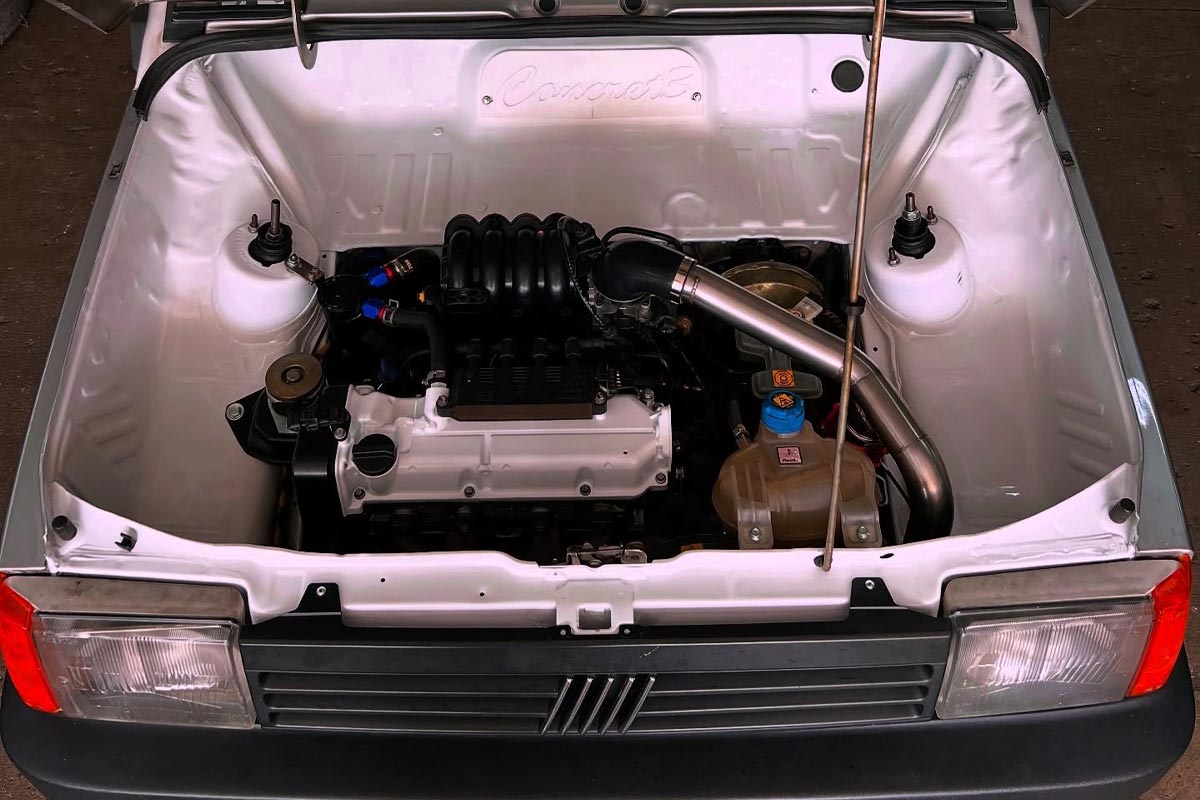
The results obtained are particularly impressive. The first configuration achieved on the test bench was approximately 200 to 205 HP and 300 Nm of torque, with a boost pressure exceeding two bars. Keep in mind that the stock engine produced only 77 HP and 115 Nm. Power has therefore increased by a factor of more than 2.6, while torque has also risen significantly.
With a reported weight of around 700 kg, the power-to-weight ratio is approximately 3.4 kg/ch. The performance figures recorded during testing live up to the expectations set by this modification. The car accelerates from 100 to 200 km/h in about 12 seconds.
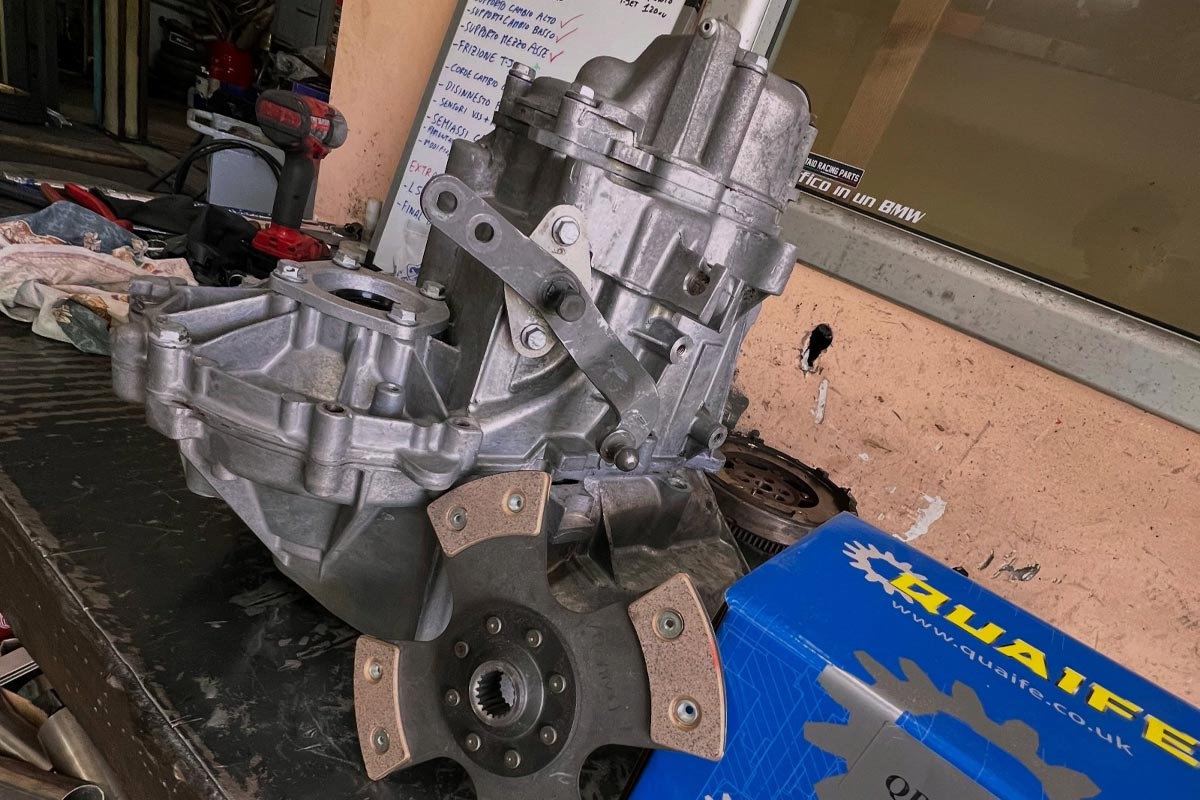
With 300 Nm of torque sent solely to the front wheels, the transmission and drivetrain are obviously major challenges. The stock transmission was not designed to handle such stresses. Concret3 therefore opted for an Abarth C510 transmission, paired with gear ratios tailored to the project. The assembly features a reinforced clutch with a copper disc, as well as a modified hydraulic clutch actuator.
A small but sturdy frame
The work doesn’t stop there. To properly harness the power and minimize drive loss, a Quaife mechanical limited-slip differential was installed. In a small car with a short wheelbase, load transfer during acceleration naturally tends to take weight off the front wheels. Without a suitable differential, much of the power could result in wheel spin rather than acceleration. The limited-slip differential is therefore an essential component of this modification, just as much as the reinforced transmission.
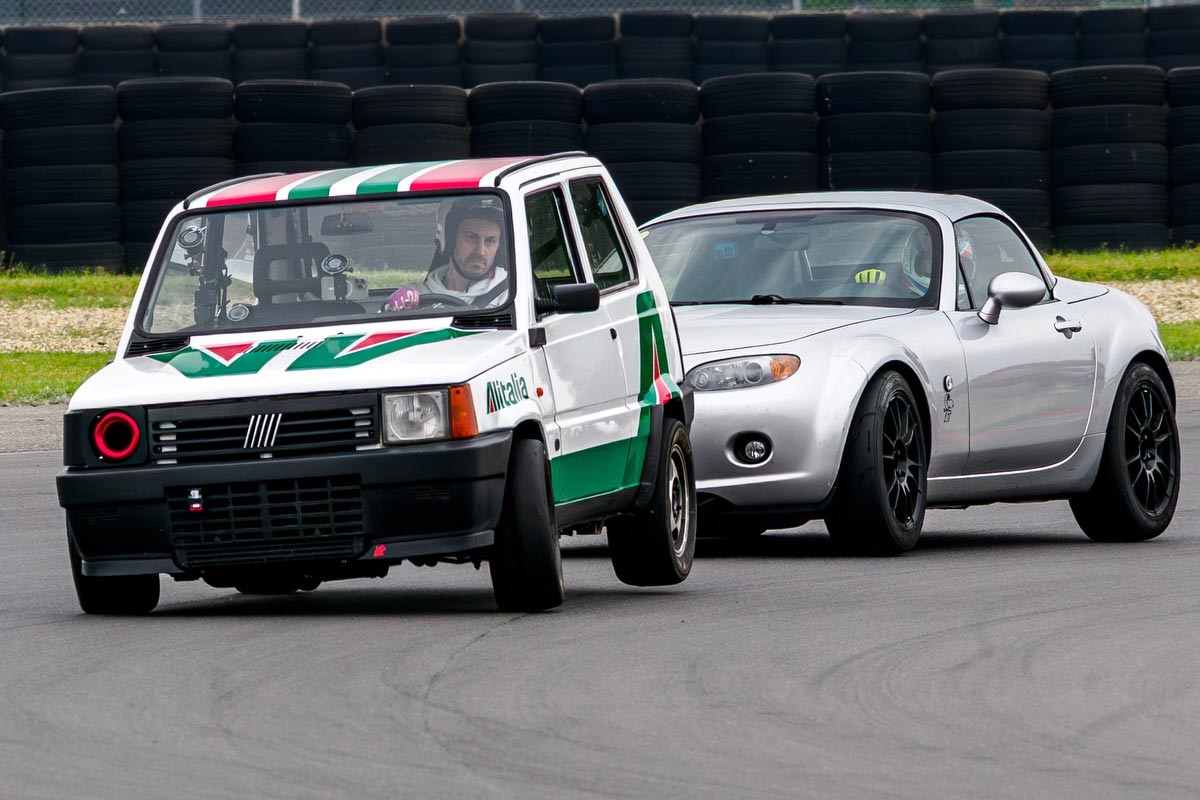
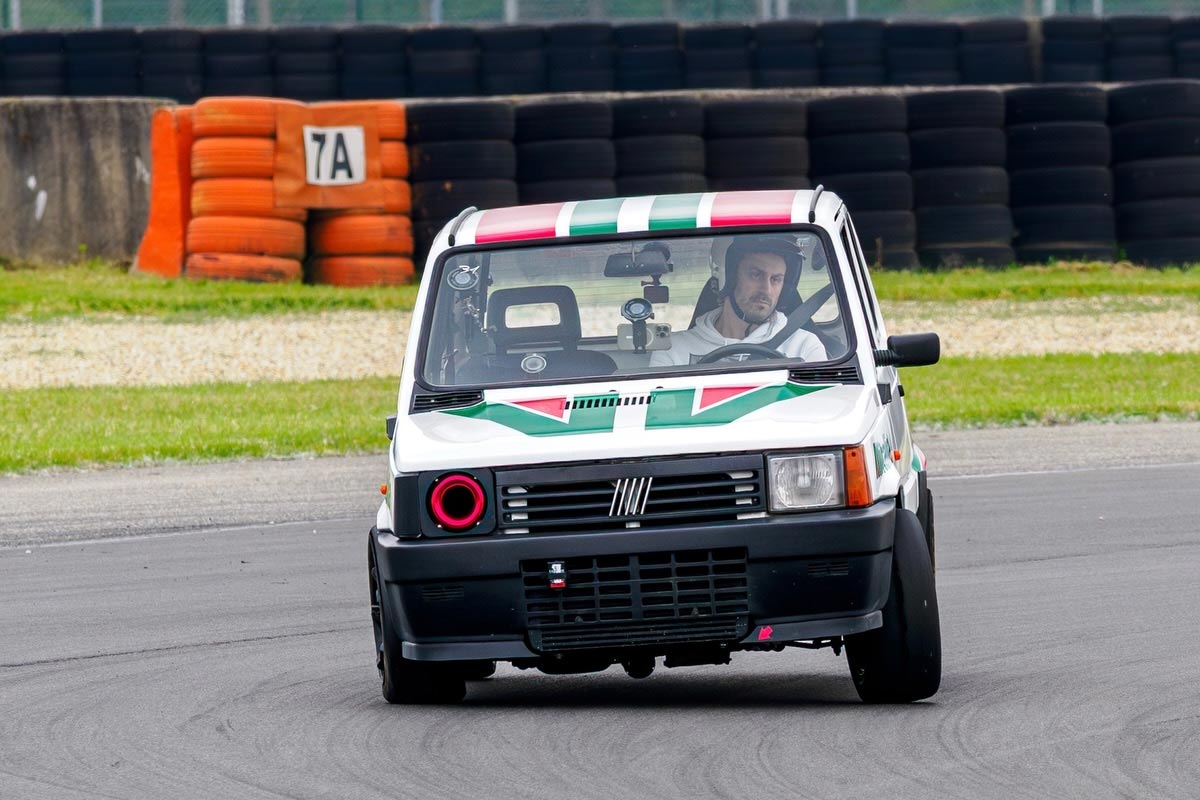
The suspension system has also been thoroughly redesigned. The modifications include threaded shock absorbers, modified suspension components, polyurethane bushings, and Uniball ball-joint mounts. These Uniball ball-joint mounts help minimize unwanted joint deflection and provide more precise handling.
The braking system has been upgraded with components sourced from other Fiat Group models to provide braking capacity suited to the car’s performance and track use. The wheels are fitted with Nankang semi-slick tires mounted on special rims. The goal, of course, is to find the best balance between traction, lateral grip, and handling precision.
A dress that pays tribute to an Italian legend
The «Pandoro» has already made a splash at track days in Italy, notably at the Tazio Nuvolari circuit near Pavia. But despite its name—which evokes a delicious cake—this supercharged Panda probably wouldn’t be quite as endearing without its striking appearance. The little Fiat sports a livery inspired by the legendary Lancia Stratos HF Alitalia cars that made their mark on the World Rally Championship in the 1970s. The white, red, and green of the legendary Italian airline, combined with the distinctive stripes and lettering, immediately evoke the golden age of Italian rallying. It’s hard not to think of Sandro Munari’s Stratos, the exploits of the official Lancia team, and the world titles won by the brand in 1974, 1975, and 1976.
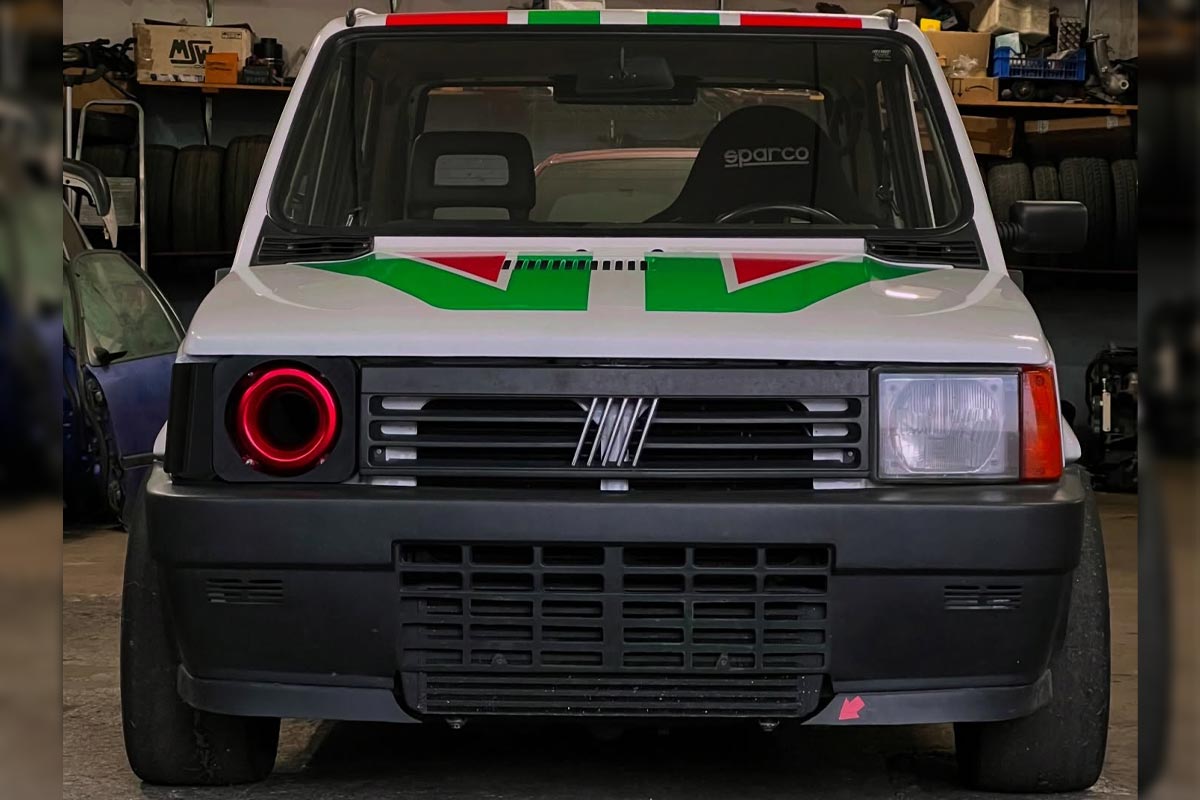
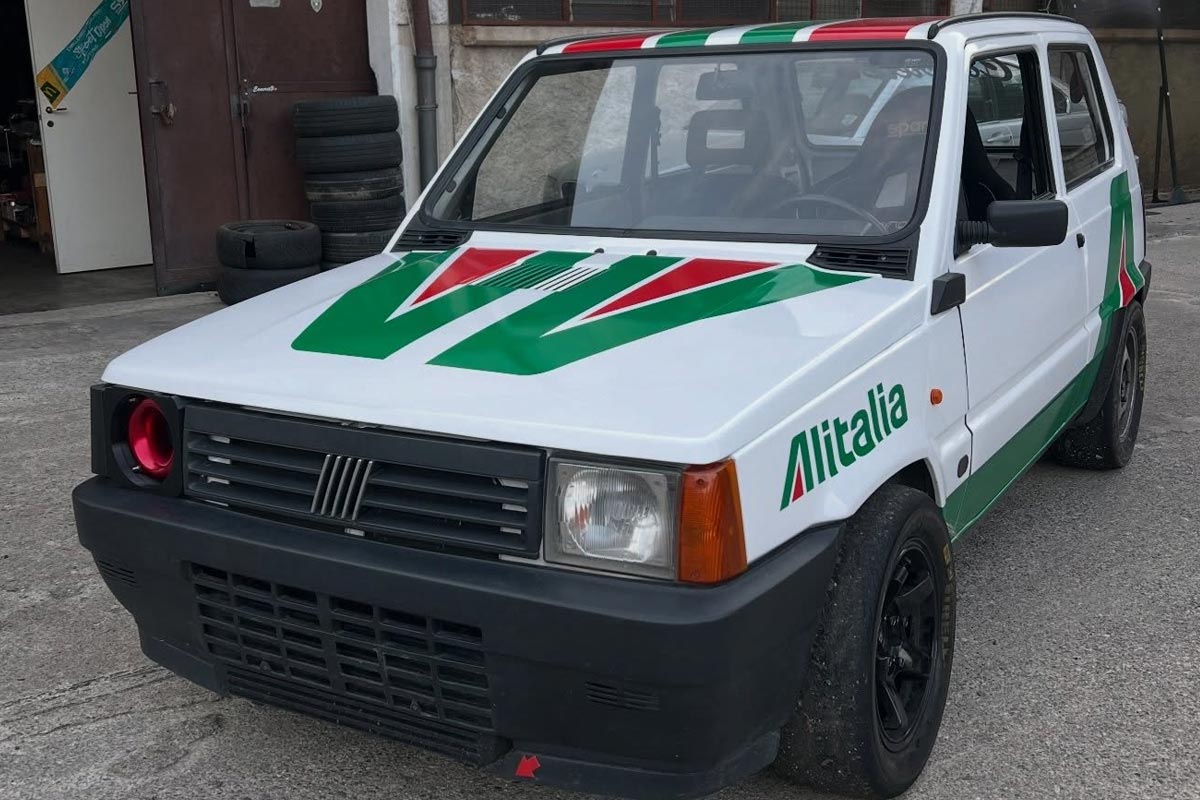
The contrast is particularly amusing: on one hand, a popular little Panda, originally designed for simplicity and economy; on the other, a design directly inspired by one of the most legendary rally cars in history. With its 205 HP 1.4-liter turbocharged FIRE engine, 300 Nm of torque, Abarth transmission, Quaife differential, and revised chassis, the Pandoro is a truly unique prototype based on the Panda. It certainly lives up to its name: a little Italian specialty, surprising on the inside, and one that leaves no one indifferent!

 English
 French
 Italian
 Spanish
 German
 Japanese
 Dutch