

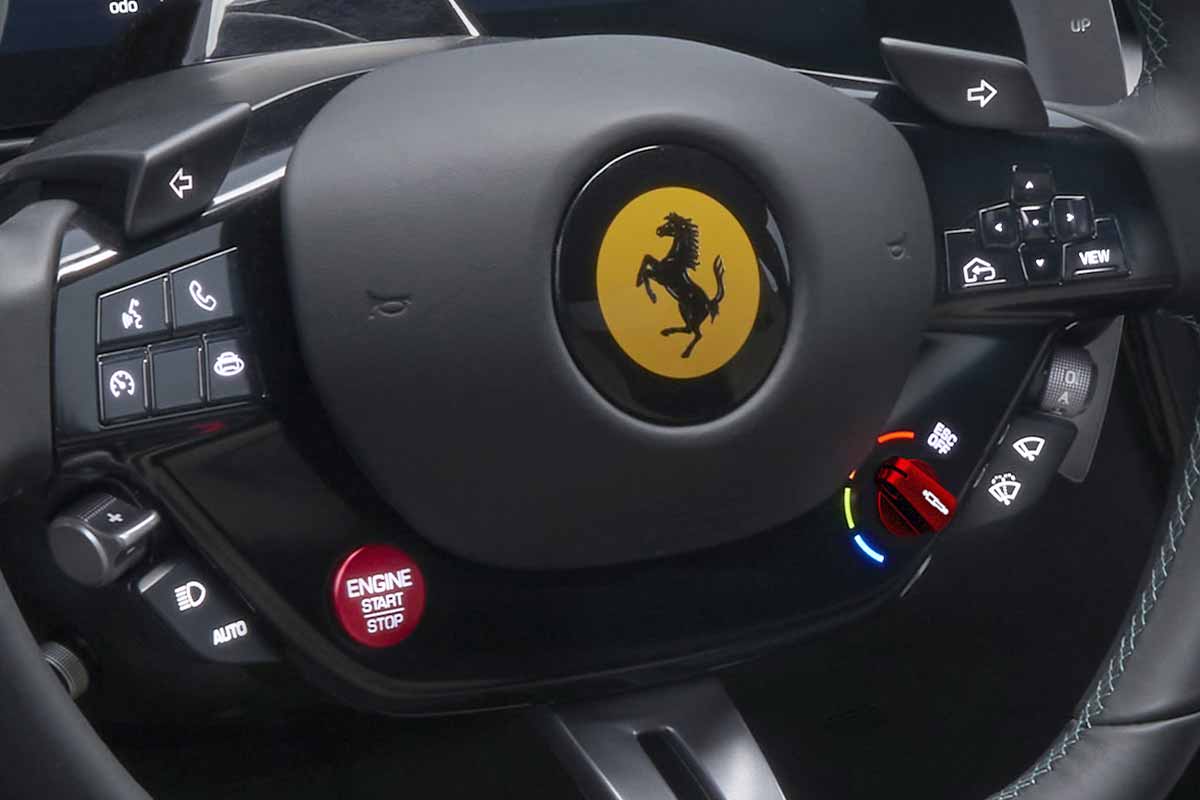
There are sometimes little stories that speak volumes about the tensions between a brand and its network. And this one, about Ferrari and its famous touch-sensitive buttons, is a perfect example. For while the Italian brand has officially acknowledged that it made a mistake by reverting to physical buttons, clearly not everyone was supposed to say so... so openly.
When Ferrari recognized its mistake
Almost a year ago, Ferrari made a major change of direction. After introducing haptic controls on models such as the Ferrari SF90 Stradale, the Ferrari 296 GTB and the Ferrari 12Cilindri, the brand was backtracking.
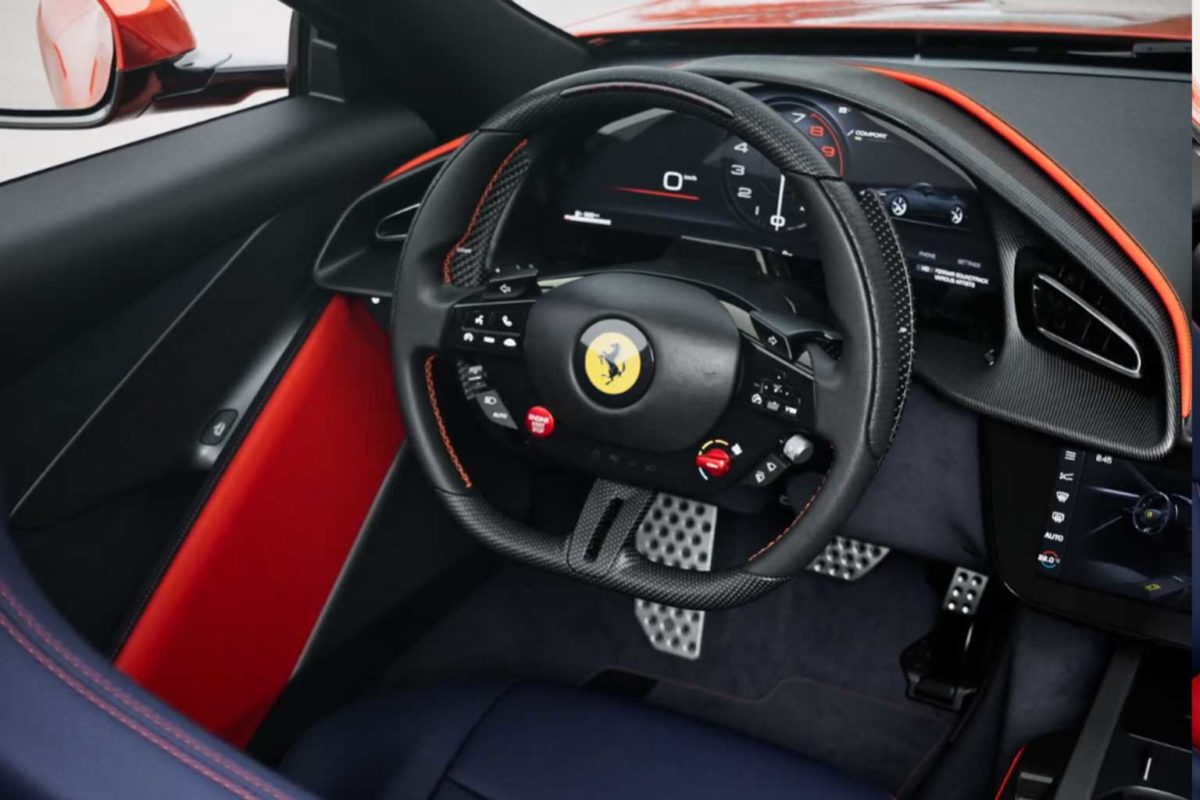
The initial idea seemed appealing: to modernize the driving experience with tactile surfaces that were supposed to be intuitive. But in reality, criticism was rife. Involuntary activations, lack of precision, frustration behind the wheel... even Ferrari finally admitted that its customers were not convinced. So, with the arrival of new models like the Ferrari Amalfi, the manufacturer reintroduced physical buttons. Better still, a backwards-compatible solution was mooted, enabling owners of recent models to replace their touch interface without changing the entire steering wheel. A rare admission in the automotive industry.
A dealer who goes too far?
Until now, everything seemed to be under control. But in early 2026, an American dealer decided to speed things up. Based in Atlanta, it posted a very direct communication on Facebook and Instagram: owners of Ferrari Purosangue or 12Cilindri could now replace their touch controls with physical buttons from the new models.
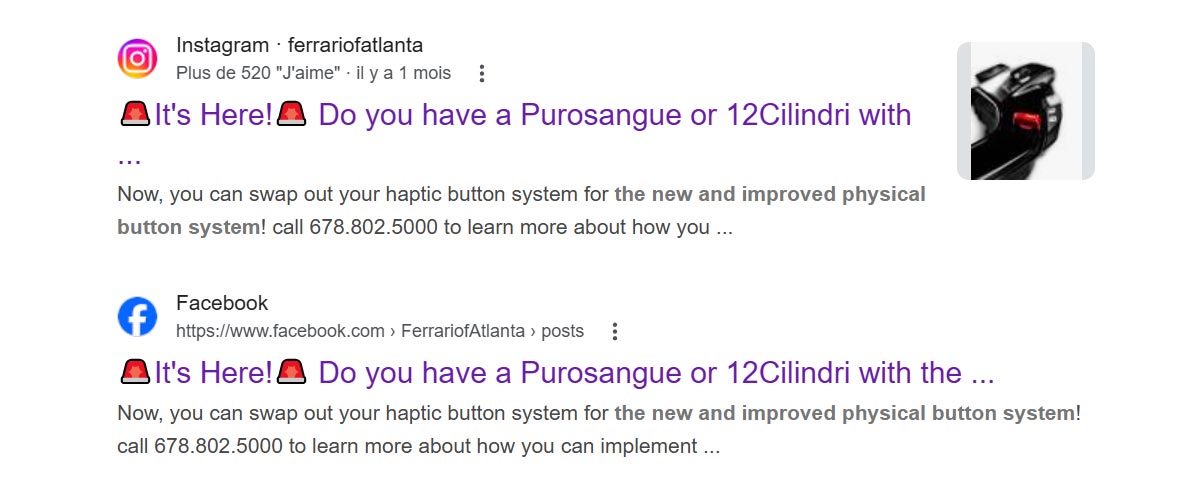
The message was clear, almost provocative for a brand like Ferrari: “You can now replace your haptic button system with the new and improved physical button system!”
This promise was accompanied by an enthusiastic, almost commercial tone, which emphasized what many people are thinking: yes, physical buttons are better.
A quickly erased communication
The detail that changes everything? One month later, these publications simply disappeared. No official explanation from either the dealer or Ferrari. But it's hard not to see this as an internal refocusing.

The message behind this initiative was a delicate one: to publicly acknowledge that a key element of the interface of a modern Ferrari, on models costing several hundred thousand euros, could be perceived as a flaw... and corrected in return for payment. It's a fact that Ferrari has admitted in part, but always with controlled communication, focused on evolution and listening to customers, never on a blatant “error”.
Between brand image and customer reality
That's where the ambiguity lies. Ferrari knows that its customers want physical buttons. The new models prove it, as do the statements made by Ferrari's directors. But at the same time, the brand needs to preserve its image: that of a cutting-edge manufacturer that doesn't make mistakes - or at least, never says so clearly. This dealer simply said out loud what many were already thinking. Perhaps a little too frankly.
 English
  French
  Italian
  Spanish
  German
  Japanese
  Dutch
Dutch