

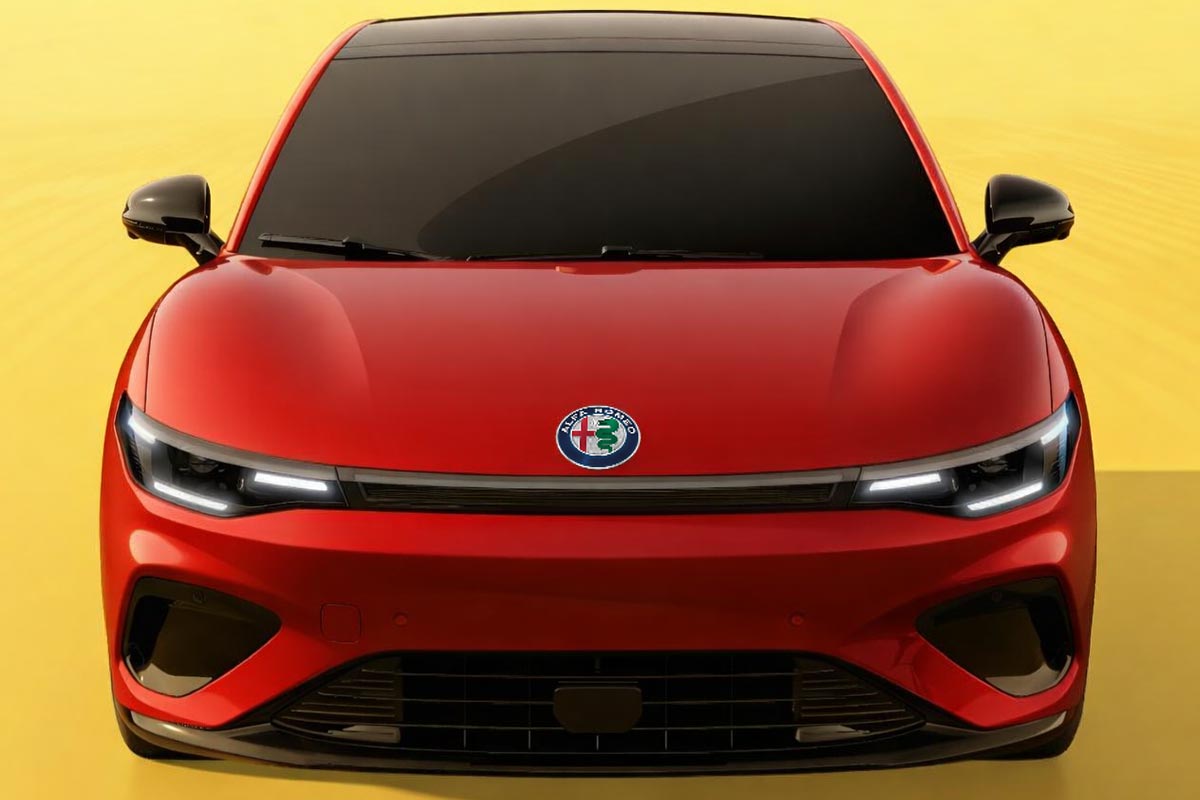
And if Alfa Romeo, a symbol of Italian sportiness and mechanical passion, would one day find itself... on a Chinese technical base? The idea may seem paradoxical, almost provocative, especially at a time when the Milanese brand is trying to return to its fundamentals. And yet, according to information revealed by Reuters, this scenario is currently being studied by the company. Stellantis. A very preliminary hypothesis, but one that speaks volumes about the current strategic tensions within the Group.
A Leapmotor base already planned for Opel... and now Alfa Romeo
The main news does not concern Alfa Romeo directly. It's part of a wider project: Stellantis is said to be in advanced discussions with Chinese manufacturer Leapmotor to develop an Opel electric SUV based on a Chinese platform, with production planned for Zaragoza, Spain, by 2028.
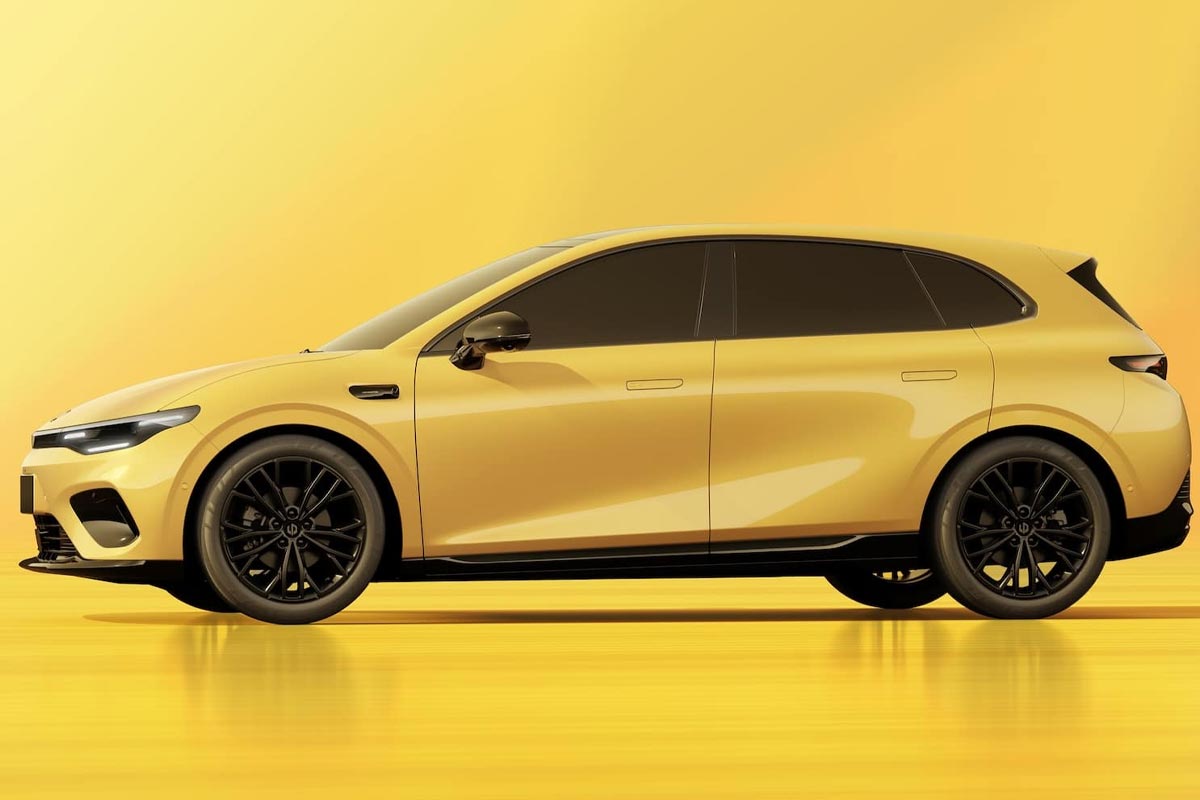
But the article does draw attention to one point: Stellantis is also said to be in preliminary discussions to develop an Alfa Romeo model based on the same architecture, again with a view to optimizing the use of the Spanish plant. In other words, after Opel, and possibly Fiat, Alfa Romeo could also be concerned by this industrial strategy.
A strategy already in the pipeline for Fiat and Opel
This project doesn't come out of the blue. For several months, Stellantis has been actively exploring the possibilities offered by its partnership with Leapmotor, in which it owns around 20 %s.
We've already talked about it several times. First with the hypothesis of a Fiat electric compact derived from the Leapmotor B05, a Chinese model repositioned for Europe, potentially produced in Spain. Then with a broader reflection: what Stellantis to directly use Leapmotor technologies to accelerate the development of electric models while reducing costs.
And while Stellantis has admitted to having overestimated the transition to the 100 % electric and had to book billions of euros in write-downs, this strategy appears to be an obvious industrial shortcut. Access to an already-developed technology, faster to industrialize and less costly, becomes a key lever in the face of competition from Chinese giants such as BYD.
With this in mind, it makes sense for Opel to be the first to switch to a Leapmotor base. But the idea of involving Alfa Romeo radically changes the perception of the project.
Alfa Romeo: back to its roots... hardly compatible?
At the same time, Alfa Romeo seems to be moving in precisely the opposite direction. After several years of promising a 100 % electric range, the brand recently revised its copy. The initial plan has been slowed down, the future Giulia and Stelvio have been postponed, and most importantly, a new direction seems to be emerging These include a return to hybrid powertrains, a more upscale repositioning and, above all, the possible use of the Giorgio Evo platform, historically linked to Alfa Romeo's DNA.
This is clearly a return to basics: driving pleasure, rear-wheel drive architecture, technical links with Maserati, and a strong Italian identity. So, for us, imagining an Alfa Romeo model based on a Chinese Leapmotor architecture seems in total contradiction with this repositioning.
From Stellantis' point of view, the benefits are obvious. Pooling platforms, reducing costs, accelerating time-to-market and improving the utilization rate of European plants, particularly the one in Saragossa.
But Alfa Romeo is not a brand like the others. Where Fiat or Opel can more easily absorb this kind of industrial transformation, Alfa Romeo relies on much stronger emotional capital. Its history, positioning and image are intimately linked to Italy, its engineering and a certain idea of performance.
Offering an Alfa Romeo designed on a Chinese technical base, even if reworked in Europe, would inevitably raise questions. Not necessarily for all customers, but clearly for enthusiasts and for the brand's overall image.
A very uncertain lead
A word of caution, however. According to Reuters, discussions concerning Alfa Romeo remain at a preliminary stage. Nothing is set in stone, and it could be just one of a number of options being considered to optimize the Group's industrial capacities. All the more so as the Stellantis product plan, expected in the coming weeks under the leadership of CEO Antonio Filosa, should clarify the long-term strategy for each of the brands.
The European automotive industry is in a state of flux. Between cost pressures, Chinese competition and an uncertain energy transition, even the most emblematic brands have to deal with new economic realities. It remains to be seen how far Alfa Romeo is prepared to go... without losing the essence of its identity.
 English
  French
  Italian
  Spanish
  German
  Japanese
  Dutch
Dutch
This seems to me to go in the direction of depreciating the brand. The principles of «driving pleasure, rear-wheel drive architecture, technical links with Maserati, and an assertive Italian identity» can perfectly well be offered under 800V electric architecture, leaving open the possibility of buying the same model as a hybrid. The problem of mechanical pleasure can be addressed even with electric drive, as Ferrari has obviously done with its Luce, and the design can be Italian even with the study of Leapmotor's technical solutions. As far as infotainment is concerned, the VAG group has accepted the obvious: the AOSP platform is the most suitable.
Yesterday I saw a Giulia with the Veloce badge, I did a little research and saw that it was a 160hp diesel... Things haven't meant anything for 5 years. Are we seeing Audi S4 TDI 160s? Are there any C43AMGs in 160 diesel? Next step: a Quadrifoglio 190 diesel?
Either they create a «Veloce line» or, as on the Giulietta, an Imola finish (Veloce equipment, without depreciating the Veloce).
Anyway, we'll see if Filosa gets it or not.
Overall, I agree with you, but it seems to me that the most important thing when buying an Alfa is that it be an Italian production with specific technical solutions and/or developed in partnership with Maserati and/or Ferrari for the most prestigious models, whether for platforms, engines or any other solution. I see a lot of production taking place in Spain, which benefits from efficient local subcontractors, but Italy isn't a desert either. It shouldn't become one.
I have the impression that Alfa is sailing at a loss and doesn't really know what to do...
It's better if I don't say anything. My comment would have to be moderated...
That said, this will be an opportunity to see whether Filosa should be consigned to the automotive dustbin like Ghosn and Tavares...
Frankly, this announcement doesn't make sense, I find it hard to believe, for Fiat , Opel , Peugeot Citroën, I'd like to, but no way !!!!
After the Alfa Romeo Junior, which borrows too many elements from Peugeot, an Alfa Romeo based on a Leapmotor! I thought April Fools' Day was only for the 1st of the month!
month 😬
Stellantis. Transporting you further and further... into disgust and amazement!
It is a very bad decision to mix Alfa Romeo with Leap Motors. Very cheapish. Worse than using the very heavy GM-platform in the 0’s (159). Even worse than the Arna bij Nissan/Alfa in the early 80’s. Why do people seldom understand the true nature of Alfa Romeo?
Ma non vi vergognate a proporre una simile idiozia. Nella tomba si stanno già rivoltando tutti gli uomini migliori che hanno contribuito a creare un mito unico nel panorama mondiale. Giulietta Giulia Gt Gtv Alfetta Duetto Alfa 33 motore Busso motore 4 cilindri in lega e altro. 9
At the time, the Alfa / Nissan Arna was a flop. I'll say this....
At the time, the Nissan-based Alfa Arna was a flop that cost a lot of money... It's also about looking to the past, not forgetting failures...
Who remembers the Alfa Romeo Arna? An Alfa on an Asian base. A Japanese base, the kind that scared people at the time. An Alfa / Nissan mix that was a huge flop and cost a lot of money. And let's not talk about Lancia / Chrysler / Dodge... Looking to the past means remembering the successes, but also the failures.
Follia pura....
Don't forget that Alfa sells 60,000 cars a year, 45,000 of them «PSA-based». In short, the remaining 15,000 «original Italian» customers represent nothing commercially. That's the sad reality. For the future, I think Fisola sees the profitability of a brand, Alfa included, more than the notion of an automotive AOP.
If it were 20 years earlier, it would be different. Alfa was then selling over 200,000 «100 Italian %» cars to customers who were still largely captive.
PS. This comment applies to many brands in disrepair (Jaguar, Lancia , Dodge....).
The idea that the Junior is «saving» Alfa Romeo needs to be put into perspective. If this model is successful, it's mainly because the rest of the range is outdated: the Giulia and Stelvio have not been renewed for almost ten years, and the Tonale remains expensive with technology that offers little differentiation. As a result, many loyal customers are turning to other brands. The Junior's success reveals an overall lack of competitive offerings. The expectation is simple: an Alfa Romeo produced in Italy, attractive, well-positioned in terms of price, with a high-performance hybrid that is consistent with the competition.
Well, it's the most recent model and the entry-level model...
If they bring out a MiTo or a Giulietta with non-Tavares prices on an FCA basis, well, that'll be 70% in sales on an FCA basis...
Why deprive yourself of leapmotor's expertise! Le junior is helping alfa to stay in business, but for how long? I'm driving my 2016 giulia and I'm happy ....I won't change except for a new one....alfa can't do without a model any more, given sales.....and what's more, the Chinese are 10 to 15 years ahead of us in electric cars.....! Ford is working with wv and even renault electrique so why deprive ourselves of that if we want to get alfa out of an industrial impasse ....
At Stellantis, there are already electric platforms, I see no reason to launch an Alfa based on Leapmotor since for the moment the electric does not sell too well, I can understand for an Opel, Citroen, Peugeot yes it is understandable, if not no interest, it's just a rumor!!???
So there were rumors in mid-2025 that STLA M was far too heavy to create a compact car, and that the platform would ultimately be used only for SUVs.
To remain competitive, the future C4 would be based on a Smart Car, while the Peugeot 308 and ex-Lancia Delta (since cancelled) would be based on an STLA Small, adapted to accommodate combustion engines (the only STLA platform designed exclusively for electric vehicles, the others being multi-energy).
Yes, I remember that at the time (the year tavares left I think) they were finally talking about using STLA Small and finding solutions to increase the range to 700 km. Not sure if it's still on the agenda...
We recently learned that adapting the STLA S to termics would be too expensive, the future Peugeots 208 and Opel Corsera will be BEV only and the current gen will be reskinned in their termic versions, a mess that's impossible!
As a result, the compact segment finds itself without a dedicated platform, and the Leapmotor base takes on its full meaning. And would indicate that this model is indeed the descendant of the Giulietta!
Well, it's the most recent model and the entry-level model...
If they bring out a MiTo or a Giulietta with non-Tavares prices on an FCA basis, well, that'll be 70% in sales on an FCA basis...