

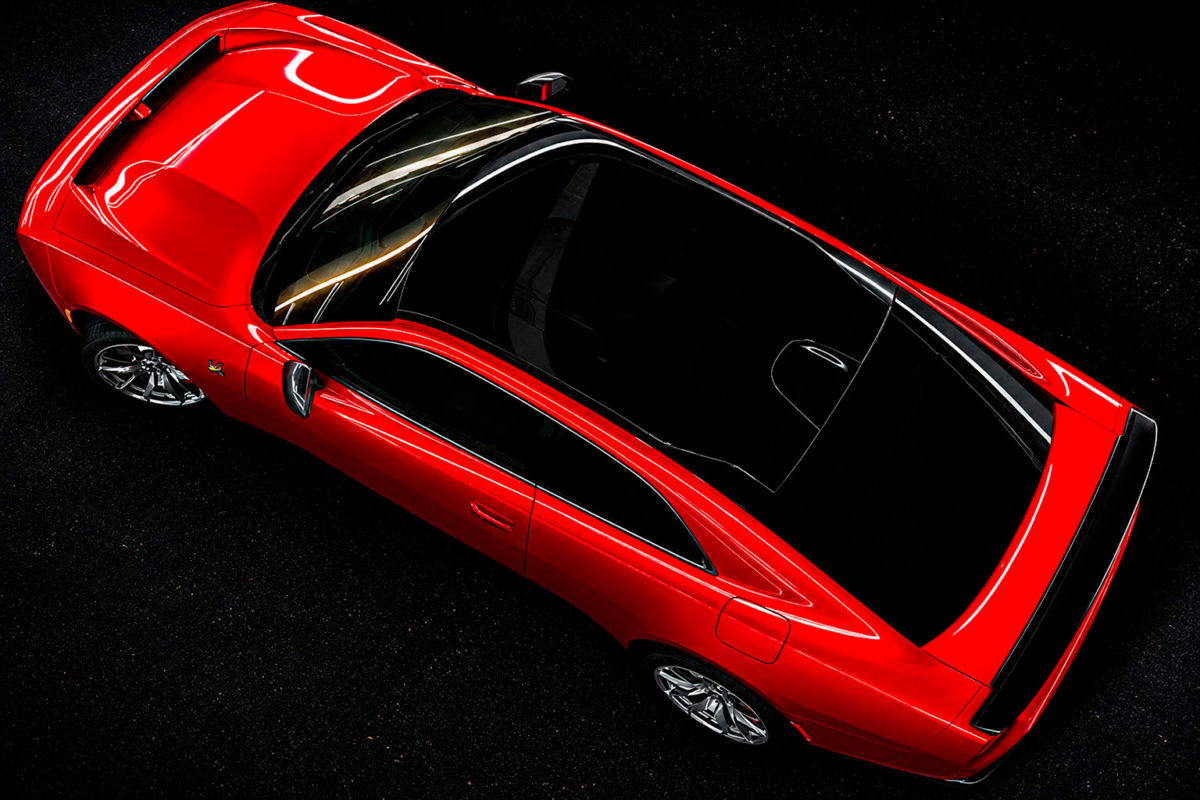
Do you remember? Just a few years ago, the calendar for’Alfa Romeo It seemed pretty clear. A new Stelvio was set to arrive in 2025, followed by a new Giulia in 2026. Granted, at the time we were told the models would be exclusively 100 % electric, but at least the next generation was assured.
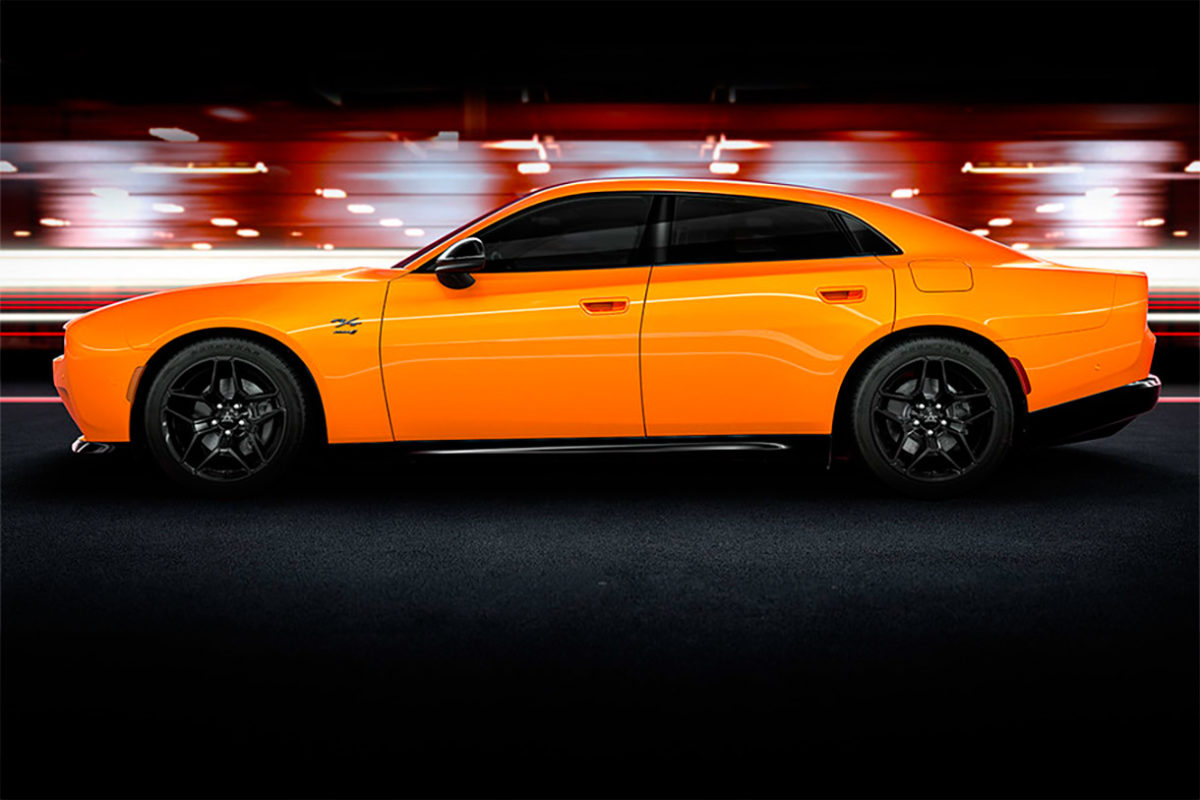
Since then, everything has changed. The projects have been canceled and Alfa Romeo's return to the D-segment is now «under consideration». Yet, on the other side of the Atlantic, it’s hard to look at the new Dodge Charger without thinking that part of the solution already exists. Because this Charger bears a striking resemblance to what an Alfa Romeo Giulia—or even an Alfa Romeo GTV—might have become….
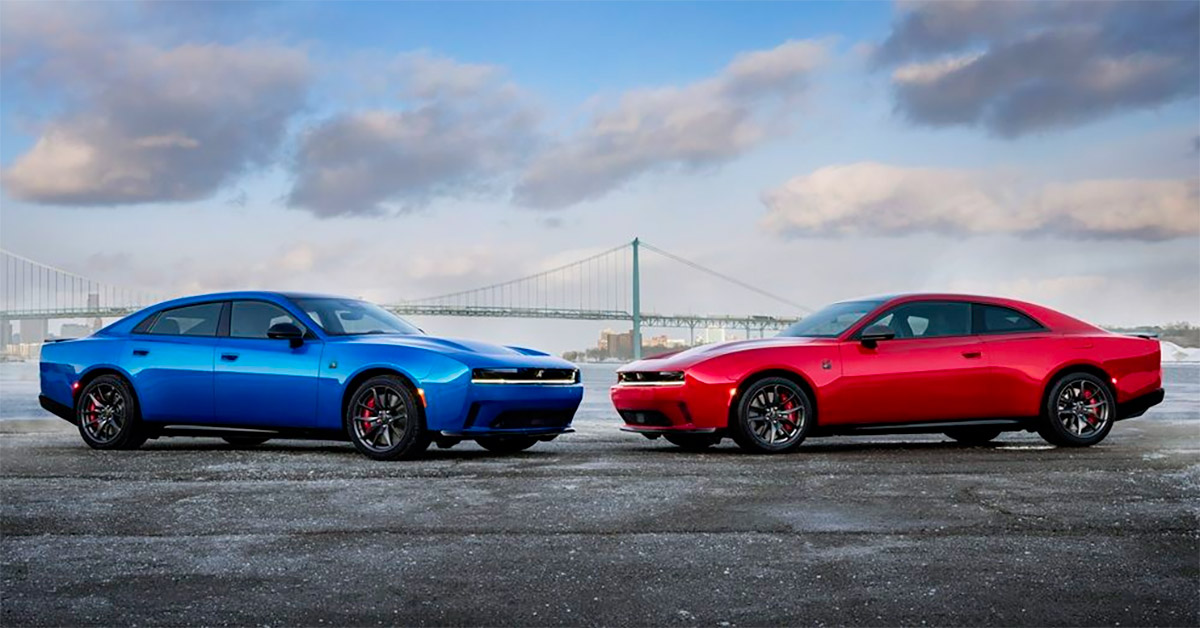
A Giulia and a GTV, American-style?
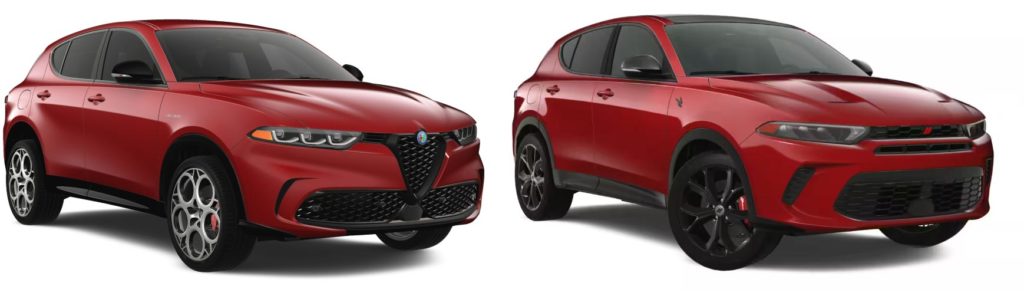
This comparison might raise a smile when you remember that Dodge has already rebranded an Alfa Romeo: the Hornet was nothing more than a heavily rebranded Tonale. With the success we all know. Apparently, the Chryslers turned into Lancias didn’t serve as a lesson…
But with the Charger, the situation is different. It’s not just a matter of taking a Dodge, changing two logos, and designing a new grille. It’s the technical platform that’s particularly interesting. The Charger is available in two body styles: the two-door coupe, set to go on sale in 2024, and the four-door sedan, arriving in May 2025. Look at them through the eyes of an Alfa Romeo fan: it’s hard not to picture a GTV and a Giulia, respectively. And technically, the idea is much less far-fetched than it seems.
STLA Large: It Was All Already There
The Dodge Charger is built on the STLA Large platform, which we have long known as «Giorgio 2» on Italpassion. This new Stellantis architecture was intended for the group's high-end models, particularly those from Alfa Romeo, Jeep, and Dodge. Its use had even been considered for Maserati.
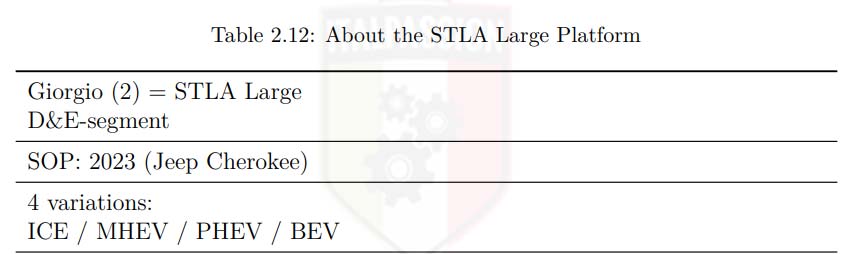
We won't go over the entire history again, but one detail is essential to understanding the current situation: there isn't just one STLA Large, but several variations, LP1, LP2, LP3, and LP4.
The future Alfa Romeo models had been developed on the STLA Large LP3 platform, designed for the all-electric 100 %. Dodge, on the other hand, uses the STLA Large LP1 platform, which is truly multi-energy. When Stellantis changed its strategy in response to the slowdown in the electric vehicle market, Alfa Romeo’s projects found themselves at an impasse. Not so for Dodge. And that’s where the situation becomes frustrating: the platform that Alfa Romeo needs today does, in fact, exist within the group.
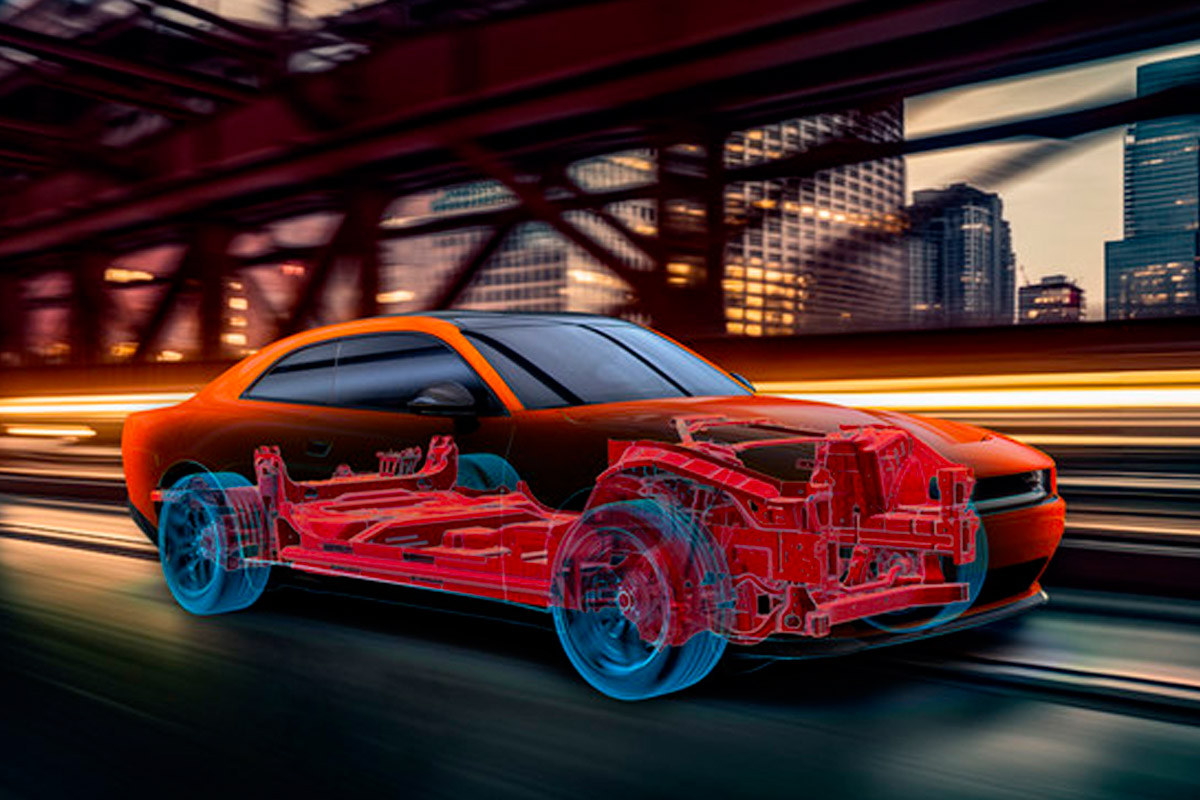
Electric, four-cylinder, or six-cylinder: take your pick
The same is true for the powertrains. Dodge already offers electric versions with power outputs of up to 370 kW (about 500 ch) and 500 kW (about 680 ch). For a European Alfa Romeo, that’s almost too much: an entry-level rear-wheel-drive model with around 220 kW—or 300 ch—would have been an excellent starting point.
And for those who don't want an electric car, there's especially the new 3.0-liter six-cylinder GME engine. We've covered this extensively on Italpassion: available in a 550 ch version, among others, it's set to get even more powerful, with A 600 ch version is expected sometime in 2027, while some preparations already exceed 1,000 ch. The Dodge Charger also lets you choose between all-wheel drive and rear-wheel drive. Awesome!
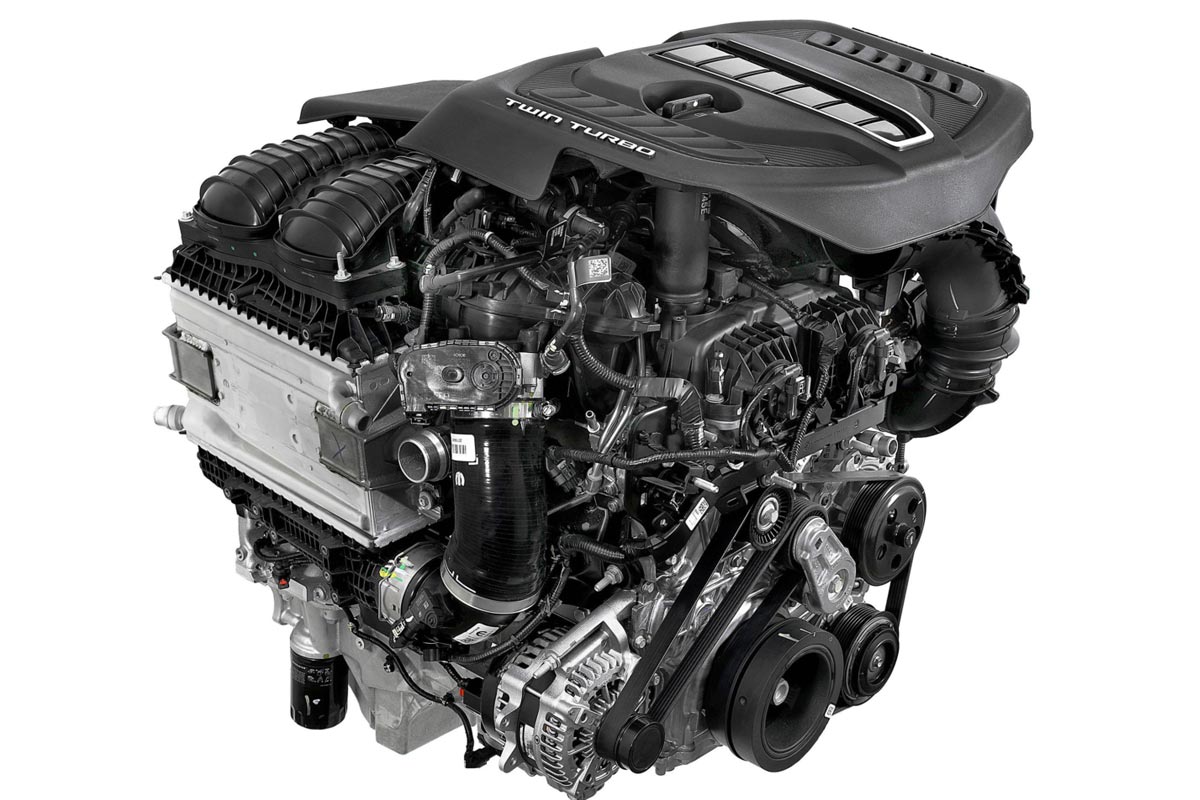
I’ve already heard comments from «true Italian car enthusiasts» explaining that they would never want an American engine in an Alfa Romeo. But let’s not forget one thing: this GME six-cylinder belongs to the same family as the GME four-cylinder that has been used for years in the Giulia and Stelvio. And that one doesn’t seem to bother anyone.
Is it really absolutely necessary to keep the Alfa Romeo V6?
Of course, one might say, «Yes, but the V6!» Fair enough. The Alfa Romeo V6 is an extraordinary engine. But at a time when every automaker is looking to pool its investments, having a modern, high-performance six-cylinder engine shared among Dodge, Jeep, and RAM makes a lot of economic sense.
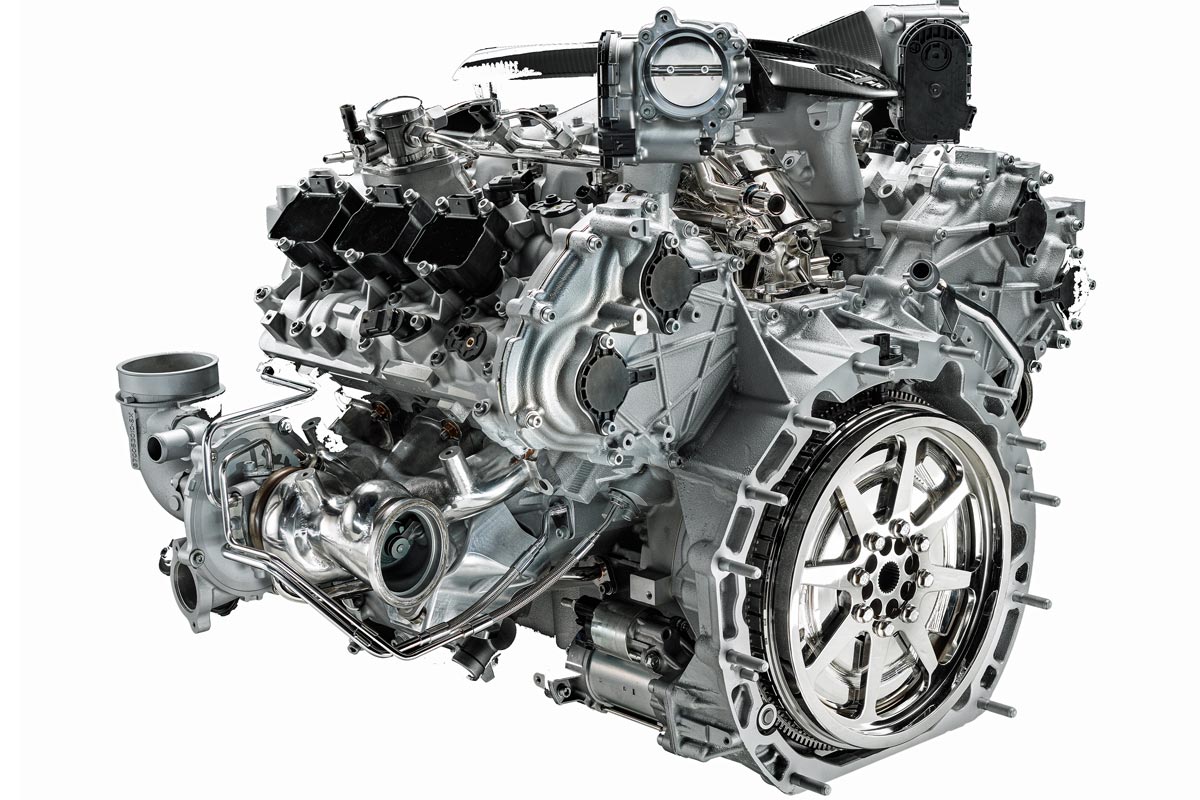
For Europe, however, there remains one major challenge to address: hybridization. A truly efficient HEV or PHEV system would make it possible to utilize these engines while meeting European regulations, as the European Union aims for an average of approximately 50 g of CO₂/km for new cars by 2030. And that is likely the missing piece at Stellantis today.
As for the rest? The multi-energy platform is here. The electric motors are here. The GME four-cylinder engine is here. The GME six-cylinder engine is here. All that’s missing, really, is a compelling hybrid system… and, of course, a design by Centro Stile Alfa Romeo.
This could even help to better differentiate Alfa Romeo and Maserati. I’d be more in favor of letting Maserati keep the Giorgio platform and the V6, in order to preserve its true technical exclusivity. I know not everyone will agree with this view, but when a Maserati shares its platform and engine with an Alfa Romeo, it greatly enhances Alfa Romeo’s value… though not necessarily Maserati’s. An Alfa Romeo based on the STLA Large platform and GME engines would, on the contrary, allow for a clear repositioning of both brands without dooming the Giulia to extinction.
And then there's the price…
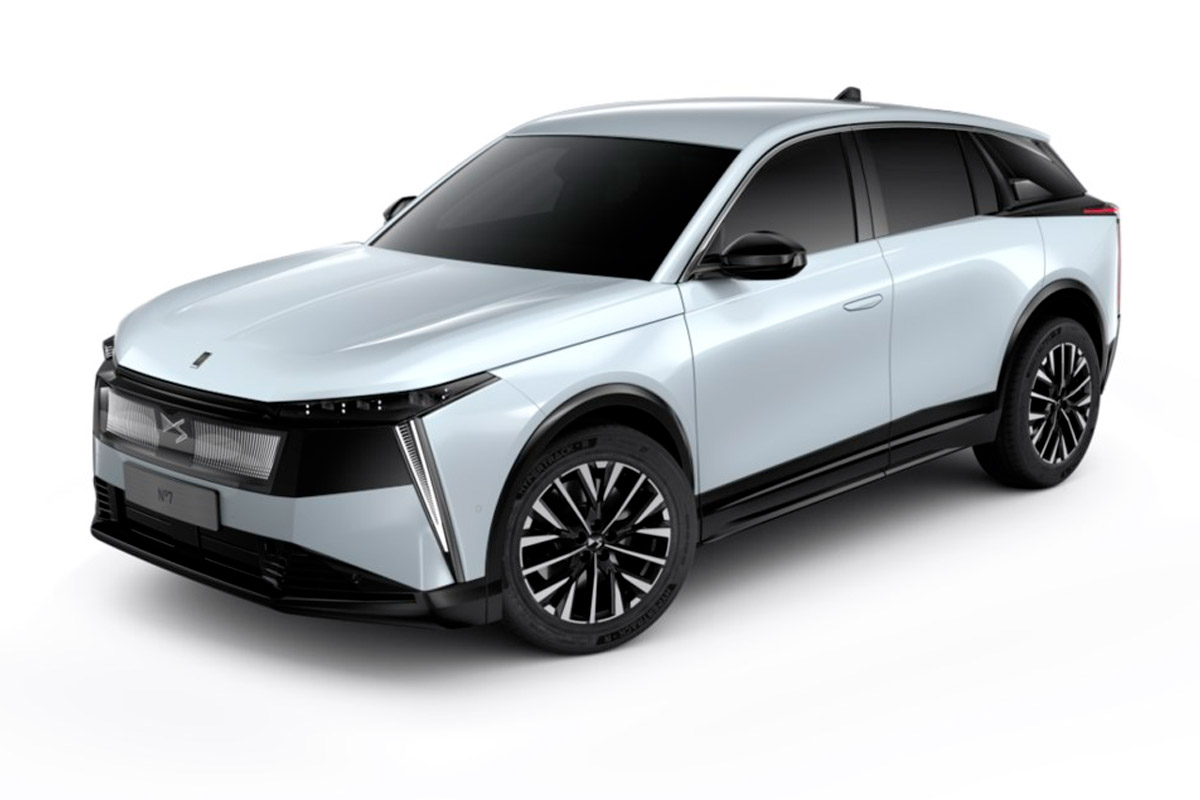
The next generation of the Tonale (expected in late 2027) is expected to share much of its technology with the new DS 7. The DS 7 starts at €49,520 for the hybrid version, which features a 1.2-liter three-cylinder engine producing 145 ch. This already gives an idea of the price range in which the future Tonale might fall.
Meanwhile, in the United States, the two-door Dodge Charger (our hypothetical Alfa Romeo GTV) starts at $49,995 with a 3.0-liter six-cylinder engine producing 420 ch. The five-door Charger, much more in the spirit of a Giulia, starts at $51,995 with the same engine. Of course, directly comparing U.S. and European prices has its limitations (taxes, manufacturing costs, etc.). But the contrast remains striking.
In the end, what is Alfa Romeo really missing?
Dodge is currently trying to convince Americans to gradually phase out their beloved Hemi V8 in favor of a new Charger based on the STLA Large platform, which is available in both an all-electric 100 % version and a version with a six-cylinder internal combustion engine.
And here in Europe, we’re still waiting to find out if Alfa Romeo will simply introduce a successor to the Giulia. Perhaps that’s what’s most frustrating. Stellantis already has nearly all the necessary components to build it: the STLA Large multi-energy platform, electric motors, four-cylinder GME engines, six-cylinder GME engines, rear-wheel drive, and all-wheel drive. Add a hybrid system truly tailored to Europe, entrust the design to the Alfa Romeo Centro Stile, and you’ve got a new Giulia. Make it a coupe, and you’ve even got a GTV.
So, when you get right down to it, this Alfa Romeo Giulia on the STLA Large platform isn’t an impossible project. It practically already exists. It’s just that, for now, it bears a Dodge badge.

 English
  French
  Italian
  Spanish
  German
  Japanese
  Dutch
Dutch
I recently read somewhere that the STLA Large is based on the FCA platform, with the Longitudinal being an evolution of the Giorgio, and the Transverse an evolution of the CUSW (Compact US Wide), which itself is derived from the FGA Compact. To be verified.
Designing a Giulia based on this Dodge Charger isn't out of place—quite the contrary. Moreover, Alfa Romeo has had inline-six engines in the past—the 6C. The Milanese automaker's iconic engine didn't begin with the Busso engine.
According to my sources in Italy, STLA Large is a brand-new platform that uses some of Giorgio's components. It was originally called Giorgio 2, with the intention of replacing it.
Was it developed in France? In Italy? In the U.S.? (Other sources say it’s an evolution of the PSA platforms, which I highly doubt.).
I think it was developed in the U.S. But you know, my source—an engineer in Italy—tells me he works just as much with Europe as he does with the U.S. or Latin America. So I’d still say it’s more likely in the U.S. (since it’s already used by Dodge and Jeep, whereas there’s nothing like it in Europe), but there’s still a sharing of knowledge. As I explained with the GME T4 evo engine, which uses technology from the Nettuno V6 engine. It’s an engine developed in the U.S. but with input from Italian expertise.
That does make sense, actually. I sometimes forget that the American part of the group is becoming more and more important.
Is it based on a Benz? I remember a discussion on LBA with Thibaut Emme who mentioned a very strong resemblance to Daimler’s W211 from back when Chrysler was affiliated with the German company. This Mercedes platform was «passed on» during the sale of Chrysler to the Cerberus fund, and later reportedly served as the basis for the development of the Giorgio when Chrysler was acquired by FIAT. It seems unlikely, but I did some research out of curiosity and came across some forums where people were making comparisons. There seemed to be enough similarities, though, to prevent us from dismissing this theory outright.
I’d like to correct and clarify my previous comment. We were talking about the STLA Large (or Giorgio 2), not the Giorgio. But if the LARGE is indeed derived from the Giorgio, and if the theory I mentioned was actually true, its (distant) origin could be far removed from anything we can imagine.
For a while, I myself believed it was a rear-wheel-drive «derivative» of the Medium (and thus related to PSA). Before the merger, PSA had begun working on platforms that could be adapted for the American market. I think that’s where the confusion came from, especially at a time when everything was sourced from PSA.
I did ask for clarification and attention to detail—this is not an evolution of Giorgio. The evolution is called Giorgio Evo and is from Maserati. The STLA Large is indeed a new platform, initially nicknamed Giorgio 2, which uses some components from Giorgio.
The elimination of the V8 is the result of regulatory constraints and draconian cost-cutting measures. As stricter emissions standards and looming fleet penalties in the U.S. and Europe increased the pressure, Stellantis, under Carlos Tavares, made a conscious decision against the costly further development of the legendary naturally aspirated HEMI engine. Instead, the company has fully committed to electrification and the more efficient Hurricane inline-six-cylinder engine. While Dodge fans will lose the irreplaceable V8 sound and the pure thrill of a true muscle car, Stellantis will save billions in development and CO₂ costs. In the end, the auto giant sacrificed the legendary U.S. tradition on the altar of profit margins, cost-cutting, and global emissions targets.
Great theory—I like it. Great cars, too. I was looking at it just recently; unfortunately, they don’t sell it in Croatia. But if they build Alfas with these features, they’ll be something special—a little heavier than the current Giulia models and without a carbon-fiber driveshaft, but special nonetheless.
The Charger is going to be officially imported into France. Maybe we'll be able to test drive it—probably in the electric version...
Americans know how to make cars, too, but their models aren't really suited to our region—what a shame.
Clearly, at 5 meters long, this is more like the large Alfa Romeo sedan 🙂
In Luxembourg, which isn't a very big country, you see a lot of big American banks.
I'd really like to know if this US Charger imported into the EU will be brought into compliance with GSR2 and all its more-than-annoying visual and audible alerts…
I'd put the question the other way around. The Giulia is a commercial failure. Why, when the car is actually good? It's simply too expensive for an Alfa! So releasing a 5-meter-long car with the best V6 in the world won't generate many sales.
It wasn’t too expensive when it first came out. I paid less than €40,000 for mine in 2016 for the 200 ch gas version with a few options. Its product lifecycle just wasn't managed well; in 2020, it was the same car as in 2016 but more expensive and with a new gearshift knob.
After all, the Alfa Romeo legend has always been fueled by interesting and technically sophisticated in-house developments (even the GME T4 was developed primarily by Alfa).
The Giulia—or even the GTV—as a knockoff of mass-produced U.S. technology.
To me, that would be the slow death of a great brand… Let’s hope my Stelvio and my 1997 GTV 3.0 V6 Busso keep going for a long time to come.
It's a shame that these days, passion—or even "Italpassion"—doesn't count for much anymore… but we'll just have to get used to it. Unfortunately
There are several reasons why the Giulia didn't sell well:
Sedans are no longer in vogue: a lack of hybrid options, a limited selection of engines, a certain lack of innovation, poor marketing, and consumers who want extra-large multimedia screens and newer cars (the appeal of novelty).
While the Giulia has been by far the best sedan on the market for the past 10 years, with a stunning design that will never go out of style and the Giorgio chassis, which is a true marvel.
Rationality isn't Stellantis's strong suit, so we shouldn't get our hopes up too much about this proposal for the Giulia.
Turning the Charger into a Giulia would be the same mistake as using the GM platform for the 159 (and the Brera and Spider). It would be too heavy, with engines that lack presence. And the car would likely end up being too big. Italian roads are the benchmark.
What I’m trying to explain in my argument is that the Dodge Charger is no more American than the Alfa Romeo Giulia is Italian. The Dodge’s STLA Large platform is the one originally intended for Alfa Romeo, and the GME 6-cylinder engine is an extension of the GME 4-cylinder engine already used by Alfa Romeo. So it’s interesting to note that some people think it’s a copy of the American car, when in fact the technology is much more global.
The Dodge Charger would be a good starting point. The build quality and the engine are excellent. It remains to be seen how reliable it is.
If the prices were the same in France—for the same performance—the Giulia would sell well.
This Charger is a behemoth—it’s way too big and heavy for Alfa. Plus, you’re conveniently failing to mention that it’s a massive flop! The previous Charger and Challenger models sold more than 100,000 units a year; the new one is selling fewer than 10,000 and has major reliability issues, particularly with its very temperamental electronics.
My conclusion is that Stellantis is trying to convince Americans to switch from V8s to 6-cylinder engines. I don’t have the sales figures, but it’s clear to me that they’re doing everything they can right now to promote this car, which got off to a rough start with the electric version. In short, I’m trying to explain that the solution exists at Stellantis, while some people continue to chase a mirage. I ordered my Giulia in September 2016… that’ll be 10 years ago… and today… there’s nothing left. RIP Alfa Romeo.
I’m 65 years old, and I’ve been lucky enough to own and drive Alfas from the ’70s and ’80s. That was the era of the real Alfas—designed and built in Italy. Sure, they rusted, but the driving pleasure was unmatched. Today they make American Alfas—my latest Alfas, the Giulia and the Stelvio.
Those days are over! At best, we'll get "Made in Italy," but everything else is centralized at the corporate level.
Soon, it’ll only matter when it comes to fashion and design! „Made in Italy“ is currently being replaced by „Destroyed in the EU“—which is a shame, really …
They've already killed the Lancia brand by selling rebadged Chryslers. They're going to do the same thing with Alfa. The Junior is already a 2008—not very attractive and with all the flaws of the 2008. They might as well just let the brand go under—it’ll be faster and less painful!
These brands are no longer viable because many models—such as the Mito, the Giulietta, and the Delta—were not updated due to a lack of commitment, even before the merger with PSA, which did nothing to improve the situation. Now it’s too late, just as it will be for other brands or groups.
The European market is no longer what it used to be; the European Commission, with its naivety regarding trade and its relentless focus on standards, will ultimately be the death of it.
The model planned for 2026 was apparently supposed to have a crossover design (according to your website^^). That probably would have caused quite a stir, even if the electric vehicle market had been ready and the vehicle had been launched lol
In short, nothing is working right with this program