

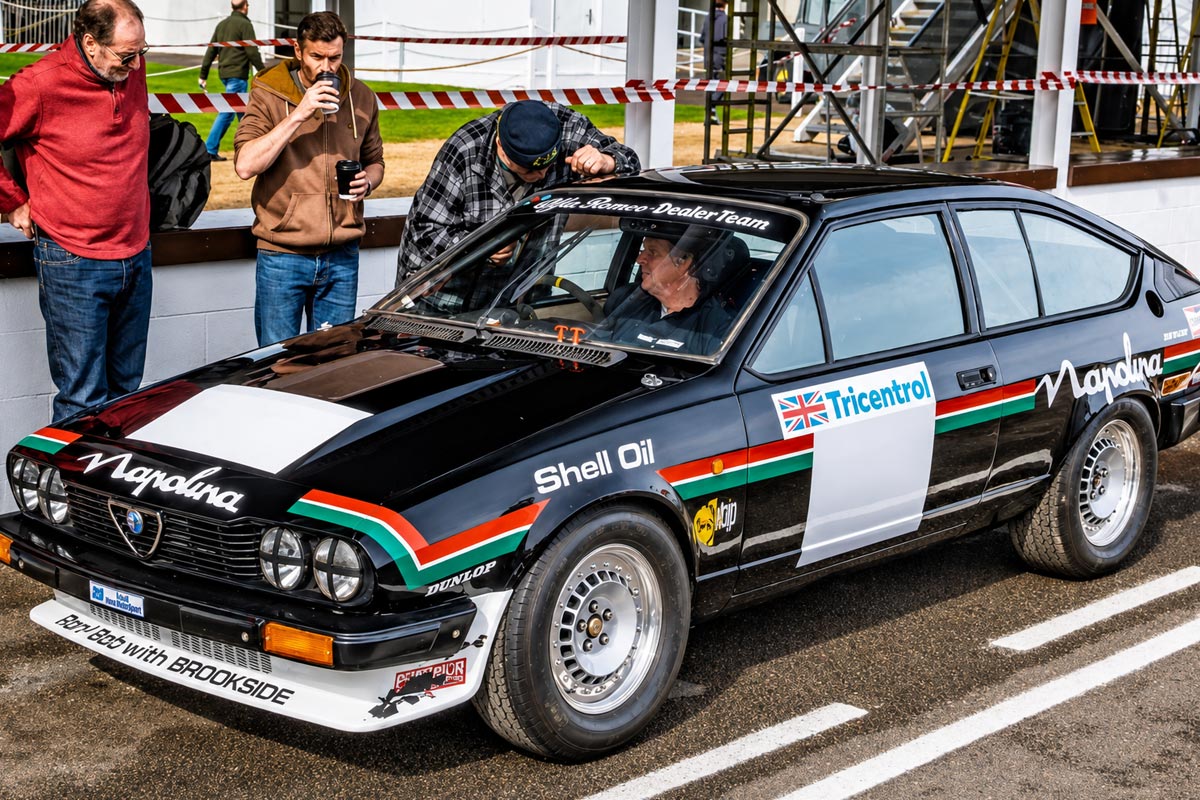
L'Alfa Romeo GTV The car in question hadn’t been driven in official competition since the mid-1980s—exactly 40 years. Chris Snowdon and his team spent months meticulously restoring this car so that it could make its grand return to the track at the Festival Italia at Brands Hatch in August 2026 and at major historic racing events, such as the Goodwood Members’ Meeting.
Chris Snowdon is a leading specialist in preparing Alfa Romeo GTV and GTV6 race cars, as well as a legend of the Alfa Romeo Championship UK, where he won the championship in 1994 and 1995 driving a GTV6 3.3. Through his West Sussex-based team, Chris Snowdon Racing (CSR), he is renowned for his expertise in transaxle-based models, offering complete restorations, rebuilds of historic race cars (formerly from the BTCC), and optimization of transaxle transmissions.
An icon of the 1980s
The Napolina GTV6 is one of the most famous “Touring Cars” from the 1980s BTCC. It is an authentic factory Group A car that raced at the time for the Napolina Alfa Romeo Dealer Team, driven by the famous BTCC driver Jon Dooley, who recently passed away. Financial controller for Alfa Romeo In the United Kingdom that week, Dooley was a seasoned amateur driver who co-founded the Alfa Romeo Dealer Team (ARDT) in late 1975. With a budget less than one-tenth of that of the factory teams, the ARDT team caused a sensation in the British championship. The partnership with Napolina, an importer of Italian food products, resulted in a famous and elegant black livery accented with red and green stripes, which went on to become legendary in British motorsports.
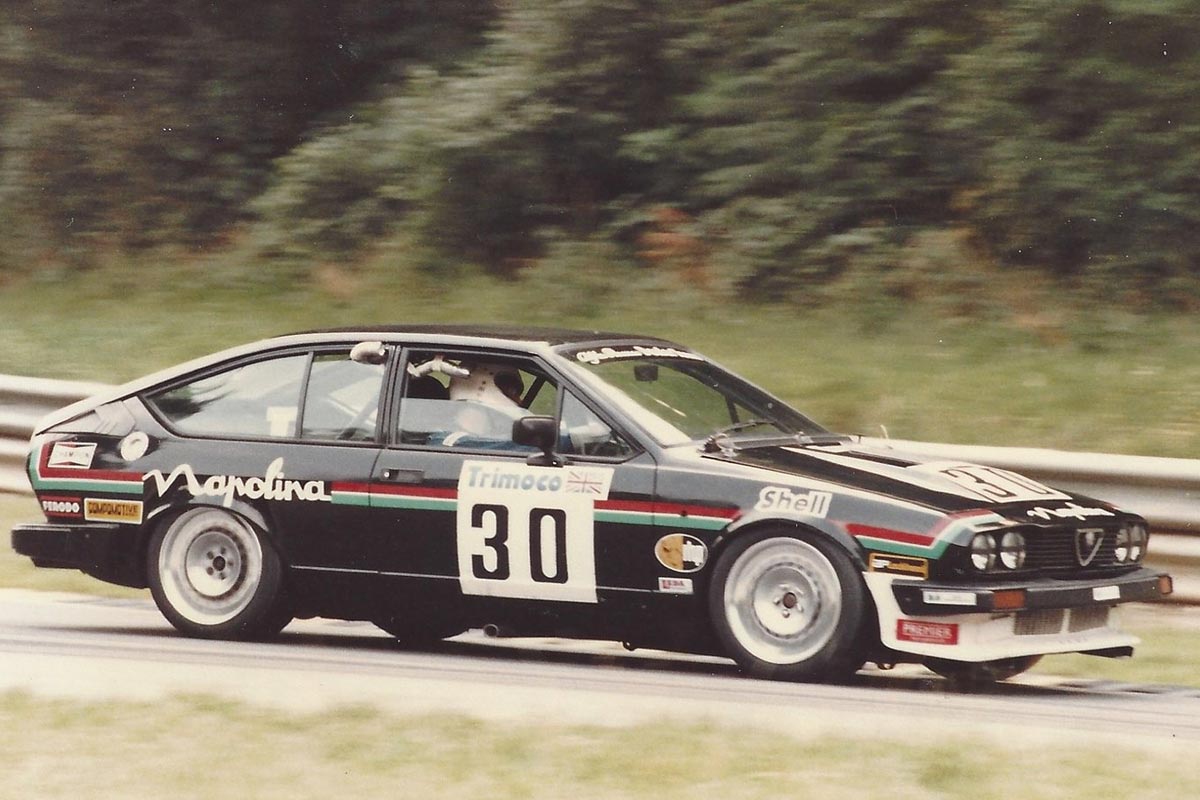
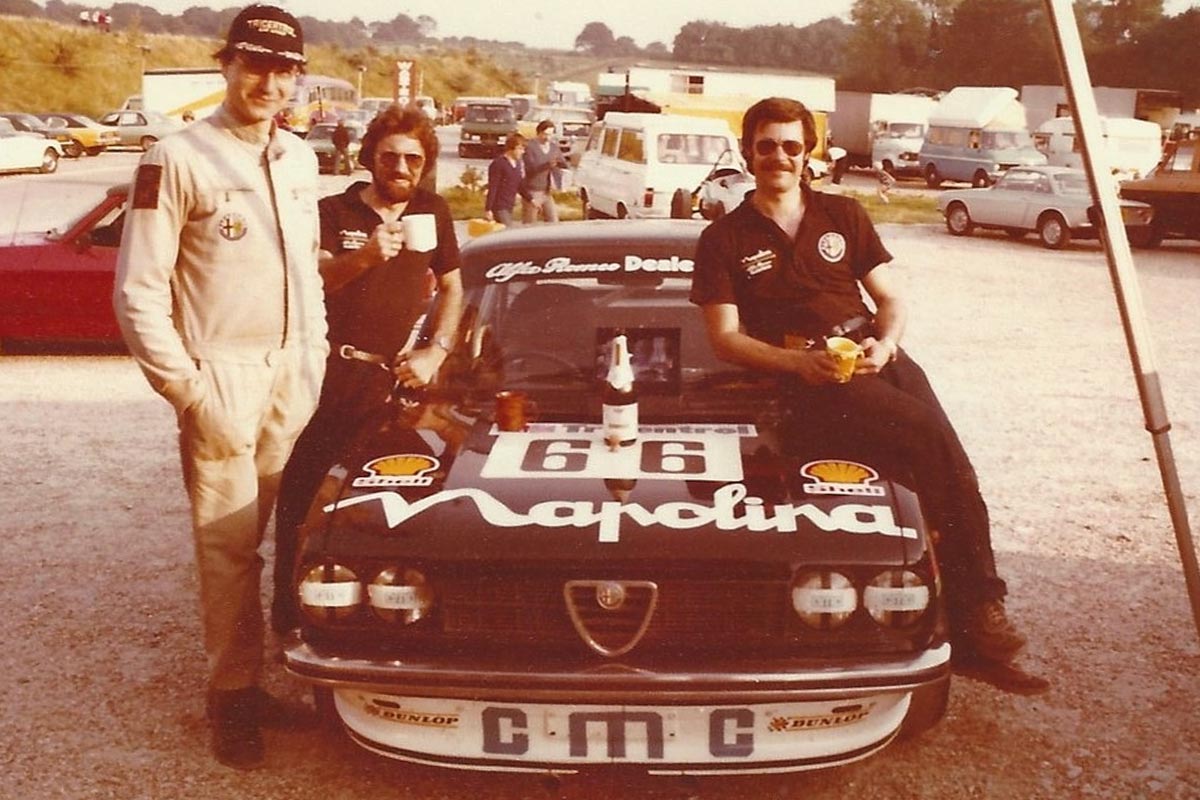
Dooley finished on the championship podium three times (3rd overall in 1981, 1984, and 1987). He won the title in his class (1300cc) in 1981 in a used Alfasud with 85,000 miles on the odometer, before repeating the feat in 1984 in Class B behind the wheel of the famous GTV6. This chassis was the one and only Alfa Romeo GTV6 configured to Group 1 specifications (minimally modified production cars) to officially compete in races at the time. It underwent a major overhaul in 1983 to comply with Group A regulations (which were more lenient regarding suspension and engine modifications).
A wreck gathering dust
This GTV sported the black Napolina livery until midway through the 1985 season, before being repainted white in the colors of its new sponsor, John West fish canneries. The car was driven in a demonstration by Jon Dooley during Heart Foundation Day at Snetterton Raceway in late 1985, but after suffering a high-speed tire blowout, the Alfa Romeo veered violently off the track and rolled over several times. Although Jon Dooley and his passenger escaped unharmed, the severely damaged car was never rebuilt for the championship.
It was then put into storage, before being purchased decades later from the Dooley family by CSR in a state of advanced disrepair. The restored GTV, which is now back on the road, still bears some traces of its tumultuous past, which the restorers have preserved as a testament to its long history.
«We started the restoration at CSR: I managed to get a painted body, with all the racing components ready to be installed in the car, and it was a massive undertaking because it’s impossible to find parts for these models.». «We had to replace the roof because it was rotten.". »The transmission tunnel still bears all the marks of having been lifted at the time. There’s even an impressive number of reinforcement plates on the tunnel—remnants of the moment when the flywheel broke loose from the engine and decided to fly into the passenger compartment while Jon was driving at Silverstone." «We left everything as it was; everything is still on the car.»
Engine and Transmission
To get it back on the track in its original configuration, CSR had to overcome significant technical challenges. The 2.5-liter Busso V6 was meticulously rebuilt in accordance with strict historical homologation specifications. «It is equipped with high-compression pistons.". We're limited by the size of the valves and have to maintain the same displacement, but we get about 230–240 ch »with this engine that revs up to about 8,000 rpm." The dual-disc clutch was replaced with an improved 3-liter single-disc clutch, similar to the one used in the Alfa 75 V6.
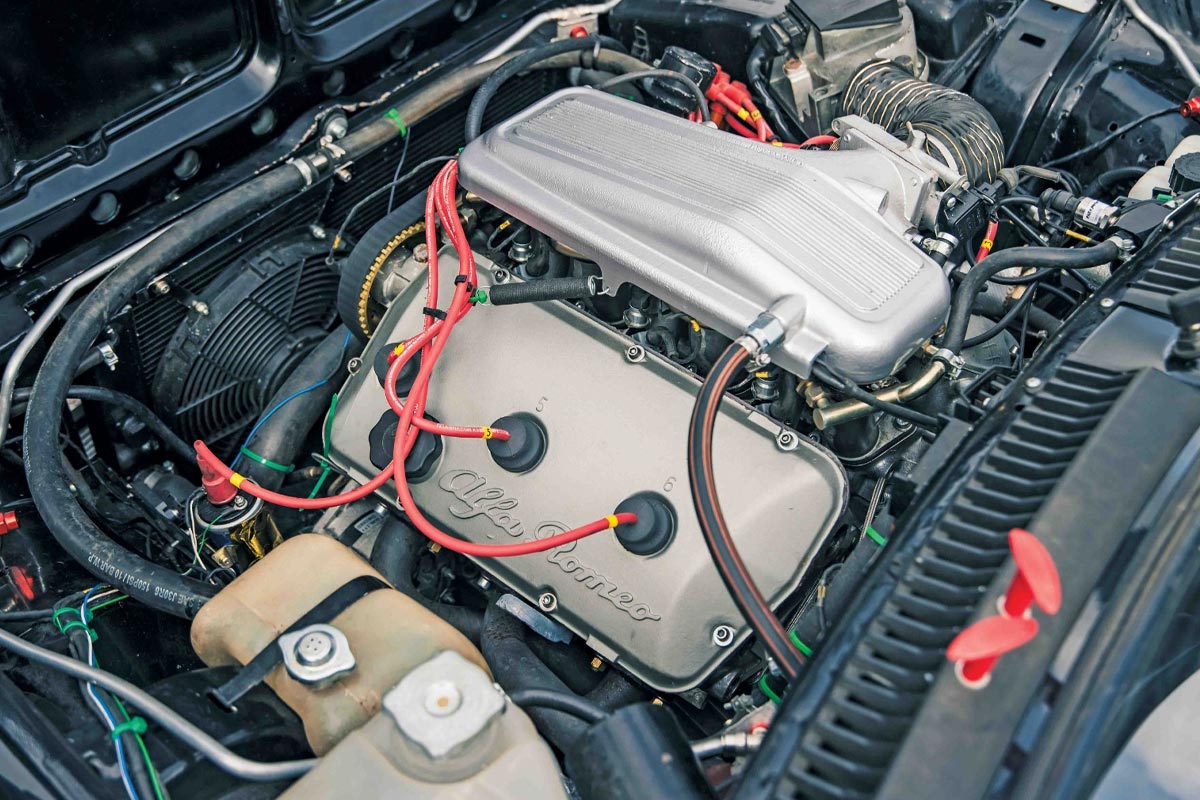
One of the most complex features of the Alfa 116 is the driveshaft, which rotates at engine speed. Chris's business partner, Richard Melvin, explained to Classic & Sports Car that at high RPMs, the vibrations transmitted to the clutch housing require the use of a special, custom-reinforced housing to prevent it from breaking on the track.
Subtle chassis and handling adjustments
Prepared in accordance with the regulations for major historic races (such as Goodwood), it is required to run on treaded bias-ply tires, which demands extensive tuning of the shock absorbers (adjustable Konis) to maximize grip without compromising the car’s period-correct handling.
The suspension is entirely ball-joint-mounted and rubber-free, while the springs and anti-roll bars have been reinforced—particularly the front torsion bars—and the Alfa features custom CSR shock absorbers developed in collaboration with Quantum to create a bespoke valve system. To eliminate the GTV6’s chronic understeer at high speeds, the team collaborated with data analysis engineers. They encouraged the team to build an oversized front anti-roll bar (whose exact thickness remains a workshop secret jealously guarded by Richard Melvin!).
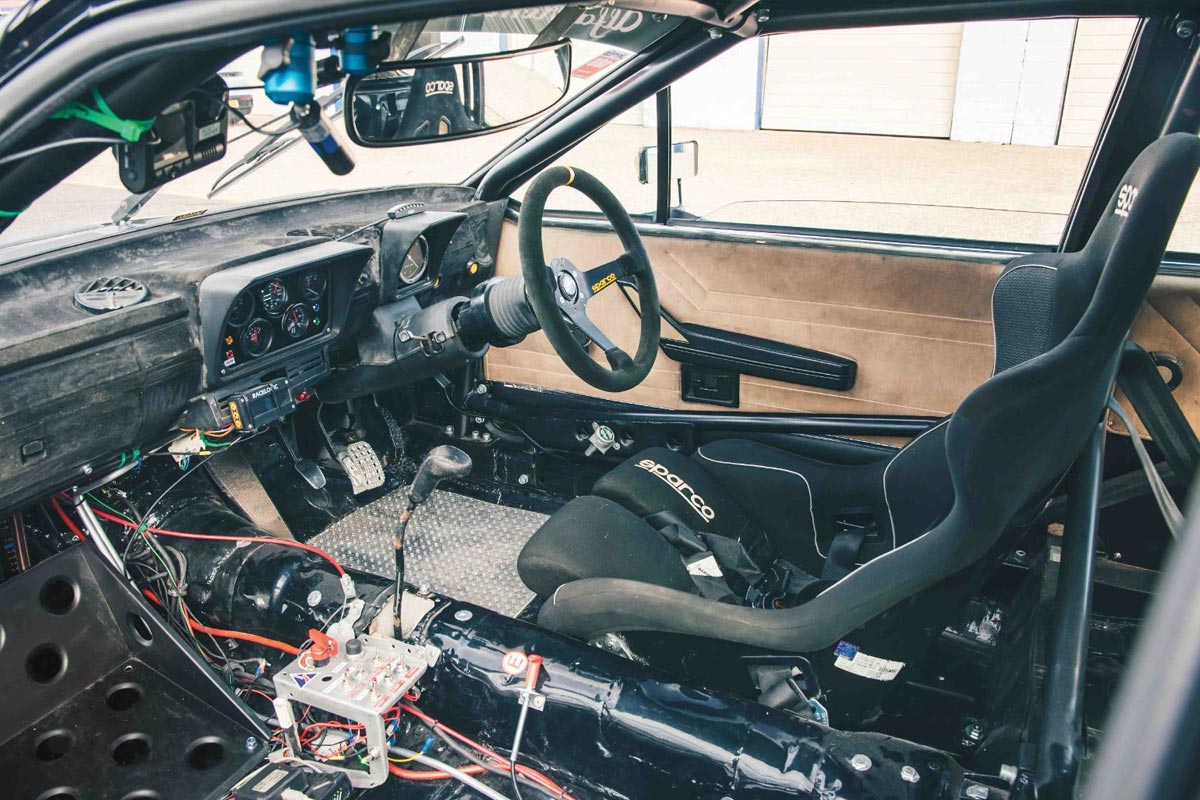
Chris Snowdon explains how to master this transaxle chassis: You have to be very precise and shift all your weight to the front when braking to make the car turn, because «you can’t let the rear end slide out while drifting, or it will never come back.». He admits that the car tends to understeer, but points out that this is just part of driving a GTV6: «You have to shift all your weight forward when braking so that it turns.».
Every detail counts
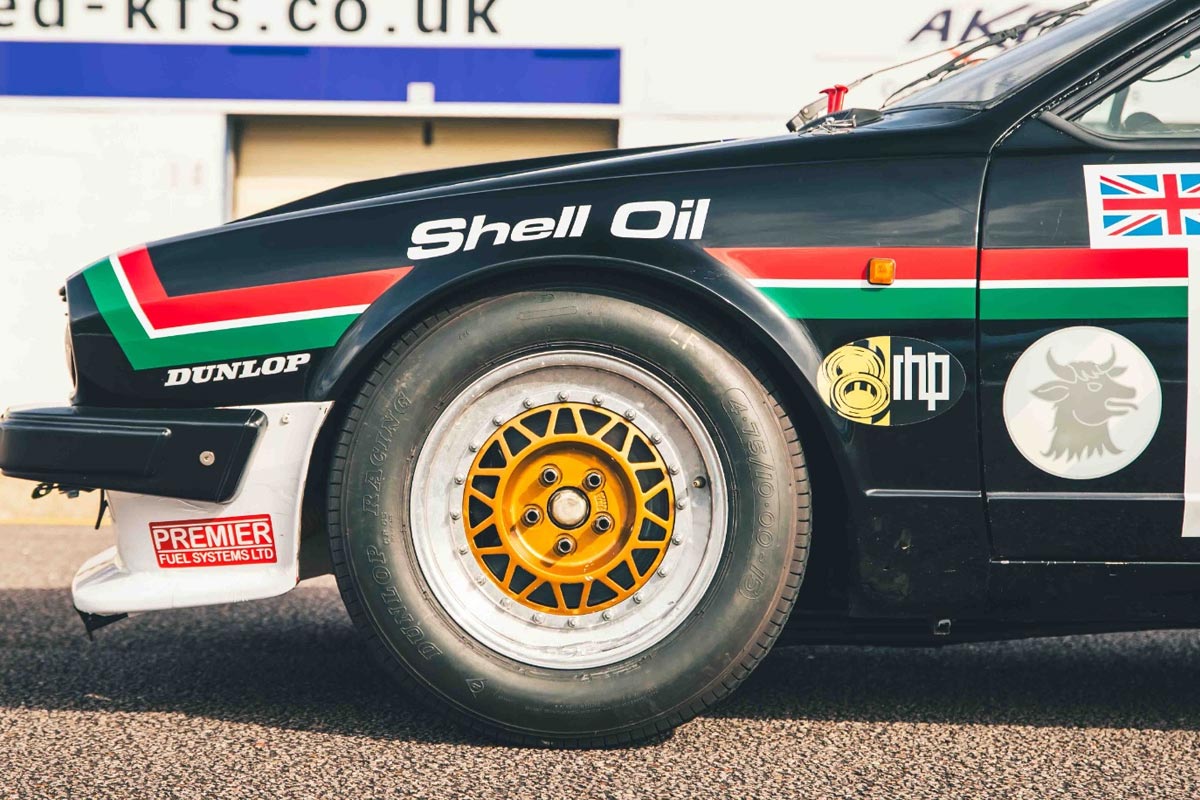
At the time, Jon Dooley’s GTV6 was equipped with three-piece Compomotive TH Turbo wheels. These «fully flared» wheels, featuring small openings around the rim, were highly aerodynamic and designed to dissipate heat from the brakes. The problem: they are impossible to find on the market, as the original parts have often developed cracks or warped after decades of racing.
Faced with this impasse, CSR directly ordered and commissioned the custom remanufacturing of multi-piece TH Turbo-style wheels. Faithful replicas of the Compomotive rims, they are assembled in three parts (a central rim disc and two bolted rim half-discs) and are available in sizes ranging from 13 to 16 inches to fit perfectly onto Alfa Romeo’s specific 5-hole hubs.
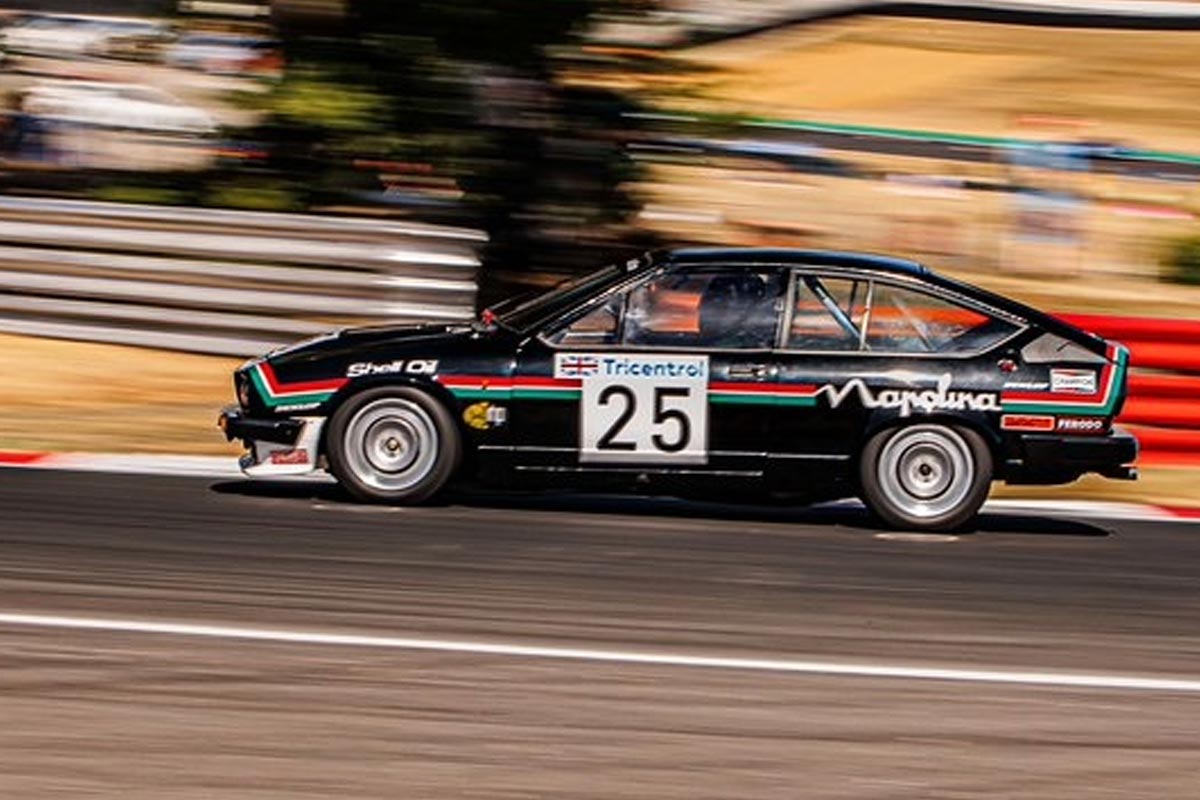
The «Napolina» look delighted enthusiasts: the distinctive center panels, combined with polished aluminum outer trim, give the black GTV6 its aggressive yet authentically historic presence on the starting grid at Brands Hatch and Goodwood.
From the strictly vintage GTV to the radical version
Chris Snowdon took the GTV back to the track for the first time at the Goodwood Members’ Meeting: the car was tested and entered in the prestigious Win Percy Trophy at Goodwood. Chris Snowdon shared the wheel with renowned driver and TV host Tiff Needell. Tiff finished 20th in the first race, while Chris fought his way up through the field to 15th place in the second race, securing a combined 14th-place finish overall against competitors in much larger-displacement cars.
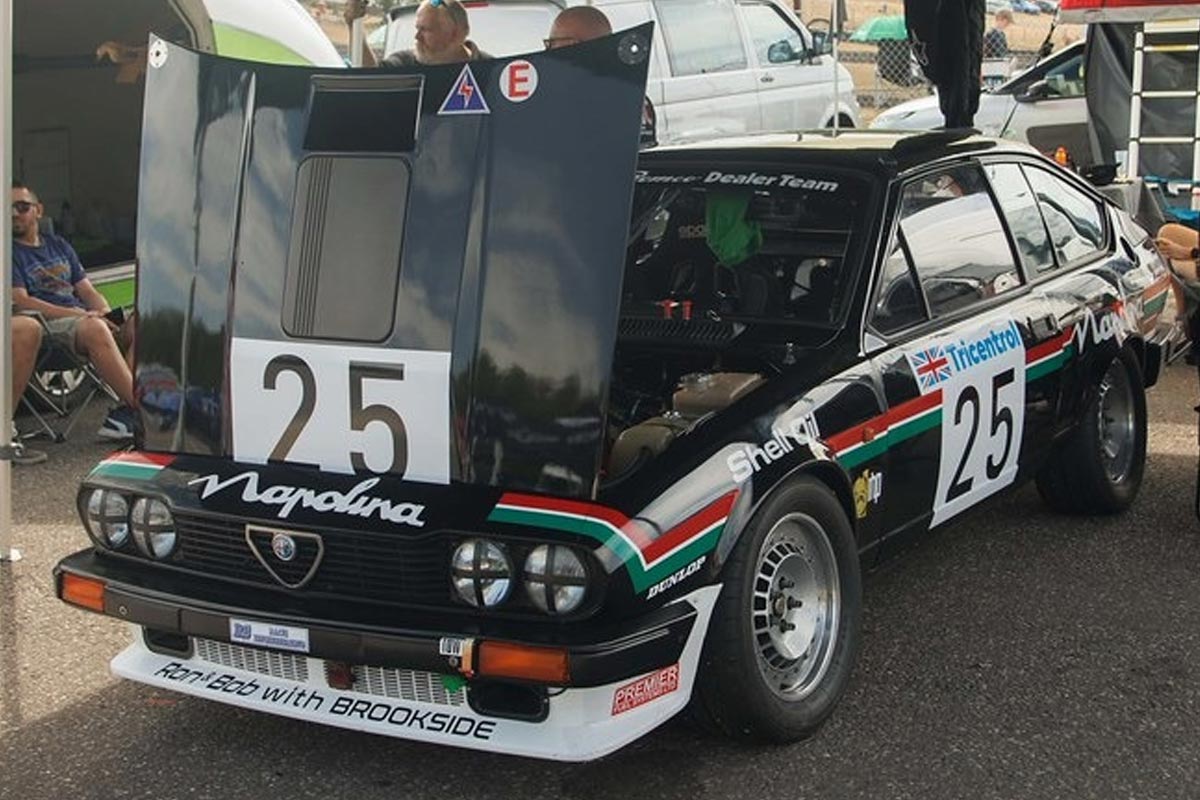
For the 2026 Festival Italia at Brands Hatch in August 2026, the team fielded two cars: Chris Snowdon in the black Napolina GTV6 and George Osborne in the red Napolina Alfetta GTV 2.0 (Group 2). The car caused a sensation on the Indy Circuit. Chris was able to take advantage of the legendary balance of the GTV6’s transaxle chassis to engage in some fantastic on-track battles, confirming that the car is now completely reliable and competitive.
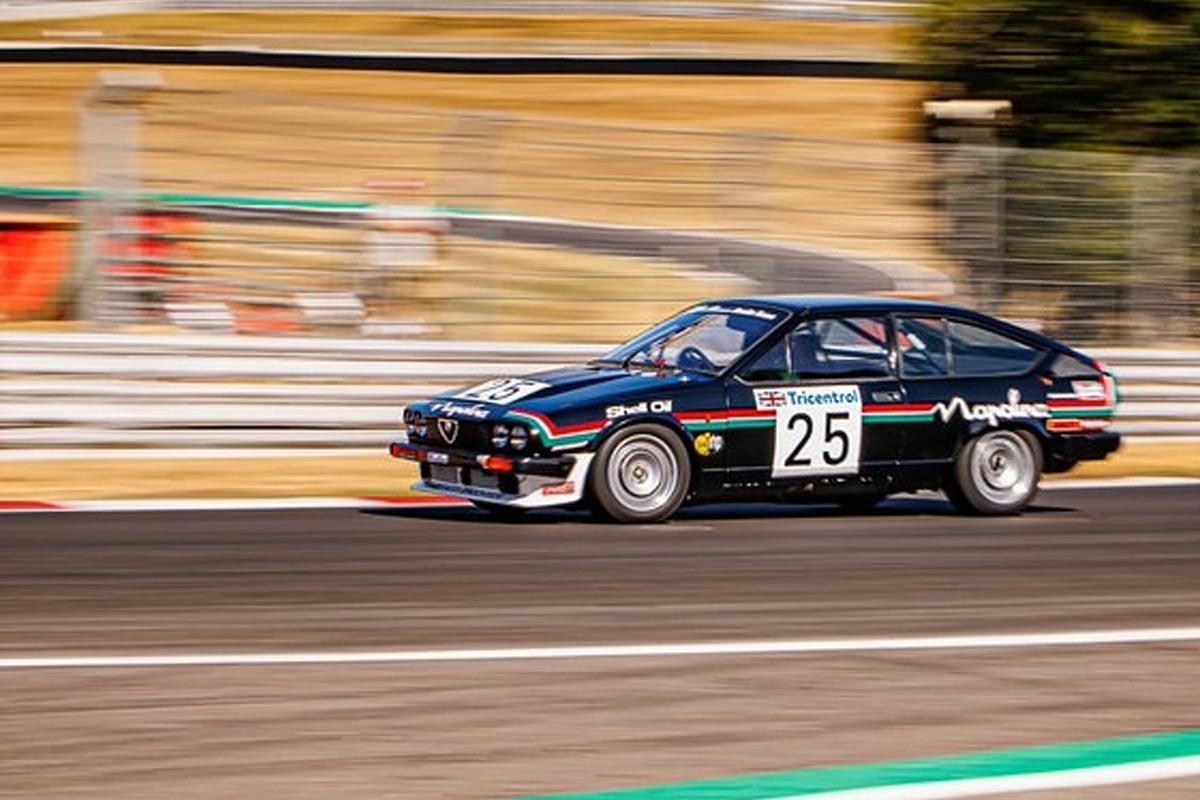
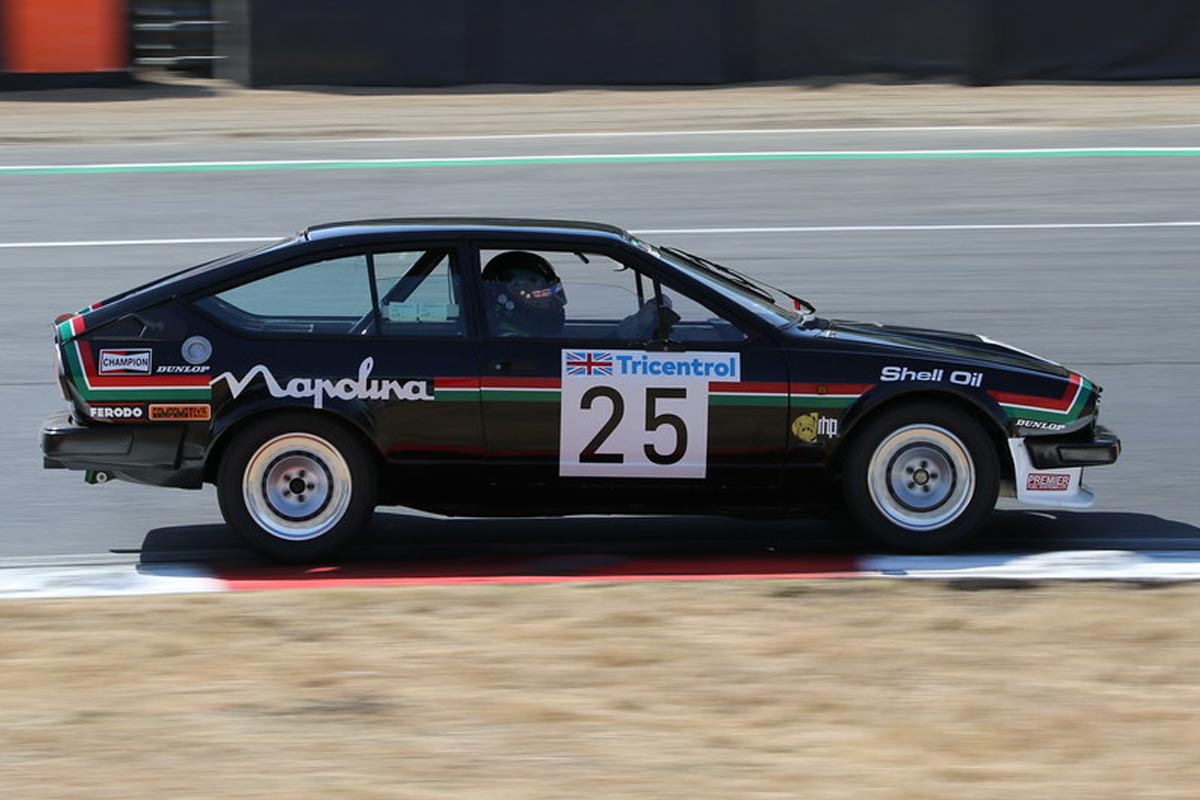
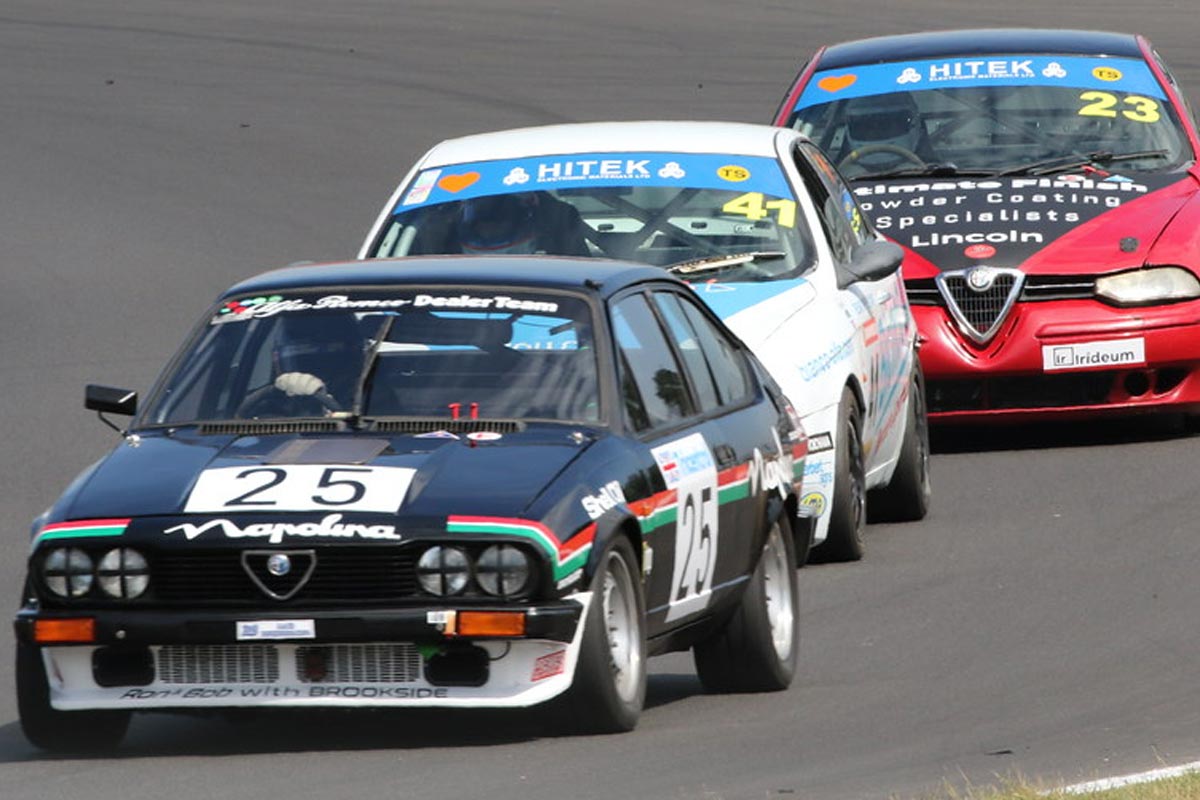
The power output of the restored GTV6 depends on the configuration, as the workshop prepares several variants: For the Power Trophy category of the current championship, the vintage «Napolina» GTV6 (2.5 liters), built to the strict homologation specifications of the 1980s, retains a 2.5-liter engine producing between 220 and 240 ch. For customers seeking maximum performance (MoTeC engine management), the workshop offers an ultimate race version, with a displacement increased to 3.8 liters and 24 valves, producing up to 400 ch (estimated) at 7,300 rpm, with 461 Nm of torque at 5,450 rpm. Brutal!

 English
  French
  Italian
  Spanish
  German
  Japanese
  Dutch
Dutch