


The countdown has begun. In one month, the Paris Motor Show will open its doors, from October 12 to 18, 2026, and Stellantis could use the event to offer a very concrete first glimpse of its next generation of affordable small electric cars. Leading the way: the new Citroën 2CV, whose concept car is expected to closely foreshadow the production model slated for 2028. But behind this French icon lies a much larger project, one that also involves Fiat and Opel. This project is of particular interest to us, since part of this new lineup is set to be produced in Italy, at the Stellantis plant in Pomigliano d’Arco.
The new 2CV to be unveiled soon
Citroën is expected to kick things off. The chevron-badged brand is reportedly preparing a concept for Paris that closely resembles its future small electric car. The production model would then arrive in 2028, a symbolic year as it will mark the 80th anniversary of the original 2CV’s debut. However, don’t expect a sophisticated neo-retro reinterpretation in the style of a Renault 5. Citroën wants to return to the 2CV’s philosophy: a simple, lightweight, practical, and above all, affordable car. The car would measure about 3.8 meters, seat four people, and could be equipped with an electric motor producing about 80 ch. Its target price would still be around €15,000. Xavier Chardon, Citroën’s CEO, had already dropped another important hint: this future city car will be capable of reaching 130 km/h.

Fiat—and now Opel—joining the family?
For several months now, we’ve been telling you that this 2CV shouldn’t be the only one. Stellantis is also developing an electric car for Fiat, which could become the successor to the current Panda/Pandina. The name “Koala,” recently trademarked by Fiat, is also a possibility. But it won’t just be Fiat and Citroën. Opel could also join the program. The German brand would use the same technical platform to create its own small city car, a segment it abandoned after the Adam and Karl.
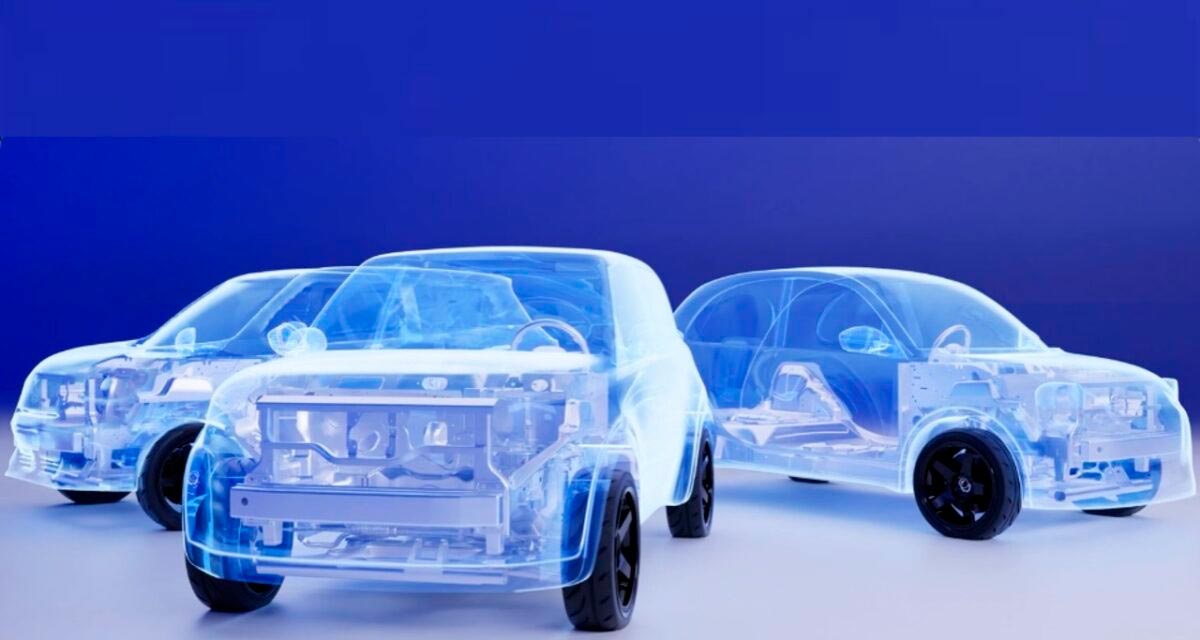
However, these would not be three identical cars with different logos. The platform, battery, powertrain, and certain components would be shared to drastically reduce costs, while each brand would have its own body style, interior, and specific tuning. Citroën would focus on comfort and the legacy of the 2CV, Fiat could revisit the practical spirit of the Panda, and Opel would offer a more understated, German-style interpretation. It’s the same formula used for the Citroën AMI, Fiat Topolino, and Opel Rocks.
A Chinese base for cars made in Italy
This strategy is in line with the information we published this summer. To achieve a price of €15,000 or less, Stellantis will likely draw on Leapmotor’s experience—specifically, on further developments in the technology used in the compact T03.
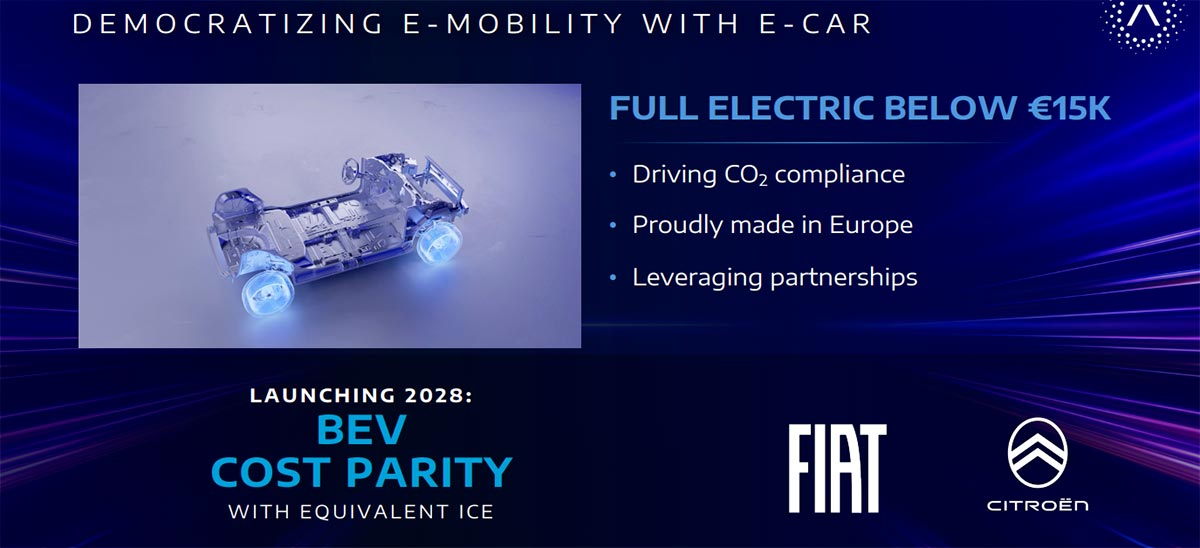
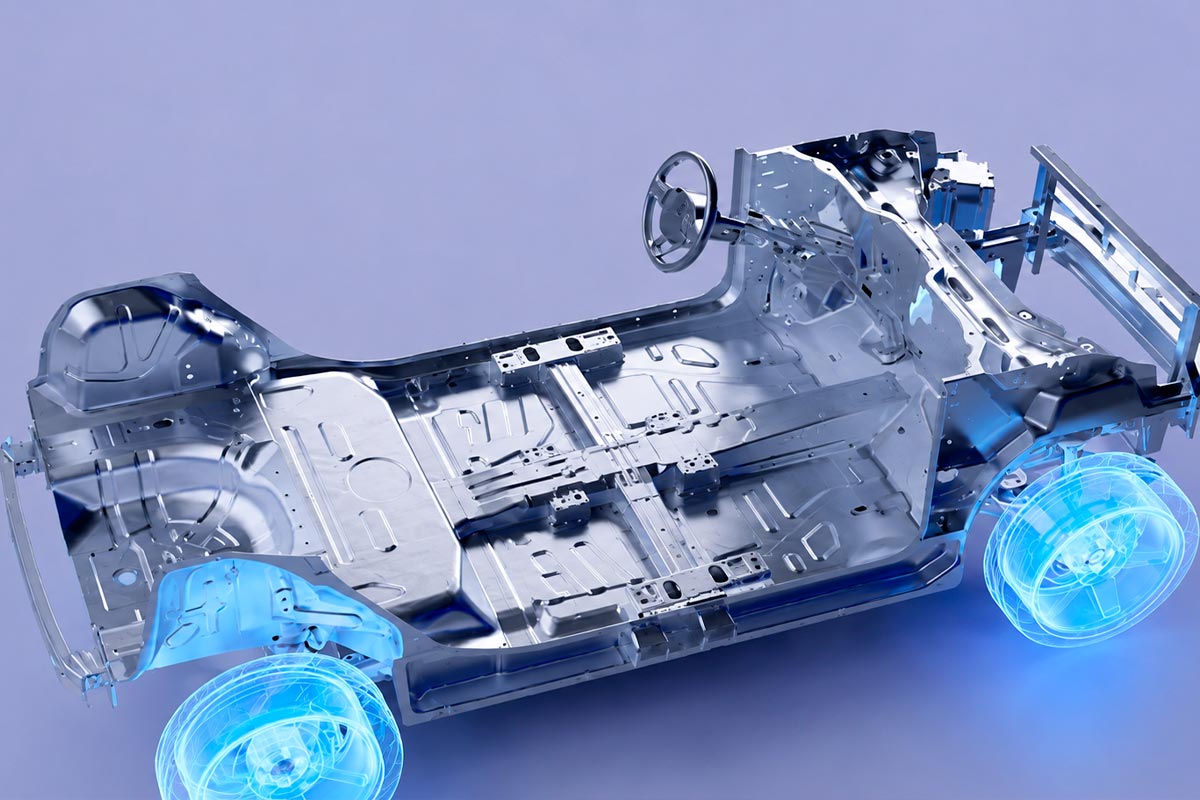
It’s an interesting paradox: Stellantis wants to build cars in Europe that can hold their own against Chinese competition… by drawing precisely on the expertise of its Chinese partner. And Italy would find itself at the heart of this strategy. The future Citroën 2CV is set to be produced in Pomigliano d’Arco starting in 2028, alongside the small Fiat and a small Opel.
After months of rumors and hints, the Paris Motor Show might finally give us a glimpse of what this new family of small electric cars from Stellantis will look like. See you in a month.
 English
  French
  Italian
  Spanish
  German
  Japanese
  Dutch
Dutch
«Each brand would have its own body style, interior, and specific settings»
Yeah, right. It's always the same old story.
Ultimately, there is no difference in performance between a 600 and a Junior.
Yeah, whether it's for this car or the Topolino, for example, I don't really care either way. For a car that costs 30, 40, or 50K€, it's a different story.
I very much doubt—for once—that the future 2CV, Pandina/Koala, and Opel Adam/Karl will look alike. I even think that, unlike other Stellantis models, they will be quite distinct.
They can only rely on their looks, and PSA has always specialized in small cars, so yes, they'll really go all out for once.
On the other hand, no Peugeot—Cappellano and Filosa turned it down!
I find it hard to believe that Citroën is going to beat the Chinese with this «2CV»… But hey, why not? 😅
Well, Fiat itself has recently spoken openly about this project, confirming that its car will also be available in hybrid versions, not just electric ones.
Belloni is also expected to give the green light for Lancia to join the project, giving rise to the future Y10: a model that will stand out for its greater elegance and comfort compared to its «sisters» aimed at the mass market.