

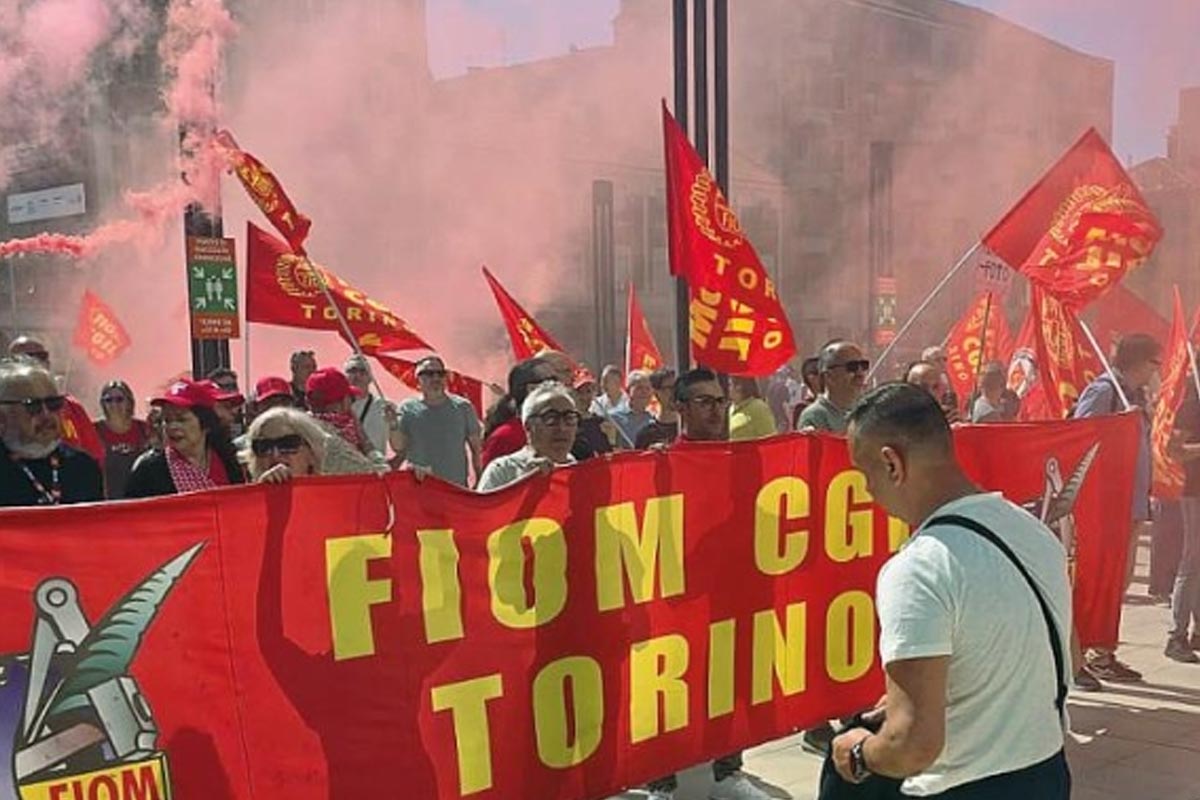
While Antonio Filosa outlined his vision for the world, Stellantis is trying to reassure stakeholders in Italy. The group has confirmed a plan to invest 5 billion euros in Italy, promising that no plants will be closed and that each site will retain a specific role. But the unions are becoming increasingly skeptical of these assurances. In Turin, employee representatives believe the announcements still fail to address the key question: how can Italian factories remain operational when auto production continues to plummet?
A 5-billion-euro plan that fails to win people over
During a meeting with labor unions, Emanuele Cappellano, head of Stellantis Europe, reaffirmed the group’s commitment to Italy. According to him, 40 % of Stellantis’ global investments will be allocated to the European region, with a revenue growth target of 15 % by 2030. For Italy, this will notably translate into 5 billion euros invested in innovation.
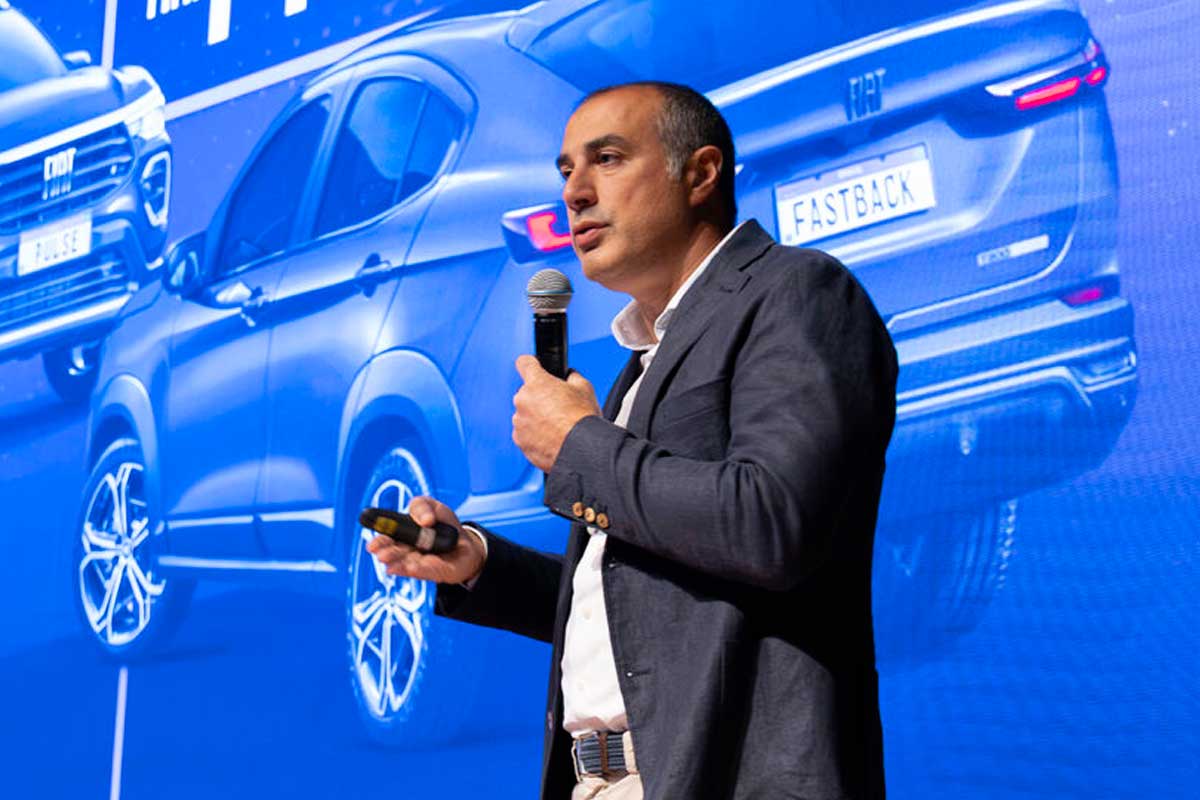
The CEO also reiterated that no Italian plant is at risk of closure. Pomigliano will remain a hub for affordable electric vehicles, Atessa for commercial vehicles, while Mirafiori is set to become a center for industrial innovation focused on the Fiat 500, batteries, and the circular economy. On paper, the message is meant to be reassuring: Stellantis is not turning its back on Italy. However, the unions criticize the automaker for talking more about innovation than about automotive production.
Mirafiori at the Center of Concerns
Tensions are highest in Turin. Mirafiori, the historic birthplace of Fiat, has been going through a difficult period for several years. Admittedly, the launch of the Fiat 500 hybrid should help boost production volumes, and Stellantis has announced the opening of a new battery center by 2027. But for the unions, this is still not enough.
Luigi Paone, head of the UILM union in Turin, believes the plant needs new models to return to a satisfactory level of activity. In his view, the 500 Hybrid alone will neither fill the production lines to capacity nor provide much relief to the many suppliers that depend on Mirafiori. The FIM-CISL echoes this sentiment, arguing that the confirmation of already-known projects does not guarantee a stable future for the site. Union representatives are now awaiting a genuine industrial plan capable of reversing the trend.
«The Filosa effect is already over»
The harshest criticism, however, comes from the CGIL. Its regional secretary, Giorgio Airaudo, did not mince words. According to him, «the time for announcements is over,» and the numbers speak for themselves. For the union leader, producing fewer than 300,000 cars a year across four Italian plants is simply not viable in the long term.
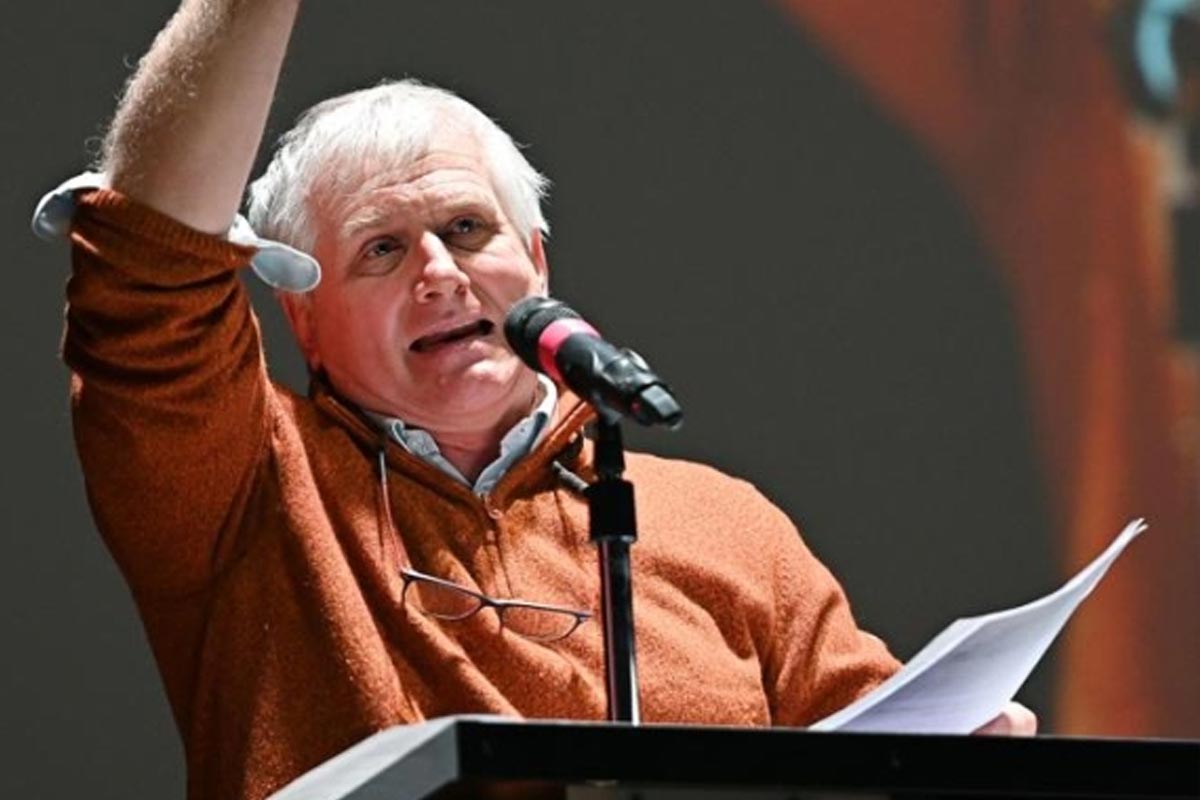
«Either the Chinese come in, or Stellantis will have to close plants,» he said. This single sentence sums up the debate currently rocking the Italian auto industry. For several months now, the Italian government has regularly raised the possibility of attracting a second automaker to the country in order to reduce its dependence on Stellantis. Several Chinese companies have been mentioned, though no concrete plans have materialized so far.
Giorgio Airaudo even believes that Italy has fallen behind Spain, which has succeeded in attracting more industrial investment. He specifically cites the example of Leapmotor, the Chinese brand partnered with Stellantis, whose vehicles destined for Europe are produced in Spain rather than in Italy.
The Numbers
These statements take on special significance when viewed in light of the production figures released earlier this year. In 2025, Stellantis assembled only 213,706 cars in Italy, a historic low. We have to go back to 1955 resulting in lower automobile production in the country.
Mirafiori is certainly the only plant to have seen growth last year, thanks to the ramp-up of production of the Fiat 500 hybrid. But even with the ambitious target of 100,000 units per year, the plant would still fall far short of the 200,000-vehicle threshold that some unions consider necessary to ensure its long-term viability. For the CGIL, the problem is simple: Stellantis has announced 60 new models worldwide by 2030, but none of them currently seems capable of radically transforming the situation at Mirafiori.
 English
  French
  Italian
  Spanish
  German
  Japanese
  Dutch
Dutch
That's what happens when you keep wanting to mass-produce more and more and more.
If you keep pushing too hard, it'll snap.
Yet they had the example of what happened with the three Americans in 2008–2009… Boom—it all comes crashing down, and we end up selling off all the family heirlooms we’ve accumulated over the years.
The same goes for cloning.
We must criticize those who wanted the merger.
No one forgets those who made the decision to merge or those who led to it. No replacement for the Mito or the Giulietta; the Fiat lineup has been reduced to 500 clones, and Lancia has been abandoned.
There was a need for an Italian platform for all these models, rather than relying solely on PSA platforms
«We must criticize those who wanted the merger.»
Ahahahaha
What is FCA's current status?
Yeah, I know… FCA would surely be No. 1 in the world—I can already hear the violins playing…
Without the merger, the French government would have broken up PSA (but was afraid of losing Citroën).
What would FCA be like? Alive!
What would PSA be like? Chinese!
It's as simple as that.
Yes, FCA couldn’t test them on its own. The platforms recently developed by Stellantis are derivatives of the CMP and EMP2 platforms, and the same goes for the 1.2- and 1.6-liter engines. PSA could recoup its investments, and FCA got off cheap. It is this accounting logic that is deadly.
No, it’s actually the opposite, because with a large global market, FCA had nothing to fear—quite the opposite of PSA, which was left with only the EU and whose taxpayers had to foot the bill for Dongfeng.
If FCA had turned down the merger a third time… PSA would be dead and buried, especially with all its engine and other problems!
The most important thing is to build cars that are fun to drive, reliable, and meet today's needs.
I think we should be wary of grand statements, flowery language, and promises.
Declarations of love aren't enough. You need proof of love.
Especially since we've already been through this back in the days of the former FCA under the late Marchionne.
At this point, the Chinese presence at Stellantis may actually be very good news, coming after a string of very bad news in the automotive industry since 2020.
Let's not forget that we've never seen a situation quite like the one in 2019!
Especially back in 2020, when customers were complaining about terrible engines that sent PSA plummeting into the abyss.
It's like having Rembrandt and Picasso right here at home, and you're still complaining that you can't produce a really nice painting. It's unbelievable.
It's time for the Chinese to step in at European factories and get things back on track, and for the Europeans to do the same as VAG—which means putting an end to the mass-production nonsense that SGL/Lysandre is so fond of.