

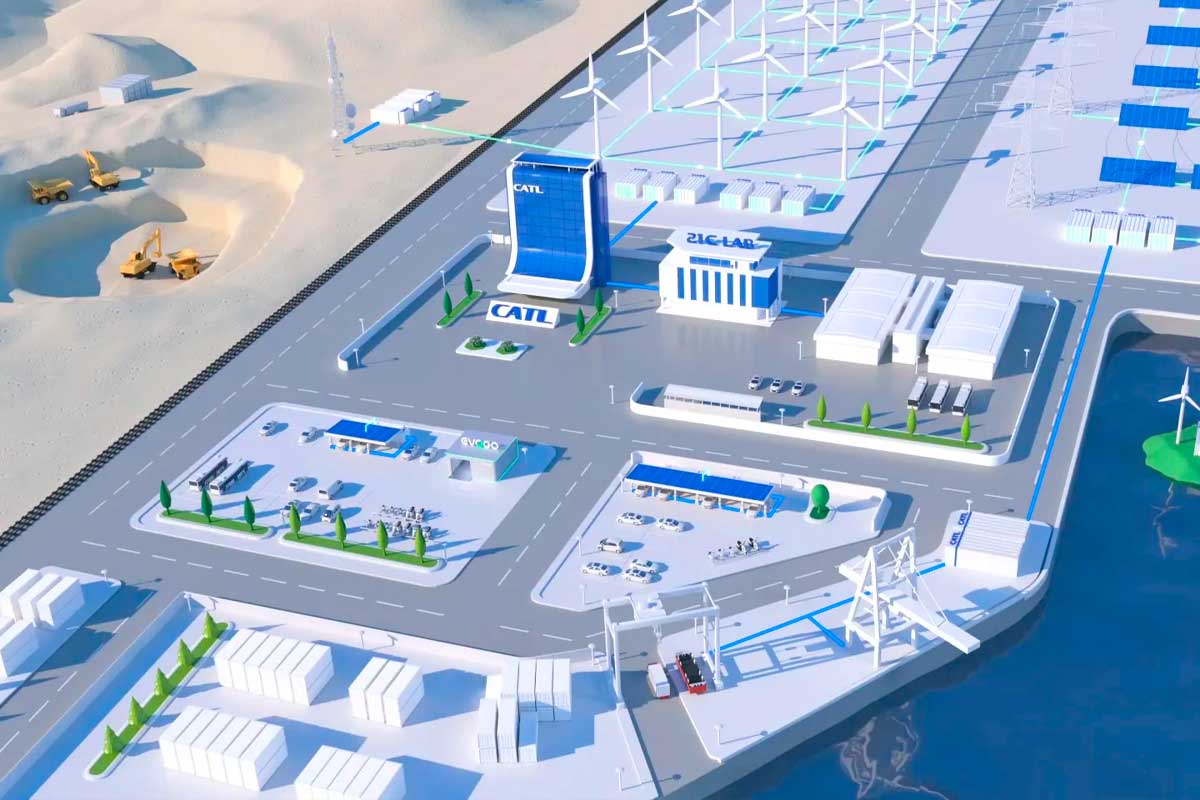
Just six months ago, the land between Figueruelas and Pedrola was just a huge expanse of earth churned up by construction machinery. Today, the landscape has changed. The first concrete pillars are emerging from the ground, the structures of auxiliary buildings are becoming visible from the A-68 freeway and the future gigafactory for Stellantis and CATL is finally taking shape.
This industrial project, one of the largest currently under construction in Europe, is entering a new phase. With more than 250 workers and technicians already on site, the gradual arrival of the 2,000 or so Chinese workers expected in the next phases is more topical than ever.
Site enters visible phase
The symbolic laying of the foundation stone took place on November 27, 2025. Since then, work has accelerated considerably. According to information published by the Spanish regional press, the foundations and structure phase is now in full swing.
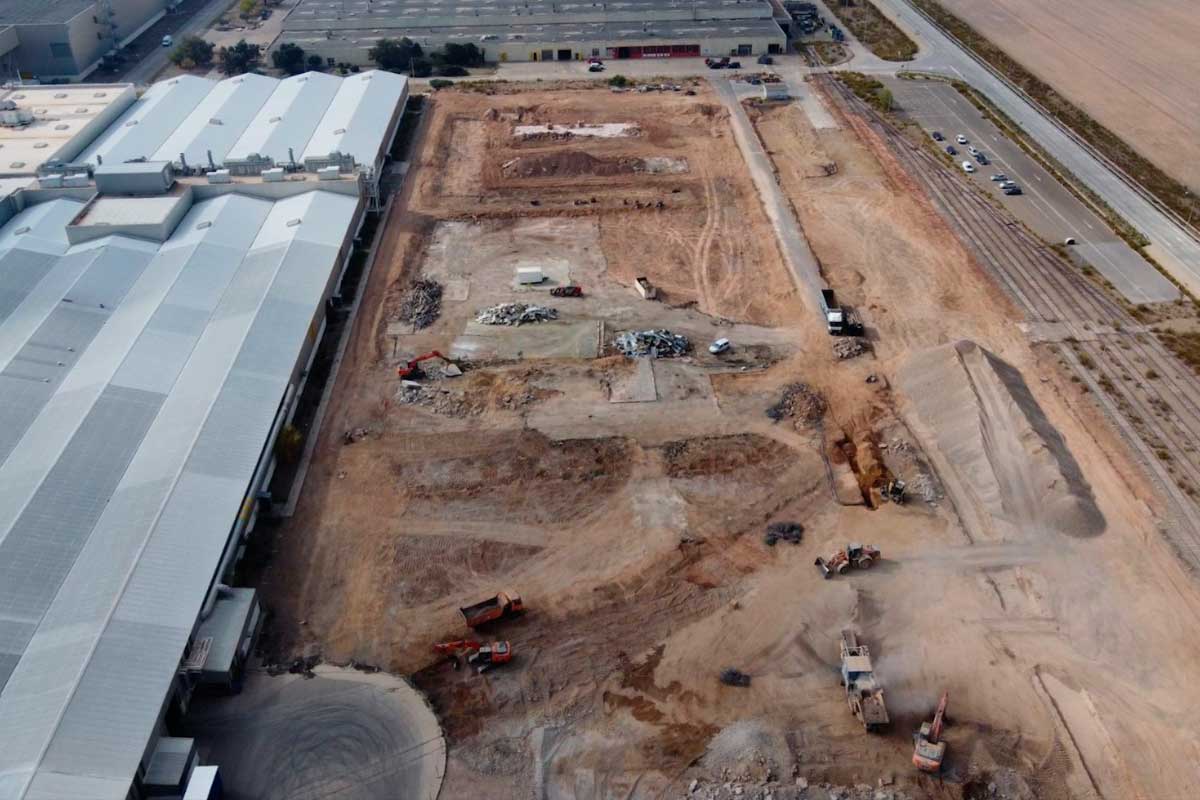
Hundreds of prefabricated concrete pillars are already forming the skeleton of what will become one of Europe's largest battery factories for electric vehicles, on the 89-hectare industrial complex. From the A-68 freeway running alongside the site, motorists can now see the first structures of the auxiliary buildings of the future cell production plant. A spectacular change when one remembers that only a few months ago, the site was still in the earthworks. The investment of over 4 billion euros by the CSE joint venture between Stellantis and the Chinese giant CATL is thus taking on a very concrete dimension.
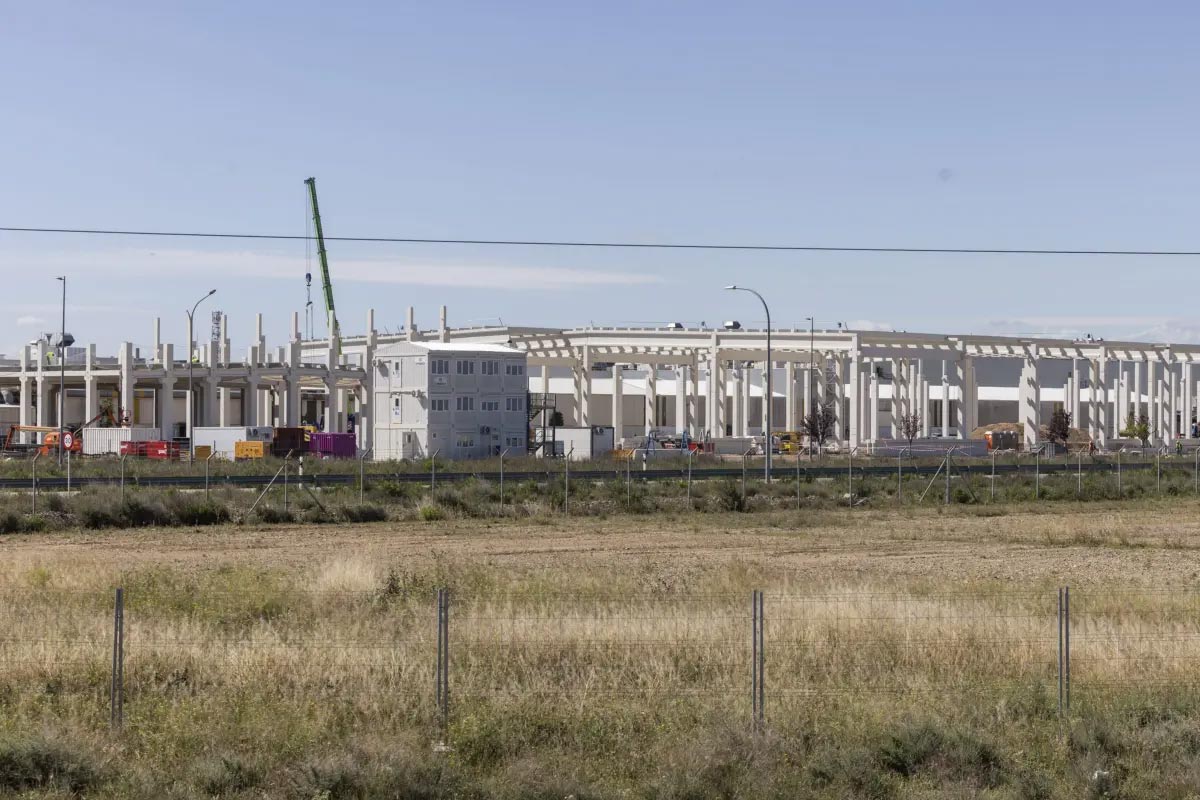
A veritable Tower of Babel on site
Activity on site is already intense. More than 250 people are currently working on the site, divided between some fifty subcontractors. Romanian company Synergy Construct, already involved in the construction of the CATL plant in Hungary, is managing a major part of this phase. It is surrounded by a large number of specialized companies from several countries.
Local observers describe it as a veritable «Tower of Babel». Workers come from Morocco, Algeria, several Latin American countries and Eastern Europe. The management teams also include many Turkish profiles, reflecting Synergy Construct's strong presence in this country. This diversity illustrates the scope of the project. For the time being, however, the Chinese presence remains relatively discreet.
The 2,000 Chinese workers have not yet arrived
One of the most talked-about issues when the project was announced was the planned arrival of almost 2,000 Chinese workers. At this stage, there are still only a few on site. They are mainly engineers, specialized technicians, logistics managers or executives in charge of overseeing the project for CATL.
The expected large numbers of Chinese workers have not yet begun to arrive. Their arrival is planned for the next stages of the project, when the installation of industrial equipment, assembly of production lines and commissioning operations will begin. In other words, the most technical phase is yet to come. This is precisely when the expertise CATL has built up in its numerous battery factories around the world will become indispensable.
The question of how to accommodate them is still under discussion. Today, the preferred solution is to install modular housing in the immediate vicinity of the industrial complex, in order to accommodate this contingent of workers in the best possible conditions.
A strategic plant for Stellantis' future electric cars
In parallel with the construction of the new Gigafactory, other work is already progressing within the Stellantis complex in Figueruelas. A number of existing facilities are being refurbished to accommodate logistics activities and the assembly of battery modules. According to the current schedule, these first activities could begin as early as the end of 2026.
This first phase will involve LFP (lithium-iron-phosphate) batteries, a technology that has become strategic for Stellantis. Less expensive than the NMC batteries used on top-of-the-range vehicles, they should enable the automotive group to offer more affordable electric models. In particular, the Spanish plant will supply future vehicles based on the STLA One platform, including several models produced in the group's European plants.
Aragon sees its biggest industrial project since the arrival of Opel
For the Aragon region, the stakes go far beyond the automotive sector. Local companies are already heavily involved in the project. As the buildings rise from the ground, local residents are beginning to appreciate the scale of the transformation underway.
Many are already drawing parallels with the arrival of General Motors in Figueruelas in the 1980s, an event that profoundly transformed the local economy. More than forty years later, the Stellantis-CATL gigafactory could represent an equally important turning point.
For the moment, only the first pillars are visible. But behind these concrete structures is a project destined to become one of Europe's leading battery production centers. And when the thousands of Chinese technicians who have been announced join the site, the transformation of Figueruelas will take on an even greater scale. As a reminder, the future battery for the electric Fiat 500 is due to come from this plant... as early as 2027.
 English
  French
  Italian
  Spanish
  German
  Japanese
  Dutch
Dutch