

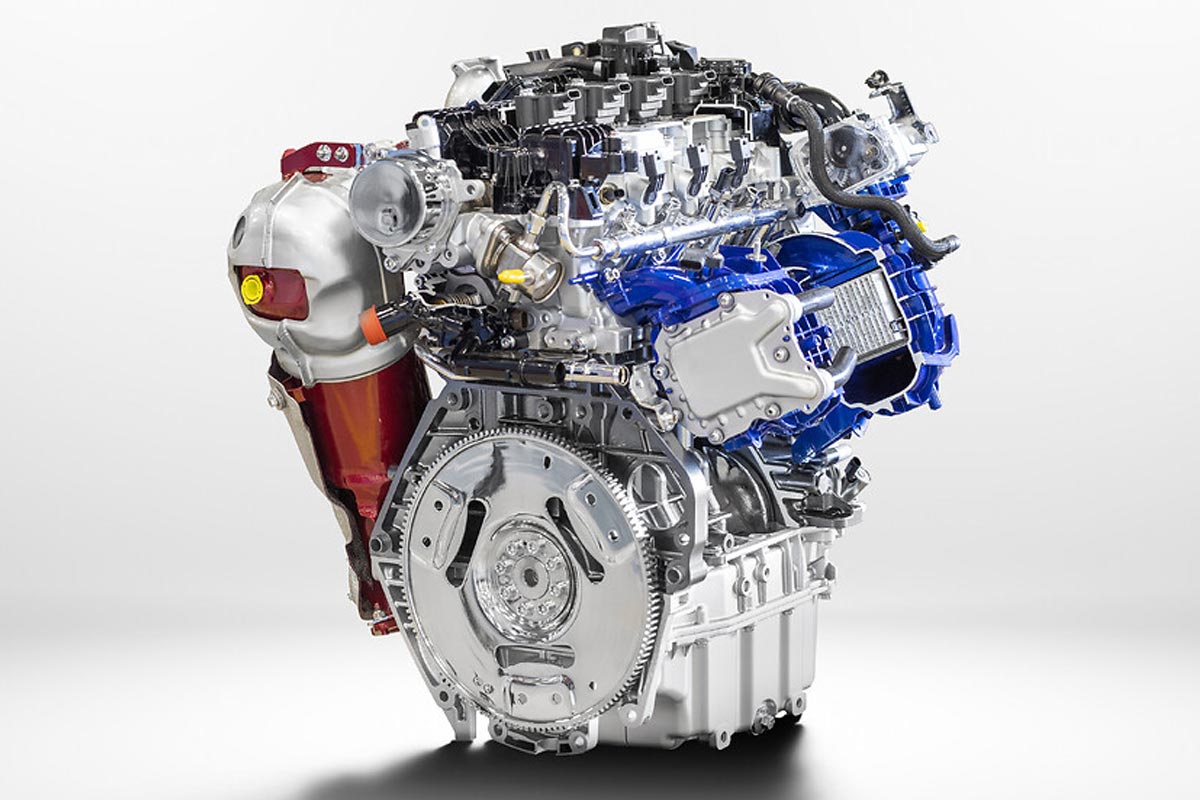
For several weeks now, a basic trend has been emerging at Stellantis. After years of domination by French engines, the group seems to be turning a new corner: turning the page on the famous 1.2L PureTech in favor of Italian GSE Turbo engines developed by Fiat. But beyond the “what”, one question keeps coming up: when will this changeover become a reality on cars sold in Europe?
Euro 7, the real tipping point
The answer lies not only in internal industrial decisions, but also in the European regulatory calendar. The future Euro 7 standard will play a decisive role in this transition.
November 29, 2026 marks the first milestone: all new cars type-approved from this date onwards will have to comply with the Euro 7 standard. One year later, on November 29, 2027, this obligation will be extended to all new vehicles sold in Europe, even those already type-approved. From that point onwards, Euro 6 models will no longer be allowed on the market. In other words, the PureTech engine will not be replaced immediately, but will gradually become unavoidable as new generations of vehicles come onto the market.
A gradual transition, model by model
In practice, this means that recent models will not be affected immediately. A Fiat Grande Panda or a future model like the Fiat Grizzly will logically continue their careers in the short term with current engines (1.2L EB2 Gen3, recently renamed Turbo 100) as long as they do not require new homologation.
However, as soon as a model is extensively restyled or replaced, the situation will change. A case in point is the Alfa Romeo Junior If a restyling takes place around 2027, there's a good chance that it will abandon the PureTech and adopt a Fiat GSE hybrid engine. It's a gradual transformation, almost invisible at first, but one that will eventually affect the entire range.
Brazil, the laboratory of Europe's future
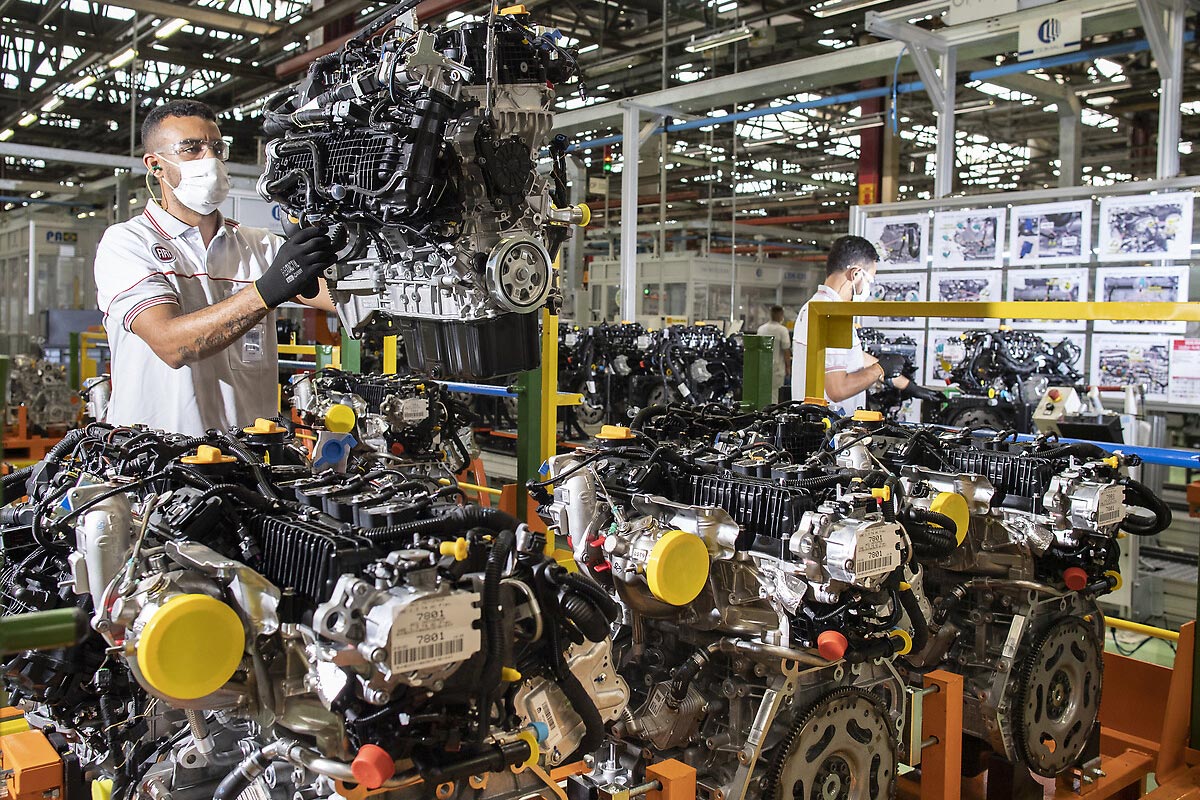
This shift is not just a theory. It's already underway elsewhere, notably in South America. In Brazil, the recently restyled Jeep Avenger is already powered by a Fiat 1.0L hybrid ethanol engine, coupled to a 7-speed CVT transmission. This configuration develops around 130 horsepower. This choice is not insignificant: in Brazil, more than 500,000 Fiat, Peugeot, Citroën and Jeep vehicles are sold with a Fiat engine every year. By the end of 2025, the Betim plant will have produced 1,000,000 Fiat GSE engines. What we're seeing today in Brazil could well foreshadow what will happen on the Old Continent in the next few years.
PureTech condemned... but not the entire French strategy
But there are some nuances. While the 1.2L PureTech clearly appears to be at the end of its life cycle, not all the engines from PSA's heritage will disappear. The 1.6L engine, in particular, should continue its career. A new rechargeable hybrid (PHEV) version has been launched. recently announced at Peugeot, while a classic hybrid evolution (HEV) has just been launched for the US market. This means that Stellantis' strategy is not to replace one technology with another, but rather to rebalance its internal strengths by relying more on Italian engines for small and medium displacements.
This change will probably not make the headlines when it happens. It won't be a sudden announcement, but a succession of launches and restylings gradually integrating these new Fiat engines. What was unthinkable just a few years ago is now becoming a reality: Fiat engines could well become the new standard for the group, where the PureTech dominated until recently.
 English
  French
  Italian
  Spanish
  German
  Japanese
  Dutch
Dutch
Bravoooooo!!!!!!!!
So if the Junior will probably get the GSE, there is a good chance that also the 600 and Avenger facvelift will eventually get the engines, right?
Why do you imply that the choices are based on the origin of the engines? If the Puretech was chosen in the first place, it's mainly because it was better suited to Euro 6 and the platforms, and now Euro 7 is changing things, but that doesn't mean that one is inherently better than the other. By the way, the gearboxes are still the original PSA ones!
It's not about being better, it's about being more reliable, which seems logical. .
Yes, of course, the PureTech is a better engine than the FireFly, as we all know...
The Puretech engine's achilles heel is the ‘wet cambelt’ where the belt runs in oil within the engine. This belt has longevity issues as a result with tge belt breaking before the stated replacement service schedule. This is well known and discussed on many forums
In terms of Euro 6 CO2 emissions, yes.
Since when has Puretech been better than Firefly? How many claims has Stellantis had with Puretech? Thousands. And how many has Fiat had with the Firefly? 0!
The Firefly 1.0L vibrates less and is more reliable than the Puretech 1.2L...
When a group owns such renowned engine manufacturers as Alfa, Maserati and Fiat....and decides to equip its models with French dung, it shows the incompetence of the group's management! 😉
I think that, in retrospect, we'll say that for 10 years these brands went through a parallel dimension where logic wasn't present. A bit like Trump making us live in an episode of The Simpsons on a global scale...
No, keeping the Puretech made sense, as it emits less CO2 and was adapted to the platforms. The latest Fiat, Alfa and Lancia models are based on PSA platforms, without which these vehicles would never have seen the light of day.
The problem with the Puretech is that it's segmented, with a lot of play. The problem with Euro7 is that they have to increase the compression ratio, and that poses a problem, hence the switch to Firefly, which seems more appropriate.
De incompetentie is een zekerheid maar waar het directies om gaat is zoveel mogelijk geld te besparen voor hogere bonussen zelfs als blijkt dat het achteraf een grote mislukking is.
Het is gewoon de ene mest door de andere vervangen. Frans of Italiaans, het stinkt allebei. Spijtig, want ooit waren de italianen de kampioenen van het fabriceren van relatief goedkoop te onderhouden, aangename motoren ... Die tijd is helaas al even voorbij.
N'importe quoi , votre analyse est de mauvaise fois , vous parle pour rien dire !!!
Helemaal mee eens! Een Alfa- of Abarthliefhebber zal dat nooit kopen, en ook geen emotieloze duracell konijnen. Alfa en Fiat hadden vroeger een fantastisch en groot modellengamma, maar wat blijft er nog van over? Heel triest.
And what did you mount your Firefly in, they weren't compatible with PSA platforms.
I motori francesi non sono mai stati affidabili , e dietro tutte queste manovre c'è la volontà di sminuire il più possibile la forza industriale italiana non solo automotive ,ricordate la mancata acquisizione di mediaset? E adesso ii francesi stanno facendo una brutta figura anche con la collaborazione della Germania per la progettazione del super aereo da combattimento sono anni che buttano soldi ma l'aereo è INAFFIDABILE...e a chi si sono rivolti per risolvere la figuraccia difronte all'Europa???? Alla LEONARDO ITALIANA
Ich bin mit meinem italienischen Motoren immer sehr zufrieden gewesen.
Der alte 900er Vergaser mit 45PS, der Lambredi 2,0l mit 113PS in der Lancia Konfiguration mit 2 Ausgleichswellen, der 20VT mit 220 PS und der 1,4l Multiair Turbo mit 140PS.
Die ersten 2 weit über 200Tkm, mein erster 20VT 180Tkm (dann leider Unfall)
Mein jetziger 20VT 130TKm, fit wie Turnschuh
Der Multiair auch schon über 200Tkm und kein bisschen Ölverbrauch, erster Turbo, das Ding läuft fantastisch.
Solange ich noch Verbrenner fahre, will ich keine anderen Motoren wie die italienischen.
De incompetentie is een zekerheid maar waar het directies om gaat is zoveel mogelijk geld te besparen voor hogere bonussen zelfs als blijkt dat het achteraf een grote mislukking is.
The 1.6 THP engine's commercial name dates back to the late 2000s, and was co-developed with BMW for the minis of the time. It is chain-driven, not belt-driven. It had reliability problems in the early days, but has since become more reliable. As usual
A boosted version equipped the peugeot rcz and 308 GTI with 270 hp and then 268 hp to meet anti-pollution standards. Now it's a rechargeable hybrid.
The purtech has been completely redesigned in response to reliability problems.* The purtech has been completely redesigned in response to reliability problems.* The purtech has been completely redesigned in response to reliability problems.
You don't have to be religious
Fiat bravo 1.4 t-jet 16v 150ps
152000km top leuft wie eine Biene
Danke Fiat
Gruß Peter Lüdtke