

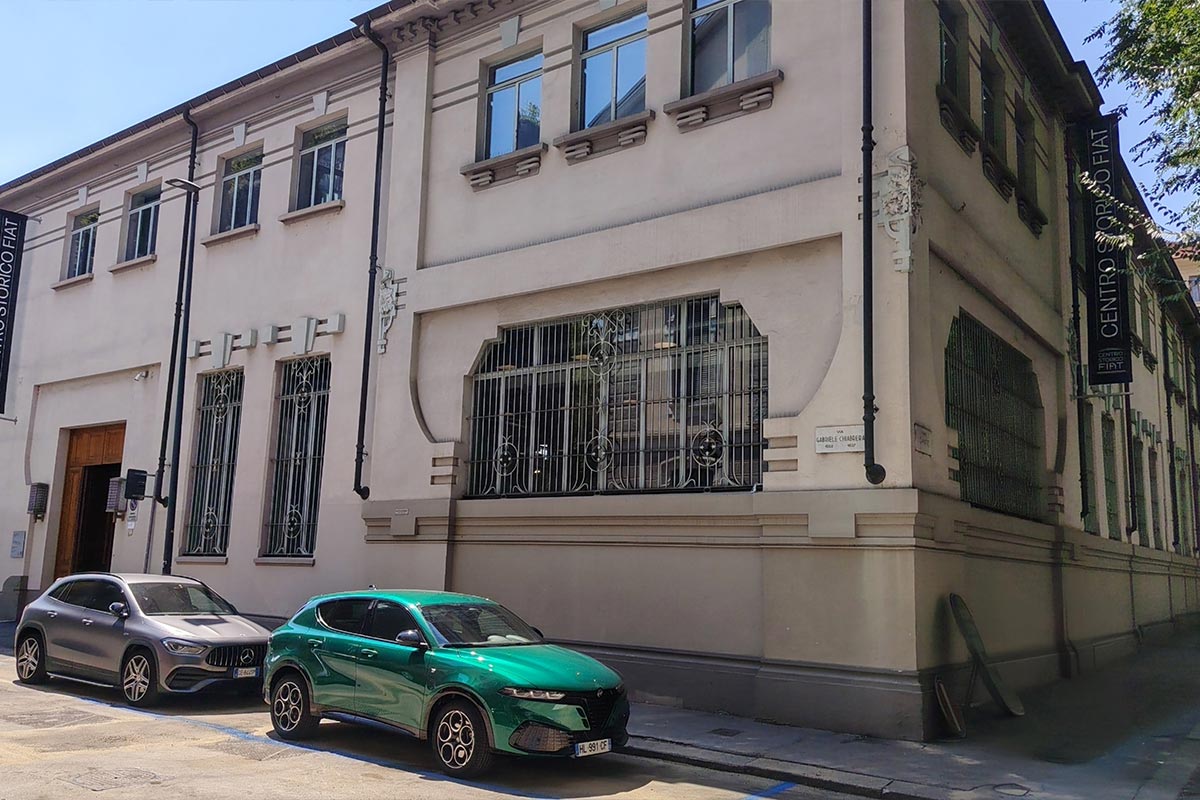
Turin is a city still unknown to many tourists, yet the former capital of the Kingdom of Piedmont-Sardinia has so much to offer in terms of urban planning, architecture, and cultural heritage. And that’s a good thing: even in the middle of summer, it doesn’t feel as crowded as Florence or Rome. Car enthusiasts will be in for a treat when visiting the stronghold of FIAT : In addition to the National Automobile Museum and the must-see Lingotto—the famous factory with a rooftop track that opened in 1922—we recommend visiting the FIAT Centro Storico on Corso Dante.
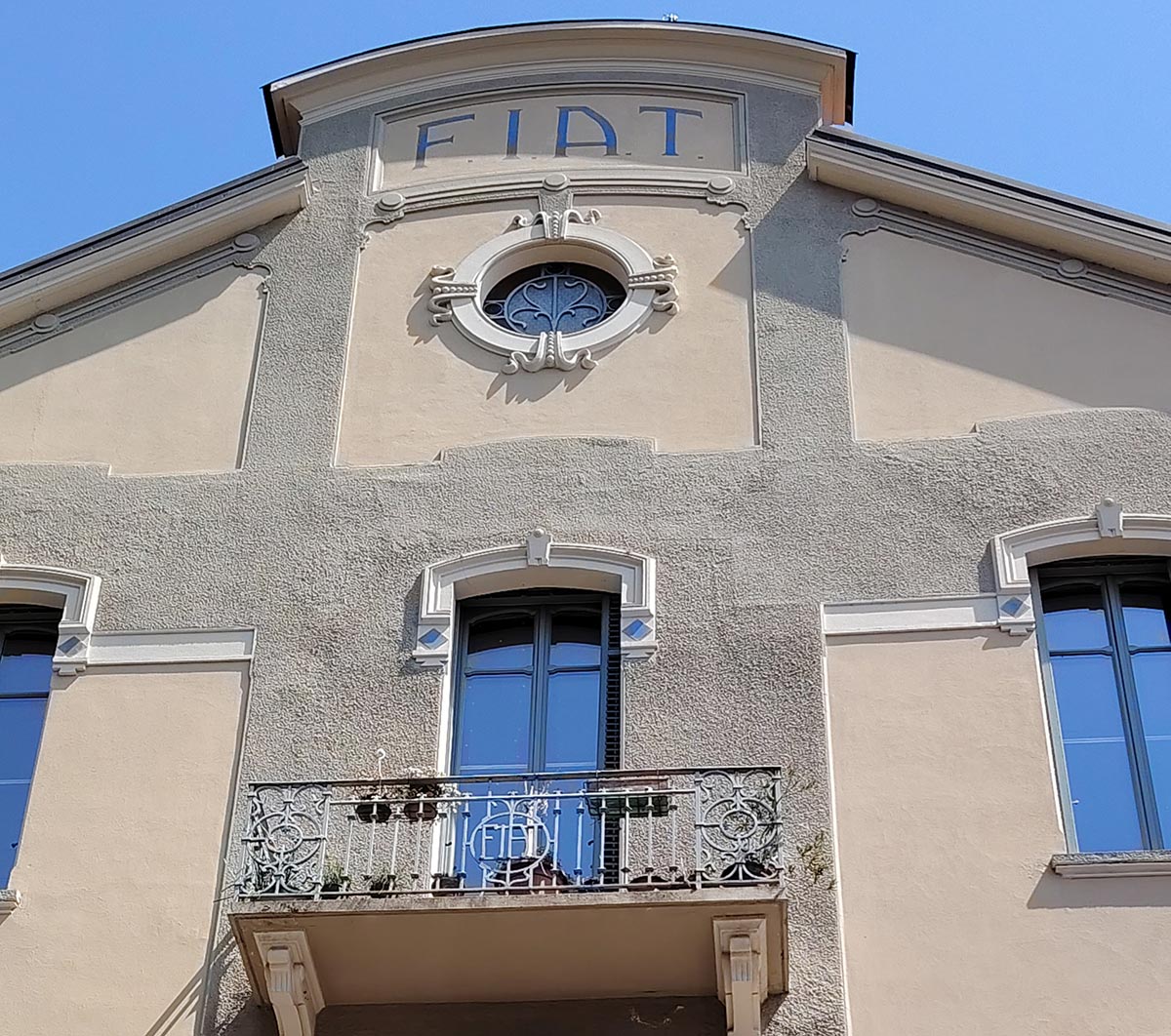
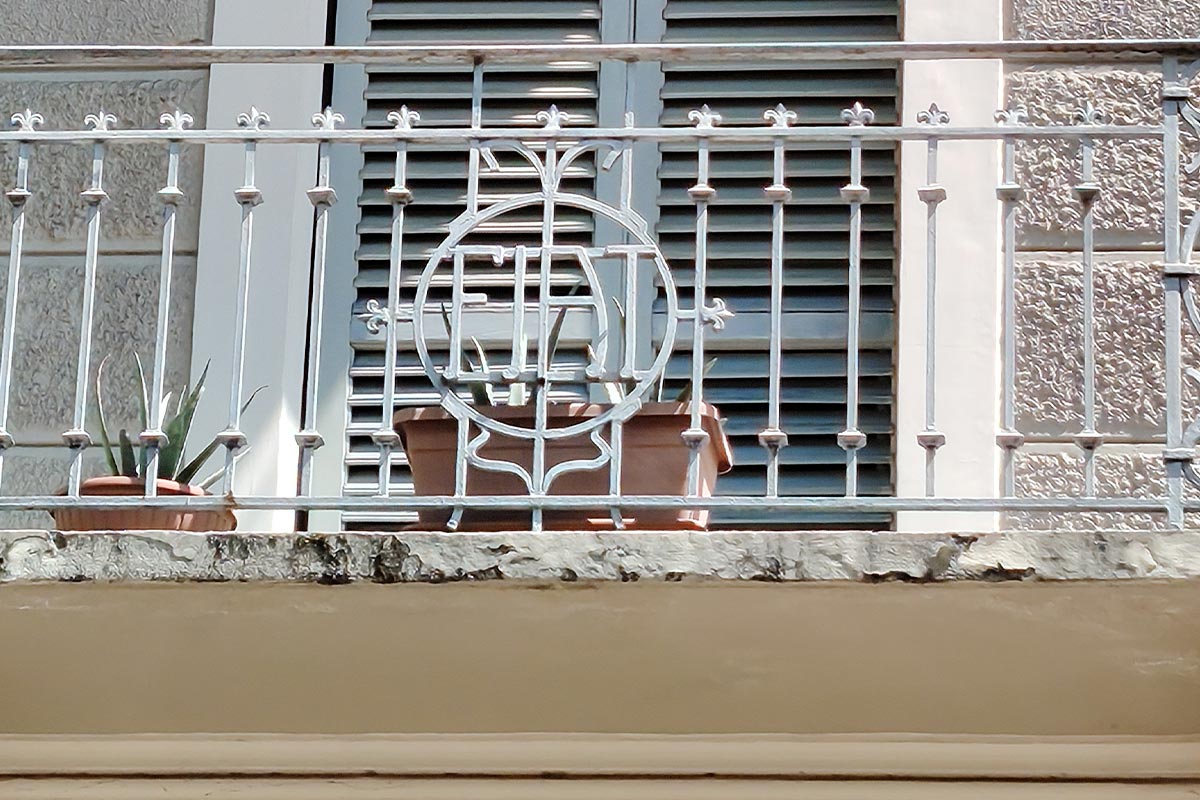
The Fiat Historical Center houses the brand’s museum and the company’s archives in a magnificent Art Nouveau building adjacent to the original Fiat workshops, where production first began before the Lingotto was inaugurated. Even before entering the building, visitors can admire the ornate facades and balconies that immediately reveal the site’s automotive heritage. Inside, a display recreates the design office of Dante Giacosa, the iconic designer who created, among other models, the Fiat 600 and Nuova 500.
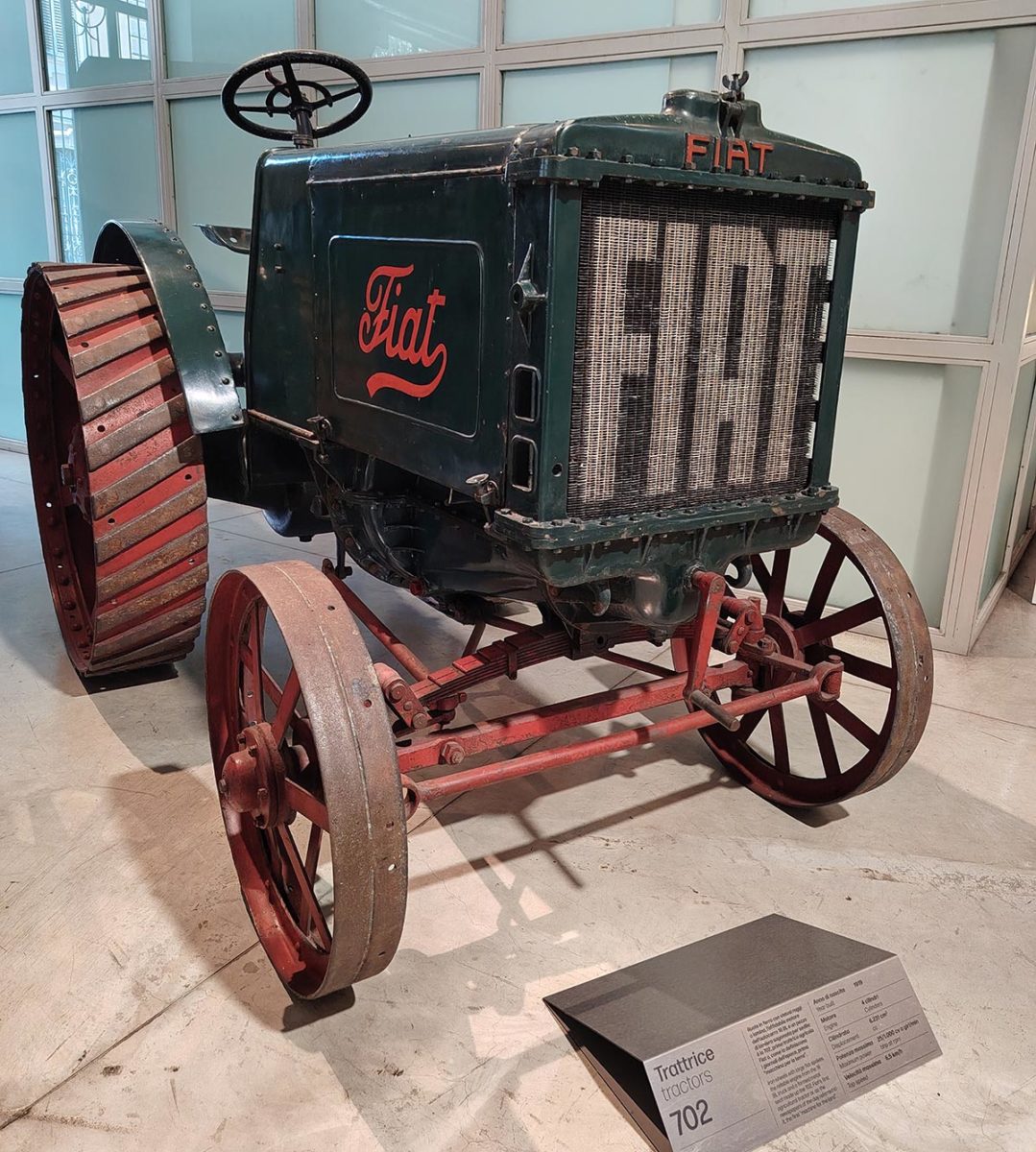
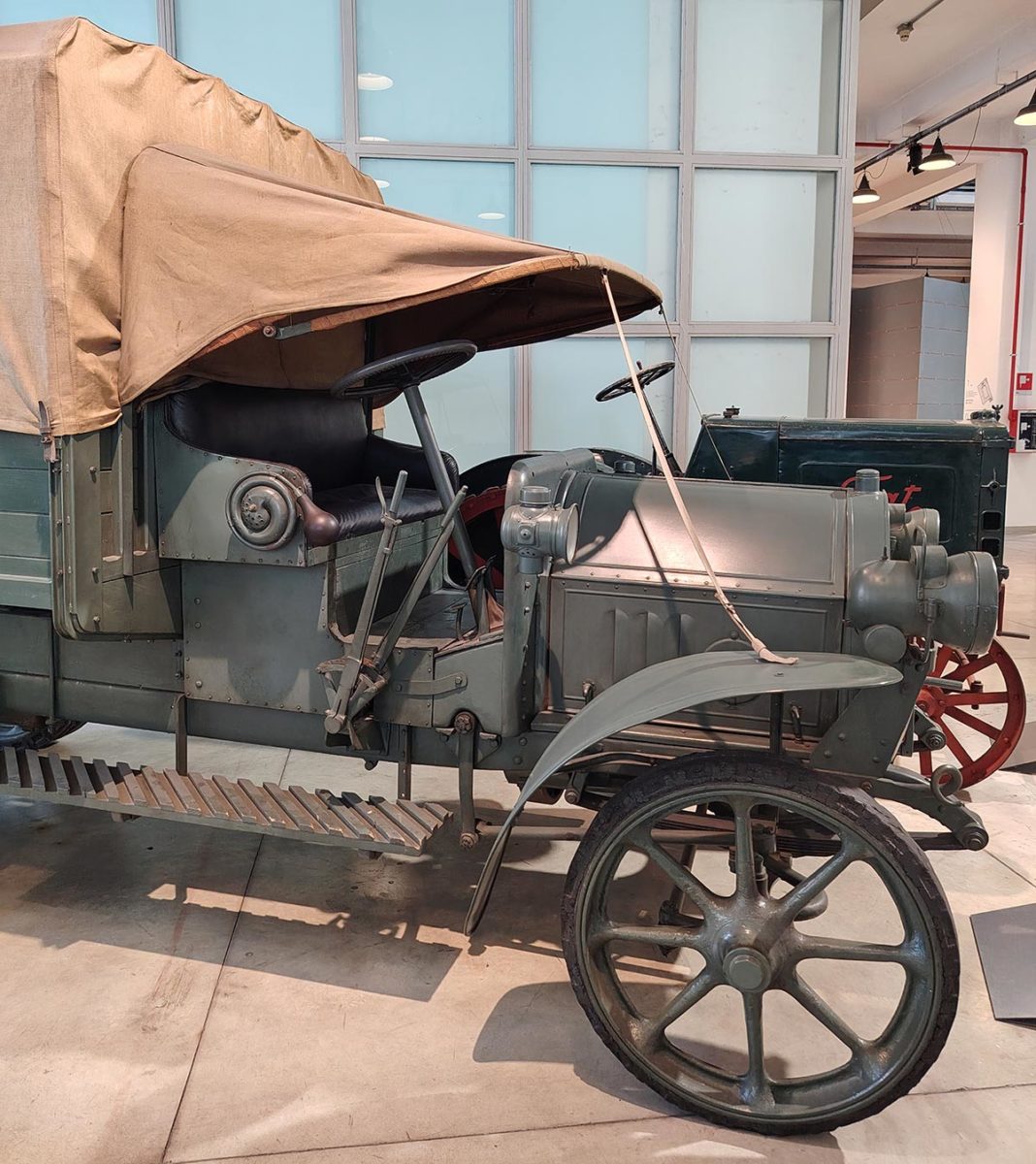
The first floor is, naturally, dedicated to the car brand, but visitors can also admire the brand’s first tractor, the 1919 Fiat 702; the 18BL truck used by the Italian army during World War I; and the Littorina, a railcar chassis used between the two world wars, not to mention a few bicycles. Multimedia stations also showcase numerous archival clips, including reports on the inauguration of the Lingotto and the Mirafiori plant in 1939.
When FIAT Dared to Make a Sports Coupe
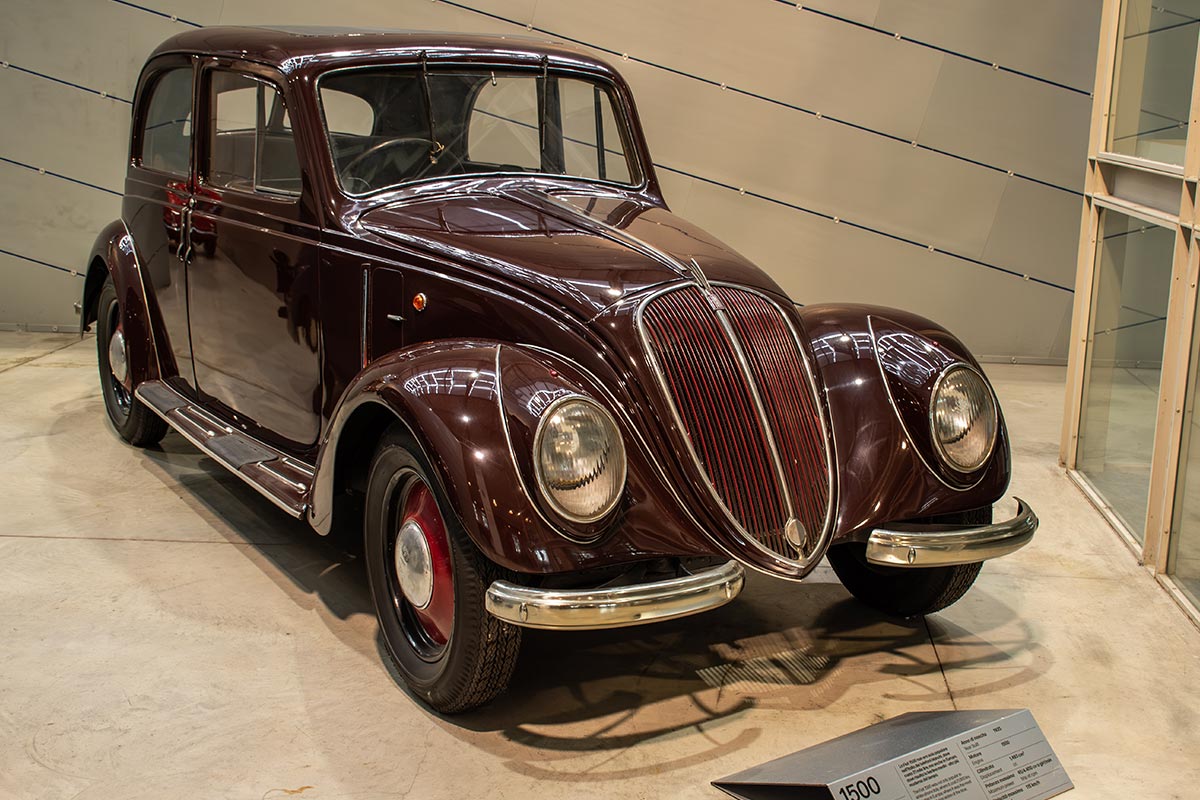
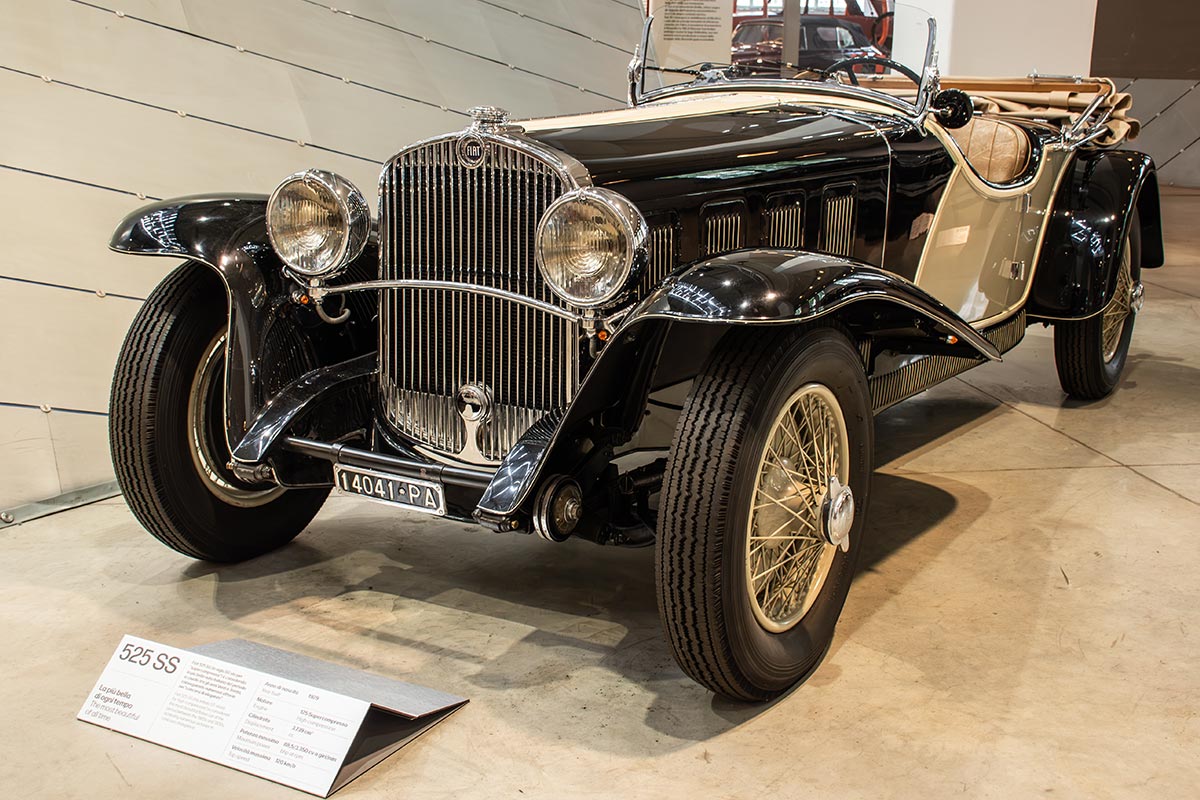
In addition to the iconic Fiat Ballila, Topolino, 500, and 700—which helped put Italians behind the wheel—what really stands out is the beauty of the coupes that FIAT produced over the decades: visitors can admire the 1930 525 SS, the 1952 V8 (with its distinctly American styling), the elegant 1961 2300S coupe, and even the 1969 Dino 2400, which owed its name to the use of the Ferrari Dino engine. These were sleek Fiats, a lineage that endured until Chris Bangle’s FIAT coupe in the 1990s, before fading away…
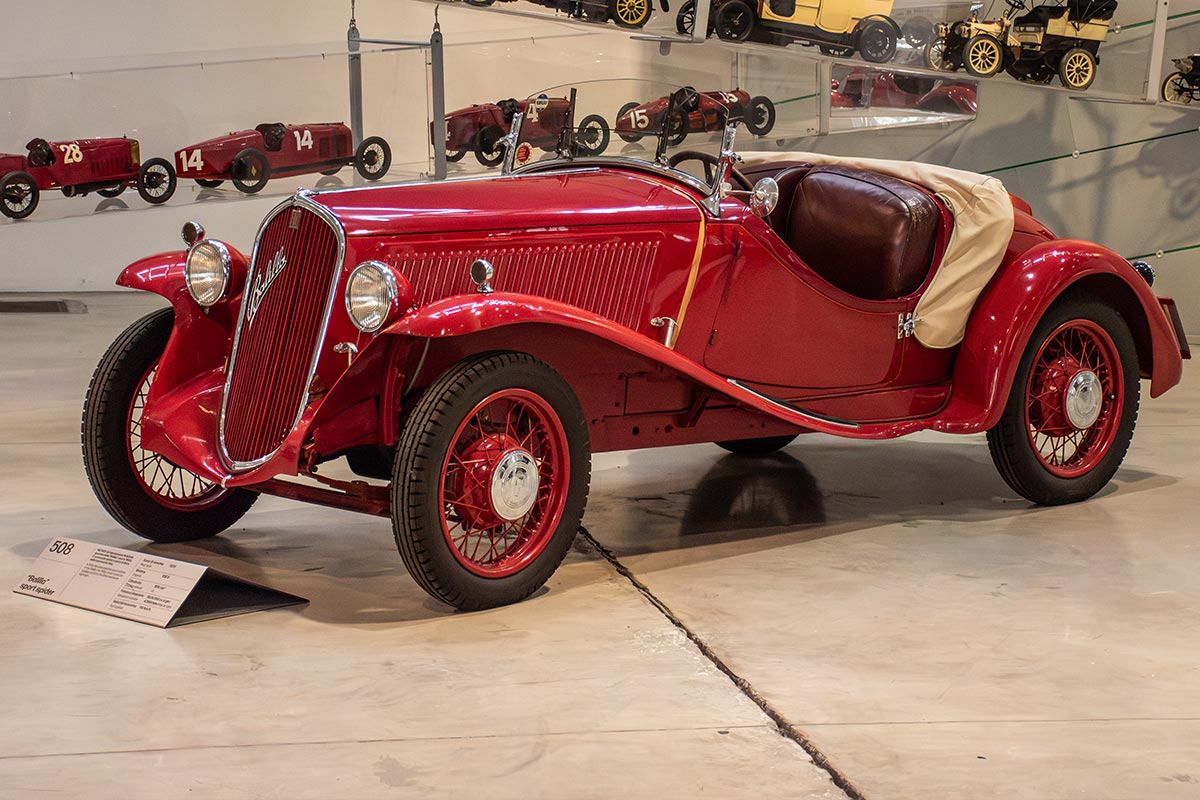
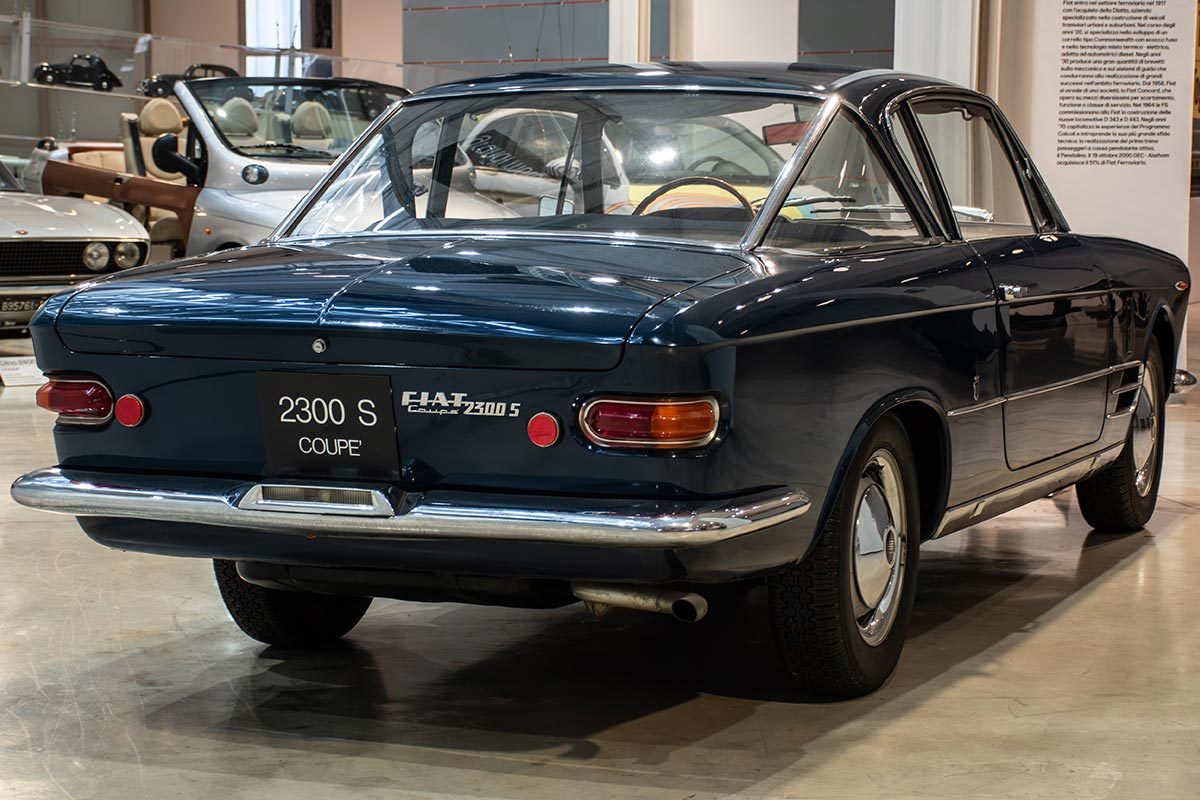
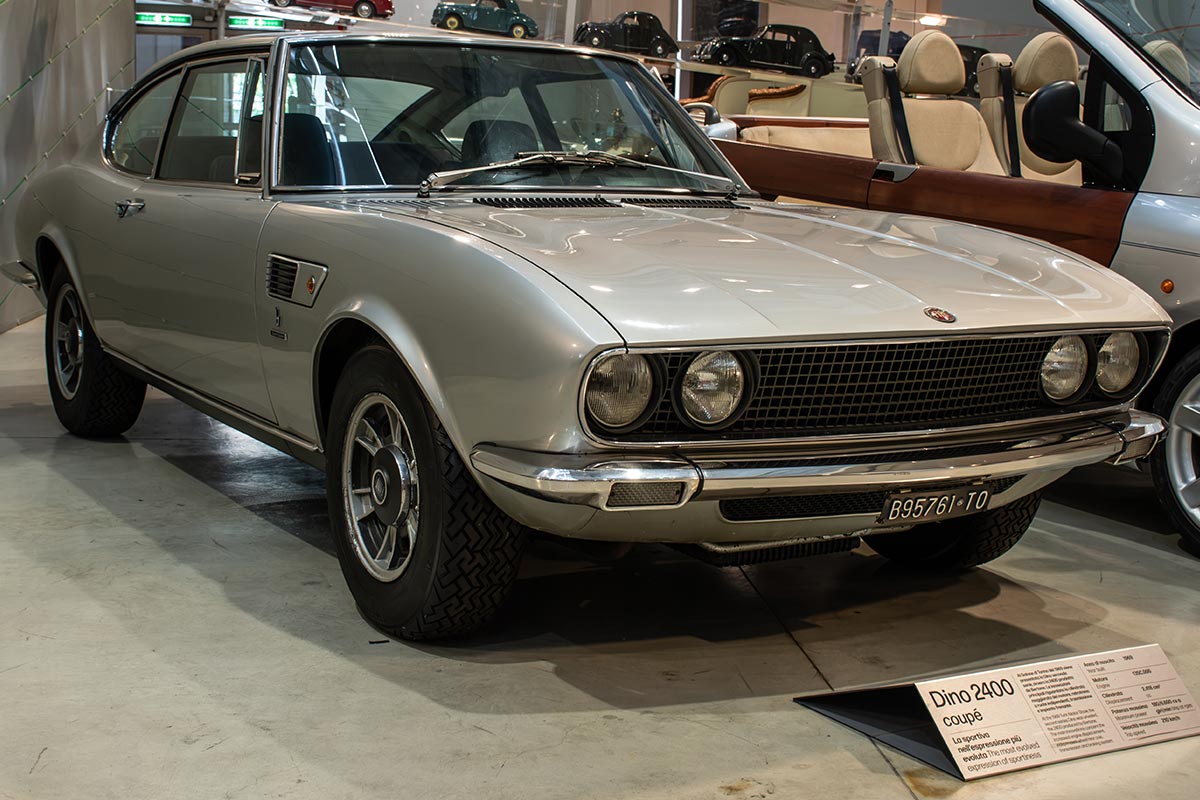
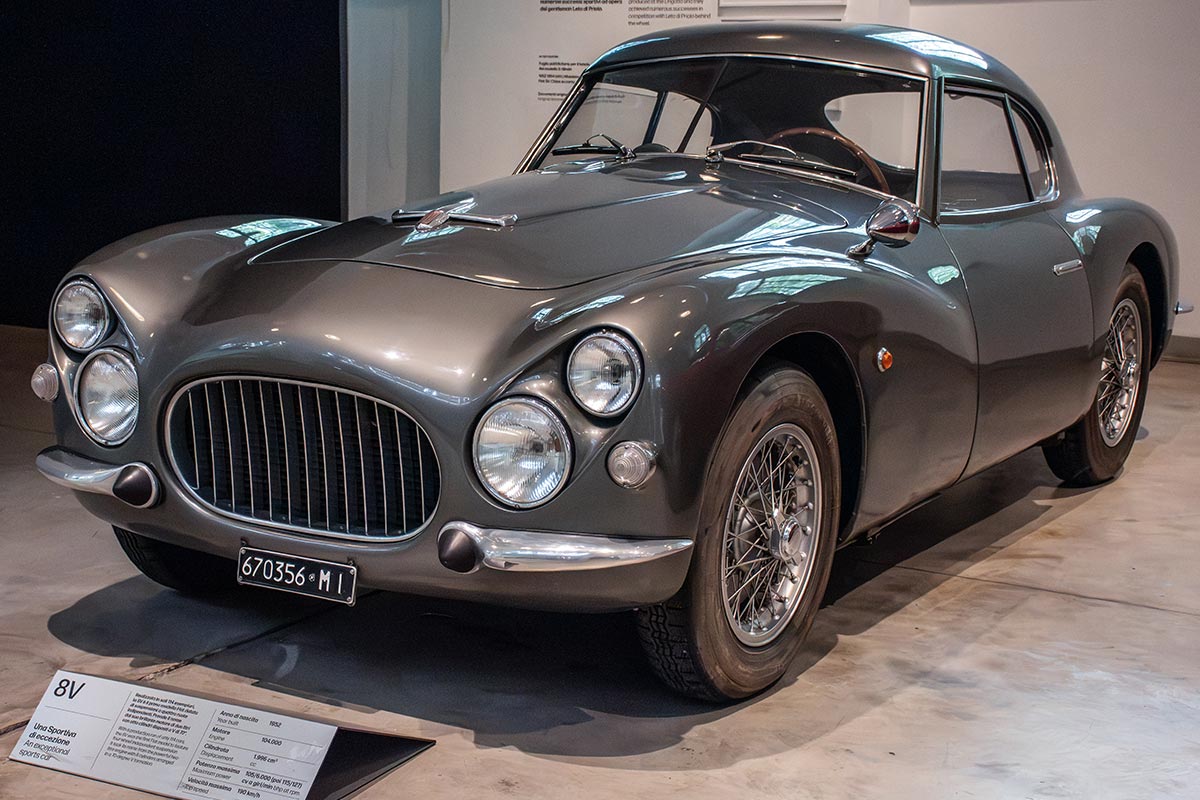
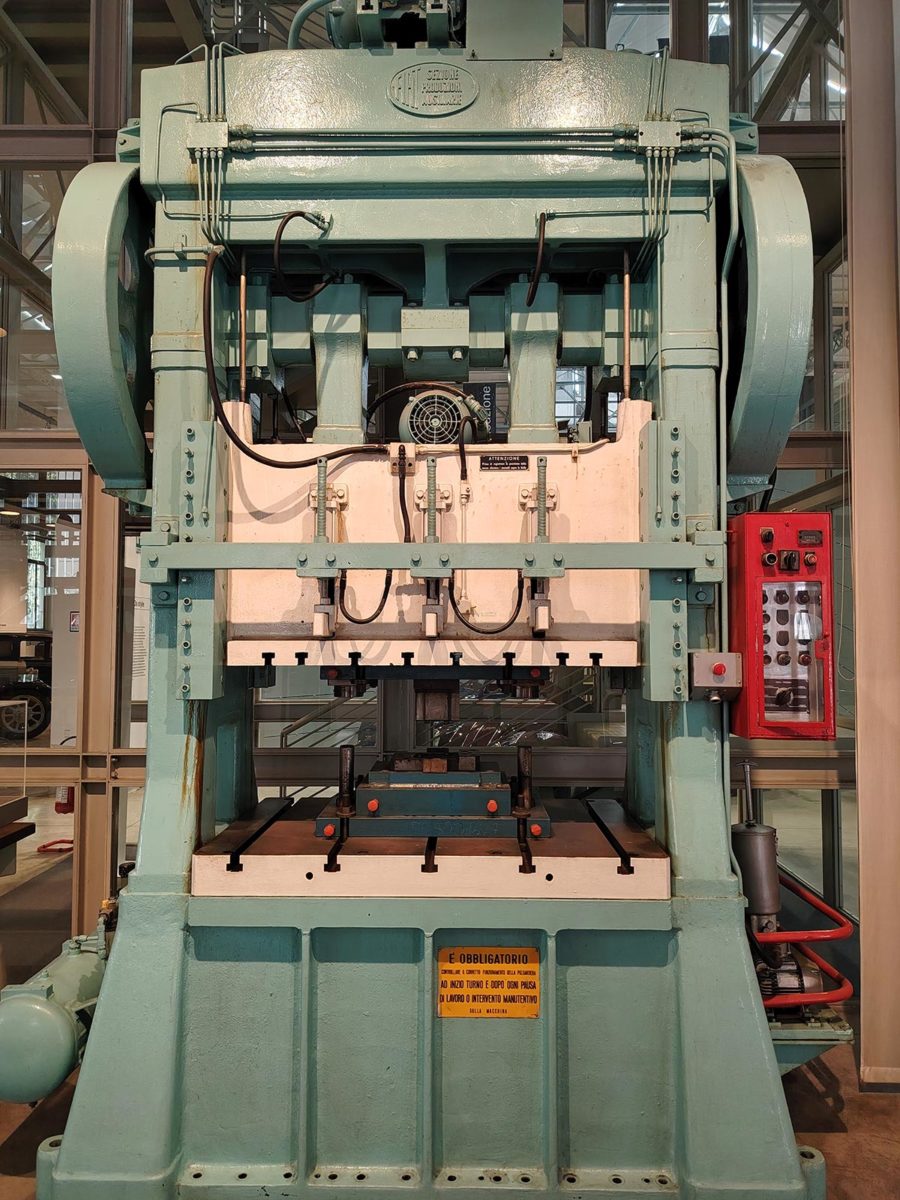
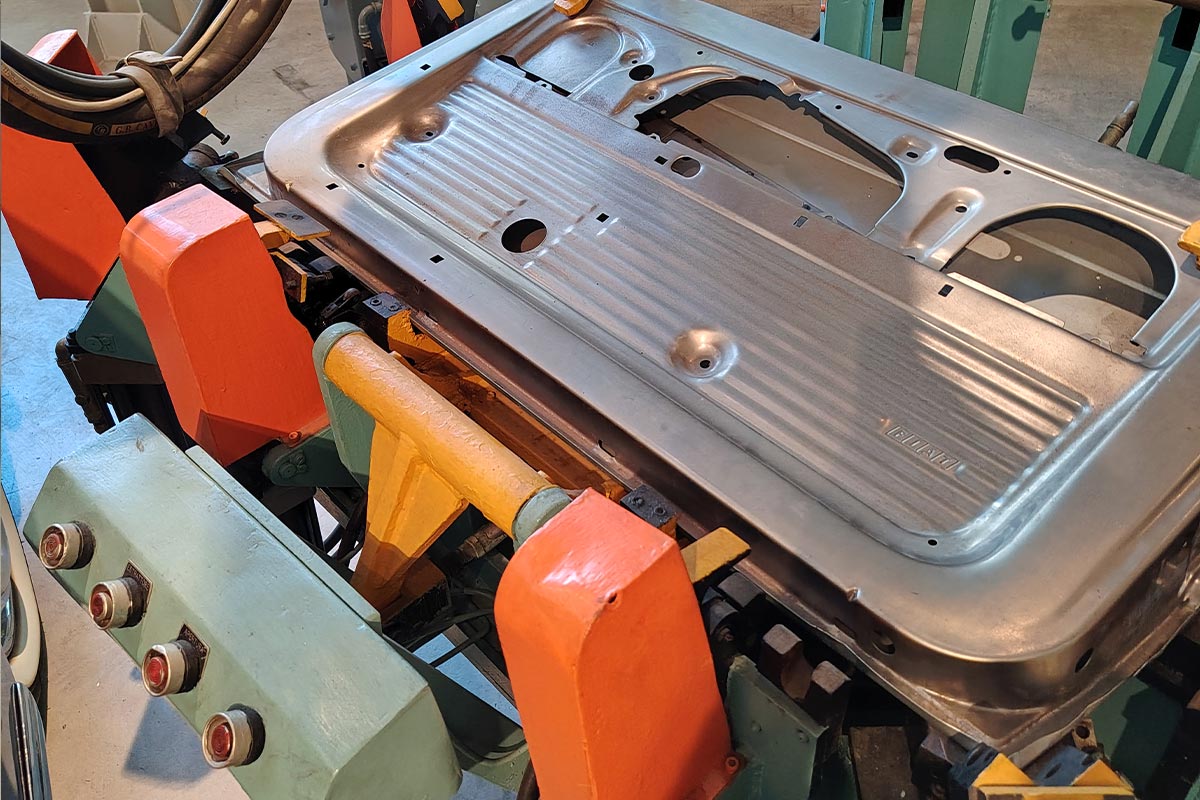
This ground floor also showcases industrial expertise, with an exhibition of machine tools and a section of an assembly line—some of which are very old (early 20th century), while others date from the 1960s and 1970s, just before the advent of automation.
FIAT Takes to the Skies
On the second floor, visitors enter another dimension that highlights FIAT’s broad industrial diversification, with a section dedicated to aviation and maritime transport. The Fiat Aviazione division was established in 1918 as a successor to the Società Italiana Aviazione, a Fiat Group company founded in 1916 whose products had proven their worth during World War I. In 1969, the Fiat and Finmeccanica groups merged their respective aeronautics divisions to create Aeritalia, which became Alenia Aeronautica in 1990. In 2003, the Fiat group permanently spun off its subsidiary, which became Avio.
Monstrous engines
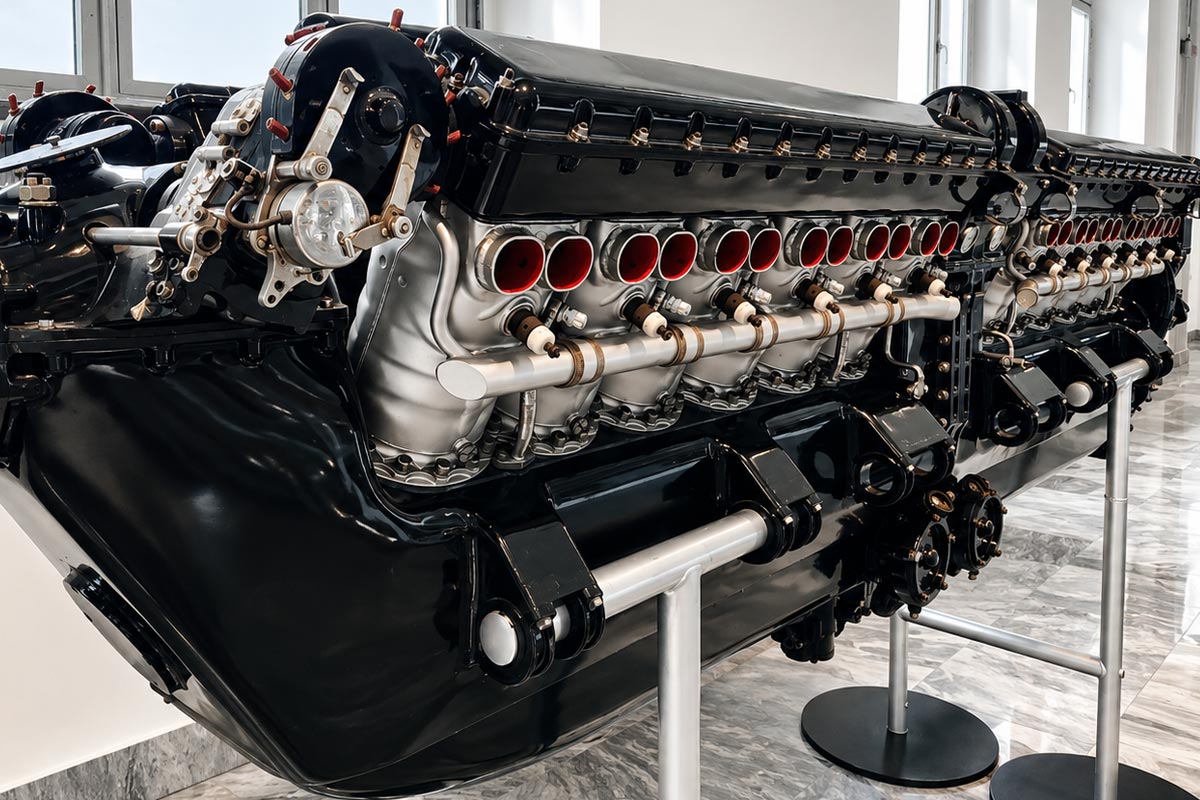
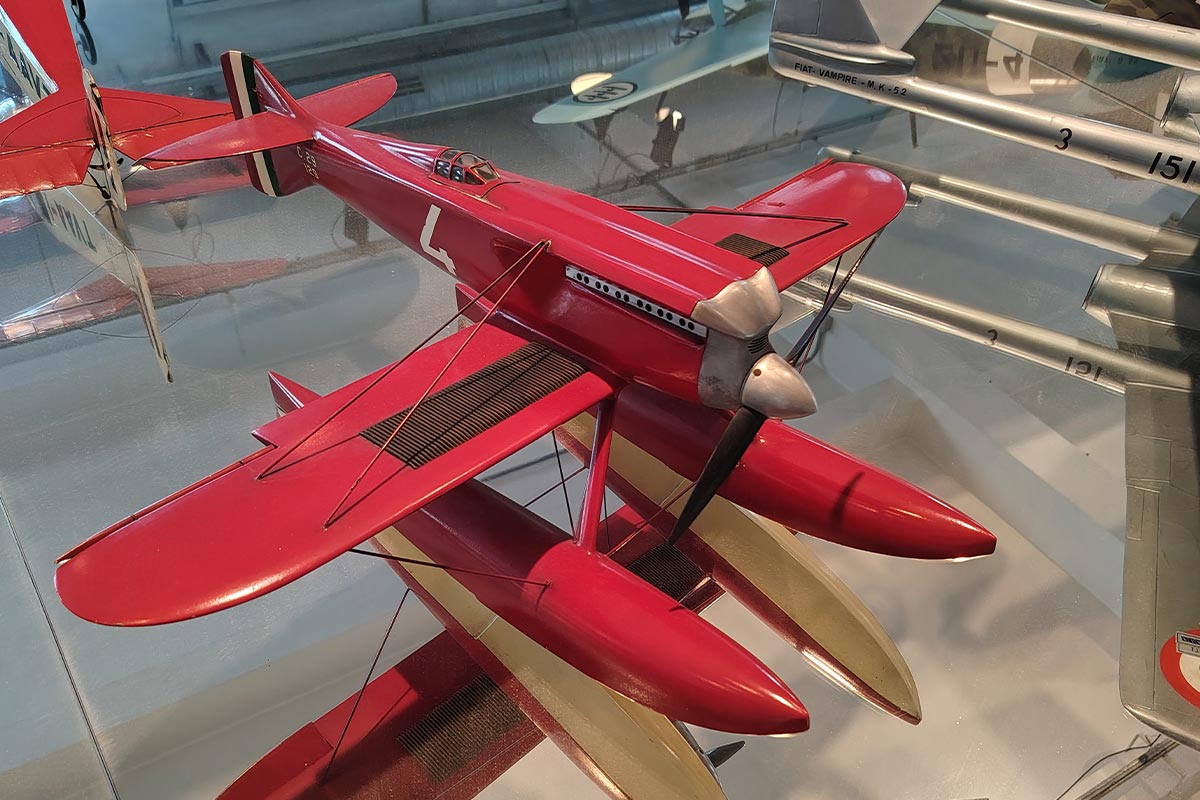
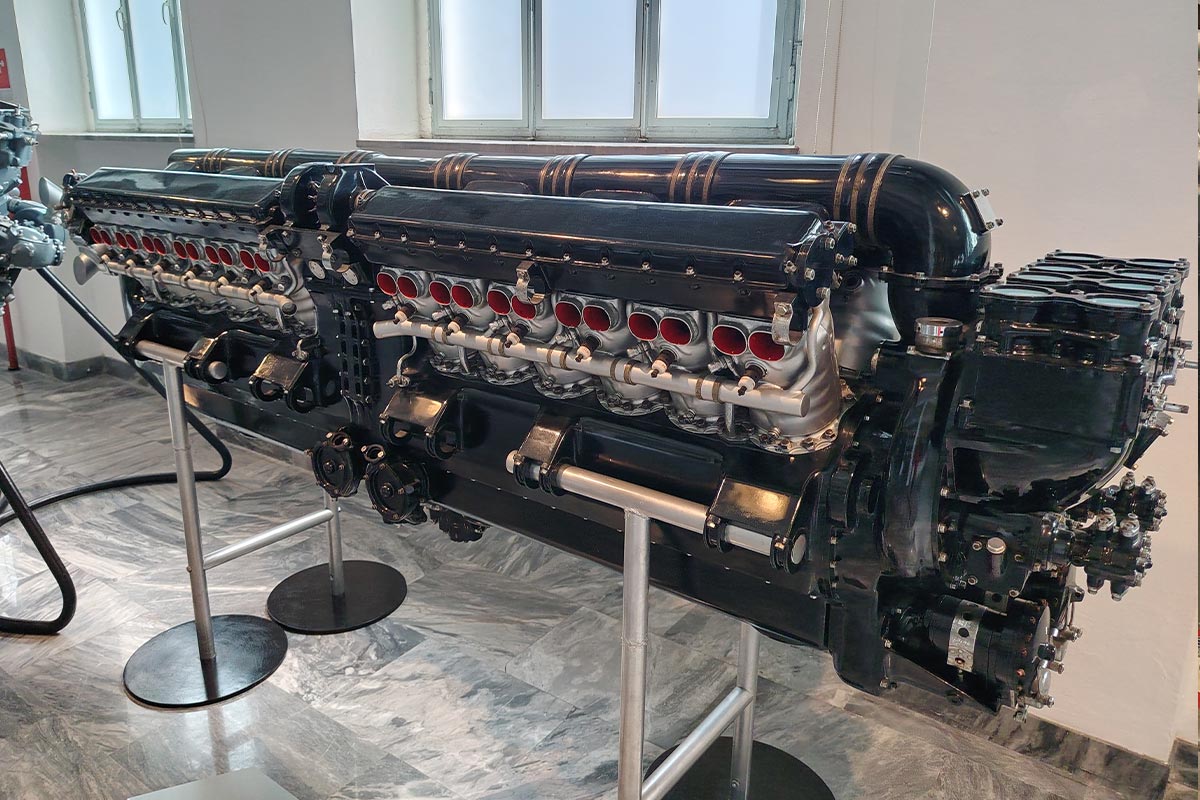
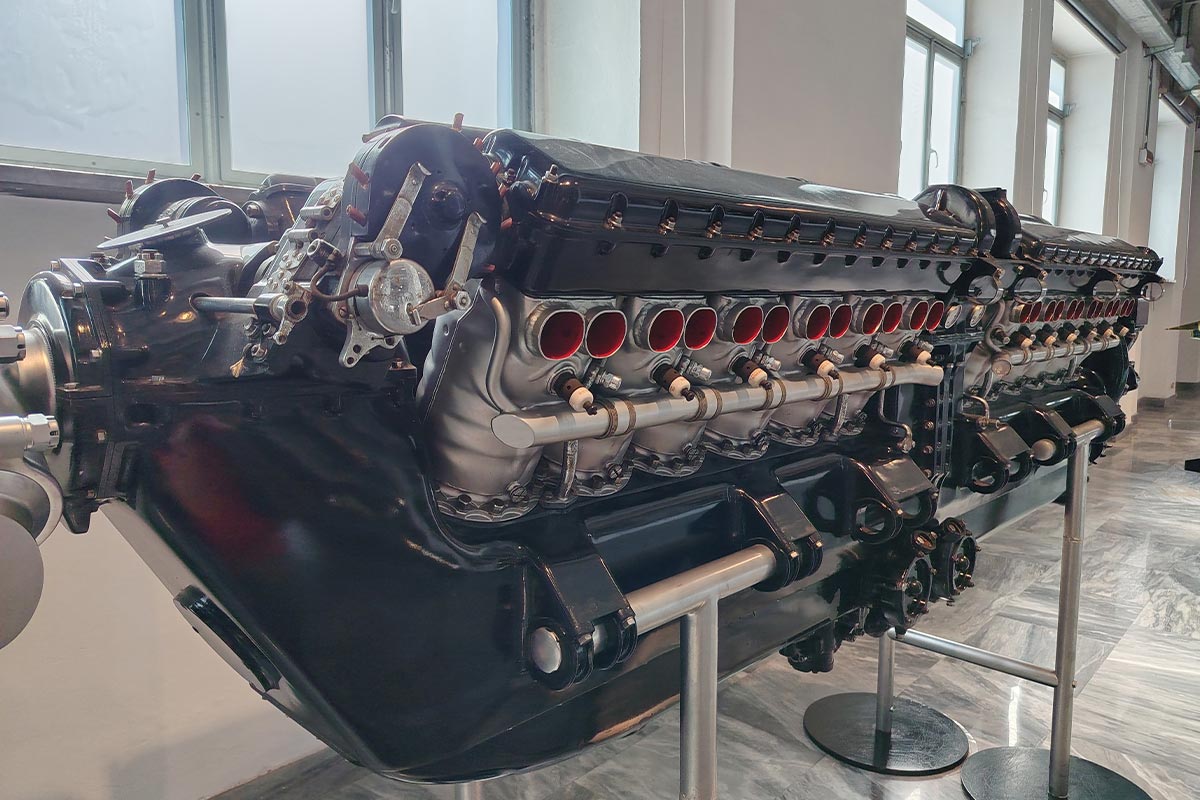
The engines on display are primarily pre-war fighter and racing aircraft engines, from a time when speed races and seaplane races were very popular. Notable examples include the 1917 A14 engine, featuring a 57-liter V12 engine producing 700 ch, as well as the A22R, which powered the seaplanes in Italo Balbo’s fleet during their heroic Rome-Rio crossing in 1930–1933. The most incredible of all remains the AS6 engine, which powered the Macchi MC72 racing seaplane, which set a speed record of 709 km/h for piston-engine seaplanes in 1934—a record that still stands today. The engine is a 24-cylinder (two coupled V12s) unit with a displacement of 51 liters, producing up to 3,100 ch!
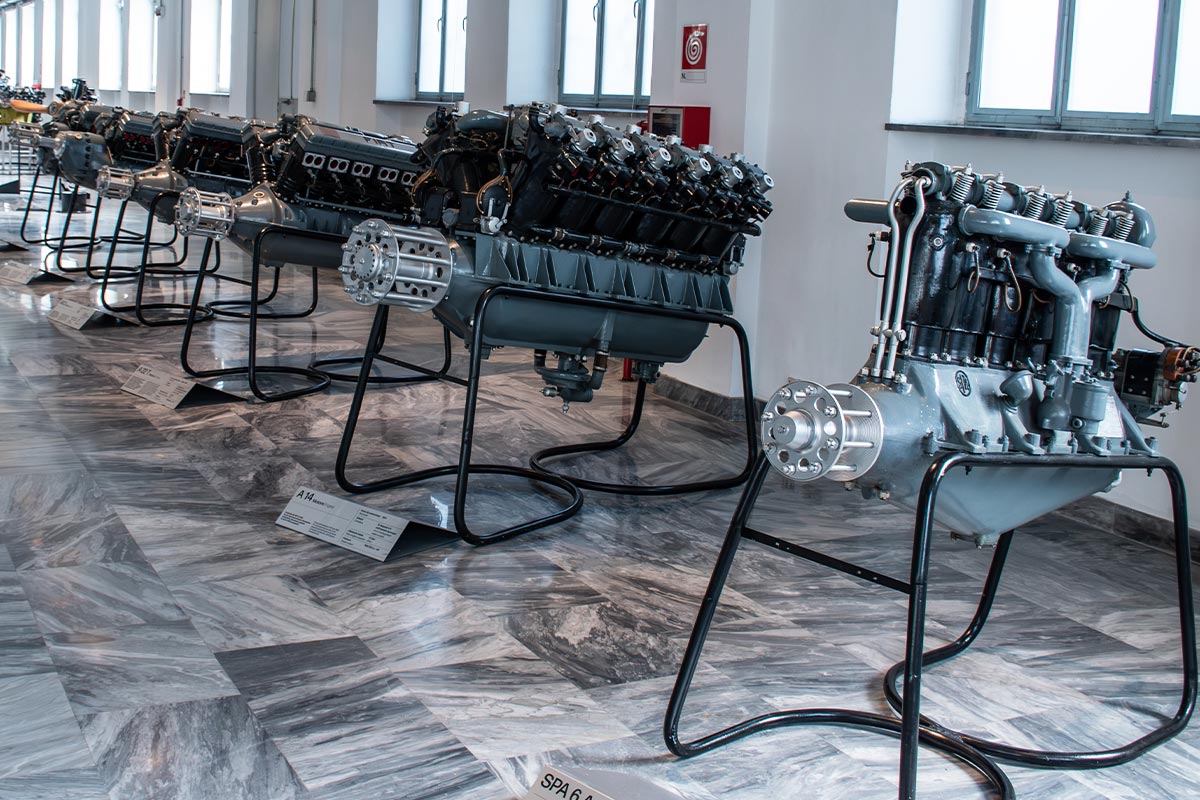
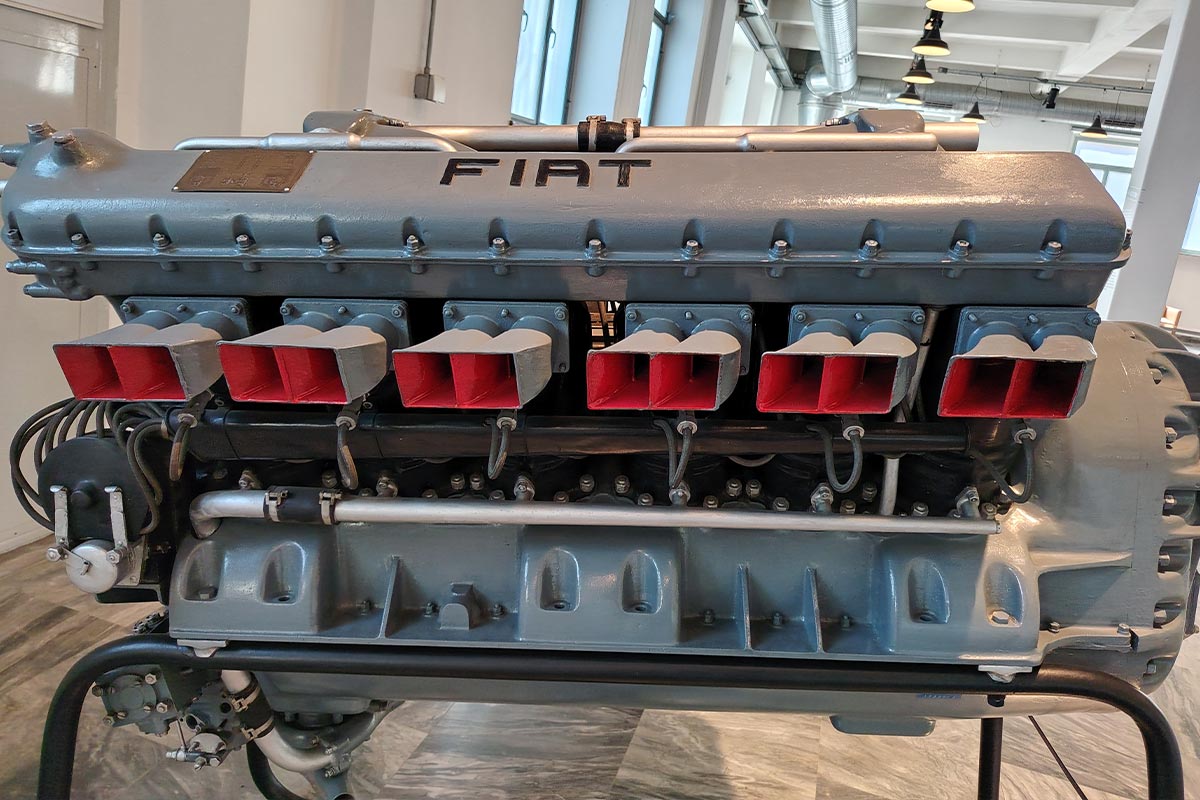
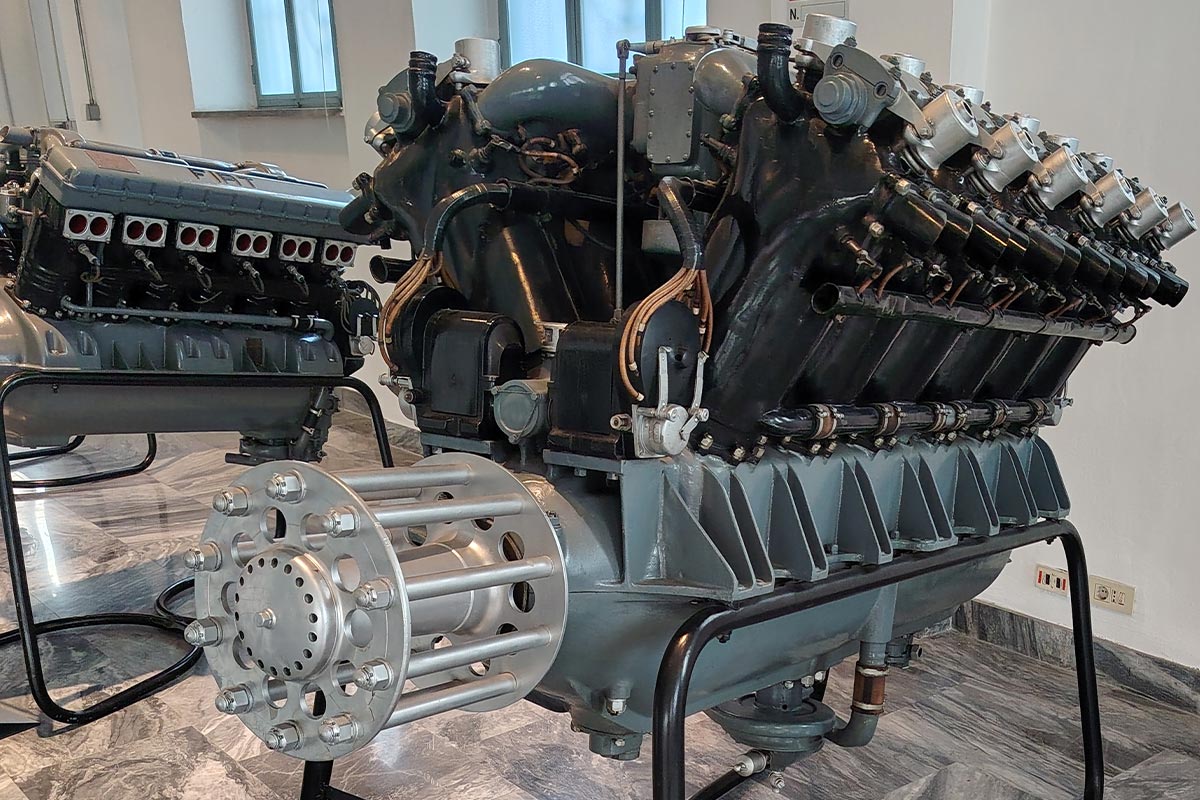
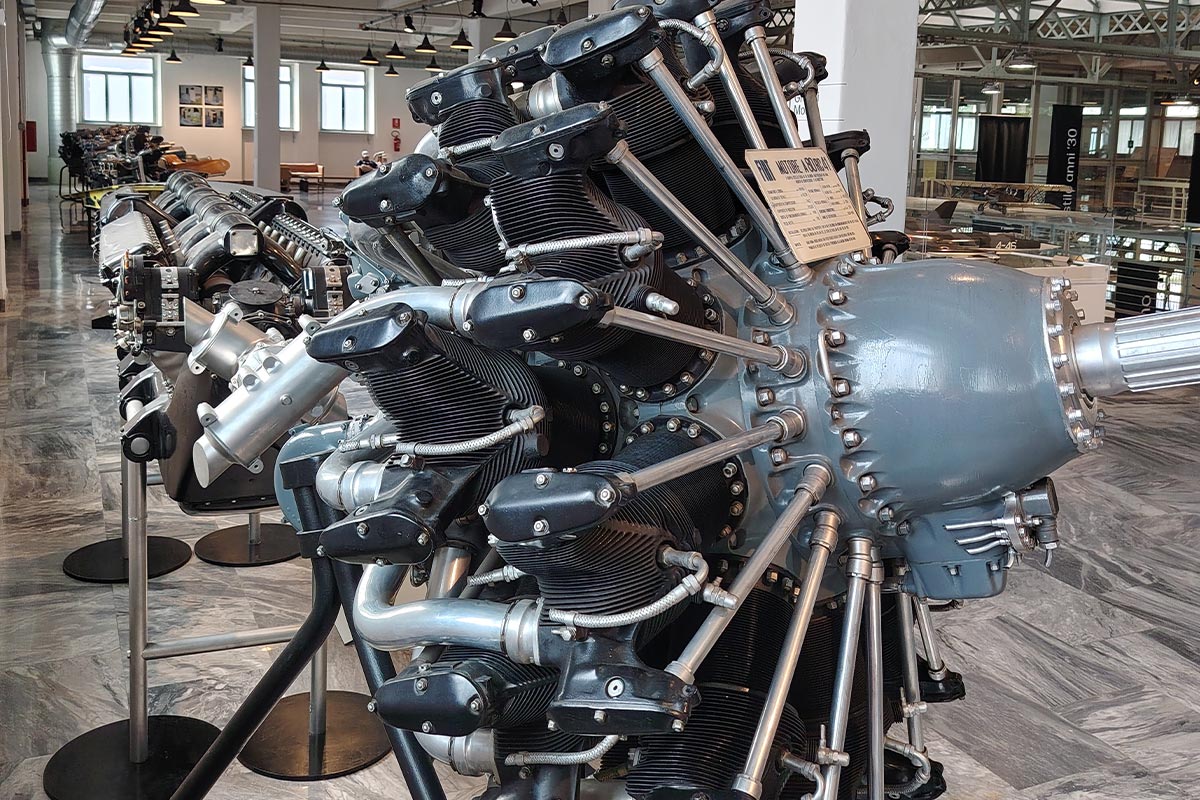
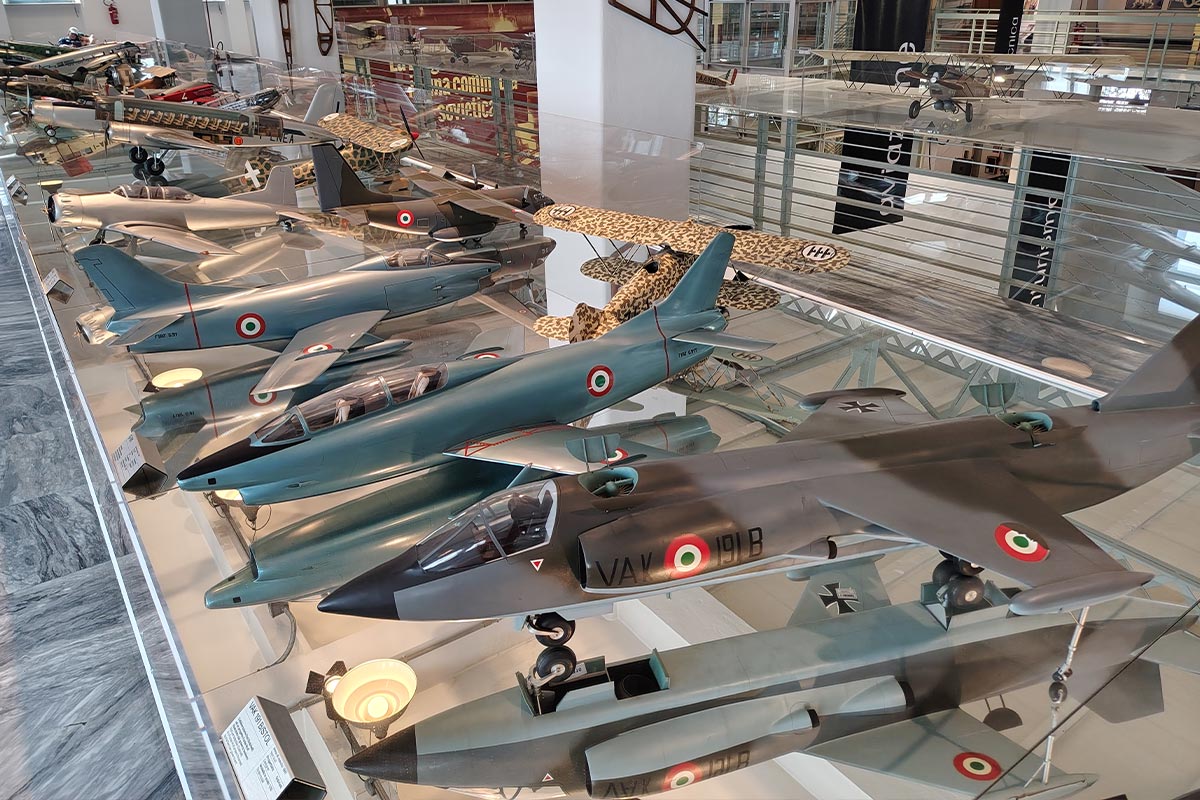
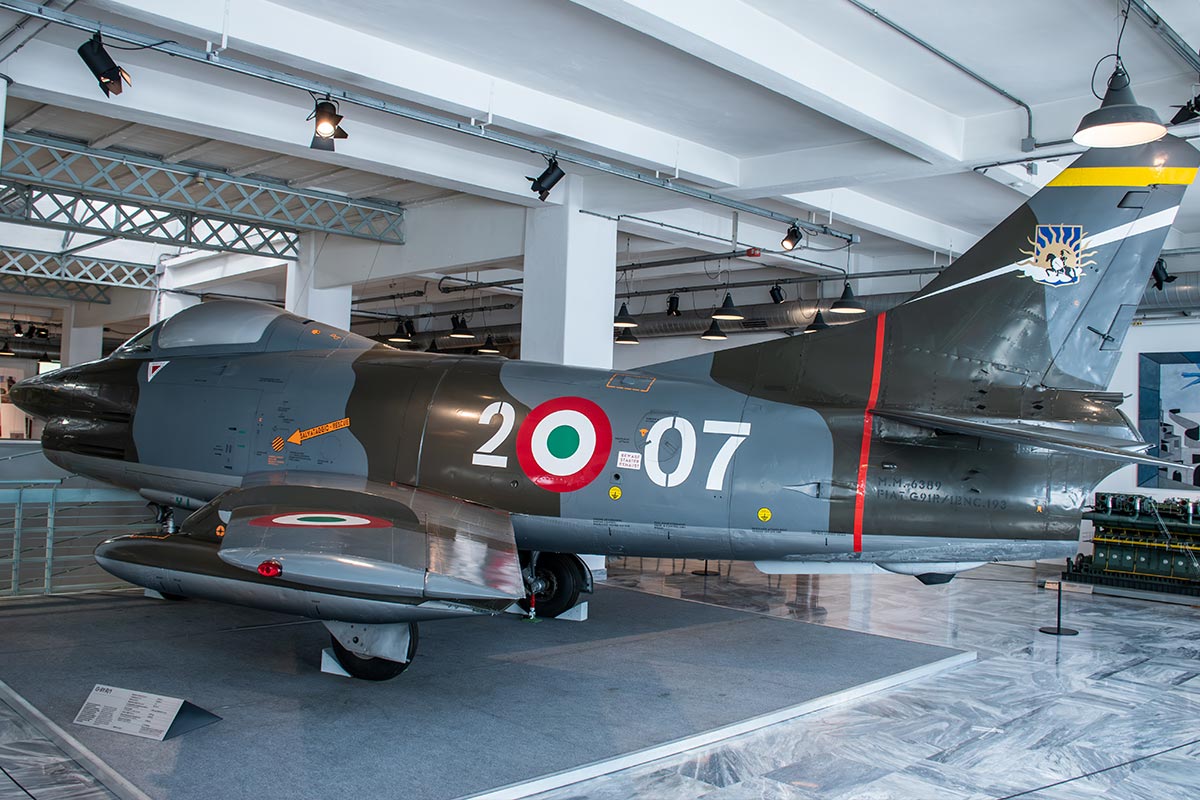
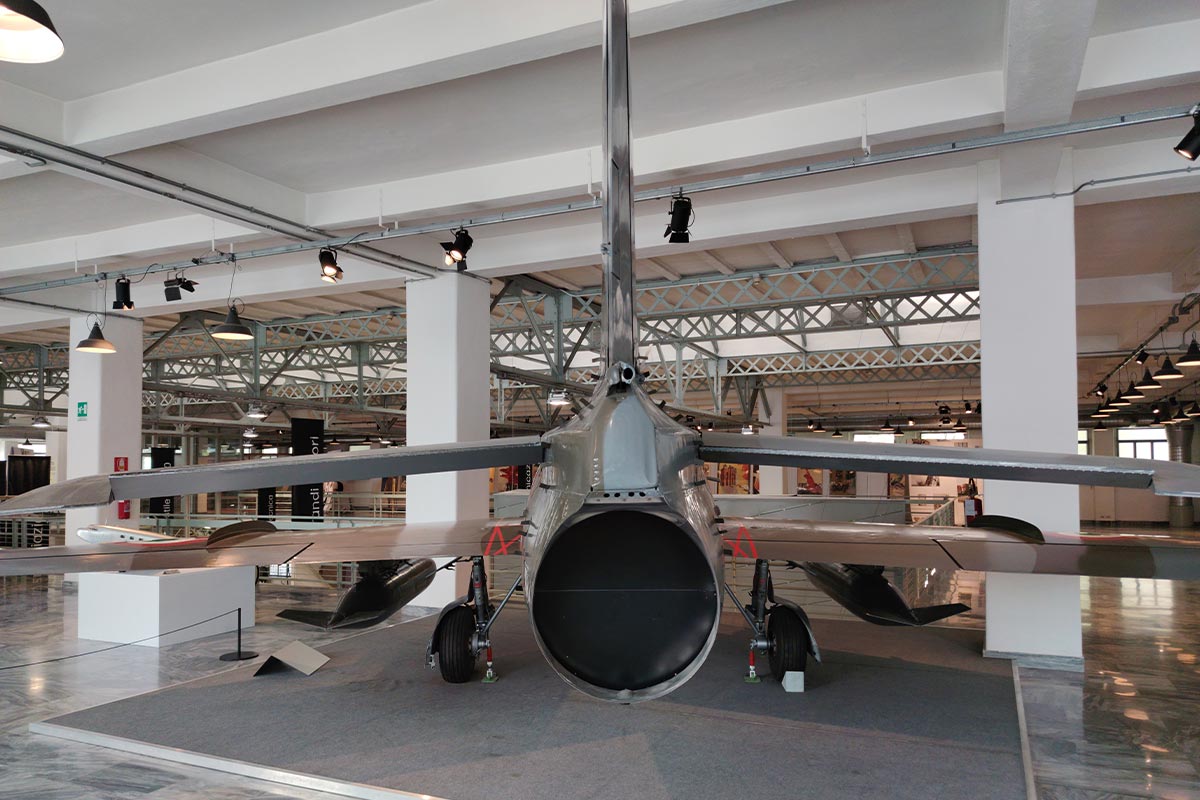
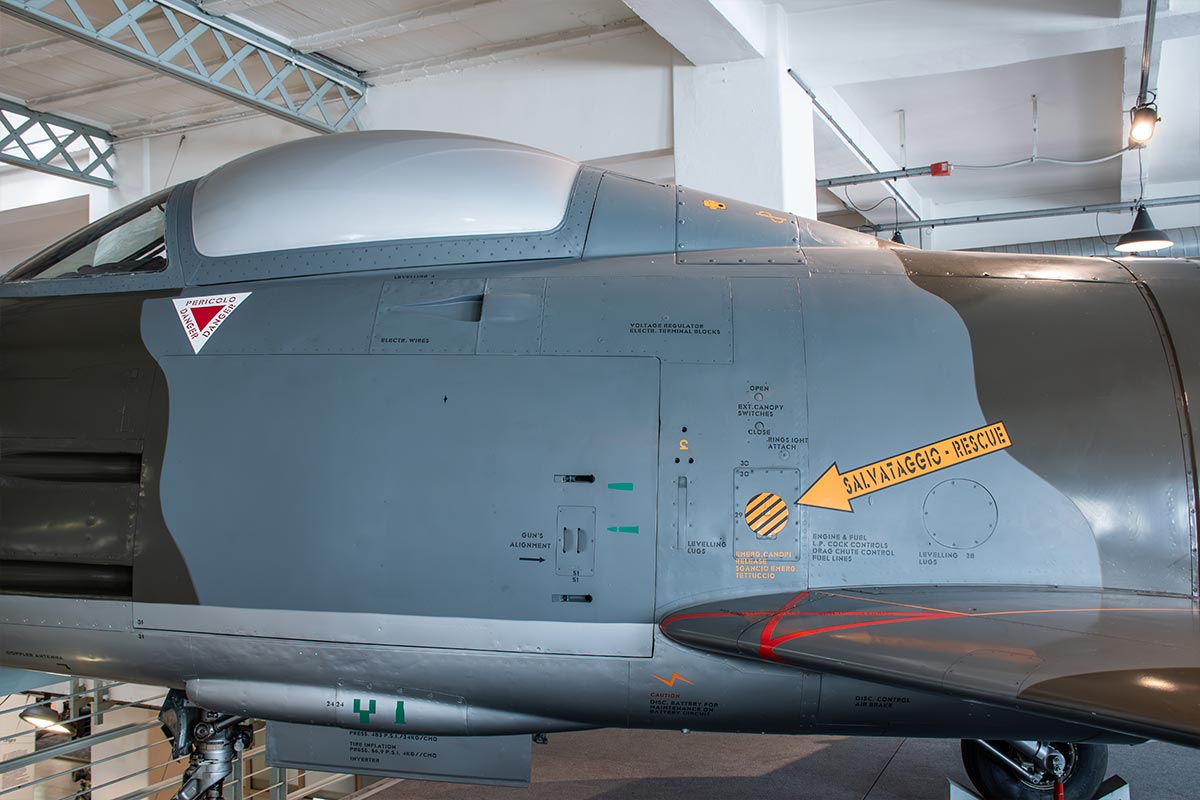
The exhibition features a beautiful collection of model airplanes, ranging from the first fighter planes of World War I to modern fighters. But as a bonus, the museum also displays a full-scale model: the Fiat G.91, a reconnaissance and tactical support aircraft that entered service in 1958 and was also used by the Frecce Tricolori until 1982.
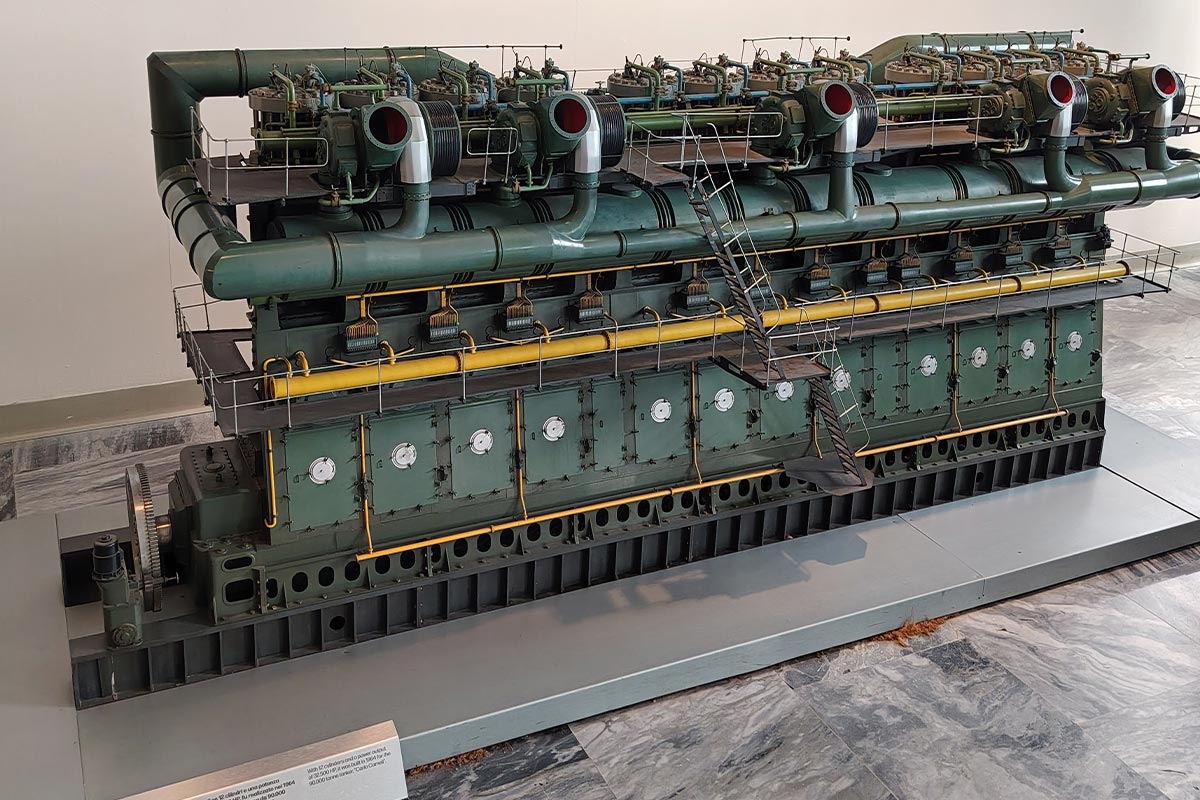
The marine world isn't left out either, with scale models (1/10) of ship engines and scale models of submarines and car carriers.
FIAT in the Soviet Union
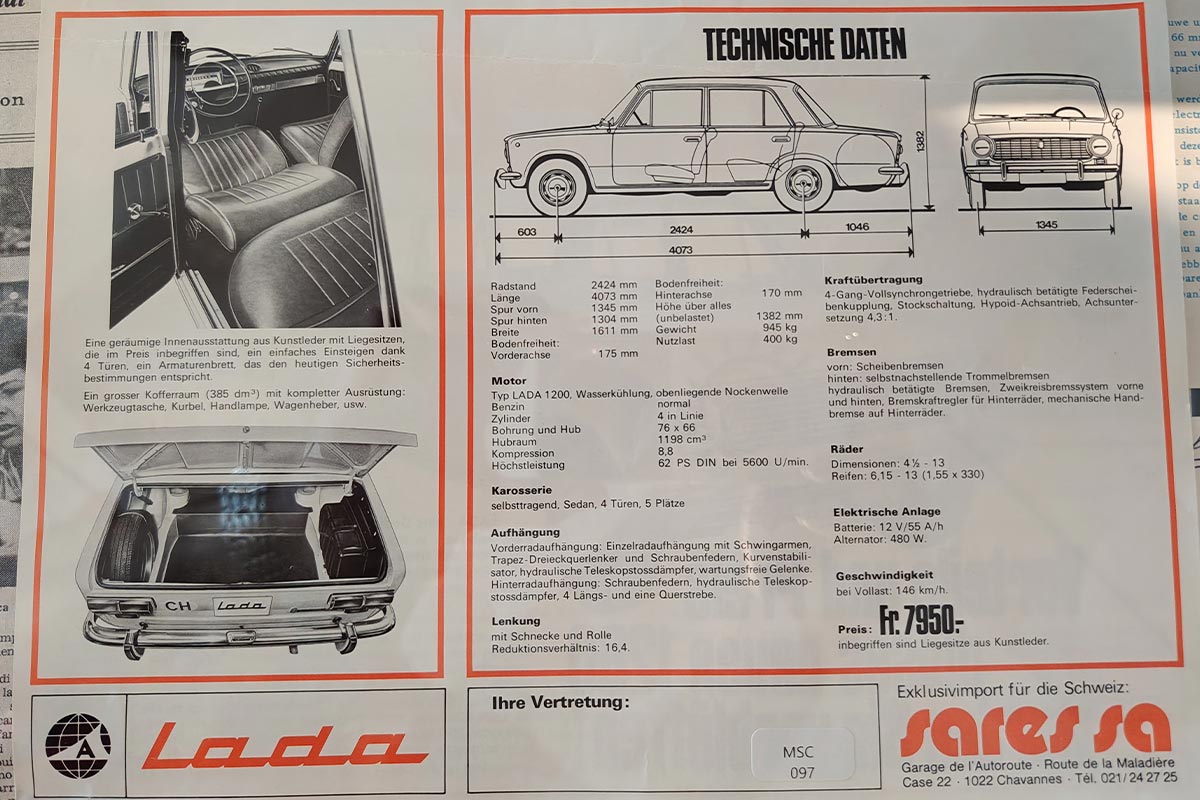
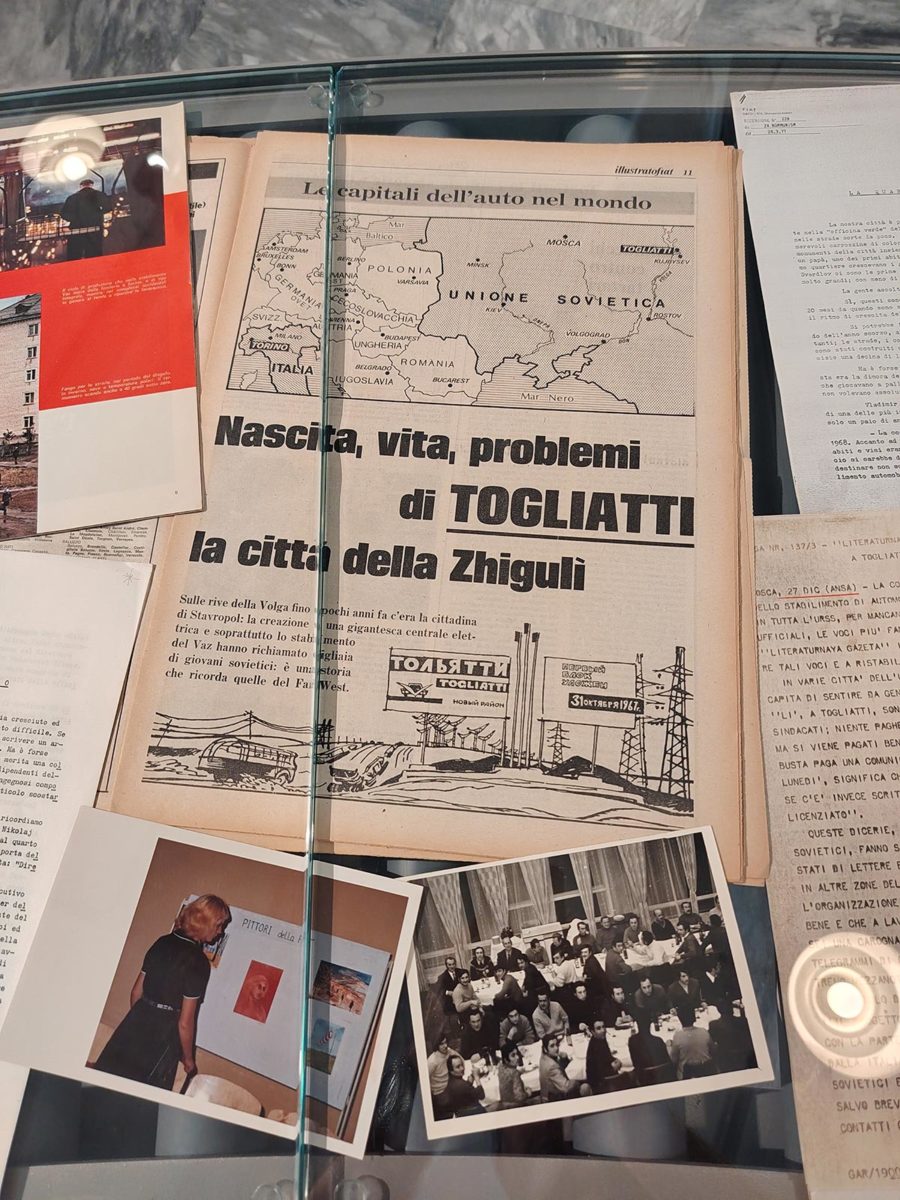
Finally, the museum’s temporary exhibition this year is dedicated to the 60th anniversary of the opening of the factory built in the USSR in Togliatti. Despite the Cold War and the Iron Curtain, an agreement was reached between Italy and the USSR in the early 1960s to produce cars under FIAT licenses for the Soviet market. In 1966–1967, the factory was built in the city of Stavropol, which was renamed Togliatti in honor of the prominent Italian Communist Party (PCI) leader Palmiro Togliatti, who had died a few years earlier. This plant would produce the «Zhiguli,» a sedan derived from the Fiat 124 and marketed under the Avtovaz brand. This model would also be exported under the LADA brand.
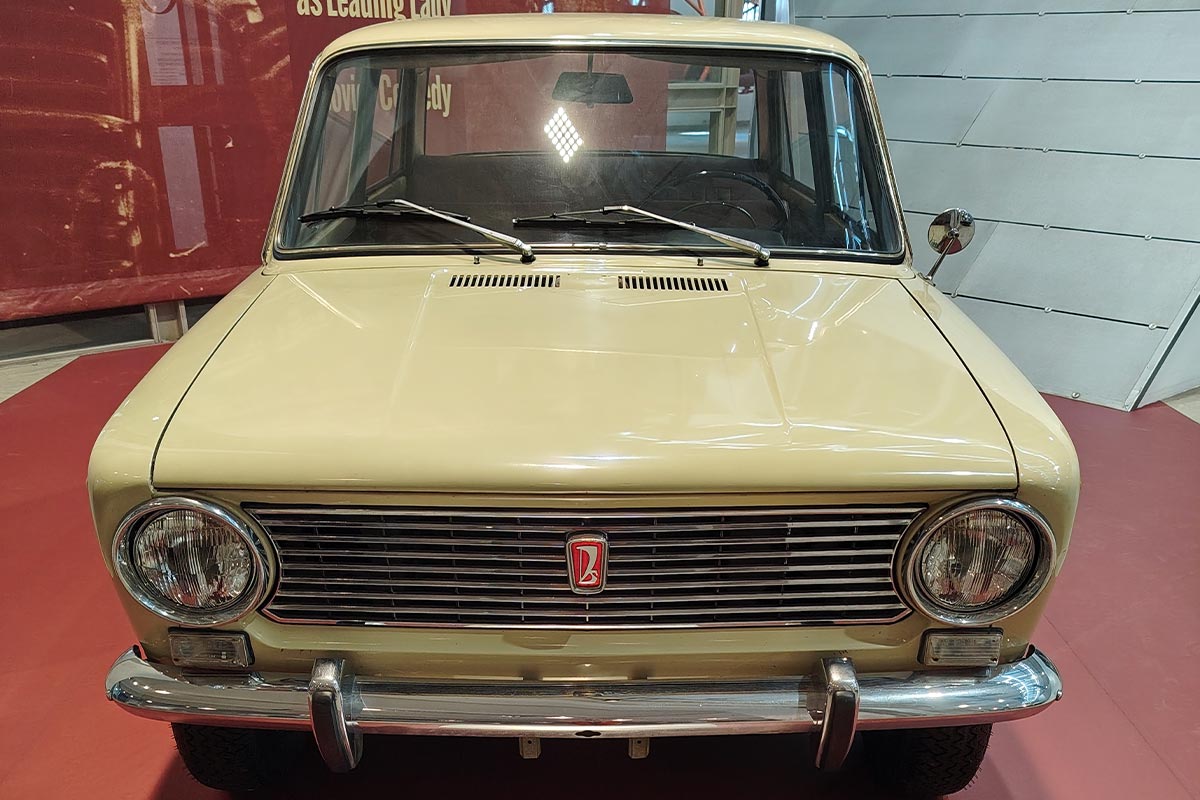
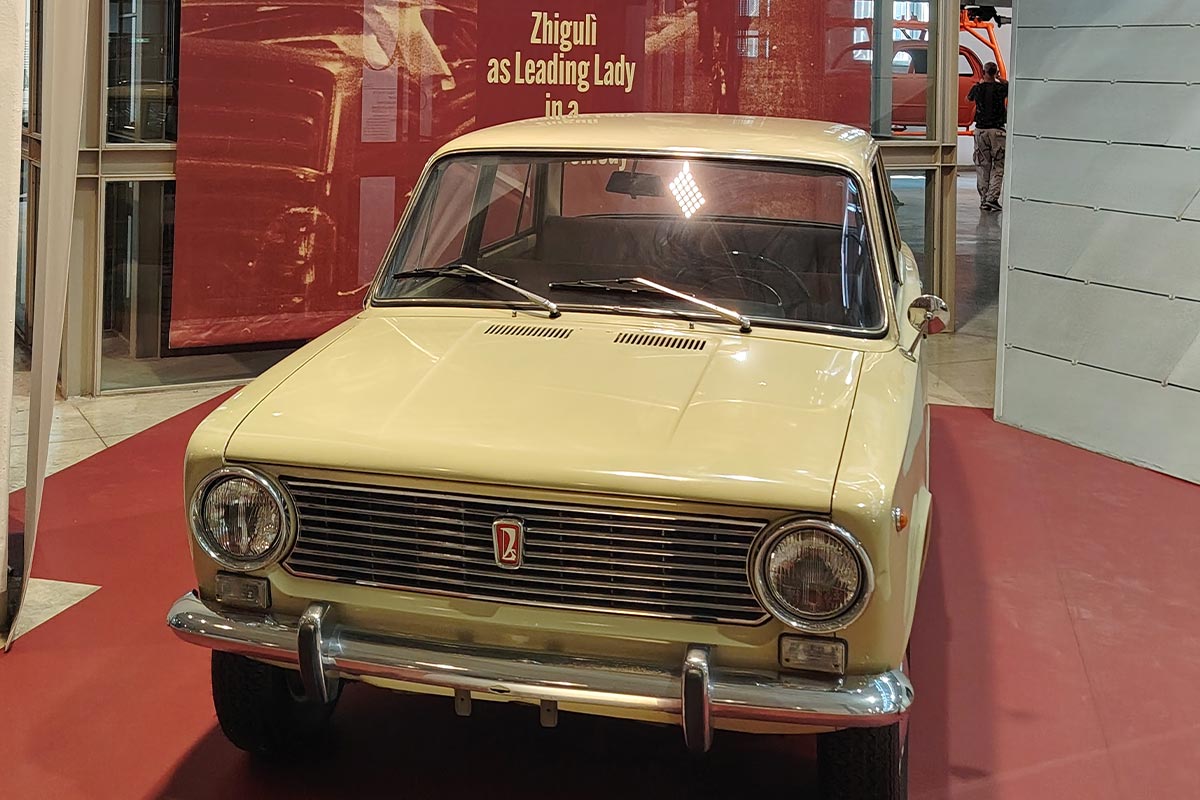
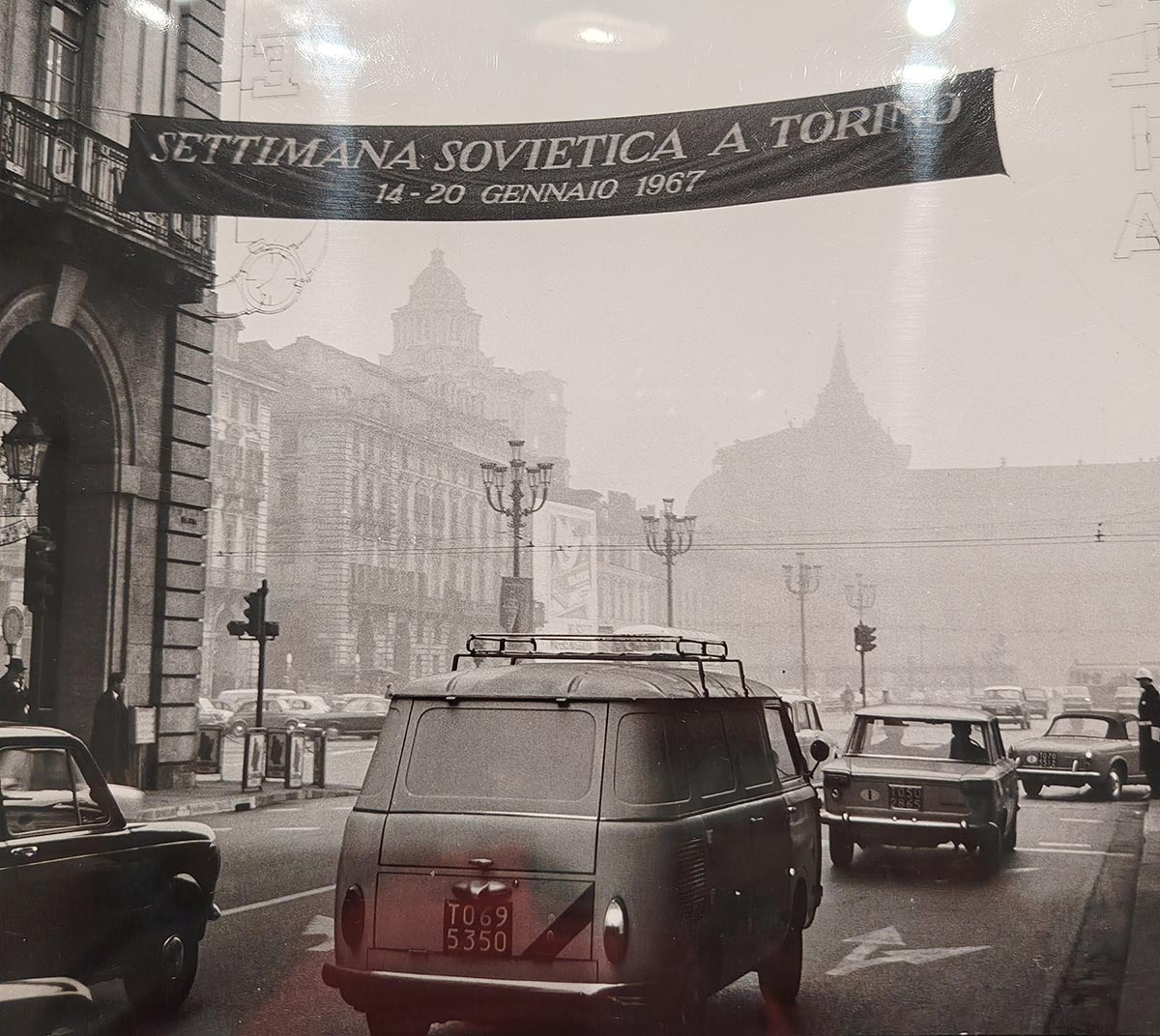
The exhibition, featuring a wealth of photographs, brochures, press articles, and other internal documents, chronicles the entire process of this extraordinary industrial history and demonstrates that cooperation was possible despite geopolitical barriers. The project also aimed to forge ties between peoples across the Iron Curtain, as the 1960s marked the period of «détente» between the blocs. Visitors can explore a Russian-language phrasebook for FIAT employees, exchange seminars between Italian and Russian engineers and workers, and even tourist brochures encouraging visits to the USSR. Turin even hosted a «Soviet Week» in 1967.
The appeal of the exhibition lies in its equal emphasis on both the human and industrial aspects. While European automakers have withdrawn from Russia since the war in Ukraine, leaving the field open to Chinese brands, this look back at Togliatti’s history gives us pause for thought…
 English
  French
  Italian
  Spanish
  German
  Japanese
  Dutch
Dutch
This is what I love; people talk passionately about cars, especially when they’re from their own country—whether they’re highly educated or less educated Italians. It’s evident in everything they do—they’re a people. The Dutch could learn a thing or two from them!! Incidentally, this perspective is subjective. Of course, everyone is entitled to their own opinion on this matter.
As the owner of a Punto and a Qubo, I’m especially pleased with this excellently researched article. I’m familiar with the old Fiat factory and the old workshops. Now we can only hope that Stellantis can stand up to all this EU madness and allow Fiat to continue creating in the spirit of its friends and Tifosi. Buon lavoro👍
It's great that this museum, where Fiat showcases its history, is open again.
It’s a museum full of unique exhibits. I was particularly taken with the films. This isn’t about modern experiential education—it’s about the exhibits themselves. The only downside is that without some knowledge of Italian, you’ll miss out on quite a bit.
Great post...
When I'm back in Turin, I'll visit the museum.
We recently visited this place after MAUTO. It’s definitely worth seeing, but the exhibit is on a much smaller scale—don’t expect anything like the Alfa Romeo museum. It’s a much quieter and more traditional setting. There are some interesting archival pieces, and while you won’t get to see every car FIAT has ever produced, the exhibits on display are fascinating. Add it to your itinerary, but don’t miss MAUTO, which has a much more extensive FIAT collection.
The reckless, unbridled desire to accumulate money has led to the downfall of a brand that once made Italian ingenuity the best in the world.
It is truly heartbreaking to see these works of art locked away in a museum that will no longer be supported, thus ceasing to tell the story of our one and only Italy.
There was a historical oddity regarding fighter aircraft engines during the war.
The Italians were at the cutting edge of technology during the 1920s and early 1930s, particularly in the Schneider Cup… And they were completely behind the times during World War II.
Even the French who weren't very good were better off.
Most of their best aircraft were re-engined with German engines in later versions. (Daimler-Benz DB 600 – Junkers Jumo 211)