

There are cars that divide enthusiasts. And before we go any further, some purists will point out that we should simply refer to it as the «Dino» and not the «Ferrari Dino.» However, the name Ferrari "Dino" has now become a common part of everyday language, including in the brand's own communications.
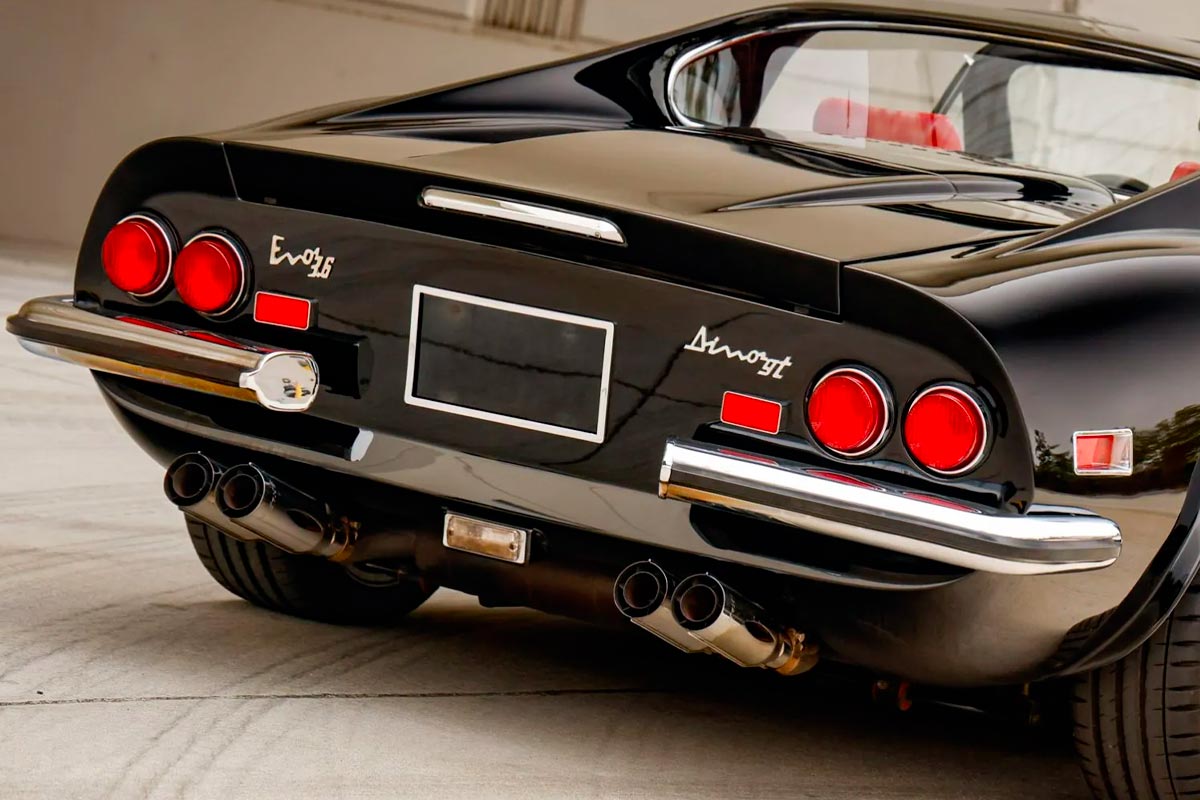
This Dino 246 GTS The 1972 model, in fact, is likely to fuel another equally heated debate. While collectors generally seek cars that strictly adhere to their original specifications, this heavily modified example has just surpassed the $900,000 mark at an auction on Bring a Trailer. That price puts it on par with—or even above—many fully original Dinos.
A Dino Like No Other
This Ferrari Dino 246 GTS is no stranger to the scene. It belonged to the famous American collector David Lee, already well known among enthusiasts for his spectacular collection of Ferraris in « ketchup, mustard, and vegetables »as well as for the acquisition of extremely rare models, including one Ferrari 250 GTO.
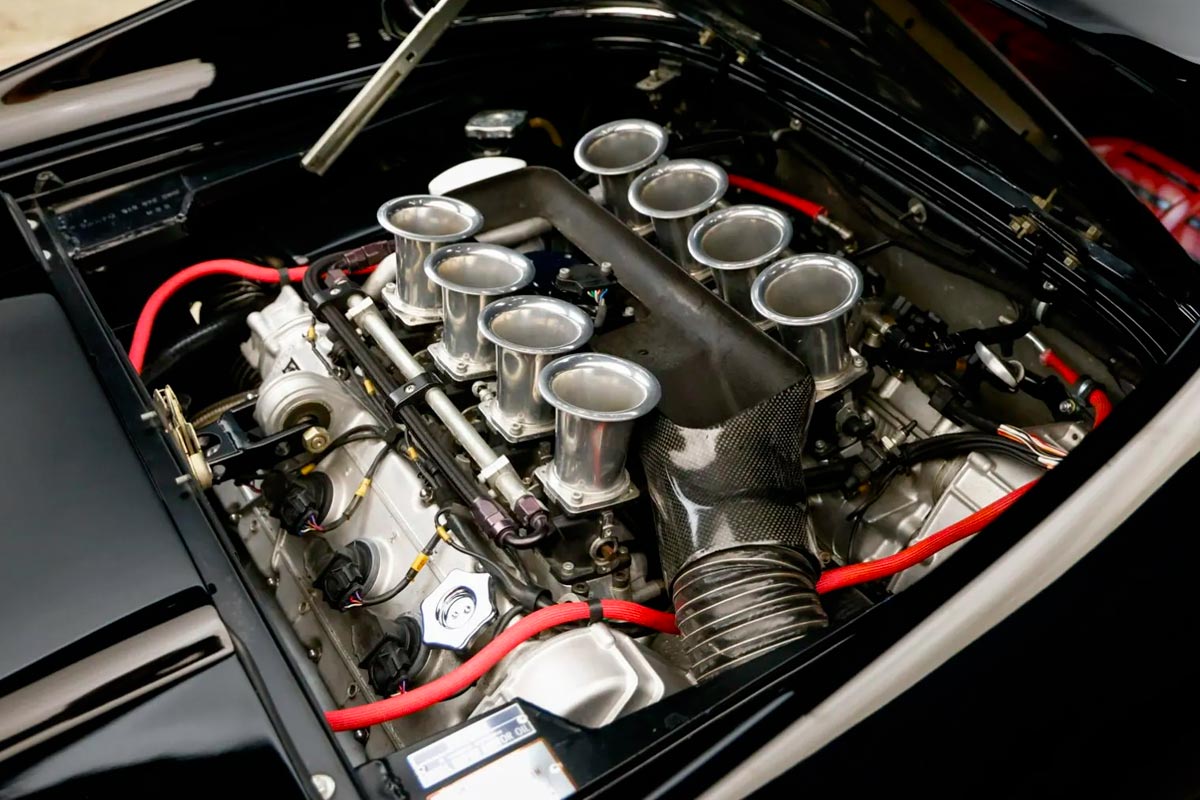
Between 2017 and 2018, David Lee entrusted this Dino to Moto Technique, a renowned specialist in classic Ferraris. The goal was not to restore the car to its original configuration, but to create the ideal Dino—the one Ferrari never produced. The original 2.4-liter V6 was thus replaced by a Ferrari Tipo F105C V8 enlarged to 3.6 liters. Equipped with modern fuel injection and a MoTeC electronic management system, this engine produces approximately 400 chevaux—nearly double the power of the original Dino.
The Ferrari That Defies All Conventions
In the world of Ferrari, authenticity is generally held in the highest regard. Collectors seek out «matching numbers» cars that retain their original engine, transmission, and specifications. This Dino does exactly the opposite.
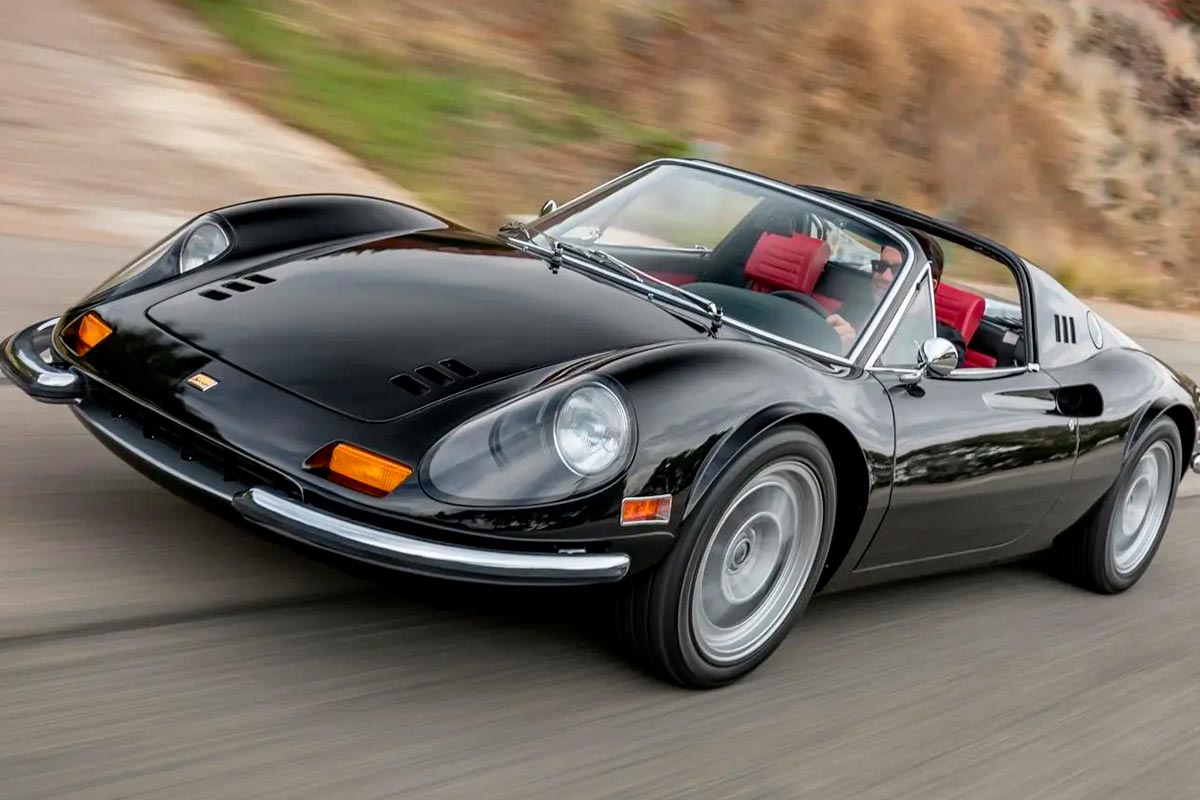
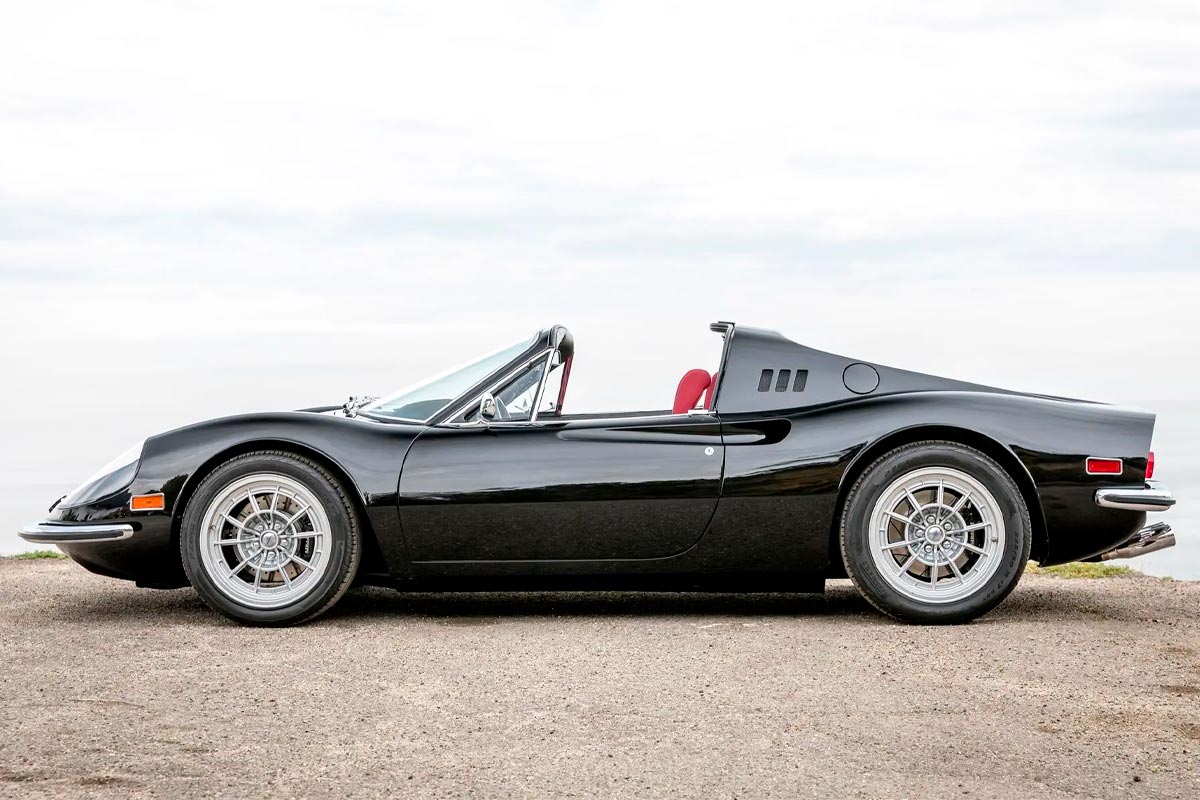
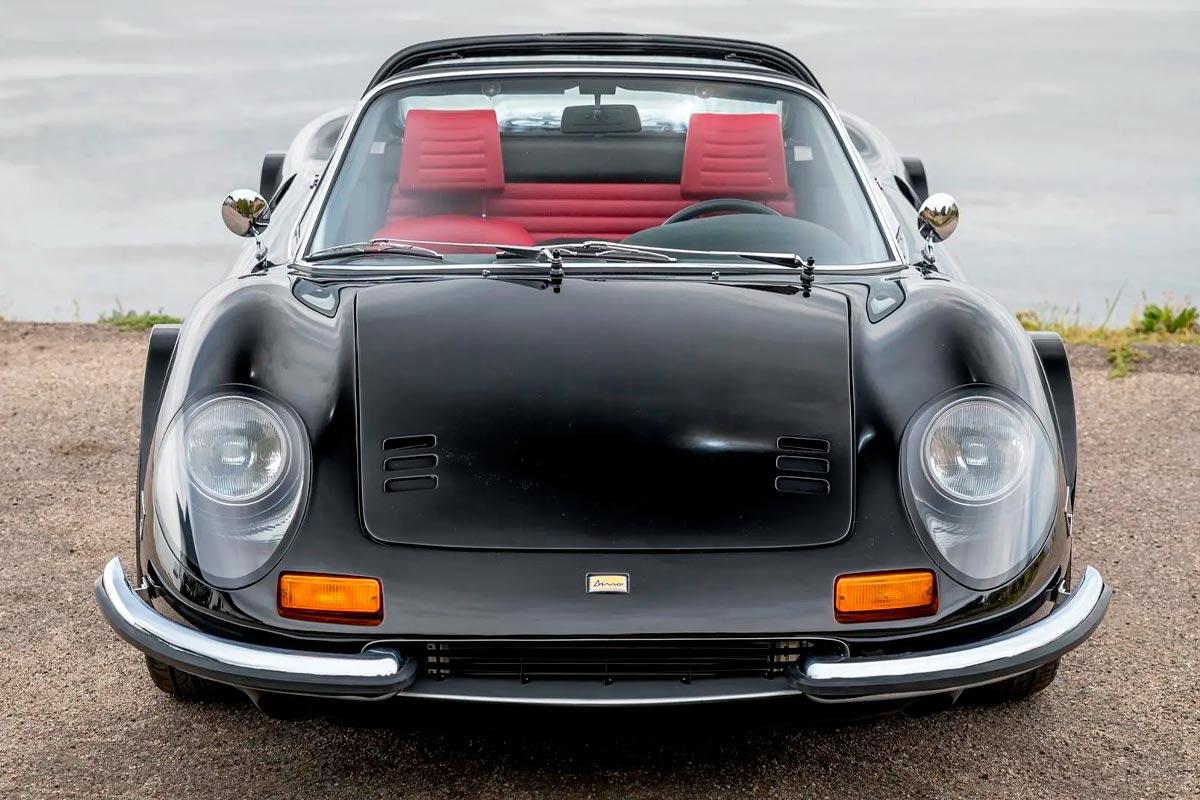
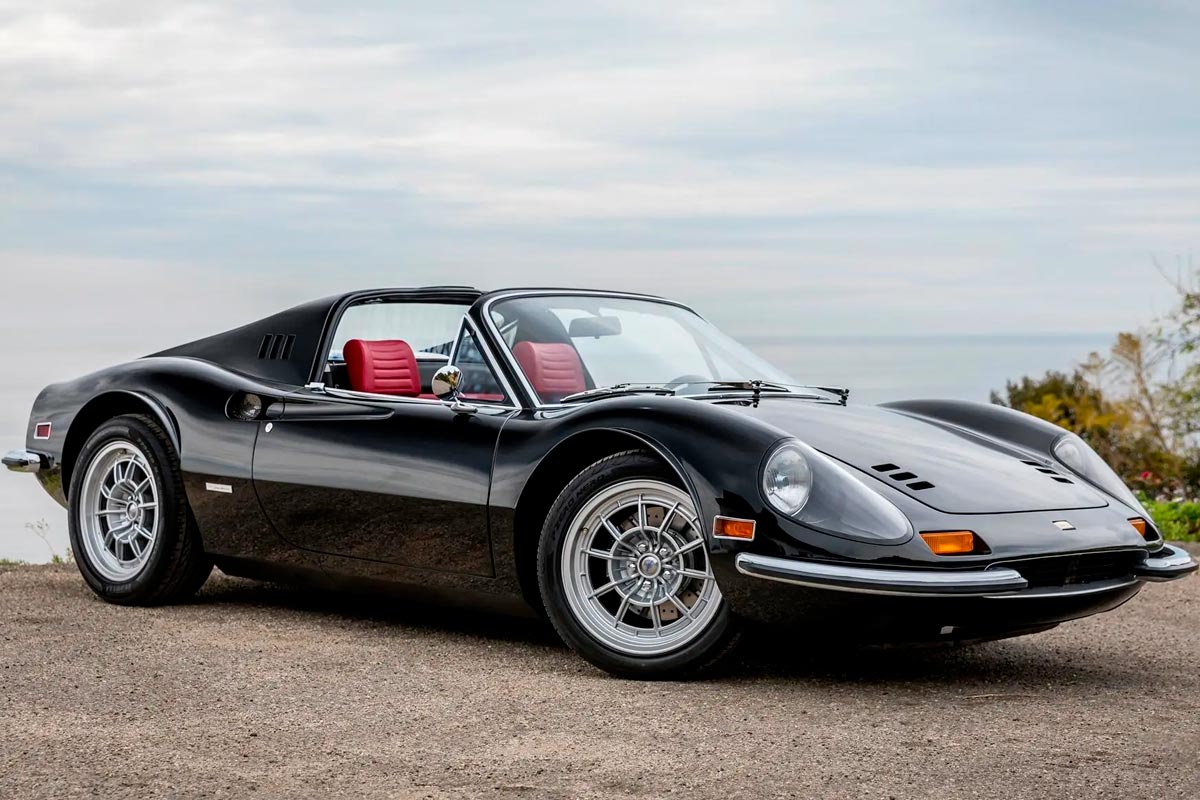
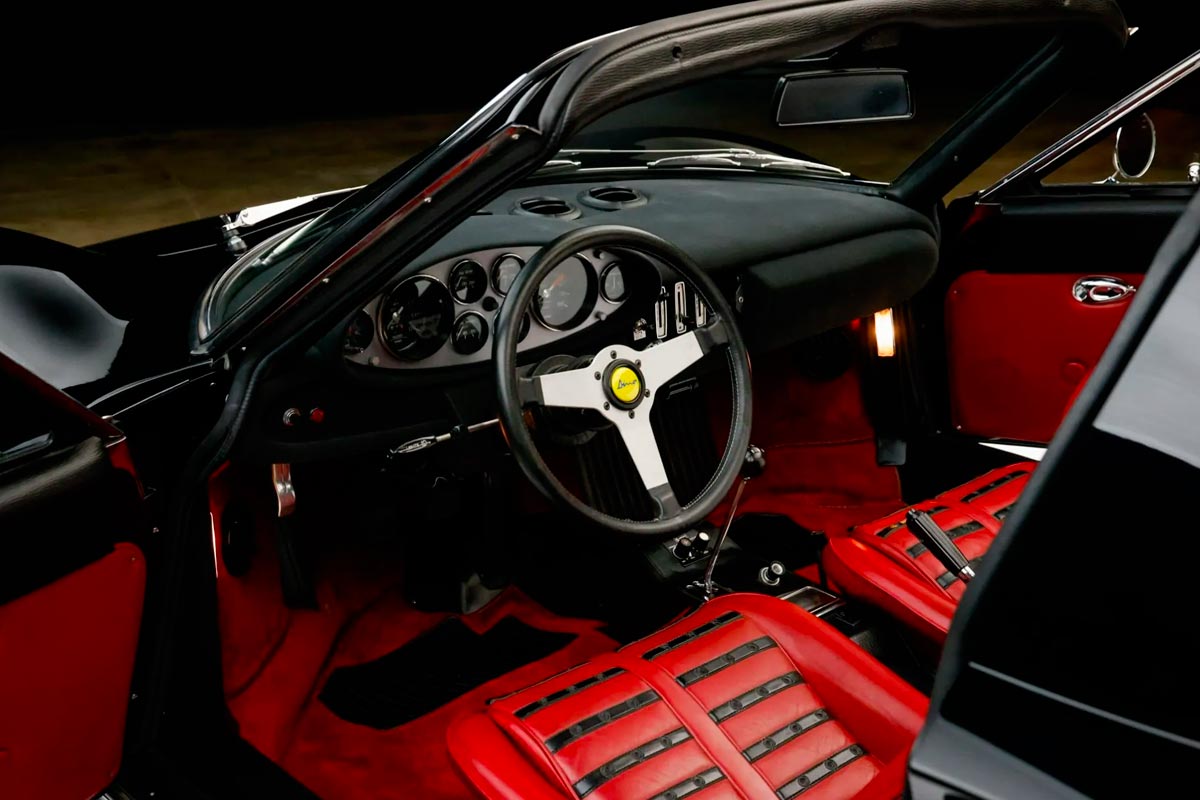
The body has been repainted black, the fenders have been slightly widened, the headlights are fitted with Plexiglas covers, the 17-inch wheels conceal brakes sourced from a Ferrari 360 Modena, and the suspension and steering have been upgraded. The interior features a mix of Daytona seats, air conditioning, a modern audio system, and red and black upholstery. On paper, this car should have lost value. Yet the opposite is true.
A price that surprises the market
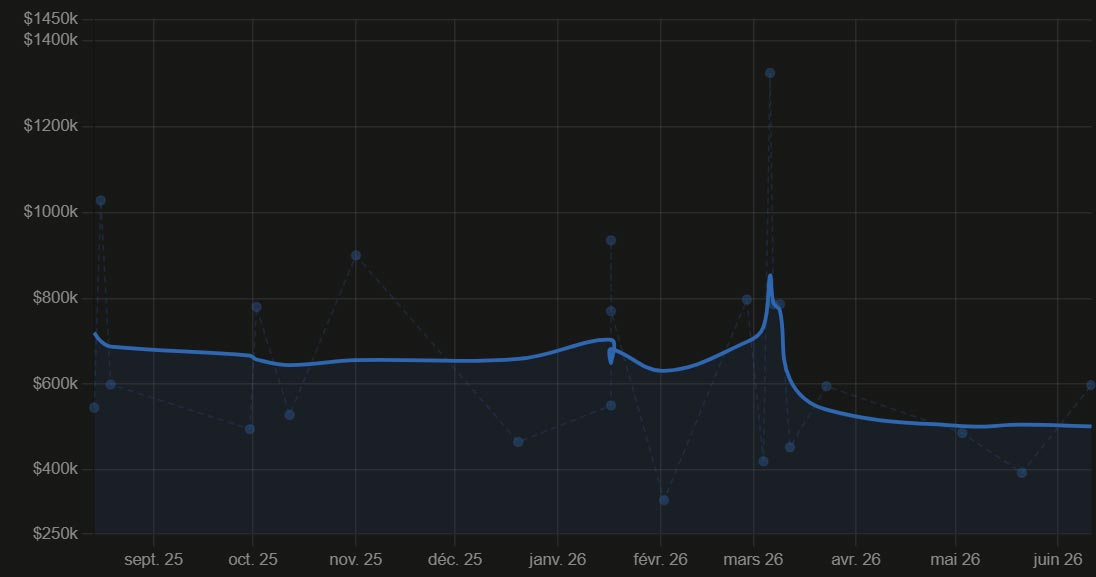
As of this writing, bids have already surpassed $900,000, with several hours still remaining before the auction closes. This figure is particularly surprising given the current market for Ferrari Dinos. Most original 246 GTS models sell for between $450,000 and $800,000, depending on their condition, history, or rarity. Some highly sought-after versions do indeed exceed this price range, but they are generally fully original, retaining their factory specifications.
Even restored, perfectly authentic Dinos have recently sold for around $786,000, while several examples listed between $500,000 and $600,000 sometimes struggle to find a buyer. In other words, this modified Dino is commanding prices normally reserved for the most sought-after models on the market.
Enthusiasts are won over
The comments posted under the ad, in fact, reveal a level of enthusiasm that’s quite rare. Several Dino owners praise the quality of Moto Technique’s work, with some even calling it «the best modern mid-engine Ferrari.».
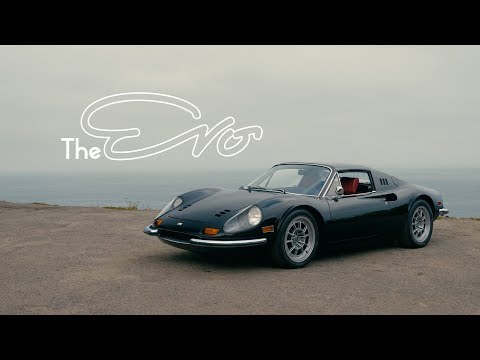
The car’s former maintenance manager explains that he drove it regularly for six years and describes it as «an extraordinary car.» An automotive journalist who test-drove the car in 2018 even claims that it remains one of the most memorable cars he has ever driven. Several potential buyers also point out that David Lee is said to have kept the original parts, theoretically leaving open the possibility of restoring the car to its original configuration.
A new take on the collection?
This sale may reflect a shift in the classic car market. Young collectors sometimes seem more drawn to upgraded models—ones that offer better performance and are easier to use on a daily basis—than to a strict pursuit of authenticity.
David Lee’s Dino no longer truly represents the small Ferrari designed as a tribute to Alfredo «Dino» Ferrari in the early 1970s. It has become something else: a modern interpretation of an icon. And it is perhaps precisely this freedom that explains why a privately owned example with its original V6 engine can now fetch close to a million dollars.
 English
  French
  Italian
  Spanish
  German
  Japanese
  Dutch
Dutch
A Dino isn't a Ferrari. Red is Ferrari's second color. A Ferrari doesn't feel like a Swiss Army knife, but it does deliver a ton of excitement.
I'm not a fan because the V6 is part of this diva's charm and will remain a testament to the work of FIAT and Dino.