

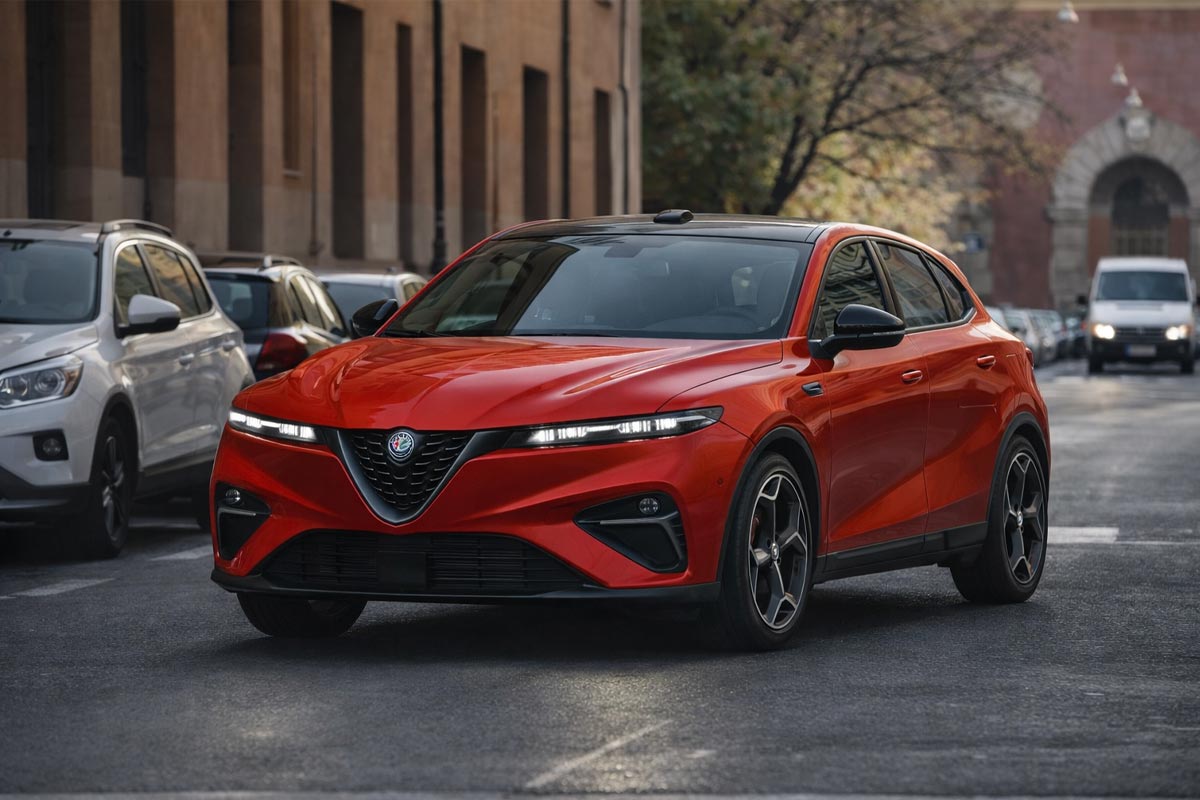
Sometimes all it takes is a simple hypothesis to rekindle a brand's wounds. By raising the possibility of a future model Alfa Romeo can be based on Leapmotor technology, i.e. Chinese technology, Stellantis was not just another industry rumor. The group has touched on something far more sensitive: the very idea that enthusiasts still have of’Alfa Romeo.
On paper, the subject might seem purely strategic. After all, the European automotive industry is going through a period of brutal change, between slowed electrification, pressure on costs, price wars with Chinese manufacturers and the need to make factories profitable. But when it comes to Alfa Romeo, accounting logic is never enough to calm the nerves. And the numerous reactions to our April 10 article prove it: for many, a Chinese-based Alfa Romeo would be more than just an industrial evolution. It would be a symbolic breakthrough.
A hypothesis that has awakened an old anguish
Originally, the information revealed by Reuters concerned a broader project between Stellantis and Leapmotor. At first, it was about Opel, with an electric SUV developed on Chinese architecture, potentially produced in Spain from 2028. But a passage in the article immediately drew attention: Stellantis was also said to be in preliminary discussions about a possible Alfa Romeo model based on the same architecture. That's all it took to set things off.
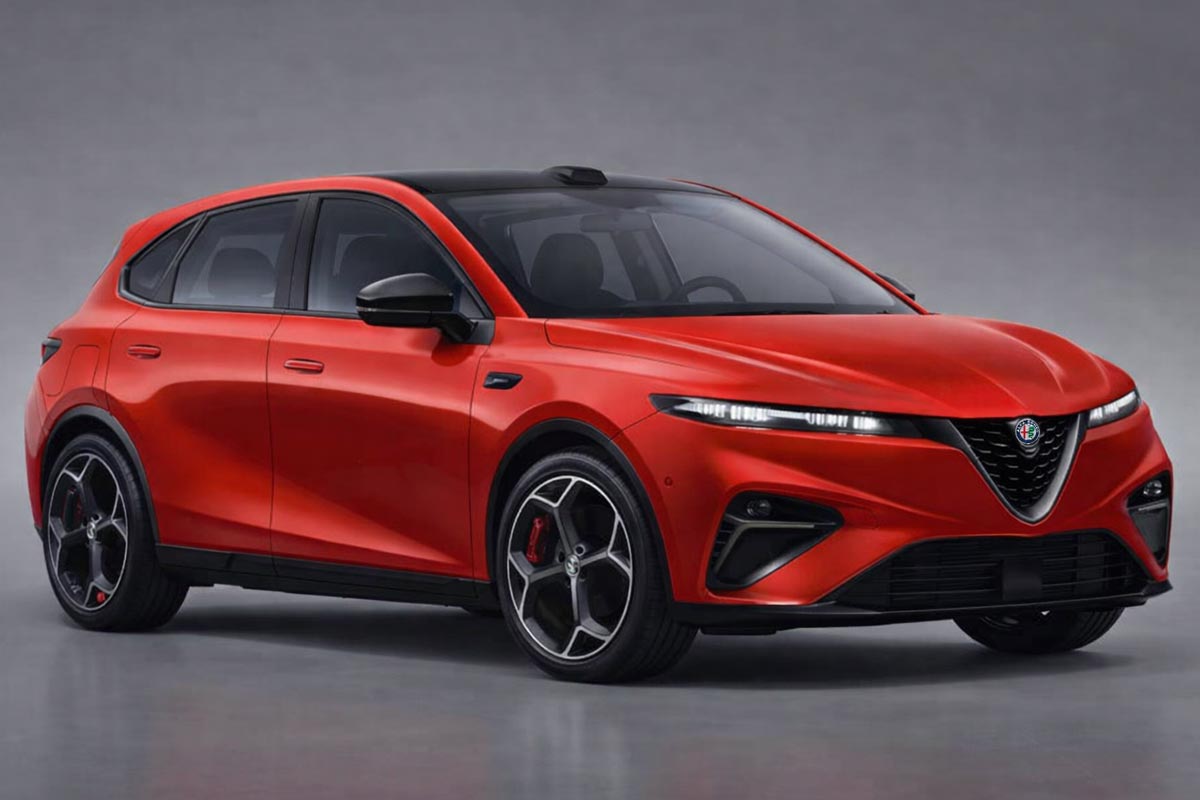
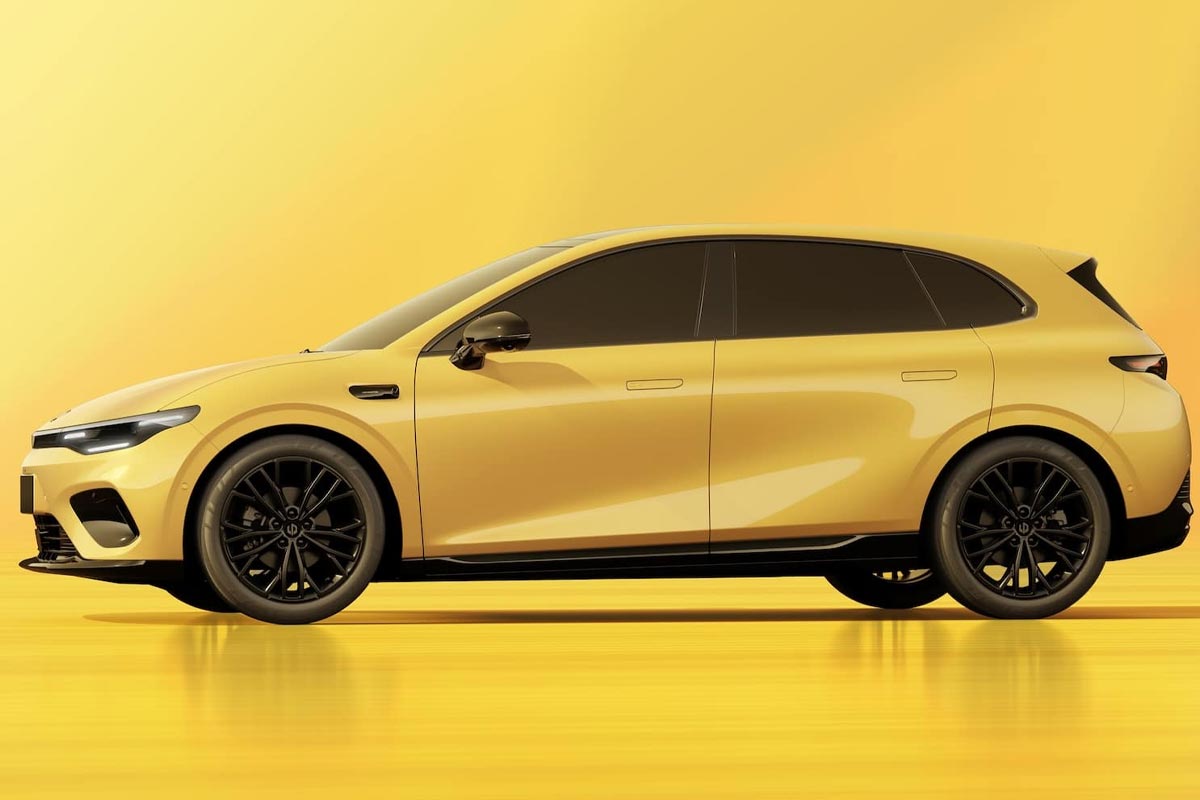
Because the timing is particularly delicate. Alfa Romeo has just given the feeling of wanting to put things right after several years of strategic wandering. An end to the promise of all-electric power, an announced return to hybrid powertrains, a more upmarket repositioning, and above all the hope of a return to a technical foundation more consistent with the brand's DNA, starting with the future Giorgio Evo platform. In short, Alfa Romeo seemed intent on returning to its Italian roots. So to see the idea of a model based on Leapmotor technology appear at the same time was seen by many as an absolute contradiction in terms.
In the comments, rejection dominates very clearly
On the website, reactions were immediate and often harsh. Many saw it as a new stage in the dilution of the Alfa Romeo identity. Some spoke of a “depreciation of the brand”, others of a strategy that was “hitting rock bottom”, or of a brand that “no longer has a direction”.
This rejection can also be explained by the current context. For several years now, some enthusiasts have felt that Alfa Romeo has borrowed too much from other technical universes, notably with models deemed too close to Peugeot productions or the Group's generalist platforms. The idea of now adding a Chinese base to the picture therefore gives some the feeling of a headlong rush forward.
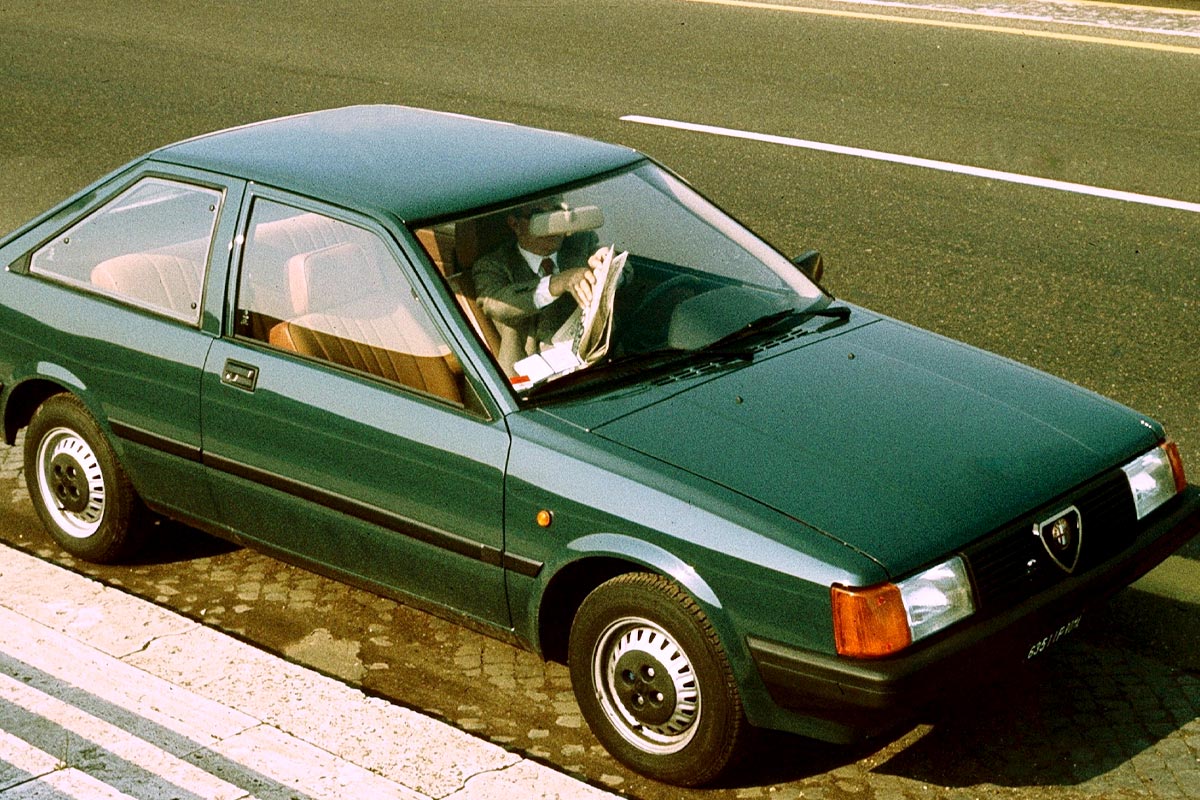
The name Arna, of course, came up again and again. For many, this precedent from the 1980s still acts as a historical trauma. Back then, the alliance between Alfa Romeo and Nissan gave birth to a car that has become one of the most famous symbols of a failed marriage between two automotive cultures. In the comments, several readers recalled that “the Nissan-based Alfa Romeo Arna was a flop”, that it “cost a lot of money” and that history should serve precisely to avoid this kind of mistake. The parallel is almost too tempting for Alfists: yesterday a Japanese base, today a Chinese one, with the same fear of a brand that loses itself through compromise.
Social networks amplified this reaction. In France, we read that “it would be the death of the brand”, that “alfists would be put to shame in a single lesson”, or that Stellantis would have “really understood nothing”. In England, several comments spoke of a late “April Fool's Day”, an “Arna Mk2”, or a choice that would have “absolutely nothing to do with Alfa”. In Germany, some subscribers went so far as to write that such a project would be “the next crash” and perhaps “the last”. In Italy, where the emotional relationship with Alfa Romeo is even more visceral, the tone is often even more brutal: “close it all down”, “shame”, “don't call it Alfa Romeo”. Clearly, for some members of the public, the mere fact of associating the Milanese coat of arms with Leapmotor architecture is already an offence.
Yet not everyone rejects the idea
But to limit this sequence to a simple anti-Chinese outcry would be reductive. For in the midst of the outraged reactions, another interpretation emerges. Less emotional, more pragmatic, sometimes even frankly favorable.
Some readers would first point out the obvious: Alfa Romeo cannot continue with such a limited and ageing range. The Giulia and Stelvio are approaching ten years of age, the Tonale is struggling to establish itself as a technological benchmark, and the Junior, despite its relatively successful launch, cannot carry the entire brand on its shoulders. Against this backdrop, the idea of developing a new model, potentially a C-segment compact, more quickly is by no means absurd.
Others go further: if Leapmotor technology is more advanced or more competitive in the electric sector, why deprive ourselves of it? Several comments point out that Chinese automakers have taken a considerable lead in this field. Some also point out that Volvo, Renault, Mercedes and Mazda no longer hesitate to integrate Chinese technologies, sometimes without so much debate. For these readers, the real issue is not the origin of the platform, but what Alfa Romeo would do with it.
This is an important nuance. There's a world of difference between a simple, soulless rebadging and a model that has been thoroughly reworked by Alfa Romeo's engineers, designers and tuners. As a number of Internet users have pointed out, Alfa Romeo has often transformed common bases with far more talent than is generally acknowledged. Many cite the Junior in the face of the 2008, or the Tonale in the face of the Compass, explaining that Alfa Romeo's interpretation doesn't boil down to a technical sheet. For them, a Chinese base doesn't automatically condemn the end result, provided that roadholding, styling, chassis calibration and driving experience remain worthy of the Biscione.
The real debate goes beyond China: what is an Alfa Romeo in 2026?
Ultimately, this controversy highlights a much deeper question: what still defines an Alfa Romeo today?
Is it the place of production? For many, yes. Italy remains central to the brand's collective imagination. Is it the platform? Here again, many enthusiasts answer in the affirmative, dreaming of a range built around specific technical solutions, ideally developed in Italy or in association with Maserati. Is it the engine? The question becomes more complicated at a time when electric power is gaining ground, as an “Italian” electric motor does not necessarily exist as such in the minds of the general public. Is it the style and driving pleasure? No doubt. And that's precisely where the debate is getting tense.
Some readers believe that a Leapmotor-based electric Alfa Romeo could never be a “real” Alfa. Others reply that there's more to Alfa's DNA than a combustion engine, and that serious work on chassis, steering, design, software architecture and man-machine relations could be enough to preserve the brand's character. Some even point out that Ferrari is also working to define a new automotive emotion in the electric age. In other words, the problem isn't so much electric as the absence of a clear vision.
And this is perhaps where the greatest concern lies. More than China itself, what many readers denounce is the impression that Alfa Romeo is “sailing at sight”. Between promises of a return to its roots, postponements of models, vacillations on platforms, the maintenance of its combustion-hybrid model here, a switch to electric power there, and now the possible use of Leapmotor, the brand sometimes gives the impression of trying to find its coherence as it goes along.
Is a Leapmotor-based compact so unimaginable?
From a coldly industrial point of view, however, there's nothing unrealistic about the scenario. Several comments point out that within Stellantis, the issue of compact platforms has become particularly complex. STLA Medium is said to be too heavy for certain applications, STLA Small has been re-evaluated, adapted or called into question according to thermal and electrical needs, and the Group's brands sometimes seem to be operating in a rather thick strategic fog.
In this context, using a Leapmotor base for a future electric compact could appear to be a short-term solution, or even an industrial shortcut. It would be quicker, potentially less costly, and compatible with the desire to occupy the field in the face of Chinese brands advancing at high speed in Europe.
For some readers, it would even make sense if this base were used to revive a form of modern Giulietta, more accessible, more competitive, and capable of bringing volume back to Alfa Romeo. Provided, of course, that the future Stelvio and Giulia remain on a nobler, more specific base, more in keeping with what enthusiasts still expect from the top of the Alfa Romeo range. In fact, this is the line of compromise that most moderate commentators are taking: an exception could be tolerated for a small electric model, provided that the heart of the brand remains profoundly Italian.
A brand judged even before the first prototype
What's striking about this case is the speed with which the symbolic trial has begun. No model exists, no decision has been made official, no specifications have been presented, and yet the rejection is already massive. This just goes to show that Alfa Romeo no longer has the right to make mistakes in this field. The mere word “Leapmotor” emblazoned on the Milanese coat of arms is enough to arouse the deepest suspicions.
But this violent reaction also reveals something else: despite all its difficulties, Alfa Romeo is still a brand that counts for a great deal. A brand that provokes, divides, enthralls, and continues to carry an emotional charge that many others have long since lost. You don't get in such a state for a simple platform operation. You get in such a state when you feel that a piece of automotive identity is at stake.
In the final analysis, yes, opinions are divided. There is a pragmatic line, a minority but real, which considers that Chinese technology is not necessarily a problem if it enables Alfa Romeo to come back quickly with a competitive, well-designed and properly tuned model.
But it would be wrong to equate the two camps. After all, reading the reactions from the site, from France, Italy, Germany, the UK and even Japan, one trend emerges very clearly: mistrust dominates, sometimes to a very large extent. For many, an Alfa Romeo of Chinese origin would be a contradiction in terms. For others, it might be acceptable on a small electric model, but only as an exception. And for the more fatalistic, this debate says one thing above all: Stellantis must quickly clarify what he really wants to do with Alfa Romeo.
 English
  French
  Italian
  Spanish
  German
  Japanese
  Dutch
Dutch
Alfa Romeo is the base of Ferrari and nothing less. It's heritage is so clear that you wonder: why is Stellantis so unable to launch this beautiful Italian brand properly.
Any other group could do better than them. In fact, since its creation in 2021, Stellantis has simply been copying Peugeot and Citroën models, nothing more. It's an evolution of PSA.
Because they've pushed cost-cutting so far, they don't even have a credible compact platform by 2026, so they're thinking about Leapmotor. It starts with one model, then two, then the whole range...
An Alfa Romeo based on a Leapmotor is shocking. But so is an Alfa Romeo with a PureTech engine. And yet the Junior sells quite well.
The question remains: does Alfa Romeo's management have a clear idea of its positioning? A premium brand, or a generalist with a design that's not too bad?
The Alfaists are shocked, but they've become too few in number. And they haven't been able to buy enough Giulias and Stelvios, which have Alfa Romeo DNA at 100%.
The 147s, MiTos and Giuliettas sold well. With 50K models, what did you expect?
Sales of the Giulia and Stelvio, following in the footsteps of BMW's 3 and X3 series, were expected to be quite good. Almost every year, the German press has said that the Giulia is the best sedan on the market, yet buyers have not followed suit.
It's all very well to call yourself an alfist, but you still have to be there.
Sales of the 156, 147, MiTo and Giulietta were excellent at a different time, and in a different car segment.
Did you buy a Giulia Quadrifoglio?
We do.
Did you buy a Stelvio Quadrifoglio?
We do
Did you buy a 4C coupe or a Targa?
We do
Stanislas has bought quite a few Italians, so I don't think he's the right target (besides, it's best to avoid this kind of passive-aggressive comment, which prevents a calm dialogue).
With the Giulia, we expected the expected result, a return to the source and finally a real sports car, and they succeeded.
In France, you didn't buy one because of the malus, but elsewhere the Giulia and Stelvio have done well.
they did well... for a while! in italy it's been a few years since these 2 models were in the top 50.
Italy and France are not the only countries in the EU.
in the EU, Alfa Romeo is mainly Italy, France and Germany.
Then give us the figures! And by the way, give us the figures for 156...
It's not a. failure point to incorporate and improve on an existing technology and to deliver a product with a strong brand identity and a unique vision. That is the basic approach Apple Inc has taken and its served them very very well.
Stellantis works on the cheap, so they won't improve anything. They'll just change the body and interior, that's all.
«In fact, this is the line of compromise that is most evident among the more moderate commentators: an exception could be tolerated on a small electric model, as long as the heart of the brand remains deeply Italian.»
The exception already exists with the Peugeot Junior. I was still driving a Giulietta 1 month ago, so I'm not going to start with a simple Sleapmotor recarross.
A year after Filosa's arrival, we'll know who we're dealing with.
Since the 80s, Alfa Romeo has always been a brand that has suffered disastrous decisions with a few exceptions ( 75,164,156,147) and closer to us Giulia and Stelvio, it began with the abandonment of the name »milano» on the logo, switch to traction mode.... and the future in Chinese mode! 🤔
«or the Tonale versus the Compass.»
Then again, the Compass uses a Fiat platform, so the honor is safe.
Vintage Jeep platform... Yeah!
Ich fahre seit über 20 Jahren Alfa, 156,159,Mito, 159 SW, Giulietta und Giulia. Jetzt habe ich rein aus Designgründen den Junior Veloce Elettrica bestellt.
Rein von den inneren Werten ist diese Stellantis-Plattform völlig überaltet (zu kleine Batterie, Frontantrieb, Effizienz, Infotainment)
Die Elektro-Mobilität ist eh nicht mehr aufzuhalten. Daher würde ich es willkommen heißen, eine vernünfitige BEV-Plattform von Leapmotor unter die Alfas zu bringen (Heckantrieb, Technik up-to-date).
Dass es sehr gute chinesische BEV-Limousinen gibt, zeien bspw. der Zeekr 7GT oder auch der neue XPeng G7. Solche Fahrzeuge gepaart mit Alfa-Design wären der Hammer.
SAREBBE VERGOGNOSO , UN’ ALFA ROMEO SOLO NELLO STEMMA.
Fahre seit 40 Jahren Alfa Romeo , jetzt Giulia, würde mir den Junior jetzt schon nicht kaufen weil er zu nahe am Peugeot liegt, wenn jetzt auch noch die Chinesen mitmischen wird es wohl mein letzter Alfa sein. Absolutes nogo!!
In fact, they had no plans for the Giulietta after its minimal restyling, claiming that the time had come for SUVs. Physics being what it is, it's difficult to reproduce the sensations of a compact sedan from a brand whose slogan was «sporting heart». And now that we're in a hurry, we should validate a Chinese platform on the shelf. Let's be clear: it's all about margins. The passion evoked in the com is that of investment bankers.
That's the direction the automotive industry is taking: ever greater profits. And even the aeronautics industry is following this logic.
Europe has allowed some people to take full advantage of globalization by gorging themselves for 40 years, which has led to almost complete deindustrialization. Of course, there are now bigger competitors on the other side of the Atlantic, on the verge of taking over everything.
So they're looking for savings, and after the blue-collar workers, it's now the turn of the white-collar workers, the design and research centers.
The c3 is an Indian car, the twingo a Chinese car etc...