

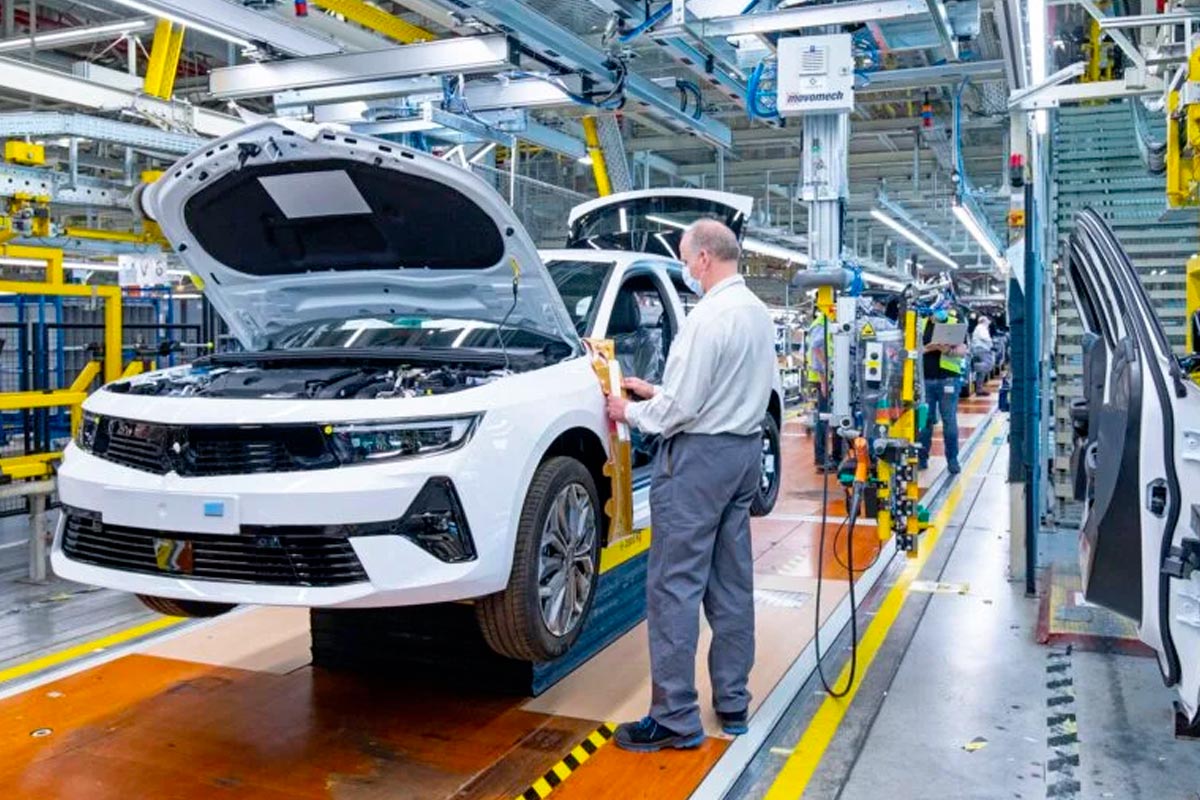
For several weeks now, Stellantis is making a series of announcements that may seem contradictory. On the one hand, the Group is massively recruiting engineers in France, Italy and the USA. On the other, it has just announced the elimination of 650 engineering jobs in Germany, at its historic Rüsselsheim site.
On the face of it, it's a complete paradox. But in fact, this decision is part of a much broader strategy to reorganize R&D worldwide, led by CEO Antonio Filosa. After acknowledging that it had gone «too far» in cutting costs, Stellantis is not simply backtracking. The group is also radically rethinking the way it designs its cars.
Rüsselsheim, symbol of a new organization
The heart of this reorganization lies in Germany. The Rüsselsheim development center, historically linked to Opel, will be transformed into a more specialized and compact «Tech Center». Today, some 1,650 engineers work there. Tomorrow, there will only be 1,000. The 650 job cuts mark a major turning point for this emblematic German engineering site.
But Stellantis insists that this is not a withdrawal, but a transformation. The site will retain a key role in the development of Opel and Vauxhall models, while contributing to cross-functional technologies for the entire Group. The priorities are clearly identified: driver assistance systems (ADAS), artificial intelligence, virtual development, batteries, safety and software linked to the future STLA Brain architecture.
Recruiting elsewhere to rebuild
At the same time, Stellantis is stepping up recruitment in other regions. In the United States, some 2,000 engineers have already been hired. In France, 700 engineering positions are currently being filled, particularly in data, electrification and electronics.
Italy is no exception. In Turin, particularly at Mirafiori, more than a hundred young engineers have been recruited or given tenure to work on strategic projects linked to digitalization and electricity. This trend is not new. It is part of a dynamic that began several months ago, after the Group admitted to having weakened its capacity for innovation. by drastically reducing its technical teams. Today, engineers are once again a central resource.
Redistribution of competencies
Behind these decisions lies a clear rationale: to adapt resources to the real needs of each development center. Stellantis explains that it wants to redistribute skills between its various R&D centers to increase efficiency. Some sites are being strengthened, others refocused.
Germany, and Rüsselsheim in particular, is not disappearing from the landscape. On the contrary, the Group claims that it intends to «strengthen its competitiveness» there by concentrating expertise on key areas and developing partnerships with universities. Training and retraining programs are to accompany this transformation, proof that Stellantis is more interested in optimizing its organization than simply cutting costs.
What's at stake today goes far beyond the question of staff numbers. Stellantis' entire industrial philosophy is changing. During the Carlos Tavares era, the logic was simple: standardize, centralize and keep costs to a minimum. While this approach has improved profitability, it has also shown its limitations, particularly in terms of product quality and capacity for innovation.
Under Antonio Filosa, the Group seems to be adopting a finer, more regional approach. Each development center must now specialize and respond to specific needs, in line with local markets.
 English
  French
  Italian
  Spanish
  Portuguese
  German
  Japanese
  Turkish
  Dutch
Dutch