

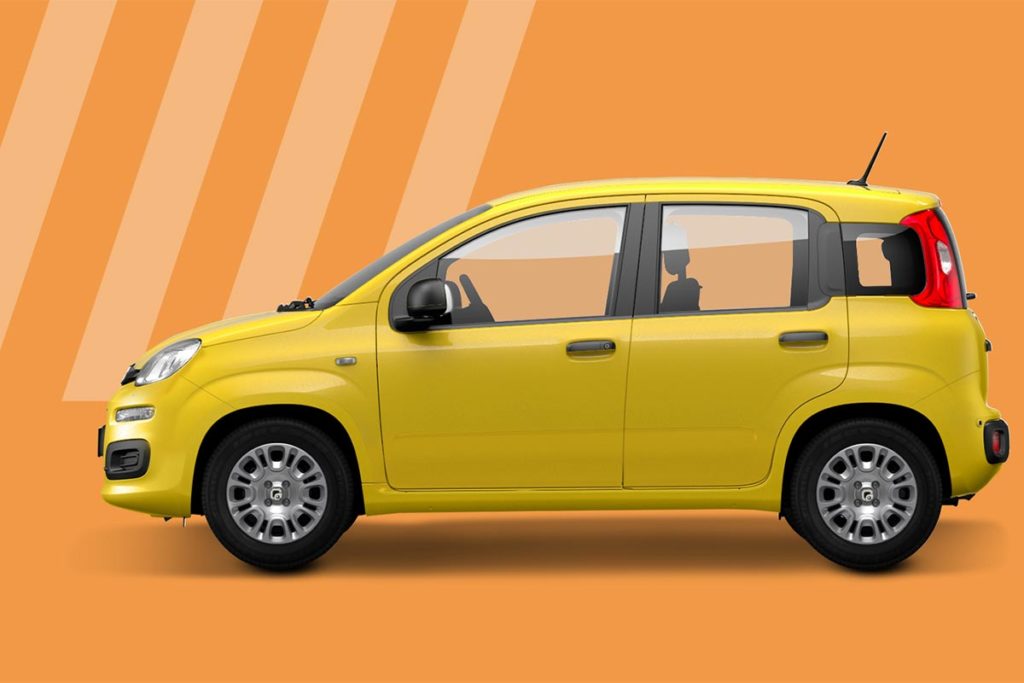
Fourteen years. In today's automotive industry, that's almost an eternity. Yet the Fiat Panda continues to crush the Italian market as if it had just been launched.
Introduced at the Frankfurt Motor Show in September 2011, then marketed in the spring of 2012, the little Italian city car is now a veritable UFO in the European automotive landscape. At a time when models are renewed every 6 to 8 years, standards are constantly changing and prices are skyrocketing, the Panda stands up to it all. Better still, it still dominates sales in Italy.
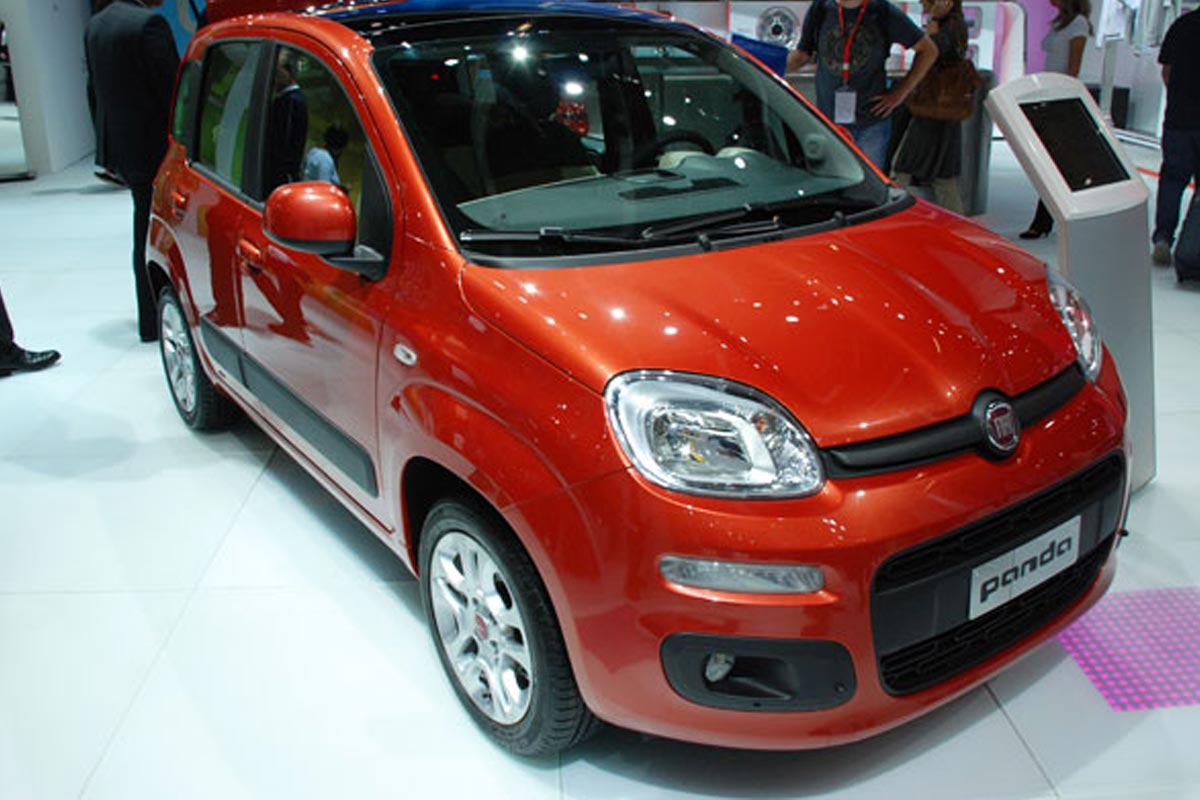
From January to April 2026, the Panda recorded 45,601 registrations on the Italian market. An impressive figure... but even more so when you look behind it. The second best-selling car in Italy is the Jeep Avenger, with 20,757 units. Third is the Fiat Grande Panda with 16,894 units. In other words, the Panda is still selling more than twice as well as its main rivals.
Italian Top 5 totally dominated by Stellantis
Even more striking: the top five places in the Italian market are occupied by models from the Stellantis Group.
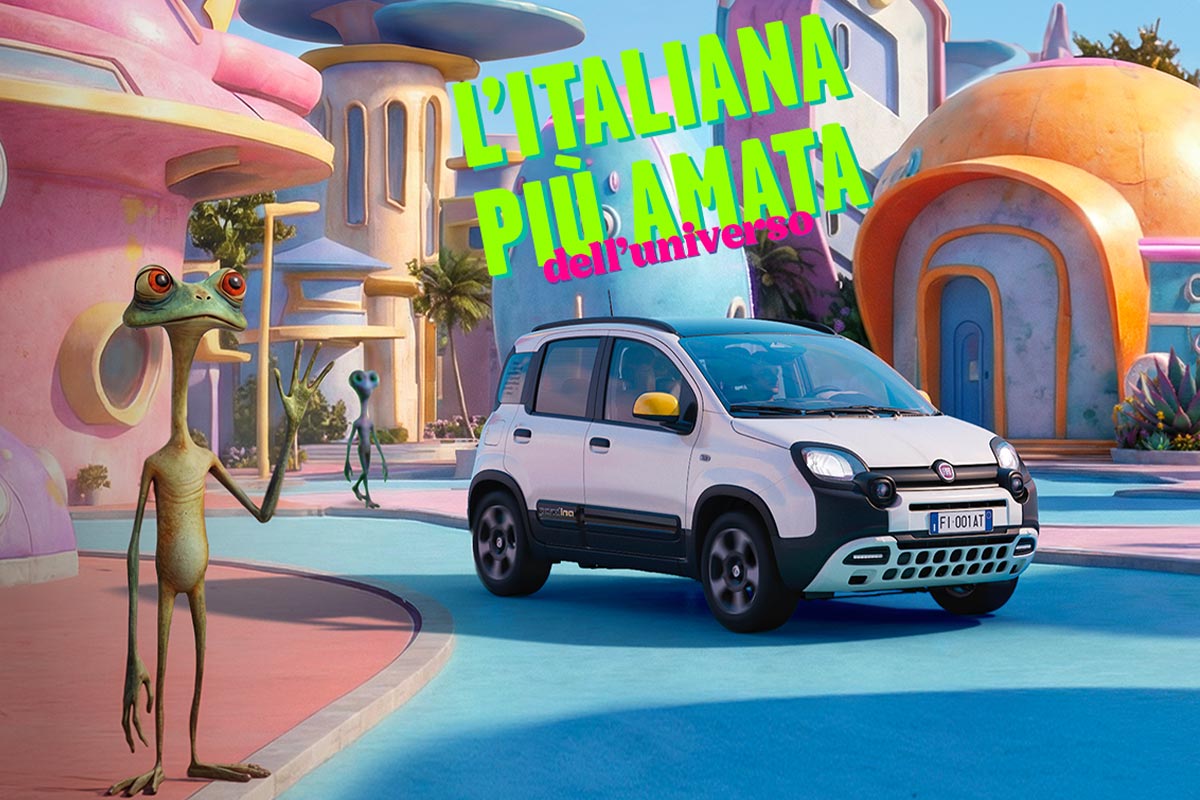
After the Panda, Avenger and Grande Panda, there's also the Leapmotor T03 and Citroën C3. An almost total domination that shows just how much Stellantis still masters the Italian market. But in the midst of this modern, electrified, technological offensive, it's a car born under the Sergio Marchionne era that continues to reign supreme. And this success has nothing to do with a last gasp before its demise. On the contrary, the figures show remarkable stability. Over the same period in 2025, the Panda already had 46,639 registrations. The decline is therefore virtually non-existent.
The Grande Panda doesn't cannibalize the Panda
This has been one of the big questions since the launch of the Grande Panda: would it kill off the historic Panda? For the moment, absolutely not.
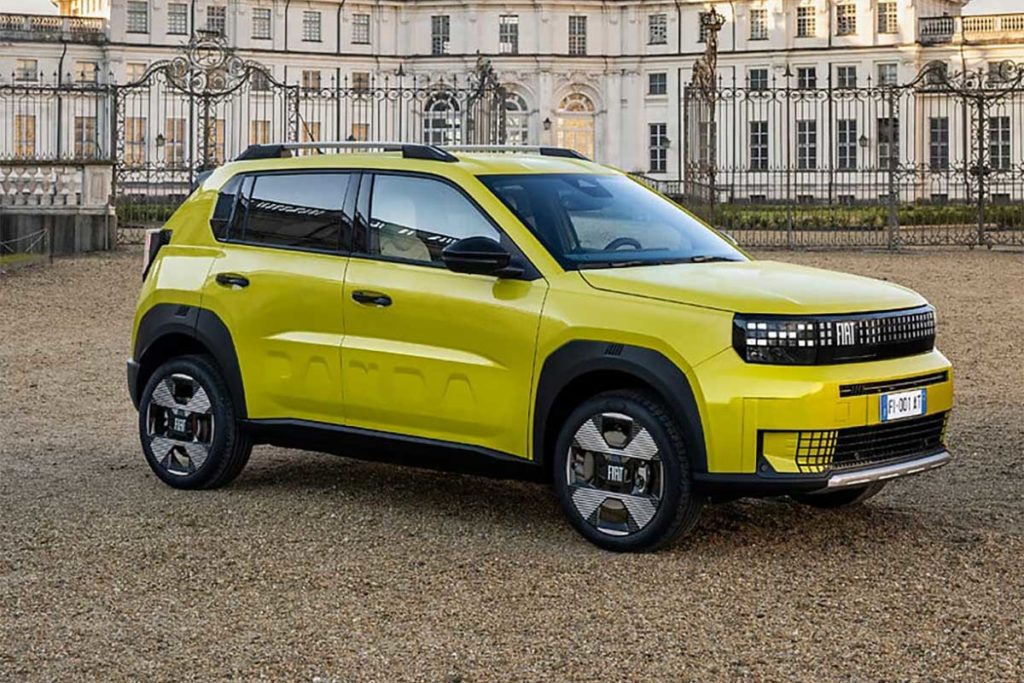
With its 16,894 registrations, the Grande Panda seems to be evolving in its own segment and attracting a different clientele. Bigger, more modern, more technological, it doesn't really replace the classic Panda in the minds of Italians. And that's probably the secret.
A car that's become irreplaceable
After all, what other car can match this recipe? A true A-segment city car, just 3.65 meters long, practical, five-door, easy to use, economical to maintain... and selling for around €12,500 in Italy.
The answer is simple: almost none. Manufacturers have gradually abandoned this segment as unprofitable. Small cars are disappearing or becoming much more expensive, electrified, heavier and more sophisticated.
The Panda, on the other hand, has remained true to its original philosophy: a simple, functional and accessible car. It's almost paradoxical in today's automotive world. While many “affordable” models are now produced in Eastern Europe, Spain or China, the Panda continues to be made in Italy, at the Pomigliano d'Arco plant near Naples. Local production has become rare... but it still sustains a veritable national icon.
The real challenge for Stellantis begins now
But behind this success lies a huge problem for Stellantis: how to replace such an efficient car?
For the future Panda will have to succeed in an extremely complicated exercise. To continue to dominate the Italian market, it will have to stay under €15,000, probably offer an efficient hybrid powertrain, incorporate the modern technologies imposed by European standards... while retaining the simplicity and low costs that have made the current Panda such a success.
And that's perhaps the hardest part. Because the Panda doesn't win on design, power or technology. It wins because it's exactly what hundreds of thousands of Italians are still waiting for: a simple, practical, compact and affordable car.

 English
  French
  Italian
  Spanish
  German
  Japanese
  Dutch
Dutch
The most adorable of the current and recent FIAT range.
The Panda (or now Pandina) is a very good, inexpensive city car. What more could you ask for in a car like this?
The fact that it's 14 years old is irrelevant, and the same goes for the Giulia, which is 10 years old and still the best sedan on the market.
Italy has always been the land of the small car (along with Japan). Fiat reigned supreme with 60% on the market not so long ago. The Pandina is the latest descendant of the narrow Italian city car, but for an extra 3,000 euros, the GPanda offers much more!
No, the Gde Panda offers nothing more than the Panda, and the latest Ypsilon is a fiasco, as the second-to-last Ypsilon sold 40,000 units a year until recently.
In short, reality shows that Stellantis products don't sell as well as some people expect, and in fact they're a flop!
We need to know what it really brings in!
Sales volume is only an indication.
If the new models earn 3 to 4 times more!?
This will keep the pool of customers for future models, if they come out!
Nonsense and totally untrue, because the Ypsilon was selling at over 40,000ex, whereas customers went elsewhere for the last one. So sales and profits were more interesting before because the so-called renewal is a huge failure.
How dare you compare two models that have nothing in common but the name!
An extra 24 cm for a new Ypsilon is like selling two or more of the previous generation.
Scudric does it...
You have to dare to compare a Ypsilon that is a fiasco with the previous version, which sold 10 times more in just one country and was a thousand times more reliable than the new one.
It's not the extra centimeters that do anything, the proof is in the sales, which as usual all say the opposite of your comments.
It's not just a city car! We often do 450 mile days in ours. The twin-air engine is an absolute peach.
This success is exactly the reason why Stellantis should never have stopped production of the previous Ypsilon, 500 plus Abarth 595. In July 2024 because of EU-legislations. These were a topsellers in 2024 so many years after their debut.
Wir haben schon die 2.Generation des Fiat Panda und sind super zu frieden , besser geht kaum klein kompakt komme in jede Parklücke rein und was ganz wichtig ist außer Öl Wechsel brauchte ich die letzten 6 Jahre nicht einmal in die Werkstatt weil irgendetwas kaputt sein sollte , das ist schon eine Top Leistung
Simple, practical, inexpensive, reliable - a recipe for success. Who cares about these high-tech cars, packed with electronics that nobody can fix?.
The Panda—or rather, the Pandina—is in a league of its own. Simply timeless. And it looks like a car, not like the many squashed, bulky, overdesigned, tacky, and embarrassing «creations» from so many manufacturers.
Why not send most of those good-for-nothing designers back into the job market? There’s meaningful work waiting for them there.