

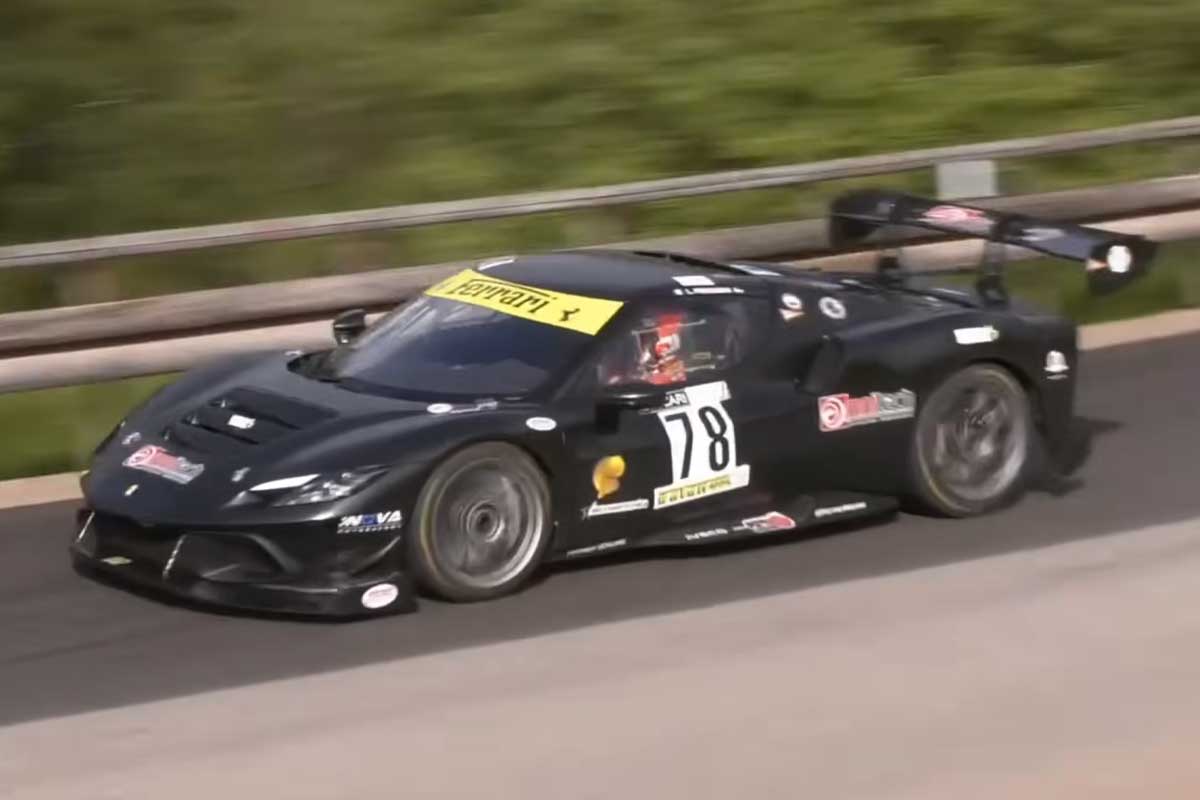
Hillclimbs are an opportunity to see old glories long since retired from official championships, such as Lancia Delta HF, Alfa Romeo 155/156 and Fiat X1/9. But for others, it's all about the latest machines: why wait to launch a GT3-type racer on the "cronoscalate"? The models FerrariLamborghini and Porsche GT3 or Challenge / Trofeo / Cup models are more suited to the racetrack than to the winding roads of Italy, but the excellence of their chassis and engines can be major assets!
King of Italy
Lucio Peruggini is an Italian driver from Foggia, specializing in mountain racing. Peruggini had already won the title in 2016, 2017 and 2018 in a Ferrari 458 GT3. In 2019, he swapped his "out of breath" 458 for a Huracan GT3, which enabled him to retain his title in 2019 and 2020. In 2022, he returned to the Ferrari fold and won the 2022 and 2023 Italian hillclimb championship, GT category, in a Ferrari 488 Challenge Evo. He also occasionally took part in historic rallies in the years 2000-2010, driving a Lancia Delta S4.
AF Corsica in support
In 2025, Peruggini has commissioned his new weapon, an all-black Ferrari 296 Challenge. A formidable car, all the more so as Peruggini has almost official driver status: the car is prepared purely and simply by AF Corse, the entity that oversees Ferrari's involvement in GT and WEC.
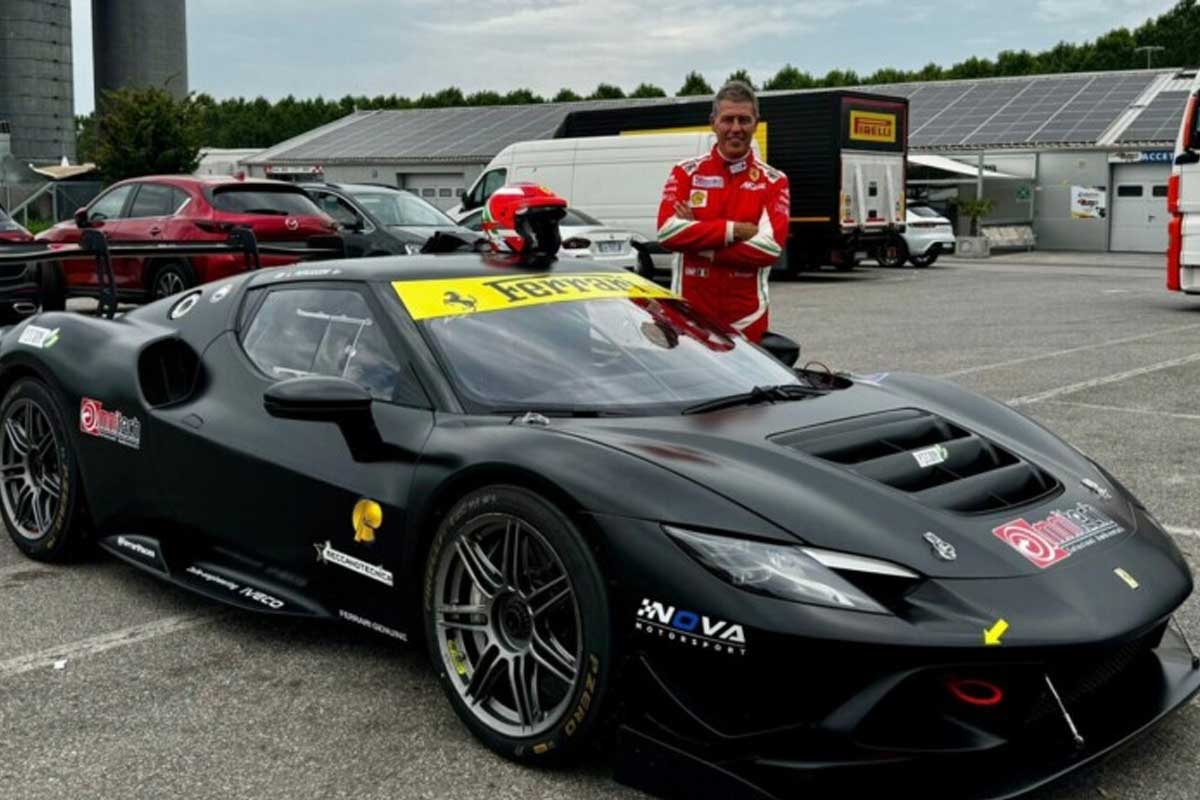
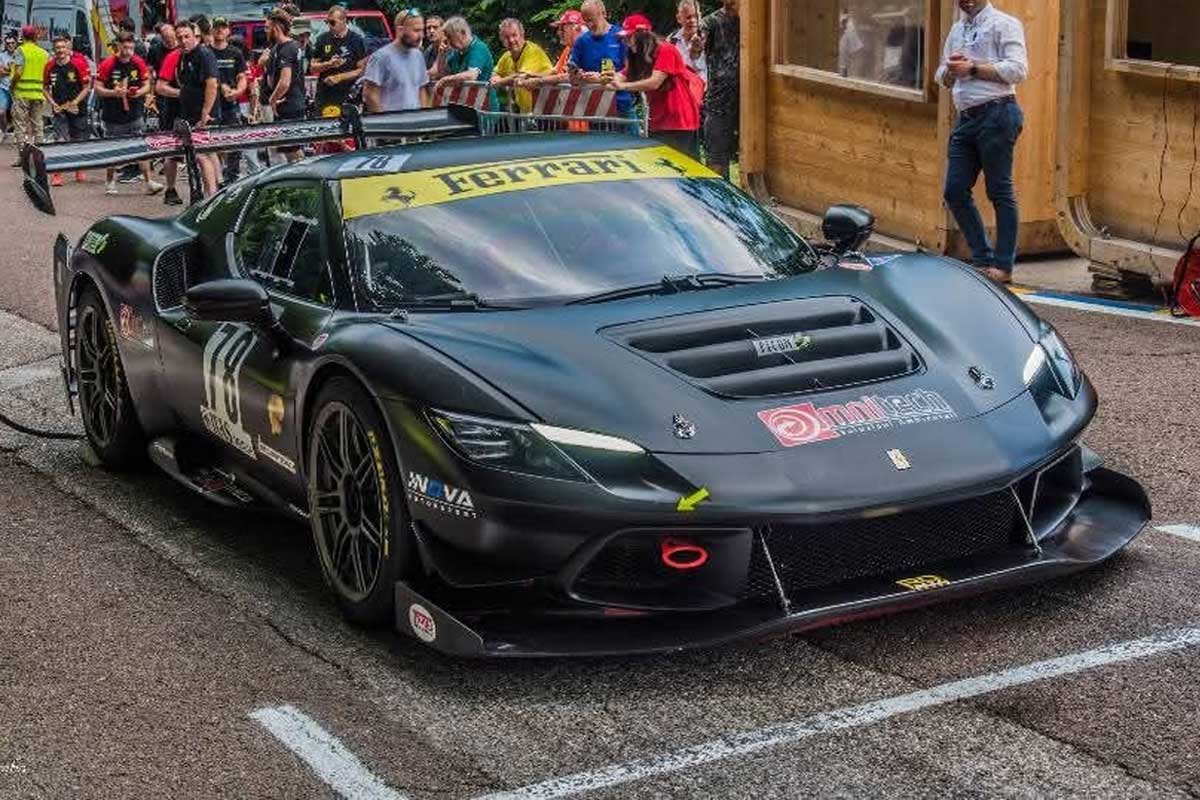
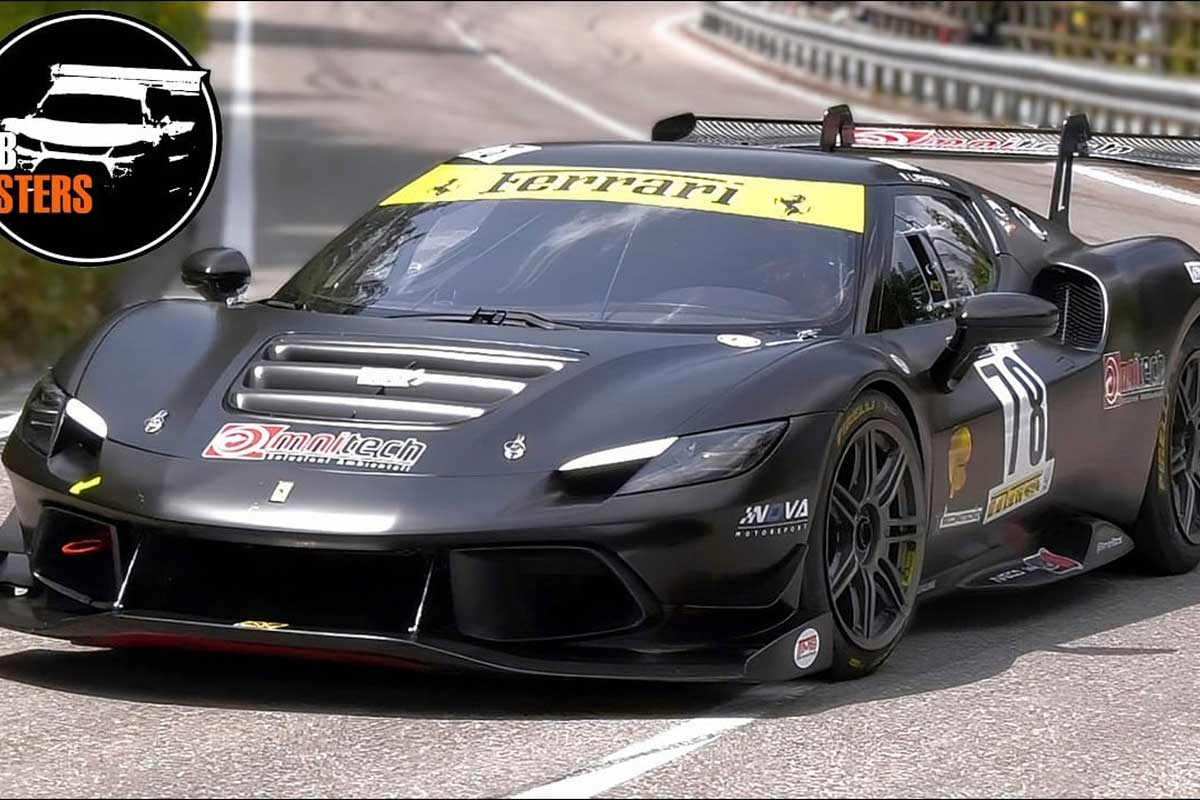
In Peruggini's own words, the switch to the 296 Challenge represents "a clear leap forward" compared with the 488 he had been using previously. The first tests in Cremona had highlighted his driver's enthusiasm: "It's a far superior car to the 488 I usually drive. More power, better braking, a more precise gearbox and remarkable agility in corners. An extraordinary car. On the circuit, it's a clear improvement; uphill, it'll be a real challenge".
An optimal Ferrari Challenge
The 296 Challenge appeared in 2024after the launch of the GT3 (since replaced by the the 296 GT3 Evo). This ninth model in the history of the Ferrari Challenge Trofeo Pirelli features a twin-turbocharged 2,992 cm3 engine, already tried and tested in the 296 GT3. As with the GT3, the Challenge does not feature hybridization, unlike the "civilian" version. The architecture unleashes 700 hp and 740 Nm of torque, i.e. more than 240 hp per liter! The elimination of the hybrid alone represents a saving of 130 kilos on the scales.
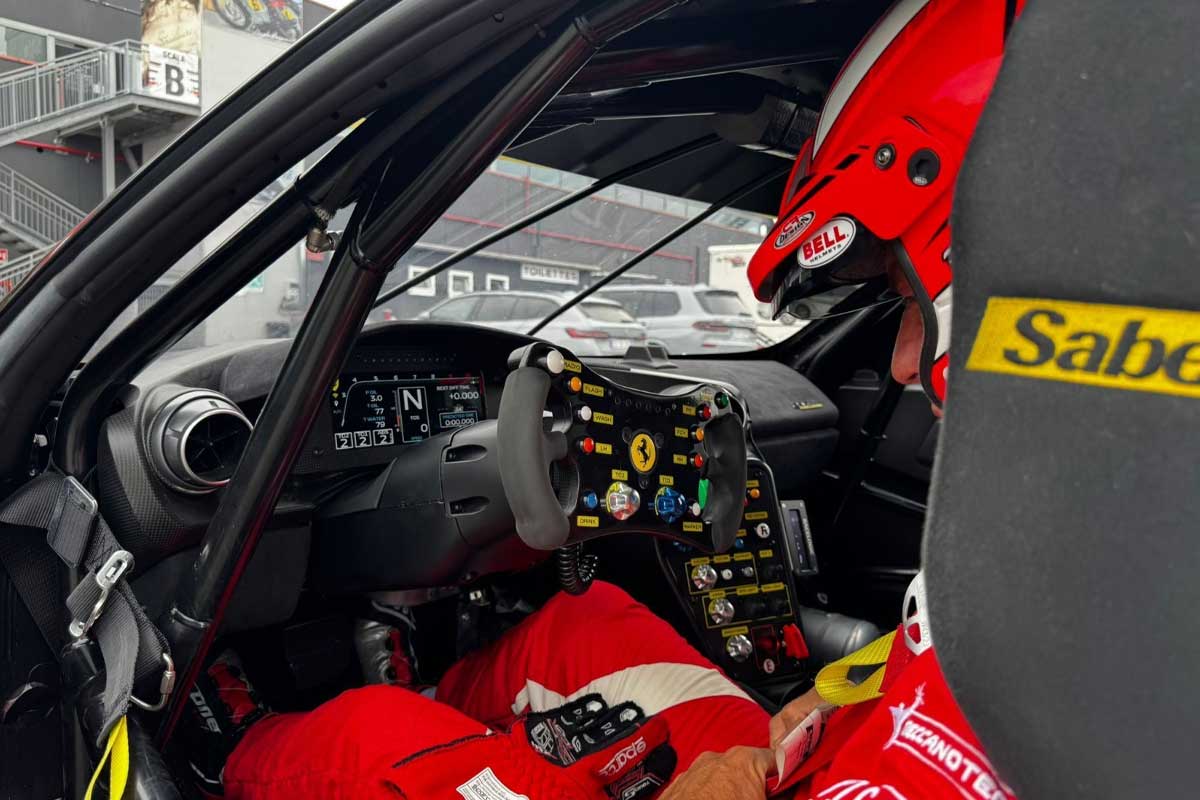
Aero-wise, the 296 Challenge offers a downforce unprecedented in the history of the series, at over 870 kg of downforce at 250 km/h with the spoiler at its maximum angle of attack. Other highlights include Evo Track ABS, an adaptation of the innovative system introduced on the 296 GTB, a "brake-by-wire" braking system, new CCM-R Plus brake discs and custom-developed Pirelli 19″ tires.
A title that calls for more!
The results lived up to the hype. The Ferrari 296 Challenge made its debut at the 74ᵃ edition of the Trento-Bondone race (June 6-8, 2025). In this opening round, it edged out some notable competitors (GT3s, other supercars) and won the GT group. Success followed success, and Peruggini took another title in 2025, the 8th of his career, the 1st in the 296 "Hillclimb".

 English
  French
  Italian
  Spanish
  Portuguese
  German
  Japanese
  Turkish
  Dutch
Dutch
Beyond the track, many drivers have taken their Ferraris to the asphalt slopes of hillclimbs, with varying degrees of assistance from Maranello.
Up until the end of the 70s, permanent circuits were still rare, and hill-climb racing offered a natural and spectacular playground, attracting the best talent behind the wheel of ever sharper cars.
In fact, the first hill-climb for a Ferrari dates back to 1957, with a 750 Monza barquette (the same one that inspired the eponymous SP1 & SP2) driven by Albert Cognet.
Subsequently, in the late 50s and early 60s, the 250 GT competizione (TdF then SWB), the favorite cars of gentlemen drivers, were naturally entered in races on open roads, including mountain roads.
Then, in addition to its exploits at Le Mans, Daytona, Sebring and the Tour de France, the 250 GTO also shone in hill-climbing, notably in the capable hands of Fernand Tavano.
But in the mid-60s, as in other disciplines, hill-climb racing was becoming increasingly professionalized, with the official support of manufacturers such as Porsche, Lotus and Abarth, who were developing specific cars - in this case, ultra-light, highly agile mid-engined barquettes.
However, Ferrari had no such vehicles in its range (since Enzo continued to assert that "the ox pulls the cart, not the other way round"), and on the competition side, there was the 250 LM, but its 3.3l V12 and its size meant it was more suited to circuits than roads.
However, as a tribute to his beloved son, who passed away far too soon, Enzo and his teams developed a new, more compact V6-powered range: the Dino.
And in 1968, a brilliant young engineer of Swiss origin, Peter Schetty, arrived at Maranello as head of purchasing and subcontracting. He was also an excellent driver, winning numerous hill-climb races in Ford GT 40 spiders and Abarth OT 1300s.
Thanks to his contacts and privileged relationship with Scaglietti, he was able to convince Enzo to develop a small racer dedicated to hill-climbing: the 212 E Montagna.
Schetty won every hill-climb in which he took part, including the European Hill Climb Championship. It's a prestigious title that's often overlooked in the (admittedly immeasurable) track record of the Prancing Horse marque.
Subsequently, on the strength of this resounding success, he was entrusted with the reins of the Scuderia in 1971 & 72, winning the World Sports Car Championship with the sublime 312 PBs, the very ones that inspired their already legendary heirs, the 499 P.
After the 24 Hours of Le Mans and an honourable second place for the 312 PB longa coda, Schetty decided to retire, and the following year was succeeded by a brilliant young lawyer, Luca di Montezemolo.
The latter's arrival coincided with the abandonment of all non-Formula 1 competition (perhaps a reason for Schetty's departure). And that was more than twenty years of single-seater hegemony in the Ferrari racing car genealogy.
In the mid-70s and late 70/80s, the Daytona Competizione and then the 512 BB LM were exceptions, but these were cars ordered by customer teams, whose size and weight made them unsuitable for hill-climbing (although the Daytona did win the Tour de France, thanks to the exceptional talent of Jean-Claude Andruet).
At the same time, again on the initiative of private customers and thanks to the Michelotto dealership, there were the beautiful Group IV and then Group B 308 GTBs, the only Ferraris to have competed in the "WRC" or World Rally Championship. They won numerous races, took the Italian championship and were European vice-champions. It's also a title of glory that we forget to mention.
In this respect, it's akin to hill-climbing.
Following on from the 308 Gr IV & B, Ferrari launched the study of a Group B, which gave rise to the sublime GTO (288), but it was more a question of track racing than road racing.
However, following the abolition of Group B, the project fell through, but inspired the legendary F40. A few years later, in the early to mid-90s, a Competizione version was developed for customers in the new GT / BPR championship.
In the heart of the 90s, it was the turn of the F40 LM & GTE to shine in the marvellous GT1 championship, a torch taken up at the dawn of the 2000s by the superb 550 & 575 GTC, worthy heirs to the Daytona Gr IV. But if they were magnificent racing beasts, they were not cut out for road racing: too big, too powerful.
Just like the one unjustly forgotten when thinking of racing Ferraris, the highly successful 333 SP, which marked Ferrari's long-awaited return to endurance prototypes.
The fact is that this was not an official car, but rather a project sponsored and supervised by the famous Italian equipment manufacturer Momo, aimed at client teams wishing to race in the IMSA category in the US and the ILMS category in Europe.
This beautiful 4-liter V12 barquette, straight out of the 412 T and F1 cars of the 94/95 model year, had a fine record of success, especially on the other side of the Atlantic, with victories at the 24 Hours of Daytona and 12 Hours of Sebring, and a top 5 finish at Le Mans.
But there are still no hill climbs, even though one was seen a few years ago on the Trento Bendone, but not racing, more demonstrating for the pleasure of spectators enjoying the vocalizations of the V12 rising in the laps at the same time as in the mountains.
In fact, the 308 Group 4 had shown the way: the development basis for road racing was the line of V8 berlinettes.
However, scalded by the abolition of Group B and eager to respond to Porsche and its Supercup formula, Ferrari instead proposed Challenge versions enabling gentlemen driver customers to compete with each other at the wheel of 348s, then 355s and 360 Challenge models.
A winning formula, since it is still offered with the 296.
On the other hand, after their heyday in the 60s, with Porsche, Ferrari, Abarth, Lola and Lotus all battling it out at the top, hillclimbing fell somewhat into disuse in the face of the development of permanent circuits, endurance racing and grand touring, and the rise of the World Rally Championship.
It wasn't until the 90s that hill-climb racing regained popularity, a generational phenomenon of nostalgia, as children of the 60s became experienced adults, wanting to revive what they had dreamed of back then.
And so, hill-climb racing began to flourish again in every corner of France and Europe, the difference with the 60s being that it was amateur racers (in the noble sense of the word) rather than drivers hired by the manufacturers.
The new-generation hill-climb grids were (and still are) made up of a motley mix of former rally glories, lightweight modified endurance cars and adapted Formula Ford or Renault single-seaters.
The finest example of conversion is to be found in Audi and Peugeot, who had the excellent idea of spectacularly adapting their Quattro and other T16s for the now most famous hill climb, Pike's Peak.
This undoubtedly helped hill-climb racing make a comeback.
Just like, a little later, the growing influence of Manga and Drift culture with the glorification of hill climbs giving rise to long drifts, particularly in the mountains surrounding Tokyo, a spirit taken up across the Atlantic by the Fast & Furious saga.
It didn't take long for hill-climbing to be reprofessionalized, with the help of success and heightened competition.
Alongside the Trofeo Challenge (where the eponymous Ferraris race), Pirelli decided to sponsor the Italian hill-climbing championship, giving it an official status. This brought in serious competitors from all over Europe, with ever sharper cars. GT2s and then GT3s quickly became the top of the range.
This is how Dave Snedson, Scottish driver and Ferrarist emeritus, first triumphed with a Ferrari, in this case an F430, in 2017, 48 years after Peter Schetty and his 212 E.
With this success leading to others, it's now up to Perrugini to make the prancing horse shine on Europe's highest peaks. Here's wishing it the same success as the 499P. Which would only be fair, given that the 296 provided the engine base, and was the first Ferrari to win the 24 Hours of Nurburgring, putting an end to more than 35 years of German hegemony in this race.
Forza!