

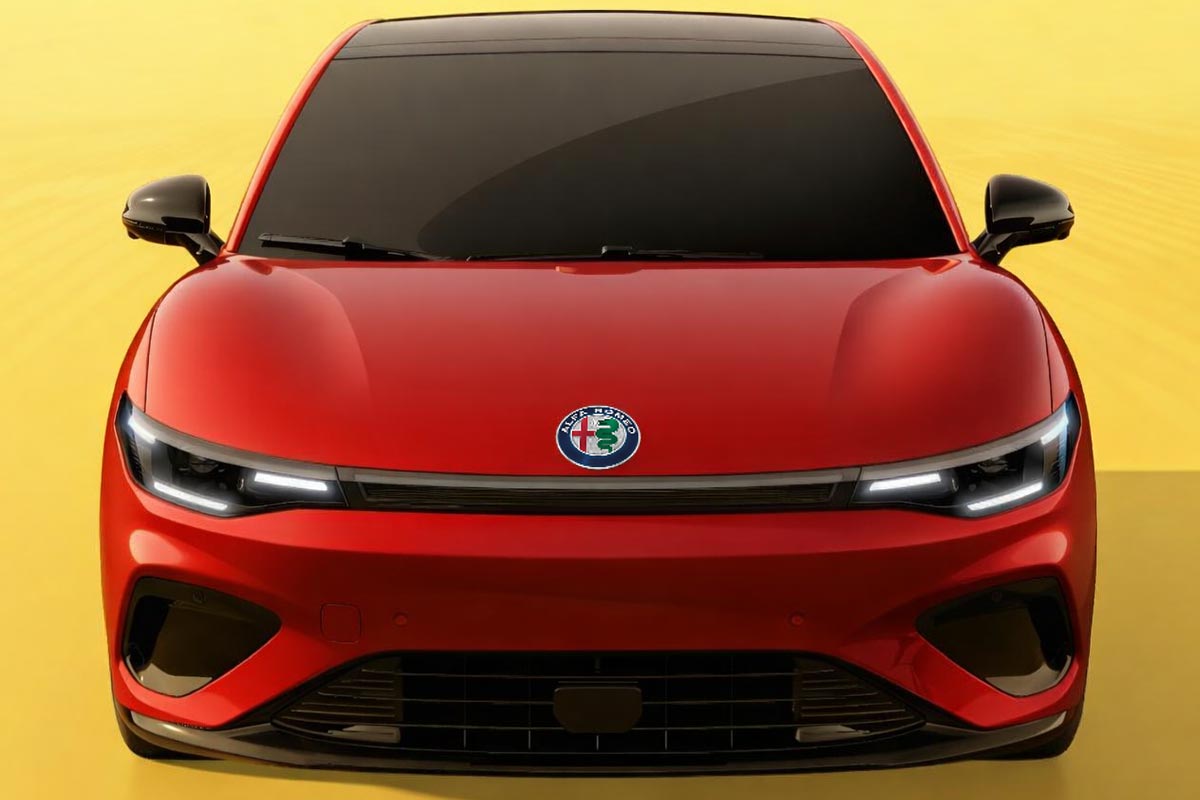
And if Alfa Romeo, a symbol of Italian sportiness and mechanical passion, would one day find itself... on a Chinese technical base? The idea may seem paradoxical, almost provocative, especially at a time when the Milanese brand is trying to return to its fundamentals. And yet, according to information revealed by Reuters, this scenario is currently being studied by the company. Stellantis. A very preliminary hypothesis, but one that speaks volumes about the current strategic tensions within the Group.
A Leapmotor base already planned for Opel... and now Alfa Romeo
The main news does not concern Alfa Romeo directly. It's part of a wider project: Stellantis is said to be in advanced discussions with Chinese manufacturer Leapmotor to develop an Opel electric SUV based on a Chinese platform, with production planned for Zaragoza, Spain, by 2028.
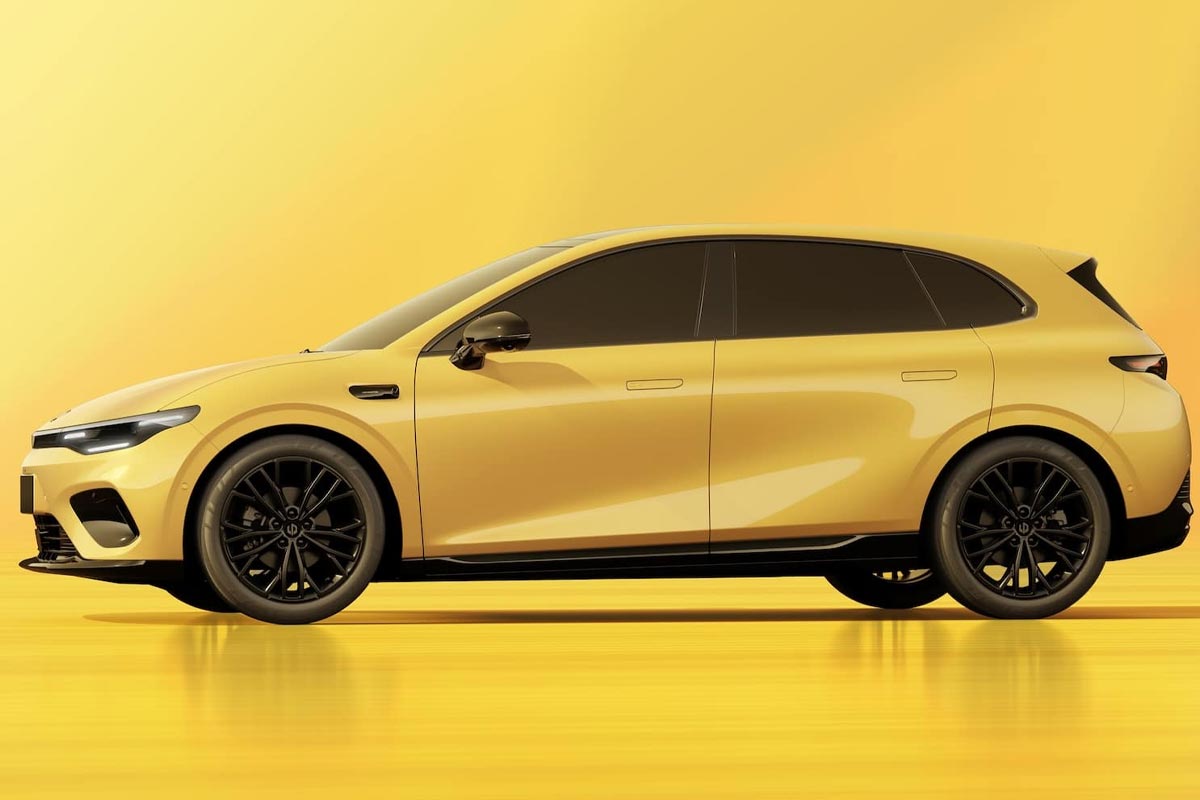
But the article does draw attention to one point: Stellantis is also said to be in preliminary discussions to develop an Alfa Romeo model based on the same architecture, again with a view to optimizing the use of the Spanish plant. In other words, after Opel, and possibly Fiat, Alfa Romeo could also be concerned by this industrial strategy.
A strategy already in the pipeline for Fiat and Opel
This project doesn't come out of the blue. For several months, Stellantis has been actively exploring the possibilities offered by its partnership with Leapmotor, in which it owns around 20 %s.
We've already talked about it several times. First with the hypothesis of a Fiat electric compact derived from the Leapmotor B05, a Chinese model repositioned for Europe, potentially produced in Spain. Then with a broader reflection: what Stellantis to directly use Leapmotor technologies to accelerate the development of electric models while reducing costs.
And while Stellantis has admitted to having overestimated the transition to the 100 % electric and had to book billions of euros in write-downs, this strategy appears to be an obvious industrial shortcut. Access to an already-developed technology, faster to industrialize and less costly, becomes a key lever in the face of competition from Chinese giants such as BYD.
With this in mind, it makes sense for Opel to be the first to switch to a Leapmotor base. But the idea of involving Alfa Romeo radically changes the perception of the project.
Alfa Romeo: back to its roots... hardly compatible?
At the same time, Alfa Romeo seems to be moving in precisely the opposite direction. After several years of promising a 100 % electric range, the brand recently revised its copy. The initial plan has been slowed down, the future Giulia and Stelvio have been postponed, and most importantly, a new direction seems to be emerging These include a return to hybrid powertrains, a more upscale repositioning and, above all, the possible use of the Giorgio Evo platform, historically linked to Alfa Romeo's DNA.
This is clearly a return to basics: driving pleasure, rear-wheel drive architecture, technical links with Maserati, and a strong Italian identity. So, for us, imagining an Alfa Romeo model based on a Chinese Leapmotor architecture seems in total contradiction with this repositioning.
From Stellantis' point of view, the benefits are obvious. Pooling platforms, reducing costs, accelerating time-to-market and improving the utilization rate of European plants, particularly the one in Saragossa.
But Alfa Romeo is not a brand like the others. Where Fiat or Opel can more easily absorb this kind of industrial transformation, Alfa Romeo relies on much stronger emotional capital. Its history, positioning and image are intimately linked to Italy, its engineering and a certain idea of performance.
Offering an Alfa Romeo designed on a Chinese technical base, even if reworked in Europe, would inevitably raise questions. Not necessarily for all customers, but clearly for enthusiasts and for the brand's overall image.
A very uncertain lead
A word of caution, however. According to Reuters, discussions concerning Alfa Romeo remain at a preliminary stage. Nothing is set in stone, and it could be just one of a number of options being considered to optimize the Group's industrial capacities. All the more so as the Stellantis product plan, expected in the coming weeks under the leadership of CEO Antonio Filosa, should clarify the long-term strategy for each of the brands.
The European automotive industry is in a state of flux. Between cost pressures, Chinese competition and an uncertain energy transition, even the most emblematic brands have to deal with new economic realities. It remains to be seen how far Alfa Romeo is prepared to go... without losing the essence of its identity.
 English
  French
  Italian
  Spanish
  Portuguese
  German
  Japanese
  Turkish
  Dutch
Dutch