

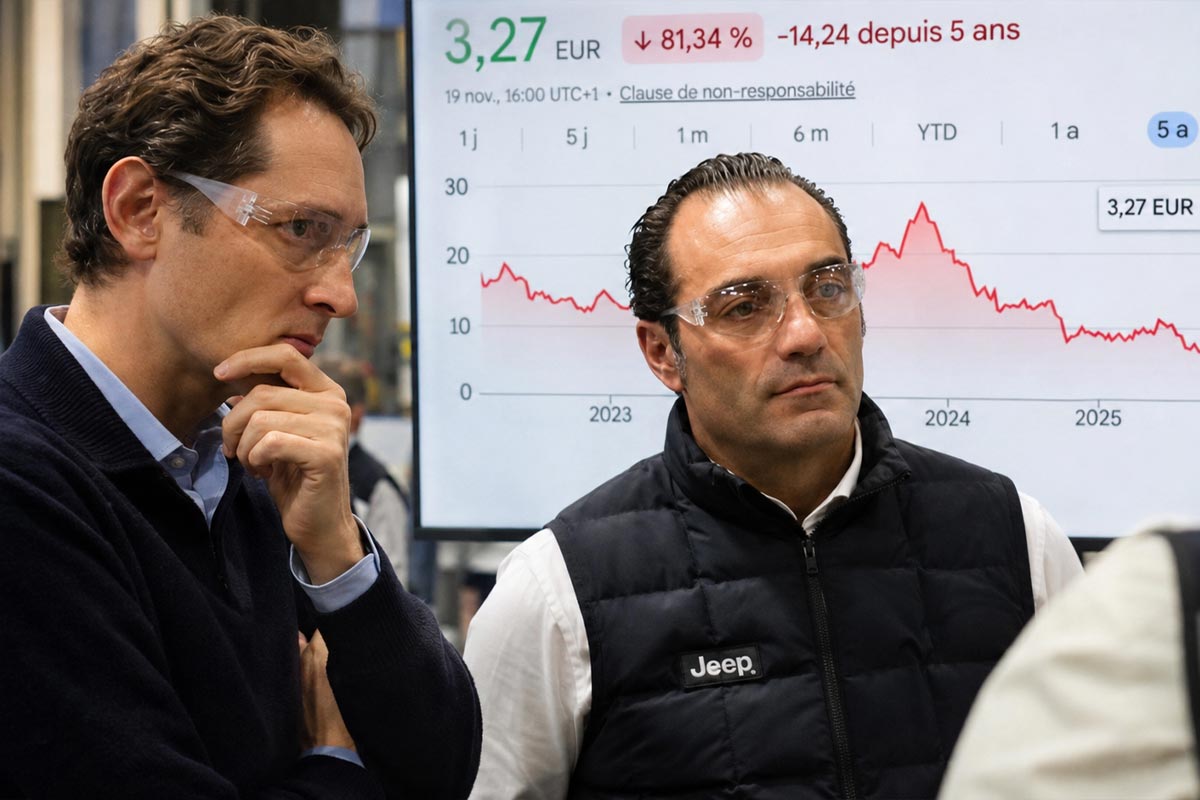
The Fall of Stellantis on the stock market seems to have no end in sight. While the Franco-Italian-American automotive group was still valued at nearly 78 billion euros in the spring of 2024, its market capitalization has now fallen to just 9.5 billion euros. This is a historically low level that brings it dangerously close to Renault, which is valued at 8.1 billion euros. This situation would have been hard to imagine just two years ago, especially since Stellantis generates three times as much revenue as its French competitor.
There is something particularly striking about this comparison. On one hand, there’s Stellantis, a global giant that owns fourteen brands, including Fiat, Alfa Romeo, Maserati, Peugeot, Citroën, Jeep, and Opel. On the other, there’s Renault, a much smaller group centered primarily around Renault, Dacia, and Alpine.
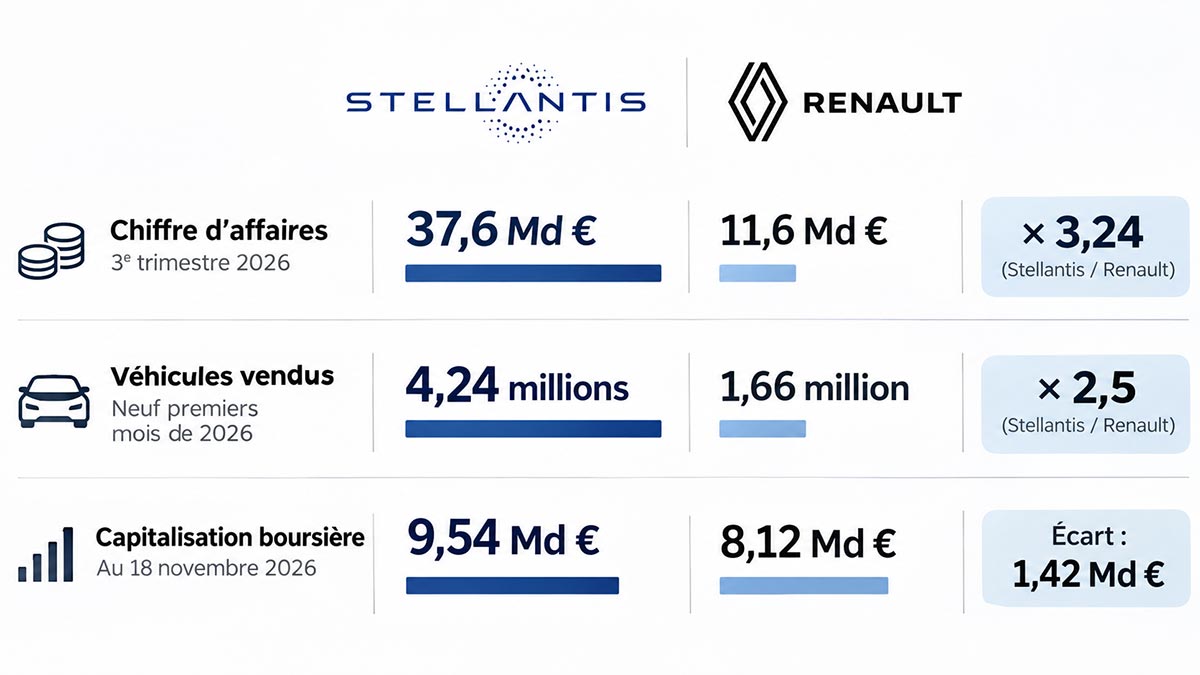
And yet, Only 1.42 billion euros now separate the two automakers on the stock market. At the close of trading on November 18, 2026, Stellantis had a market capitalization of 9.54 billion euros, compared with 8.12 billion for Renault.
Yet Stellantis generates three times as much revenue as Renault
To gauge the paradox, one need only compare the latest financial results of the two groups. In the third quarter of 2026, Stellantis reported revenue of 37.6 billion euros, compared with 11.6 billion for Renault. In other words, the group led by Antonio Filosa generates 3.24 times more revenue than its French competitor.
The gap is also significant in terms of sales volume. In the first nine months of the year, Stellantis sold 4.24 million vehicles, compared with 1.66 million for Renault—about 2.5 times as many. But on the stock market, this industrial dominance is no longer reflected at all in the market capitalization of the two companies.
Market capitalization is the stock price × number of shares outstanding.
Based on the figures from November 18:
Classes Number of shares (net) Capitalization Stellantis 3,28 € about 2.9 billion approximately 9.5 billion euros Renault 27,45 € about 296 million approximately 8.1 billion euros
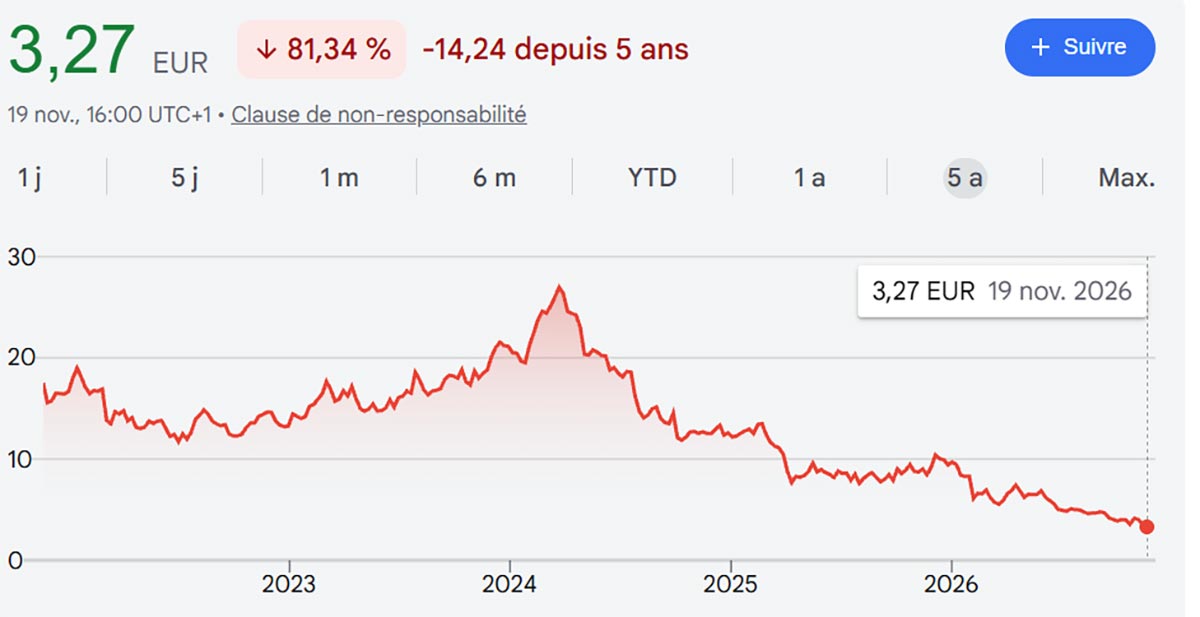
Stellantis has lost nearly 88 % of its value since 2024
The situation is all the more dramatic given that Stellantis was still worth about 78 billion euros in April 2024, when Carlos Tavares was leading the group.
Since then, nearly 68.5 billion euros in market capitalization have evaporated. And the decline has accelerated even further in recent days. On November 5, Stellantis was valued at 12.1 billion euros. Less than two weeks later, its market value had fallen by another 21 %. On November 18, the stock even hit 3.18 euros during trading, a new all-time low.
Why are investors punishing Stellantis so harshly?
Stellantis's problem stems not only from sales, but primarily from profitability and its financial outlook. In the third quarter of 2026, Stellantis reported a net loss of 453 million euros, with an operating margin of just 0.7 % (2.1 % for the first half of 2026). Even more concerning is that the group burned through 4 billion euros in operating cash flow in this quarter alone.
In contrast, Renault’s financial position is more reassuring. In the first half of the year, its operating margin reached 5.2 %, with positive automotive cash flow of 653 million euros.
Investors therefore seem to prioritize profitability over size. And despite the turnaround ambitions outlined by Antonio Filosa, who aims to return to positive operating cash flow by 2027, confidence has been slow to return.
A Dramatic Downfall for the Agnelli and Peugeot Families
This sharp decline also has significant consequences for long-standing shareholders.
Exor, the holding company of the Italian Agnelli family, holds approximately 449 million Stellantis shares. This portfolio was worth nearly 11.5 billion euros in April 2024, compared with less than 1.5 billion today.
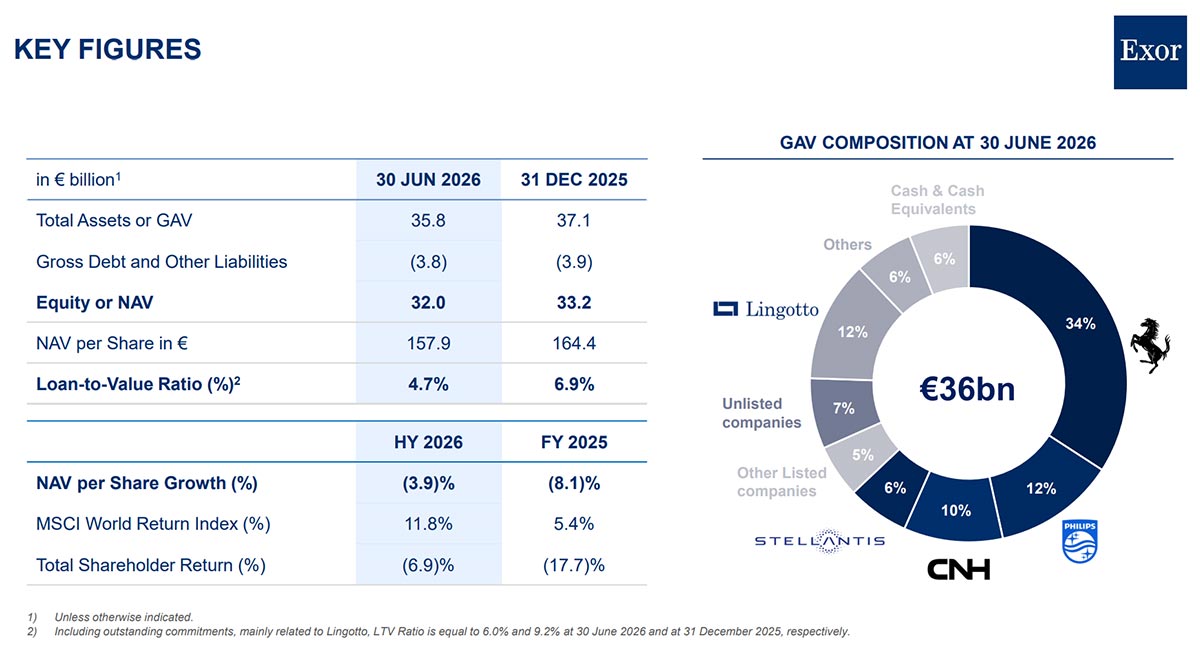
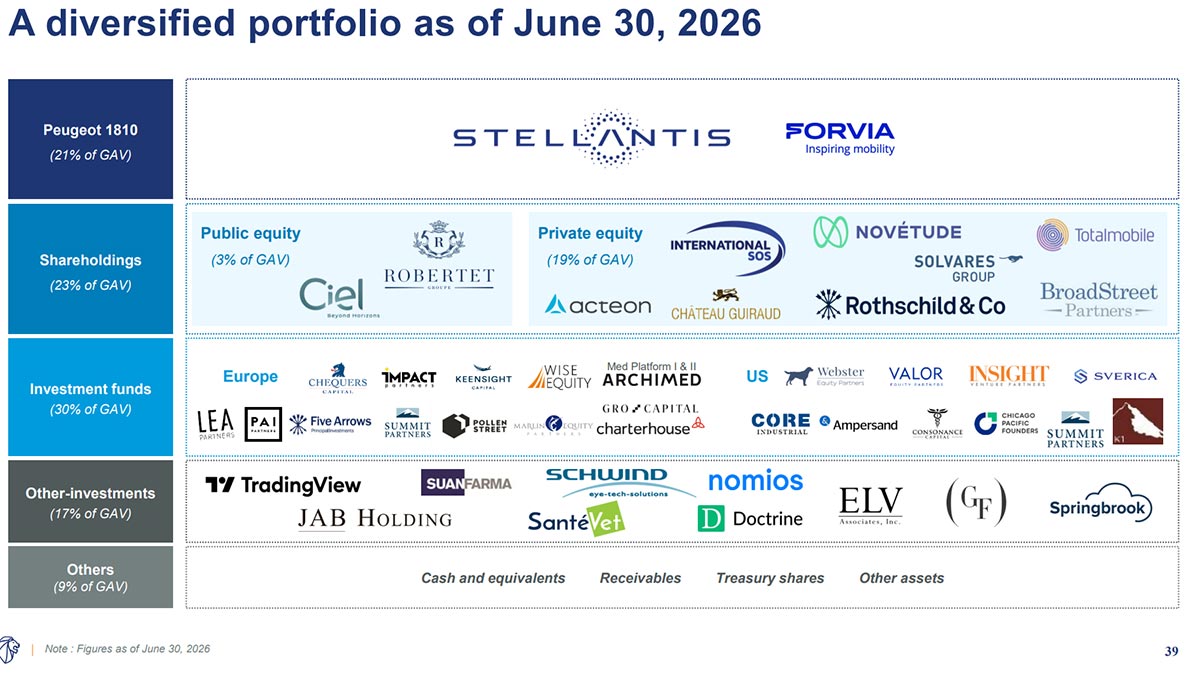
For the Peugeot family, the value of their stake fell from approximately 5.5 billion to just 736 million euros.
One thing is certain: on the stock market, Stellantis has never been this close to Renault. And after losing nearly 88 % of its value since its peak, the automotive giant must now convince investors that it can return to sustainable profitability… especially since Antonio Filosa has already announced rising costs in 2027.
 English
 French
 Italian
 Spanish
 German
 Japanese
 Dutch