

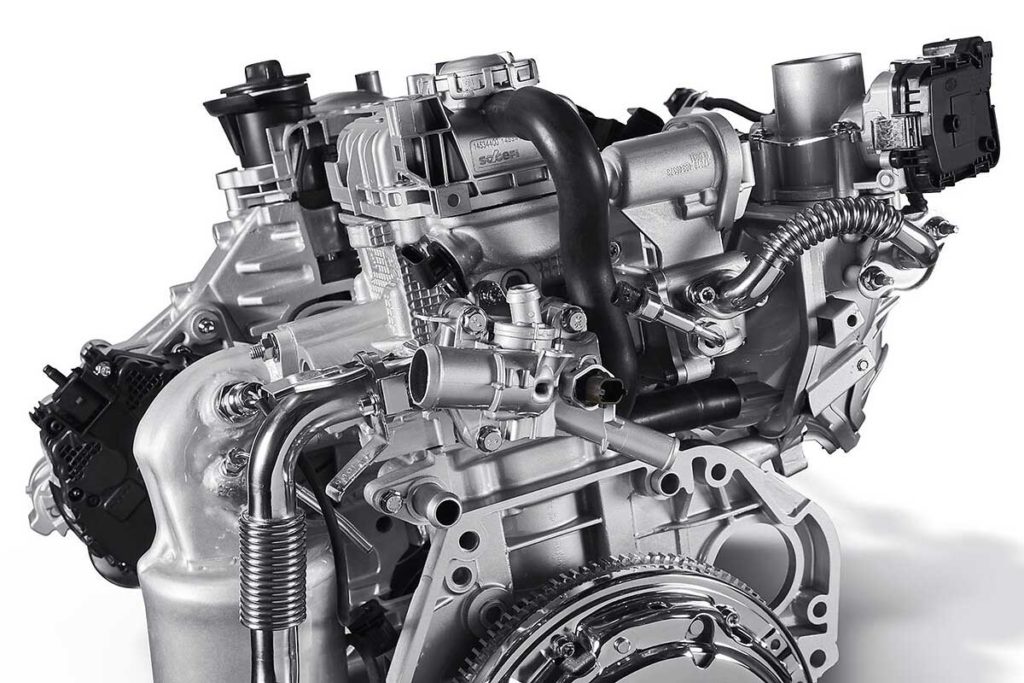
For several years, the fate of the Fiat FireFly engine, also known as the GSE, seemed sealed. Discreet, aging, marginalized in Stellantis' product strategy, this Italian gasoline engine seemed doomed to a slow extinction. And yet, against all odds, the automotive group has just given it a second life. A significant decision for the Italian industry... and for the future of internal combustion engines in Europe.
An Italian engine takes a back seat
Since the creation of StellantisThe goal was clear: maximum rationalization of powertrains and widespread use of the 1.2L EB2, ex-PureTech, which has become the Group's benchmark petrol engine in Europe.
In this context, the FireFly/GSE was an exception. Produced in Termoli, Italy, it was struggling to survive in a few very specific models, such as the Fiat Panda or the Alfa Romeo Tonale, with no real prospects for further development. The situation at the Termoli plant reinforced this feeling of the end of the cycle. Promised to be converted into a battery gigafactory via ACC, engine production seemed destined to disappear. Although the project has since been put on hold, there was no clear sign that the FireFly would still have a role to play in Stellantis' European range. Especially since the new Alfa Romeo Junior, Fiat 600 and Lancia Ypsilon models were all launched with the EB2 engine. And there's every indication that future Lancia Gamma models or the forthcoming Alfa Romeo A4U SUV will follow the same path, or even that of the 1.6L EP6.
The Fiat 500 hybrid, a half-hearted reprieve
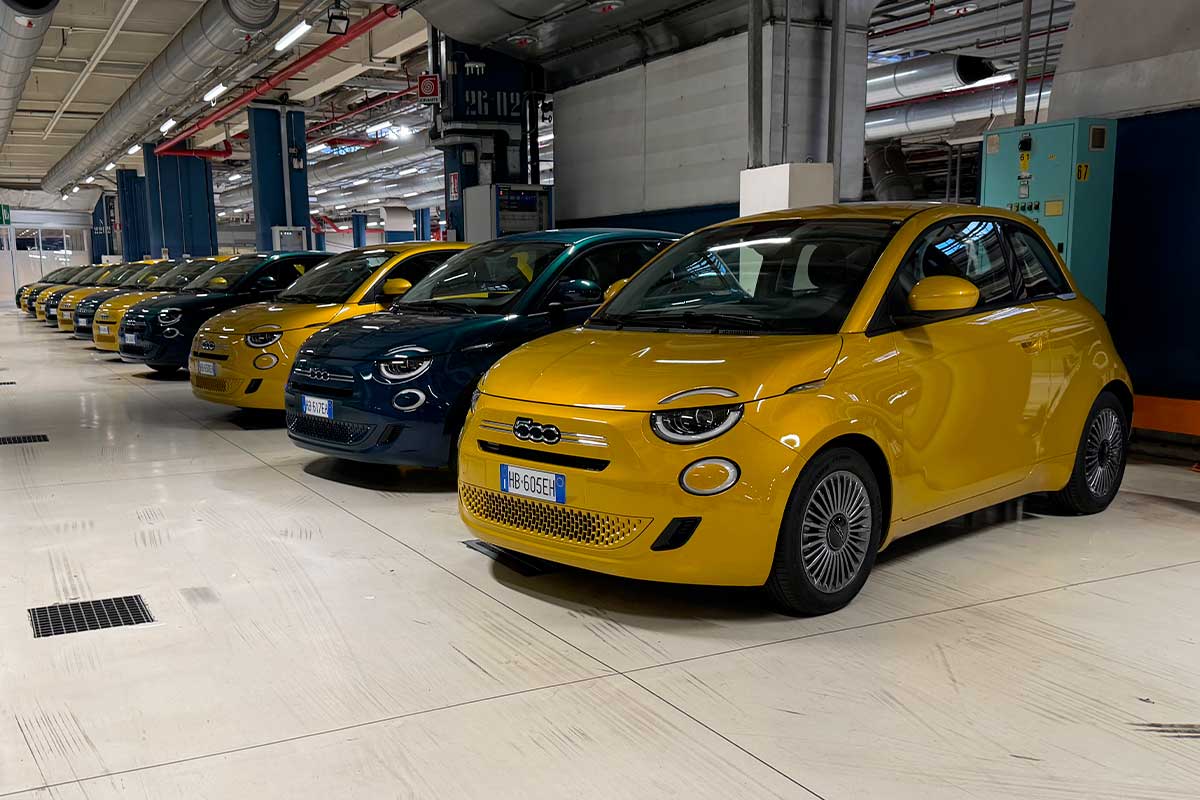
The only positive announcement for Termoli in recent months had been the relaunch of the Fiat 500 hybridequipped with FireFly/GSE. A breath of fresh air for the factory, certainly, but technically disappointing. With 65 bhp, very light hybridization and around 120 g of CO₂/km, this declination paled in comparison with competition that was already far more advanced by 2026. Enough to maintain industrial activity, but clearly not to embody the future of the Italian combustion engine.
The coup de théâtre: Euro 7-compatible FireFly
This is where the scenario changes. At a recent automotive round table at the Italian Ministry of Enterprise and Made in Italy, Stellantis made an unexpected decision official: the GSE engine will be adapted to the Euro 7 standard. What's more, as confirmed by Emanuele Cappellano, CEO of Stellantis Europe, the group has chosen "to invest in the future of GSE engines to ensure their use beyond 2030". A strong statement, which radically changes the industrial reading of the dossier. The FireFly/GSE is no longer an end-of-life engine, but an extended engine, modernized and integrated into Stellantis' long-term strategy. A strategic turnaround that guarantees Termoli's operational continuity, irrespective of the continuing uncertainty surrounding the ACC gigafactory.
Termoli once again a strategic site
The CEO of Stellantis had already announced this in December 2025, Termoli remains a major focus of the Stellantis industrial plan. And this decision is accompanied by another key element: confirmation of the arrival of e-DCT gearbox production at Termoli. This double allocation (GSE Euro 7 engines and electrified transmissions) gives the site a real industrial perspective. On the union side, caution remains the order of the day, but the message is clear. Uilm, through Rocco Palombella and Gianluca Ficco, confirms that preparatory work for the e-DCT is about to begin, and that the development of a new Euro 7 generation of the GSE will enable the plant to go beyond 2030.
And now, what does the future hold for the Fiat engine?
This announcement opens up a whole new field of possibilities. By making the FireFly Euro 7 compatible, Stellantis is opening up the possibility of reintegrating an Italian 100 % engine into future European models, at least for transalpine brands. One essential condition remains: technological evolution. To be credible in the next decade, the GSE will have to go far beyond the current micro-hybridization. The hope now is that it will be combined with a genuine HEV hybrid system, capable of rivaling the best on the market in terms of fuel efficiency and performance. If this is the case, the engine that was thought to be doomed could well become a pillar of the European automotive transition, as technological neutrality returns to the heart of the political debate. Destined to die, the Fiat engine may finally have been reborn.
 English
  French
  Italian
  Spanish
  Portuguese
  German
  Japanese
  Turkish
  Dutch
Dutch
Really, there is some good news that is positive on the part of Stellantis, the Giorgio evo base for the new Stelvio and Giulia, the evolution of the Firefly euro 7 which seems logical to me and which is an error of strategy by Tavares who wanted to impose only PSA on the Italians.
Ich habe wieder Hoffnung
That's a lot of good news lately. It's as if Stellantis, after a disastrous start resulting from a series of zany decisions, had put his head back on his shoulders and decided to get serious about his work.
Personally, I see it as Stellantis tilting in favor of the Italians/a stronger political will on the southern side of the Alps. What was impossible before is now logical. Alfa and Fiat have regained their legitimacy.
Finally some good news, with the FireFly/GSE modernized and relaunched in Italian cars.
The PureTech engine, even in Italian cars, has been a disgrace, almost an attempt to kill off Italian brands and Italian engines.
Perché parlate di EB2 quando su tutte viene montato il Tgen3?
Pur pensando che i GSE siano migliori a livello di affidabilità questi motori.....perché non è uno solo....la scelta di puntare sul tre cilindri 1.2 è stata presa da un comitato tecnico finanziario congiunto seguendo una linea guida ben precisa ....il risparmio ad ogni costo.
Gli effetti di quella scelta hanno fatto sì che i GSE ibridi italiani emigrassero in Brasile per non gettare qualcosa di buono.
Il fatto che i Marchionne Boys (FILOSA e CAPPELLANO)abbiano deciso di svilupparli ancora mi fa sperare che lo HEV vada a finire su questi e non sul Tgen3.
Once again, you have to understand what we're talking about here. It's all very well for the GSE to come back... but it costs money. Stellantis has received funding guarantees to do this (thanks to the Italian state). That wasn't the case 3-4 years ago, and that's why the puretoc on the Italians!
The pre-eminence of the PureTech engine was Tavares' response to the anti-pollution standards required by Brussels.
"but it costs financially."
Like any investment. The question is why Stellantis is doing it. Certainly for
1) replace that 1.2L PureTech that nobody wants.
2) respond to certain markets.
Seit Jahrzehnten fahre ich Autos von Lancia und Fiat, aktuell ist ein Lancia Musa Diesel und ein Fiat 500X in Betrieb. Beide Fahrzeuge sind in die Jahre gekommen
aber in der letzten Zeit ist der Eindruck entstanden, die Leute möchten kein Auto mehr verkaufen und wissen nicht was den Kunden am Herzen liegt.
Vielleicht ist der gemachte Schritt ein Schritt in die richtige Richtung.
HR . Wien in Österreich
Speriamo che lo montino su tutti i marchi italiani di Stellantis lasciando il bidone puretech 3 ai francesi e tutti i loro problemi