

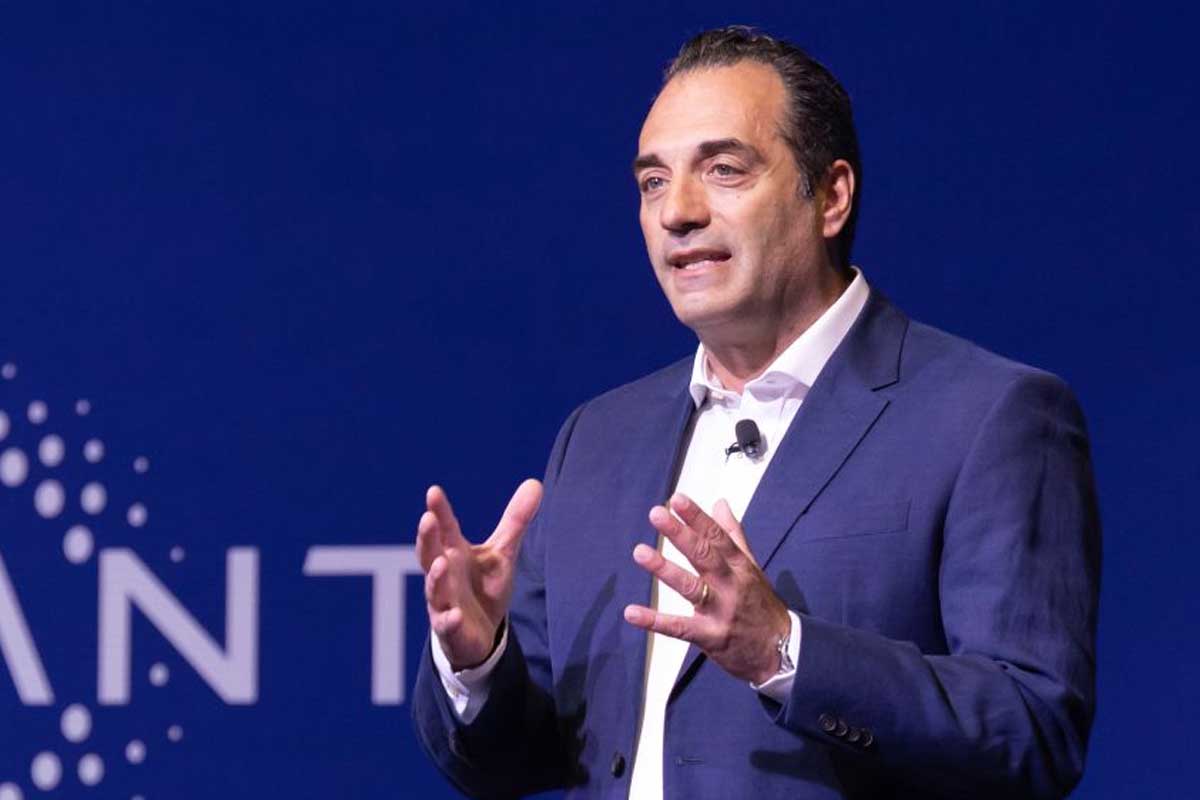
Nearly two years after Carlos Tavares’s much-discussed hearing before Italian lawmakers, the tone has changed dramatically. On June 17, 2026, Antonio Filosa, who had become CEO of Stellantis A little over a year ago, he appeared before the joint committees of the Chamber of Deputies and the Senate to outline his vision for the group’s future in Italy. The hearing, which lasted more than two hours, was marked by a much more conciliatory tone, concrete industrial announcements, and a central message: Stellantis wants to put the mistakes of the past behind it and put Italy back at the heart of its strategy.
From the very beginning, the Italian executive made a point of signaling a break from previous years. He reflected on his 27-year career with the group, spoke of his attachment to Italy, and paid tribute to Sergio Marchionne, whose 74th birthday would have been celebrated that very day. This was a powerful symbol, as Marchionne’s name came up repeatedly during the discussions with lawmakers.
A deliberate reevaluation of past strategy
The most important message from this hearing is undoubtedly the implicit admission that Stellantis has fundamentally overhauled its strategy. Antonio Filosa explained that he had «reversed the group’s course» by strengthening regional structures, putting quality back at the forefront, and, above all, giving customers greater freedom in their choice of powertrains.
This shift in direction did not come without a cost. The executive revealed that the change in strategy had resulted in 25 billion euros in extraordinary expenses. This substantial amount illustrates the scale of the shift the company has undertaken. According to him, however, this decision was essential to put the company back on a more solid footing.
The group is no longer focusing exclusively on electric vehicles. The future lineup will be based on a combination of hybrid, electric, and high-efficiency internal combustion engine models, thanks to platforms capable of accommodating different technologies. This approach is now in line with the positions that many European automakers have been advocating for several months.
Initial results deemed encouraging
Antonio Filosa presented several indicators intended to show that this new direction is beginning to have an impact.
Globally, Stellantis reported a 12.% increase in registrations in the first quarter of 2026, driven primarily by Europe and North America. The group continues to hold a substantial cash position, estimated at approximately 45 billion euros.
In Italy, the figures are even more striking. Over the first five months of the year, Stellantis’s registrations rose by nearly 15 %, while production at Italian plants increased by more than 16 %. This improvement has led to a reduction of approximately 30 % in the use of short-time work programs. For Antonio Filosa, these results are proof that the «Piano Italia,» presented last year by John Elkann, is on track to be met—and even exceeded in some areas.
Confirmation of the 60-billion-euro global plan
Stellantis' new strategic plan calls for 60 billion euros in investments and more than 60 product launches between 2026 and 2030.
Volume brands such as Fiat, Jeep, Peugeot, and Ram will be at the center of global technological developments. Alfa Romeo and Lancia will adopt a more regional focus, while Maserati will retain its role as a showcase for Italian luxury. Artificial intelligence also plays a key role in this strategy. Stellantis states that it is already using AI on a large scale in engineering, production, design, and customer relations, with plans to accelerate its adoption even further in the coming years.
Italy at the Heart of the Industrial System
The section on Italy was, of course, the most eagerly anticipated. Antonio Filosa described an industrial organization in which each plant is assigned a specific role. Pomigliano and Mirafiori will become the hubs for small cars. Melfi, Cassino, and Modena will focus on premium and luxury models. Atessa will remain the nerve center for commercial vehicles.
Pomigliano: The Arrival of E-Cars
The main development concerns Pomigliano. By 2028, the site will be home to the STLA platform for future «e-Cars,» featuring at least two new high-volume models. According to Filosa, these small electric cars produced in Europe are expected to be priced around 15,000 euros in order to compete with growing competition from Chinese automakers. The Fiat Pandina hybrid, a major commercial success in Italy, will continue to be produced until at least 2030.
Mirafiori Is Back on Track
In Turin, production of the new Fiat 500 hybrid led to an increase of more than 100 % in production volume compared to the previous year. This upturn resulted in the hiring of several hundred employees. Mirafiori also maintains its role as a technology hub, with more than 3,000 engineers, a battery research center, and the group’s Italian and European headquarters.
Melfi: Four New Models and One More Alfa Romeo
The Melfi plant appears to be one of the big winners under the new plan. Following the launch of the new Jeep Compass and DS No. 8, the plant will begin production of the Lancia Gamma and the DS No. 7 this year. But the most interesting announcement concerns Alfa Romeo. Antonio Filosa confirmed that a new Alfa Romeo model will be produced at Melfi by 2028.
Maserati: A Plan Expected Before the End of the Year
Maserati remains the most sensitive issue. Antonio Filosa confirmed that a new strategic plan for the brand will be presented in Modena before the end of the year. In particular, it will include two new models in the luxury sedan segment.
In Modena, production of the GranTurismo and GranCabrio has already been brought back, while the new «Bottega Fuoriserie» facility is set to bolster the company’s customization business.
Regarding Cassino—arguably the site facing the greatest challenges today—the executive remained cautious. He simply confirmed that the plant’s future is tied to Maserati’s upcoming plan and that Stellantis is currently working with potential industrial partners. In the meantime, the plant will continue to produce the Alfa Romeo Giulia and Stelvio, while a new Maserati Grecale is expected to roll off the assembly line starting in 2027.
Atessa and Termoli are secure
Among the most significant announcements is the future of Atessa. The Abruzzo site will be home to the group’s next generation of large commercial vehicles. Stellantis plans to invest more than one billion euros there over five years to make it the European hub for this business.
In Termoli, Antonio Filosa has all but buried the ACC Gigafactory project. In response to market trends, Stellantis is now focusing on the production of eDCT electrified transmissions and GSE engines. The goal is to exceed 1.5 million transmissions produced per year starting in 2027.
5 billion for innovation and 7 billion for Italian suppliers
The executive also emphasized the importance of the Italian supply chain. Stellantis says it spends approximately 7 billion euros annually with Italian suppliers and aims to further strengthen this local integration, particularly for the future Atessa commercial vehicles and the future Alfa Romeo model to be produced in Melfi. At the same time, more than 5 billion euros will be invested in research and innovation in Italy over the next five years. In 2025, Italian teams filed nearly 400 patents, particularly in the fields of autonomous driving, propulsion, safety, and materials.
Energy costs: a top priority
While Antonio Filosa presented an ambitious plan, he also explained what he believes threatens the competitiveness of Italian factories. The first issue is energy. The executive revealed that in the first quarter of 2026, Stellantis was paying an average of 205 €/MWh in Italy, compared to 90 €/MWh in Spain and 100 €/MWh in France. He considers this gap unsustainable in the long term.
The group is seeking “energy-intensive company” status in order to qualify for specific tax breaks and, at the same time, is accelerating its solar and biomass projects. Antonio Filosa also called for greater flexibility in the labor market, while noting that such flexibility should benefit both companies and employees.
A Call to Change European Rules
Another major topic of this hearing was Europe. Antonio Filosa confirmed that Stellantis continues to support the transition to electric vehicles and the goal of carbon neutrality. However, he believes that the current regulations lack realism and must be adapted to industrial realities.
The executive emphasized three priorities: light commercial vehicles, small cars, and «Made in Europe.» In particular, he considers it inappropriate to apply the same regulatory constraints to passenger cars and commercial vehicles, given that electric commercial vehicles still account for only about 3 % of the Italian market.
Regarding small cars, he welcomed the idea of «supercredits» proposed by the European Commission. Finally, he called for a genuine European industrial policy based on “Made in Europe,” including, in particular, a more realistic timeline for batteries produced on the continent.
Breakup with Carlos Tavares
Throughout the remarks made by members of the National Assembly and the Senate, one observation came up repeatedly: Antonio Filosa’s hearing was perceived as very different from that of Carlos Tavares in 2024. Several elected officials praised the change in tone, the greater pragmatism, and the clear willingness to engage in dialogue with Italian institutions.
The challenge now is to turn these announcements into concrete results. The Cassino issue remains largely unresolved, Maserati’s future has yet to be clarified, and the question of production volumes remains central. But for the first time in several years, Stellantis is presenting an industrial plan that relies equally on hybrid and electric vehicles, restores a prominent role to its Italian plants, and clearly demonstrates the group’s ambition to strengthen its presence in its home country.
For Antonio Filosa, the challenge now is to convince people that this new direction is not just a change in rhetoric, but truly the beginning of a new chapter for Stellantis in Italy.

 English
  French
  Italian
  Spanish
  German
  Japanese
  Dutch
Dutch
The key point to remember is that energy costs are a decisive factor when competing against teams like France and Spain, which have several of the group’s plants. This economic factor is crucial to maintaining Italy’s industrial base. As for the rest, today’s reality will not be the same tomorrow.
I'd like to know what the future holds for GME engines in Termoli—will they no longer be manufactured there?
Honestly, I have less and less confidence in the GME engine. Stellantis continues to insist that Termoli will produce GSE engines and eDCT transmissions. We also know that the V6 engine will continue to be used, at least for Maserati (in small quantities), but as for the GME engine, it doesn’t seem to have much of a future in the group’s European models.
And what about future models like the Giulia and Stelvi—if they get a new generation, what engines will they have? I hope not Puretech.
This is just my opinion, but: at first there was talk of the STLA Large, then there was talk of creating synergies with Maserati… and now they’re announcing that Maserati is looking for an industrial partner. So I think that, for the time being, nothing has been decided regarding the Giulia and the Stelvio.
He talks a lot. But in reality, he’s only really interested in the American market. In short, all that political talk has no real value in the end. Sad.
When you look at all the hot air spouted by that other hypocritical penguin—aka Tavares—and the results… you just can’t sink any lower, no matter what happens.
That's exactly what I was thinking. He talks and talks, but in practical terms, aside from the return of the V8 in the U.S. and diesel in Europe, what else is there?
Italy is the country with the most Stellantis plants, and Stellantis is shooting itself in the foot if it doesn't close one or two plants in Italy, where energy costs are twice as high—luckily, wages are low.
The best thing to do is to shut down all the factories 🏭 in France because they’ll never be profitable again—especially since FDM has closed its doors and PSA has shown us that they’ve never been able to develop a decent platform or engine, whereas Renault has.
In short, RIP PSA and its tiny market that brings in next to nothing but trouble!