

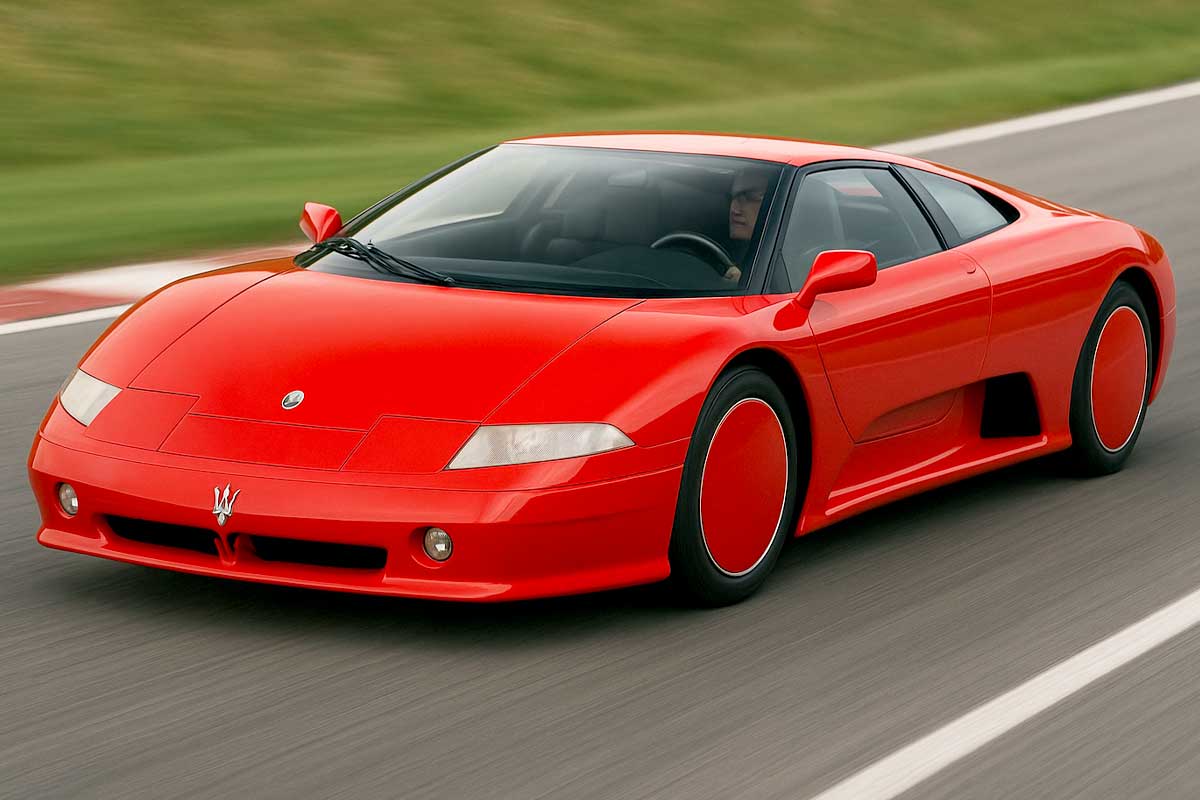
For those thinking of any spicy sauce, forget it immediately. The term "chubasco" refers to a violent gust of wind with thunder and lightning, which occurs during the rainy season along the Pacific coast of Mexico, Central America and South America. Ten years before Pagani and its supercars named after Argentinian winds, one manufacturer was already tapping into the imaginary power of the American elements: Maserati presented in 1990 a concept car that could have shaken Ferrari.
Ambition
In the '80s, Maserati survived thanks to the positive reception of the Biturbo, but the Trident lacked a "flagship" to carry the Modena name to the top. In December 1990, on the occasion of the "Casa" annual anniversary, Maserati presented three new models. The Shamal in its final, production-ready version, and the Racing, the new 285hp 2-liter coupé. But the star of the show was an entirely new car, both aesthetically and mechanically, to the existing Maserati range. De Tomaso, who owned the brand at the time, hoped to bring it up to the level of the Motor Valley's great rivals.
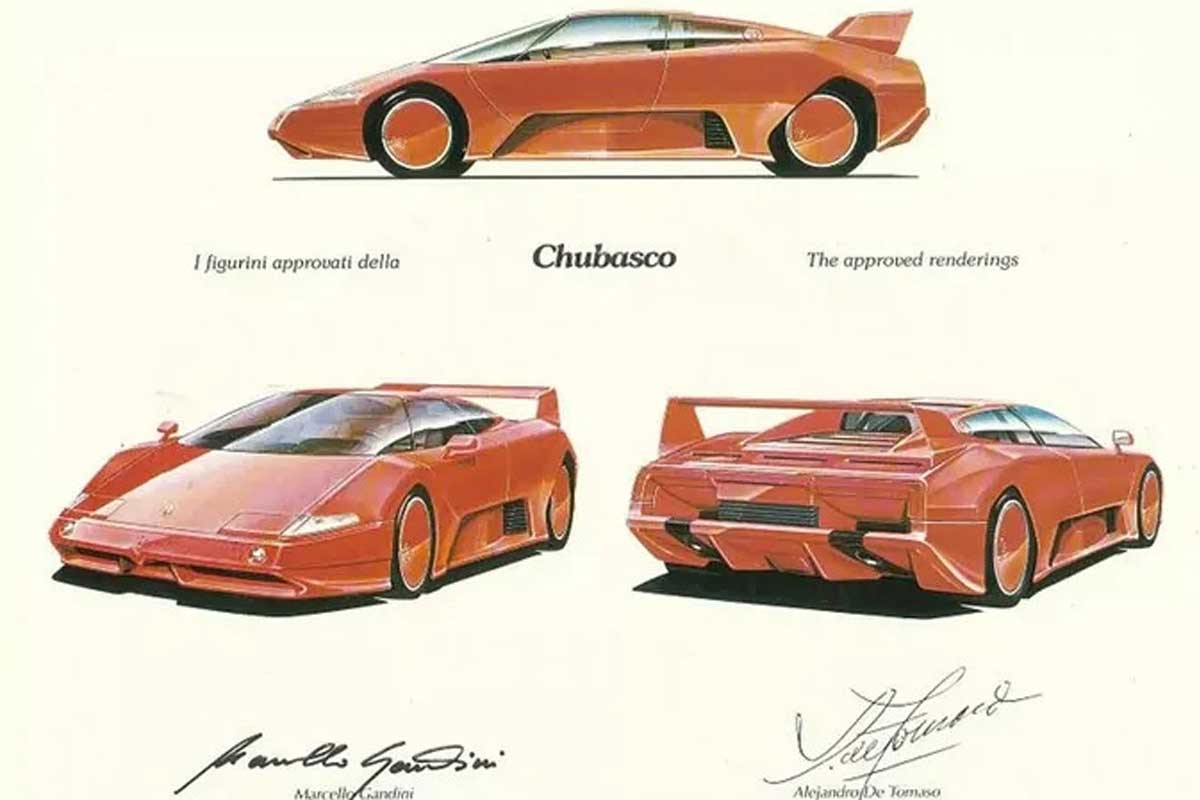
Beneath a tarpaulin was a resolutely futuristic-looking supercar in its day, the Chubasco. Presented in its still static form (mock-up) - the finished product was due to be unveiled in early 1992 - it completely seduced the admiring guests. The Trident lends itself to dreaming, directly challenging Lamborghini and Ferrari, whose 348 didn't win all the votes.
Bold design
The bodywork had to ensure good air circulation at critical points on the vehicle requiring cooling. To achieve the desired performance, the chassis with central spars was chosen for its excellent rigidity, thanks in particular to an engine mounted in a central rear position. The Chubasco thus follows in the footsteps of the De Tomaso Vallelunga and Mangusta, which had successfully experimented with this configuration.
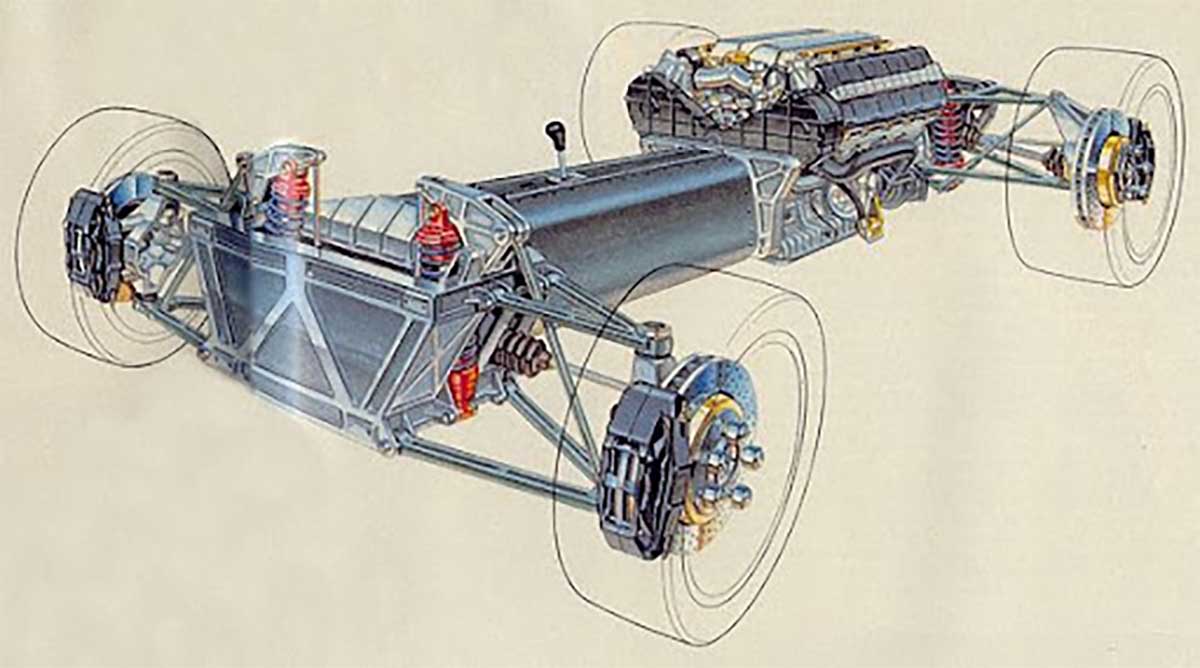

The chassis would provide anchorage points for radical suspensions, with pushrods at the front and tie-rods at the rear, hydraulic lifting and progressive stiffness, and rockers with internal springs, a typical F1 solution. This was designed to leave space for two large side ducts for air passage and distribution. The central aluminum honeycomb structure features ribbed light-alloy subframes to support the suspension and engine.
Il maestro Gandini at work
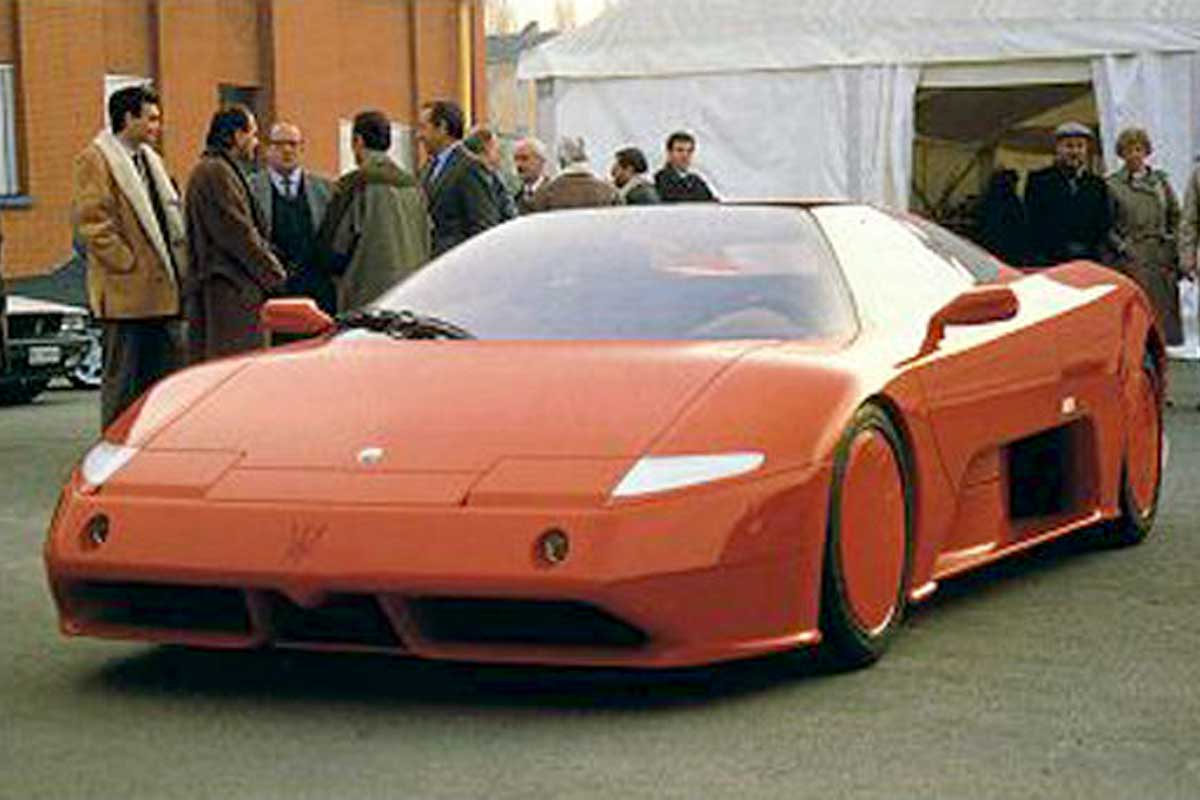
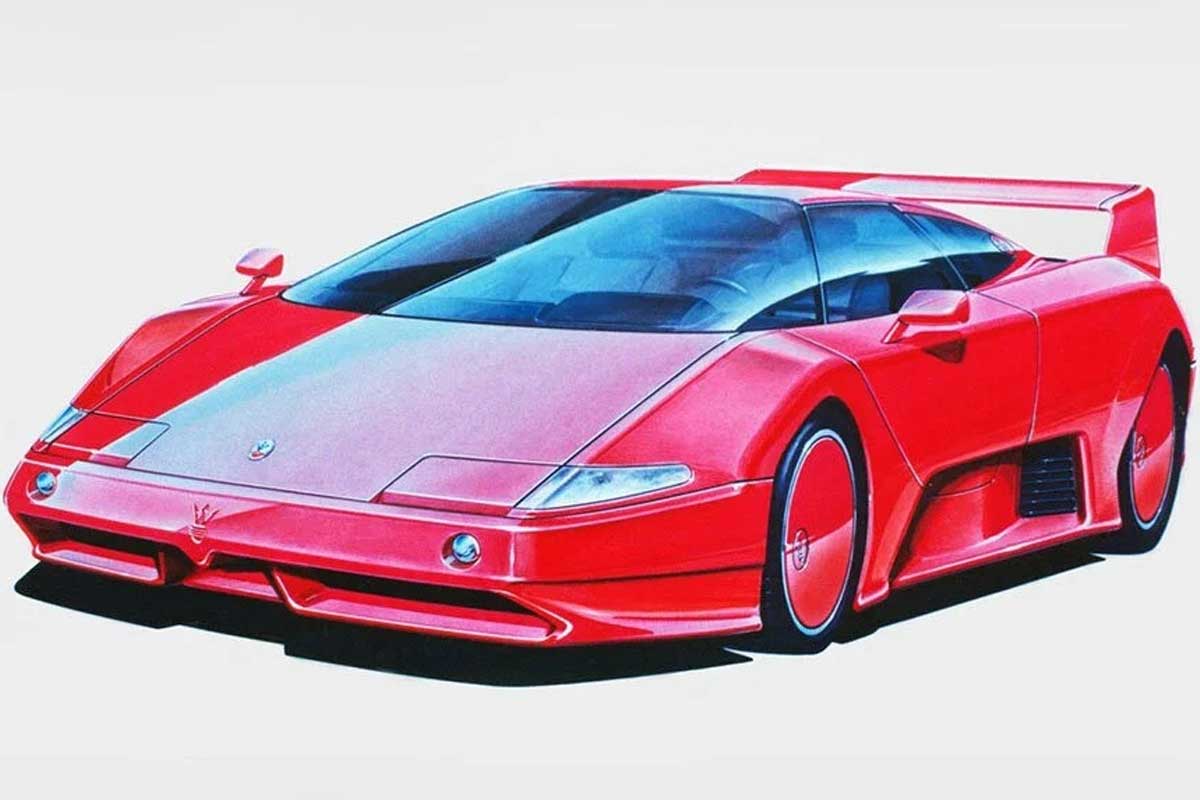
For the design, the master Marcello Gandini was called upon. The Chubasco's look is both aggressive and fluid, surprisingly anticipating the design of some of today's electric and hypersport concepts. The design skilfully blends traces of cuneiform, dear to the master who designed the Countach and Diablo, but with a nice touch of aerodynamic curves and clean surfaces. There are Lamborghini features such as the pyramidal cockpit and trapezoidal wheel arches, but one could almost anticipate the techno-futuristic design of the latest Ferrari F80 and 849.
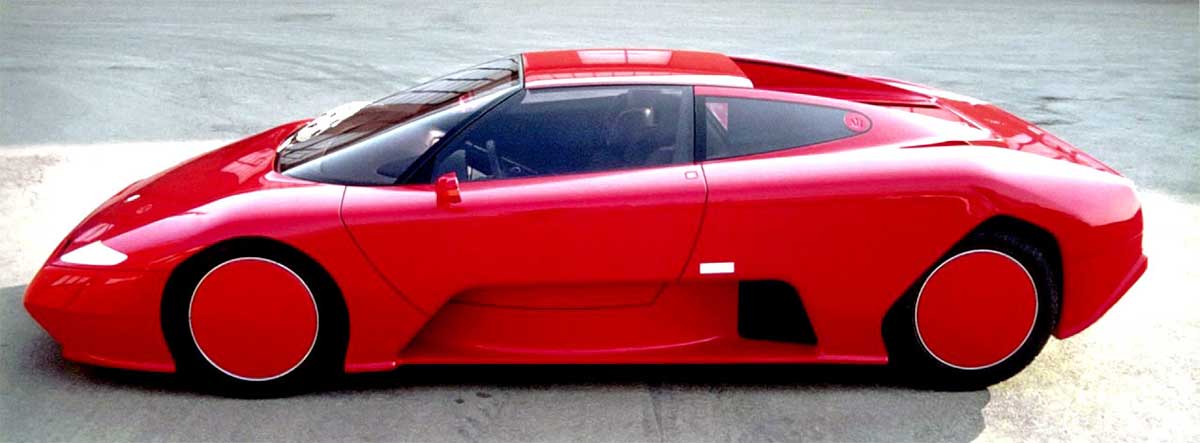
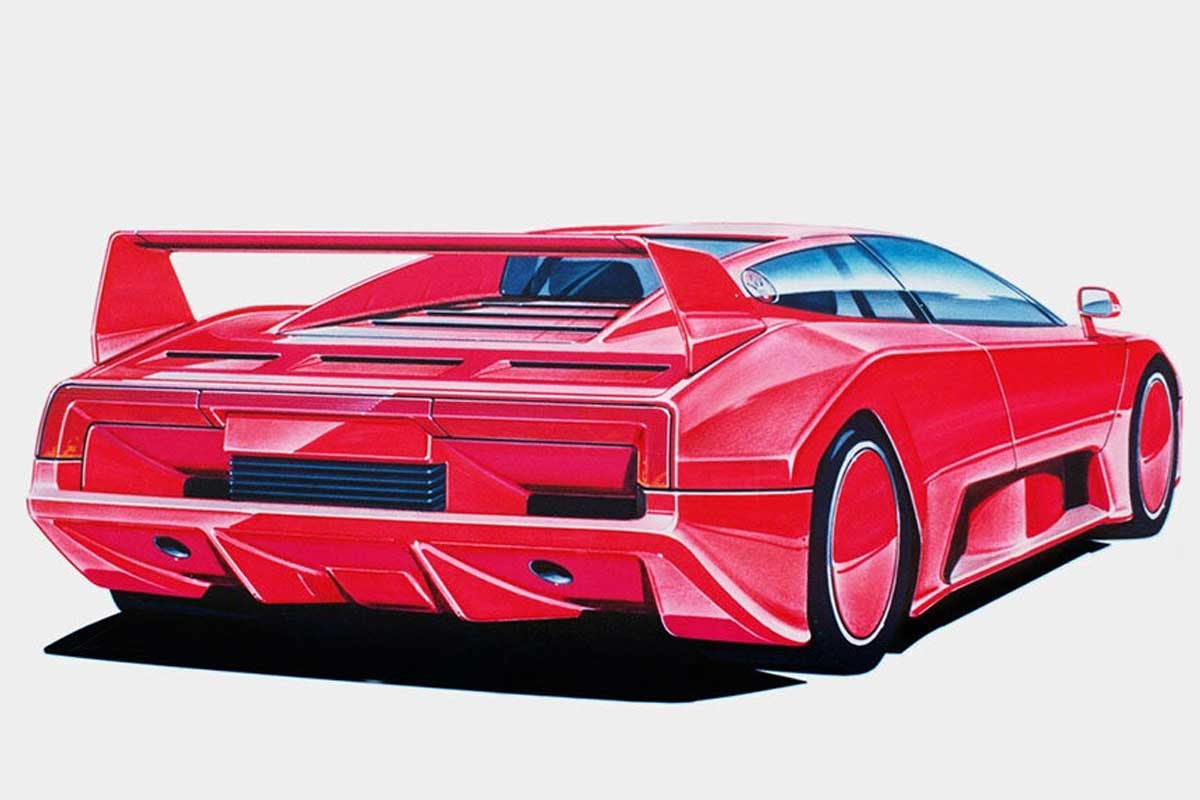
The Chubasco's lines are dictated by aerodynamics. At the front, airflow is drawn in through three large front intakes, then accelerated and discharged laterally under the doors, creating a pressure drop under the side panels. All this accentuates the ground effect produced by the rear ramp and flat underbody, to keep the car glued to the ground. Engine cooling air is drawn in through two additional intakes located in front of the rear wheels and discharged to the rear.
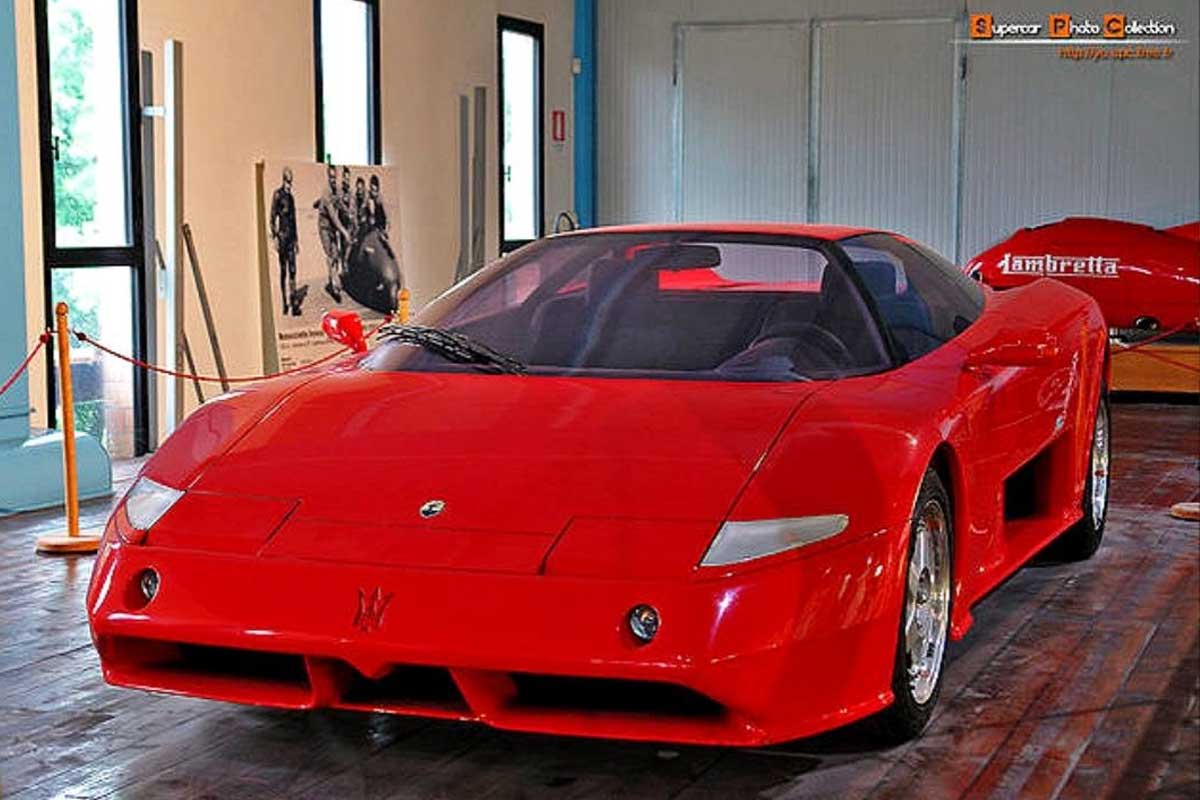
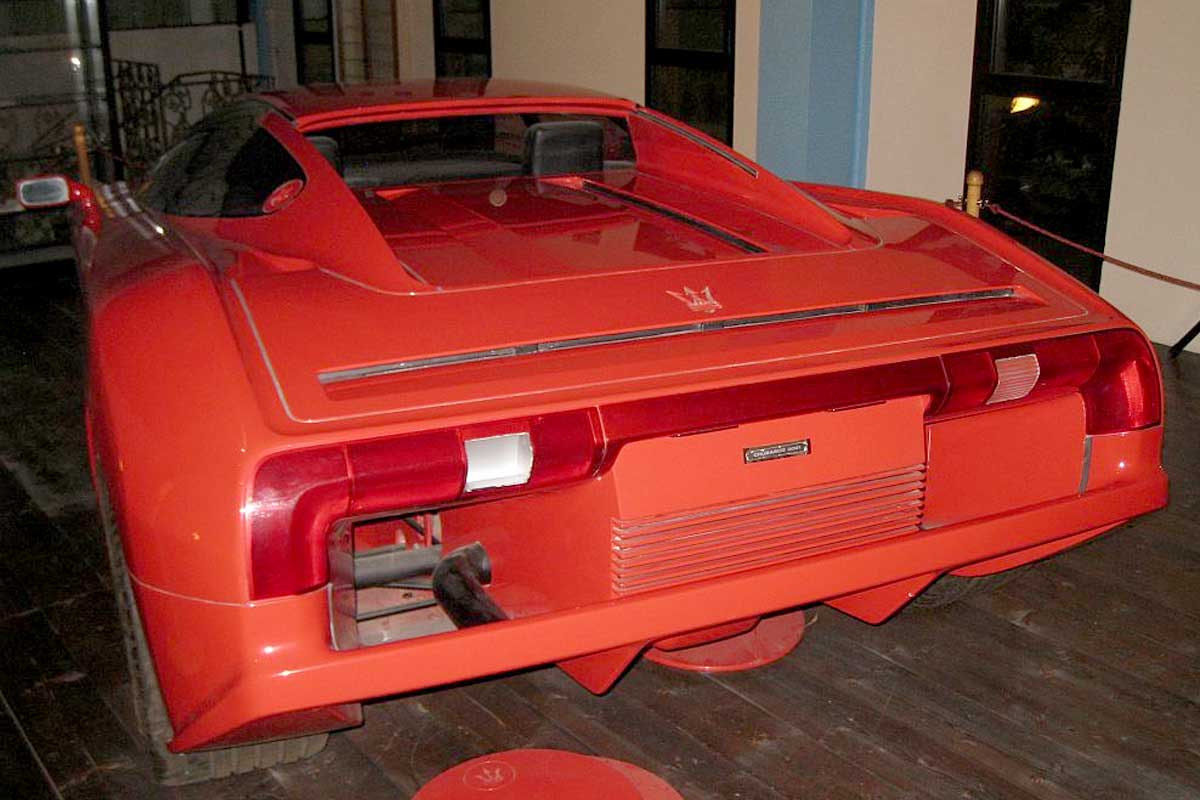
Another distinctive feature of the Chubasco is the absence of spoilers. The large rear spoiler seen in previous sketches was not present on the concept car. The monocoque, or body, is ideally designed as a floating cell connected to the chassis by shock-absorbing mounts that absorb vibrations from the engine, transmission, suspension and wheels, thus isolating the driver's compartment from the full frequency range of noise, vibration and torsion.
FIAT puts its foot down
The ultimate feature is the electric sunroof, which can be retracted over the engine compartment for open-air driving... (or extra cooling, just in case!). The two-seater cabin features two wrap-around seats, separated by a central tunnel that ensures optimum support and contributes to the car's aesthetic balance.
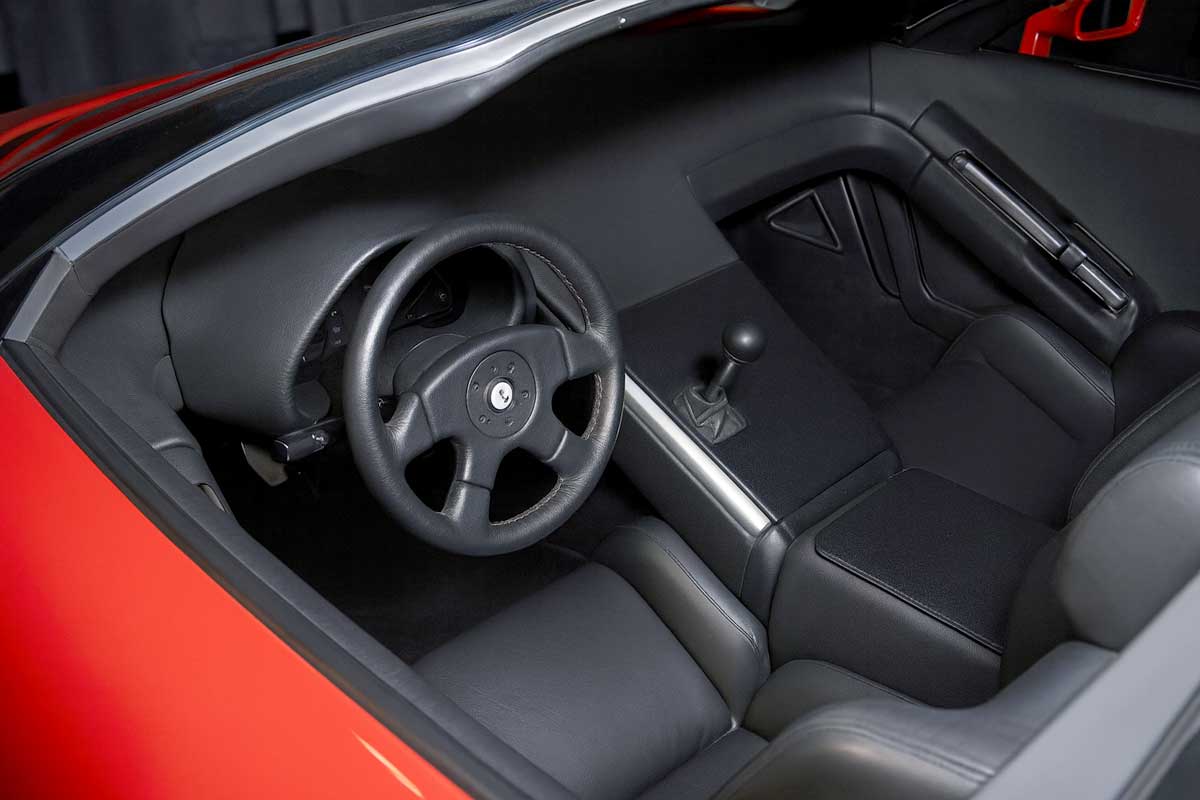
The model had no engine. The plan was to use the Shamal's 3.2-liter twin-turbo V8, boosted to 430 hp with power transmitted to the rear wheels via a six-speed manual gearbox and limited-slip differential.

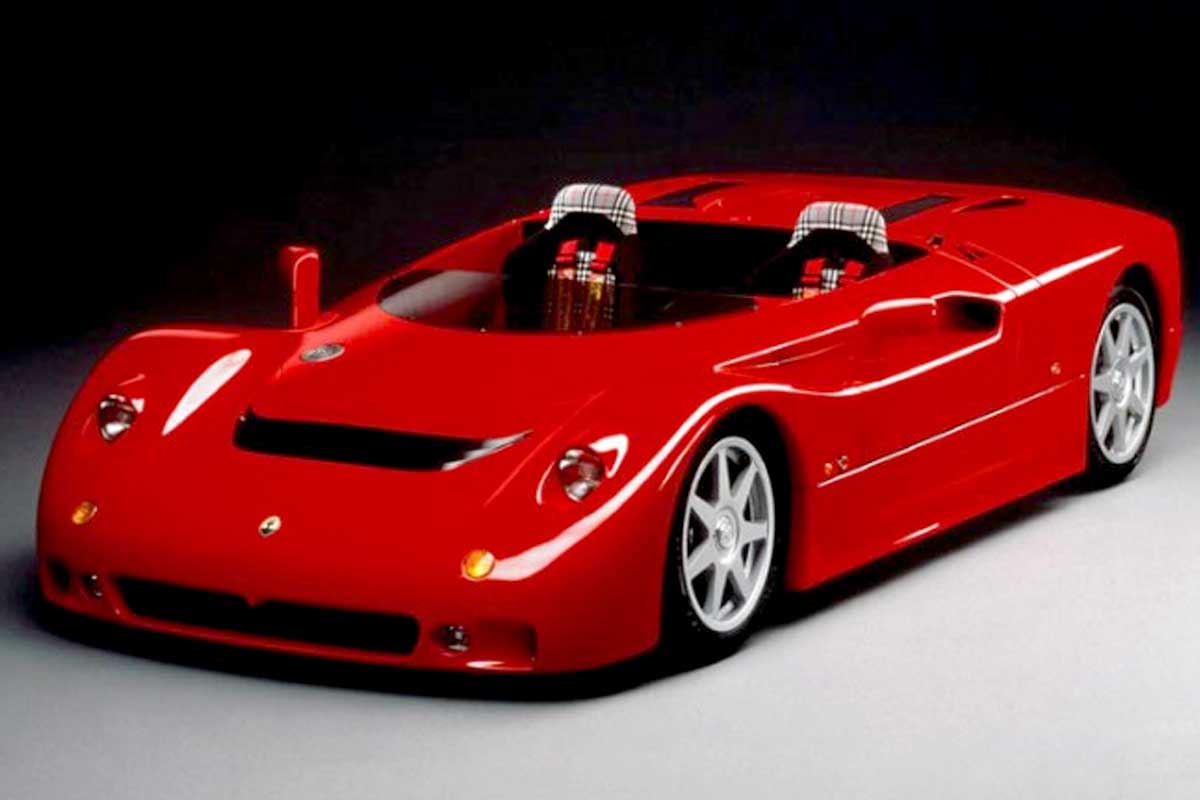
The original intention was to produce 450 units from 1992, but within two years the political context had changed completely. The economic bubble burst, bringing the supercar frenzy to a halt. Fiat, which had become Maserati's majority shareholder, judged the project to be too close to Ferrari and pushed for its abandonment, as it was far too costly. As a result, the Chubasco remained a model, on display at the Panini Museum on the outskirts of Modena. Nevertheless, the project served as the basis for the Maserati Barchetta, built for the 1992-1993 one-design championship. Carlo Gaino used this work to develop the ultimate De Tomaso, the Guara, which would not save the brand from bankruptcy.
 English
  French
  Italian
  Spanish
  Portuguese
  German
  Japanese
  Turkish
  Dutch
Dutch