


In recent years, restomods and reinterpretations of iconic classics have become increasingly popular. Officine Fioravanti with the Testarossa, Kimera with the EVO37 and EVO38 evoking the Lancia Rally 037, or even Totem which reinvents the Giulia GT. One of the pioneers of the genre was MAT Automobili, which in 2017 presented the "New Stratos", an evocation of the iconic 70s sports car. But after all, there were those who had tried their hand at it long before, nearly 30 years ago!
Boldness, a common thread between Sbarro and the Stratos
Franco Sbarro is an Italian designer who founded his eponymous design house in Switzerland, as well as an automotive design and training school in France near Montbéliard. Each year, the students produce a design project in the form of a complete car. Franco Sbarro is renowned for his spectacular prototypes, which combine aesthetic innovation and mechanical experimentation. So Lancia's head of design at the time, Mike Robinson, asked him to create "a car that paid homage to the Stratos, but more in spirit than in style".
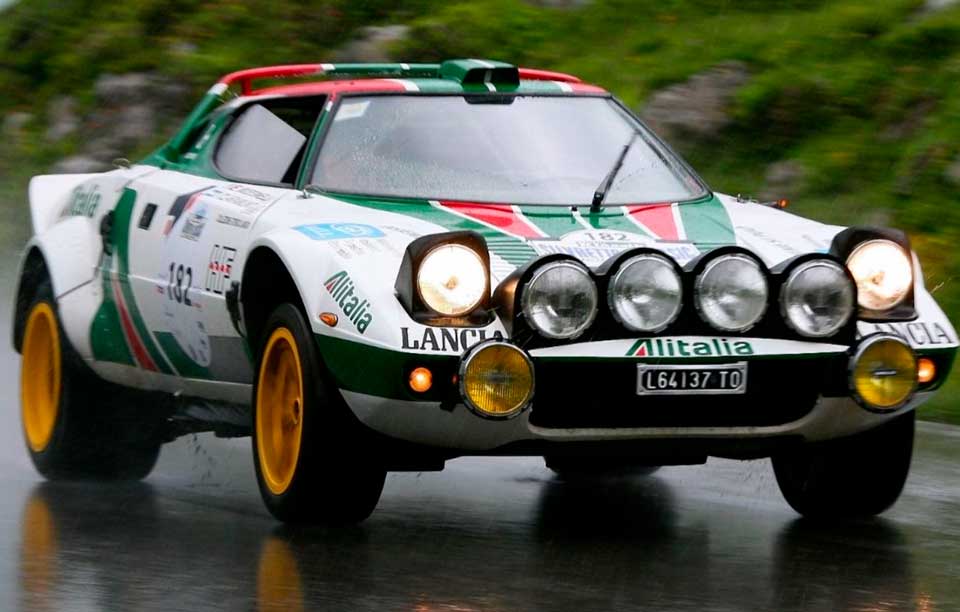
Announced at the Turin 70 motor show with Bertone's Stratos Zero concept, the Lancia Stratos revolutionized rallying in 1974. In addition to its resolutely futuristic and radical design, it was the first car to be conceived primarily for racing, both in terms of its mechanical concept and its accessibility for maintenance. Prefiguring the Group B cars by a few years, the Stratos was equipped with a Ferrari V6, derived from the Dino, and became the new queen of rallying in the second half of the 70s, winning successive world titles.
At the crossroads of Stratos and bio-design
Franco Sbarro's vehicle was presented for the first time at the 1997 Geneva Motor Show, where it attracted attention thanks to its atypical architecture, unique powertrain and radical looks. The Ionos incorporates certain features reminiscent of the Lancia Stratos: a steeply raked windshield, a forward cabin and a compact silhouette. The visor glass is also a strong reference to its illustrious ancestor. The Ionos is 3.60 metres long, 1.80 metres wide and 1.10 metres high.
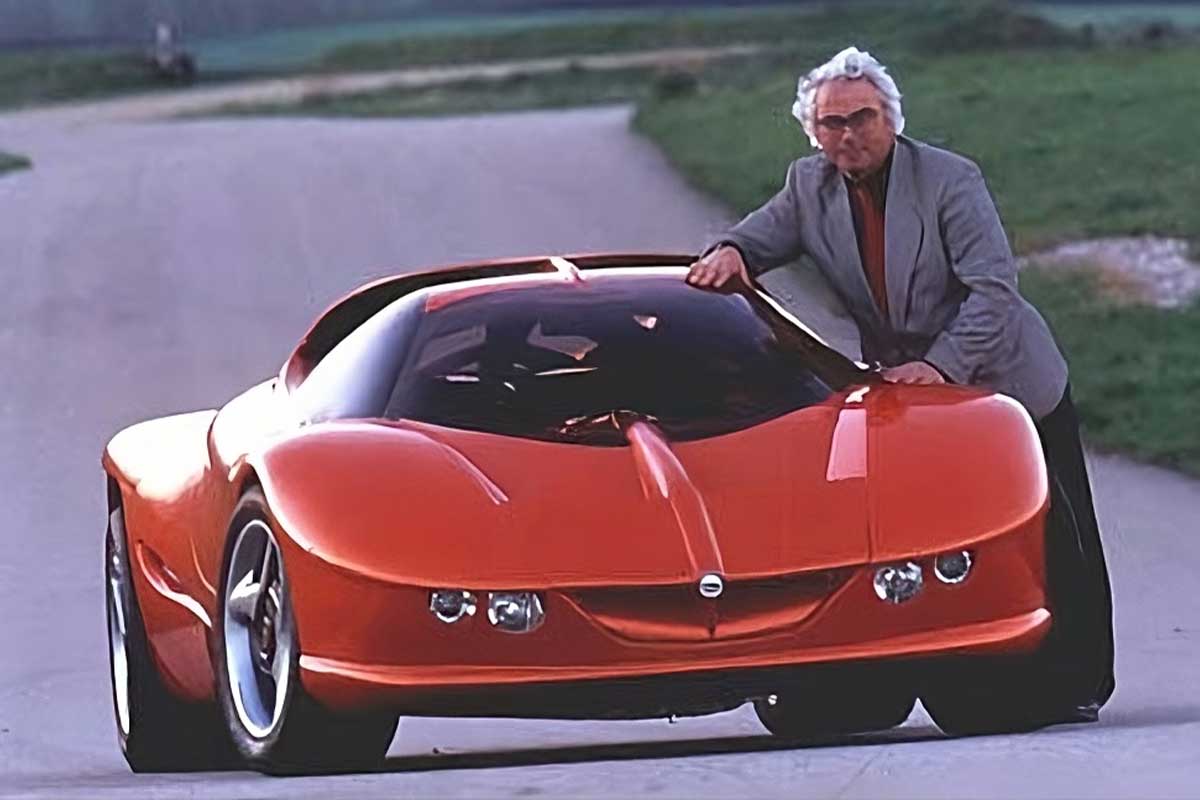
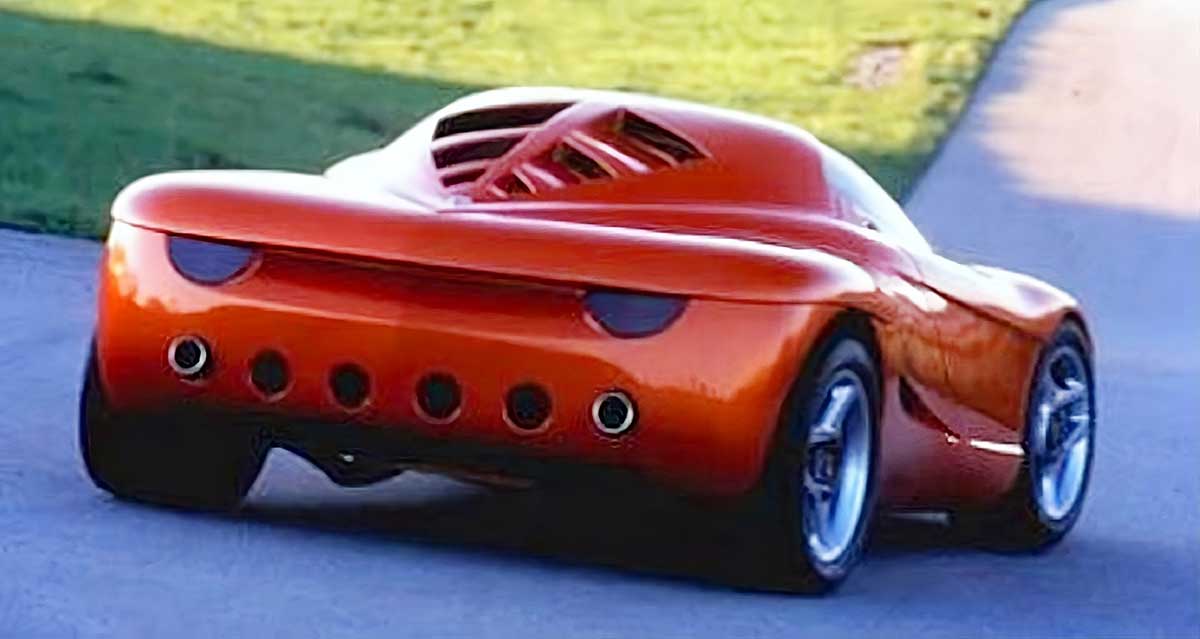
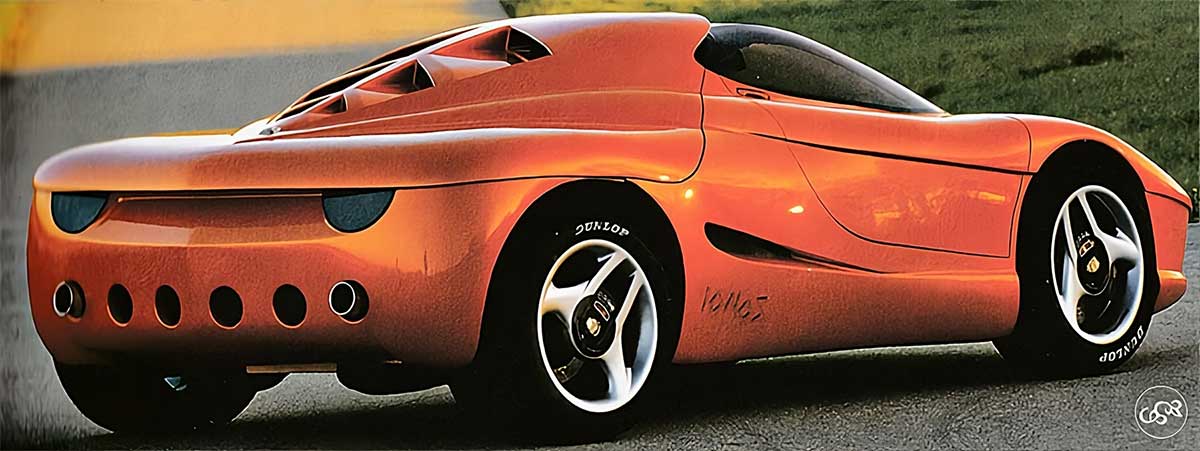
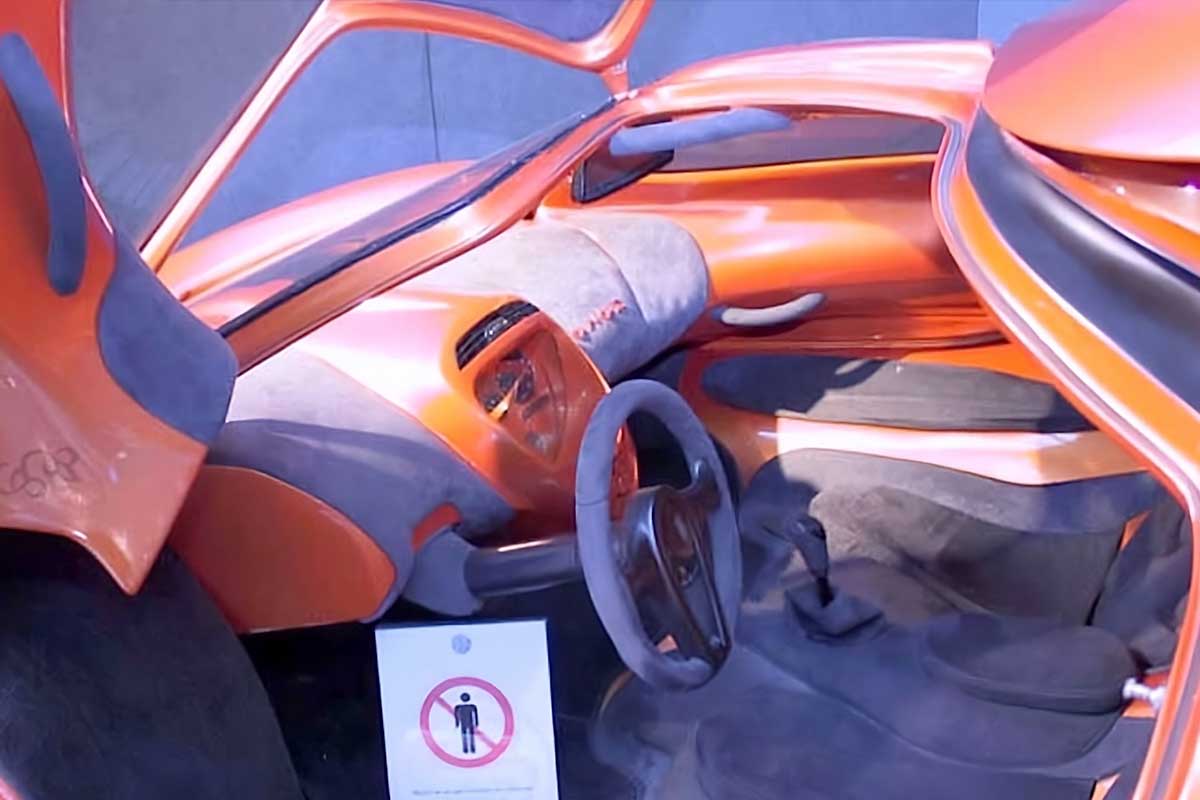
Sbarro is looking for its own identity: the concept is structured by a characteristic central line, like a "backbone", which runs right through the car, from the front hood to the stern, giving the concept a certain animality. The curves and ribs give a reptilian aspect to the whole, and we're right in the middle of the "bio design" era, which turned its back on the wedge-shaped design in force since the 70s. No aerodynamic appendages are added, to preserve stylistic purity.
An atypical engine and a wide range of solutions!
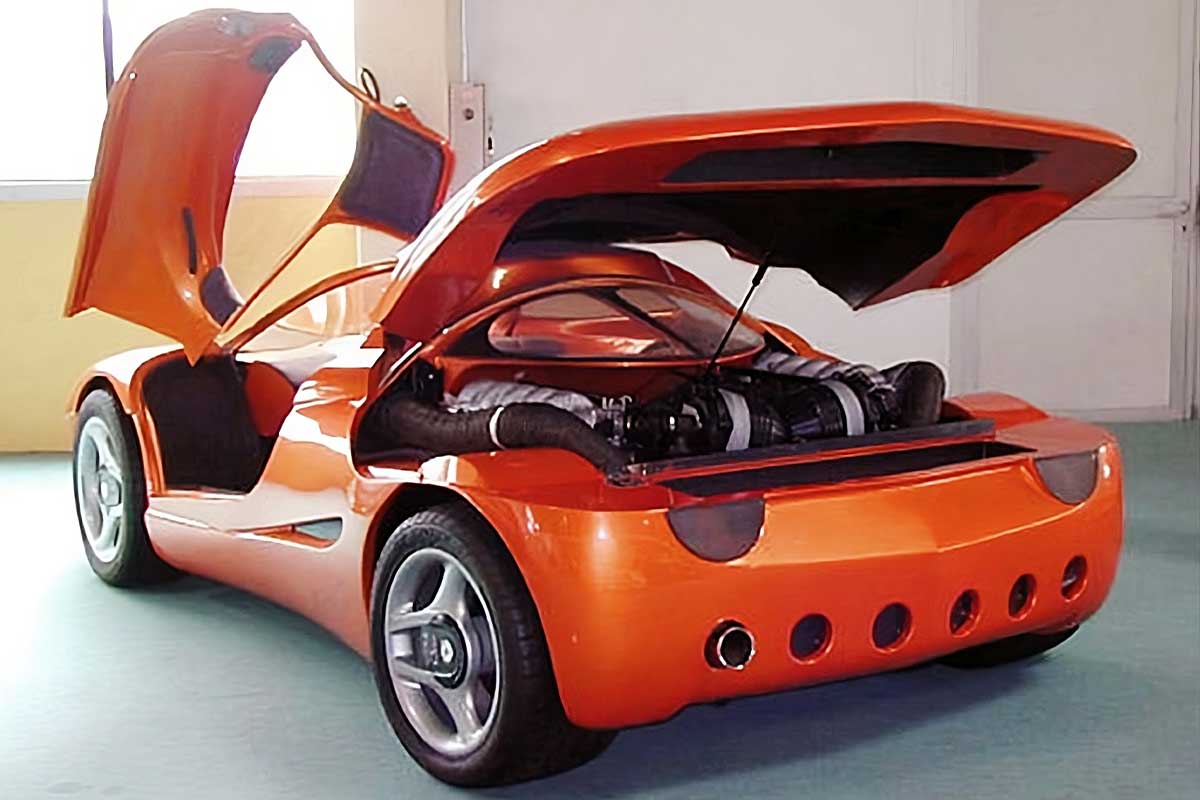
The engine of the Sbarro Ionos is one of its most atypical aspects, but also the designer's trademark. The Ionos features a "V10 in A", actually composed of two 2.4-liter in-line 5-cylinder engines taken from the Lancia Kappa, the sedan that replaced the Thema in 1994. Sbarro had done the same thing a year earlier, offering two Alfa Romeo 6-cylinders on the Issima.

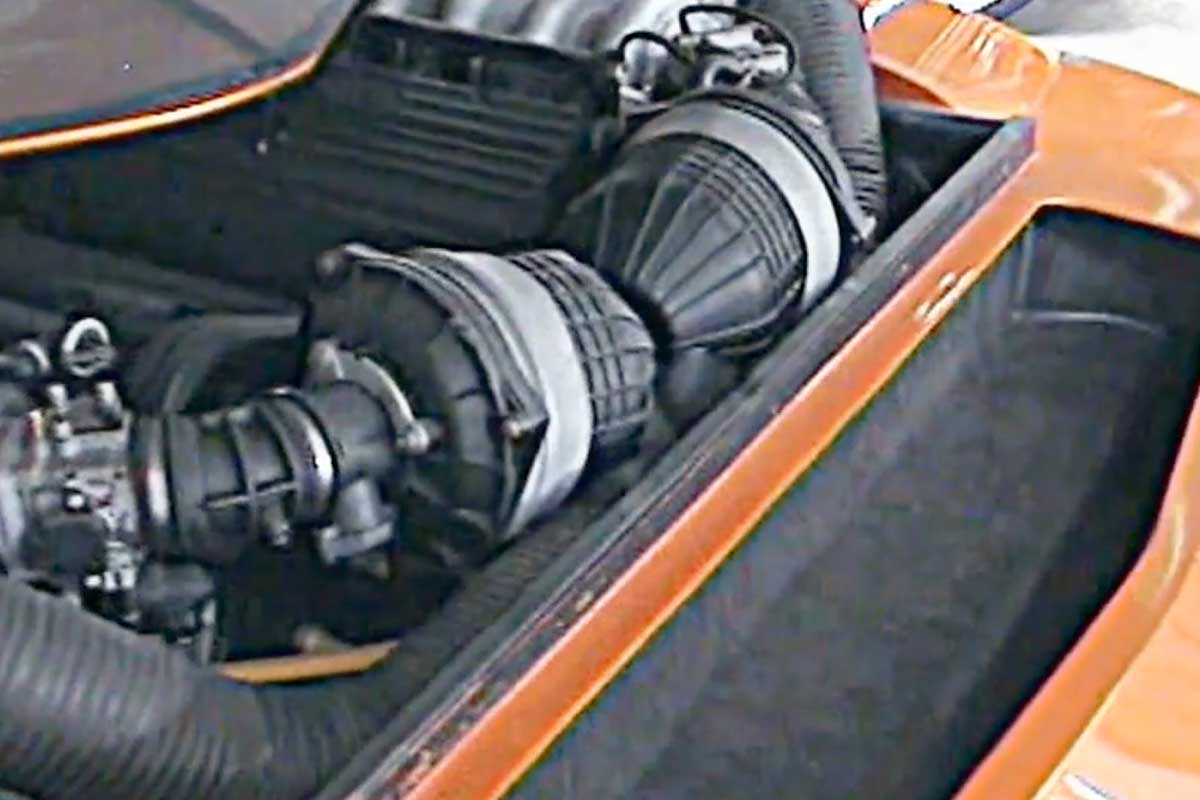
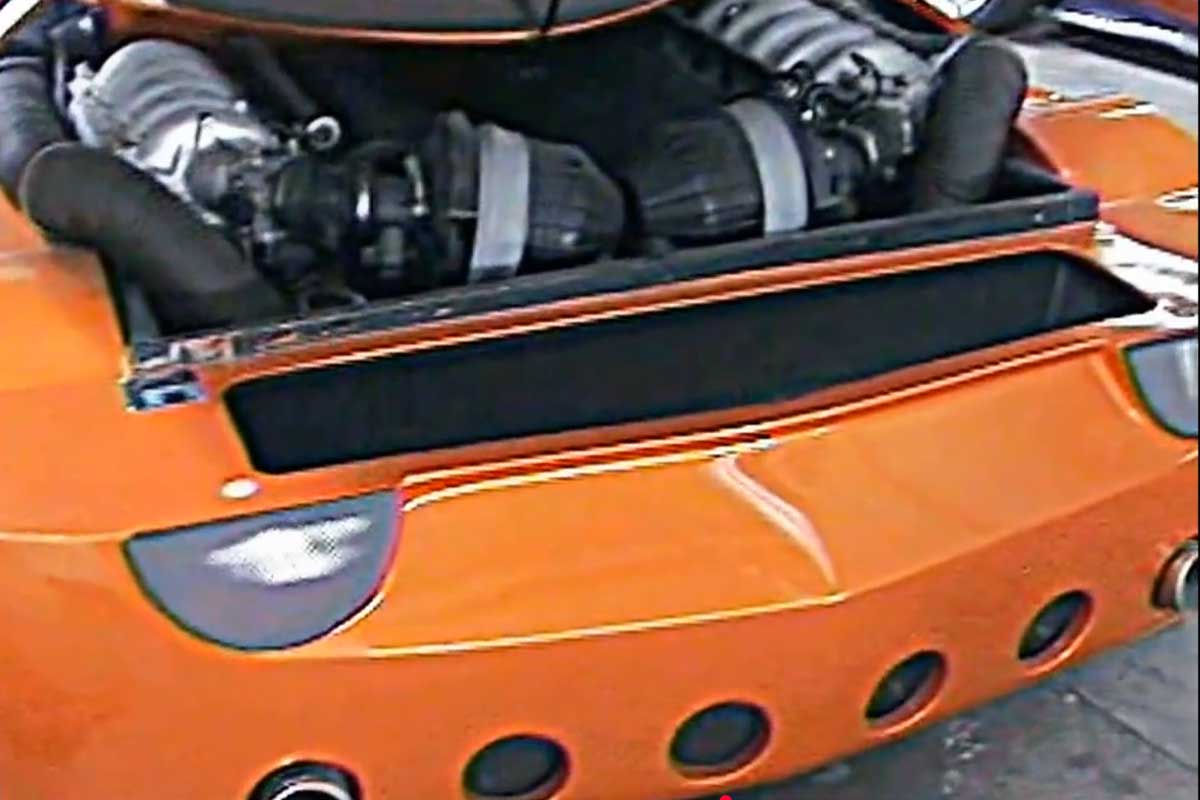
Ingeniously assembled, these two engines share a synchronization system to work as a single unit delivering around 400 hp. Their A-shaped layout also leaves room for the transmission, which is provided by a Porsche-derived 5-speed manual gearbox, coupled to an all-wheel drive system also borrowed from Porsche. As with the Stratos, the engine is mounted in a mid-rear position, providing good weight distribution and sporty dynamics.
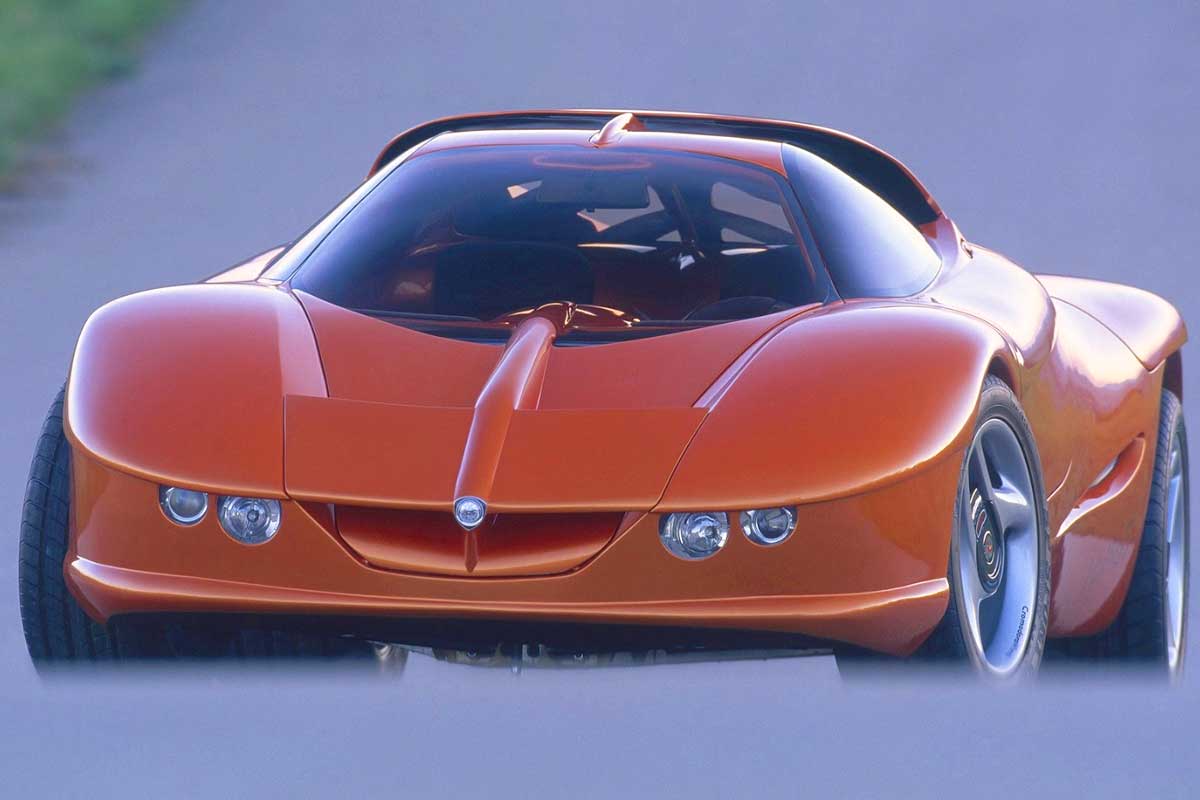
The chassis uses "Dual Frame" technology, developed by Sbarro: a mixed steel + composite structure designed to optimize rigidity and safety. The hull is made entirely of composite materials, keeping the weight down to around 1100 kg. Brakes are supplied by Brembo, comparable to those used in DTM at the time, with large ventilated discs.
Although promising, the project was never destined for production. The Ionos remains a testament to Sbarro's pedagogical approach, designing concept cars, real and running, on unconventional technical bases. At the beginning of the 2000s, Lancia switched to neo-retro models, with the Lybra and above all the Thésis, but without much success...

 English
  French
  Italian
  Spanish
  Portuguese
  German
  Japanese
  Turkish
  Dutch
Dutch