
From 1985 onwards, the FIA announced its intention to replace Group B with a new category, Group S, which was to attract more manufacturers and allow bold designs by requiring only a small series of 10 models to be produced for homologation, whereas Group B required a minimum of 200. By reducing the number of models from 200 to 10, the FIA's intention was to allow manufacturers to showcase their technological know-how by producing genuine rally prototypes and using innovative materials and solutions. For the sake of safety, the FIA announced shortly afterwards that a flange would limit power to 300 hp.
The fruit of two years of intense development, Lancia introduced the Delta S4 in 1985, its new weapon to counter the Peugeot 205 T16. The S4 was the brand's first 4-wheel-drive car, and featured a turbocharged and supercharged engine. But Abarth, which oversaw the development of the S4, is already working on a new car to match this Group S.
F1 technology comes to rallying
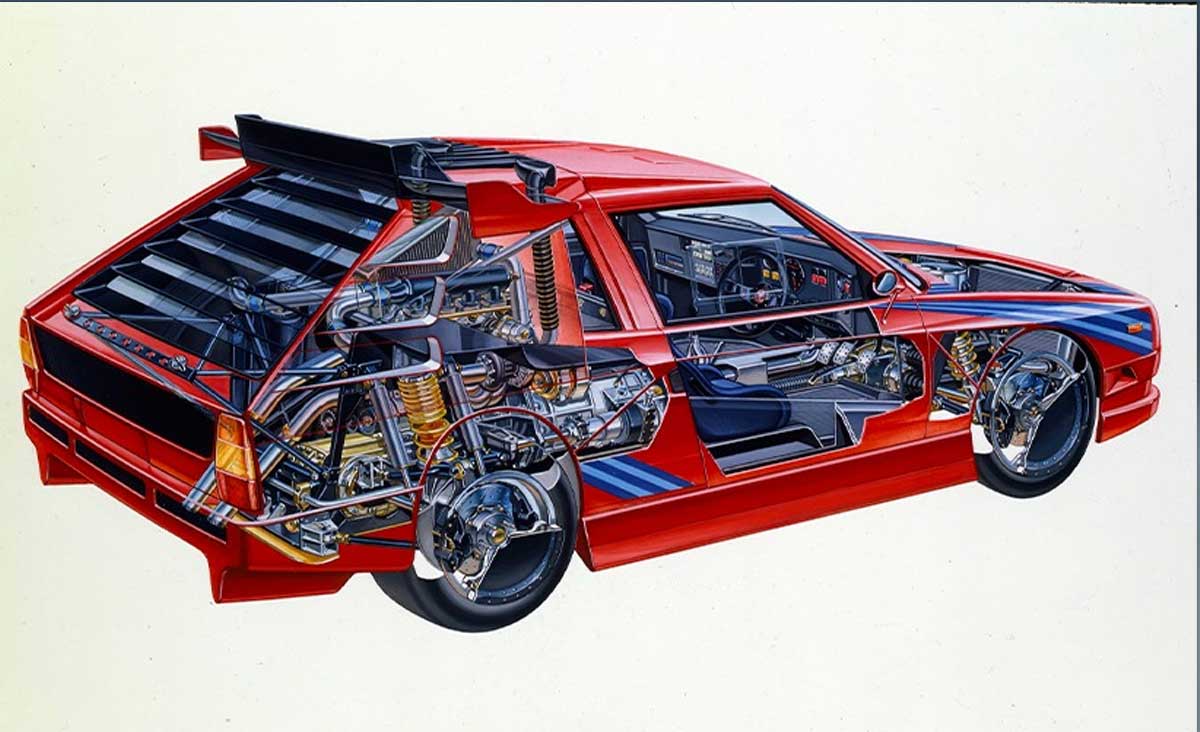
The Scorpion opted for an innovative F1-inspired honeycomb chassis, using aluminum and composite materials such as kevlar and carbon, assembled with epoxy. The use of composite monocoque chassis was then becoming widespread in motorsport, offering both greater lightness and greater smoothness. In Group B, the Ford RS200 was the first car to adopt this solution, while the Lancia Delta S4 retained a square-spar chassis to which composite panels were attached.
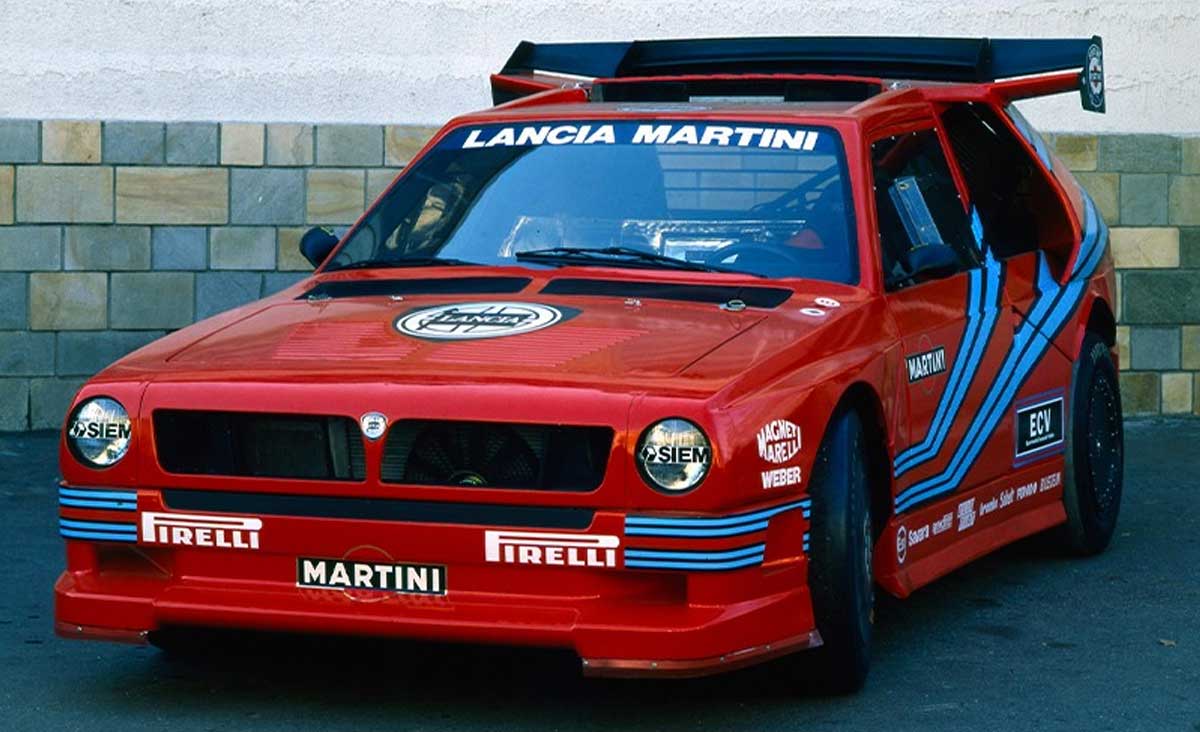
Under the direction of Sergio Limone, Abarth created a model suitable for fitting the mechanical and body components of the Delta S4. Once assembled, the prototype was renamed ECV ("Experimental Composite Vehicle"), in reference to the chassis made from a newly-developed composite of Kevlar and carbon fiber.

A special "cradle" envelops the engine, while a series of panels make up the rigid cockpit and the rest of the body. Only the front end is made from conventional steel tubing, for faster repair and replacement. To make the car even lighter, composite materials are also used for the drive shaft and rims, manufactured by Speedline and weighing just 6 kilos! The weight saving is 20% compared with the conventional Delta S4.
Triflux, the revolutionary turbo
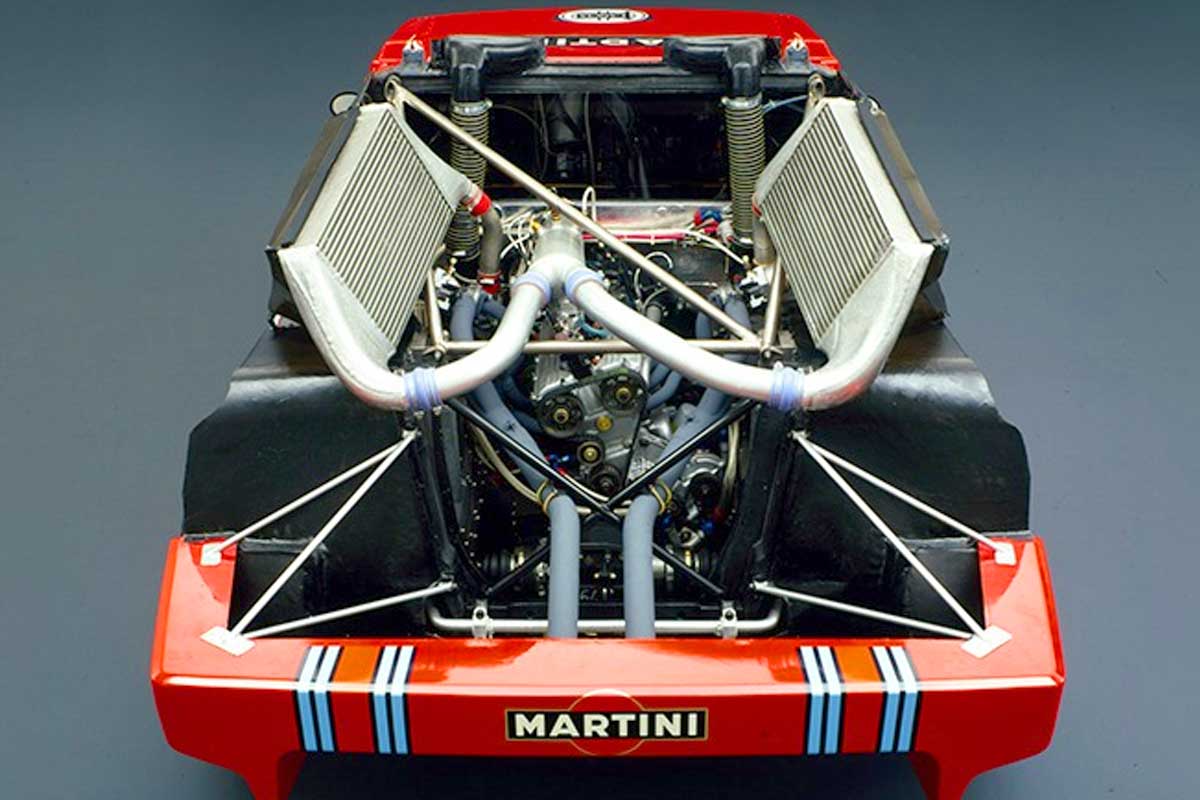
Under the direction of Claudio Lombardi, the ECV prototype is based on the S4's 1.8-liter 4-cylinder engine, but fitted with a new cylinder head and two KKK turbos with faster response times. Lancia also innovates with a system called Triflux. To minimize turbo lag (i.e. response to acceleration), the valves are positioned in an X pattern: an intake valve is positioned on one side of the cylinder and an exhaust valve on the other, to feed the two KKK turbos via two separate manifolds.
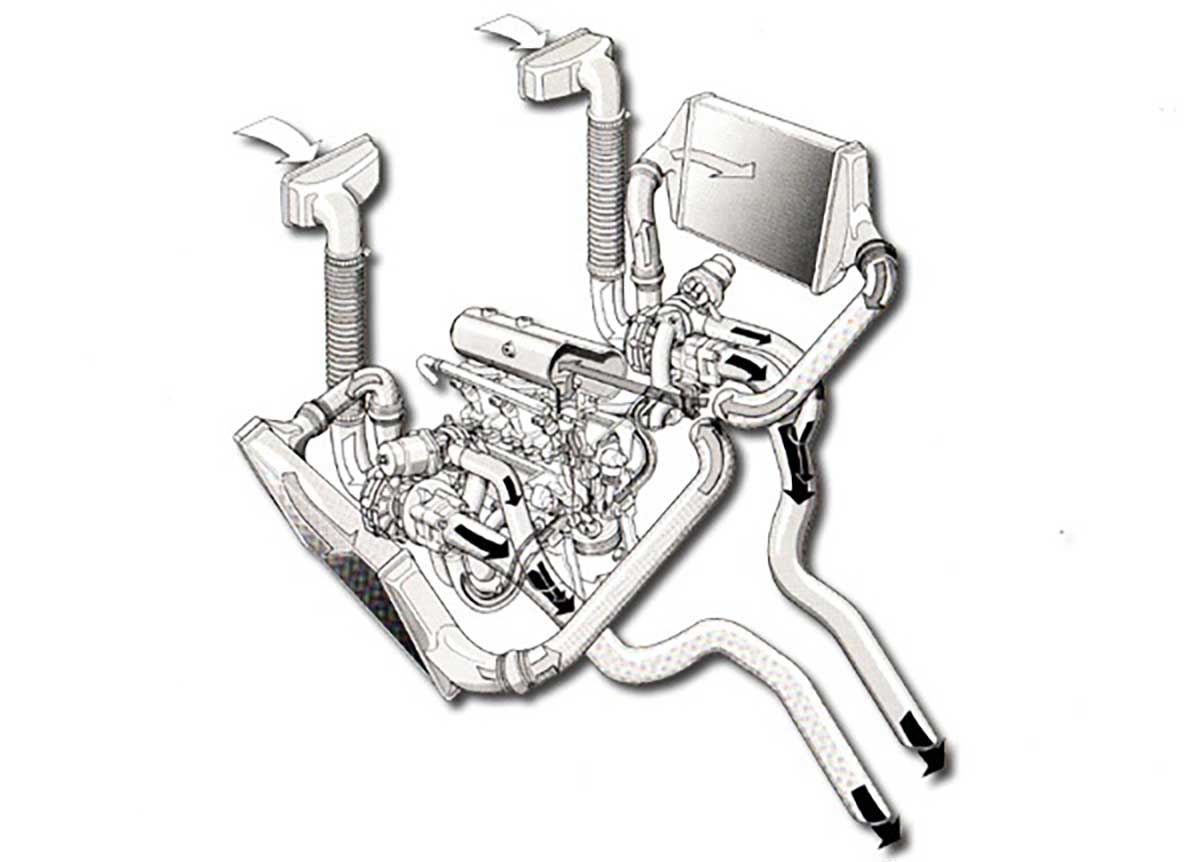
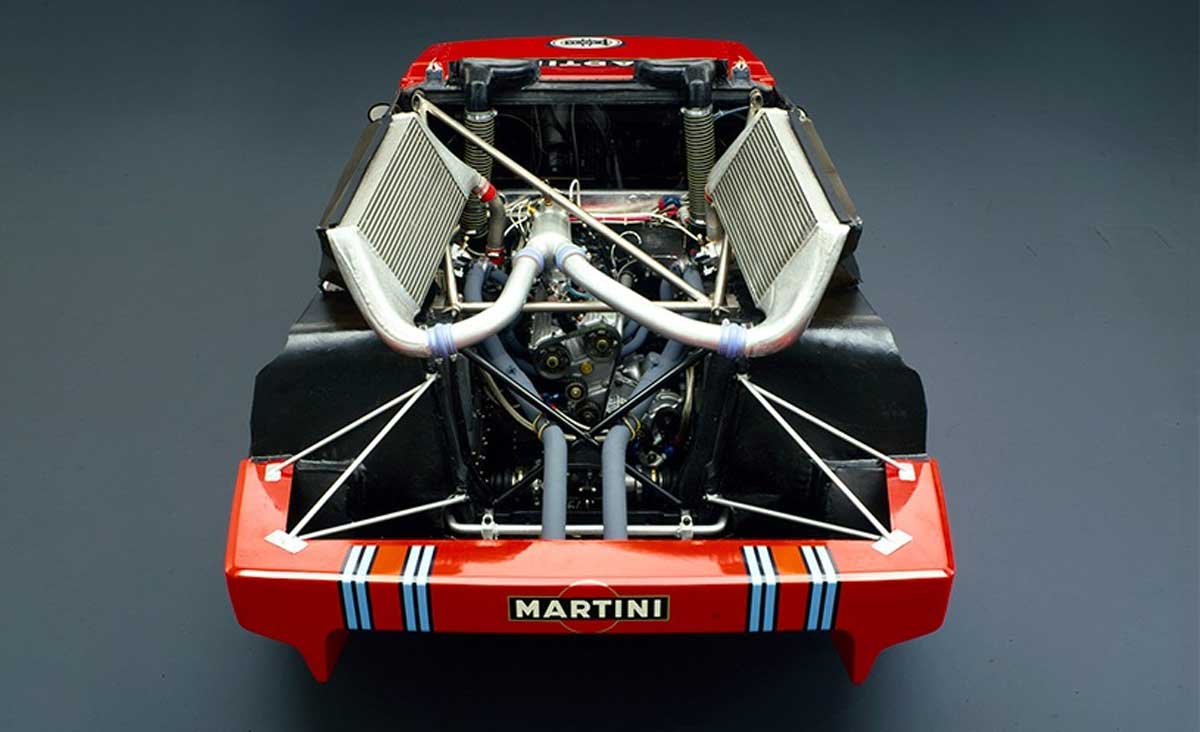
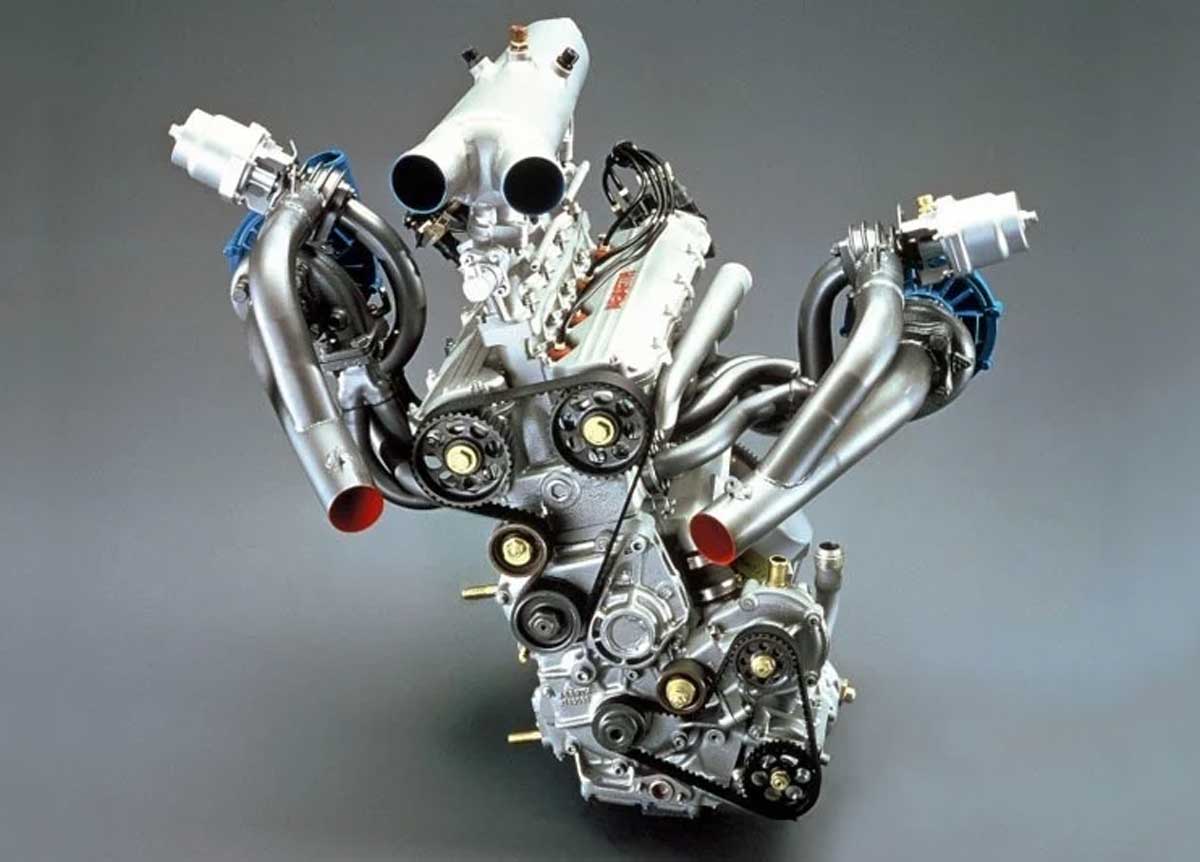
Better still, the turbos are activated sequentially: at low revs, the first operates alone, offering excellent availability, then, from 5000 rpm, the second engages and both turbos work in torque. Pressure reaches 2.3 bars and drops to 1.8 bar during gear changes. The car was equipped with a box of 5-speed gearbox with front clutches. A single manifold was used for air intake, hence the name Triflux. In this configuration, the engine delivered up to 600 hp at 8,000 rpm, and even 800 hp in an "asphalt" configuration, well beyond the limits set by the FIA. It claims a top speed of 230 km/h and a 0 to 200 km/h time of 9 seconds! Just as good as today's supercars.
ECV2, Lancia's "K2000
The beast is presented at the 1986 Bologna Motor Show. Unfortunately, the tragedy of the Tour de Corse, with the deaths of Henri Toivonen and Sergio Cresto, meant the end not only of the Group B, but also of the Group S, which was due to enter service in 1988, the FIA preferring a more reasonable category, the Group A. Despite this, Lancia did not give up its research and went one step further, developing an ECV 2 that radically departed from the look of the S4. There's nothing to suggest that this is a Lancia, apart from the Delta grille fixed to the front!
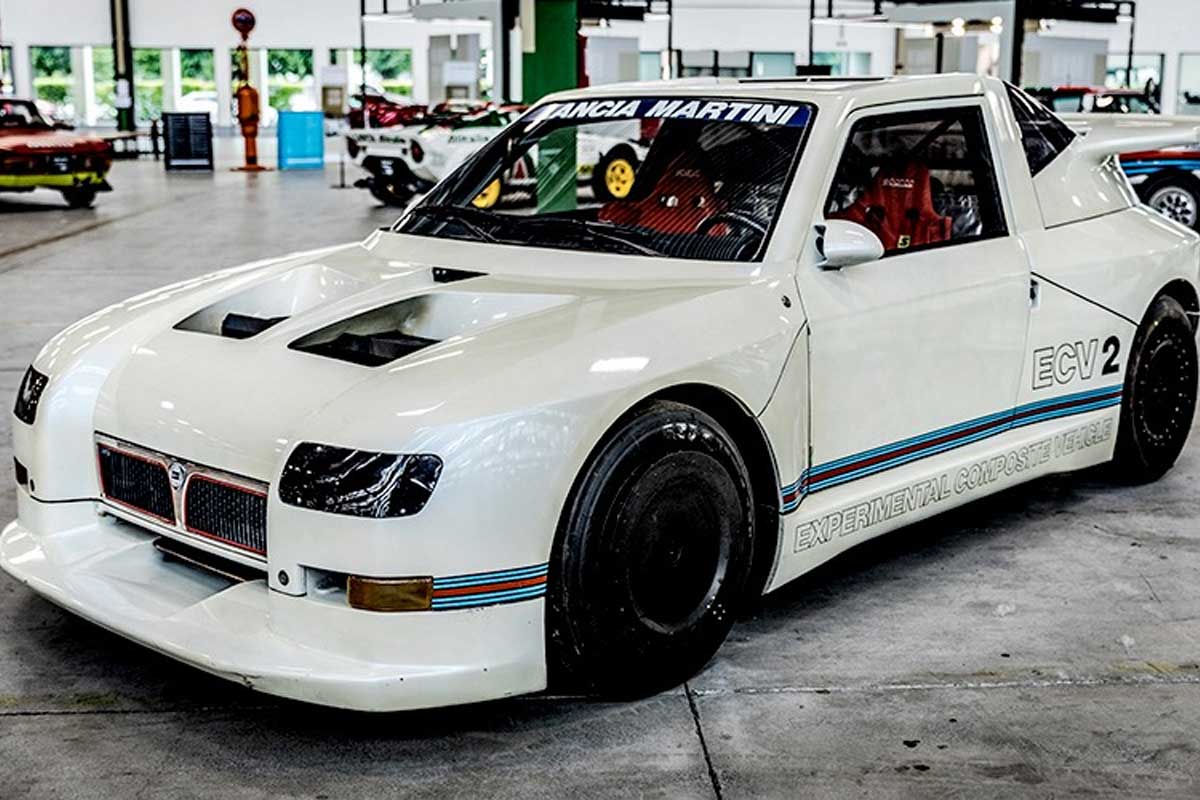
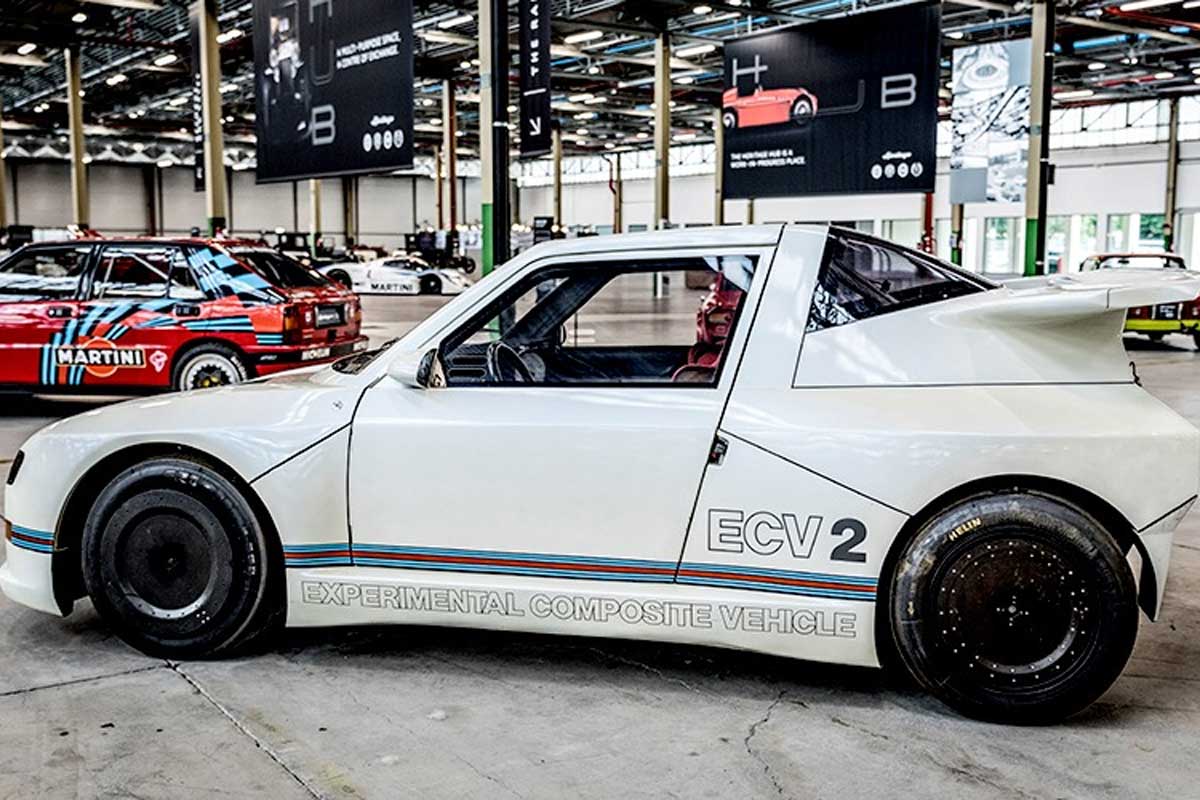
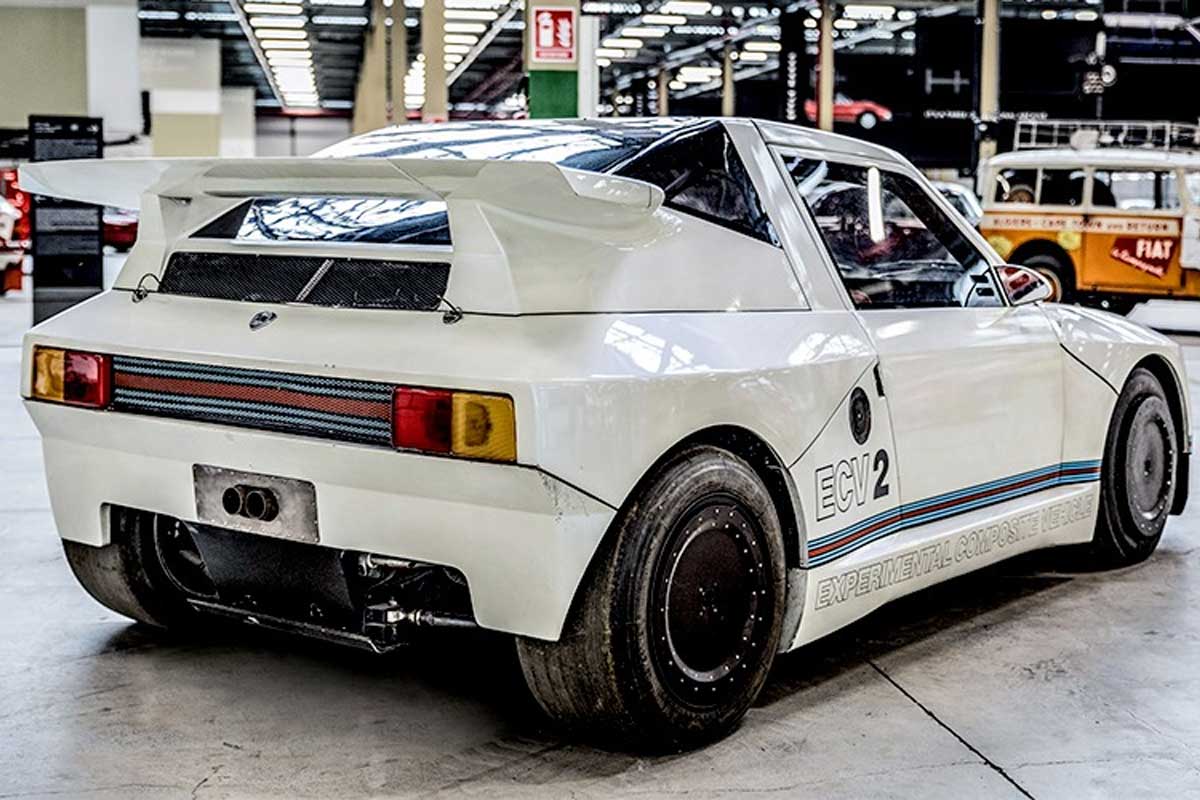
More compact, the ECV2 breaks away from the look of the S4 and presents a more streamlined aerodynamic appearance. The large air intakes on the rear pillars, which characterize the lines of the Delta S4 and ECV, disappear in favor of a slot at the end of the roof to channel air to the engine compartment. The front hood features a large double opening to allow air to escape after cooling the radiators. The large front spoiler connects to the front grille, while the headlamps are fairing. On the sides, mini-skirts enhance lateral aerodynamics, while the rims feature external discs, again in composite material, to help cool the brakes. The hood features two radiator vents and a NACA air intake.
For the story
The ECV is yet another stillborn project. The only difference is that, this time, the reason lies in the FIA's regulatory changes, and not in the manufacturer's renunciation. Failing an official entry to the World Championship, enthusiasts staved off fate. Starting from the chassis of a Lancia Delta S4 and assembling it with the ECV's original carbon components and bodywork, tuner Giuseppe Volta rebuilt an ECV1 in 2009, with the help of former colleagues from the Abarth / Lancia rally team in Turin. The car took part in Rallylegend 2010, driven by Miki Biasion, and made further appearances in historic events.

 English
  French
  Italian
  Spanish
  Portuguese
  German
  Japanese
  Turkish
  Dutch
Dutch