
By the end of the 1992 season, when Honda announced its withdrawal from F1, the Renault V10 had become the new benchmark, as evidenced by Williams' outrageous domination. Now deprived of the Japanese engine manufacturer, McLaren boss Ron Dennis was scrambling to get the French engine back, as his worst fear was losing his champion, Ayrton Senna. The Brazilian obviously wants the best equipment to win: he is clamoring for the V10 from Viry-Châtillon and is eyeing the Williams seat, which Nigel Mansell is leaving after his coronation. Dennis is even ready to buy the Ligier team, equipped with the Renault V10, but various technical, contractual and political reasons prevent the deal from going through.
Blocked by Prost, who had been recruited by Williams but vetoed a new cohabitation with his "worst enemy", Senna was forced to stay with McLaren in 1993, paying dearly for his services. Having failed to recover the Renault V10, Ron Dennis had to fall back on the Ford V8, but in its "customer" version, i.e. with specifications inferior to those of Benetton, the official partner team! The season confirmed Senna's fears. At the wheel of a successful McLaren MP4/8, the Brazilian certainly had a magnificent season, punctuated by 5 victories, including the legendary Donington race, but the Ford V8 didn't allow him to upset Williams-Renault and Alain Prost in their quest for a 4th world title.
Lamborghini in search of a real partner!
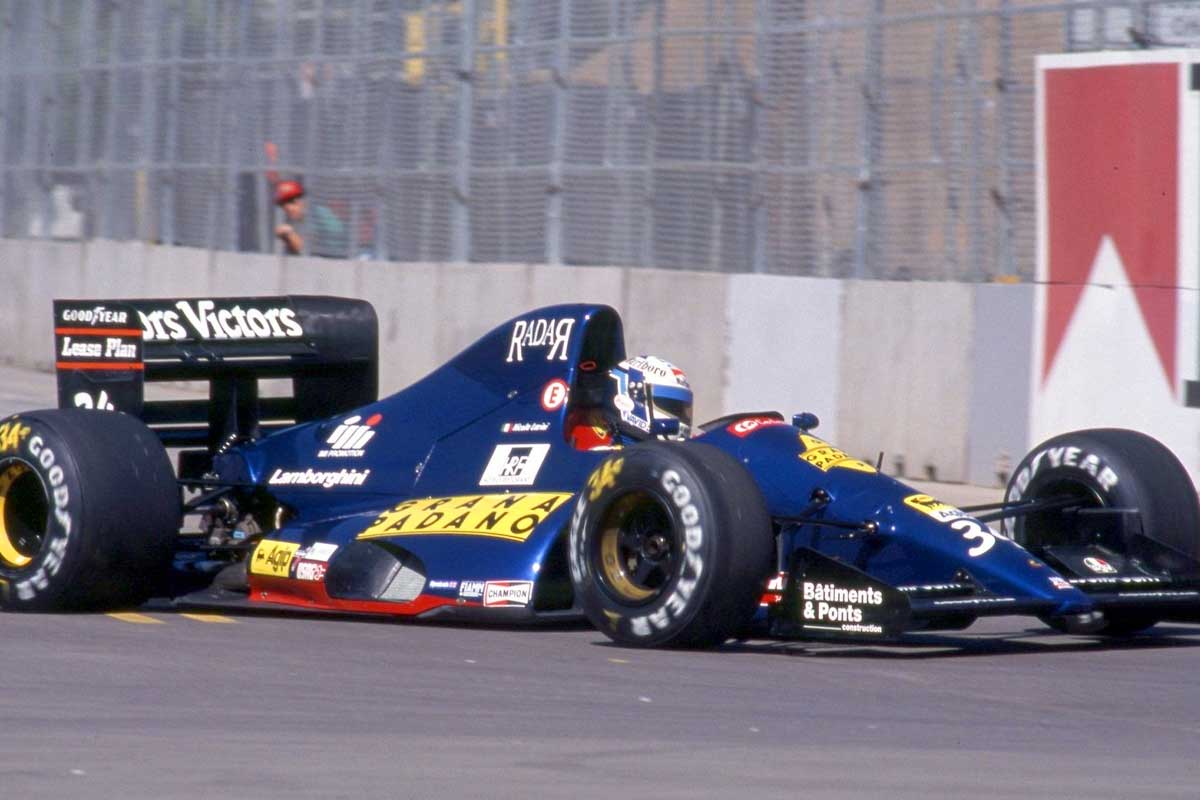
While Prost announced his retirement and Senna seemed ready to make the leap to Williams, Dennis played a gamble and seized an opportunity: Lamborghini ! In 1987, the financially exhausted bull had come under the control of the giant Chrysler, which was counting on this acquisition to boost its image. Lamborghini entered F1 in 1989 with an atmospheric V12 designed by Mauro Forghieri, Ferrari's former technical director. Except that until then, the Italian engine had to make do with small teams, such as Larrousse Lola (1989-1990), Lotus (1990), Ligier (1991) Venturi and Minardi (1992), not forgetting the rocky adventure of the Modena Team in 1991, with a chassis-engine project 100% that turned into a fiasco.
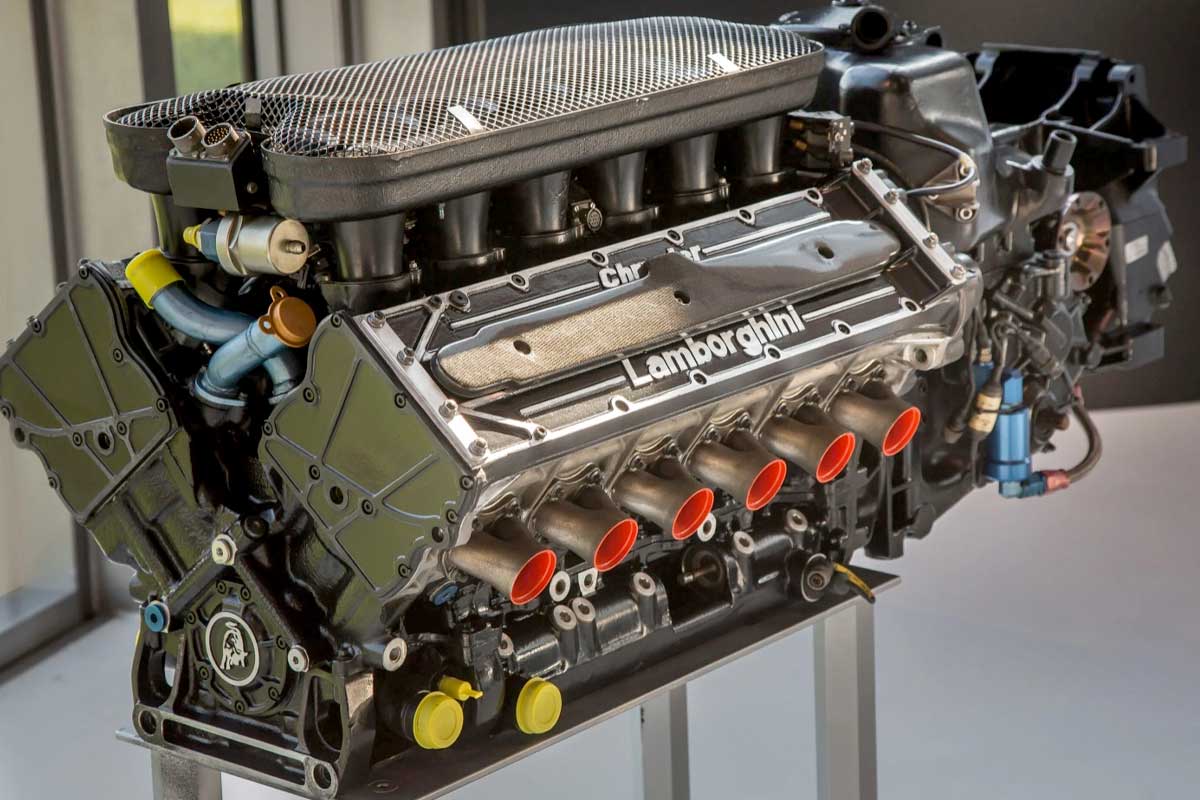
After Forghieri's departure and the failure of the 291 single-seater, Detroit-based Mike Royce took over in 1992. The engine improved: its center of gravity was lowered, it received a new lubrication system, while gaining in power, lightness and reliability. From 640 hp in 1990, it reached 700 hp in 1992 and 710 hp in 1993. Chrysler, which has yet to rid itself of this financial hole, despairs of ever seeing this V12 engine in a chassis worthy of the name! Chrysler CEO Ron Lutz meets Ron Dennis at the Frankfurt Motor Show, and the two men agree on a test.
Promising tests!
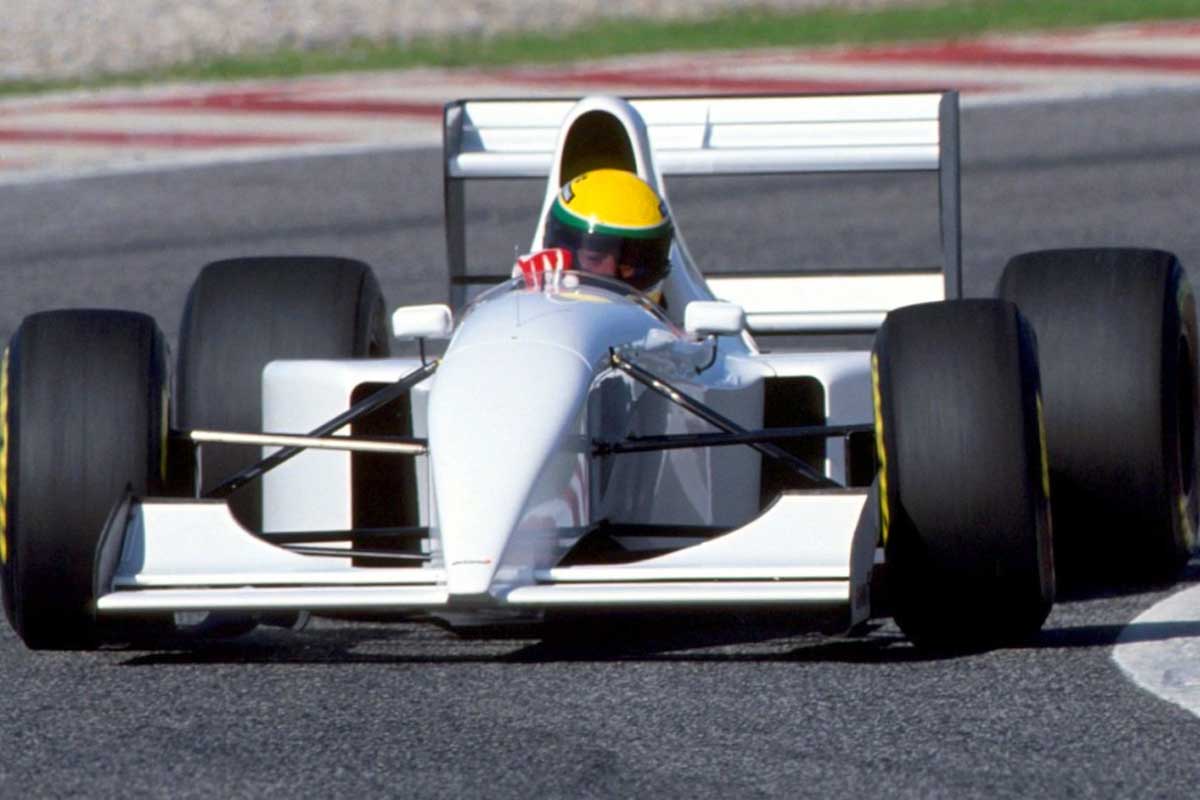
Two Lamborghini engineers, including former Renault employee Alain Marguet, are sent to England. At Woking, McLaren's base, the installation and adaptation of the Lamborghini engine takes a few weeks. The staff worked hard to integrate the Italian V12, larger than the Ford V8, into an experimental McLaren called the MP4/8B. The wheelbase and body were lengthened, the radiators were adapted, and the engine's anchoring points to the chassis and gearbox were modified, resulting in a car that was now 9.5 cm longer. The secret tests were carried out with two cars, prepared for Hakkinen and Senna, initially on the Pembrey circuit in Scotland.
We recently met Alain Marguet, who is involved in this project:
"The lap times were better than with the Ford V8. It was the beginning of "fly by wire" technology: there were no longer any throttle cables, and the engine's intake butterflies went at such speed! As it was electronic, we could change the opening kinematics as we wished, program the curves, it was extraordinary! The only drawback was that McLaren was equipped with TAG Heuer for the electronics, whereas we had developed the V12 with Bosch. They wanted us to switch to TAG for their electronic programming. The tuning wasn't quite perfect, and we were losing power at high revs because the V12 was a bit sluggish. We knew we still had room for improvement in this area, as well as in matching the engine to the chassis."
This was followed by another successful test session at Estoril with Senna, in a McLaren. immaculate whiteSenna asked for a wider powerband. Senna asked for a wider power range, with less brutality at high revs and more torque at medium revs. Lap times were kept secret, but several sources confirmed that it ran better than the Ford! "In some sectors, we were ahead". And yet, the engines used were old Larrousse specifications.
Peugeot takes the prize
The feedback is overwhelming. At Silverstone, according to some reports, Mika Hakkinen beat the time set with the Ford V8 at the British Grand Prix by one second. The car has gained in stability and tire wear is improved, even if reliability is still perfectible. Hakkinen suffered an engine failure which, in his words, was the strongest he had ever felt! Whatever the case, Senna is categorical: the McLaren-Lamborghini package is promising, and should even start at the 1993 Japanese GP!
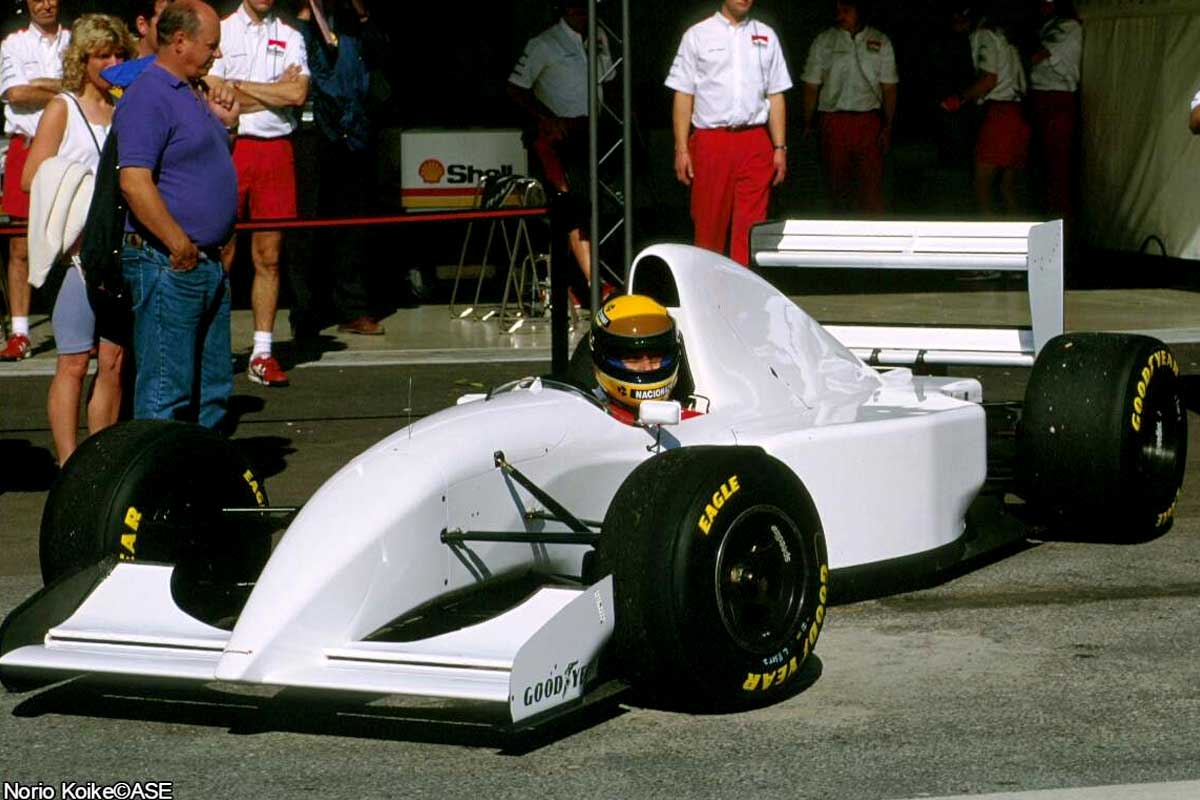
For obvious contractual reasons, Dennis refused. But in reality, the English manager had already changed his mind. Dennis wanted free engines and more, but François Castaing, according to Alain Marguet, refused categorically. What's more, with Prost's retirement, Senna jumped at the chance to drive for Williams in 1994. Ron Dennis had already made his choice: it would be Peugeot, which was entering F1 with the ambition of challenging Renault. The Lion brings a promising V10 derived from the engine used on the Endurance-winning 905, provided free of charge what's more, as well as financial backing. Lamborghini was disappointed by this about-face, but soon afterwards Chrysler sold the brand to Indonesian investors who had no interest in motorsport. The Lamborghini V12's career thus ended in anonymity, after 80 races and just one podium finish. A pity, because the package was one hell of a looker!

 English
  French
  Italian
  Spanish
  Portuguese
  German
  Japanese
  Turkish
  Dutch
Dutch
Osamu Goto, Honda's wizard, was at Mclaren at the time. He is said to have helped with the Lamborghini V12 before leaving for Ferrari, where he helped with other V12s (1994 and 1995).
McLaren /. Senna / Lamborghini, a dream partnership, a real unicorn.
Ron Dennis, the enigmatic pragmatist, unfortunately put an abrupt end to what would have been a beautiful romance.
It's true that Lamborghini, in the shadow of its huge Maranello neighbor, has always struggled to assert itself in competition. The SC63's meagre track record is no contradiction.