

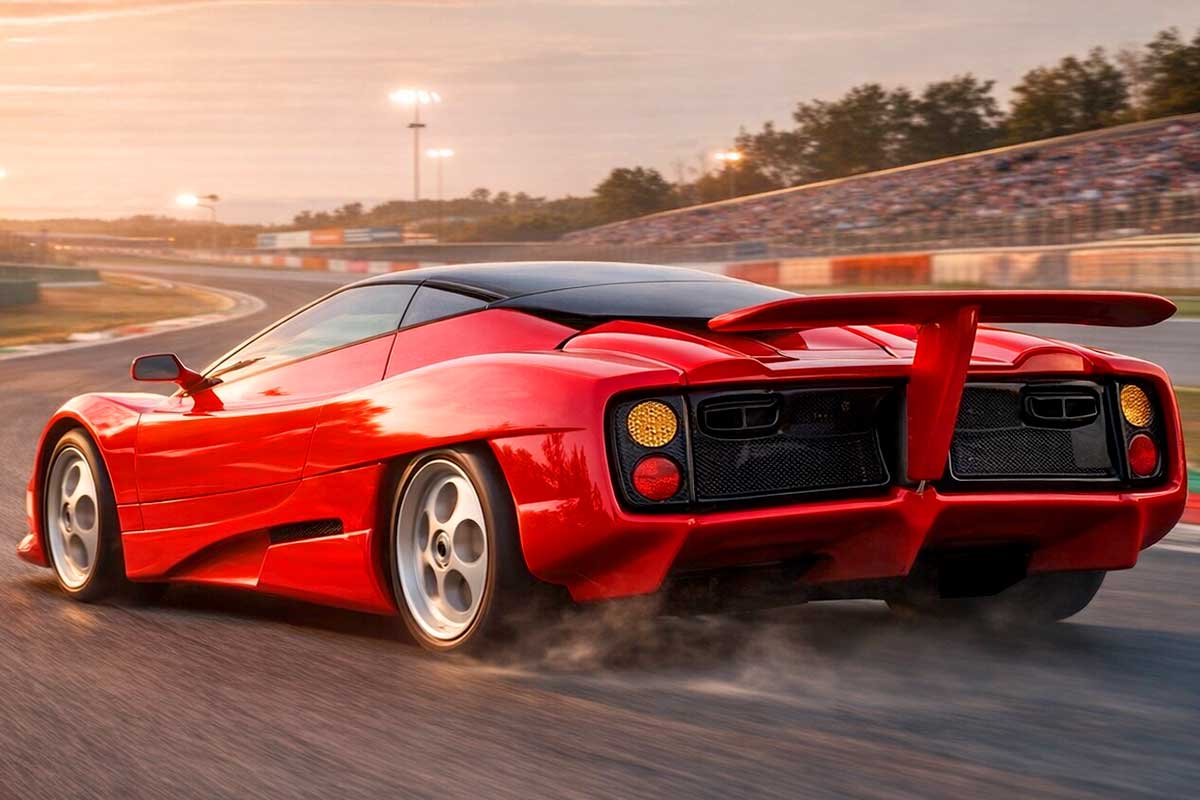
When Lamborghini take it out Diablo In 1990, the Taurus regained some of its lustre, after a rather moribund 80s and a few adventurous projects such as the F1 engine. With its unique appearance and monstrous performance, the Diablo was a great success on release, but the wind soon died down: after just over 600 sales in 1991, Lamborghini sold just 166 cars in 1992! The brand was unprofitable and in chronic financial difficulty. The Diablo, despite its devastating looks, is not exactly what its designer, Marcello Gandini, had originally imagined, having started out with a much more radical concept. It was out of this frustration that he collaborated with Giorgio Moroder to create the incredible Cizeta 16T.
All in the composite!
But back to Lamborghini, for whom an important date is looming: 1994 is to mark the 30th anniversary of the brand's birth! For some time now, the idea has been afoot at Sant'Agata Bolognese to launch an exceptional model for the occasion, a car made entirely of composite materials. Considering that even the Murcialego, more than ten years later, was still built around a welded steel tubular chassis, this was a real revolution for its time. Until then, Lamborghini had only designed cars with steel structures. But in the space of a few years, the situation changed. McLaren, a pioneer of carbon fiber in F1, caused a revolution in 1992 with the unveiling of the McLaren F1, a supercar based on a carbon monocoque. Ferrari also initiated the F130 project in the late '80s, which led to the carbon monocoque F50 in 1995. The Bull then turned to a specialist in composite materials.
Pagani, rejected then listened to
That's where Horacio Pagani comes in! The Argentinian is an old hand at the company: he joined Lamborghini in 1983, and from 1985 was assigned to the composite materials department, created on his own initiative. Pagani worked on the P140 project, launched around 1987 to find a replacement for the Jalpa. In 1985, Pagani also worked on the Countach Evoluzione project, which made use of composite materials, but never came to fruition. "The budget was ridiculous", he recalls. Indeed, in the '80s, Pagani came up against the reluctance of the management board. The famous "old" versus "new" quarrel, Motor Valley style!
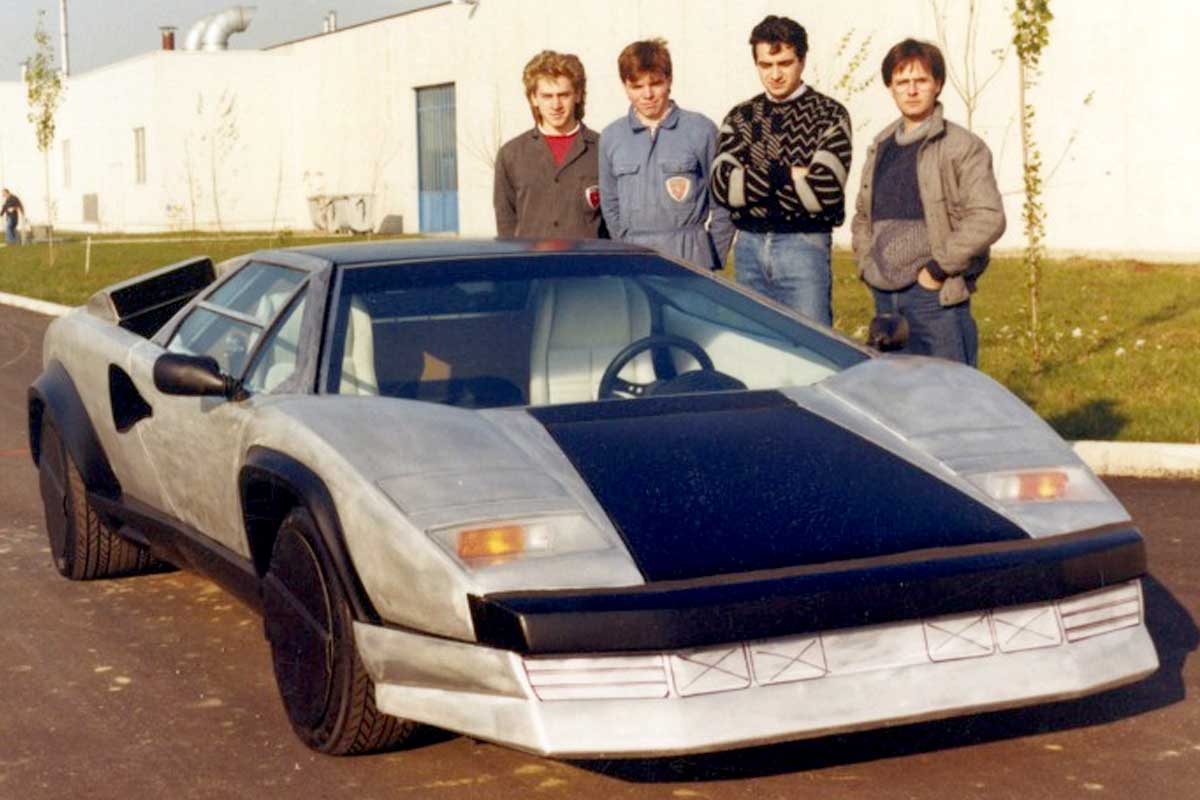
Faced with Lamborghini's refusal to invest heavily in technology and autoclaves to produce parts in-house, Pagani had finally left the Italian brand in the late 80s to create Pagani Composite Research... which became a Lamborghini subcontractor! Things accelerated in 1991 with the founding of Modena Design, which specialized in the design of composite materials, the demand for which was exploding not only in motor sports but also, in a still embryonic way, in the world of sports cars. His company was not affected by the crisis, and its customer base grew, including F1 teams. Pagani's expertise was to be put to good use, ironically enough!
The "Super Diablo
Pagani cooperates on 1993 Diablo SE30for which he designed several elements, including the front bumper. His studies on the "Super Diablo" concept went hand in hand with his own supercar project, which had been in gestation since the turn of the 80s and 90s: a certain C8, which he initially planned to name Fangio F1, after the great champion with whom he had forged a close friendship.
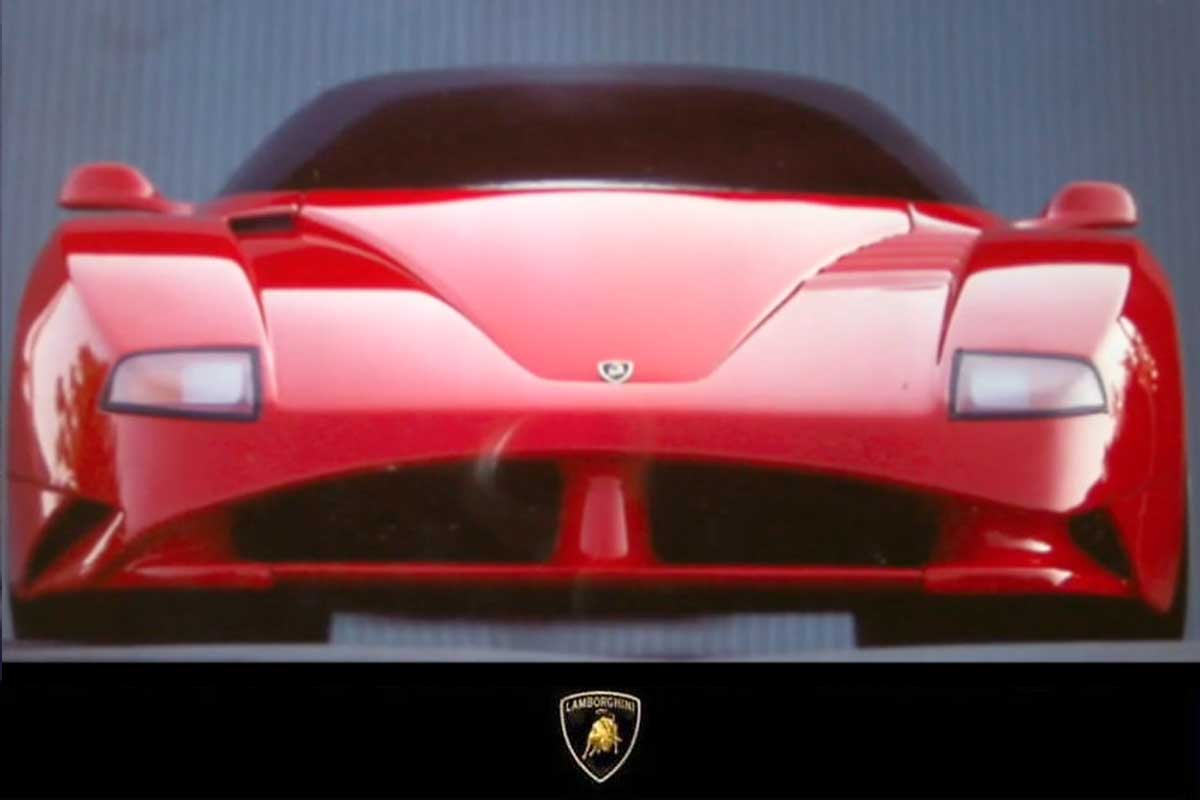
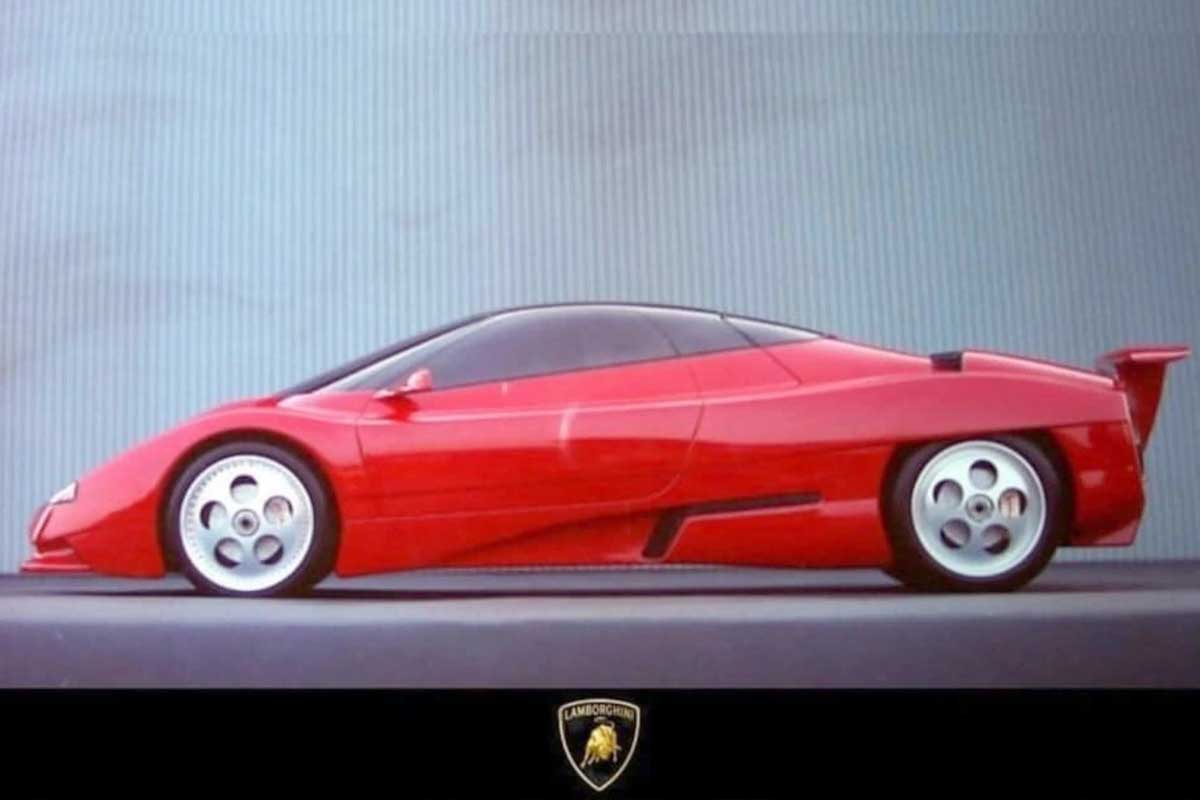
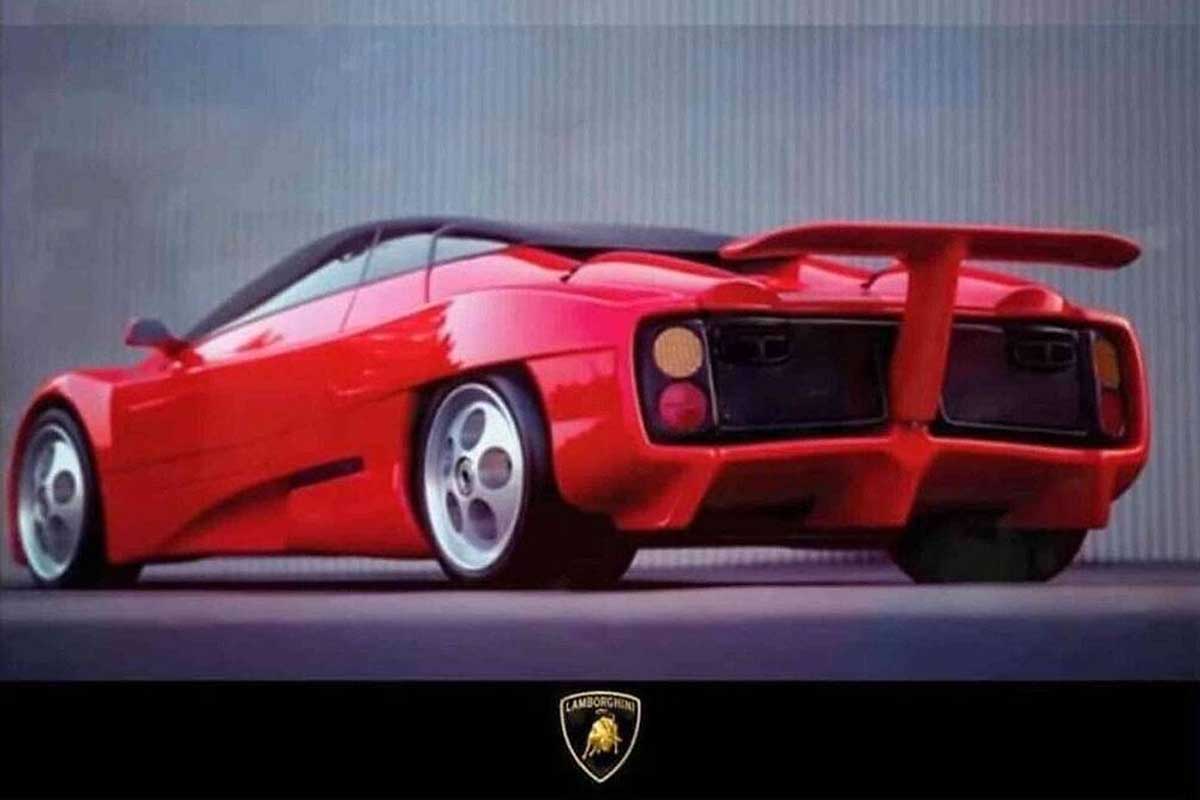
That's where the connections are made, when you look at the design of the "Super Diablo": admittedly still marked by the taut lines typical of the '80s, this concept features a streamlined, plunging, highly aerodynamic shape, a domed cockpit, a single-seater-inspired front end with a central pillar separating semi-ovoid air intakes and, above all, a spectacular rear end, consisting of a double-section diffuser, a huge center-pillar spoiler and vertical light clusters. The V12 was to benefit from a major upgrade, nearing 600 hp. We'll see it again a few years later...
You want something done right, do it yourself!
So what happened at the Taureau? In 1994, there was yet another change of ownership. Good-bye Chrysler, who no longer wanted the ball and chain, and make way for Megatech, an Indonesian group headed by President Suharto's son, among others! Except that the new Indonesian owners turned out to be just as cash-strapped as Chrysler. The "Super Diablo" remained on the drawing board, the shareholders preferring to focus on optimizing the existing Diablo, before selling it to the Volkswagen group in 1998, in the midst of the Asian economic crisis.
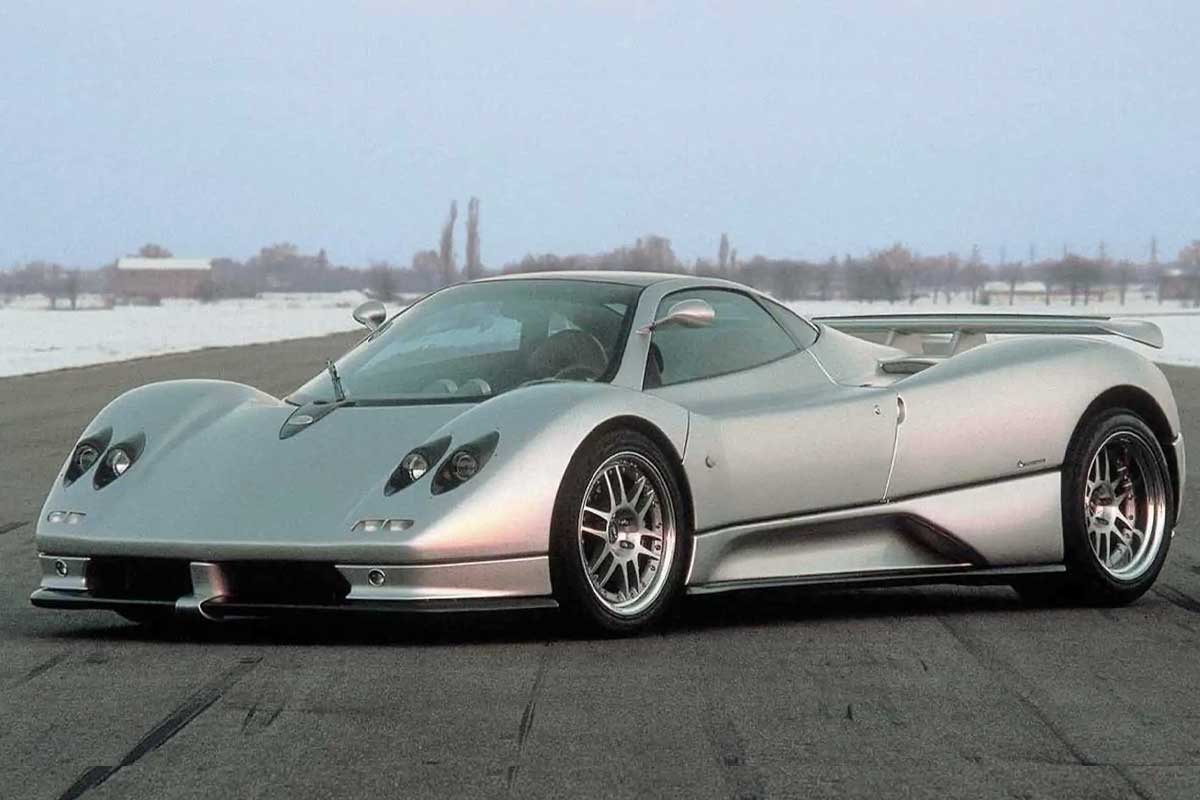
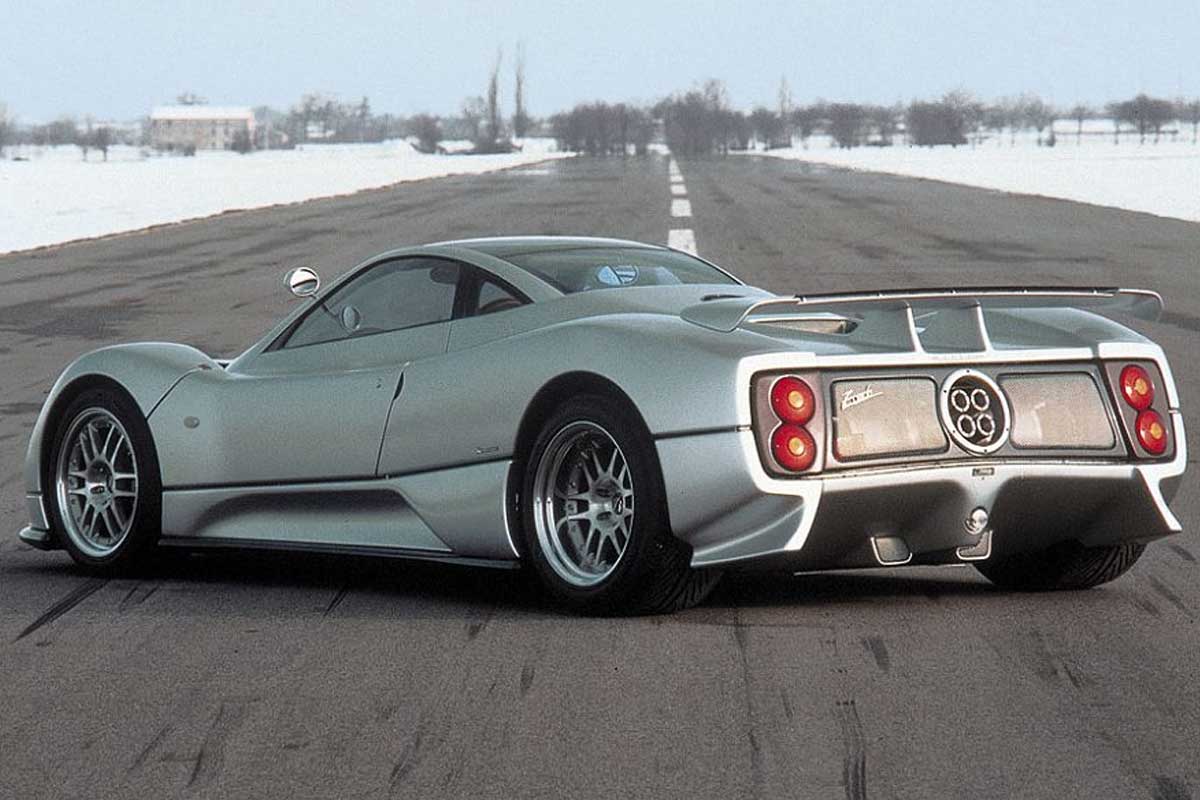
Yes, there's no doubt about it: this "Super Diablo" did produce something, in part. In 1998, Horacio Pagani finally unveiled his first supercar. Lamborghini had heard of his project and offered to buy it, but he preferred to go ahead with his dream. It was to be called the Fangio, but following the death of the "maestro" in 1995, it became the Zondanamed after a powerful Argentinian wind. While the Zonda adopts more sensual lines and a totally baroque interior, the profile, with its highly advanced cockpit, and the rear end are reminiscent of the Super Diablo concept!
 English
  French
  Italian
  Spanish
  Portuguese
  German
  Japanese
  Turkish
  Dutch
Dutch
Thank you