

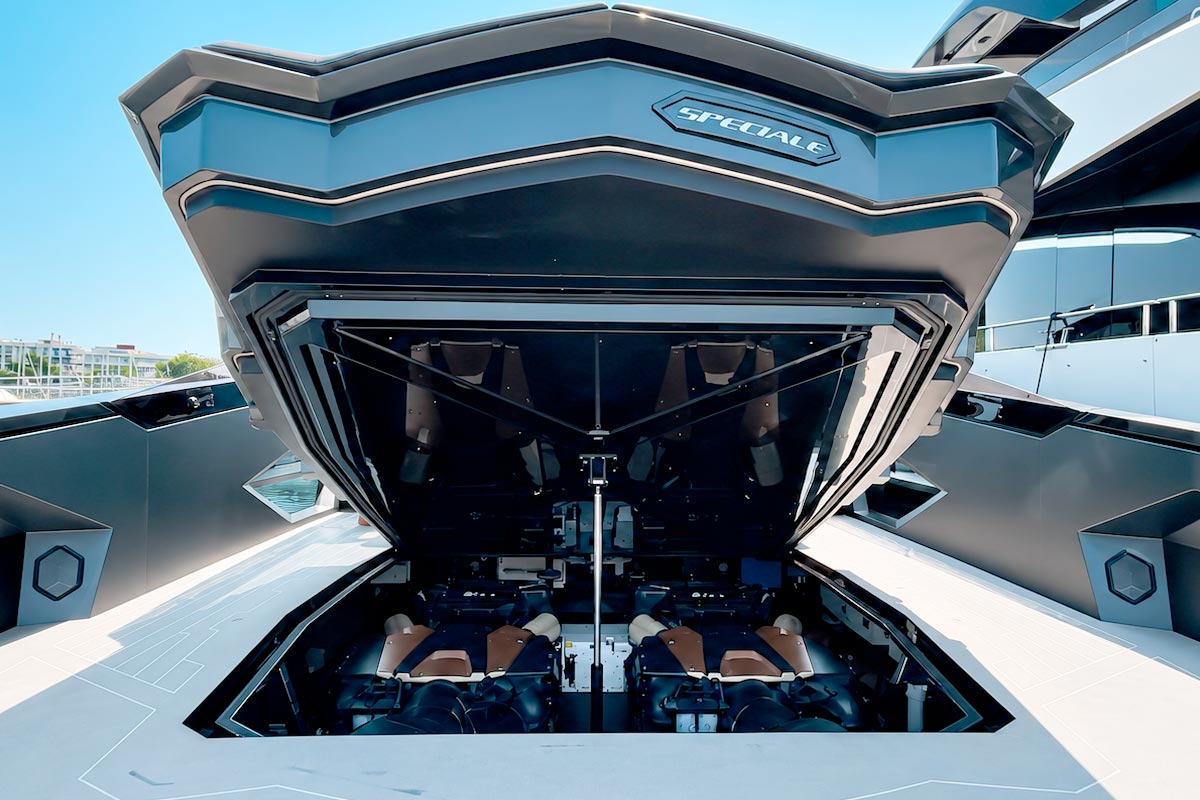
When you think of Lamborghini, When you think of a Lamborghini, you immediately imagine a low-slung, aggressive supercar with an atmospheric V12 screaming down an Italian road. However, the brand with the bull has also ventured onto the water with a totally outrageous project: the Tecnomar for Lamborghini 63, a luxury yacht capable of exceeding 110 km/h thanks to... two V12 engines developing a total of 4,000 hp.
And while we're still waiting for the arrival of the spectacular Lamborghini 101FT with three 16-cylinder engines With a claimed 7600 hp, the Tecnomar 63 continues to impress with a specification sheet worthy of a marine fighter jet.
A Lamborghini yacht that makes no secret of its automotive inspirations
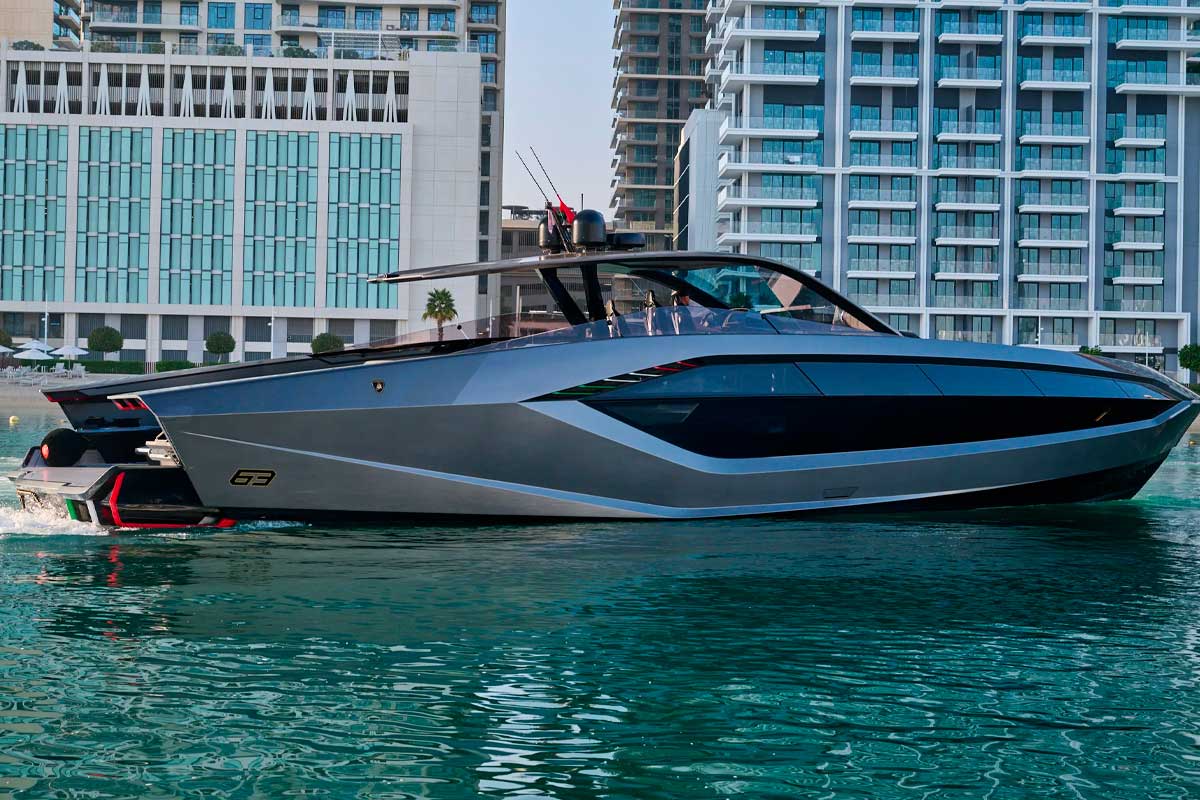
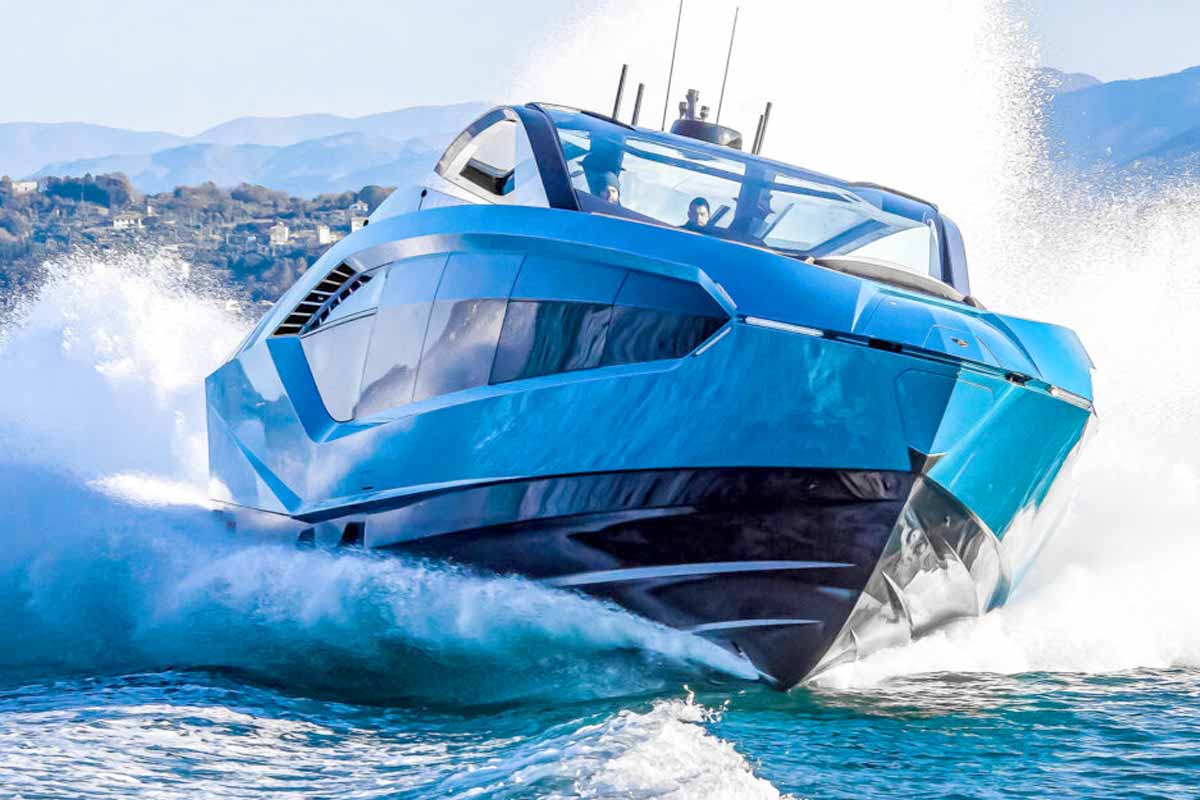
At first glance, it's impossible not to recognize Lamborghini's DNA. The yacht's lines are immediately reminiscent of the supercars from Sant'Agata Bolognese, including the Sián FKP 37 and the modern Countach. The taut surfaces, hexagonal shapes and ultra-futuristic cockpit really give the impression that a Lamborghini has been transformed into a boat.
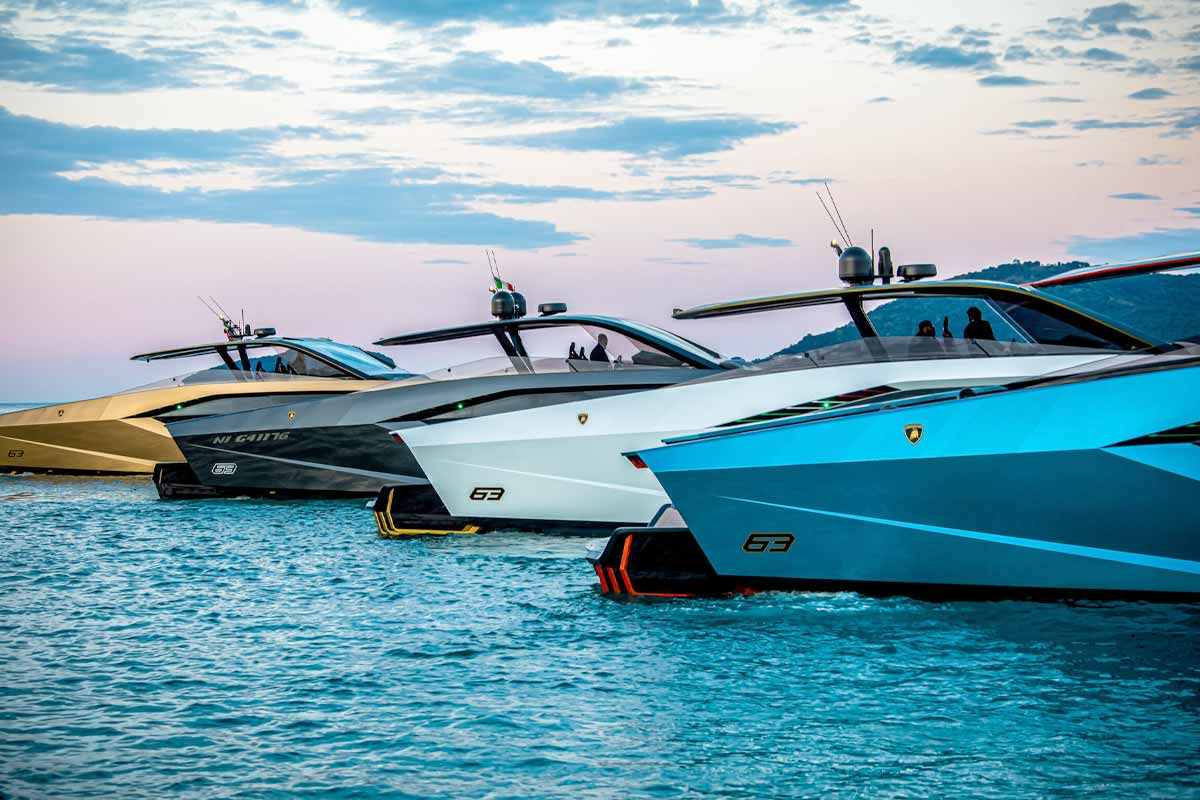
The name itself was not chosen at random. The number 63 refers not only to the year Lamborghini was founded, 1963, but also to the yacht's length: 63 feet, or around 20 meters. Even production was limited to just 63 units, to reinforce the model's exclusivity.
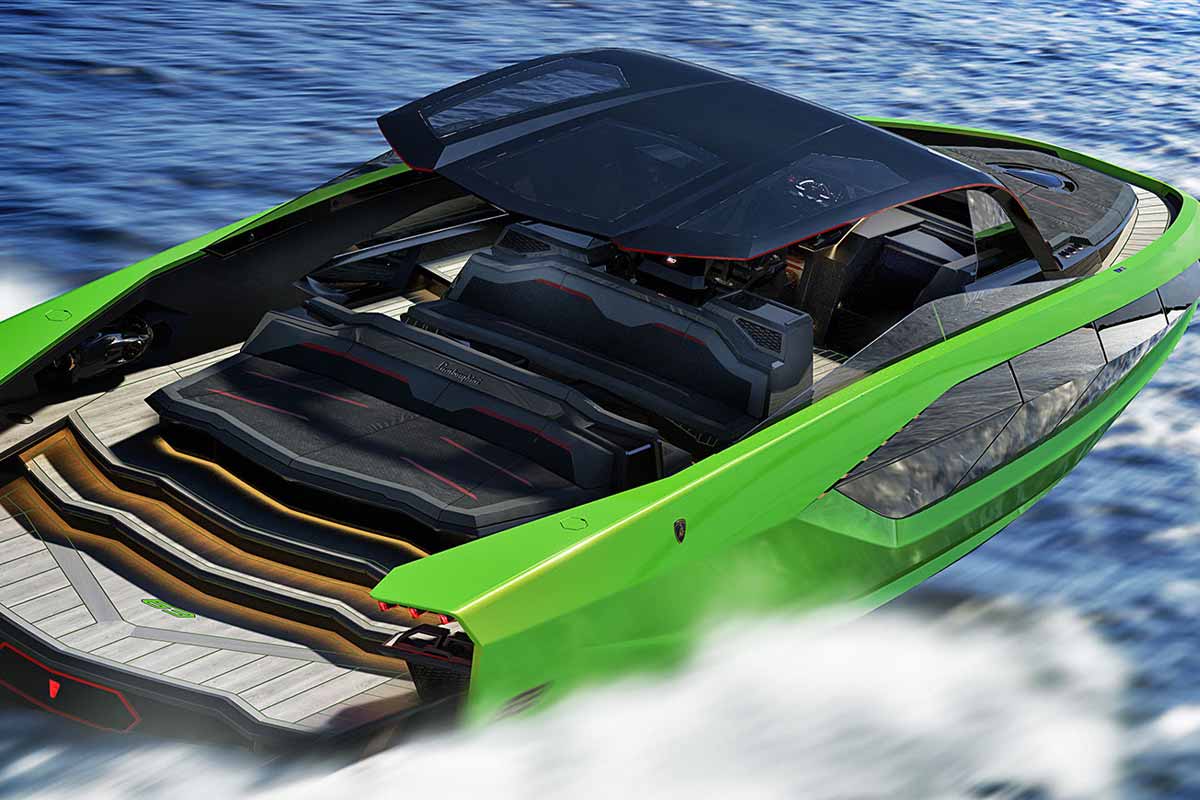
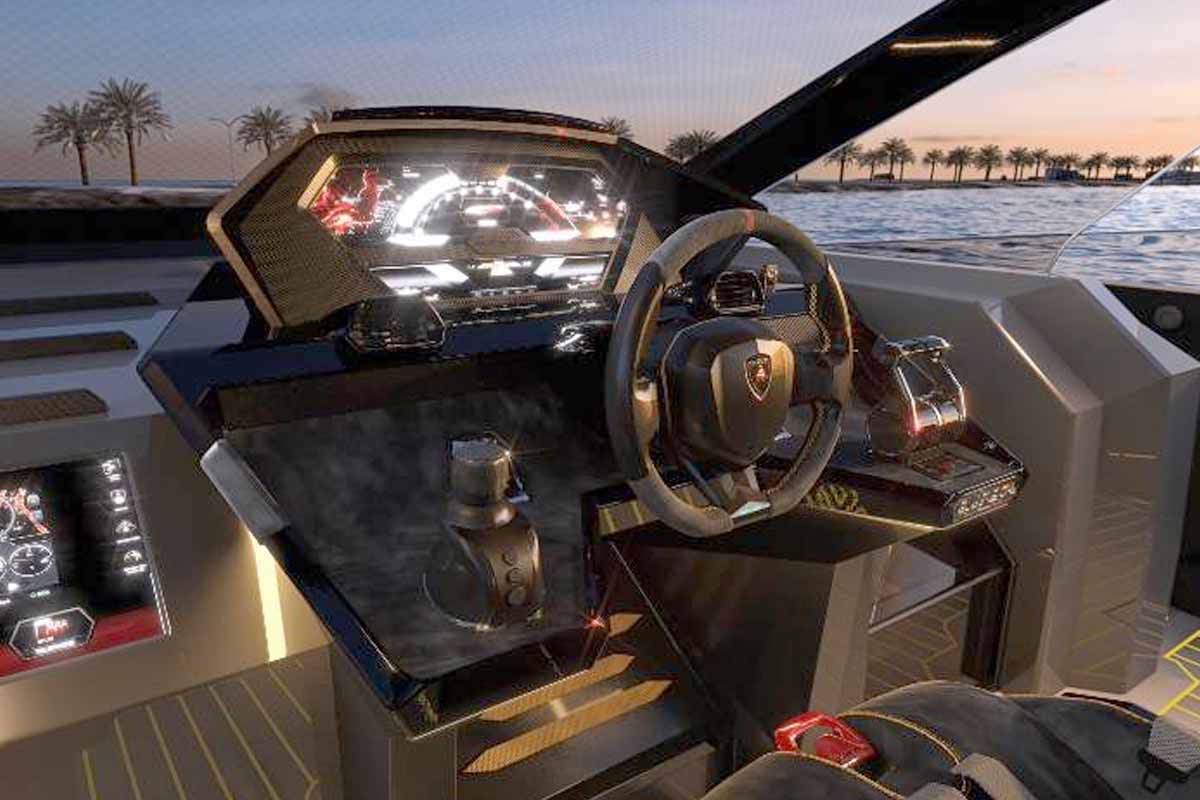
On board, everything has been designed as a tribute to the Italian brand's cars. The cockpit reflects the spirit of Lamborghini supercars, with a start button directly inspired by road models, omnipresent carbon fiber elements and an ambience that blends luxury and extreme sportiness.
No, they're not Lamborghini engines
This is probably one of the most surprising details about this yacht (actually, not so surprising if you think about it twice). Contrary to popular belief, the two V12 engines powering the Tecnomar for Lamborghini 63 are not Lamborghini engines. The manufacturer behind these engines is none other than MAN, a renowned German specialist in marine engines. On its social networks, MAN Engines regularly shares videos and images of the yacht in action, including tight turns at over 48 knots.
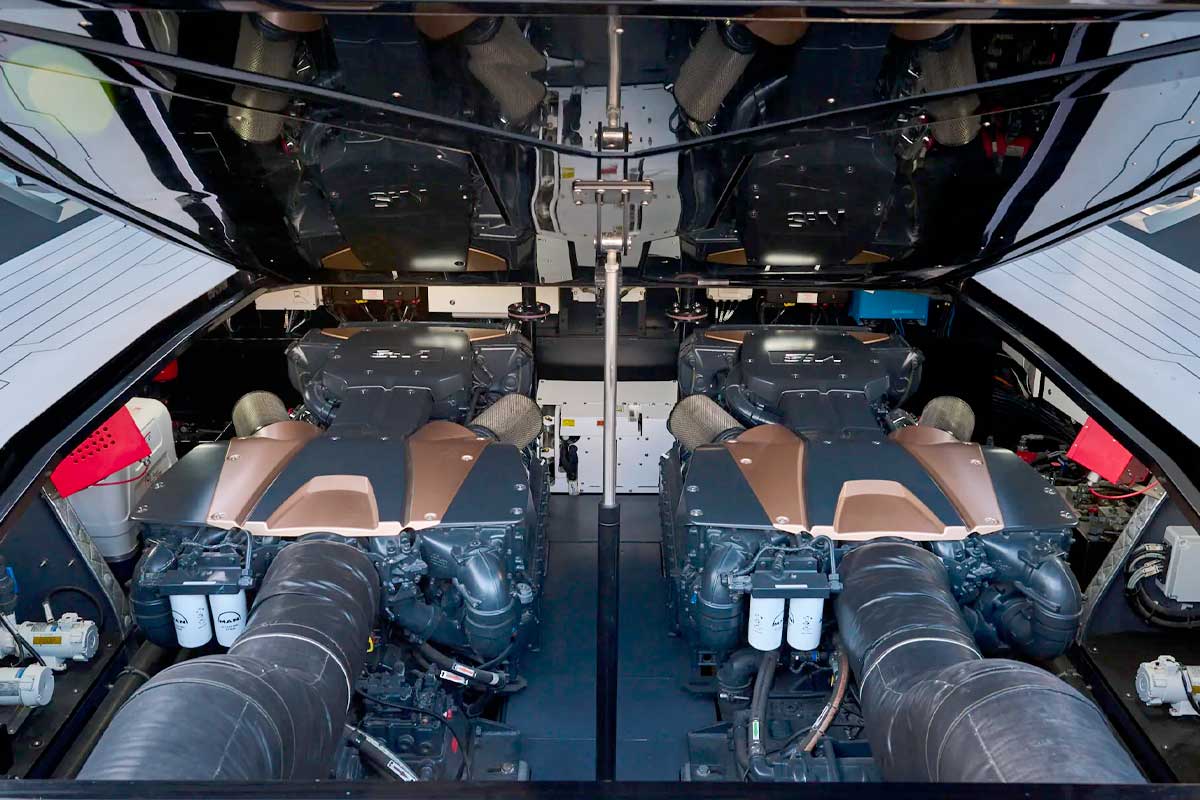
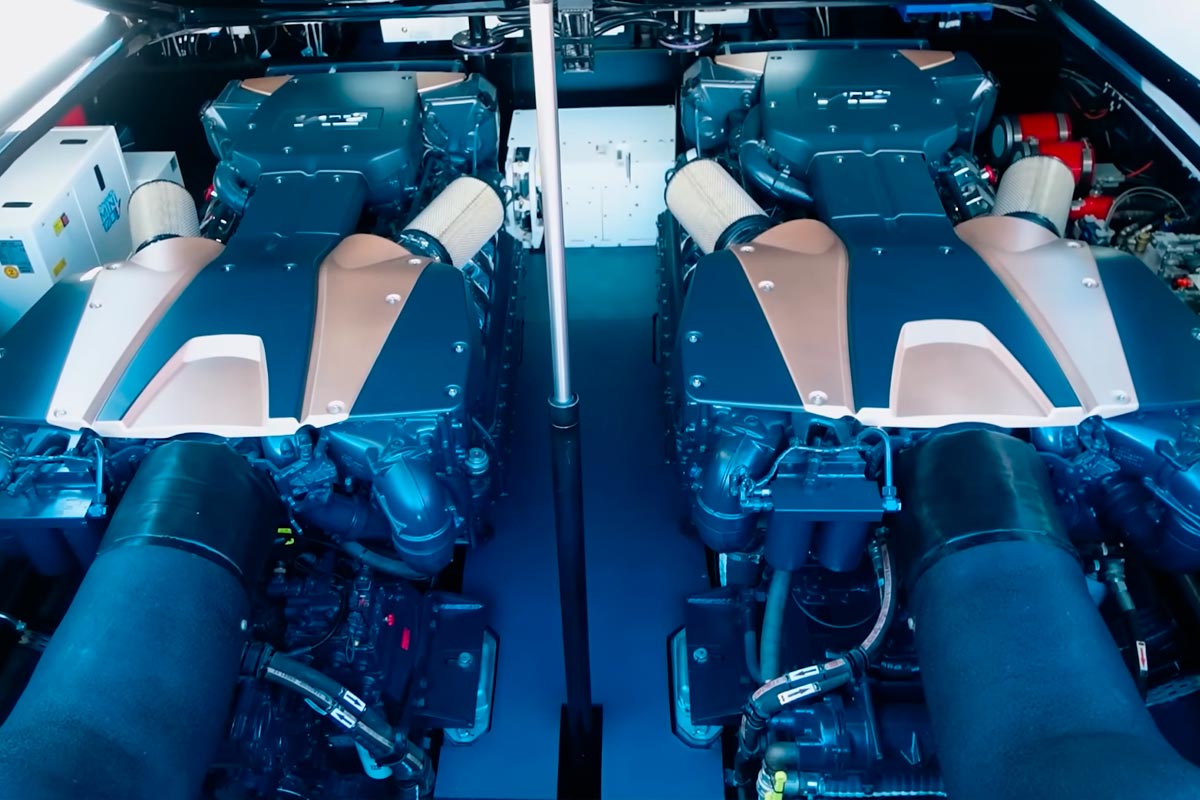
The boat uses precisely two MAN V12-2000 engines, two 24-liter V12s each capable of developing 2000 hp on their own. The result: a combined power output of 4000 hp. And the figures are breathtaking.
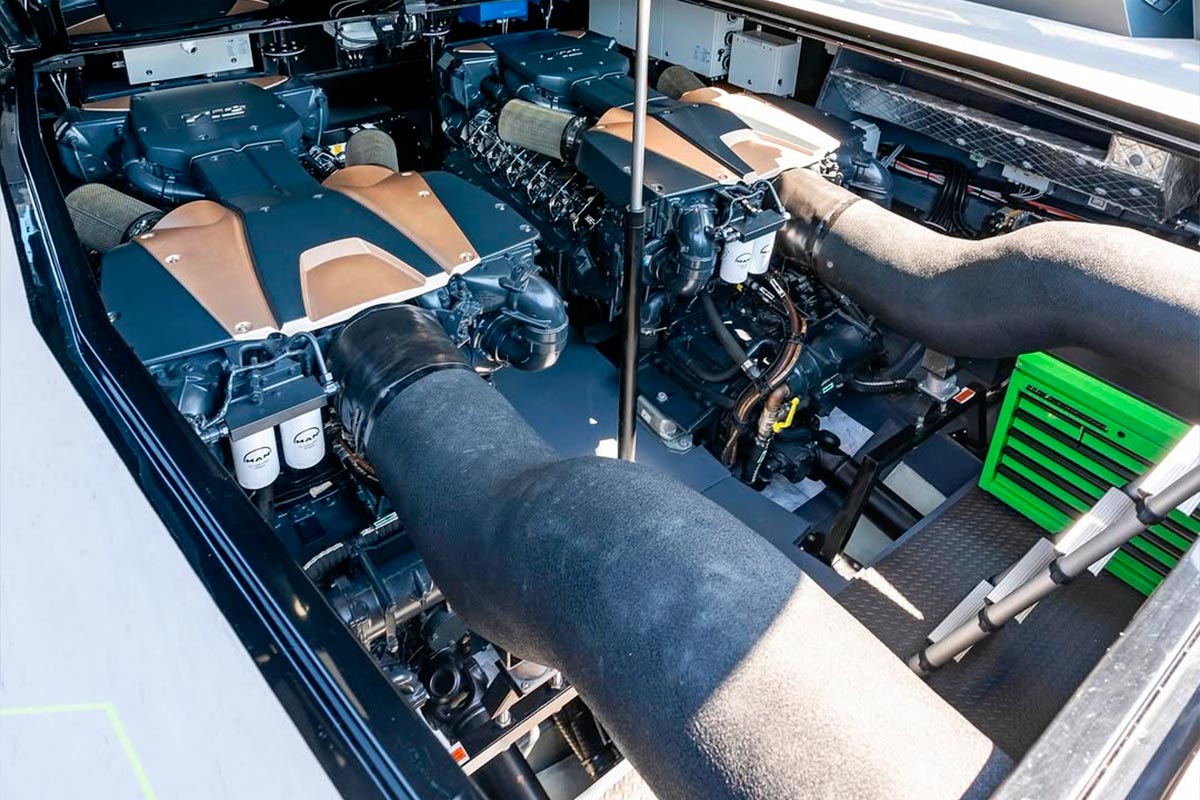
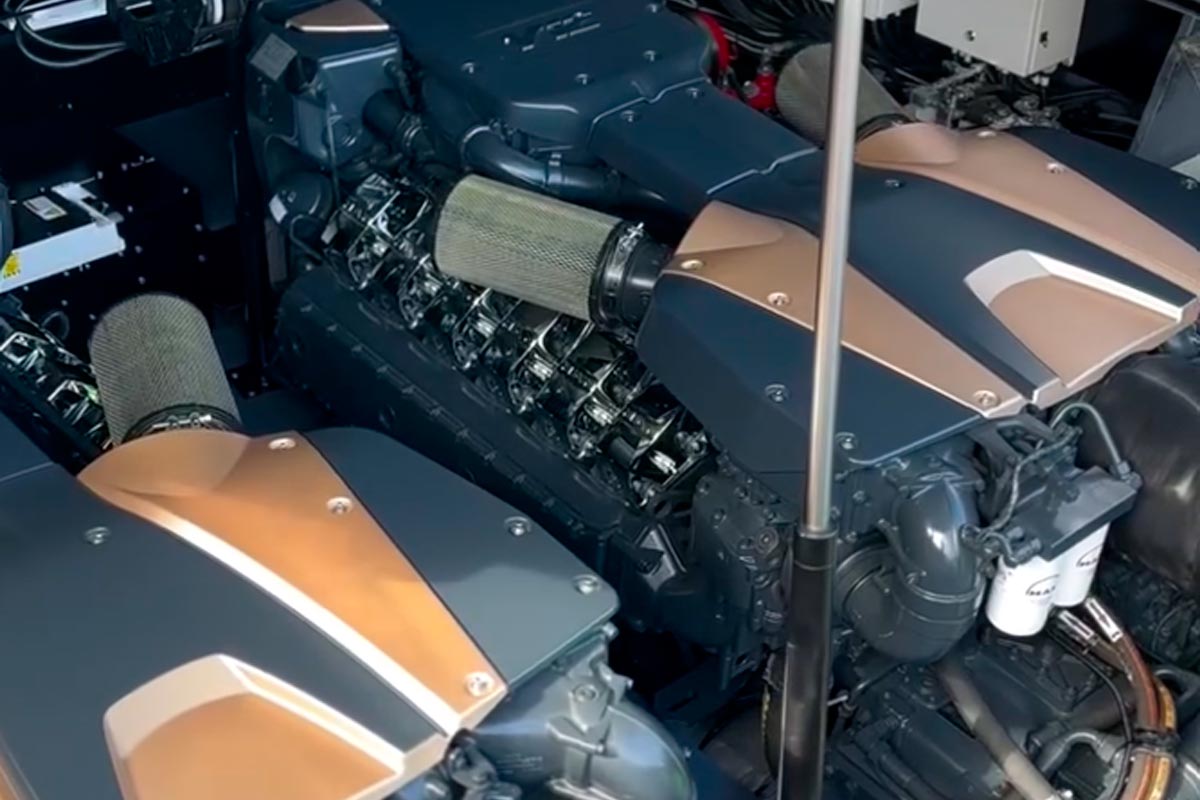
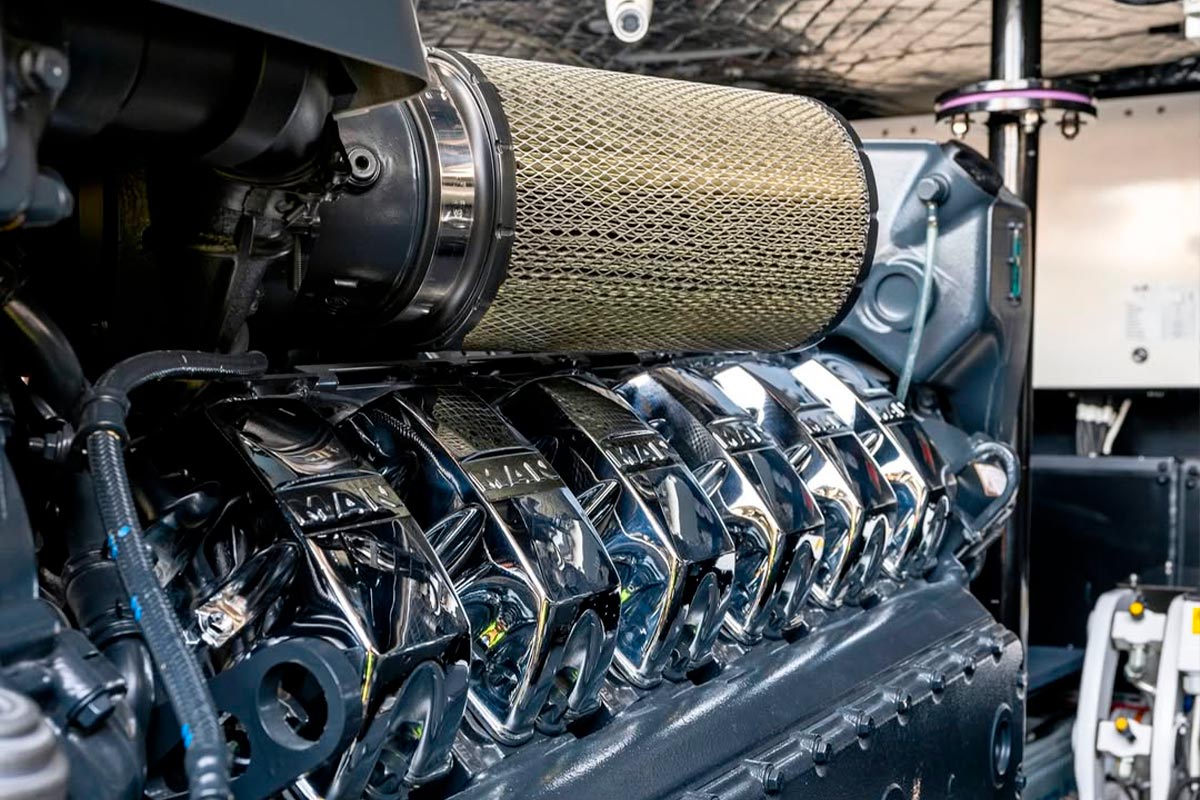
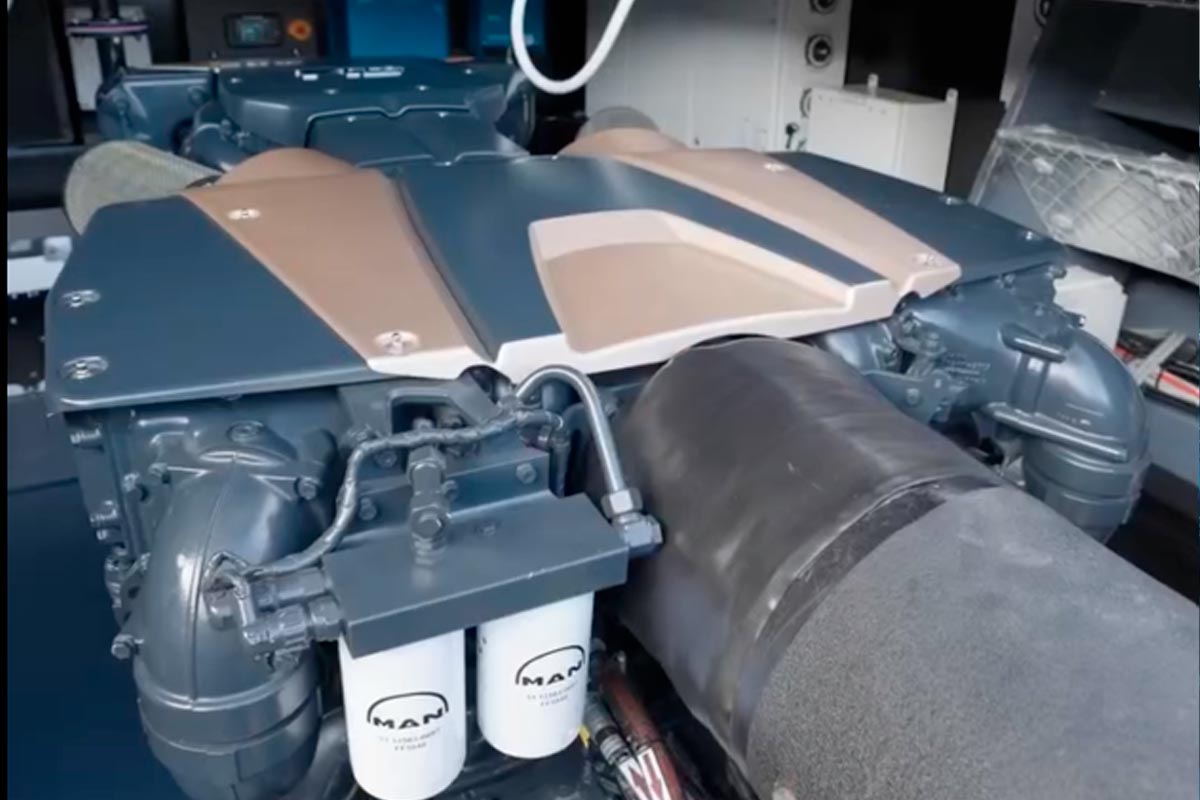
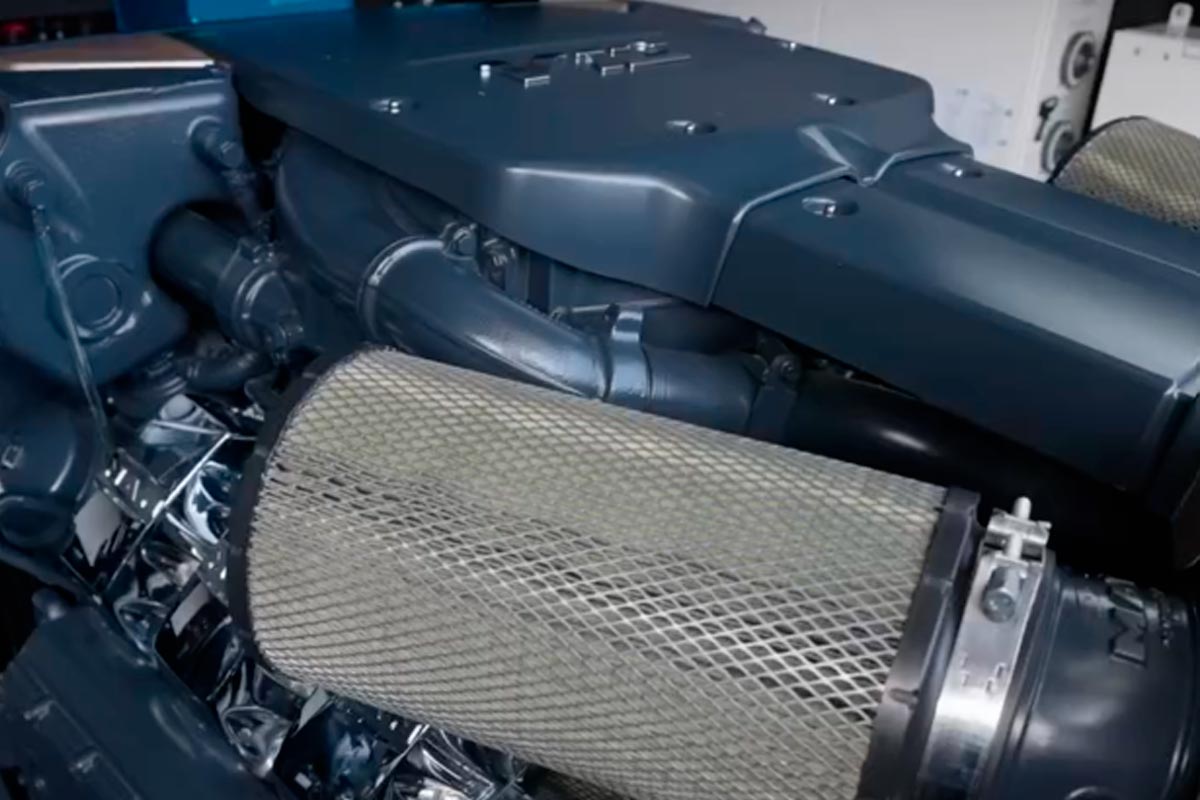
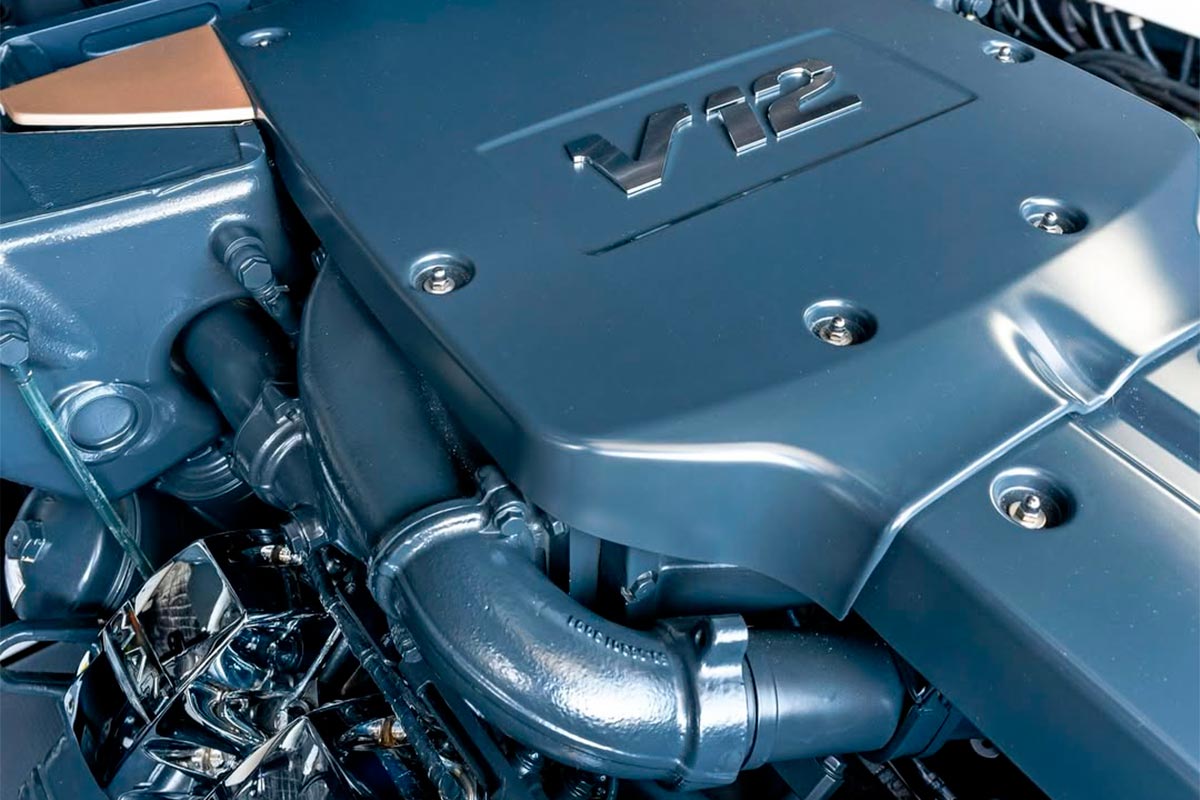
With the V12-2000, MAN claims to have set a new benchmark in the world of high-performance marine engines. This 24-liter engine develops 1471 kW, or 2000 hp, making it one of the most powerful V12 engines on the marine market.
The manufacturer particularly emphasizes its exceptional power density: 61 kW per liter of displacement. Despite this enormous power, the engine remains relatively compact for its class. MAN stresses that the V12-2000 retains the dimensions of its predecessor, the V12-1900, but gains an additional 100 hp. Each engine weighs around 2,380 kg dry, which is still impressive, given that it's more or less the same weight as the Lamborghini URUS SUV.
Over 63 knots on the water
Thanks to these two V12 engines, the Tecnomar for Lamborghini 63 can reach a top speed of 63 knots, or around 117 km/h. At this speed, the yacht literally becomes a floating rocket. And unlike many ultra-luxury yachts, this one isn't all about comfort. Everything in its design has been thought out to deliver supercar-like sensations. The structure makes extensive use of carbon fiber to keep weight down, while the aerodynamics of the roof and surfaces have been worked on like those of a sports car.
A boat going viral on social networks
Since its launch, the Tecnomar for Lamborghini 63 has become a social network star. Between Miami, Dubai, Monaco and Saint-Tropez, the yacht regularly appears in viral videos where it splits the turquoise water at full speed.
It has to be said that the mix works perfectly: Lamborghini design, outstanding performance and ultra-luxury ambience. With a price tag that can exceed 3 million euros depending on configuration, this boat demonstrates just how far the Lamborghini image can go when it leaves the asphalt to tackle the sea.

 English
  French
  Italian
  Spanish
  German
  Japanese
  Dutch
Dutch
Comunque è economica: solo 3 euro. E questo la dice lunga sulla qualità dei giornalisti
Da un lato vi ringrazio per aver trovato il tempo di leggere. Dall'altro, trovo che il vostro giudizio sia un po’ severo solo perché ho dimenticato la parola «milioni». In casi come questo, una breve e-mail sarebbe più gentile. Ma in ogni caso, commenti negativi come il vostro si verificano sempre più spesso e non capisco che piacere ci troviate nel farlo.