

Underground Racing builds, in its own words, the "Lamborghini on the planet" and uses them to break speed records on dragstrips. Underground, for example, was the first to install a pair of turbochargers on the Lamborghini Aventador SVJ, creating a very rare 2,000 hp monster.
Underground also offers several levels of preparation on the Lamborghini Gallardo, starting at around 1000 hp. Further stages bring the power up to 1250 hp, 1500 hp (notably for versions that have been entered for track and hillclimb racing by Supaloc), then 2000 hp. At the top of the range is the “X” preparation level. This configuration generates a staggering 3,000 hp.
Without mastery, power is nothing
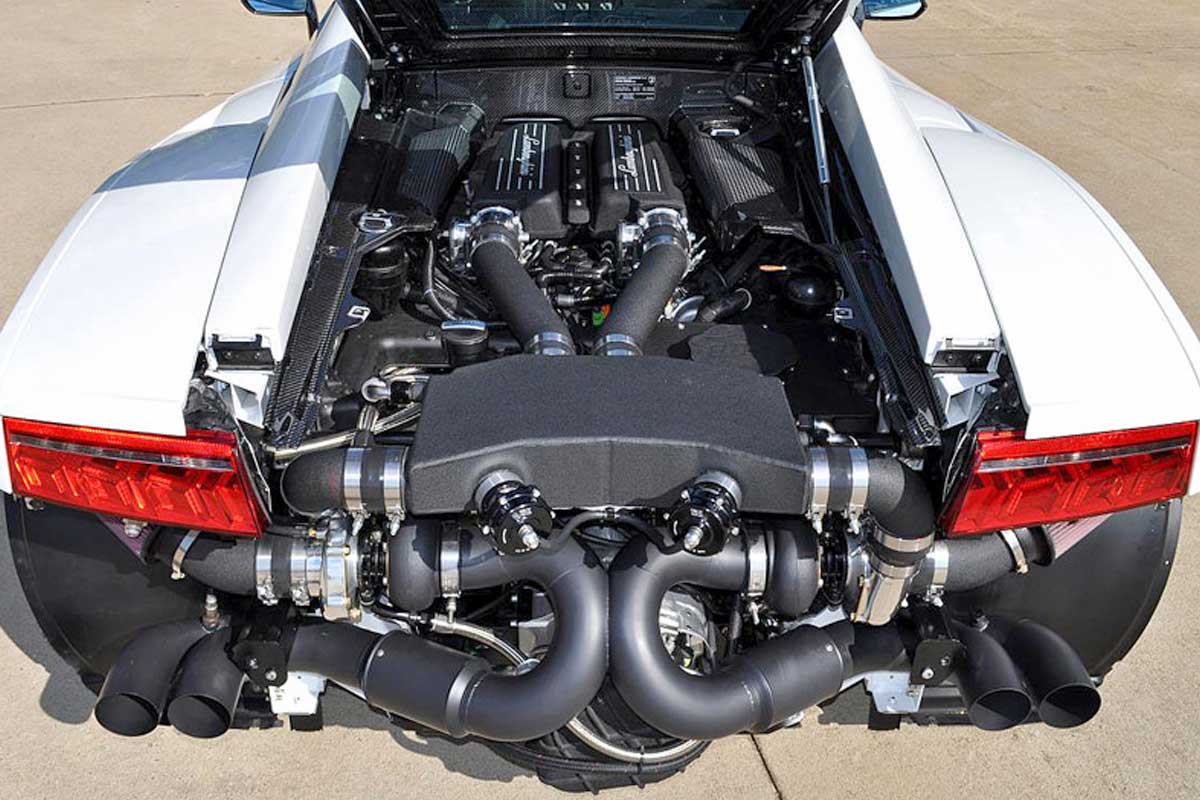
The engine is completely rebuilt, with an ultra-strong solid machined block, forged pistons and connecting rods, and a modified cylinder head, all of which must be able to withstand the enormous turbo pressure. Supercharging is provided by an enormous Precision Twin turbo, with very high boost pressure and an anti-lag system.
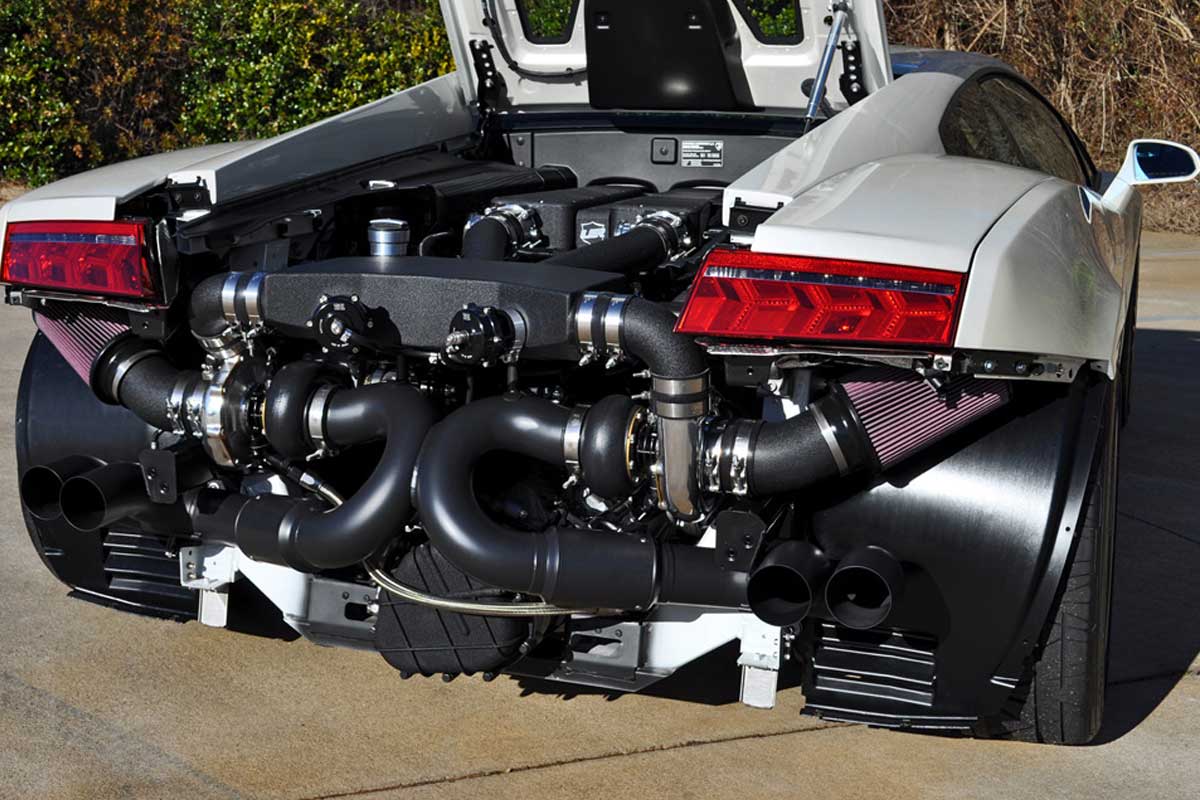
Electronic management is via a “standalone” MoTeC / JRR ECU, i.e. independent of all manufacturer limitations and civil homologation standards.
Control is complete, to avoid ending up in the trees: traction control and launch control, boost per gear. The transmission and chassis must also take the strain: racing sequential gearbox, reinforced differentials, carbon/ billet driveshafts, otherwise everything breaks instantly at 3000 hp. Last but not least, special fuel is required for such high combustion levels. A complete project of this kind can cost well over a million euros.
Like the Hunaudières record, but over 800 metres
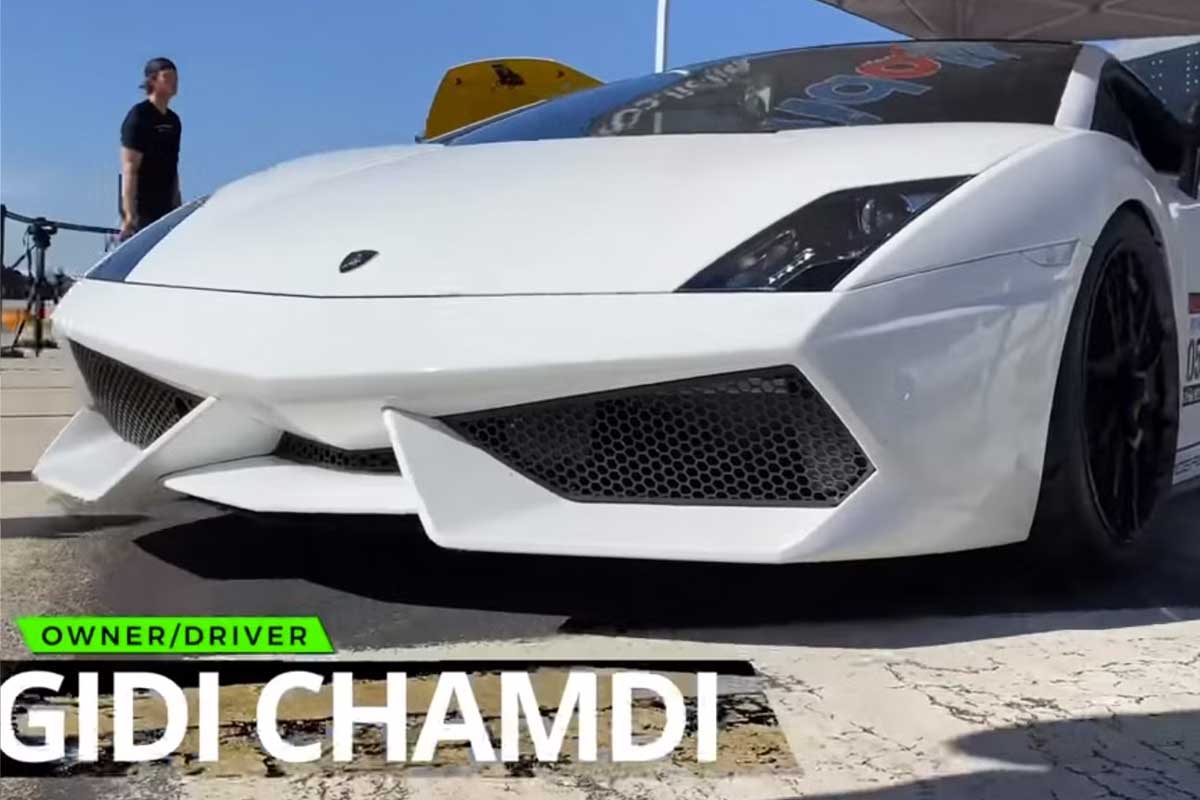
One of the best-known Gallardos is that of Gidi Chamdi: in 2016, he set a half-mile (800-meter) record by reaching 244 mph (392 Km/h). But when he learned that another prepared Gallardo owner coveted his record, he asked for the beast to be optimized. In 2021, he reached 249 then 252 mph, i.e. a speed of 407 km/h in 800 m. 407 Km/h, for example, is the top speed record set on the Le Mans 24-hour circuit in 1988, on the Hunaudières straight, by a WR-Peugeot, before the chicanes were installed in 1990.
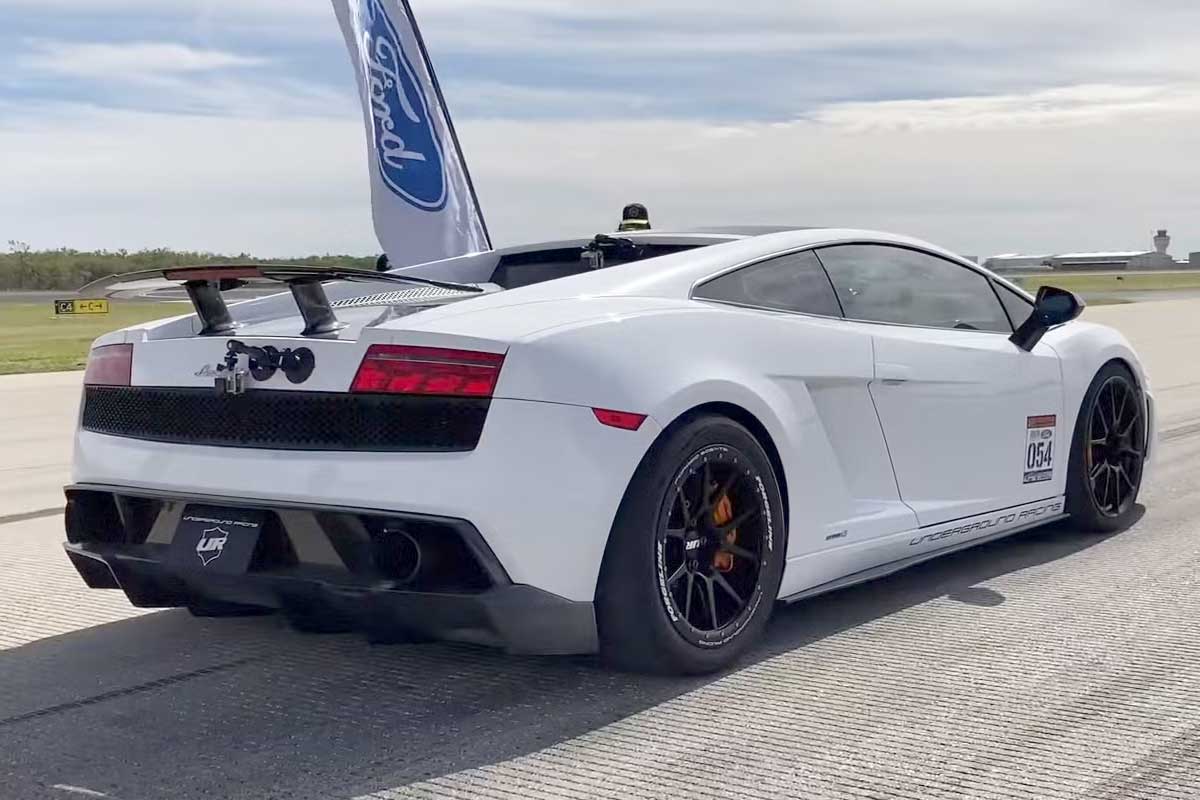
The videos speak for themselves. Screaming, still skating at high speed, it's like the acceleration of a smartphone game like CSR Racing.
It's faster than a Bugatti... but only in a straight line. It's virtually impossible to operate at 100% on the road, ultra dangerous without experience, not to mention monstrous maintenance. Surprisingly, these performances were achieved with road-approved semi-slick tires, namely Toyo R888Rs, not special drag racing tires.
In real life, it's a drag racing car disguised as a supercar!

 English
  French
  Italian
  Spanish
  Portuguese
  German
  Japanese
  Turkish
  Dutch
Dutch