

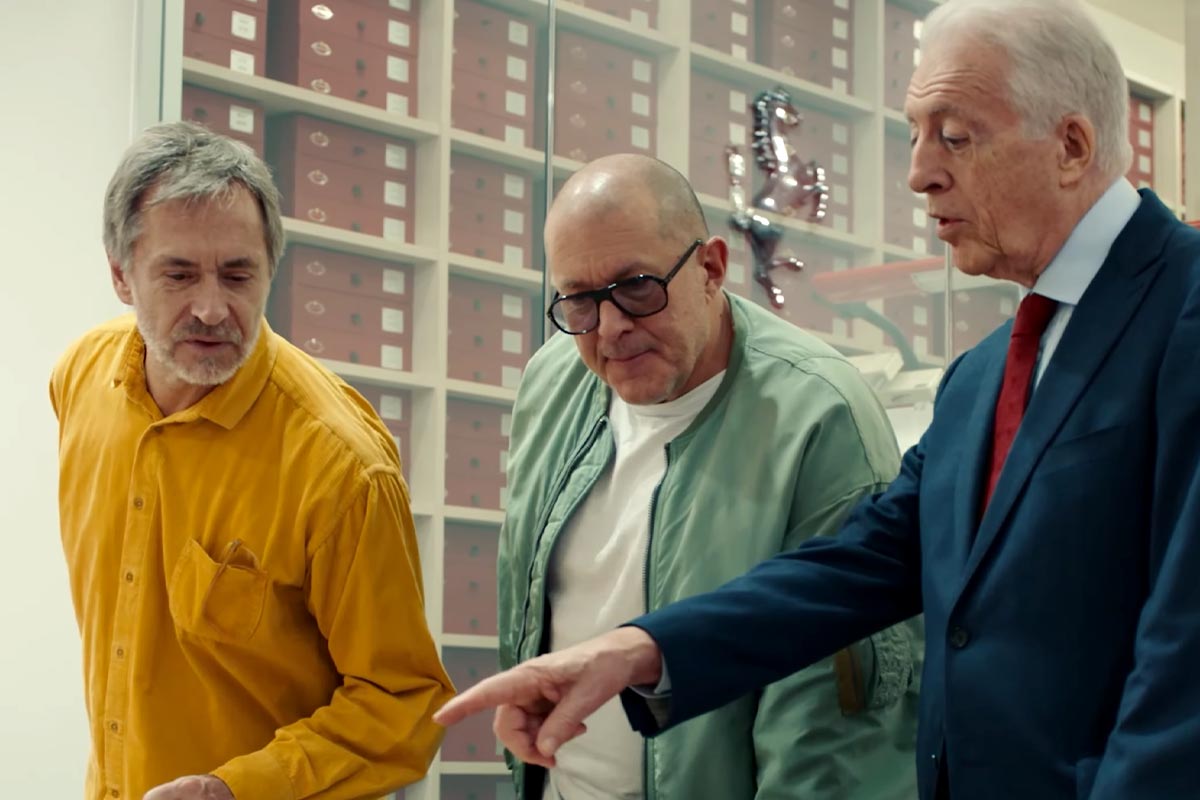
For five years, a team of the industry's most influential designers worked behind the scenes in Maranello on a historic project: the first Ferrari 100 % electric. Among them is a well-known name in the world of technology: Jony Ive, former iPhone designer and a major figure in Apple design.
His verdict, after several years spent thinking about the interface of the future electric Ferrari, may come as a surprise: the mistake would be to transform an electric car into a simple digital object filled with touch screens.
An unprecedented collaboration between Ferrari and Silicon Valley designers
The Luce project was born several years ago when Ferrari began thinking about its first all-electric car. To imagine this new generation of Ferraris, the brand chose an unusual approach: teaming up with the LoveFrom creative collective, founded by Jony Ive and Marc Newson.
This collective brings together industrial designers, user interface specialists, typographers and graphic artists. Their aim: to work on projects where the creative process takes precedence over everything else.
A small team was soon formed between San Francisco and Maranello, with designers literally integrated into the Ferrari teams. For five years, the members of LoveFrom worked at the heart of the Centro Stile Ferrari alongside Flavio Manzoni, Design Director, but also under the watchful eye of Piero Ferrari, considered the guardian of the brand's DNA.
According to the project participants, the collaboration was built up gradually, with a mutual learning phase between designers from the tech sector and Ferrari engineers.
The first electric Ferrari poses an unprecedented challenge
Designing an electric Ferrari involves more than simply replacing a combustion engine with a battery. For the designers, the challenge was threefold.
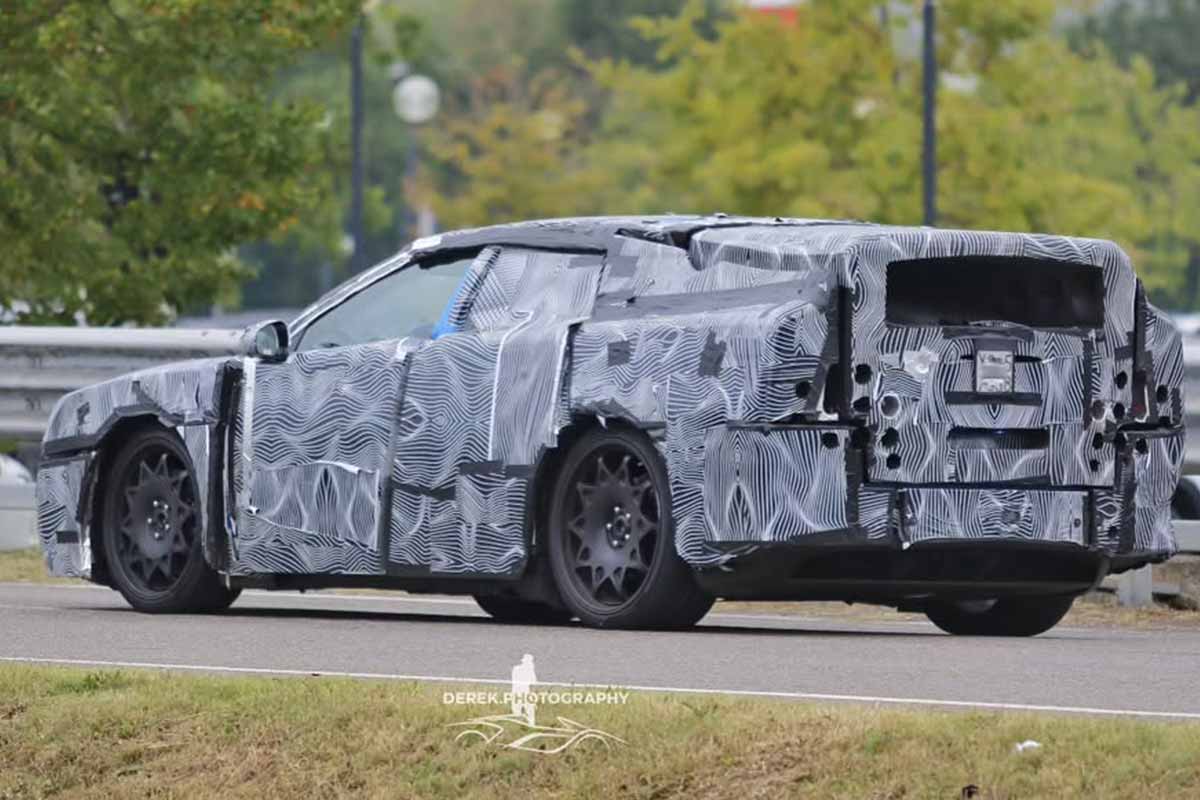
First, we had to imagine a new technical architecture adapted to an electric car. Secondly, to preserve Ferrari's emotional DNA despite the absence of an internal combustion engine. And finally, to completely rethink the interface between driver and machine. It was on this last point that Jony Ive and his team placed particular emphasis. For them, the arrival of electric cars does not mean that the driving experience has to become entirely digital.
«If the car is electric, the interface doesn't have to be digital».»
In the official Ferrari video, Jony Ive criticizes an idea that has become almost automatic in the automotive industry: that of multiplying screens in electric cars.
In his view, this reasoning is flawed.
«There's this strange idea that if the power source is electrical, then the interface must be digital. It just doesn't make sense.»
For the British designer, a sports car must above all offer a sensory and intuitive experience, where the driver never feels distracted by a complex interface. If the interface is poorly thought-out or too digital, it can even detract from driving pleasure.
The team's aim was therefore to design a clear, uncluttered and intuitive cockpit that would enable the driver to remain focused on the essentials: driving.
A steering wheel inspired by F1 and classic Ferraris
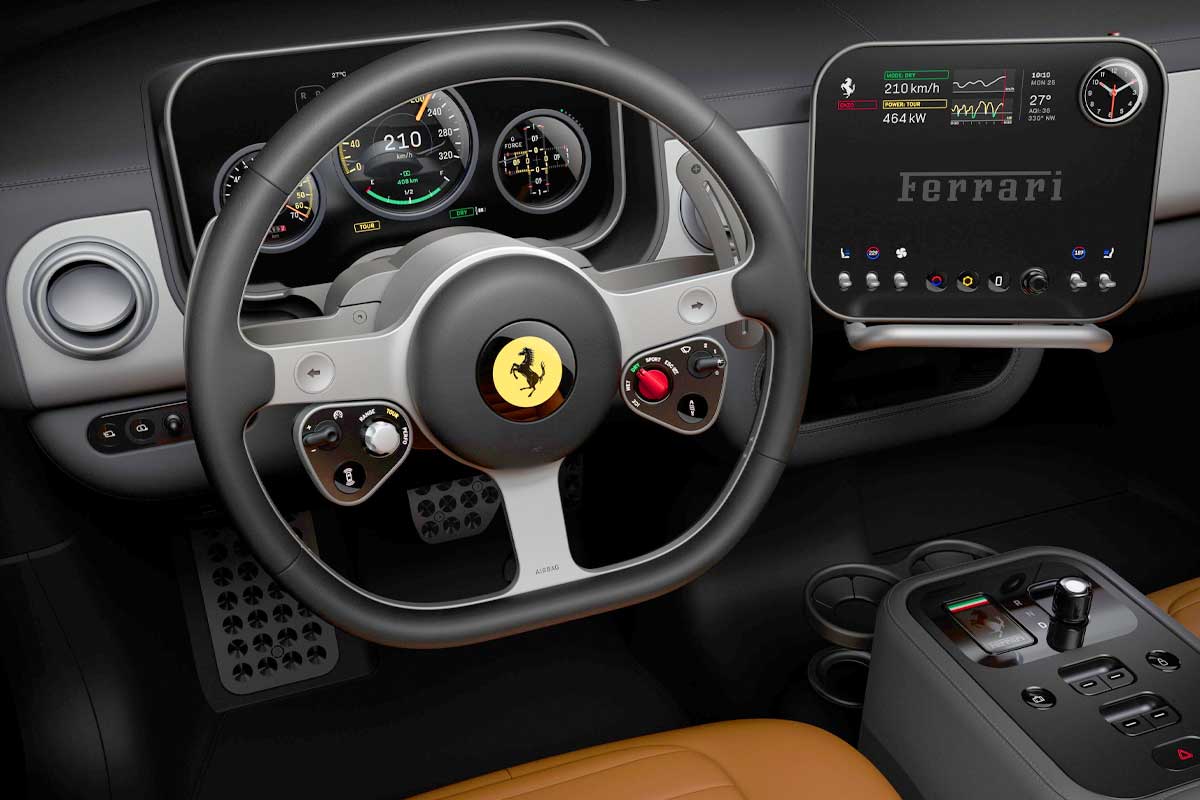
One of the central elements of the project was the design of the steering wheel. The designers studied two major references: the steering wheel of Formula 1 single-seaters and classic Ferrari three-spoke steering wheels. The result is a three-spoke steering wheel in anodized aluminum, designed to be both modern and deeply rooted in the brand's history. The whole philosophy of the project is based on a simple idea: make the design disappear to make room for the obvious. If an object is well designed," explain the designers, "it must seem almost natural, as if it had never been designed.
A more physical relationship between driver and car
Rather than creating an entirely tactile interface, the team wanted to maintain a physical, tactile relationship with the car.
In the Ferrari Luce, many important functions remain accessible via mechanical controls. The air-conditioning, for example, features dedicated physical buttons for quick adjustment of temperature, fan speed and seat ventilation without taking your eyes off the road.
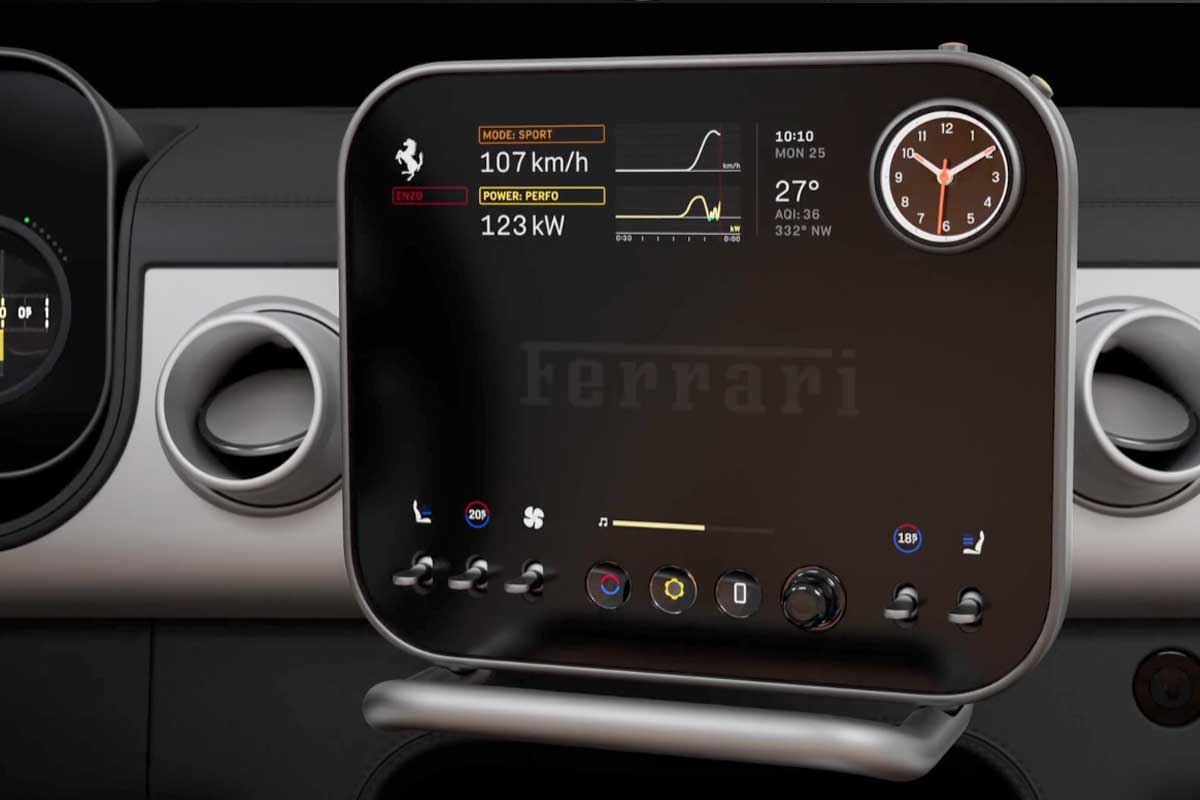
Ferrari calls it an «articulated control panel», combining digital screen and physical controls. The touchscreen remains present for certain functions such as navigation, media or more advanced settings, but it is not central to the driving experience.
An electric Ferrari that promises an «almost illegal» experience»
The first tests of the car took place on the Balocco circuit with Ferrari test drivers and project teams. According to those who were able to try it out, the experience is hard to describe. Some even speak of an «almost illegal» sensation, given the car's performance, functionality and driving pleasure.
Ferrari's mission is clear: to prove that an electric car can retain the pleasure, emotion and simplicity of a Ferrari. And if Jony Ive is to be believed, the key may lie in resisting the temptation to turn the car into a gigantic tablet on wheels.

 English
  French
  Italian
  Spanish
  Portuguese
  German
  Japanese
  Turkish
  Dutch
Dutch