

In the early “80s, the Group B craze revolutionized world rallying. Audi and its Quattro system redefined rally car standards, followed by Lancia, Peugeot and Ford. A race for power that attracted many manufacturers, including Porsche, who gave it some thought: the Stuttgart firm developed a 911 SC/RS that won the European title in 1984, while paving the way for the 959, presented at the 1983 Frankfurt Motor Show under the name ”911 Gruppe B". And why not Ferrari?
The beginnings
The cars from Maranello have tried and often succeeded in their rally escapades. At the request of several Italian and French private customers, including the French importer Charles Pozzi, Michelotto developed in 1978 a Ferrari 308 Groupe 4, which won the Spanish Rally Championship and was a favourite of the Tour de France auto and the French Rally Championship with Jean-Claude Andruet.
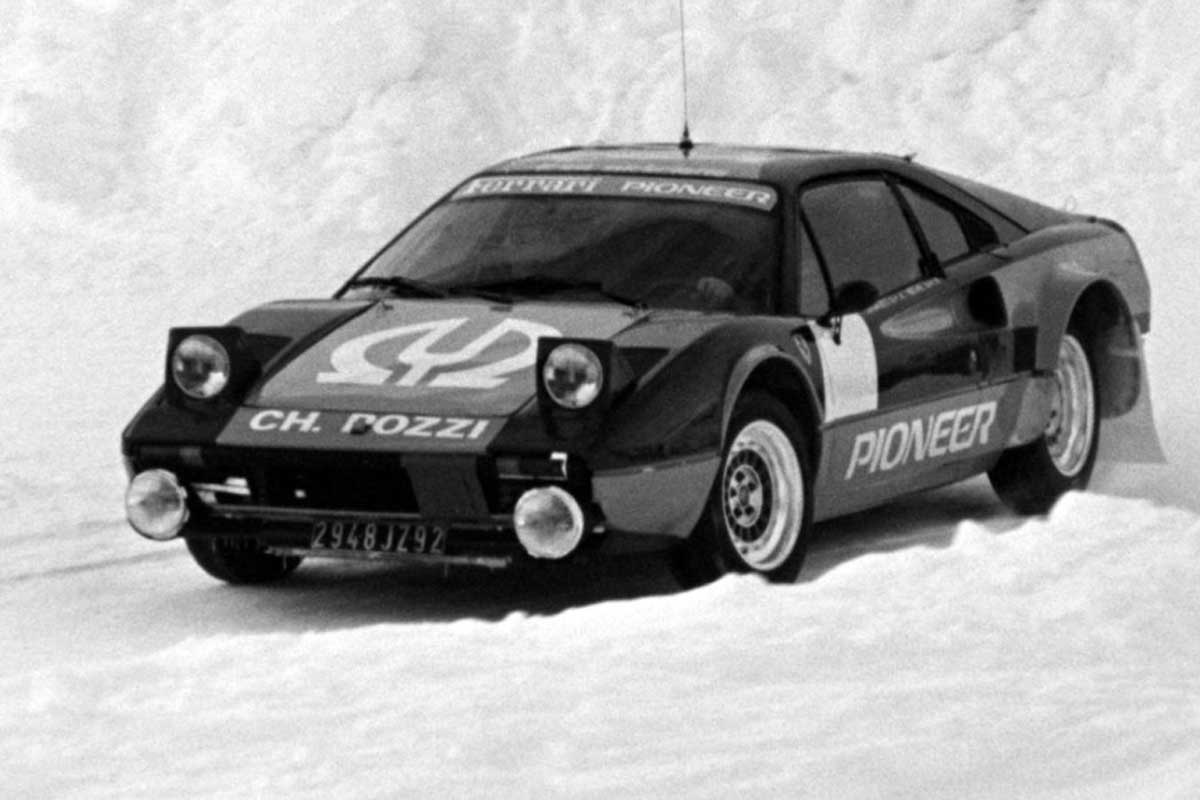
Impressed by the results of these private cars, Ferrari teamed up with Michelotto to build a more extreme Group B car, the 308 GT/M, with a composite body, towards the end of 1982. The first car wasn't ready until the spring of 1984, but Ferrari lost interest because it couldn't compete with the turbocharged, four-wheel-drive machines that dominated Group B rallying.
GTO, the return
Except that in 1984, Ferrari unveiled its new supercar, the 288 GTO, which resurrects the famous GTO for «Gran Turismo Omologato». It was the first production eight-cylinder Ferrari whose V8 was mounted longitudinally in the chassis, a configuration more suited to racing. In fact, the 288 GTO was designed for Group B, for performance on both track and road. Group B regulations appeal to Ferrari, which could therefore enter a powerful turbocharged car, a technology it has now mastered perfectly thanks to its F1 experience.
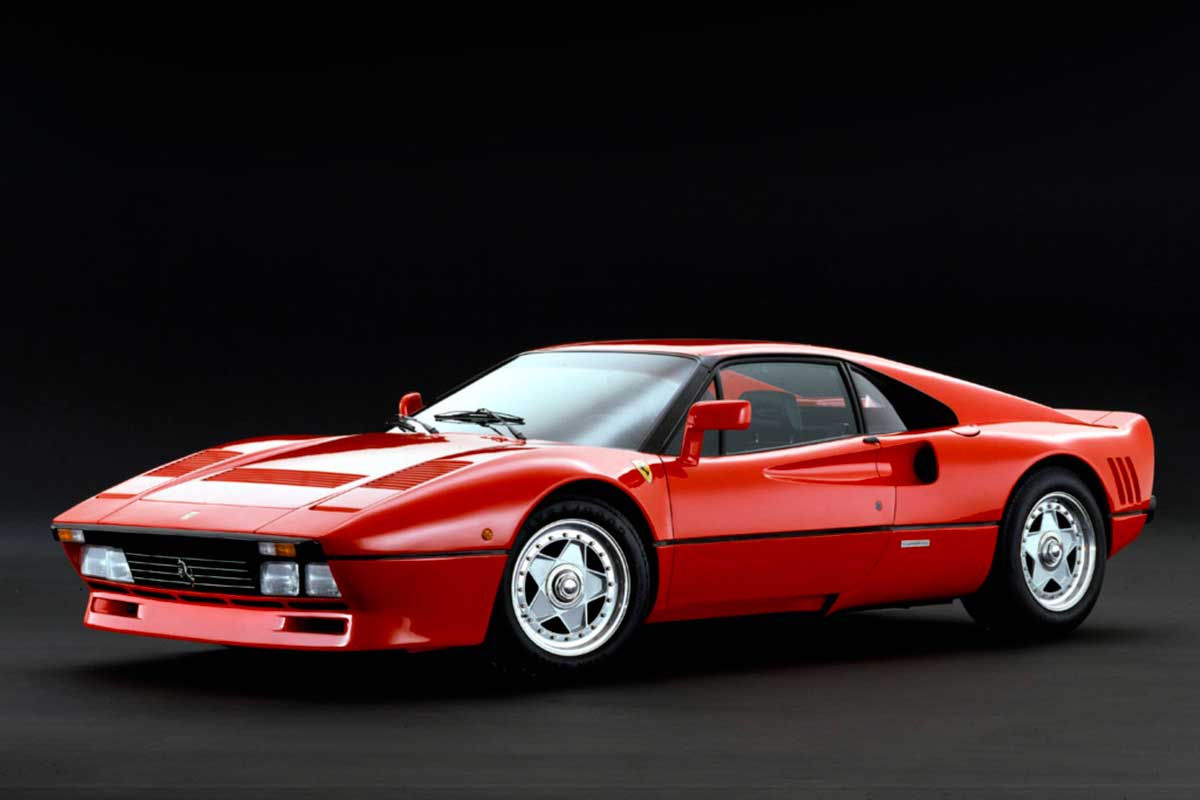
Homologation requires the production of a minimum of 200 road models in one year. This 288, designed by Pininfarina, is a genuine racing car disguised as a «stradale», with a tubular chassis covered by a fiberglass, Kevlar and carbon body, lightened weight, wider tracks and, above all, a fabulous 2.8-liter V8 powered by two IHI turbos rated at 400 hp. A first for a production Ferrari V8. Initially produced in 200 units, the 288 GTO was a resounding success, prompting Ferrari to extend production by a further 72 units.
Radical!
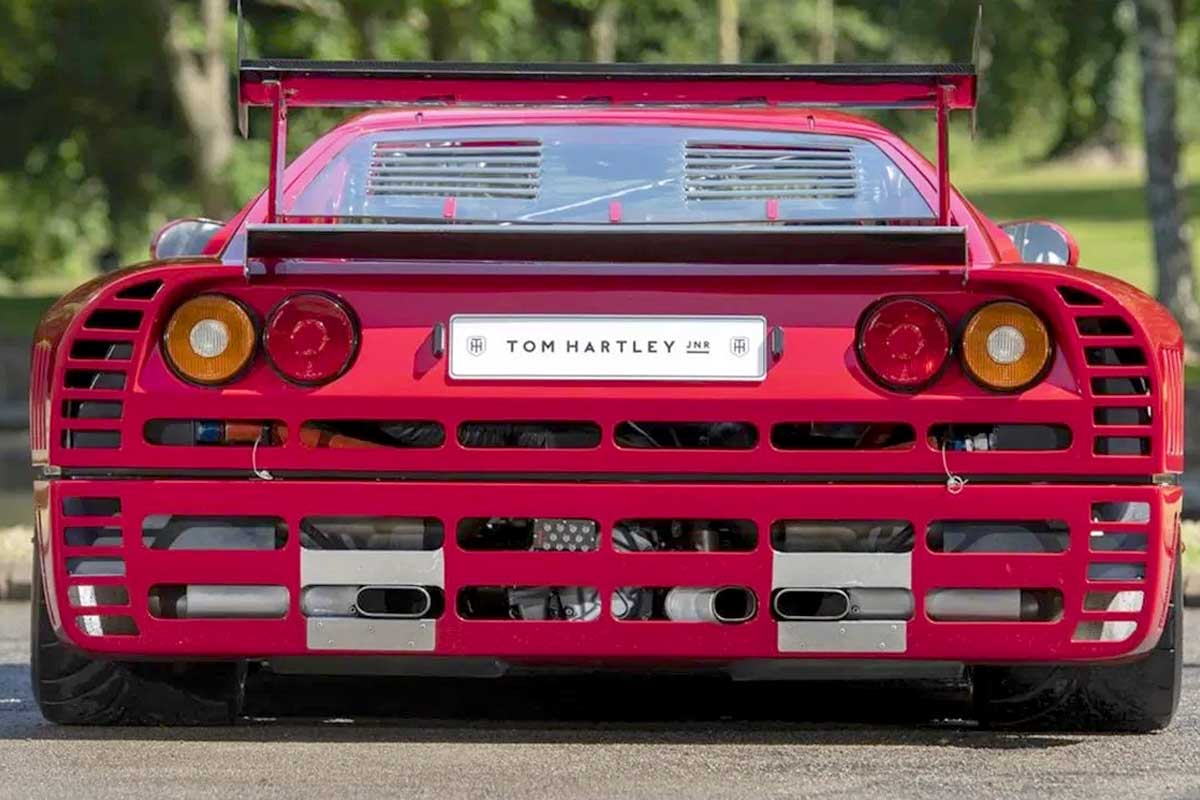
Ferrari is working on a racing version, from 1985, called «Evoluzione». Three teams shared the work on aerodynamics, chassis and engine. Lightened to 940 kilos through the use of fiberglass, Kevlar and carbon, the GTO Evo made no concessions to performance. Inspired by the 512 BB LM and the 308 GT/M, the design is beastly, with a huge rear spoiler, wickedly wide fenders and numerous aerodynamic appendages.
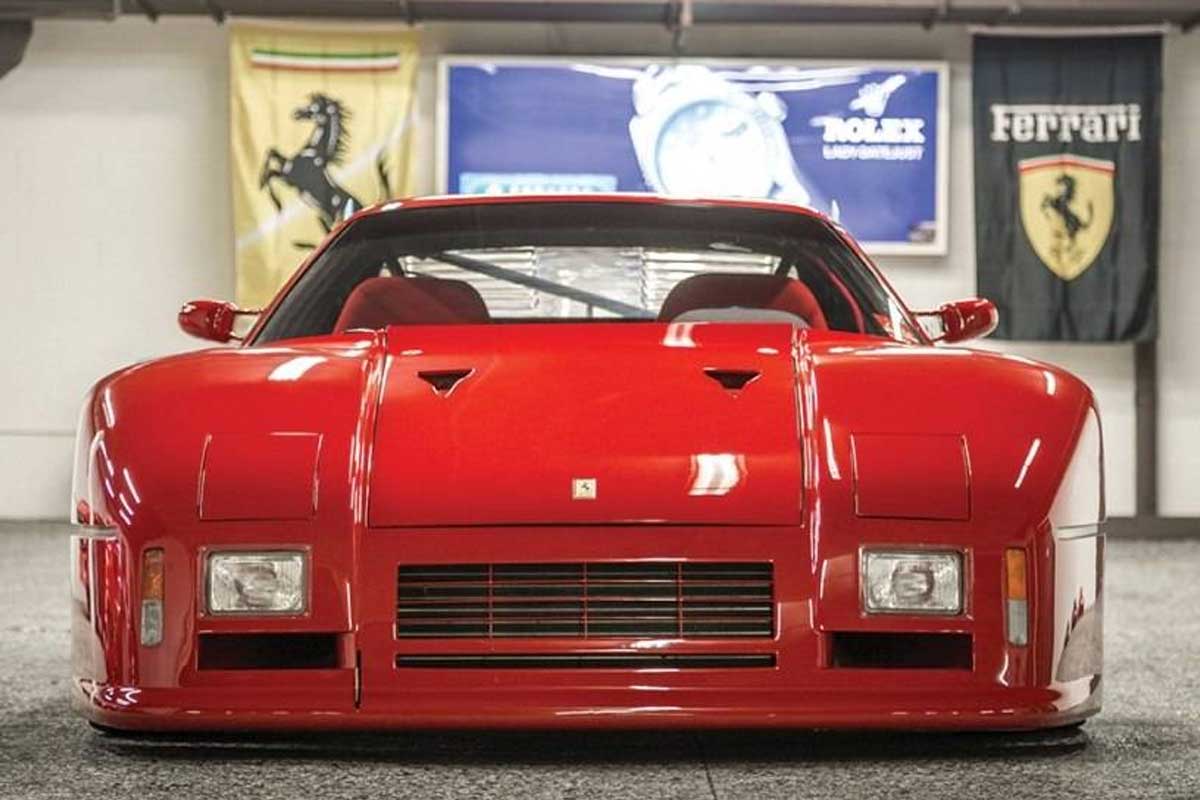
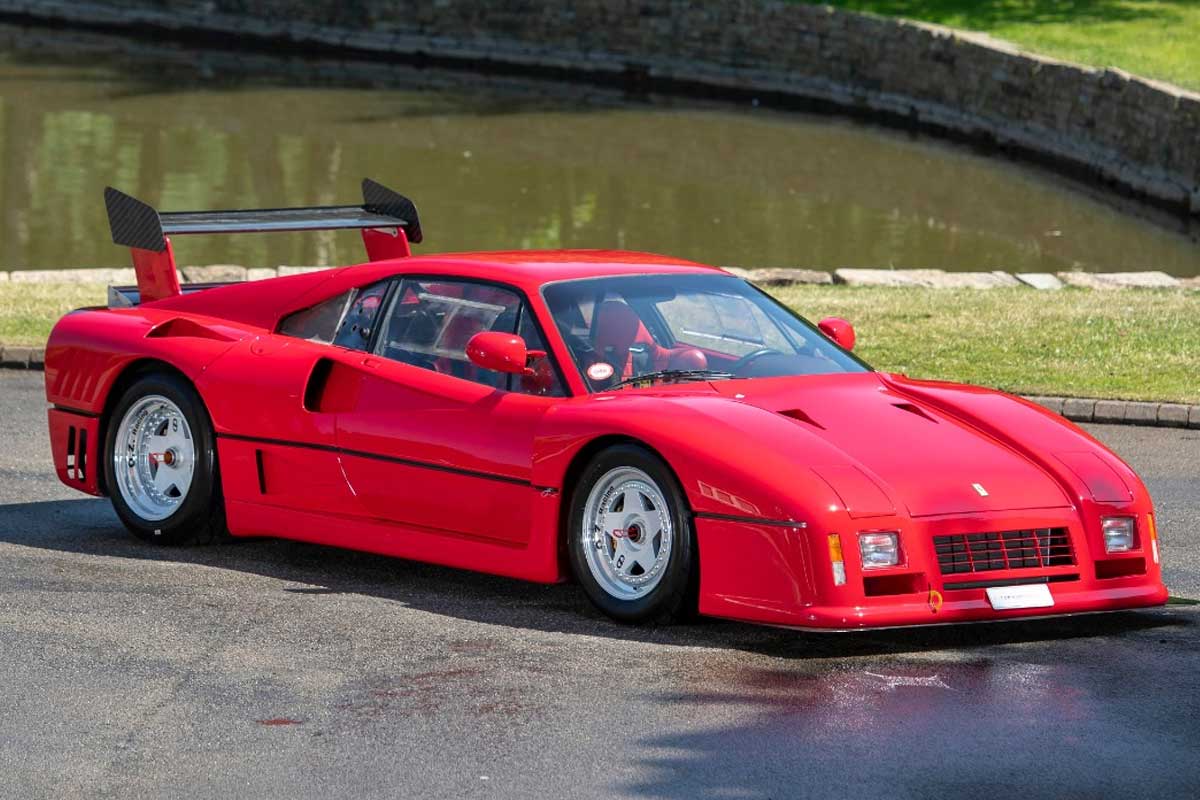
The lexan windows, NACA sockets and shark gills are already there, while the stern is riddled with openings designed to evacuate the engine's volcanic heat. The V8's displacement remains at 2.8 liters, the maximum allowed for turbos under Group B regulations (by applying the displacement coefficient of 1.4, i.e. a maximum of 4 liters allowed).
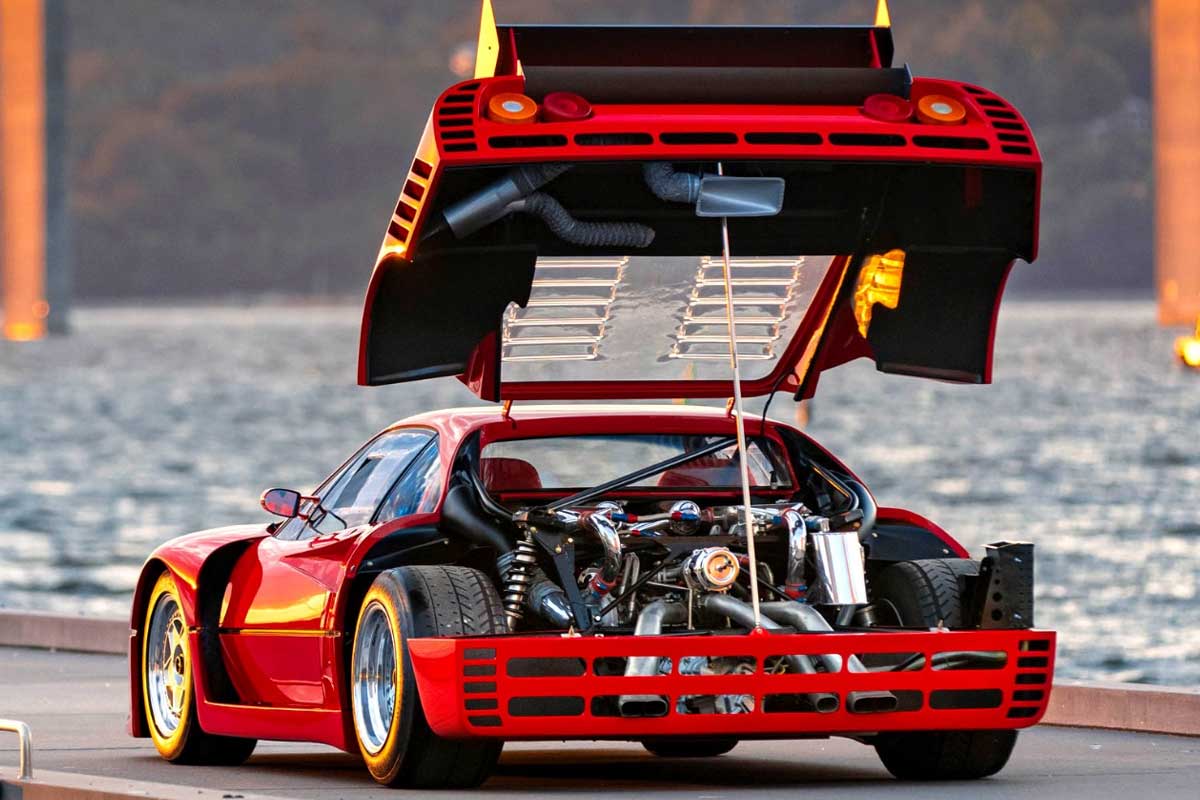
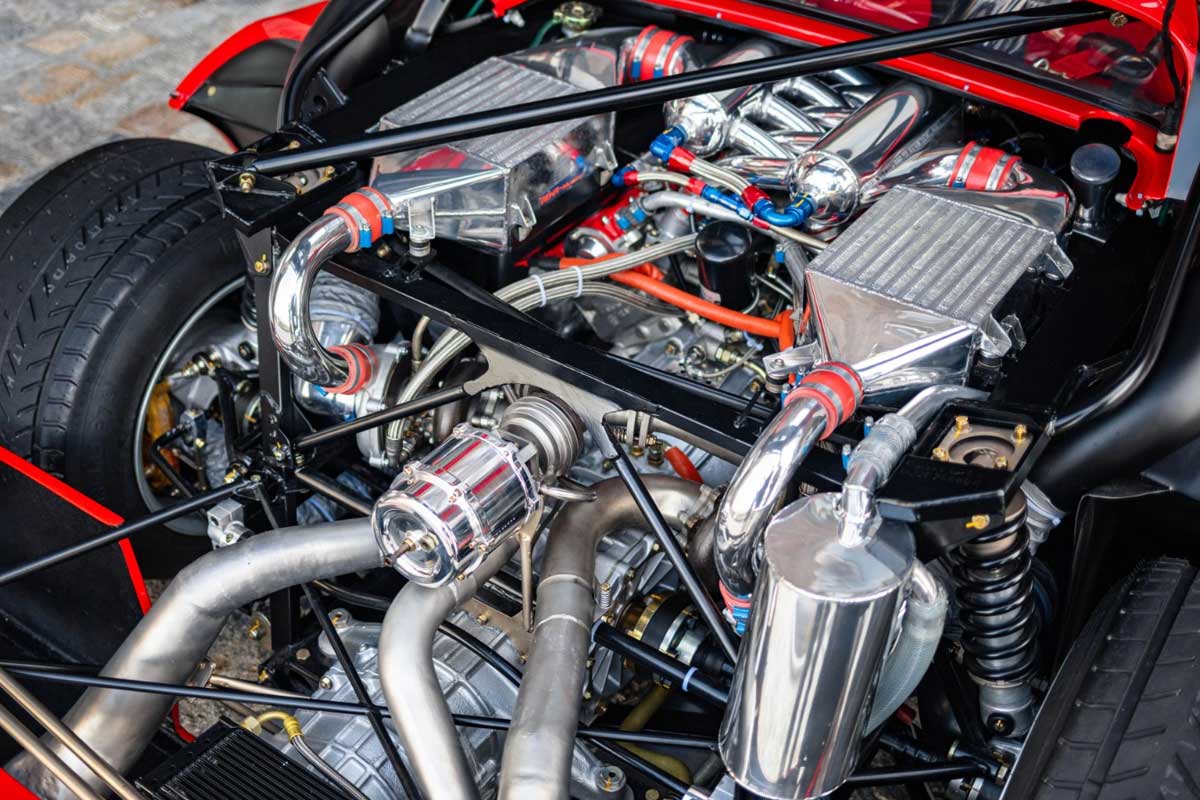
The basic GTO, with its 400 hp, already offered astonishing performance: 0 to 100 km/h in 4.9 seconds and a top speed of 320 km/h. The GTO Evoluzione engine is available in two versions, CK for track use and CR for rallying. The CK version boasts 650bhp and a 0-100km/h time of 4 seconds, a 0-200km/h time of 6 seconds, and a top speed of 369km/h! We'll let you imagine it on the roads of Corsica...
A destiny on the road
Initially, 20 racing models were to be produced. 5 had already been built when, in the wake of repeated accidents during the 1986 season, notably Toivonen's fatal accident in the Tour de Corse, the FIA legislated to ban the Group B category. The displacement conversion coefficient was modified, which meant that the Ferrari V8 was no longer within the limits. The 288 GTO Evoluzione never competed in a rally. Once the development work was completed, Ferrari sold several of the 288 GTO Evoluzione prototypes to its most important customers, including Jacques Swaters, Pierre Bardinon and the Sultan of Brunei.
However, as you may have noticed, this Ferrari is reminiscent of a supercar released the following year. Ferrari is not stopping there with the GTO Evoluzione on its hands: failing to file the WRC tracks, this GTO Evo could give an extreme sports car for the road.
This will be the famous F40, the iconic supercar, the last car to come out of Enzo Ferrari's lifetime, and the natural evolution of the bestial 288 GTO Evoluzione, some examples of which served as test prototypes. Behind these two monsters, the same genius in the person of engineer Nicola Materrazzi.

 English
  French
  Italian
  Spanish
  Portuguese
  German
  Japanese
  Turkish
  Dutch
Dutch