

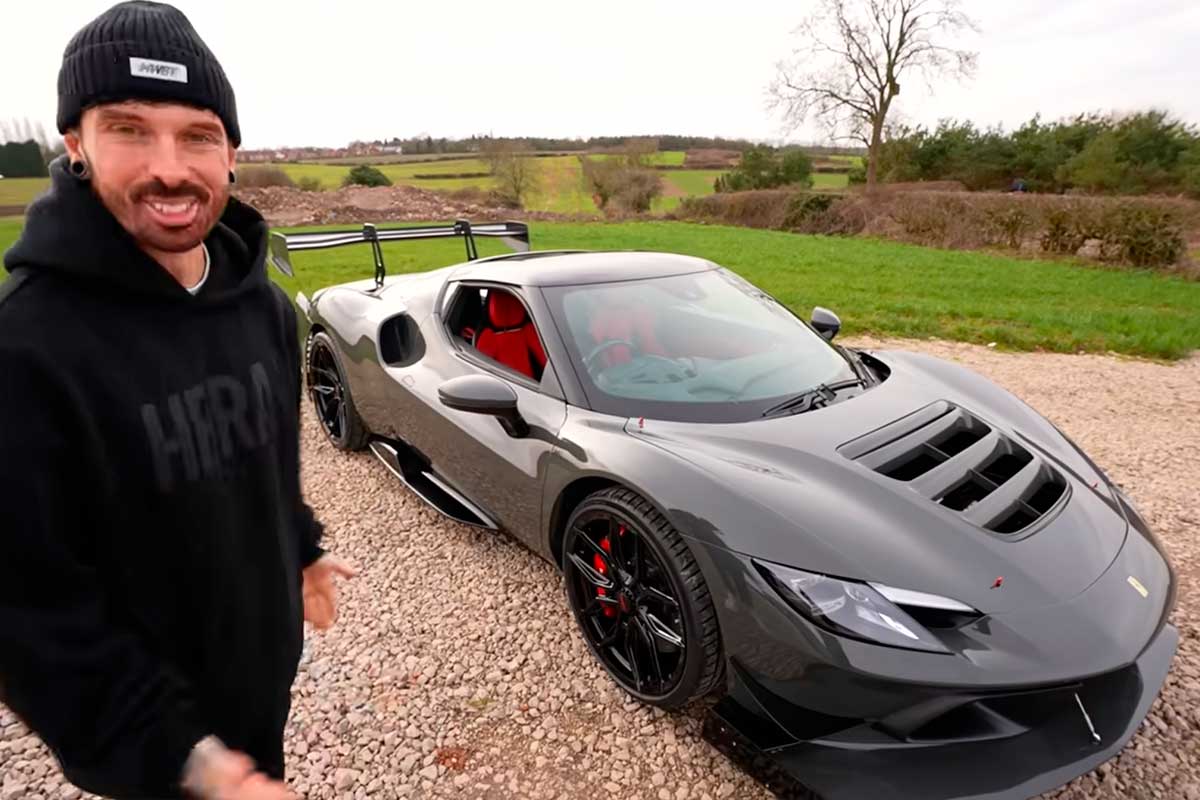
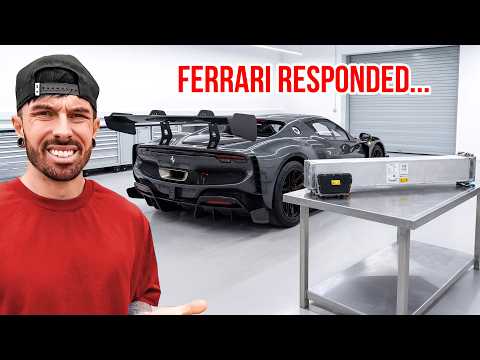
When Mat Armstrong published the previous episode of his rebuilt Ferrari 296 GTB in a road-going racing version, the story seemed to have reached a dead end. The car still wouldn't start, Ferrari refused to take it on as is, and the project looked more and more like a technical and financial abyss. This time, there's a turning point. The Italian brand has finally responded. Yes, it now agrees to intervene. But on one very clear condition: the car must be complete before it even enters the network.
And that's when things get complicated... again.
A Ferrari 296 still mute despite months of work
On paper, Mat Armstrong is not far off the mark. His Ferrari 296 GTB, bought heavily damaged, has already been rebuilt to impressive proportions. In the meantime, it has even changed its nature: instead of simply putting an 830 hp hybrid supercar back on the road, the British YouTubeur decided to make a totally unique example, dressed up in a Ferrari 296 Challenge kit, the racing version.
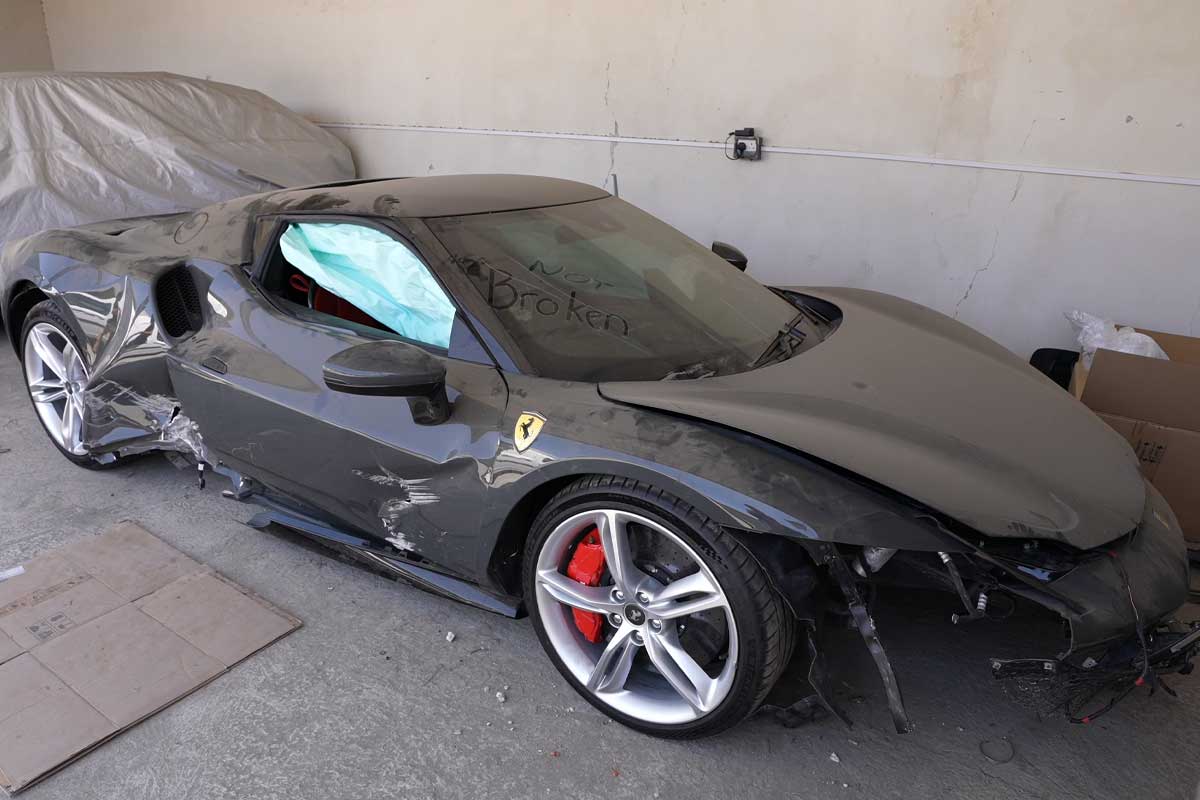

The problem is that a modern Ferrari isn't just a mechanic you reassemble to hear an engine come back to life. The 296 is an assembly of electronics, safety, high-voltage management and locked-down protocols. And despite all our efforts to date, the car still refuses to start.
In this new video, Mat returns with an obsession: before moving on, he wants to get that Ferrari up and running. Because as long as it's standing still, everything else is just a spectacular backdrop to an unsolved problem.
Ferrari finally responds... but doesn't want an unfinished car
The important news in this episode is that Ferrari has finally replied to his email. After refusing in the previous video, the manufacturer is now opening a door. But it's not an unconditional green light.
The message is simple: Ferrari can work on the car, provided it's complete. In other words, there's no question of bringing in a partially reassembled 296, with pending components, an unfinished air-conditioning system or a modified front end. The brand wants a finished car, or at least a fully reassembled one, ready to be checked and diagnosed under normal conditions.
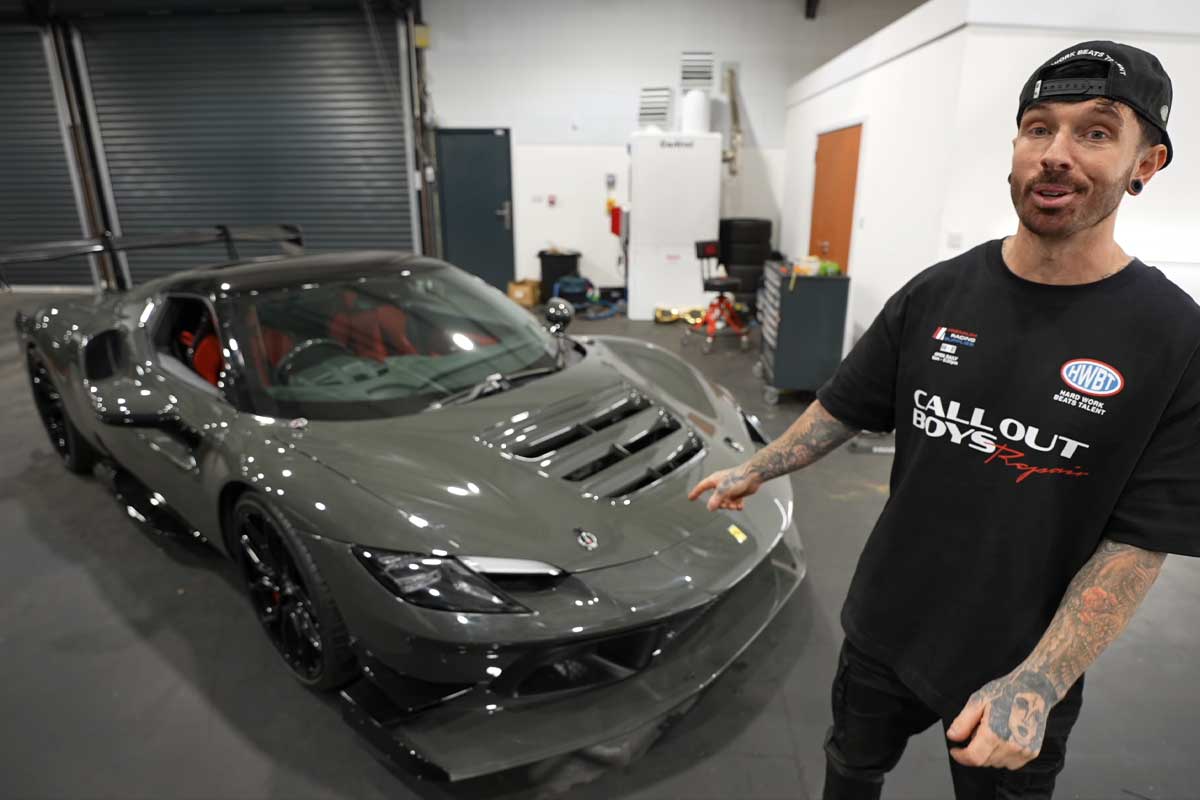
For Mat Armstrong, this changes everything. On the one hand, he is no longer totally excluded from the Ferrari network. On the other, he finds himself faced with a new mountain of work before he can even hope for concrete help. And he already knows that, even once the car has been taken to Ferrari, there's no guarantee of a simple or inexpensive intervention.
The €20,000 bet to try and wake her up
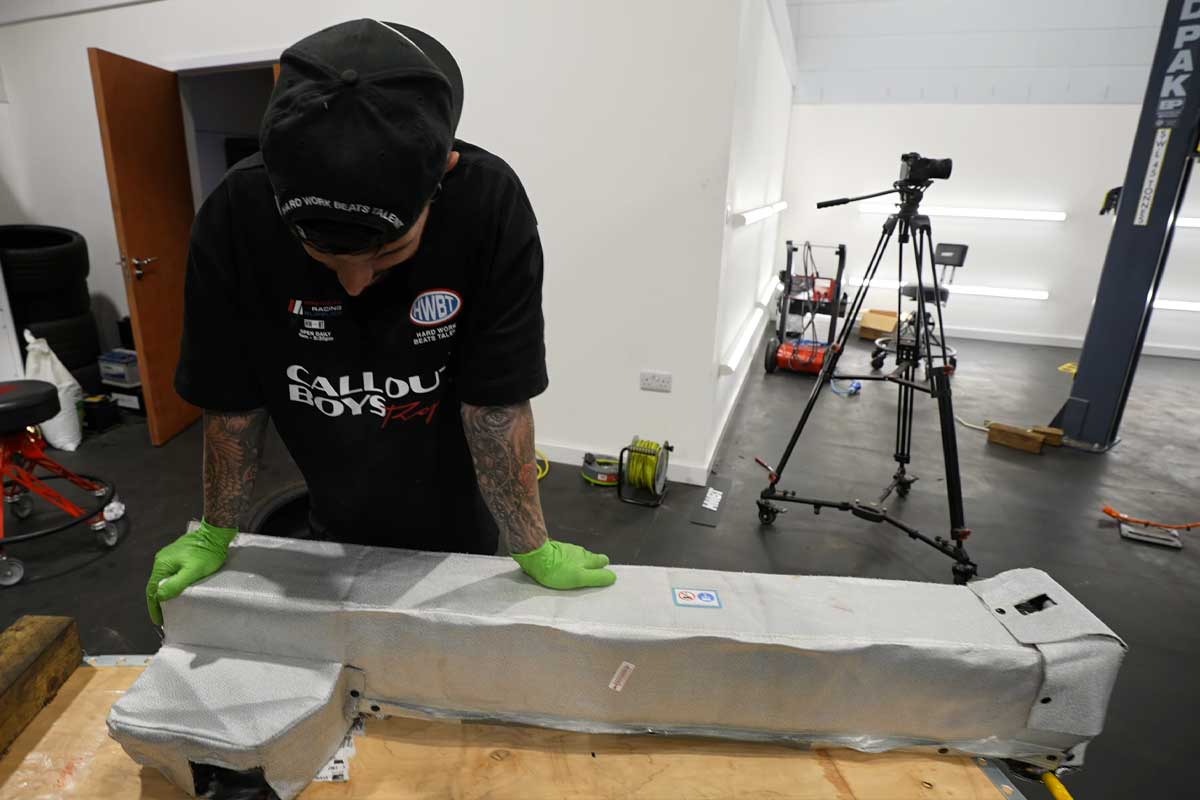
Mat soon returned to the hypothesis that had been obsessing him for some time: the hybrid motor battery. On the Ferrari 296, it plays a central role in starting up the vehicle. And according to Mat, after a major accident, it could simply become irreversibly unsafe, as had already been observed on his previous Lamborghini Revuleto in his workshop.
As a result, he decided to replace the high-voltage battery altogether. The cost: £18,000, or around €20,000. So the battery is removed, replaced and reconnected. Everything was put back in place, with the hope of a positive outcome at last. This is the moment when the project could have gone the other way.
When the 12 V battery is reconnected, the team knows it will be fixed immediately. If the warnings start flashing again, it's a bad sign. And that's exactly what happens...
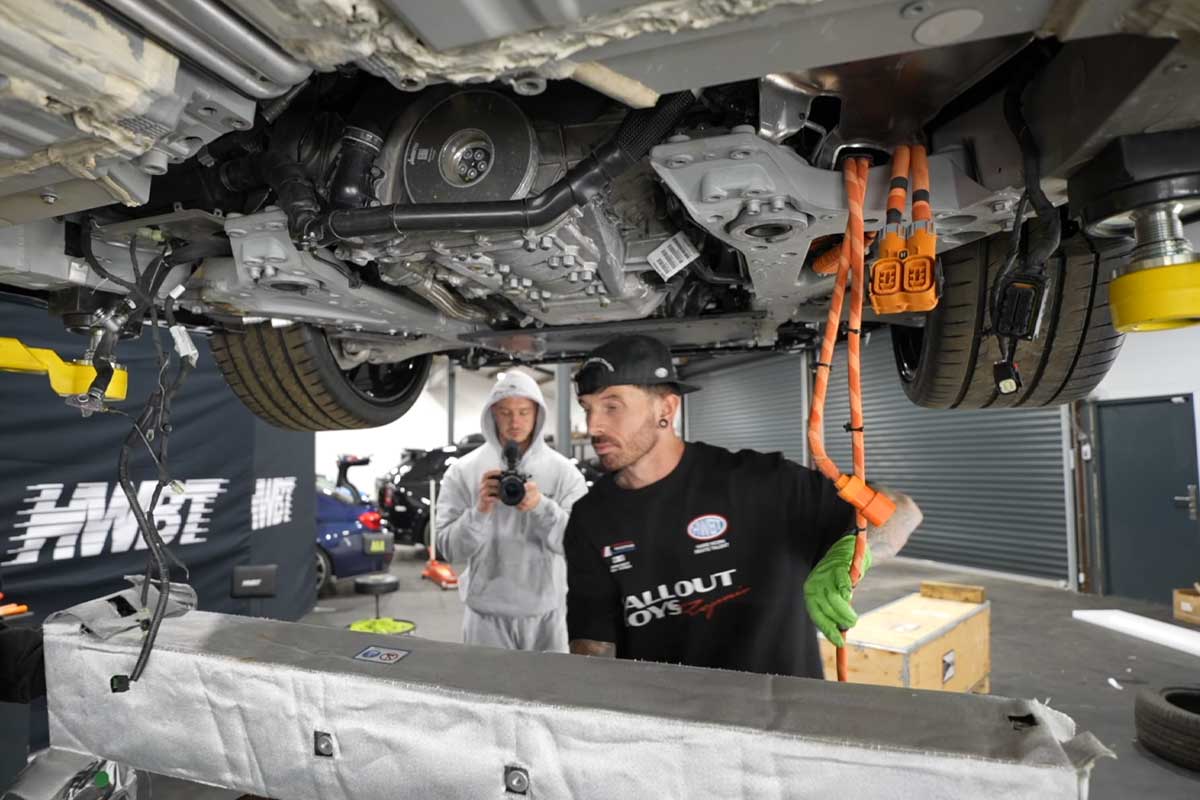
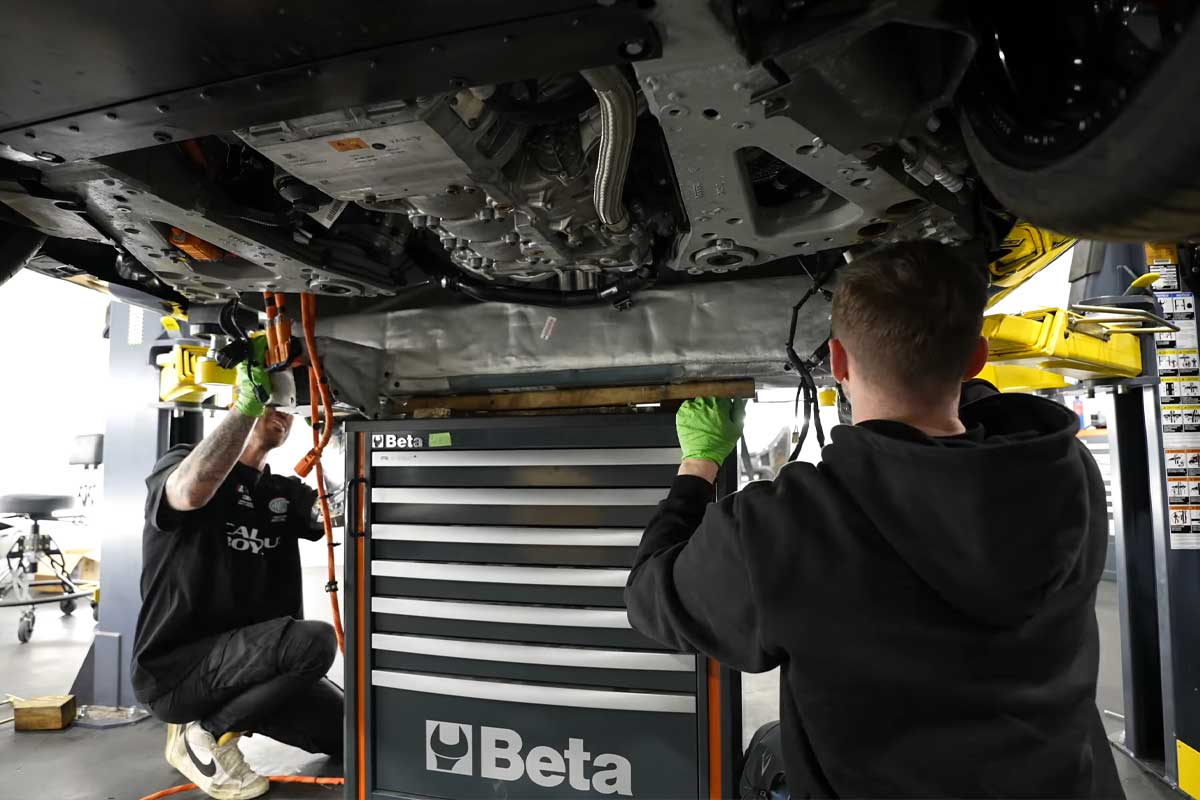
The message displayed changes, but the situation is not resolved. The Ferrari now reports a risk of “battery thermal runaway”, with a message to stop the vehicle immediately and evacuate it. Except that the vehicle doesn't run, still won't start, and doesn't really seem to be catching fire. As for the dashboard, it starts to come alive a little more than before. The ignition finally starts, but it's impossible to complete the procedure.
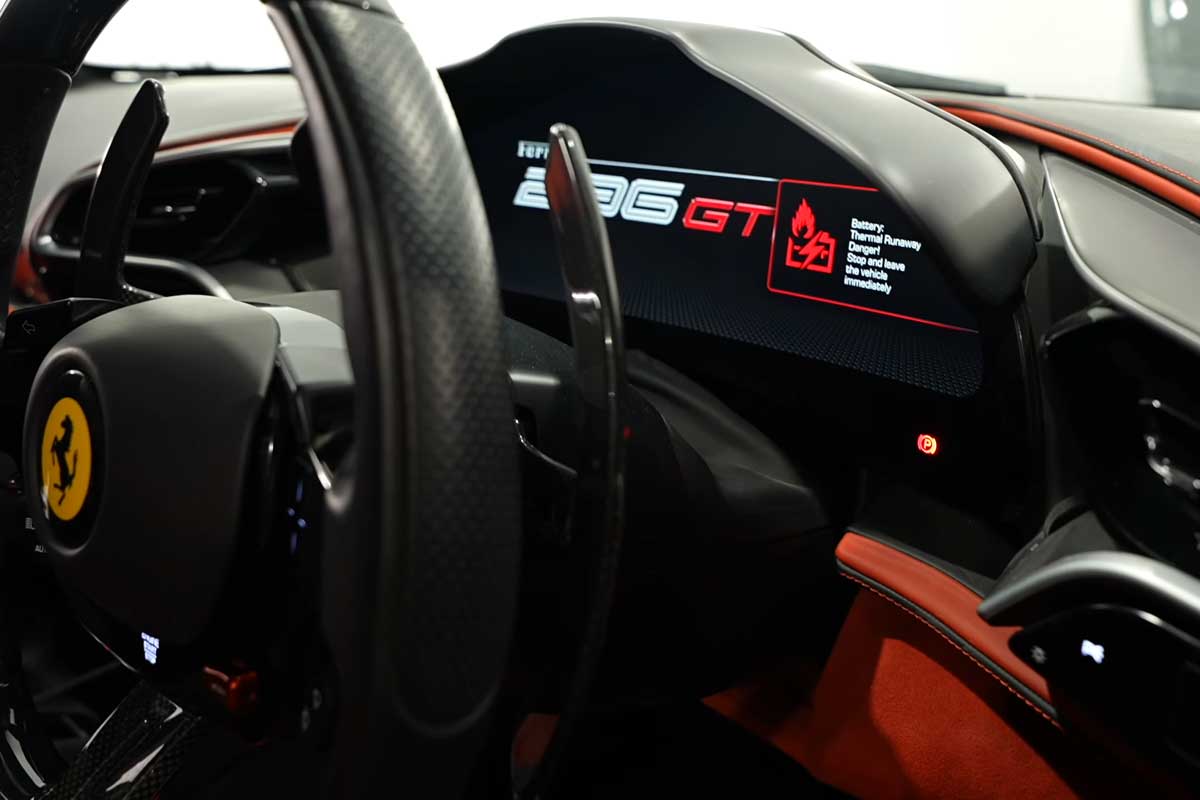
It's progress, but frustrating progress. The 296 remains unable to start. The diagnostic tool then identifies several battery-related faults, particularly around the temperature sensors. The team checks the wiring and connections, but nothing obvious comes up. It all comes down to the same conclusion: without the right Ferrari tool, it's extremely difficult to go any further.
The real lock is no longer mechanical, it's software
This is probably the most revealing part of this rebuild. On a recent Ferrari, especially a hybrid, the difficulty is no longer just replacing parts or repairing damage. The real lock is access to the electronic system.
Mat and his technician have reached a point where they suspect that a trip to the manufacturer's tool has become unavoidable. In other words, even if they've bought a new battery for £18,000, even if they've replaced or repaired a multitude of components, even if they've managed to eliminate certain faults, the car remains dependent on a validation that only Ferrari really masters.
In theory, the door is ajar. Ferrari is now willing to take a look at the car. In practice, Mat Armstrong is already dreading what awaits him if the 296 ever arrives at the dealership complete. Because once there, Ferrari may very well consider that certain repairs carried out outside the procedure are not acceptable. A connector repaired by hand? The entire wiring harness may have to be replaced. A component deemed non-compliant? You might have to go back to an original solution. And on a car of this level, every decision can make the bill explode.
In the meantime, Mat Armstrong's Ferrari 296 remains what it has been for several weeks: probably one of the most unlikely 296s of the moment. A GTB rescued after a major crash, transformed with 296 Challenge parts, rebuilt through sheer determination, but still unable to take to the road.
 English
  French
  Italian
  Spanish
  Portuguese
  German
  Japanese
  Turkish
  Dutch
Dutch