

The disappearance of the World Sport Prototype Championship at the end of 1992 marked the end of the Group C category, in which Alfa Romeo had almost participated by developing the SE048 SPwhich we recently reported on. While the sport-prototype category is in decline, GT racing, on the other hand, is enjoying a renaissance. The BPR championship was founded in 1994 by Patrick Peter and Stéphane Ratel to revive GT racing without blowing costs. Originally aimed at gentlemen-drivers, the championship - the forerunner of today's SRO-regulated competitions - became a popular medium for supercar manufacturers to promote their models.
Ferrari had developed GTE and LM versions of the F40, and several of these competed in the BPR against the eternal armada of Porsche 911s, Venturis, Jaguars and above all the new McLaren F1s. The latter, in its LM version, caused a sensation by winning the 1995 24 Hours of Le Mans, right under the protos' noses. It was a sign that the future of endurance racing lay in supercars!
The F50: Ferrari enters a new era
What if the F40, now a little dated, found its worthy heir in competition? Introduced in 1995, the Ferrari F50 represents an enormous technological leap forward. Conceived as a true "Formula 1 for the road", it is based on a monocoque in carbon/kevlar composite materials. The engine also carries F1 DNA, since the F130B V12, re-bored to 4.7 liters and rated at 520 hp, is directly derived from the Tipo 36 engine that powered Alain Prost and Nigel Mansell's 640 F1 single-seaters in 1990! The engine-gearbox assembly, directly attached to the hull, and the electronically-controlled suspension, attached to the gearbox, are solutions derived directly from racing and totally unprecedented at the time on a road-going supercar.
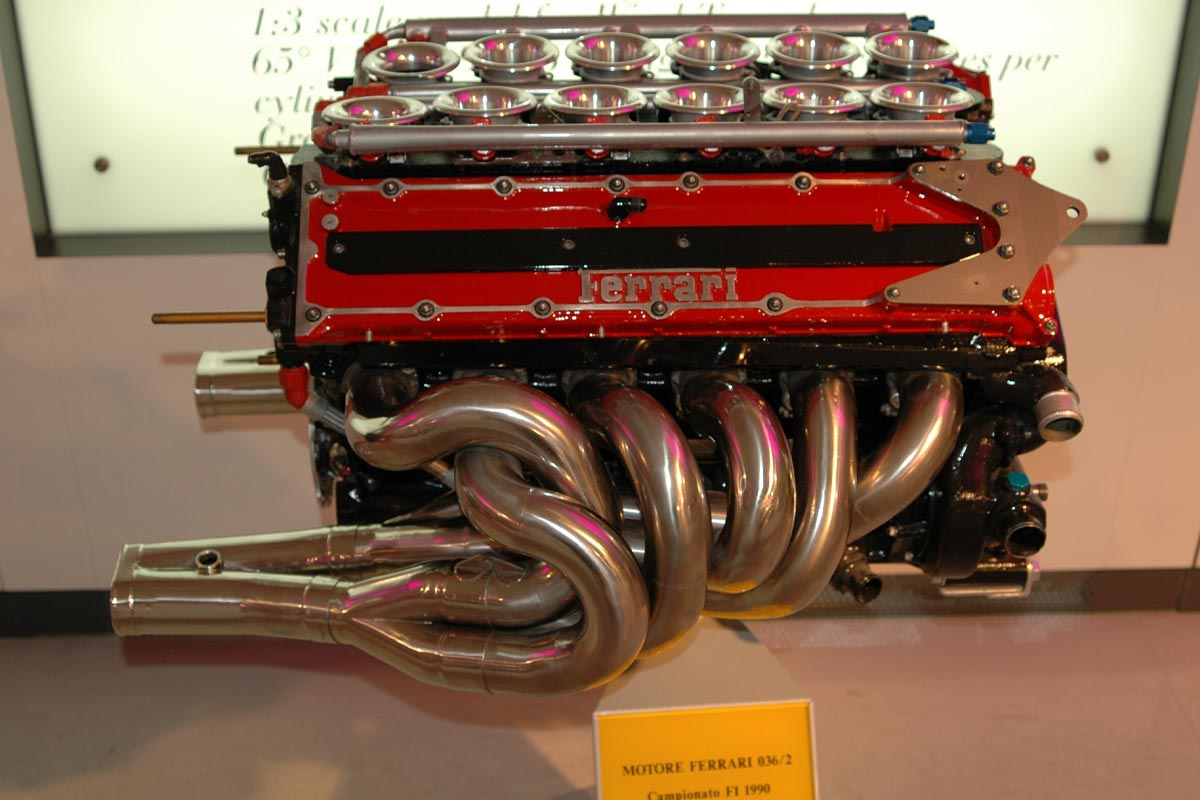
The F50 race car also relies on another formidable base: the Ferrari 333Sp, a prototype developed by Dallara, which reintroduced Ferrari to sport-prototype racing from 1994 onwards. The 333Sp met with some success, first in IMSA, then in Europe in the late '90s. The carbon monocoque and suspension of this prototype, which also uses the Ferrari F1 V12 (in a 4.0-liter version known as the F130E), were carried over to the development of the F50 GT. Ferrari enlisted the services of Dallara and Michelotto, a company which, if you can believe it, was responsible for the production of the Lancia Stratos, Ferrari 308 Rallye Group 4 and the 333 Sp!
Highly sharpened and at the cutting edge of technology
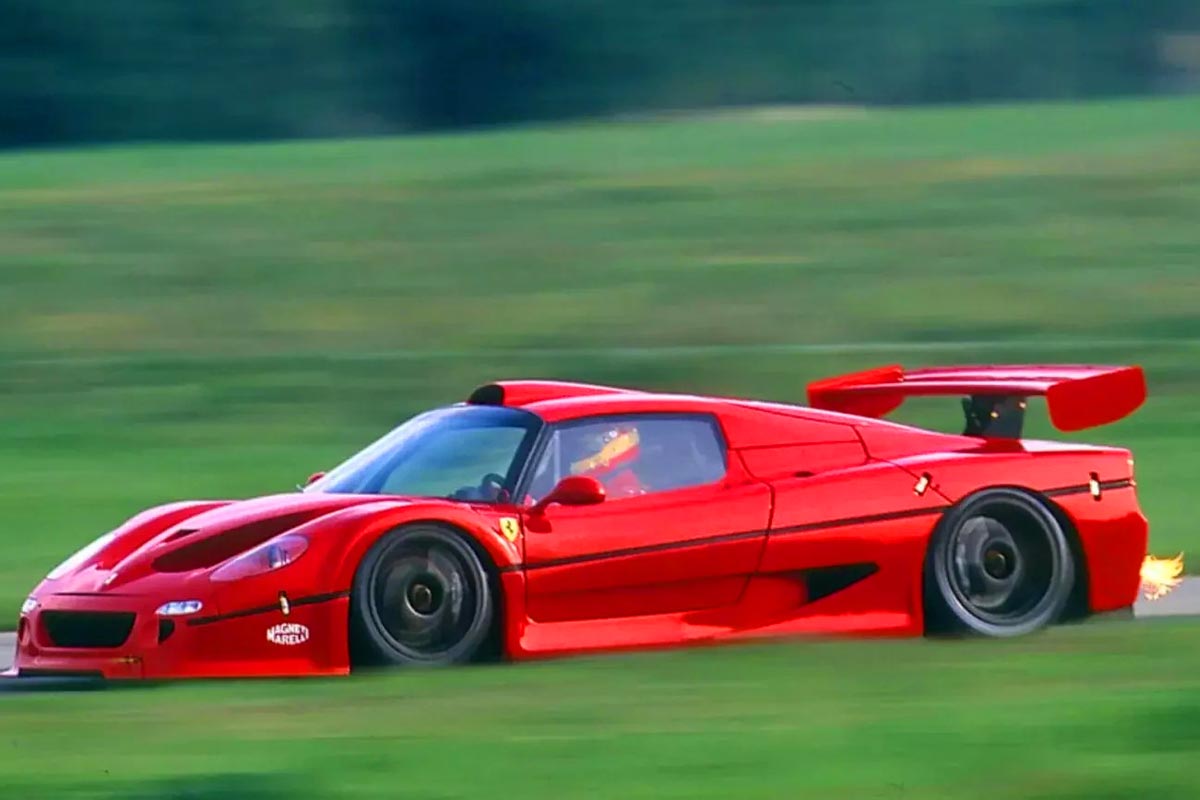
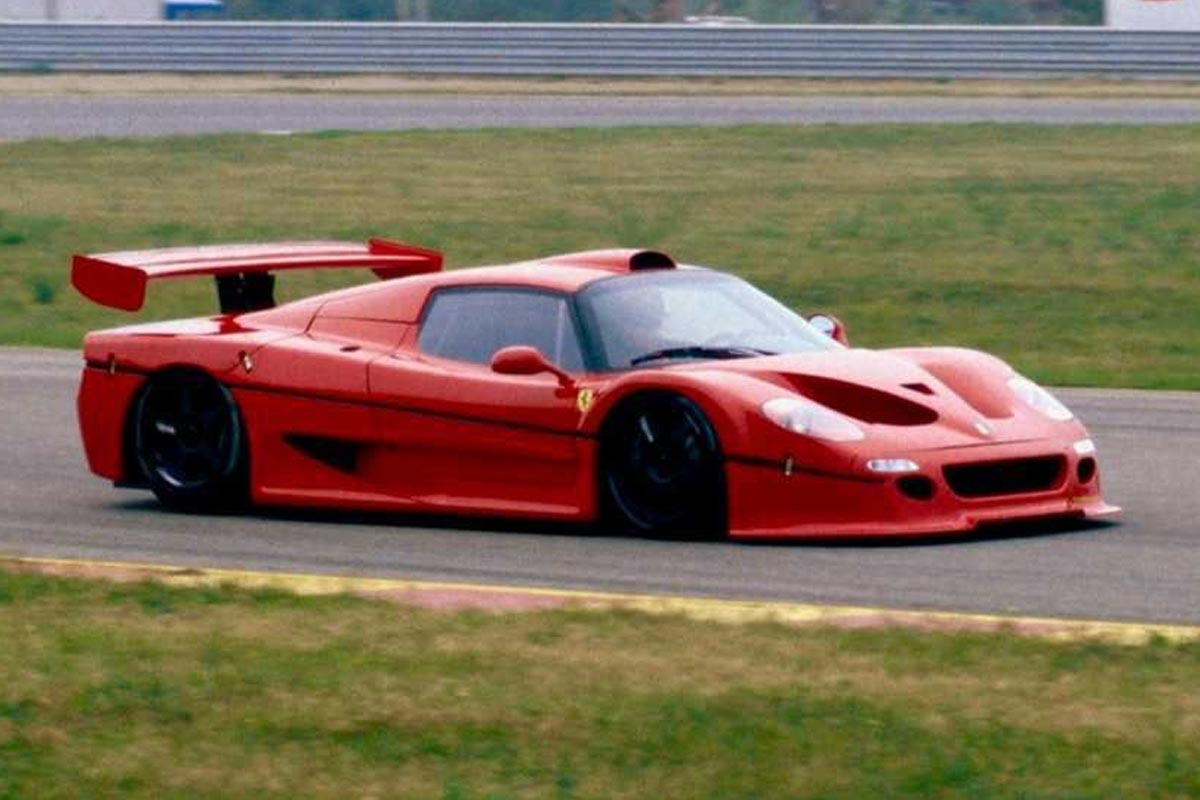
Weighing in at just 860 kilos unladen (compared with 1,230 for the production version), the F50 GT uses the same composite monocoque chassis as the production version, with Kevlar, nomex and carbon fibre. The F50 GT no longer even has a starter, replaced by an external starting system like in F1. The car has also undergone significant aerodynamic changes, featuring a larger, adjustable rear spoiler, a revised front spoiler, a wide diffuser and a fixed roof topped by a large air intake to cool the beast lurking behind the cockpit. Suspension is fully adjustable, the clutch is carbon fiber, as are the brakes, with 6-piston calipers and 380 mm-diameter discs.
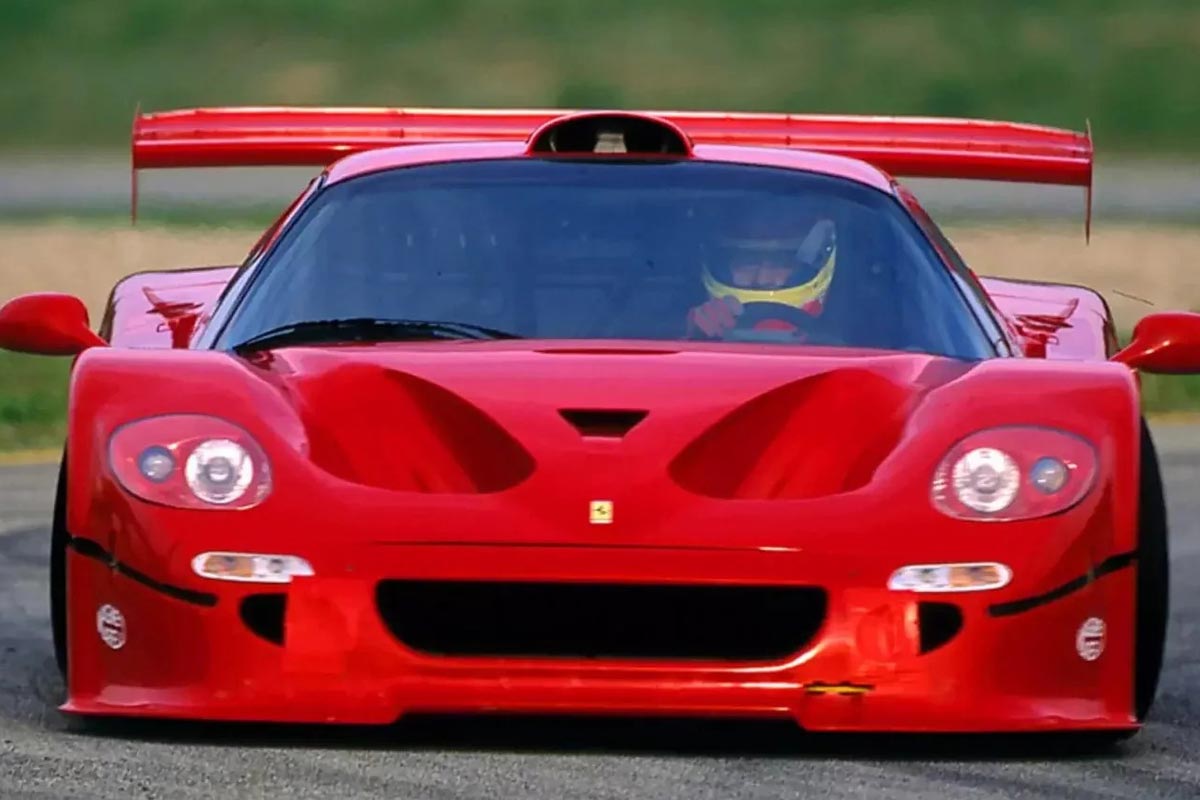
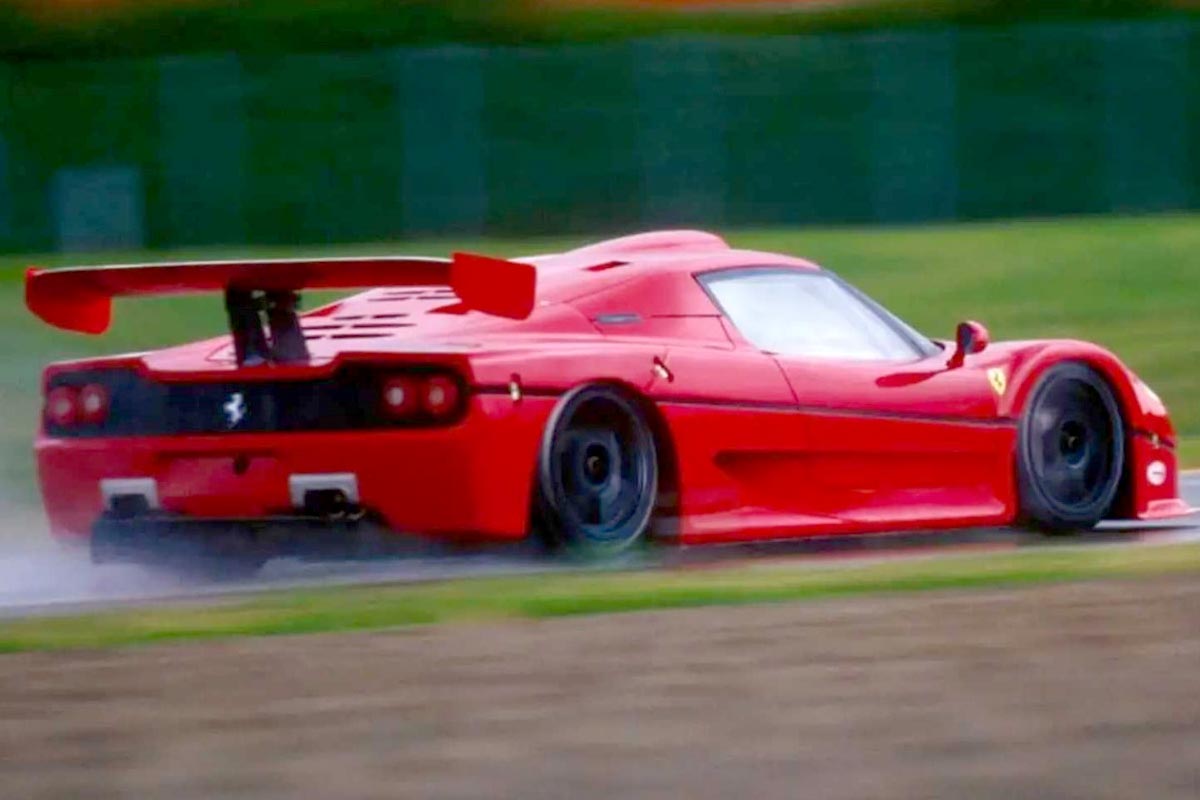
The gearbox is 6-speed sequential, but without the semi-automatic paddle-shift system which Ferrari pioneered in F1 from 1989 onwards. As for the V12, positioned longitudinally, with a 65° angle and dry sump lubrication, it retains its 60-valve cylinder head and features Magnetti Marelli Competition management. This engine screams up to 10,500 rpm for maximum power of 750 hp and 529 Nm of torque at 7,500 rpm. Wow!
Testing was entrusted to Nicola Larini, Scuderia test driver and Biscione hero, who had led the 155 V6 to DTM triumph. The tests took place at Fiorano, and immediately showed promising performance: the F50 GT was faster than the 333sp, with a 0 to 100 time of 2.9 seconds and a theoretical top speed of 376 km/h (impossible to reach at Fiorano!). Official lap times remain confidential, however.
Ferrari slams the door at the last minute
But it was all to no avail. Ferrari remained in the spirit of the BPR, with a production car that could be transformed into a racing car. But the political situation suddenly changed. Growing interest from manufacturers prompted the FIA to take the reins of the BPR, which became the FIA-GT championship in 1997. The overall picture was promising, with technical regulations giving free rein to engineers' creativity, a production run of just 25 road models for homologation, and TV coverage provided by Eurosport, which should guarantee interesting economic spin-offs.
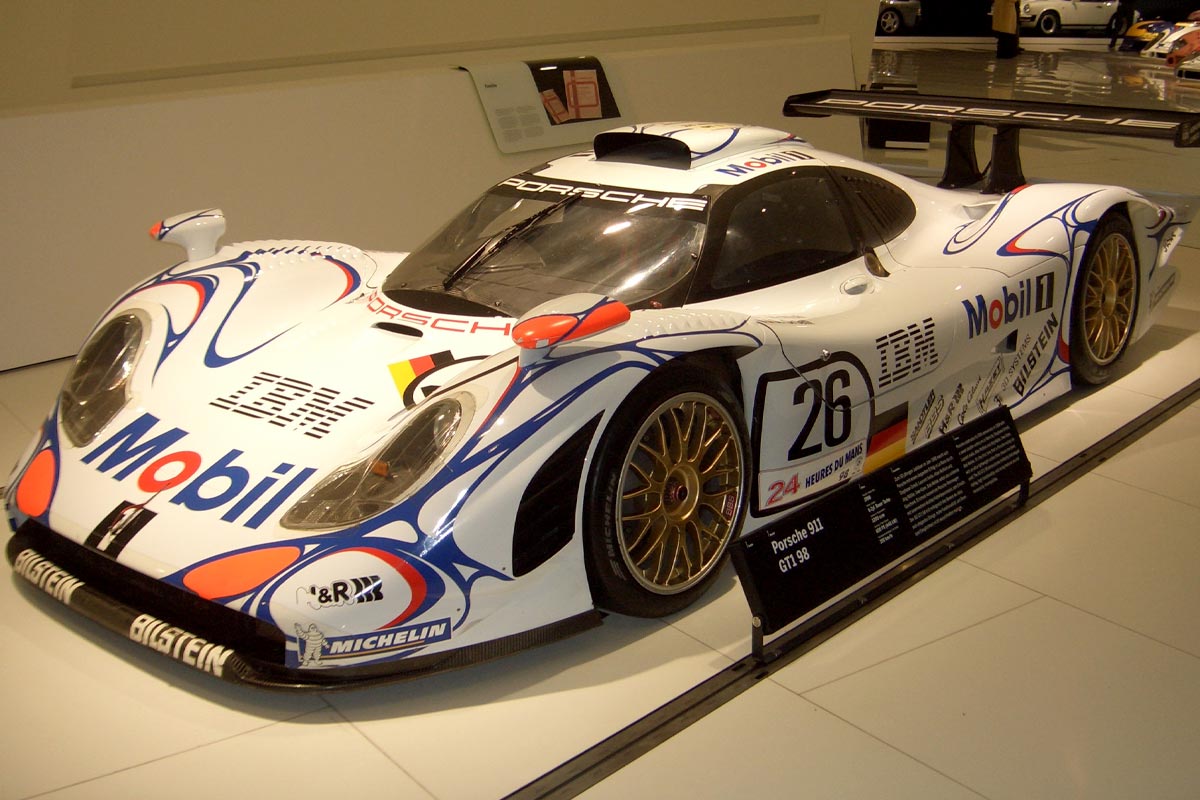
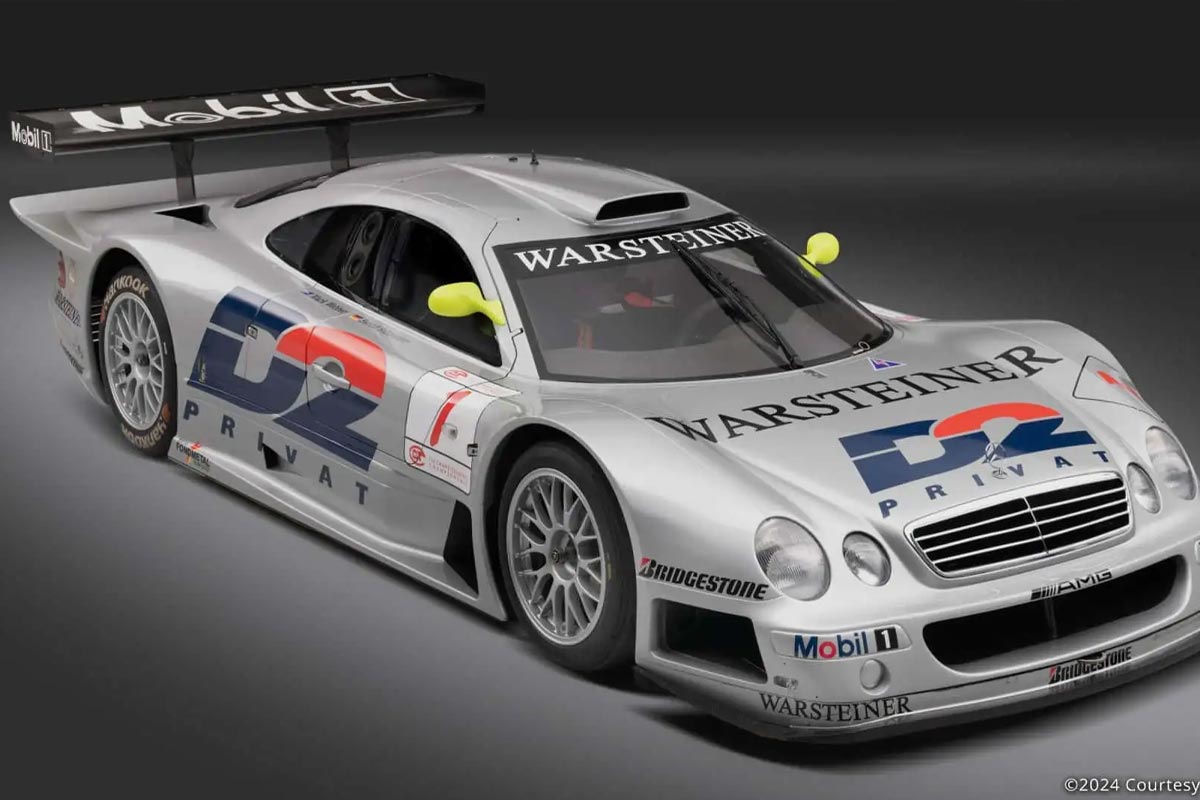
But unlike Ferrari, Porsche and Mercedes have chosen to extrapolate the regulations to the limit, exploiting the loopholes of a rather permissive legislation. They developed GT1s that looked more like prototypes in disguise than real GTs. The road version, with a few adjustments, is homologated to stay within the regulations. Porsche arrives with a "911 GT1" that has nothing in common with the production 911, except for the headlights, and offers a "Strassenversion" GT1 in pure form. Mercedes, which joined the series after the demise of the DTM/ITC, enters a brand-new car, the CLK-GTR, which has nothing to do with the production CLK, and is also offered by the star in a road version of 20 units. The promise of an arms race!
Ferrari felt that the spirit of GT was being betrayed by the Germans. Maranello protested to the FIA, going so far as to request a ban on the 911 GT1, but without success. This regulatory "dispute" was used as a pretext to cancel the F50 GT project, especially as Ferrari preferred to give priority to F1. Ferrari has invested heavily in the transition to V10 regulations. Jean Todt has put together a veritable "dream team" of engineers, structured around Michael Schumacher, recruited from 1996 onwards to win back the world title. As in 1973, when FIAT ordered Ferrari to put an end to Endurance racing to focus on F1, Di Montezemolo does not want Ferrari to disperse its forces. Other hypotheses suggest that Ecclestone used his influence to prevent Ferrari from joining the FIA-GT, for fear that this championship might overshadow F1. It is well known that "Bernie" had already worked to weaken Group C previously... Others simply think that Ferrari, aware of the intrinsic superiority that Porsche and Mercedes would enjoy with their disguised protos, would have preferred to spare itself a possible sporting failure.
The initial plan was to build six cars. Two were already confirmed with Scandia Racing, two with Ferrari Club Italia and one with MOMO Corsa. In the end, only 3 of the F50 GT were completed: the development model and two others, which were sold to private individuals in return for a promise never to enter them in any competition. The other three chassis were destroyed. Nevertheless, following the demise of the FIA-GT1 after just two seasons, having become too expensive and finally deserted by the manufacturers, Ferrari did return to GT racing. First through private teams, which entered the 550 Maranello designed with Prodrive in the early 2000s, then through semi-private partnerships with varying degrees of official backing, such as AF Corse. The F360 Modena paved the way for success, which continued with the F430, 488 and 296 GTB. For over twenty years, they have won countless titles and victories all over the world.

 English
  French
  Italian
  Spanish
  Portuguese
  German
  Japanese
  Turkish
  Dutch
Dutch
This one made me dream. We'll never know the real performance because Ferrari avoided confrontation.
It is also virtually the most expensive Ferrari of all time, with an offer of $100 million made at the last Peeble Beach and turned down by its owner - see related article of September 5, 2025.
Not bad for a car that has never raced, but has been and still is a vehicle of fantasy.
A bit like a certain Mercedes 300 SLR Ulhenlaut sold by Mercedes to a wealthy and obstinate collector for the modest sum of 135 M$.