
In 1976, Tyrrell caused a sensation with the P34 designed by Derek Gardner: the single-seater had 6 wheels, including 4 small ones at the front. This daring solution was designed to increase the surface area in contact with the ground, and therefore grip, while reducing drag. The podiums achieved at the start of the season, and above all the team's one-two finish in Sweden, seem to confirm the validity of this solution.
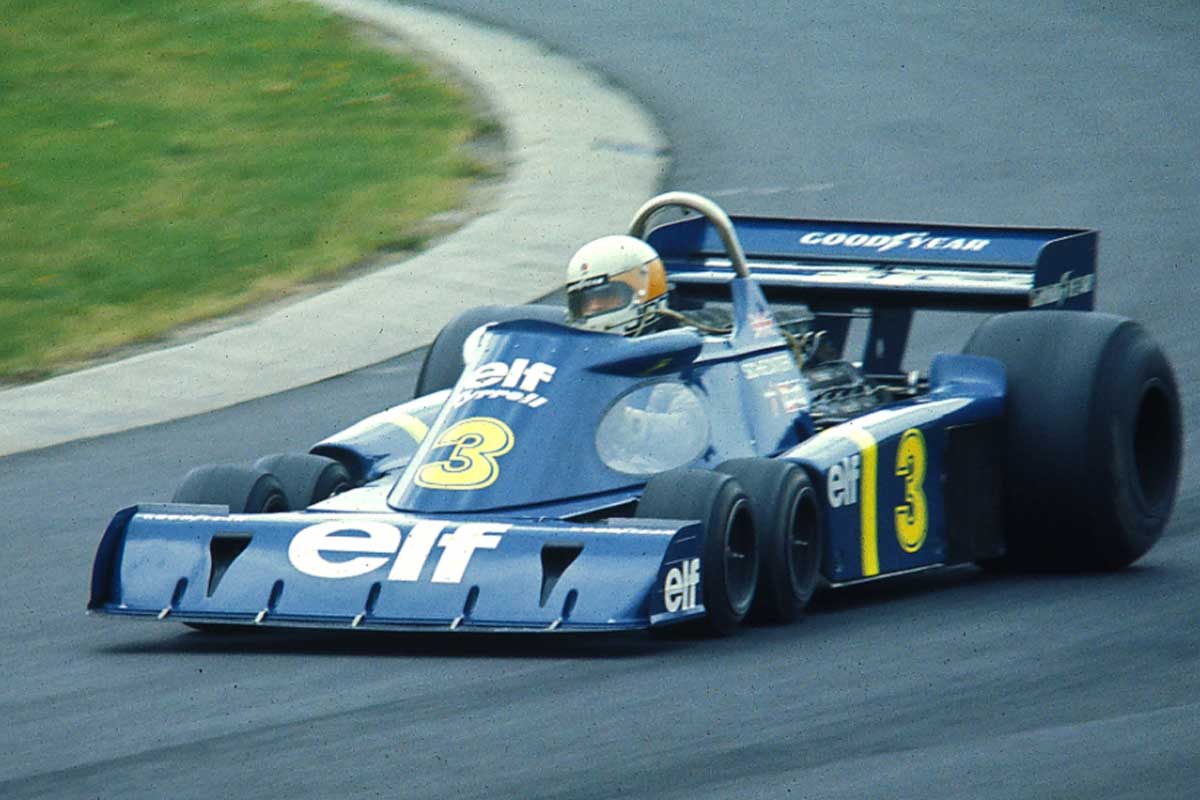
As a result, other teams developed 6-wheel prototypes, but with different solutions, as the P34 had a number of pitfalls: understeer, rapid rubber wear and the need to use special tires of different sizes, which prompted Goodyear to halt tire development. By 1977, the Tyrrell team had fallen down the pecking order, unable to pursue the development of this concept.
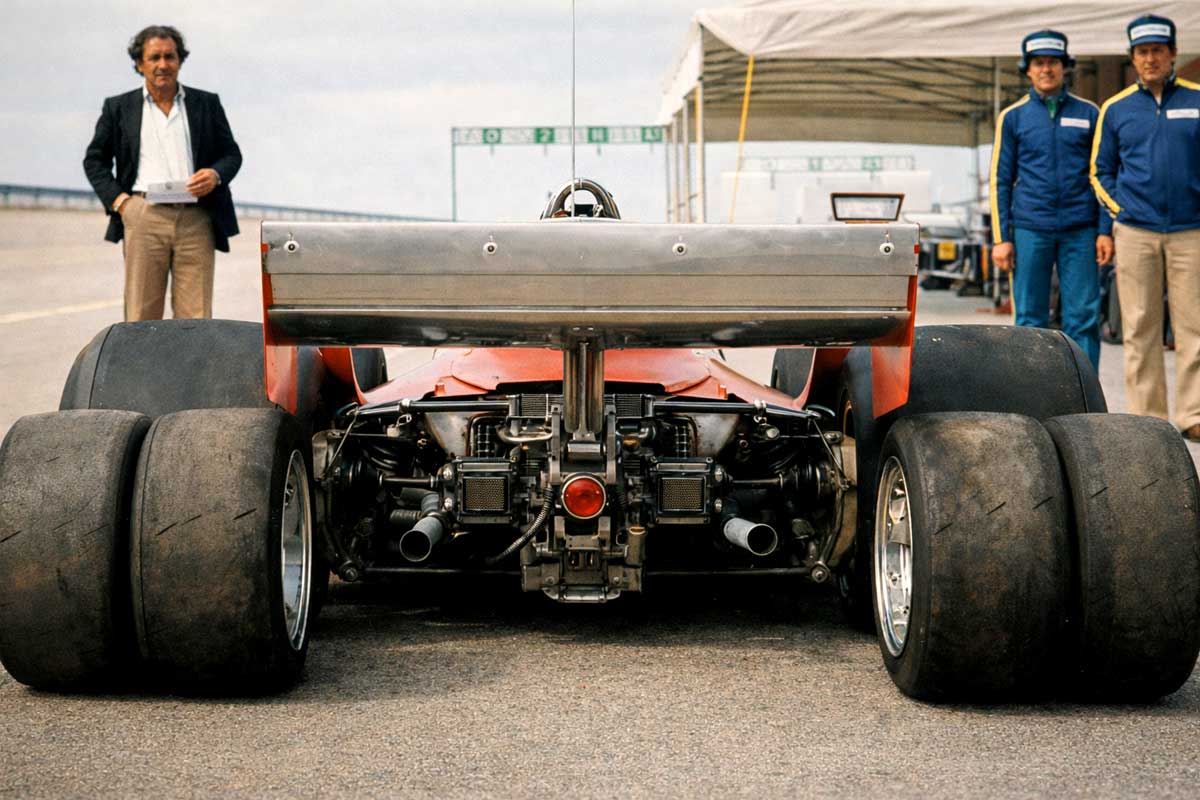
As early as late 1976, the Italian magazine Autosprint mentioned rumors of a Ferrari «6-wheeler», without a single photograph to back it up. But the rumor was well-founded... Unlike Tyrrell, Ferrari took up the idea of the pre-war Auto-Union or the Alfa Romeo V16: twin wheels mounted at the rear, on the same axle, and the same size as the front wheels.
A technical challenge
During tests carried out in March 1977 at Fiorano, Sante Ghedini, head of public relations at Ferrari, Lauda invited a small group of photographers and journalists to stop taking photos, as the Scuderia was about to reveal its secret. Once testing was completed on the 312T2, Niki Lauda took his place in a single-seater called the 312T6. So it was true: the Scuderia was experimenting with a car with six wheels! Further tests were carried out at Nardo, near Lecce, on the speed circuit, where it exceeded 300 Km/h.
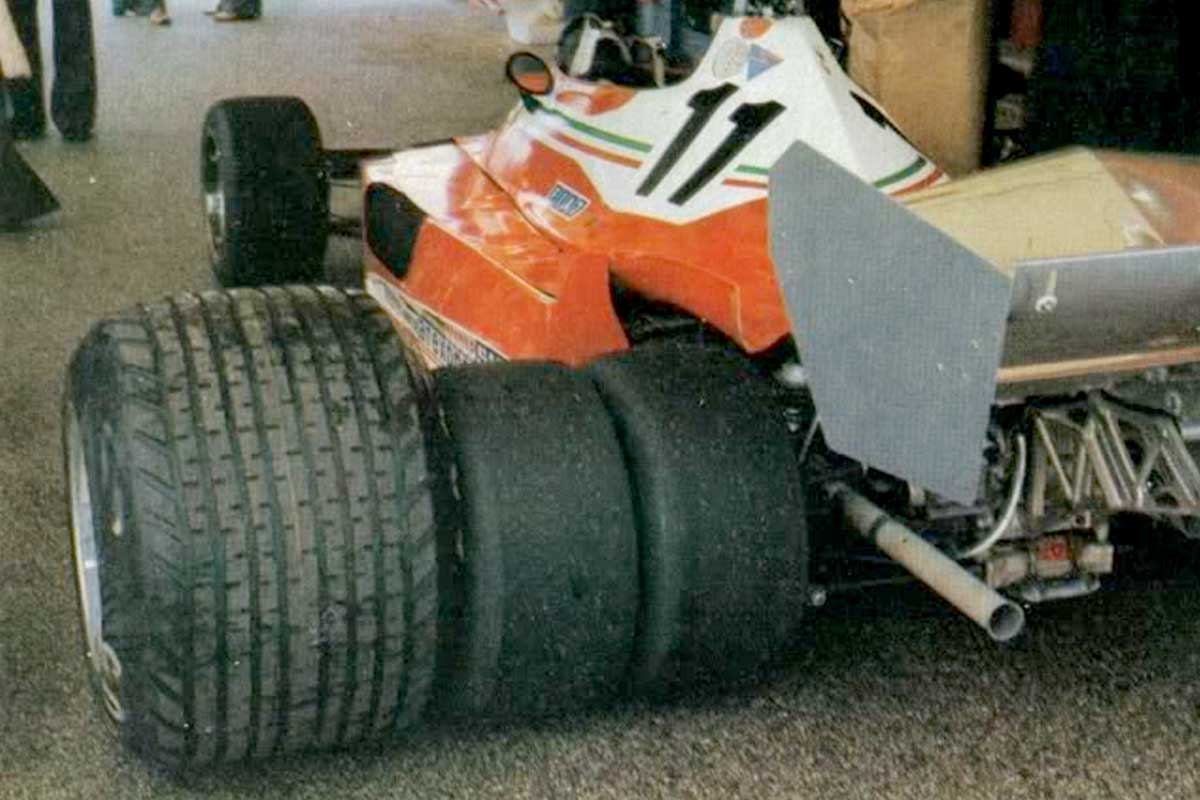
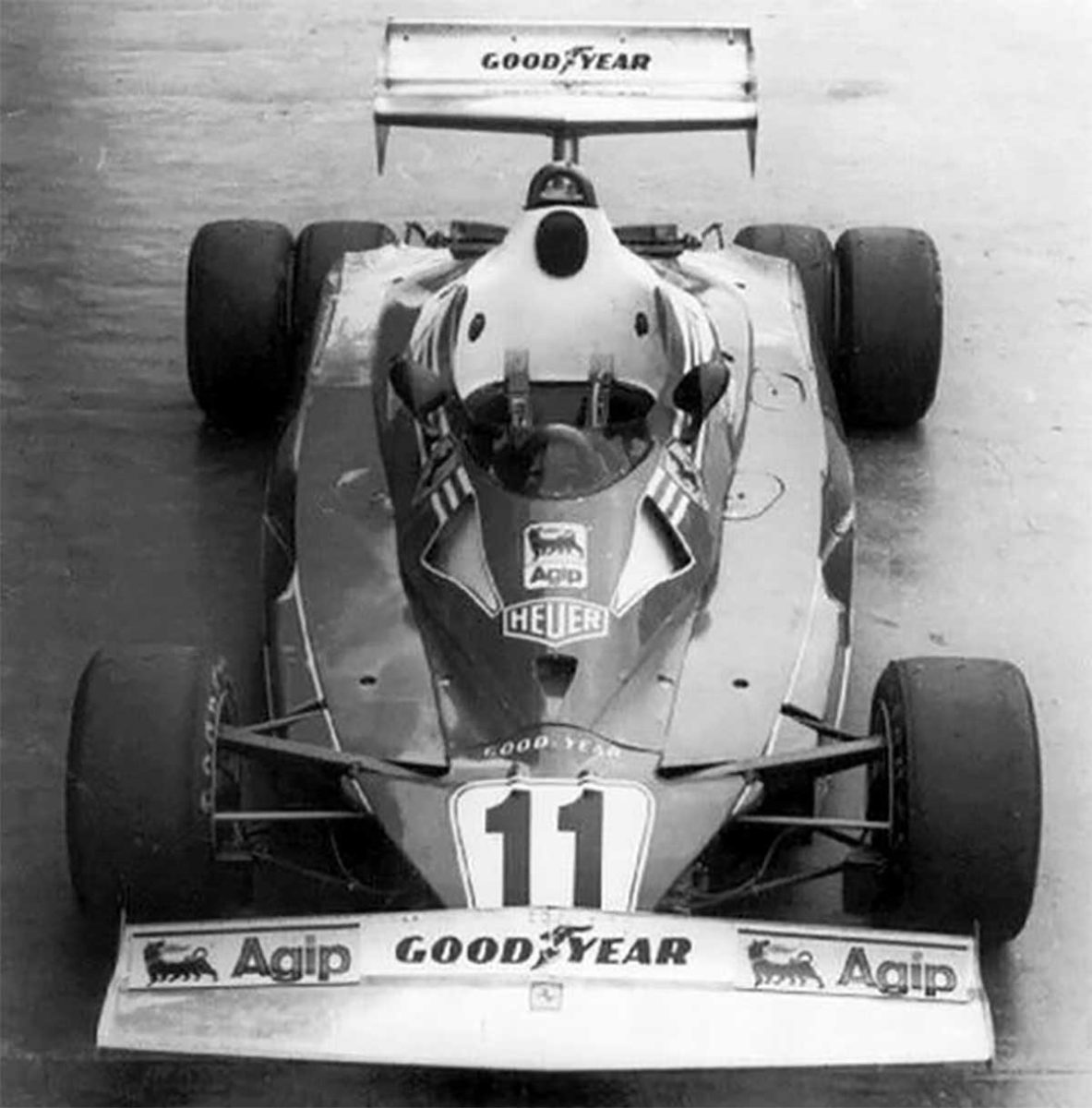
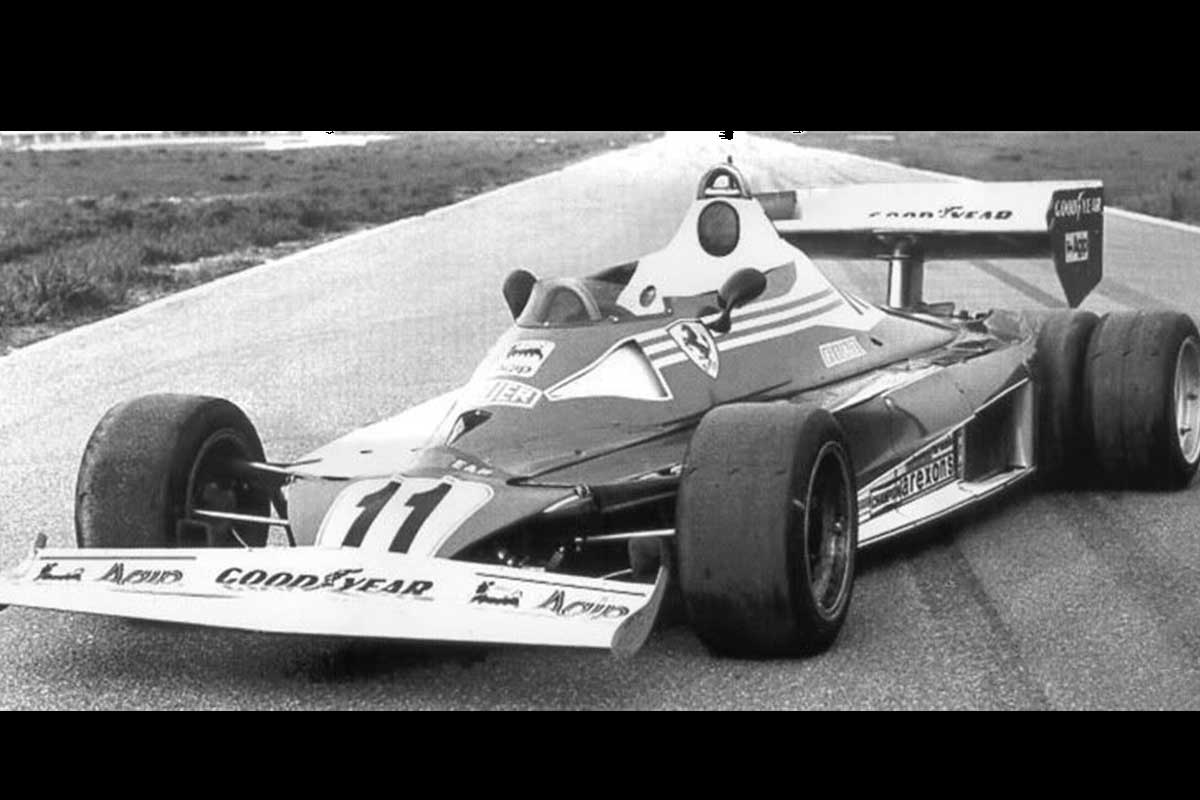
Ferrari was considering several solutions to optimize the performance of the 4 rear wheels, including fitting a crankshaft between the wheels to influence rotation. The idea was that the inner wheel would turn more slowly than the outer one when cornering. However, this system posed other constraints, such as the link to the gearbox, the extra weight generated and the weight distribution. But that wasn't the only problem: the most obvious was that the 312T6 exceeded the maximum width allowed for single-seaters! The T6 was 2.14 metres wide, compared to the T2's 2.03. What it gained in length over the P34, it lost in width. One can also imagine the difficulties of driving in Monaco, where you pass close to the tracks...
Gum puzzle
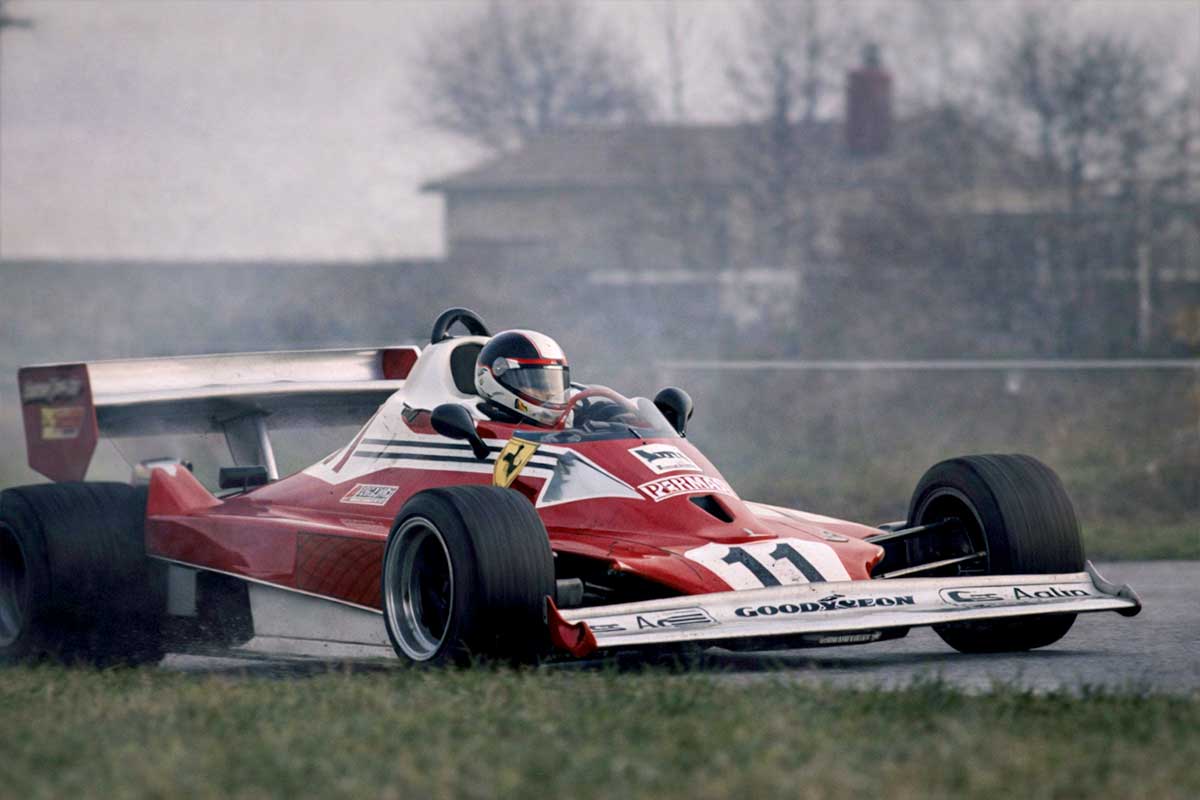
The tires also posed other concerns, with significant radial deformation at high speeds, considerably reducing the car's contact surface with the asphalt and its agility. Ferrari finally tested another solution, with reduced drag thanks to twin rear tires, a ride height lowered by 6 centimeters to improve the center of gravity, improved air flow and less deformation. The weight induced by the extra tires and rims, all at the rear, necessitated reinforcement of the bodywork and suspension. The car thus received additional modifications, including a reduction in the length of the driveshafts.
However, the manufacture of the special tires themselves remained tricky. As had already been seen with the Tyrrell P34, a team's exclusive contract with a tire supplier was already a major problem.
FIA puts its foot down
After further unsuccessful sessions with Lauda and Regazzoni, one of which ended in a crash, Ferrari announced in the spring of 1977 that it would stop testing the T6 until Goodyear supplied special tires. In any case, the FIA finally banned six-wheel cars in 1982, while Williams was working on a similar single-seater whose tests were very promising. The T6, meanwhile, had already been consigned to the graveyard of unfinished projects.
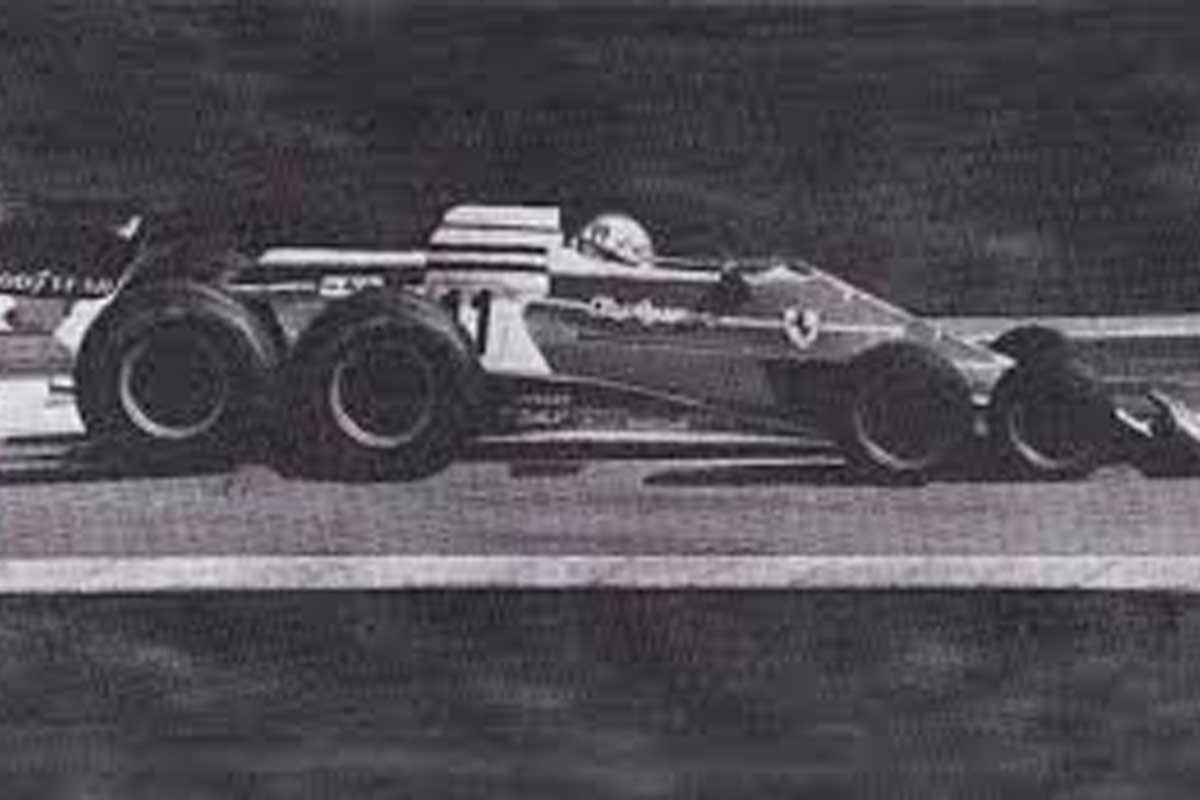
Even back then, F1 was a breeding ground for espionage, leaks and rumors. In 1976, Ferrari even leaked a photo of a 312T8 with 8 wheels (four at the front, four at the rear). It was obviously a photomontage, part of the usual intoxication to encourage other teams to embark unnecessarily on time- and resource-intensive development projects. We can also imagine the hardship suffered by the mechanics responsible for tire changes!

 English
  French
  Italian
  Spanish
  Portuguese
  German
  Japanese
  Turkish
  Dutch
Dutch