
At the end of the 1995 season, the craziest transfer of the decade was confirmed: Michael Schumacher, two-time outgoing world champion with Benetton, joined the Scuderia Ferrari ! The transfer has raised huge expectations, as many see the German as the catalyst that will bring the Scuderia back to the top, all orchestrated by team manager Jean Todt.
First drive with the 412T2
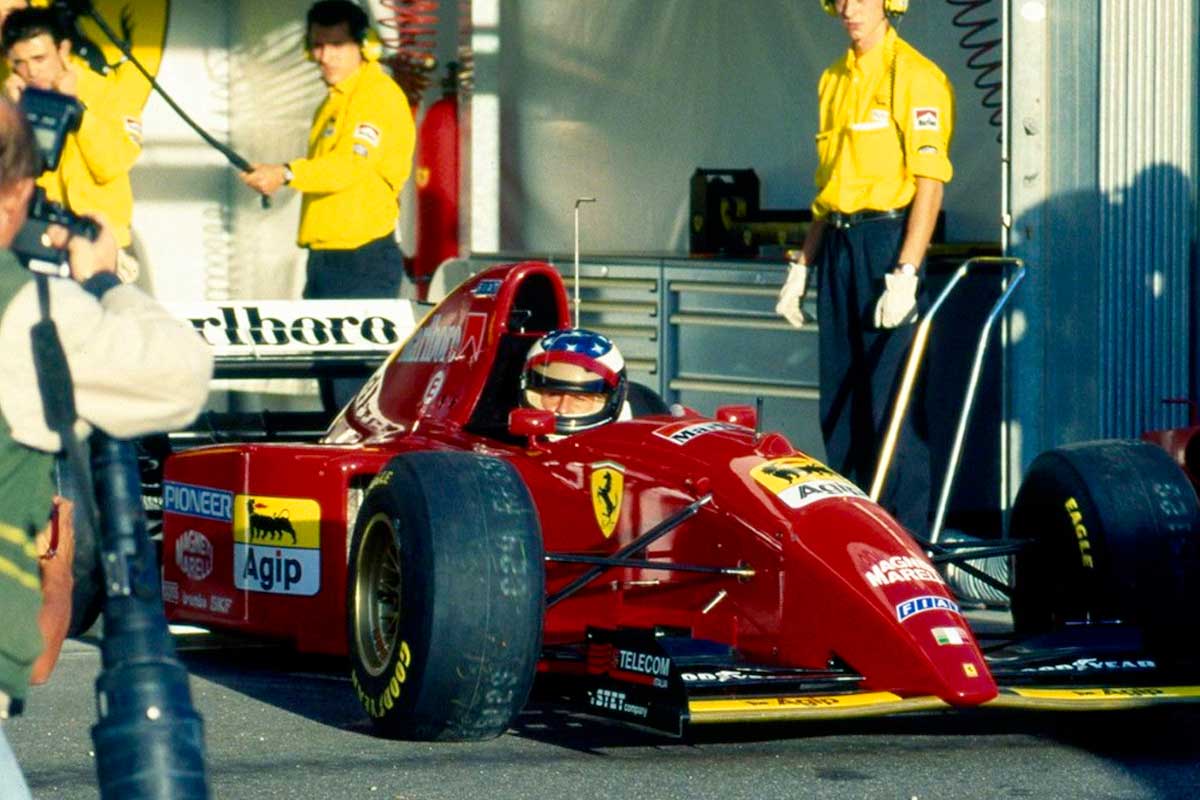
In the meantime, Schumacher took to the wheel of a Ferrari single-seater at the end of 1995, at Fiorano (with the new V10) and then at Estoril (with the V12, as the early V10s were unreliable), driving the 412T2 that Jean Alesi and Gerhard Berger had used that season. The German showed himself to be very fast right from the start, beating the Ferrari drivers' benchmarks. An adept at psychological warfare, he even took an initial dig at Ferrari, saying he couldn't understand why they couldn't have won the world title with a car and a team that were so good. a high-performance engine... a way of undoubtedly devaluing his rivals Alesi and Berger, even if he failed to take into account the capricious reliability of the V12, which had cost the Scuderia victories in 1995.
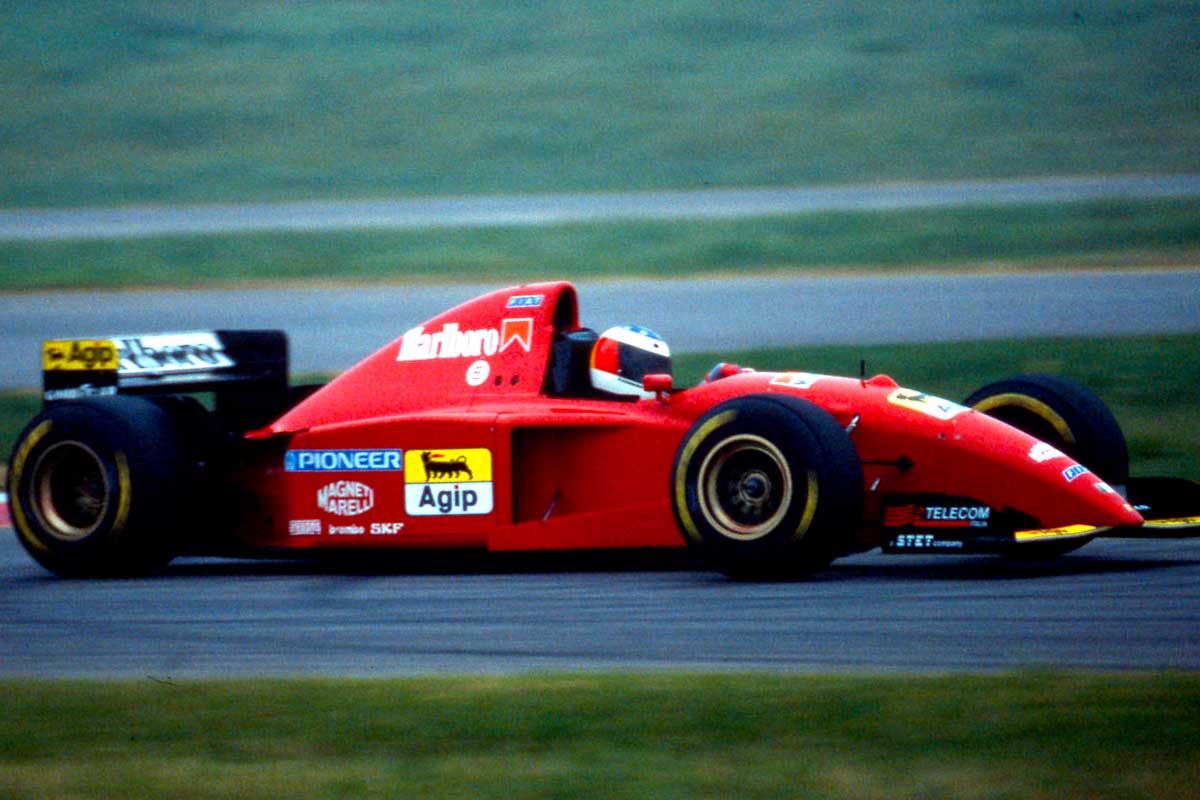
It wasn't until February 1996 that “Schumi” took the wheel of the first real Ferrari designed during his era: the F310. The single-seater was designed by John Barnard, a brilliant English engineer who had first expressed his talent at McLaren in the days of Niki Lauda and Alain Prost, with the Mp4/2, champion in 1984, 1985 and 1986. Barnard then collaborated with Ferrari for the first time in 1989 and 1990 (he was responsible for the introduction of the semi-automatic steering wheel gearbox), and again from 1993 onwards.
Unpublished F310
The first version of the F310 was original, with its plunging nose, going against the grain of the other single-seaters, all of which adopted a raised nose. Less aerodynamically efficient than the Williams, the F310 was brought into line during the season with the “B” version, which in turn adopted a raised nose. The F310 lacks the grace and finesse of its predecessor, the 412T2, partly because of its high pontoons, but also because of new safety standards. These require the adoption of a very wide hood, which forms a massive whole with the cockpit's imposing side guards at the level of the driver's head.
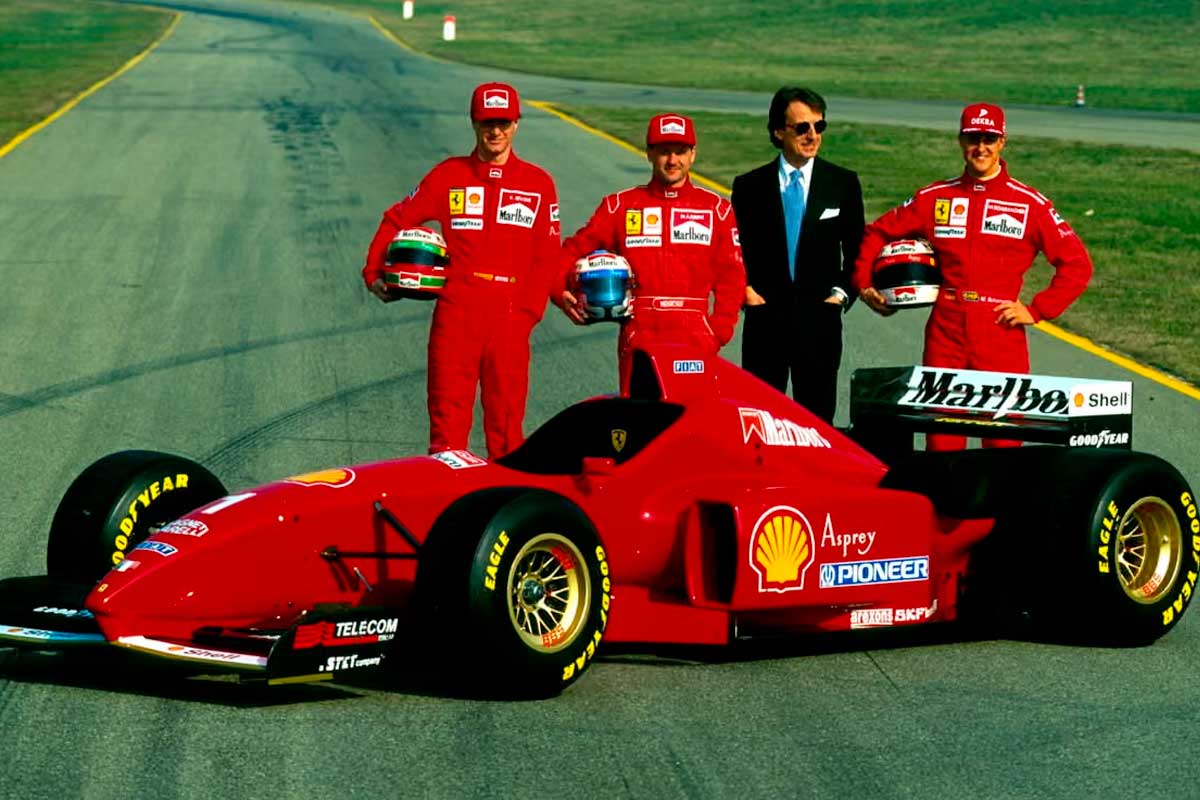
Above all, the F310 was the first Ferrari single-seater to adopt the engine architecture V10, abandoning the V12. Hardly more powerful but highly symbolic, the V12 had proved heavier, more fuel-hungry and not sufficiently reliable. Designed under the direction of Paolo Martinelli and Osamu Goto, the 046 block is a 3-liter, 40-valve engine that climbs to 14,500 rpm and delivers up to 750 hp. The V is 75°.
Schumacher's signature style makes an immediate impression
By the time the first tests took place at Fiorano, Schumacher had already made his mark on the Scuderia, in conjunction with Jean Todt: test sessions began earlier in the day and ended later, with drives lasting until nightfall. It was also a different era, when simulators didn't exist and private testing wasn't restricted. This was a godsend for Schumacher, who didn't just contribute his driving talent.
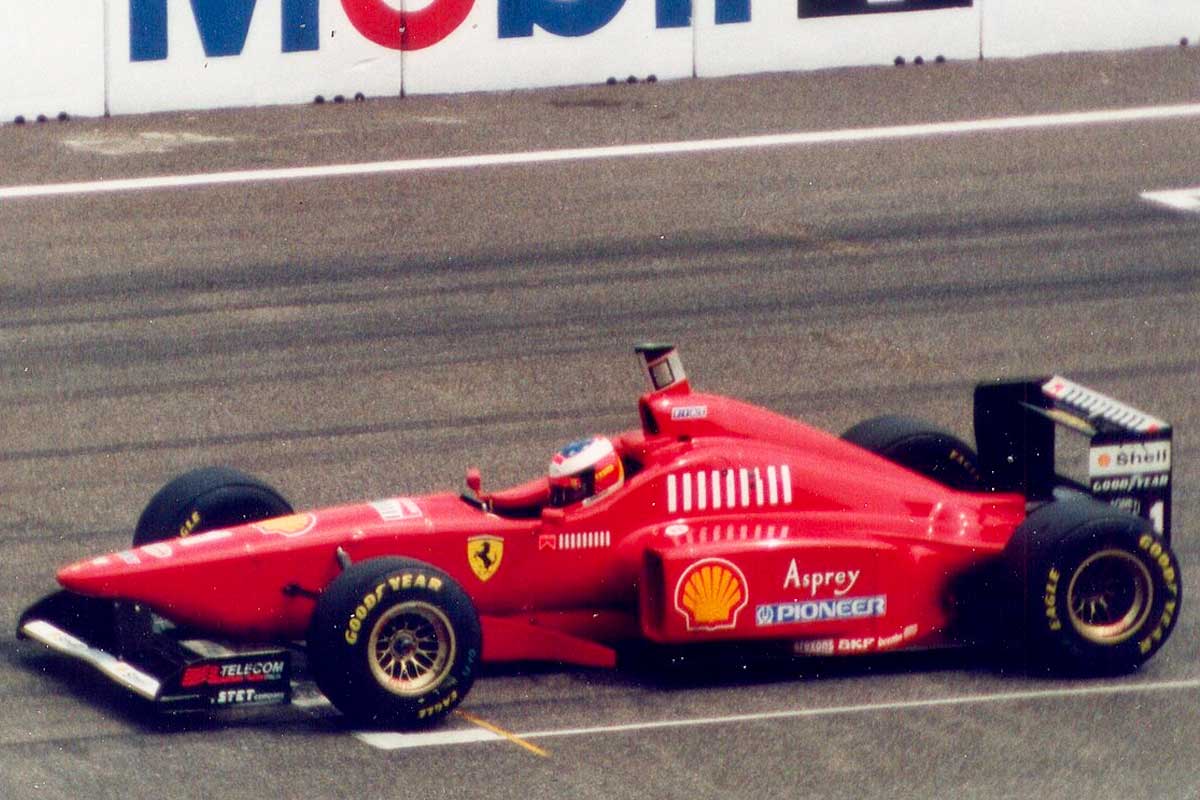
Like the great champions, who know how to structure an optimal environment around them, changes have already been made to reorganize the technical department and modernize certain facilities, thanks to the driver's comments, which had something to compare with Benetton's facilities in Enstone. John Barnard was not retained at the end of the 1996 season, especially as Todt considered his working methods and the distance from Maranello of his design offices, located in England (a requirement of the engineer's to work with Ferrari), to be inefficient. But many of the ingredients were already in place. Ross Brawn left Benetton and joined the Scuderia in 1997, the missing link in the famous “dream team”.

 English
  French
  Italian
  Spanish
  Portuguese
  German
  Japanese
  Turkish
  Dutch
Dutch