
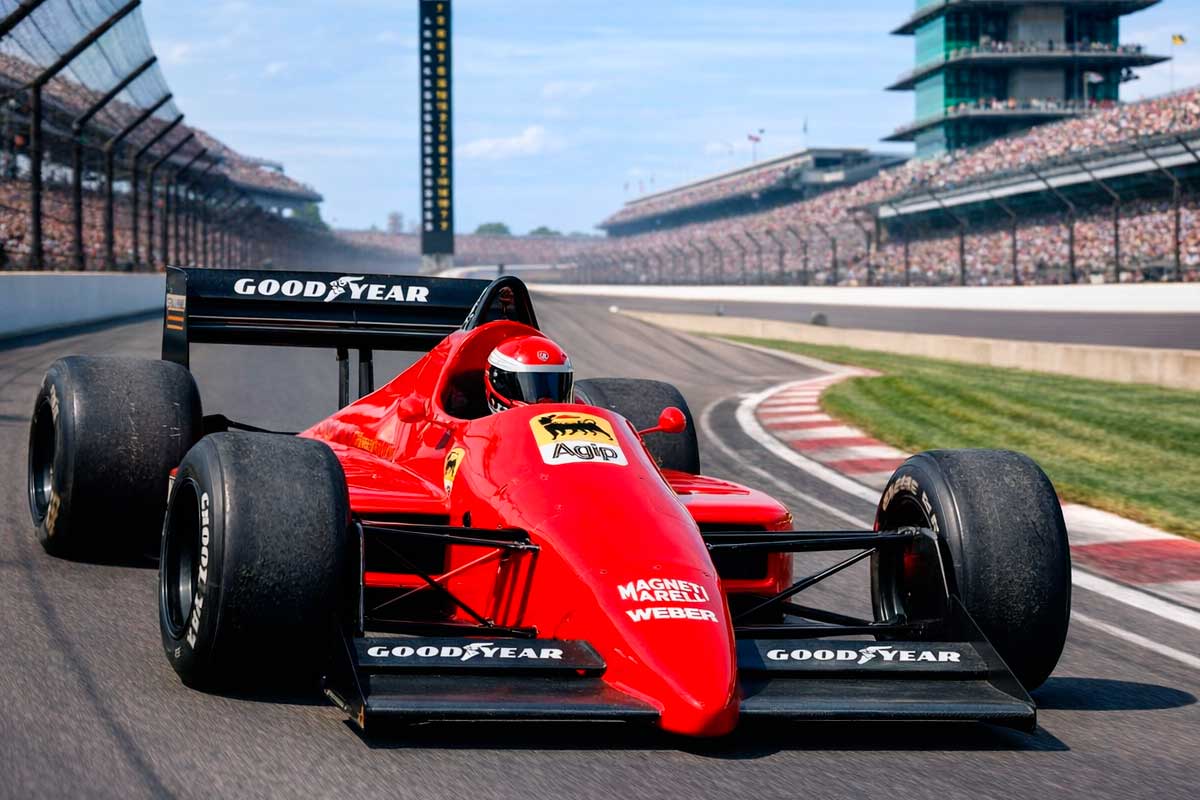
Ferrari has won all the great monuments of motor sport - Monaco, Le Mans, the Nürburgring - except one: the Indianapolis 500. It has to be said that Ferrari is not a manufacturer like the others! Where others may be "content" to be engine builders and graft their engine onto another chassis, Ferrari wants everything to be "fatto a la casa". That's why Ferrari chose the Hypercar and not the LMDh for its return to Le Mans, or why Ferrari can't just put an engine in an Indycar chassis, even if it's a Dallara. The famous Indianapolis 500 has thus far eluded the prancing horse's list of honours, but Maranello was not far off a real commitment in the 1980s.
The early 80s were a complicated time in F1 for the Scuderia Ferrari. Renault had revolutionized the discipline by introducing the turbo in 1979. Ferrari soon joined the turbo club, starting in 1980, but its single-seaters lagged behind McLaren and Williams in terms of aero performance, while new engine manufacturers such as TAG Porsche, BMW and Honda shook up the hierarchy.
The prancing horse invested heavily to catch up, and this began to pay off: the manufacturer's title in 1983, and Michele Alboreto became Alain Prost's main challenger in the race for the title in 1985. But the FISA, under the leadership of Jean-Marie Balestre, went on a crusade against turbos. In the name of safety and cost reduction, but also against the backdrop of a tug-of-war with Bernie Ecclestone's FOCA, the legislation restricted turbocharging and fuel tank capacity year after year, with these perpetual regulatory changes increasingly annoying the manufacturers involved.
Ferrari unveils its CART
Tired of these uncertainties, the American project is being revived at Ferrari. The Commendatore has never given up on his dream of winning the Indy 500, but it could also serve as a means of political pressure against the infernal Balestre-Ecclestone duo. The influence of Ferrari and Enzo Ferrari on F1 politics is undeniable. In the USA, CART is booming in sporting and media terms, beginning to rival the mighty Nascar. At the same time, sales of production Ferraris in the USA became a crucial factor for his company. At the time, however, Ferrari had little presence in motor racing in North America: the American Grand Prix was not as successful as it is today, and Ferrari was absent from IMSA.
What's more, the championship is controlled by the teams! Ford and Chevrolet are present, but rumours are beginning to circulate that Porsche may be joining us. Its technical regulations, which allow turbocharged V8s, seem far more stable than in F1, and there's little room for political intrigue. In 1985, competition director Marco Piccinini travelled to the USA to attend several races in the CART championship.
Close to working with...Newey!
Goodyear's Leo Mehl advises Jim Trueman's TrueSports as a potential partner. Truesports successfully engages Bobby Rahal and counts a certain Adrian Newey among its engineers! The latter was even approached to supervise the Ferrari CART technical project, but he had already signed up with Kraco for 1986. Newey could therefore have worked with the prancing horse, 40 years before the wild rumors which set the web ablaze after his departure from Red Bull.
At the end of 1985, the Truesports team even came to Fiorano to drive a March-Cosworth, in the presence of Bobby Rahal and Michele Alboreto. However, collaboration was out of the question as it stood, as Ferrari would never put its engines in someone else's chassis. So, under the technical direction of Gustav Brunner, Ferrari gave the go-ahead for the development of a complete CART project: construction of a V8 Turbo, christened internally 034, and an Indycar 100% Ferrari chassis! Endorsement from FIAT, budget, sponsors - everything seems to be falling into place!
Ferrari doesn't seem to be kidding
In 1986, Ferrari took F1 and its CART project seriously. And then everything accelerated: after the new tragedy of the death of Elio De Angelis during private testing at Le Castellet, Balestre led the charge against the over-powerful turbo engines. Blamed for making F1 cars dangerous, he announced a sharp reduction in power from 1987, then their replacement by naturally-aspirated 3.5-liter engines from 1989! The rebellion from engine manufacturers, who had invested heavily in turbochargers, was so strong that BMW announced its withdrawal and Porsche accelerated its involvement in CART. For Ferrari, the cup was full when FISA envisaged limiting the number of cylinders in future atmospheric engines to 8, thus condemning the V12! Sacrilege!
The Ferrari staff's trips to the USA - President Ghidella and engineer Gustav Brunner attended the 1986 Indy 500 - did not go unnoticed, and the Prancing Horse was not above blowing hot and cold. In a press release, Enzo Ferrari declared at the time: "The news concerning the possibility of Ferrari abandoning Formula 1 to race in the United States actually has a basis. For some time now, Ferrari has been studying a program for participation in Indianapolis and the CART championship. In the event that in Formula 1 the sporting and technical rules of the Concorde agreement are not sufficiently guaranteed for three years, the Ferrari team (in agreement with its suppliers and in support of its presence in the United States) will implement this program." The spectre of Ferrari's withdrawal from F1 is stirring the whole paddock, as on other occasions in history".
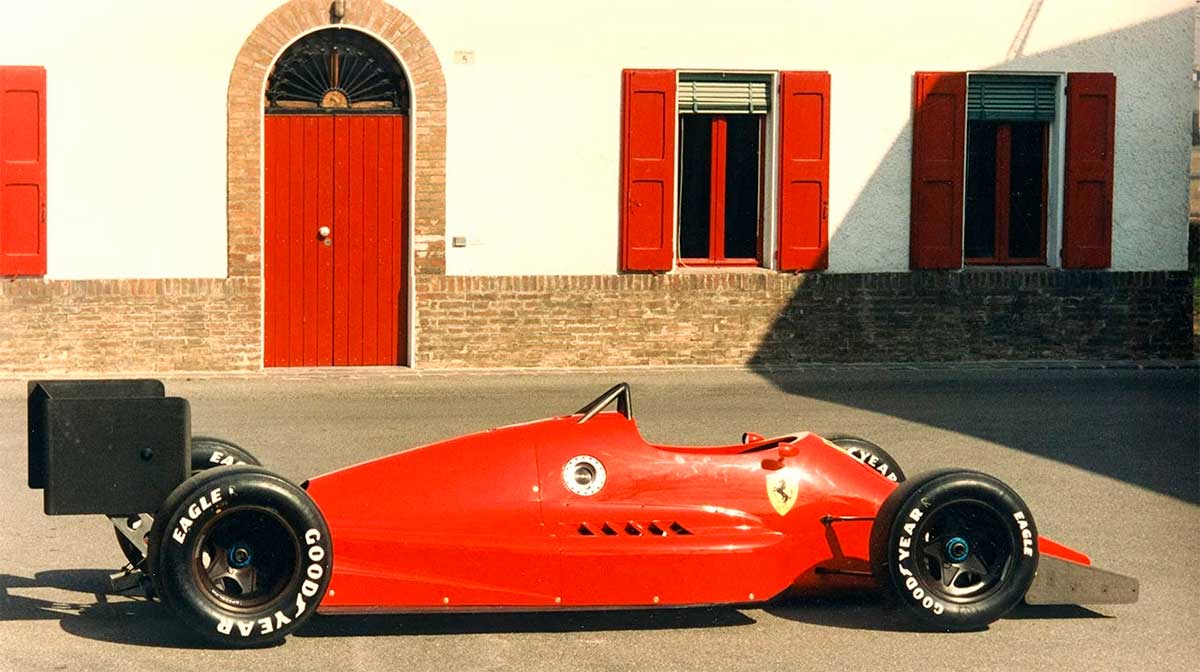
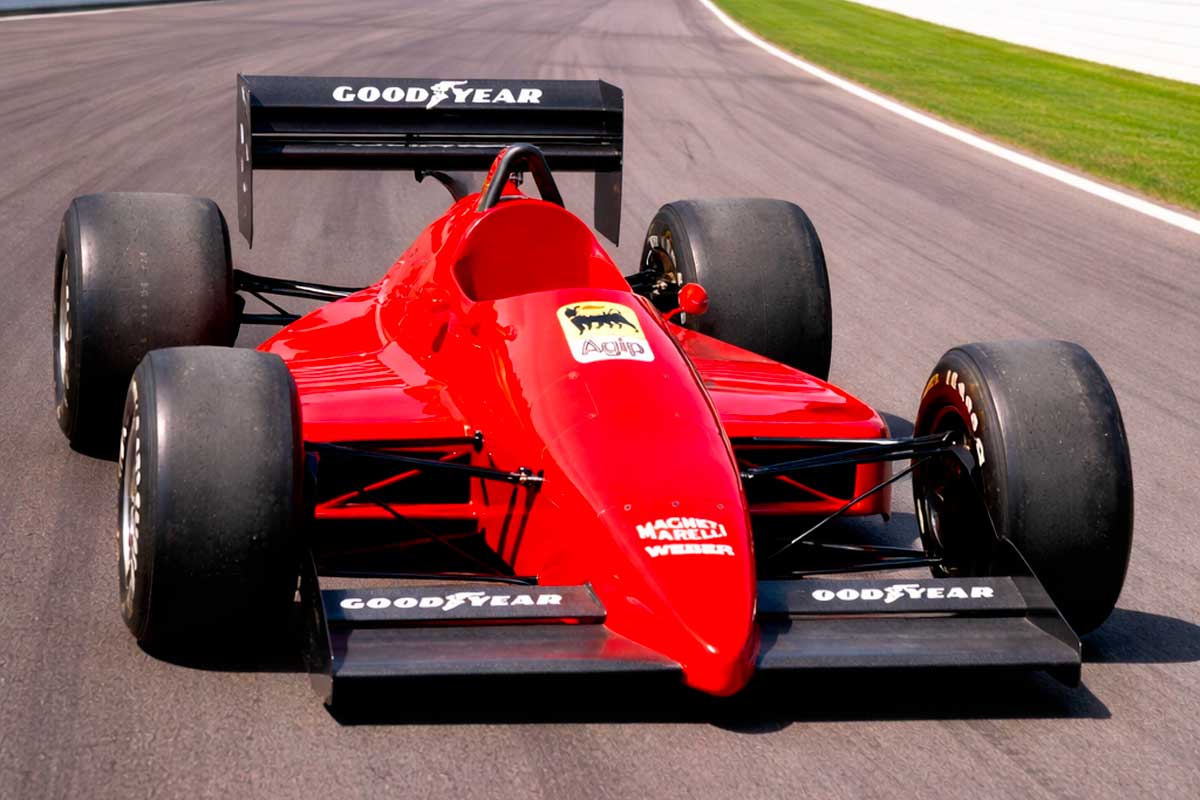
And the project was a serious one, as evidenced by the quality of the 637 produced. Ferrari took advantage of the FIAT engine bank, the 034 32-valve 90° engine being derived from the V8 used by Lancia on the LC2 endurance car. It is adapted to CART rules, which impose a displacement of 2.65 liters with a single huge turbocharger. The Tipo 034 was remarkable for its exhaust and intake manifolds positioned outside the engine, in the side pillars. The turbocharger was placed in the usual position for a CART race car, behind the engine, above the gearbox.
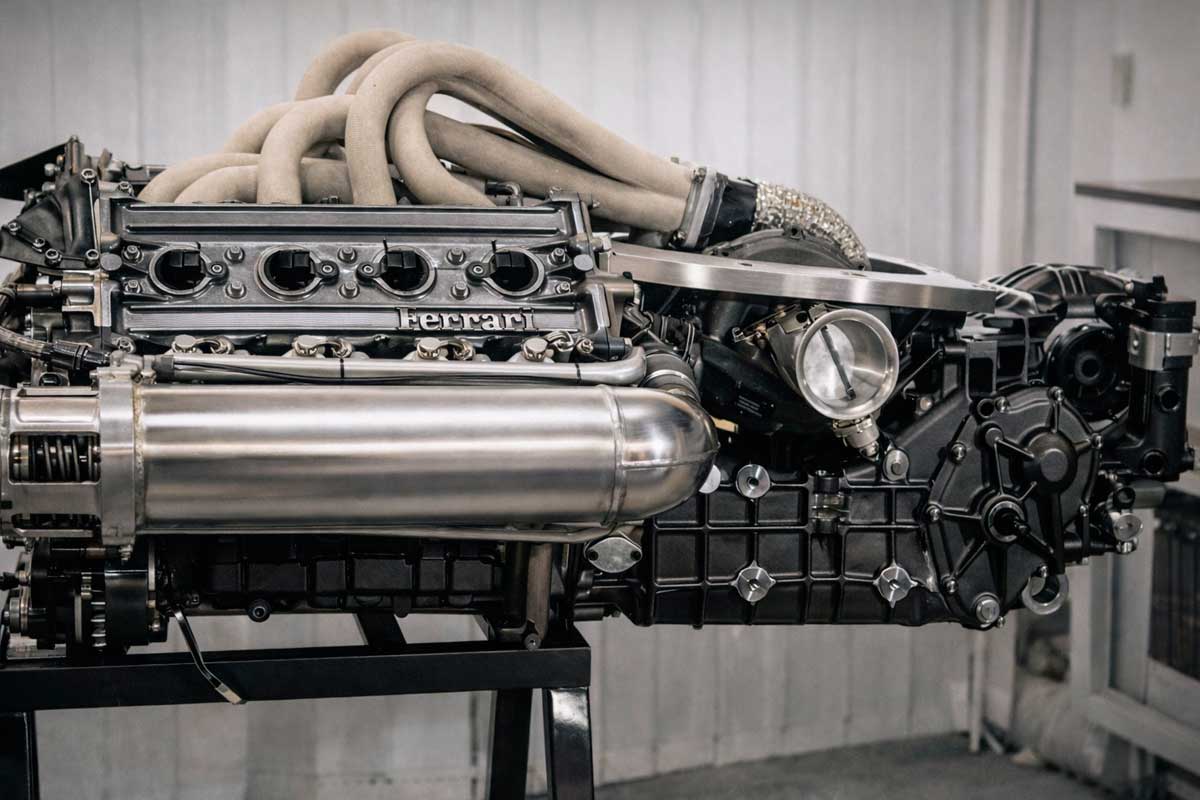
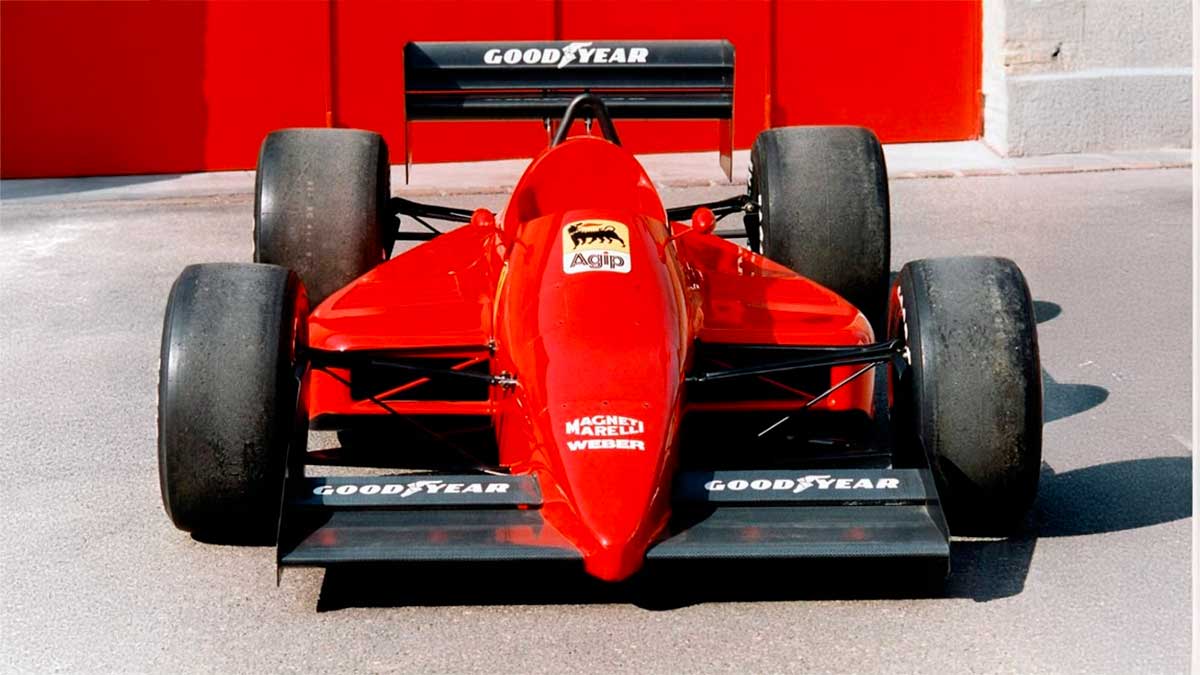
All this can produce between 690 and 710 hp at around 12,000 rpm. As for the chassis, blending aluminum and carbon fiber, it sends Indycar's March and Lola cars back to prehistory. Elegant and very slim, with the exception of the huge rear spoiler, the 637 is far more pleasing to the eye than the clumsy March!
The V12 has the last word
The story goes that, during a meeting organized in Maranello with FISA representatives to discuss the future of the discipline and to enquire about the choice of Commendatore, a little staging was orchestrated: as the discussions dragged on and Ferrari remained cryptic about its intentions, suddenly the evocative sound of a V8 echoed not far from the meeting room...and the Commendatore pointed his hosts towards the 637 development workshop. The FISA officials then realize just how far along the CART project is!
At the start of the 1987 season, F1 authorized V12s, while Ferrari abandoned its CART project. A "Concorde II Agreement" was signed in March 1987, strengthening Ecclestone's grip on F1 and motor sport, with only Ferrari involved in the discussions.
No dispersion
Did Ferrari use CART to blackmail FISA and get its way on the V12? Given the amount of money actually invested in the 637, that's a lot of money to put on the table! The board of directors simply realized that it would be financially complicated to run both an F1 and a CART program, at a time when costs were skyrocketing in the late 80s with R&D, carbon and electronics. Another factor was the recruitment of John Barnard to head the technical department. Transferred from McLaren, where he had designed the fabulous Mp4/2 that won the title with Lauda and Prost, the English engineer would have weighed in heavily to ensure that Ferrari concentrated on F1, CART being a "distraction" in his eyes. All the more so since Barnard demanded that Ferrari be able to design single-seaters from its Maranello-funded base in Guildford, England!
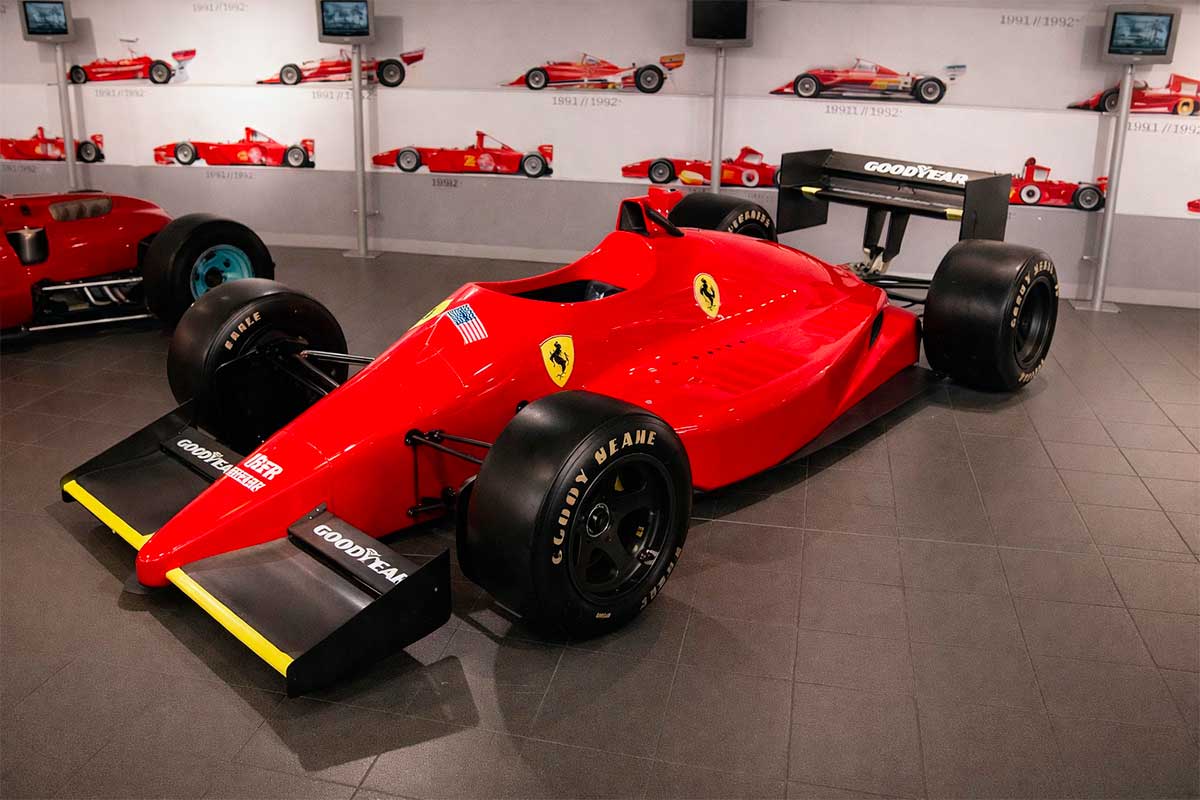
Could Ferrari really afford to play...several horses at once? Reason prevailed, and the 637 never set foot on the Indianapolis track. However, nothing was thrown away, since the 637 served as the basis for Alfa Romeo's Indycar adventure in 1988.
 English
  French
  Italian
  Spanish
  Portuguese
  German
  Japanese
  Turkish
  Dutch
Dutch
I didn't know about this aborted Ferrari CART project envisaged during the 1980s, and I'd never seen a photo of this 637. I found it really elegant, with its beautiful red livery and its fluid, uncluttered forms that suggested interesting Indycar performances against the March and Lola of the time. It's a pity that the project didn't come to fruition, even if running it in parallel with F1 seemed too ambitious.