

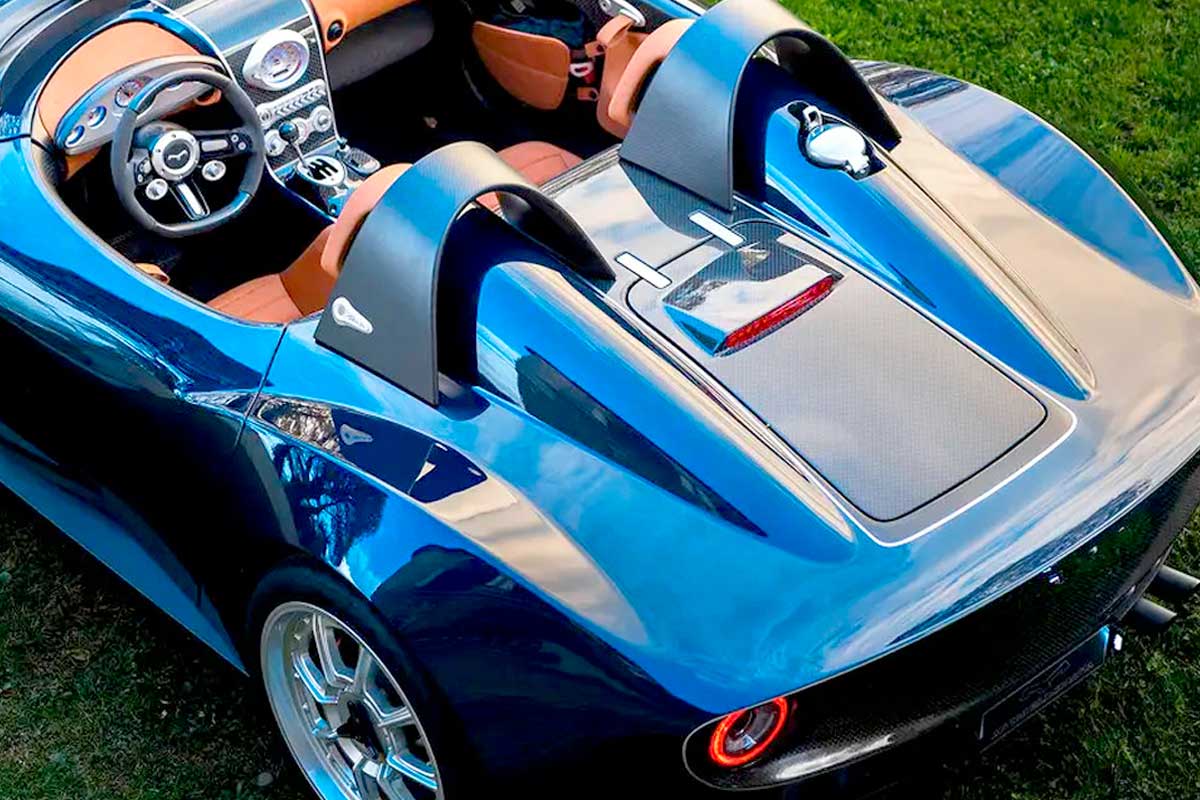
While Italian mass production has been in crisis for some years, the craft sector has been doing wonderfully well. The latest example of this is Automobili Mignatta's presentation of the Rina: the first car from the Piedmont-based manufacturer, which is linked to JM, an expert in the composites sector. JM, which has been working with carbon fiber for over 25 years, has contributed to restomods such as the Totem GT AMan electric reinterpretation of the Alfa Romeo GT, and the Kimera 037reinterpretation of the Lancia 037, as well as components for theEccentrica V12based on the Lamborghini Diablo. So much for the CV!
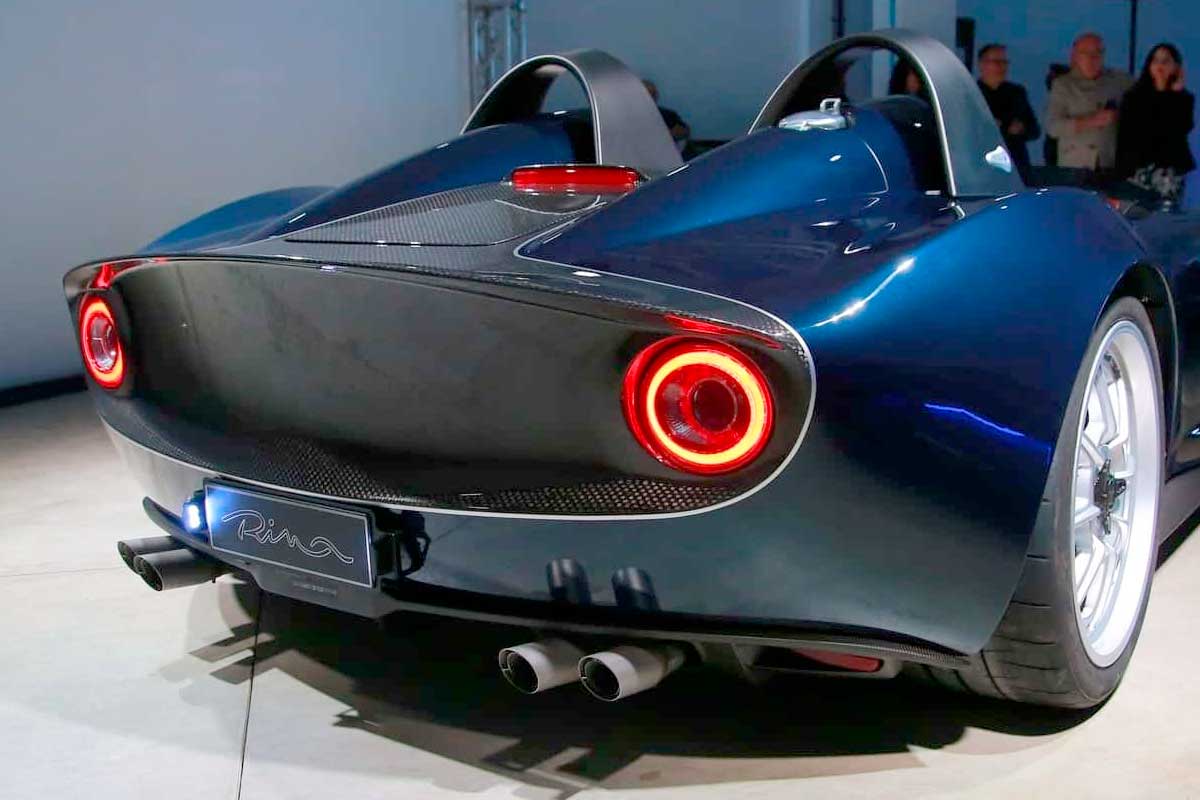
This sports car is inspired by Italy's glorious past, while the company's logo is an "M" reminiscent of the blue three-drop emblem found on the regional flag of Piedmont. The philosophy behind the project is clear: "This is not a restomod, but a sports car developed from scratch that will be custom-built and handcrafted in our factory, sharing the experience with the future owner. We've created a car that didn't exist.
Purist architecture
The body, machined from a single block in one of Italy's largest autoclaves, and the tubular monocoque chassis weigh just 71 kg and feature preformed seats. Inspired by the muscular, curvaceous sports cars of the 60s, the Rina is built entirely in carbon fiber. With a dry weight of around 1,000 kg evenly distributed between the axles, it promises pure, direct driving. The Mignatta repeats the "Transaxle" trick so dear to Alfa Romeo in the 70s and 80s: the engine, positioned in the front center, transmits its power to the rear wheels via a mechanical transaxle. The gearbox is positioned at the rear, integrated with the self-locking differential, to ensure optimum weight distribution between the two axles.
The Barchetta spirit
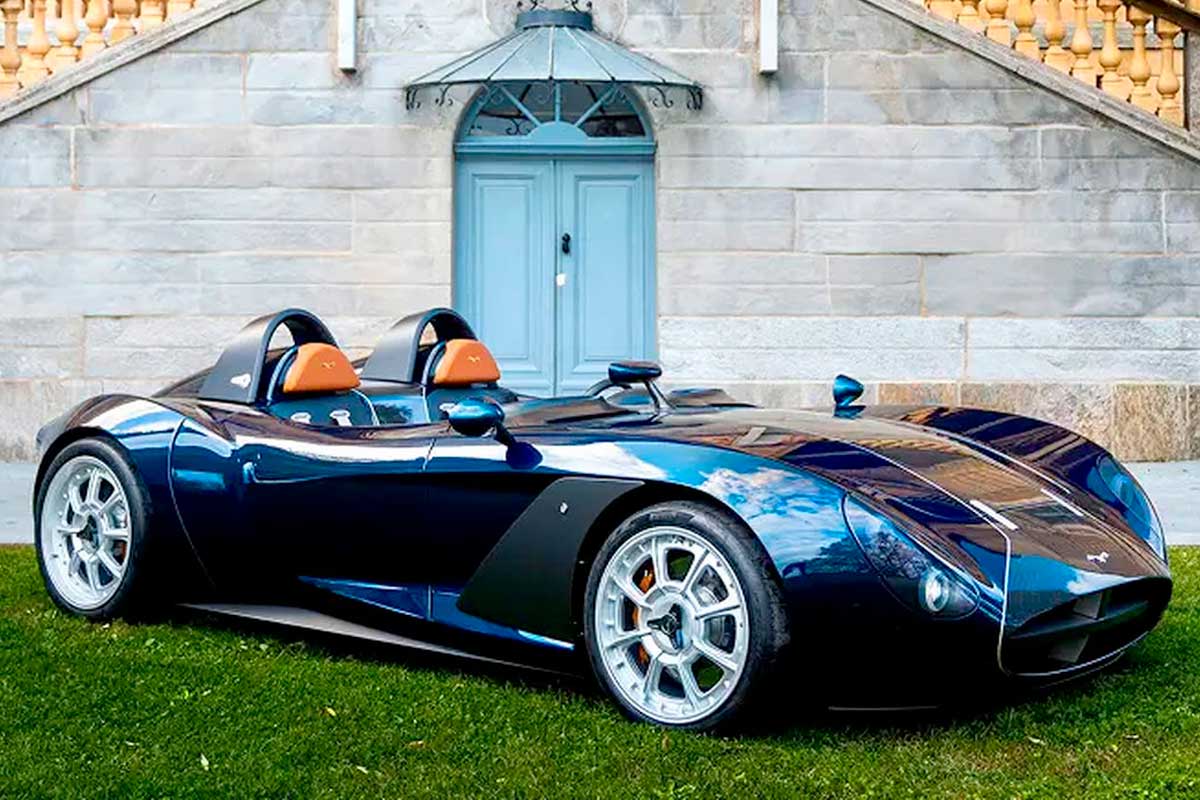
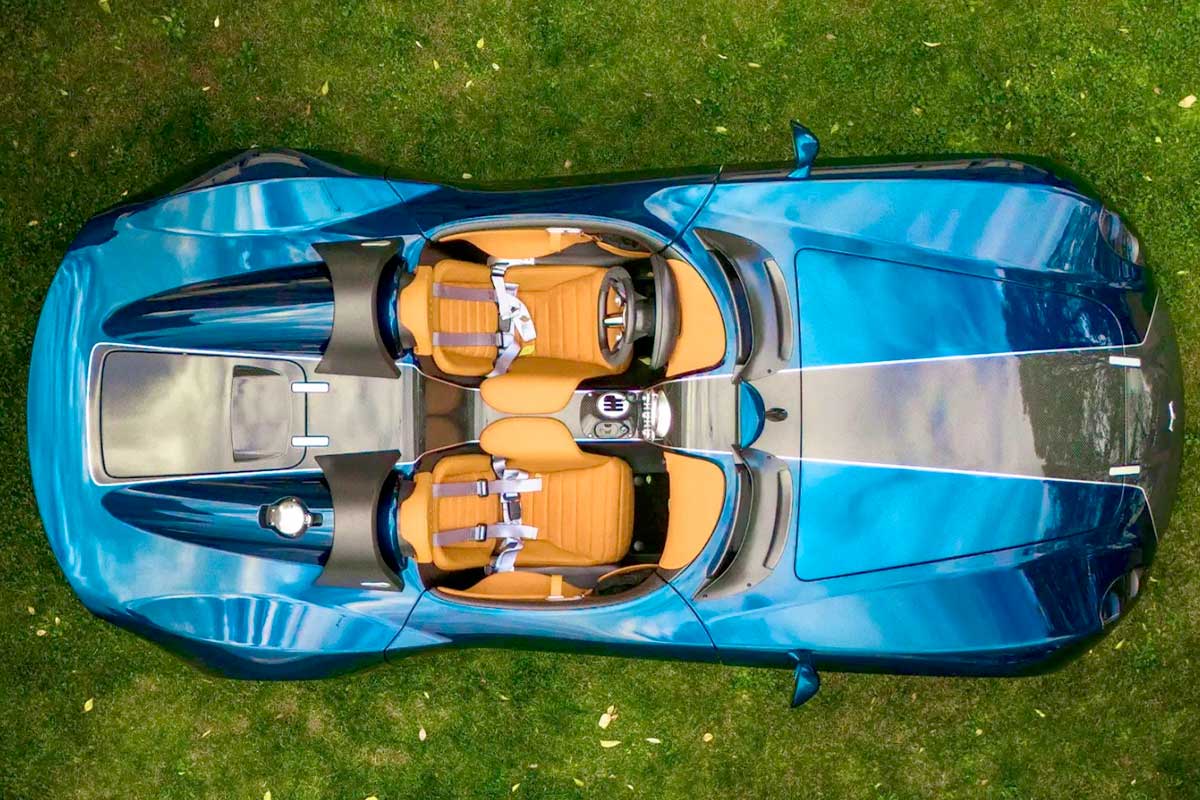
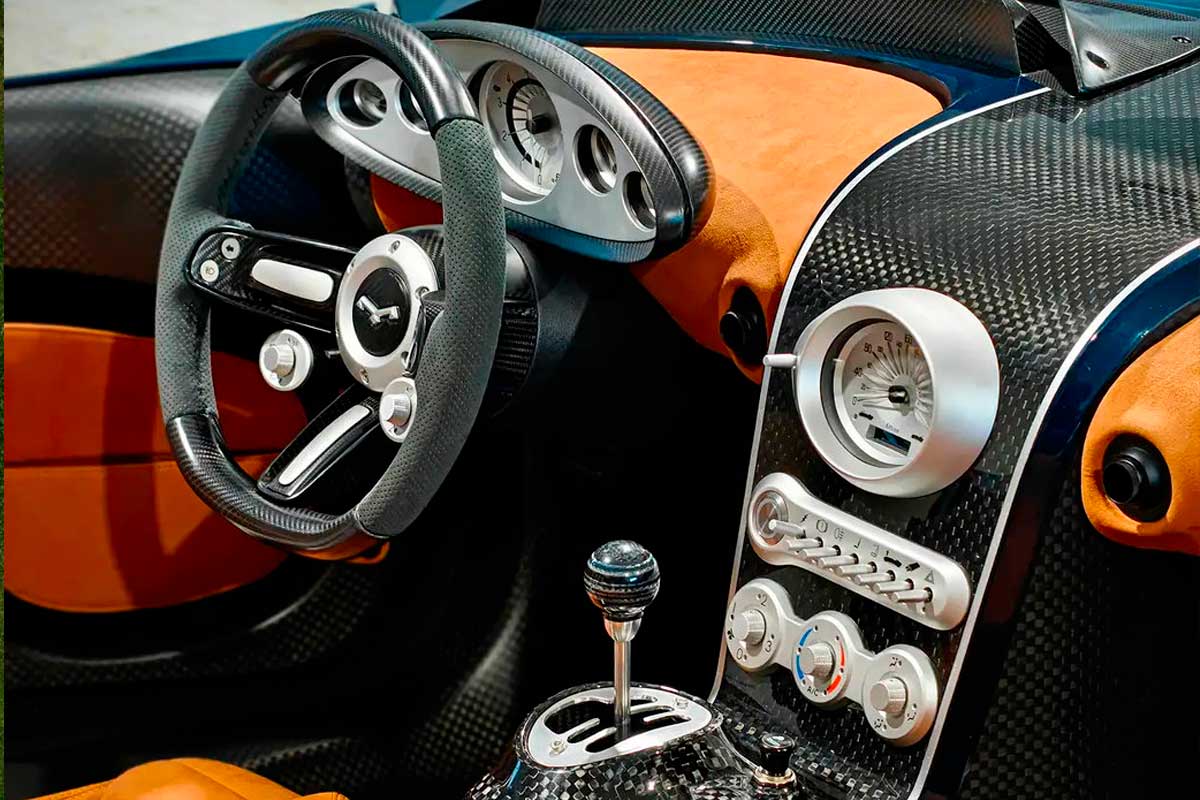
Styling director Davide Dessi, who trained at Italdesign in Grugliasco, designed a two-seater speedster body measuring 4.41 meters in length, with a wheelbase of 2.68 meters and a height of just 1.15 meters. The body features a long hood extending from an elliptical grille, muscular fenders, harmonious side lines and a tapering rear, topped by a spoiler and two small domes behind the driver's station. The cabin is devoid of windows, sun visors and windscreens, replaced by two small aerodynamic Plexiglas screens in front of the passengers. The doors incorporate storage compartments for helmets, and the seats, sculpted into the bodywork, are fitted with cushions and adjustable pedals. Finishes are in aluminum, carbon fiber and hand-cut bullhide leather. The center console and dashboard blend the modernity of carbon with the roundness of the 60s, notably in the instrumentation, while the numerous switches evoke the world of aviation.
Indomitable horse
In the tradition of certain Italian sports cars from the 60s and 70s, such as Bizzarrini and De Tomaso, the roaring heart is American: the Rina is powered by a Ford-sourced, naturally-aspirated 5.0-liter aluminum V8, combined with a six-speed manual transaxle and limited-slip differential. The engine was modified to Automobili Mignatta specifications by another reference company, Italtecnica Engineering, which worked on the intake system to optimize the RAM effect (exploitation of exhaust gas inertia), the exhaust system and electronic management.

The manufacturer claims a power-to-weight ratio of around 2 kg/hp. The car is equipped with double-wishbone suspension and adjustable dampers, as well as 19" and 20" wheels shod with semi-slick Pirelli PZero Trofeo RS tires. The braking system, with ABS, is by Brembo, with 360 mm front discs and six-piston calipers. A carbon-ceramic braking system will be offered as an option.
Mignatta will produce 30 Rina models a year, starting at 290,000 euros, at its Valfanera d'Asti plant, where a dedicated workshop will be set up to configure and customize each model. The first examples are expected in early 2026.
 English
  French
  Italian
  Spanish
  Portuguese
  German
  Japanese
  Turkish
  Dutch
Dutch
Very interesting car themes