

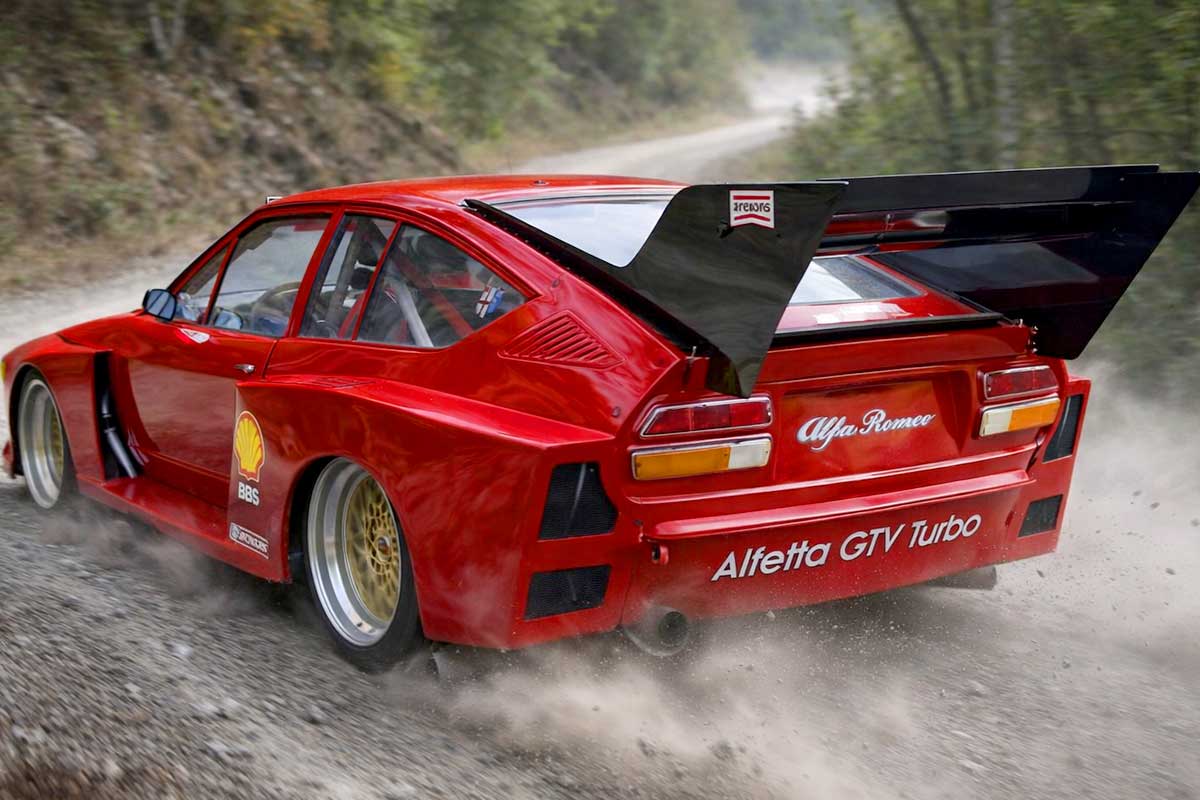
For the 1976 season, the FIA introduced a new Group 5 category, "Special Production Cars", allowing extensive modifications to production vehicles homologated in FIA Groups 1 to 4. The Deutsche Rennsport Meisterschaft (DRM), the predecessor of the DTM, used this regulation from 1977 to 1981, until the category was abolished at the end of 1982 in favor of Group B, but Gr.5s continued to take part in IMSA GTX and other national sports car championships for a few more years.
The regulations limited the standard body width, but allowed for wider fenders. Only the hood, roof, doors and rocker panel were to remain unchanged. Everything else was left to the engineer's discretion. In short, manufacturers had total freedom to play with aerodynamics, use ultralight materials or install huge turbochargers. An excellent example was the monstrous Ford Capri Zakspeed, whose 1.7-liter twin-turbo version, fed by a KKK turbo, could deliver 600 horsepower. For a car weighing less than 800 kg, such power gave it exceptional performance.
A German project
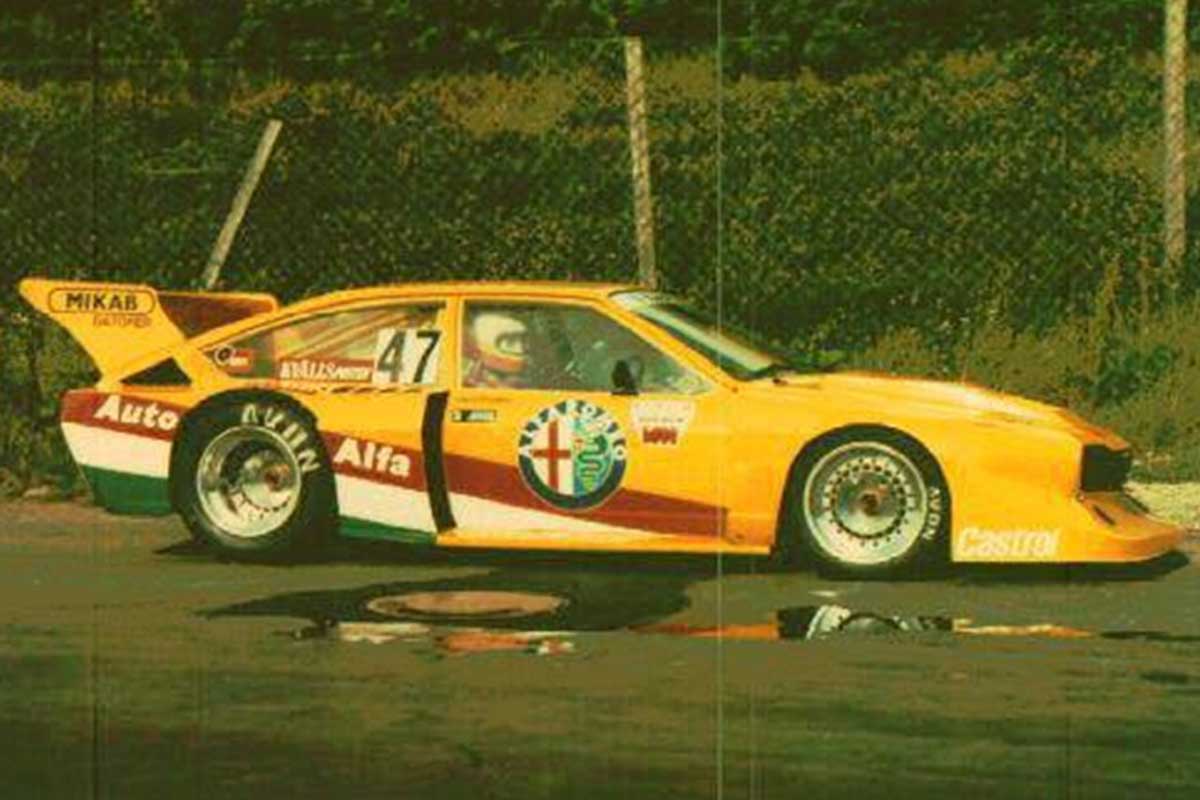
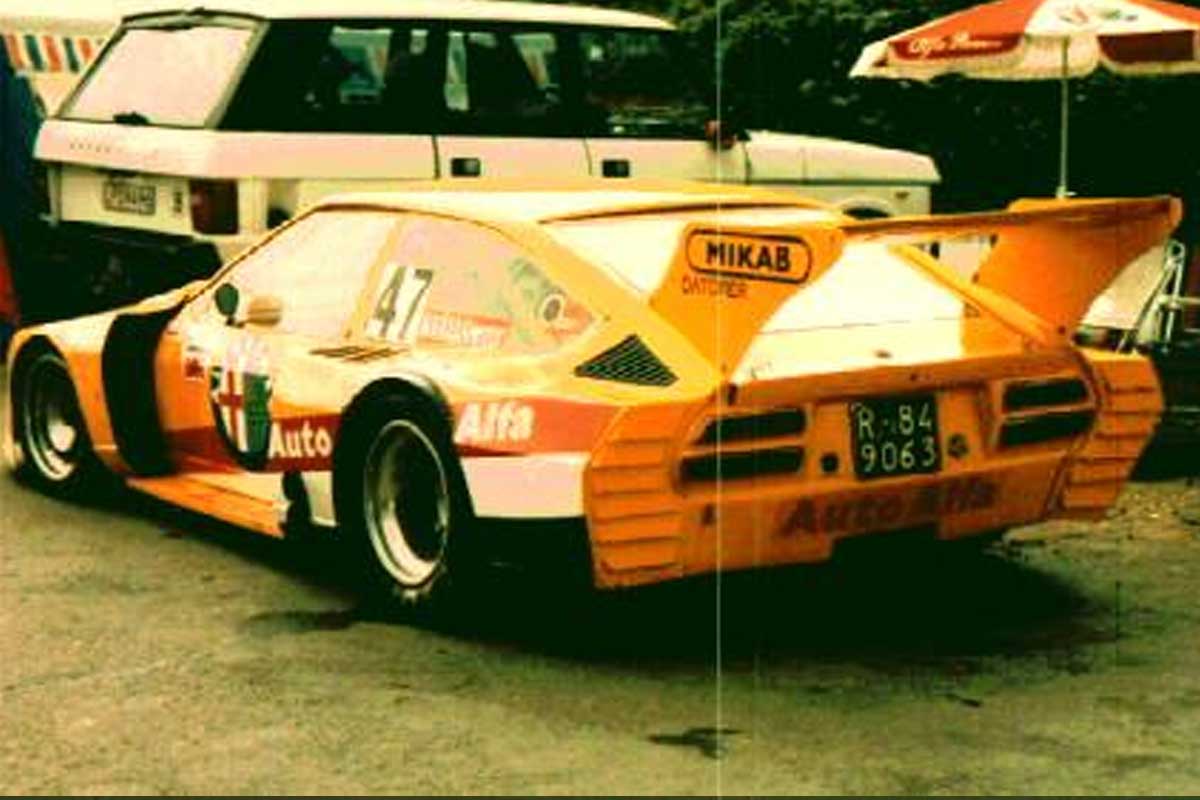
Many automakers tried their hand at it, with varying degrees of factory support: Lancia with the Stratos and Beta Monte Carlo, BMW with the 320 Turbo, Porsche with the 935, Lotus with the Esprit and even Toyota with the Celica! And of course, Alfa Romeo also made a few appearances! A Grp.5 version of the Alfetta GTV was developed for the DRM and raced there between 1979 and 1981. The project was a collaboration between Isert Motorsport (who built the car), Sachs Racing (suspension) and Dr. Schrick, who contributed to the engine design. Alfa Romeo Germany financed the entire project, but was not officially involved.
400 hp from a 1.3 L engine!
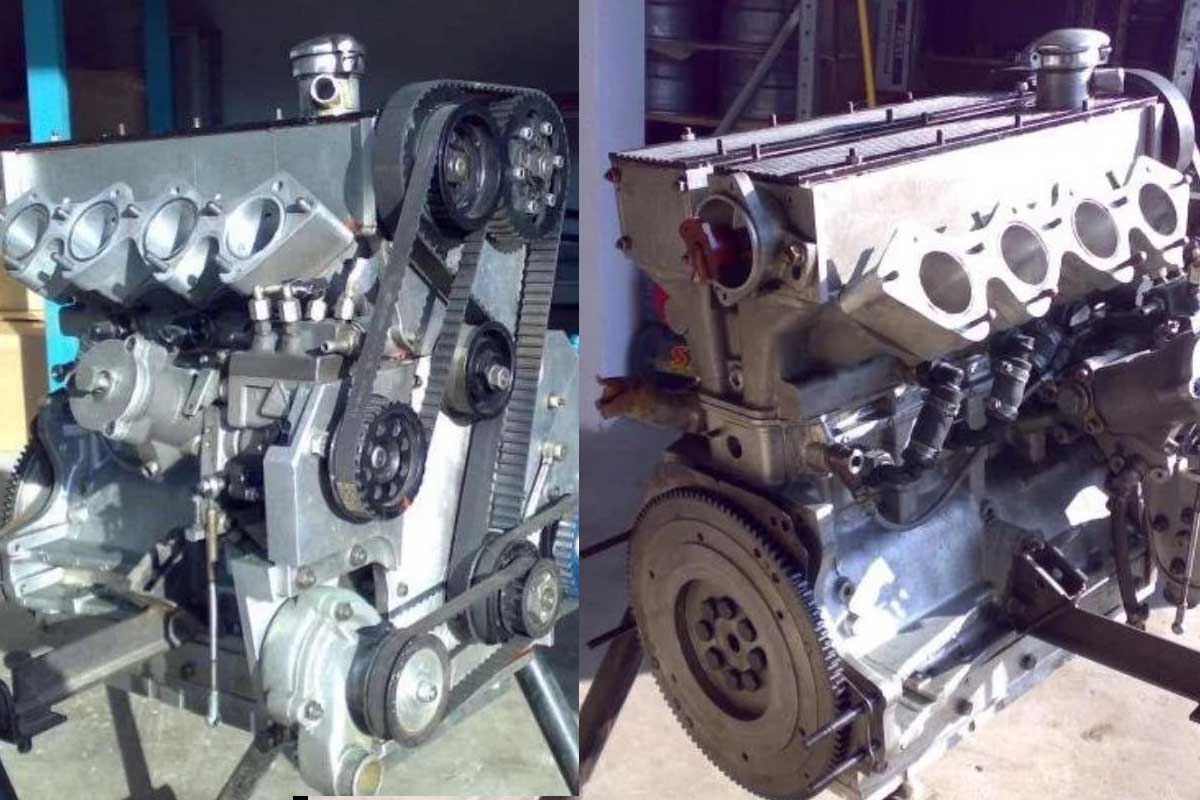
The engine has a short stroke of 67.5 mm and a bore of 81 mm, based on a GTA 1300 crankshaft and 4-valve cylinder head. With its displacement, the car was eligible for Division 2 of Group 5. The first test version had chain drive, then was converted to belt drive in 1981. This car was also the only DRM to experiment with electronic fuel injection, before finally being fitted with Kugelfischer mechanical fuel injection. In this configuration, the Alfetta GTV developed around 400 HP, which was certainly impressive, but a far cry from the 600 HP achieved by the Ford Capri Zakspeed and Porsche 935!
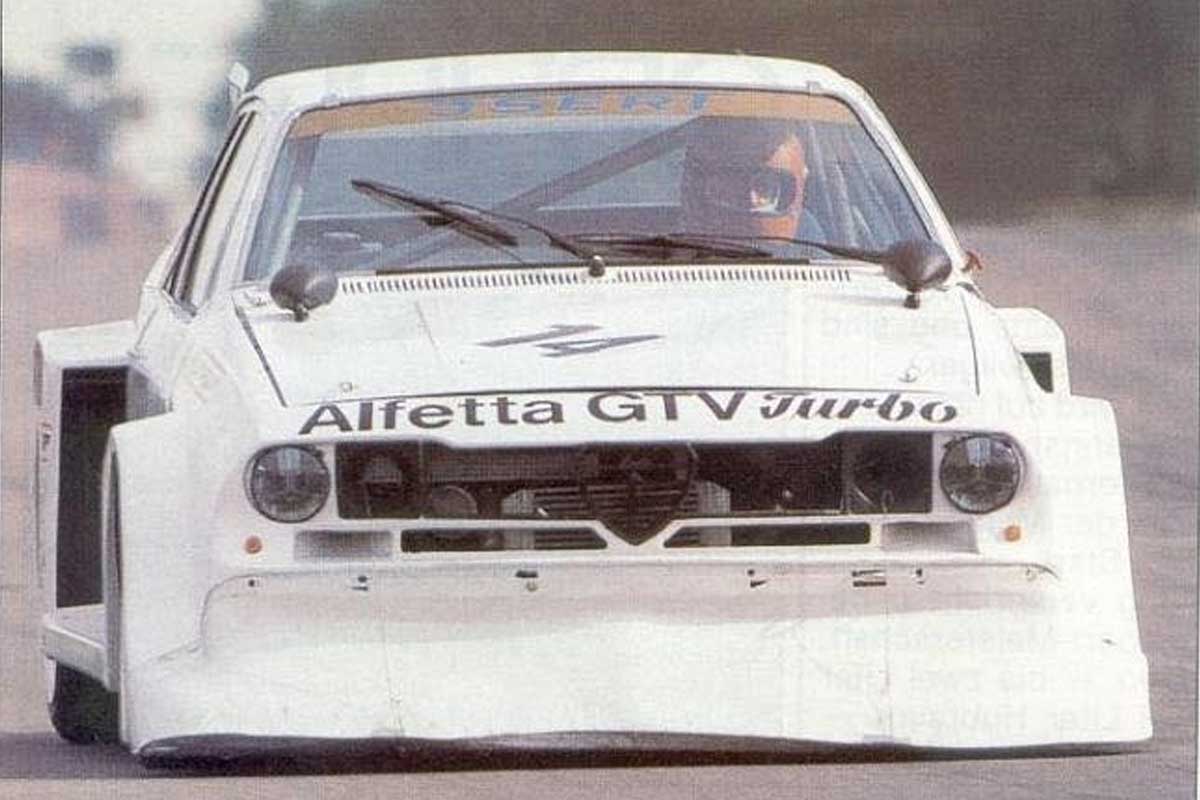
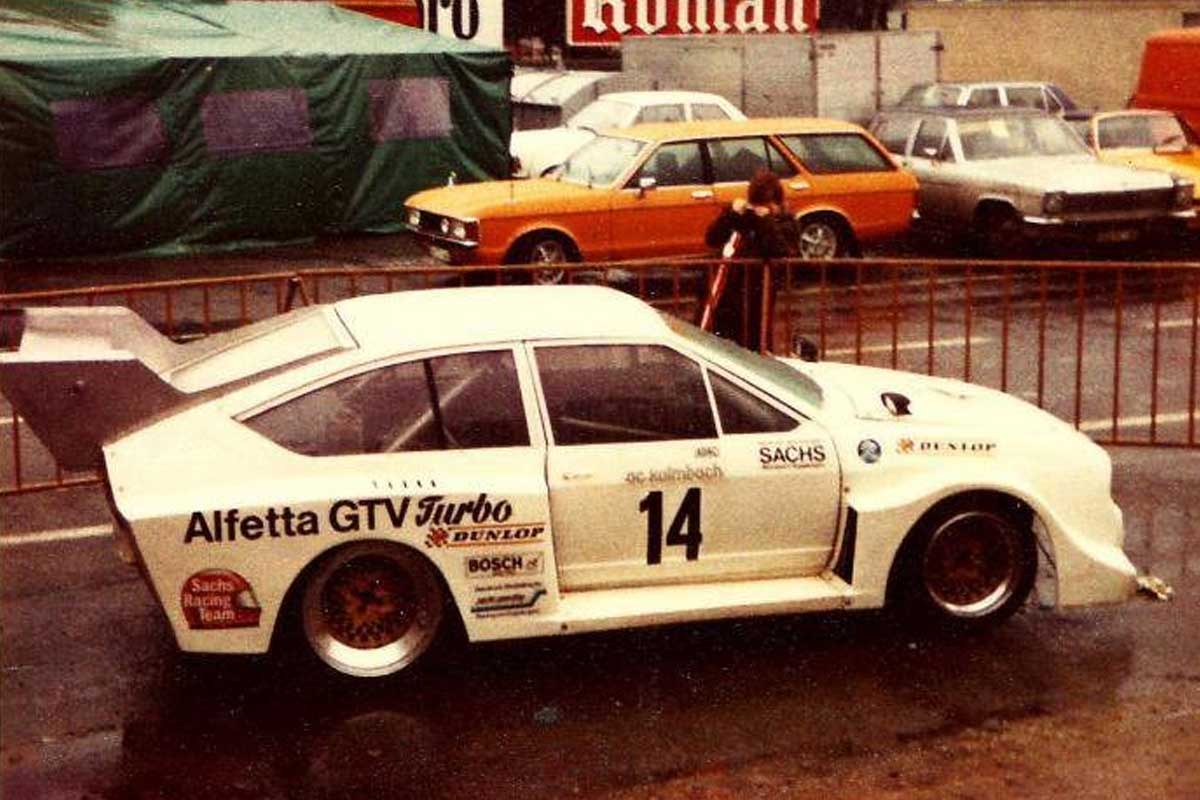
It had a 4-link rear suspension (like the Ford Escort and Capri of the time) with an anti-lock bar. This GTV Gr5 is a veritable Alfa patchwork, with Rallye Alfetta Gr.4 rear brakes and calipers taken from the Tipo 33.
A strange look, even more so in 1981!
All exterior body panels are plastic, with the exception of the roof. In addition to the wider track, the front end features an enormous spoiler, which bears a striking resemblance to that of the Group B Quattro S2 released a few years later. This ungainly, massive spoiler earned the GTV the nickname "snow shovel".
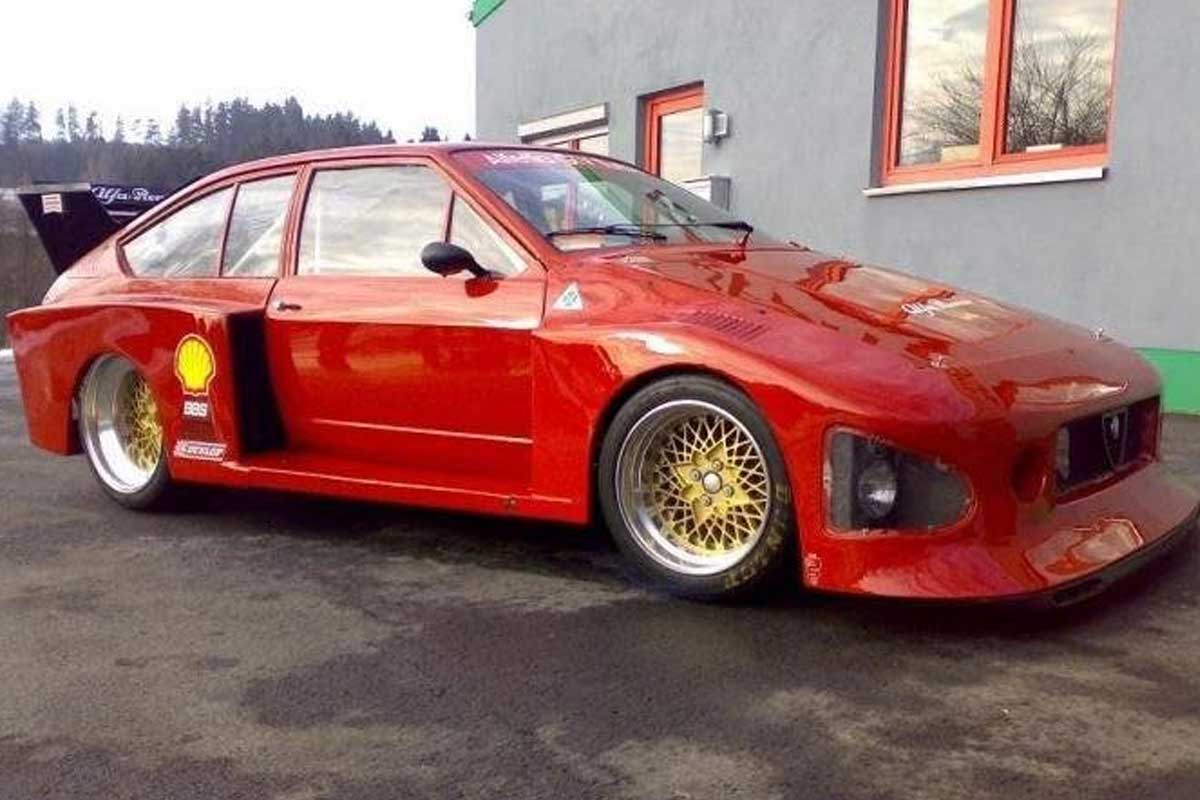
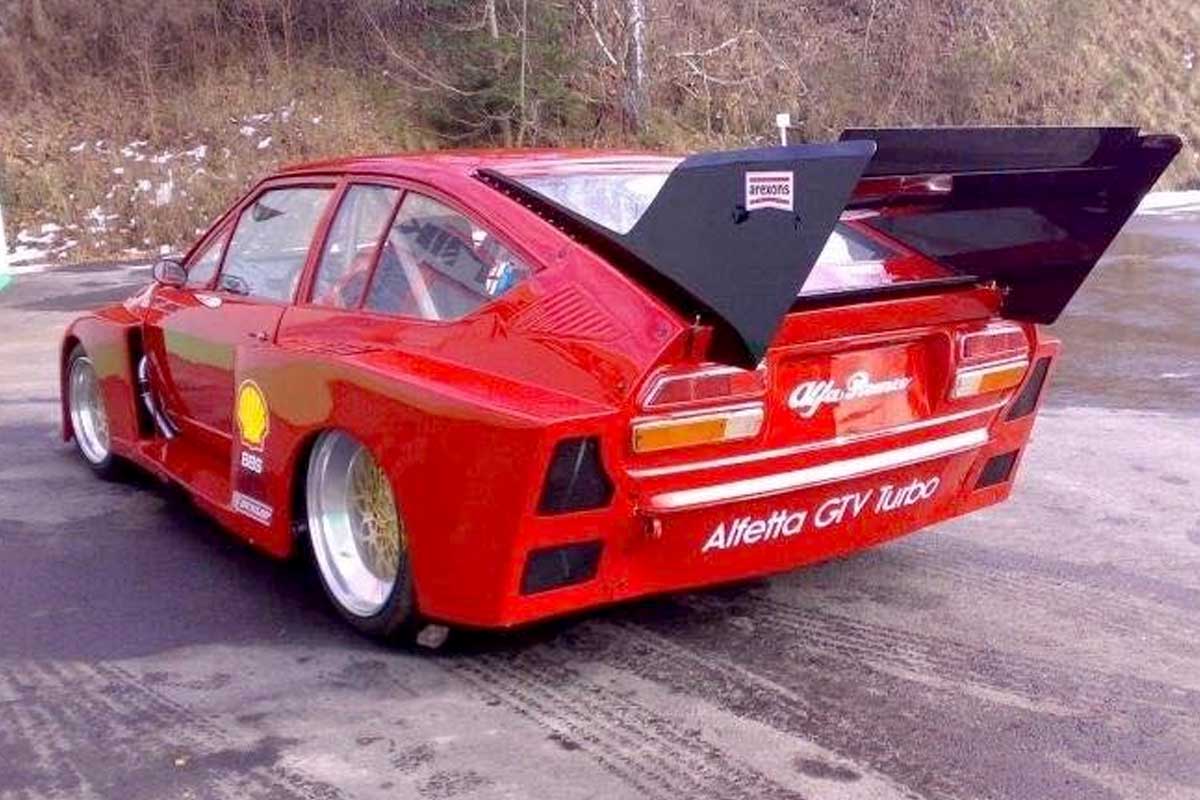
Later, the design evolved in a strange way, as the GTV received a new front end with a Porsche 935 look. At the same time, the white livery (which, according to some photos, was also predominantly yellow) changed to red! Produced in 1981, this kit features a plunging nose and headlights quite similar to those of the German bombshell. The result was highly questionable, and took away the car's distinctive identity! Only a small Scudetto reminds us that this is an Alfa Romeo in this bizarre guise.
Having failed to achieve any significant results (or to finish a single race, due to a mechanical system weakened by the 400 hp and turbo), the car was put aside at the beginning of 1982, following the disappearance of the DRM. It remained out of service for a long time, in its original condition, before being restored in recent years after several changes of ownership. The last I heard, it was in Portugal!
 English
  French
  Italian
  Spanish
  Portuguese
  German
  Japanese
  Turkish
  Dutch
Dutch