


In 1993, unlike many national touring car championships which adopted the 2-liter class, Germany chose Class 1 for the DTM, paving the way for sophisticated, high-performance touring cars. Thanks to permissive regulations that gave engineers free rein, the DTM's body-built sedans took on the look of prototypes.
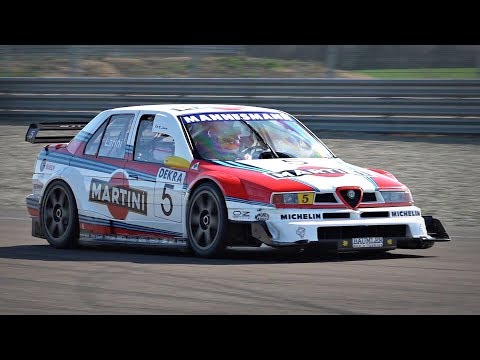
Alfa Romeo sprang a surprise with the 155 V6 4×4, taking Mercedes by surprise and winning the drivers' and manufacturers' titles! Differential, 6-speed gearbox, ABS, titanium valves, electronics and 4-wheel drive: it's a fighter plane, powered by a 2.5-liter 60° V6 derived from the Busso and developing 430 HP. Nicola Larini dominates his subject and offers the Biscione the German title.

Stung to the core, the Germans retaliated. By 1994, Mercedes had abandoned the 190E for the C-Klasse V6, and the star was back in the limelight with Klaus Ludwig's title, but Alfa Romeo was still doing very well with numerous victories. In 1995, the DTM goes international and becomes the ITC. This was the pinnacle of the championship, with races all over Europe, as well as in Japan and Brazil. On the track, DTM stars (Schneider, Ludwig, Thiim) rub shoulders with F1 veterans (Modena, Tarquini, Lehto, Nannini) and young guns (Jan Magnussen, Fisichella, etc.). The cars were real prototypes in disguise, and costs soared.
A new V6 for 1996, partly French!
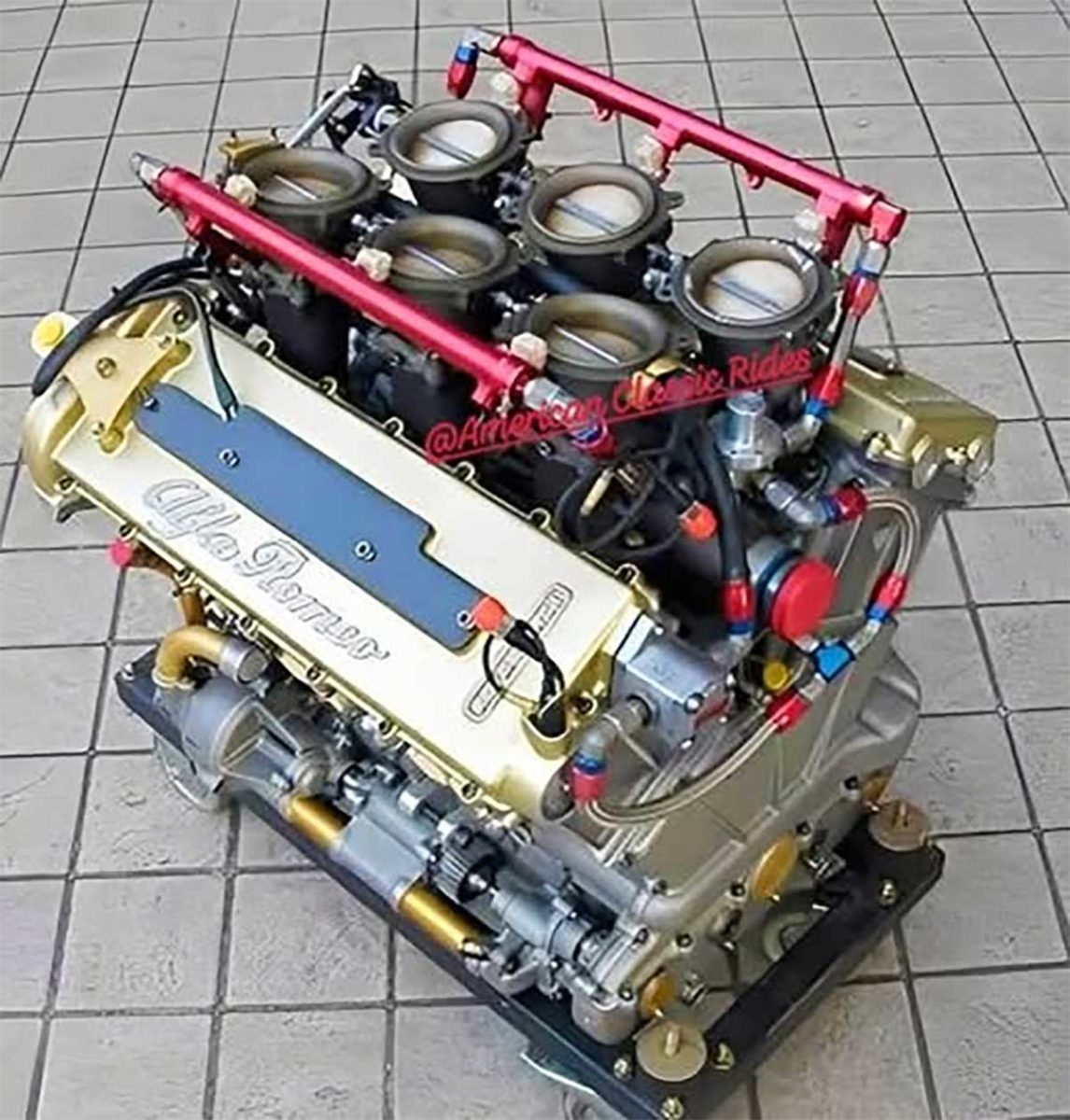
To counter the C-Klasse V6 and Opel Calibra 4×4, Alfa Romeo is upgrading its monster with a new 90° V6, an angle deemed more efficient by engine engineers.

Problem: the regulations require the engine to be a series production model. Well, “series-derived” is a big word: you have to keep the same cylinder angle and center distance. The rest is up to you! Yet the only 90° engine produced in quantity by Alfa Romeo was that of... the Montreal! The Montreal's V8 was homologated as a V6, but only to serve as a «screen» and save honor, since Alfa Romeo actually opted for an engine modified from the V6 of the Lancia Thema (a car that shared its base with the Alfa Romeo 164). And this V6 was none other than the famous... V6 PRV!
Sleight of hand
How did this engine, developed by Peugeot, Renault and Volvo, end up in a Lancia? When the Thema came out in 1984, a V6 seemed essential to support the status positioning of the elegant Italian sedan. At the time, however, Fiat had no V6 in its organ bank, and Alfa Romeo had not yet been taken over by the group, making the Busso V6 inaccessible. Compact, light, flexible and torquey at low revs, the PRV is a sensible choice. And let's not forget that, in return, Renault and Peugeot bought diesel engines from Fiat!


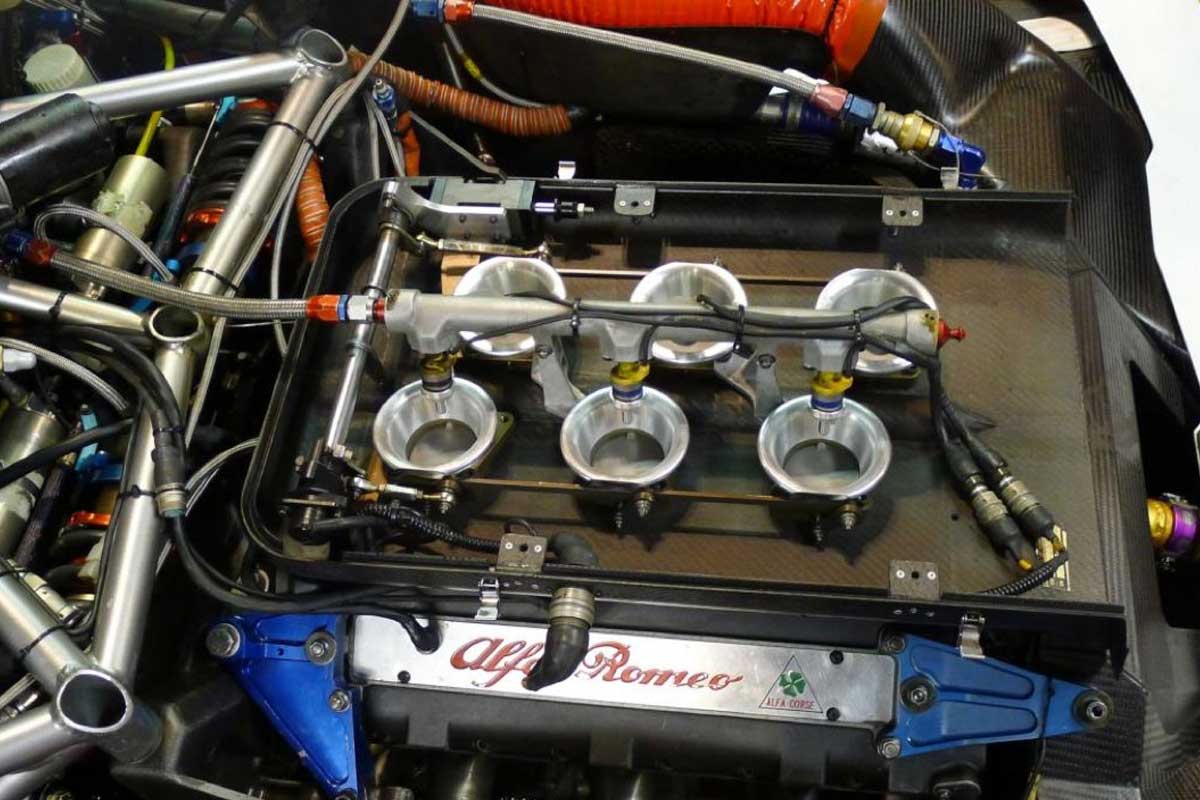

Second question: how could a Lancia V6 PRV engine be used as the basis for an Alfa Romeo racing car? Well, the trick was this: Alfa Romeo had been acquired in 1986 by FIAT, which had then merged the two brands under the Alfa-Lancia Industriale umbrella. What's more, the Thema was assembled in Arese, the historic heart of the Biscione. This meant that a Thema V6 engine could be considered “in-house”!
It wasn't enough
According to project manager Sergio Limone, Alfa Romeo kept a low profile on this trick. For obvious marketing reasons, it would have been unglamorous to admit the foreign origins of the V6 Ti's engine. Power rose to 490 hp, but was not enough to beat the sharper German models, as development of the 155 was halted. Sergio Limone also revealed that Mercedes had been more clever in interpreting the «gaps» in the regulations to its advantage, and that the English translation of the regulations used by the Alfa Corse engineers was not exactly the same as the German original...

The 1996 155 V6 also featured ingenious aerodynamic evolutions, such as a fairing on the front doors that merged with the rear-view mirrors, creating a vortex that reduced aerodynamic disturbance towards the rear spoiler. Unbelievable) The DTM came to an end at the end of the season, due to soaring costs and insufficient media coverage. For the 155, it was the end of its career on the racetrack, but the 156 was already in the pipeline to come and ruffle the 2-liter supertouring class.
 English
  French
  Italian
  Spanish
  Portuguese
  German
  Japanese
  Turkish
  Dutch
Dutch