

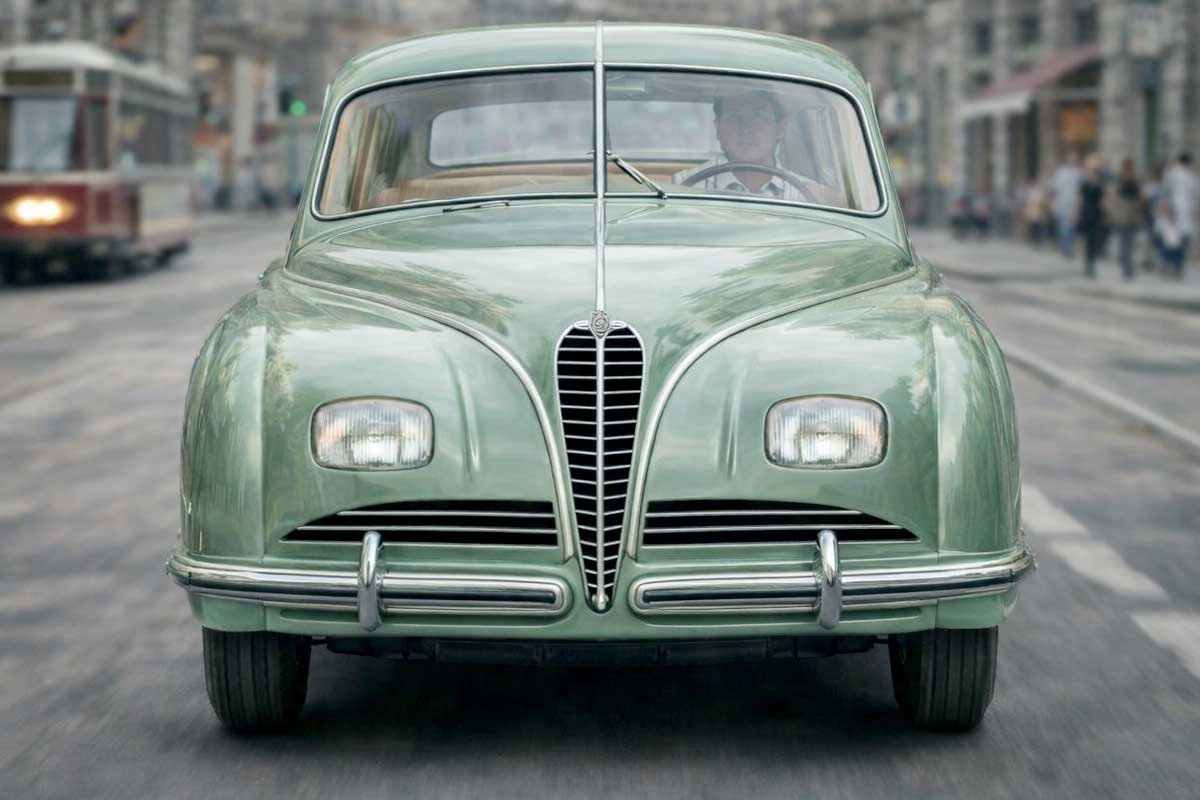
Following Enzo Ferrari's departure in 1939, when he refused to accept Alfa Corse's takeover of Scuderia Ferrari, Spanish engineer Wifredo Ricart stepped up to supervise the Biscione's competition-related projects. Recent examples include the Tipo 512 single-seaterthe first Italian single-seater with a central rear engine and a 12-cylinder boxer engine. A real technical feat for its time, it was inspired by the Auto-Union, but was scheduled for 1940 and never raced. Vittorio Jano, brilliant designer of the P3 and Alfa Romeo's various engines in the '30s, left for Lancia in 1937 to develop the Aurelia. Alfa Romeo's boss, Ugo Gobbato, needed someone to look after his Milan-based company's production cars. For the job, he chose Bruno Trevisan, a reserve commander in the Italian air force and an industrial engineer from Fiat Aviazione.
Preparing for the post-war period
While Trevisan's team had already been working on two sports cars, a V12-powered S10 and a V8-powered S11, since 1939, a radical turn was taken in 1941. Ugo Gobbato ordered a halt to these programs, and finally entrusted Wifredo Ricart with the technical supervision of all work in progress in the Special Studies Department, as well as all other design and experimental projects for cars, trucks, aircraft, bodywork, racing vehicles, and so on. From 1943 onwards, the Alfa Romeo design office worked on a project for a new sedan to be launched at the end of the conflict, christened "1352", intended to be sold at 2,000-3,000 units a year.
Despite numerous difficulties (the design office had moved to the shores of Lake Orta), Ricart wanted an innovative project: a 5-6 seater sedan with a load-bearing body, a 2-liter in-line 6-cylinder engine with double overhead camshafts, transverse torsion bar suspension and a gearbox integrated into the rear axle. This model prefigured the transaxle transmission that would equip the Alfetta thirty years later. Gobbato's strategic decision was to create a car that was "simple to build" and "easy to maintain", of "medium type", with "a brilliant, yet progressive and smooth pick-up even at low revs". The price was to remain within a range 10 % higher than that of the Lancia Aprilia.
Innovative, inside and out
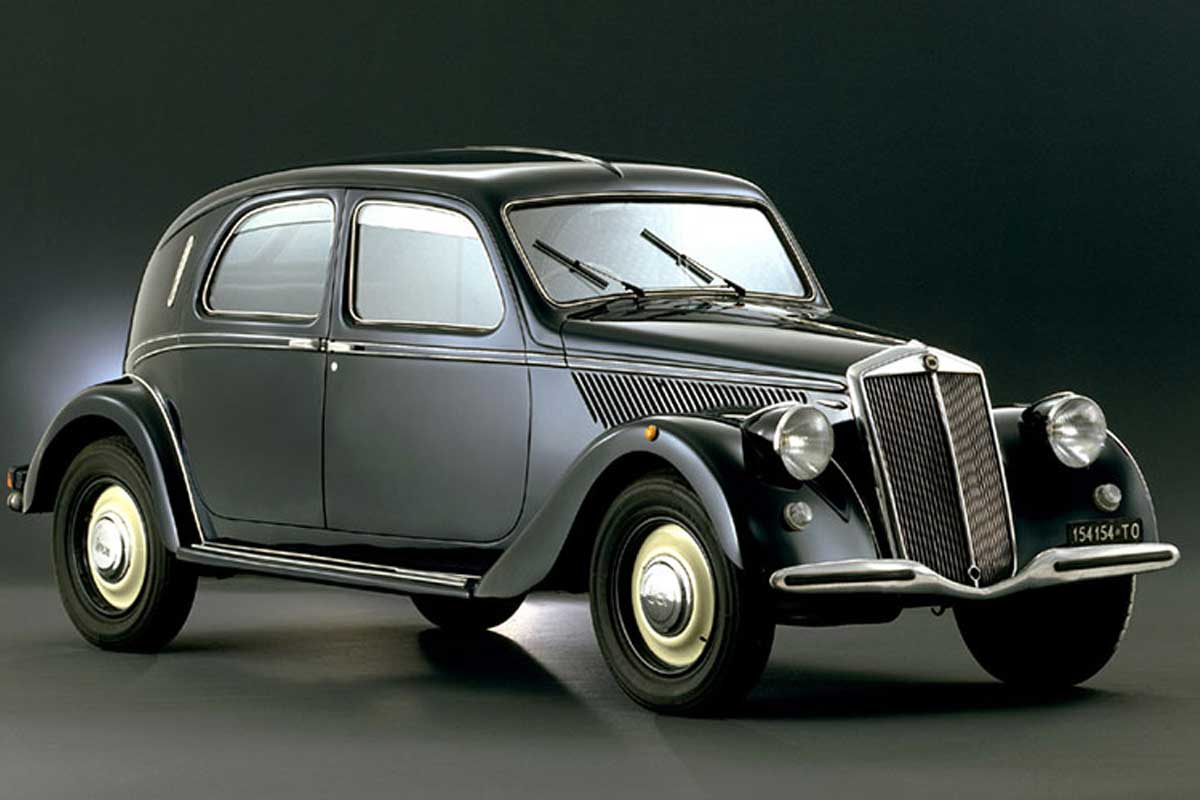
The first step was to redesign the bodywork of the 6C, transforming this two-door coupé into a sedan. In this respect, the designers imagined lines clearly inspired by the Lancia Aprilia of 1937, particularly in terms of profile and rear end, in line with fashionable canons strongly influenced by aerodynamics and the "streamline". The absence of a B-pillar offers unobstructed access when the rear doors are wide open, as they are antagonistically opening doors. Despite these Lancia influences, the Alfa Romeo "Gazzella" has two particularly original body elements: the wheel arches are largely covered and the headlights are retractable! The interior required a complete redesign of the chassis to free up space for the two rows of seats.
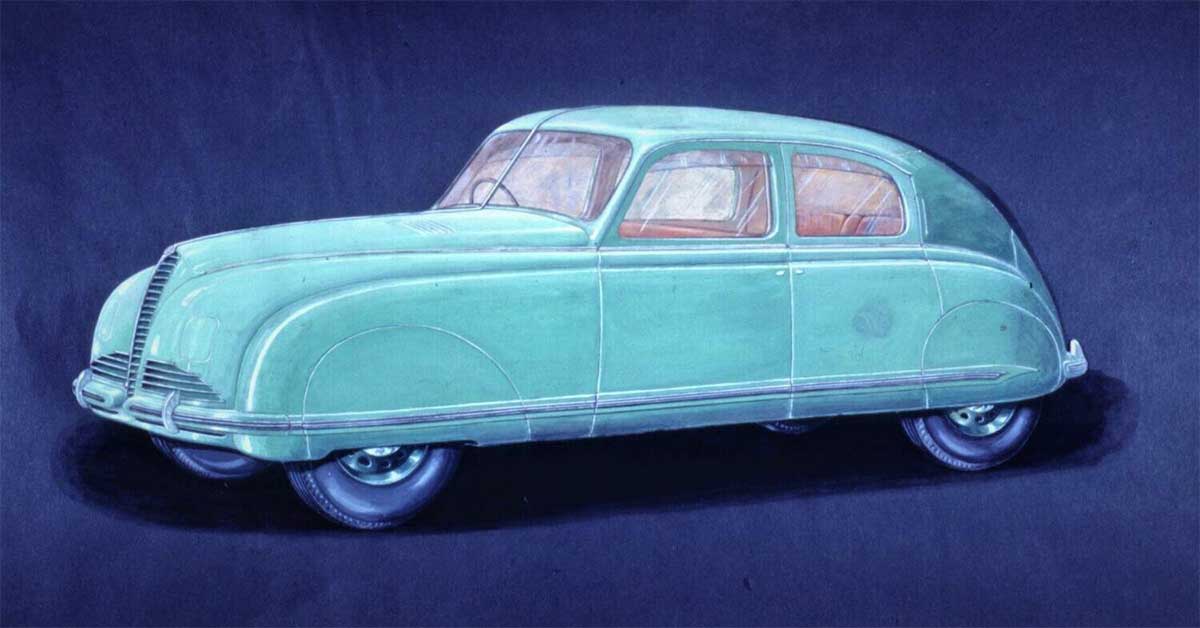
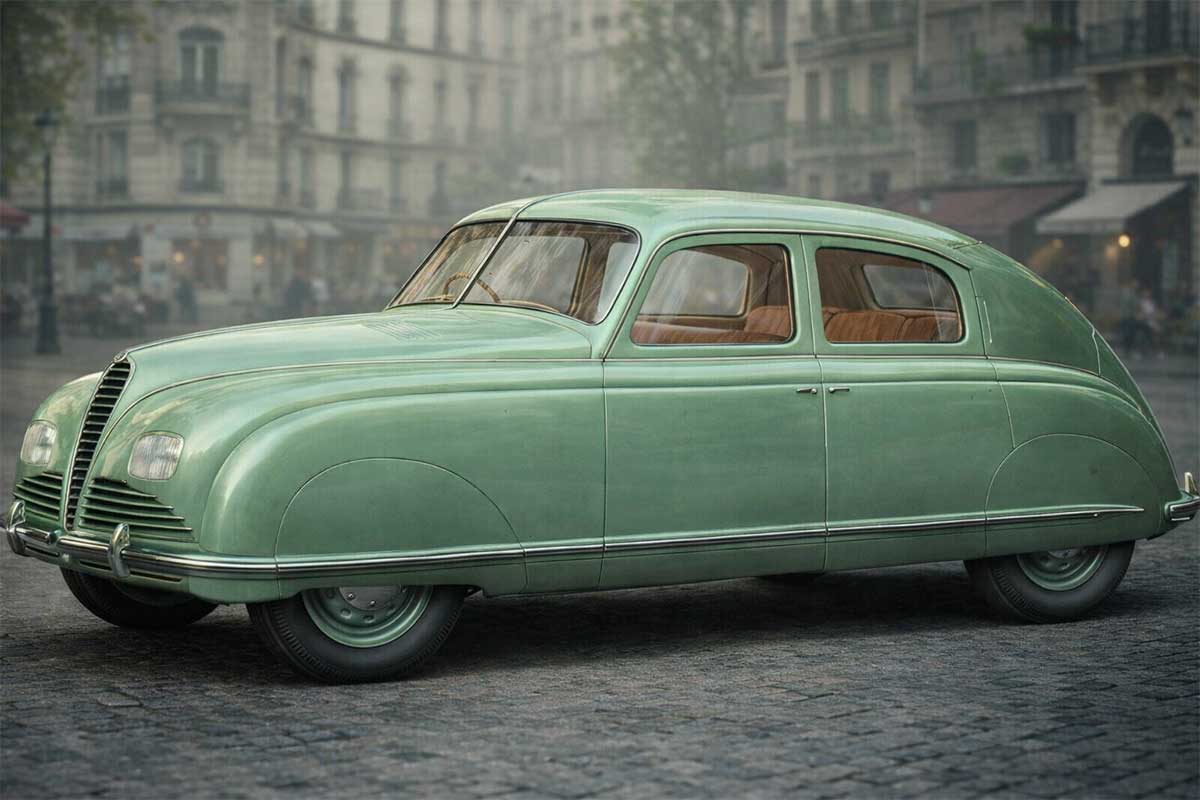
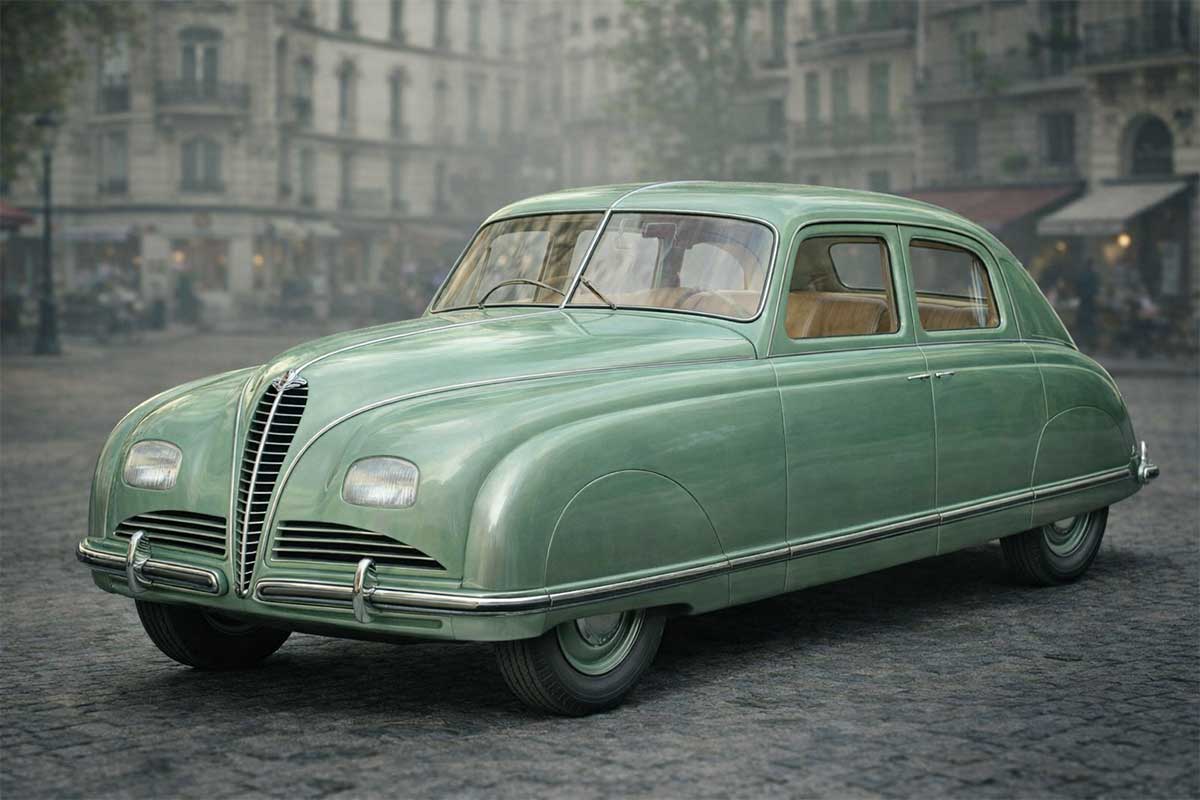
Giuseppe Busso drew up a sketch of the engine-gearbox-differential assembly towards the end of February 1944; this Alfa Romeo was to be front-wheel drive, not rear-wheel drive. The gearshift was eliminated thanks to the integration of a hydraulic gearshift operated by a lever on the steering wheel. First select the desired gear, then press the clutch pedal to change it. A highly refined system. The absence of the gearbox on the floor of the passenger compartment meant even more space was saved. This is why the Gazzella was designed as a sedan for up to six people: three in the front and three in the rear.
In the end, the answer was no!
Although only one prototype of the Gazzella was built, the project was very close to production. Recently unearthed archives show that Alfa Romeo had allocated 256 million lire to the production of a first series of 1,280 examples, with a target price of around 200,000 lire. These figures testify to the progress of the project, which even justified the creation of a specific emblem in 1944, also preserved in the archives. Alfa Romeo planned to launch a sub-brand for its new sedan range.
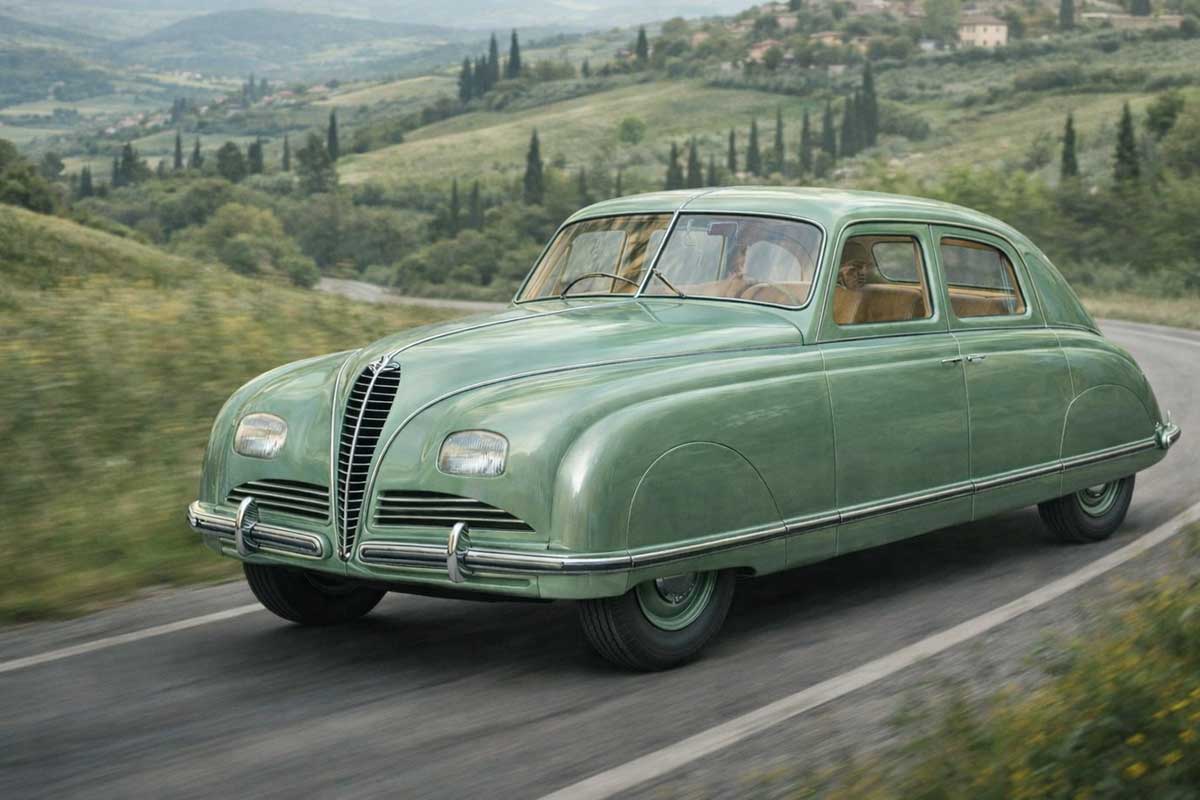
However, Pasquale Gallo, then Alfa Romeo's special commissioner, rejected the car. This surprising decision, explained in part by Gallo's aversion to mass production and the reduced production capacity following bomb damage at the Portello plant, was strongly criticized by the technicians in the testing department. Cost was an issue, as Alfa Romeo preferred to wait and develop a more compact and entirely new sedan to enter this segment, a process that led, as mentioned later, to the 1900.
Another argument put forward for ending the project was more political. Given Ricart's obvious sympathies for the Axis powers, he left Italy at the end of March 1945, just as Salo's fascist regime was coming to an end, and took refuge in Spain, where he helped found ENASA under the protection of Franco's regime. The "political" arguments are more a matter of a posteriori justification, in a context of the return of democracy to Italy and the need to disassociate oneself from the years of fascism. In any case, the assassination of Ugo Gobbato in April 1945 undoubtedly had a significant impact on the projects in progress.
This explains the advent of the iconic 6C Freccia d'Oro in 1946. This two-door version was a transitional car between the purely artisanal and the more industrial era. It offered four real seats, thanks to a rear end very similar to that of the Gazzella. This new model did not require major investment, as it followed in the footsteps of the 6C without structural modifications, which was already well ahead of its time, unlike the project by Wifredo Ricart and Giuseppe Busso.
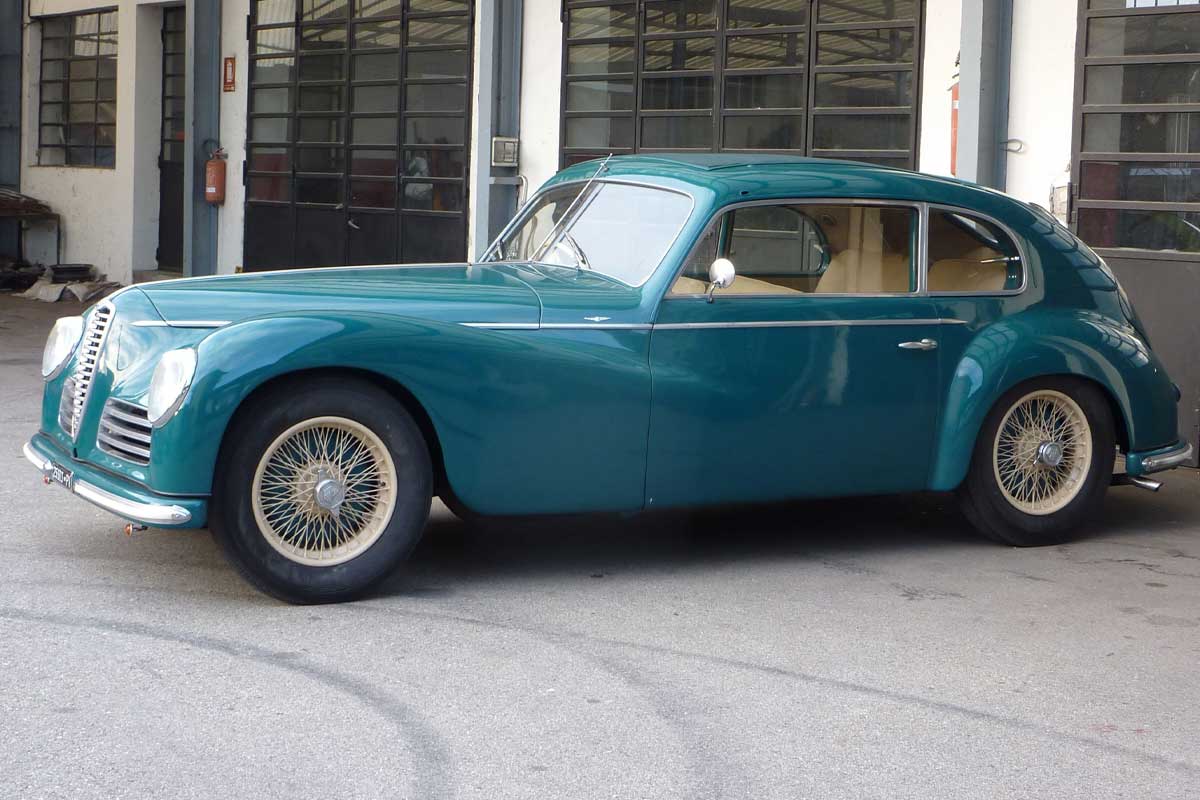
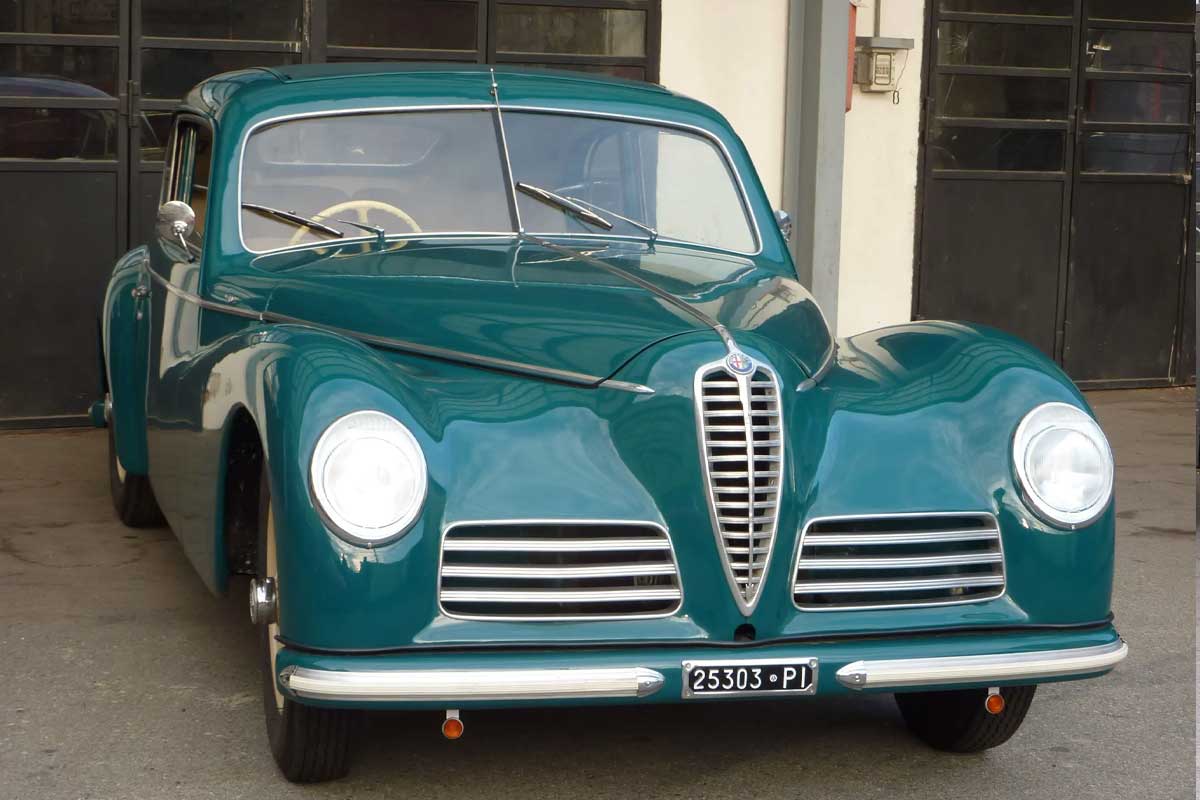
It was finally in 1950 that Alfa Romeo made its industrial revolution with the 1900: a new design, modern production methods and a product accessible to the emerging middle class. This was the reason for abandoning the Gazzella, a more ostentatious model not really suited to the immediate post-war context.
In an interview, designer Edo Masoni described it as follows: "It was at least thirty years ahead of its time, with its electromagnetic clutch for the cooling fan, which avoided wasting energy. The transmission was completely conventional, but the selector forks were operated by a hydraulic piston after the driver had chosen the gear using a lever on the steering column, and then depressed the clutch pedal. It was a totally new system. The engine, too, was a jewel.
 English
  French
  Italian
  Spanish
  Portuguese
  German
  Japanese
  Turkish
  Dutch
Dutch
It looks a bit like a Tatra. I like it.
Thank you for this original and well-written article. It's a pleasure to enrich one's automotive culture.
It's a story that shows that, before being an industrial and technical adventure, the automobile is also a human story, with its flashes of genius and vision, but also its struggles for influence and its political failings.
As a young driver of an Alfa Sprint Coidrifolio Verde in 1988, I'm well aware of what real driving pleasure used to be. Today's vehicles are crammed with safety systems to the point of making us forget the dangers. And it's the new hybrid or electric vehicles that fly past us like flies,...BZ.BZ.BzBz. ... nothing beats a good boxer engine with 4 well-tuned carburetors. That's the doltchi vita.