

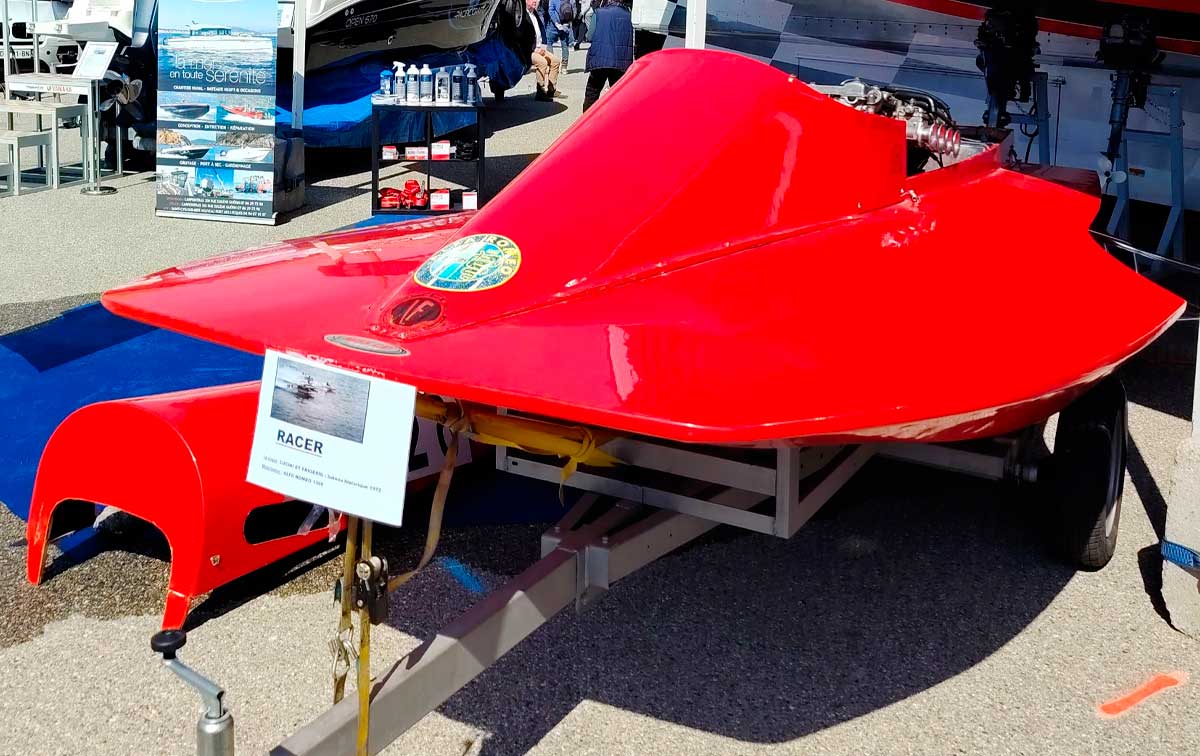
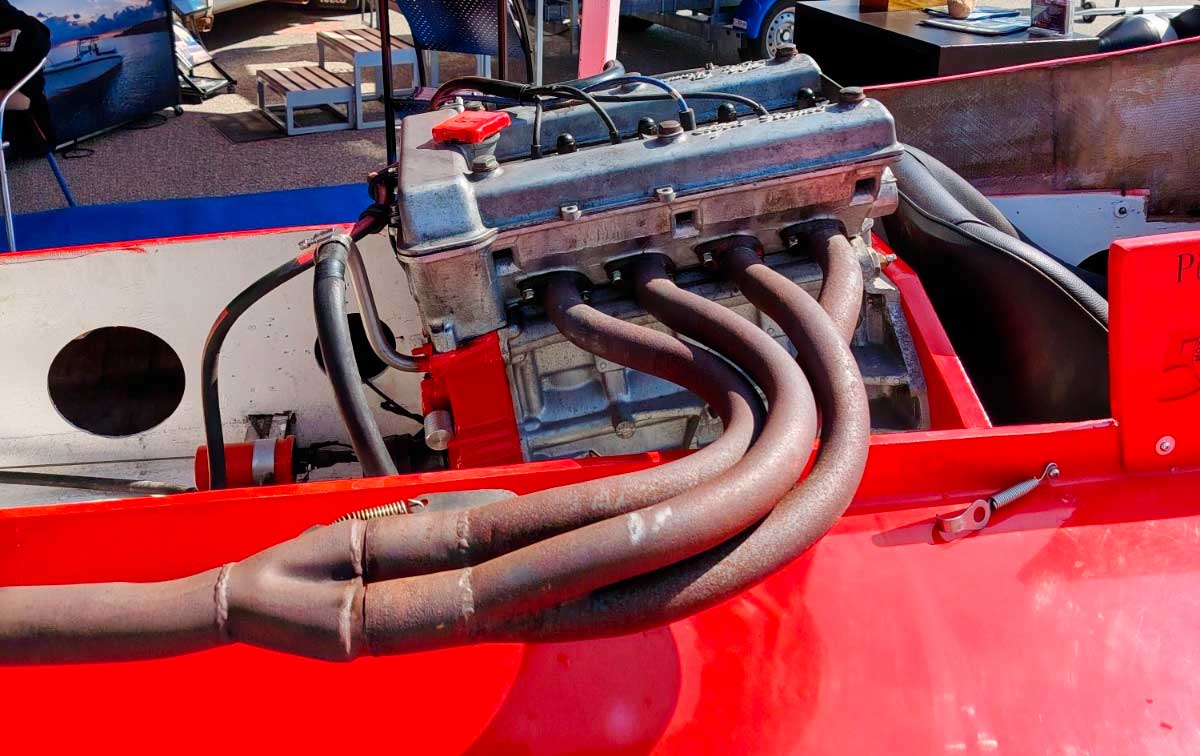
Alfa Romeo didn't just distinguish itself on land. An Alfa Romeo-powered racing dinghy was on display at the recent Motor Passion show in Avignon, France, built by manufacturer Lucini & Frigerio. This 1972 model was in a class of its own, powered by a 4-cylinder bialbero 1300 engine. It reminded us of the «Cavalli Marini» exhibition (sea horses in Dante's language) that had taken place a few years earlier at the Museo Storico d'Arese. An opportunity to evoke Biscone's maritime past, both sporting and industrial, in the nautical sector.
When Alfa Romeo was a multi-product group
The Milan-based brand also had an Alfa Romeo Industrie branch, active in the aeronautics sector with Alfa Romeo Avio and in the commercial transport sector with Alfa Romeo Veicoli Industriali. Buses, trolleybuses, trucks and aircraft engines were all part of the Biscione's production, which contributed to the Italian war effort during the Second World War. Alfa Industriale powered pleasure boats, Venice vaporetti (even fishing boats!) and also the famous MTS (Motoscafo Turismo Silurante) «explosive boats» used by the Regia Marina during the Second World War to try to sink Allied ships, fast boats that used the 6C 2500 engine.
From the '30s to the '80s, Alfa Romeo had a strong presence in motorboat competitions and record attempts, accumulating titles in Italy, Europe and around the world. Italy, a seafaring power and vacationing land, has always been one of the cradles of motorboating. Maserati and Ferrari also tried their hand at it, motorizing racing dinghies in the 50s, including the hydroplane-like Timossi Ferrari Arno XI of 1953, which was powered by the V12 of the 375 F1 scuderia Ferrari. Since the 80s and 90s, Lamborghini has entered the world of sea racing, with powerful engines, including the V12s that power Inshore F1s.
F1 engines
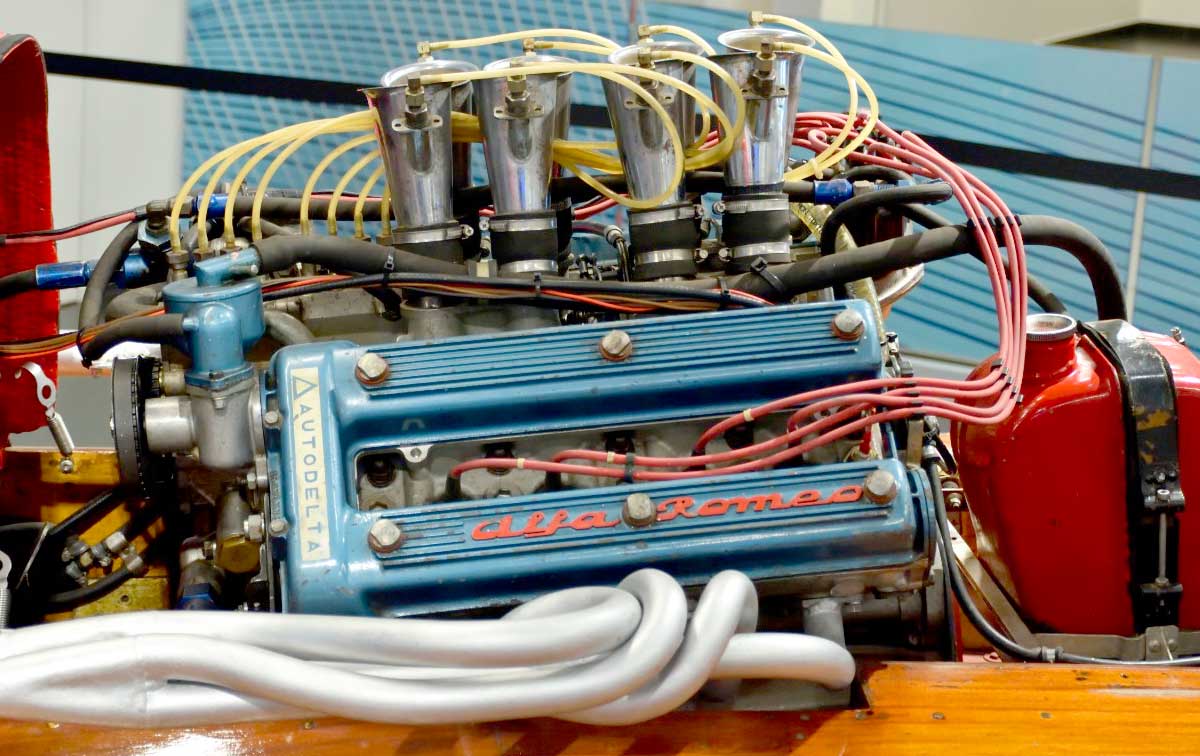
In the motoronautical field, engines suitable for marine use were supplied exclusively for temporary use and managed directly by the Alfa Romeo racing department. The famous 158 engine, designed in 1938 by Gioacchino Colombo, was a 1.5-liter in-line 8-cylinder powered by a Roots compressor. In its ultimate evolution, with a two-stage compressor, it peaked at 450 hp!
Although this engine is best associated with the single-seaters that dominated the Grand Prix between 1946 and 1951, with two F1 world titles won by Giuseppe Farina and Juan-Manuel Fangio, it was already used in motorboats in the late 30s and equipped the Arno II racing boat, a lightweight monohull built by the Picchiotti shipyards in Viareggio in 1946.
With Achille Castoldi as pilot, the engine had won three world championships on the water. Castoldi had held exclusive use of the 158 engine in motorboat competitions since 1938. And it was he who, in 1943, saved some of the Alfettas by hiding them in his farmhouse, safe from bombing and wartime requisitions. The racing boat Arno II was even piloted by Achille Varzi, who reached the podium of the Luino Cup in 1948.
Laura, F1 from the sea
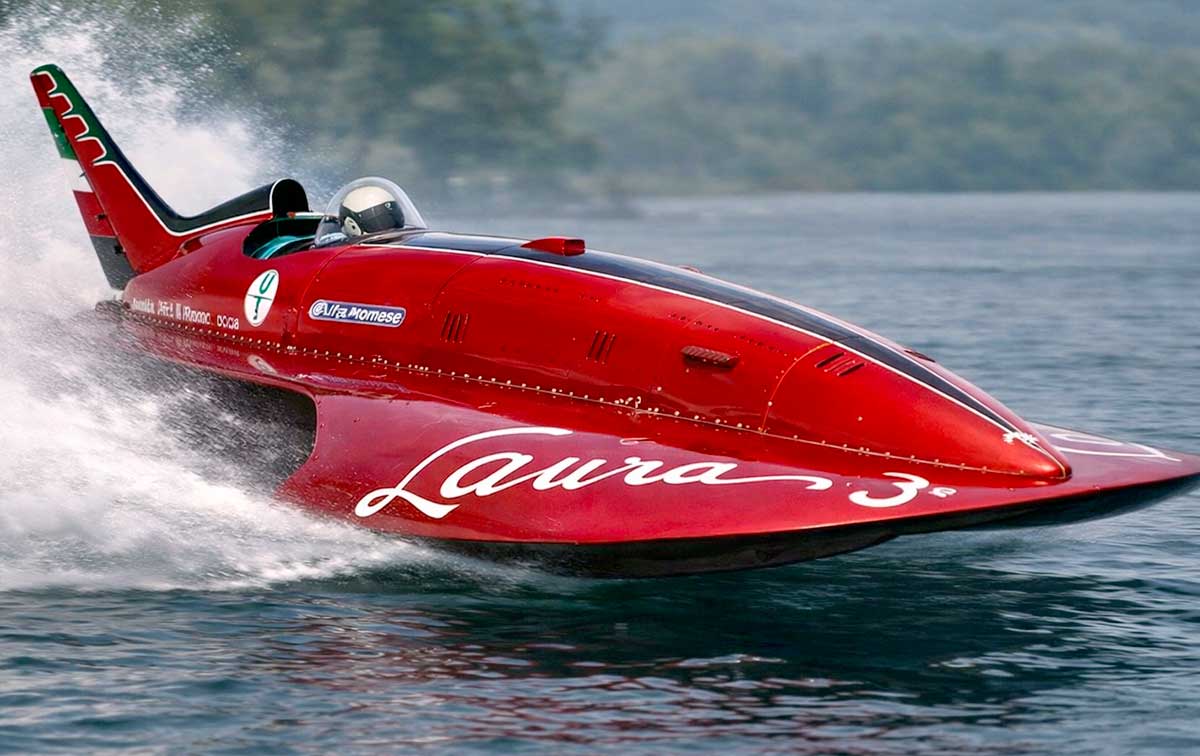
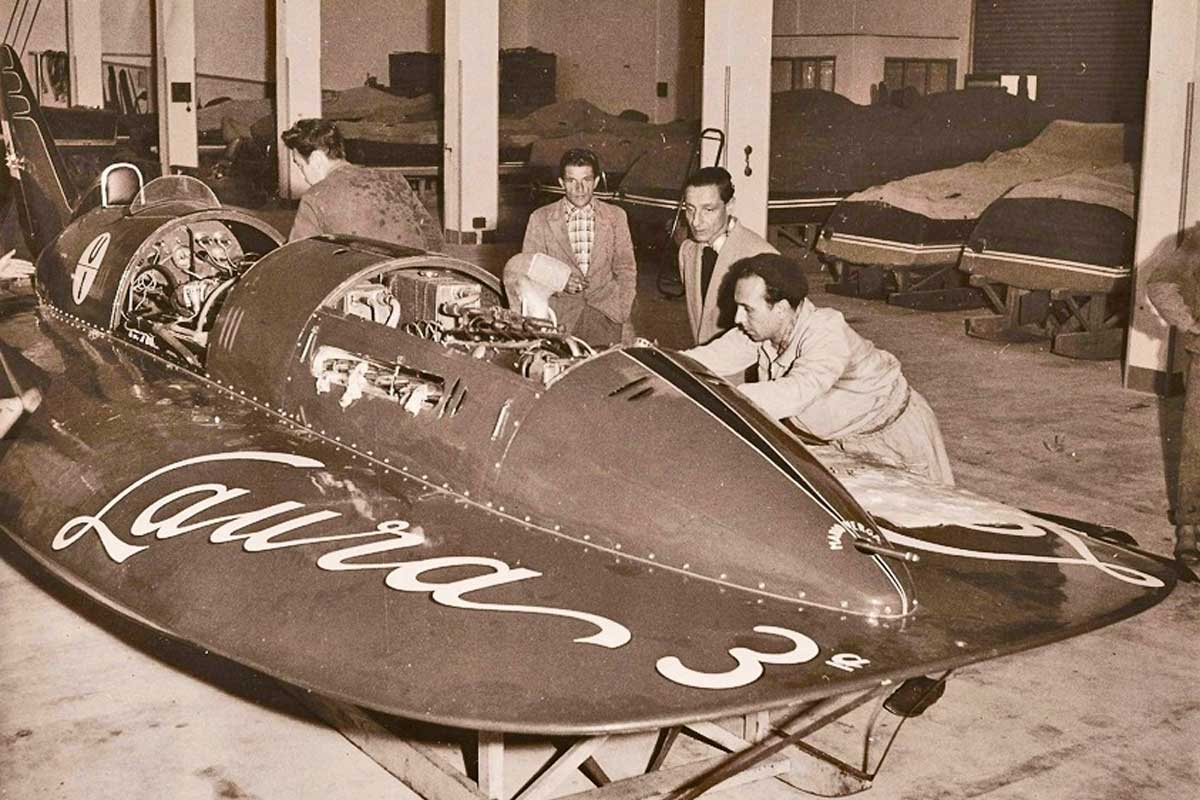
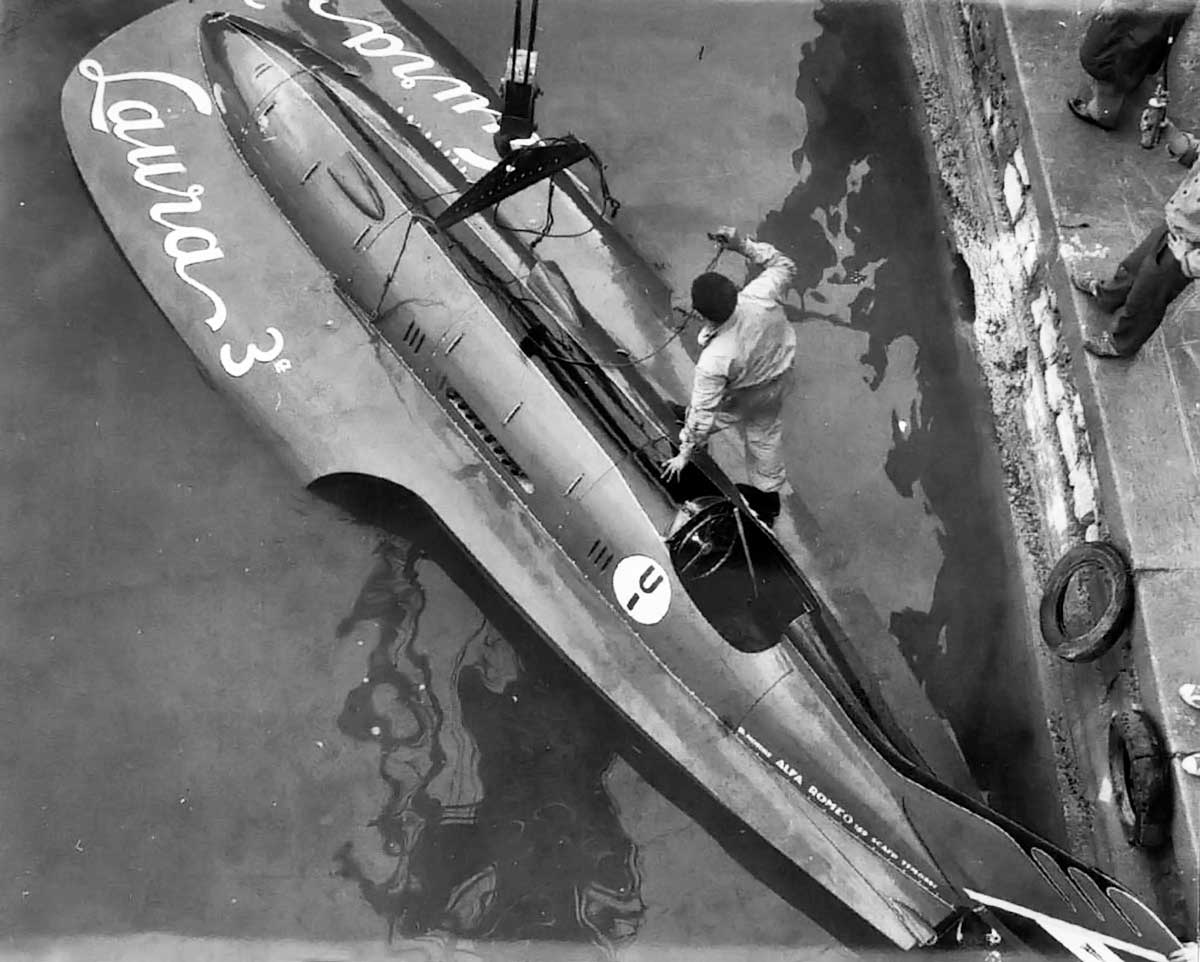
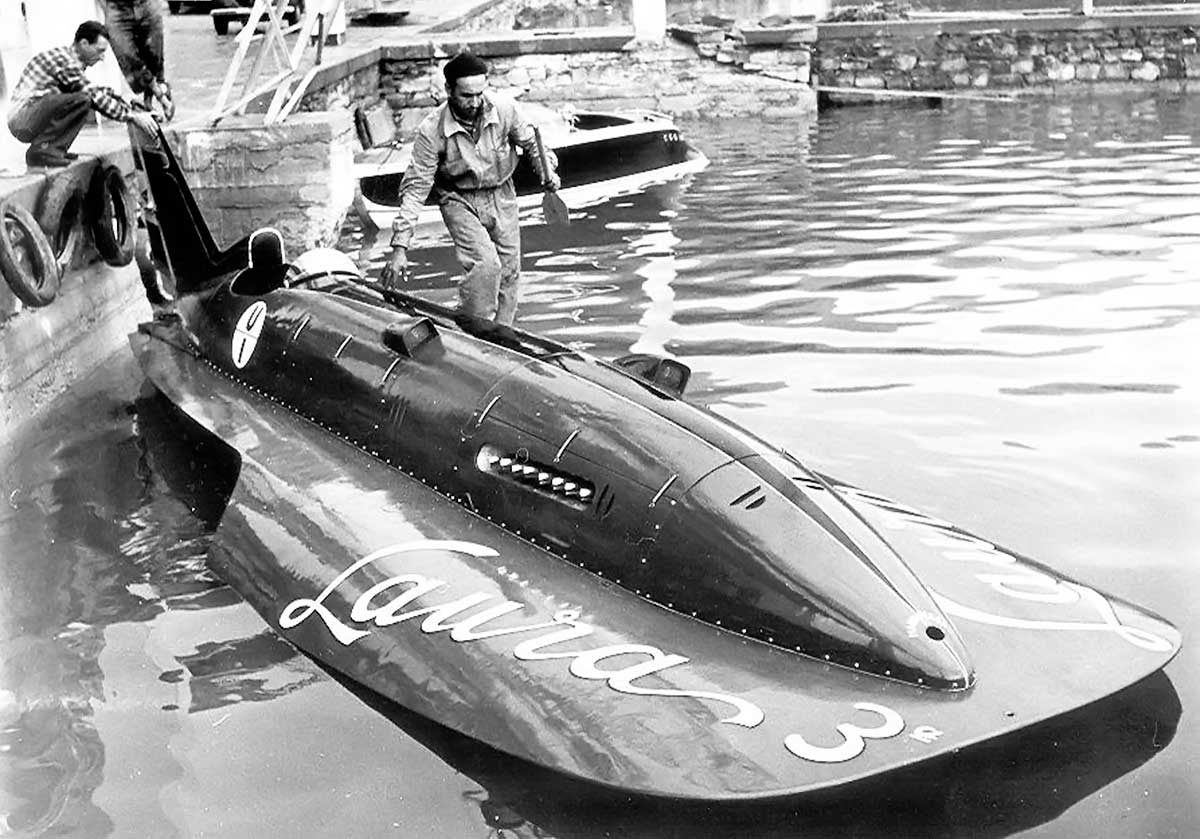
Other emblematic boats include the 1952 «Laura 1er», which uses the engine of the Alfetta 159, which had just won two F1 world titles before the Biscione withdrew from the world championship following the adoption of F2 regulations.
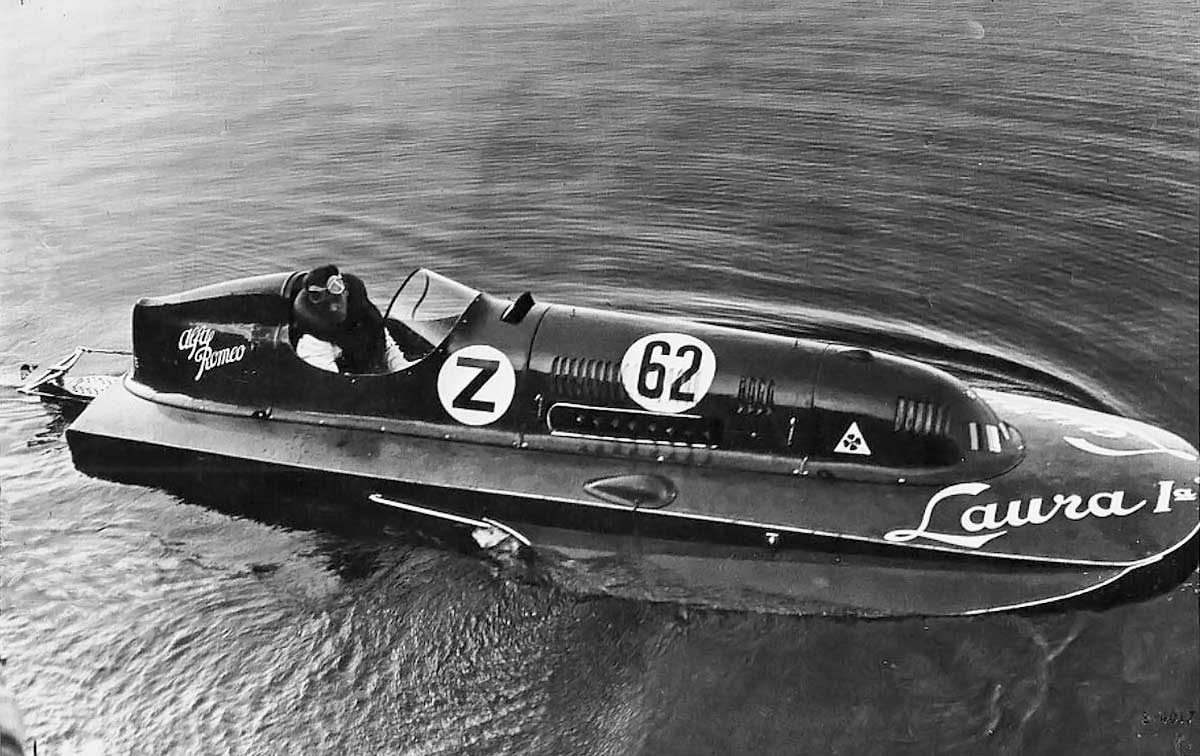
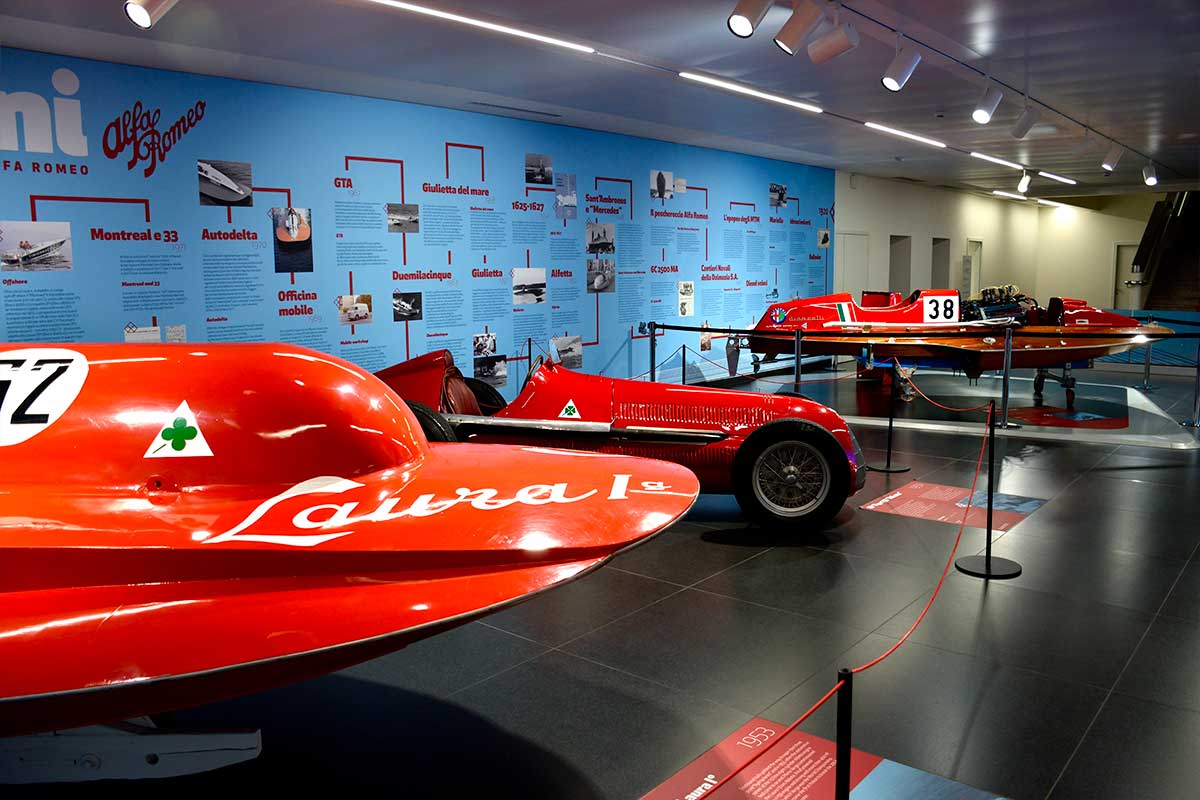
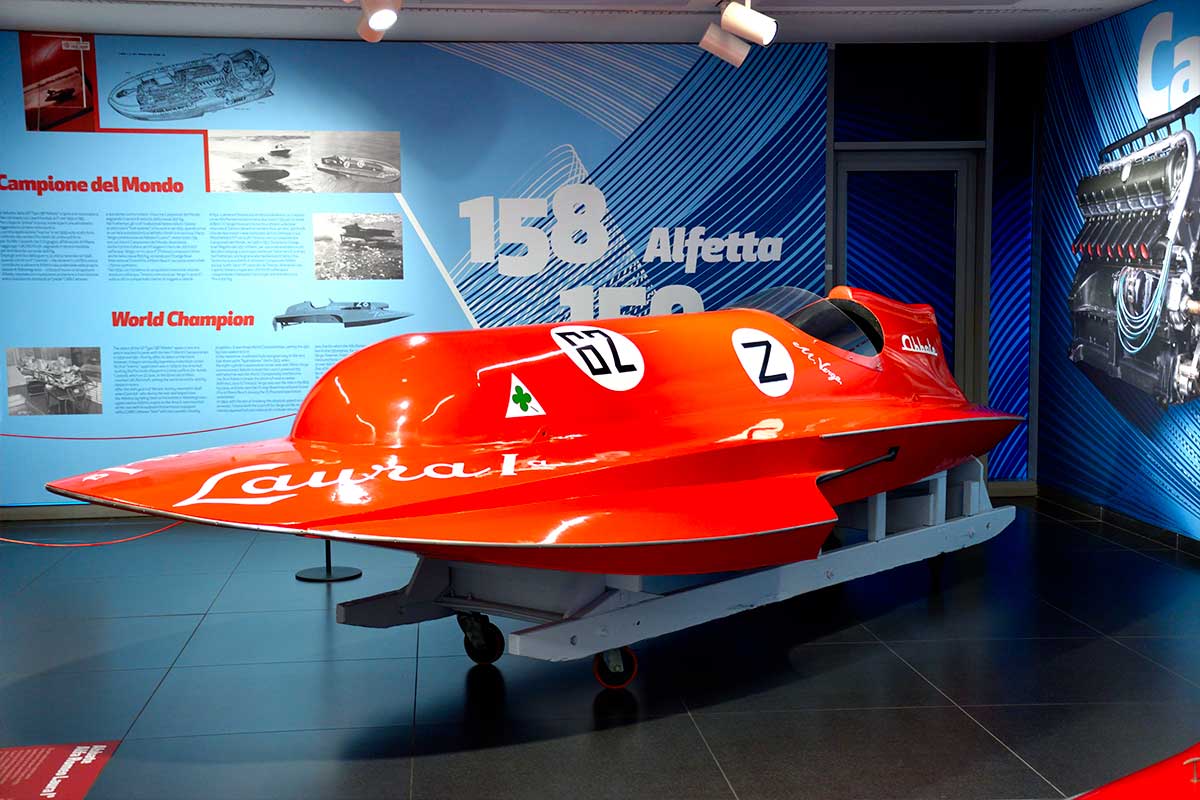
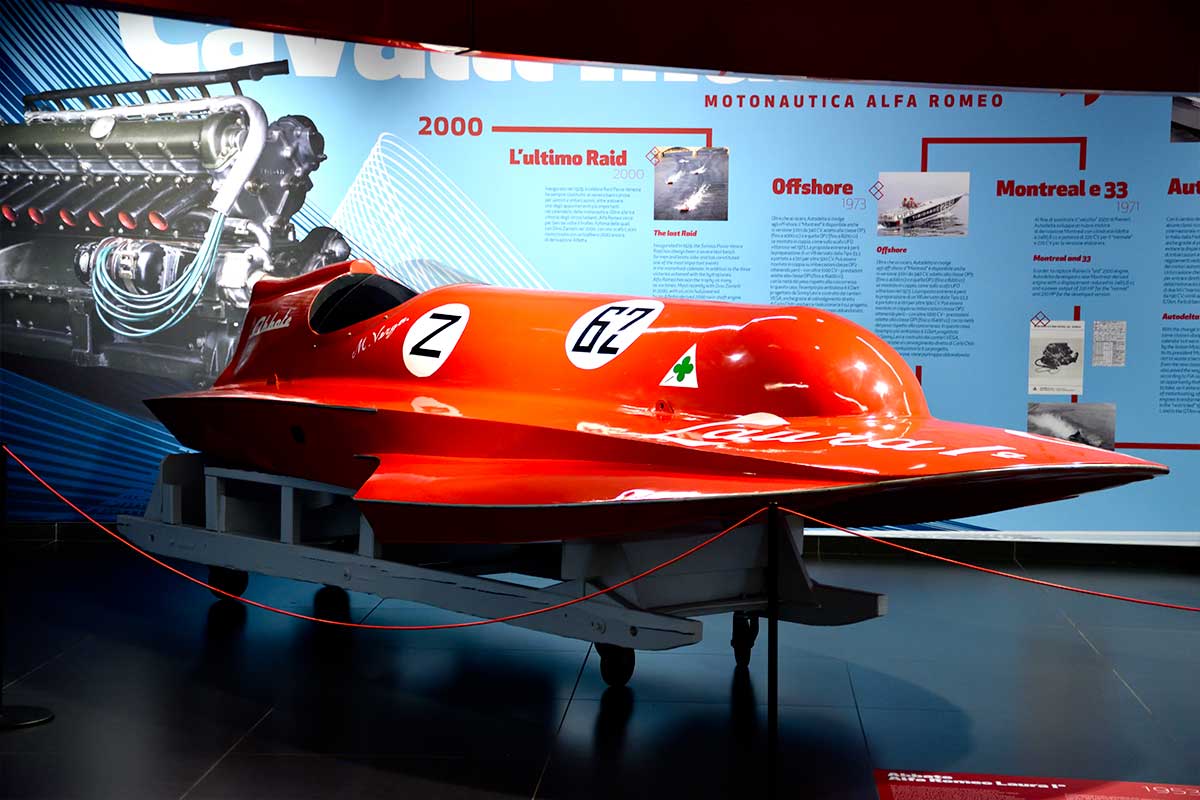
A «bimotore» version, the Laura III, combining two Alfetta engines to achieve 800 hp, was also tested in 1954, reaching speeds of over 290 km/h! But with a tragic end for its star pilot. On Lake Iseo, Verga reached 274 km/h before making another attempt: he exceeded 300 km/h but hit several waves that catapulted the Laura 3, which disintegrated while the pilot was killed instantly.
Other boats
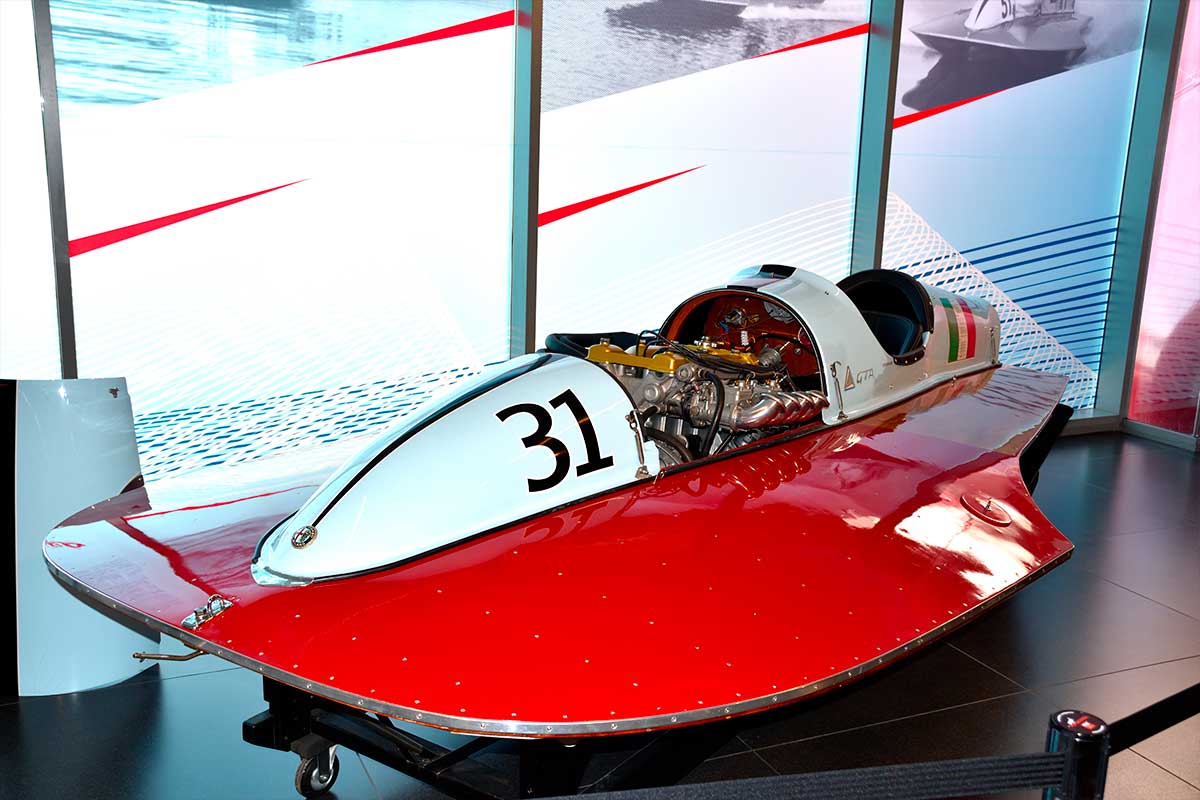
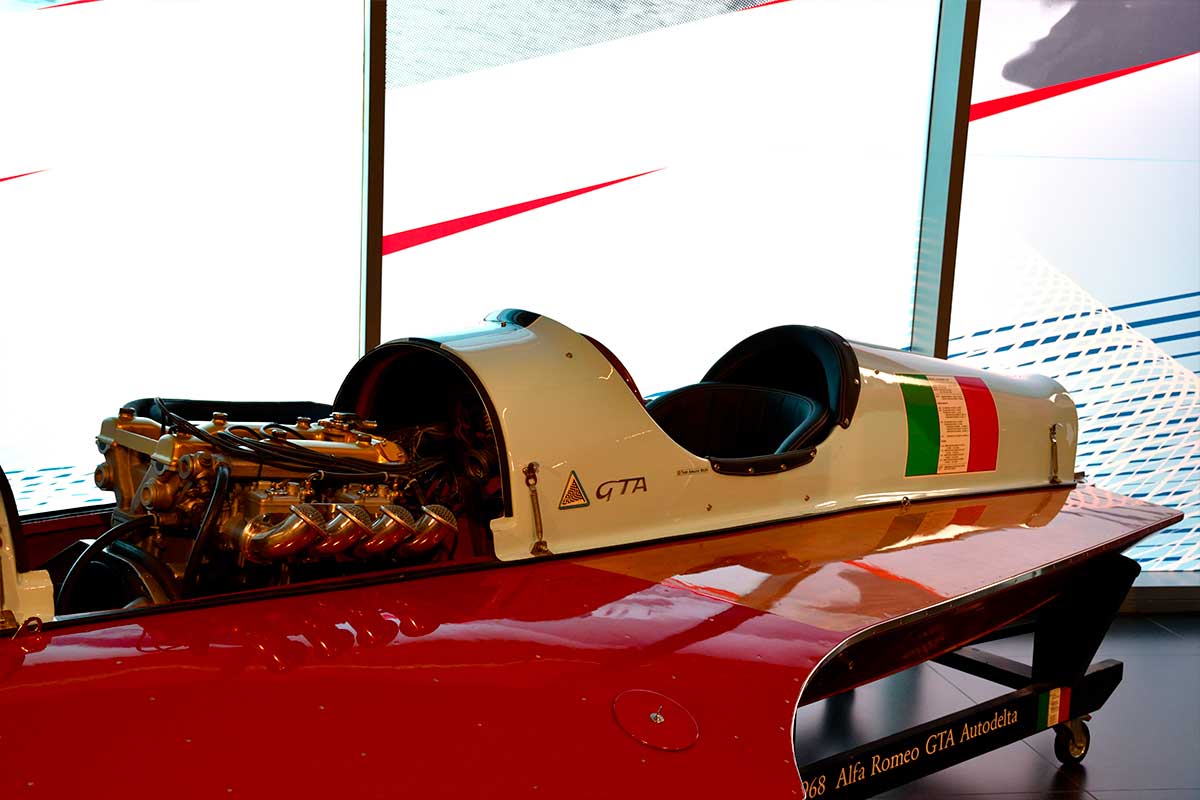
The «Molivio - Alfa Romeo GTA» uses the 1.6 170hp of the Giulia Sprint GTA and was driven by Leopoldo Casanova. Between 1968 and 1972, it won a European title, 4 Italian titles, and beat the world speed record four times in 3 different categories.
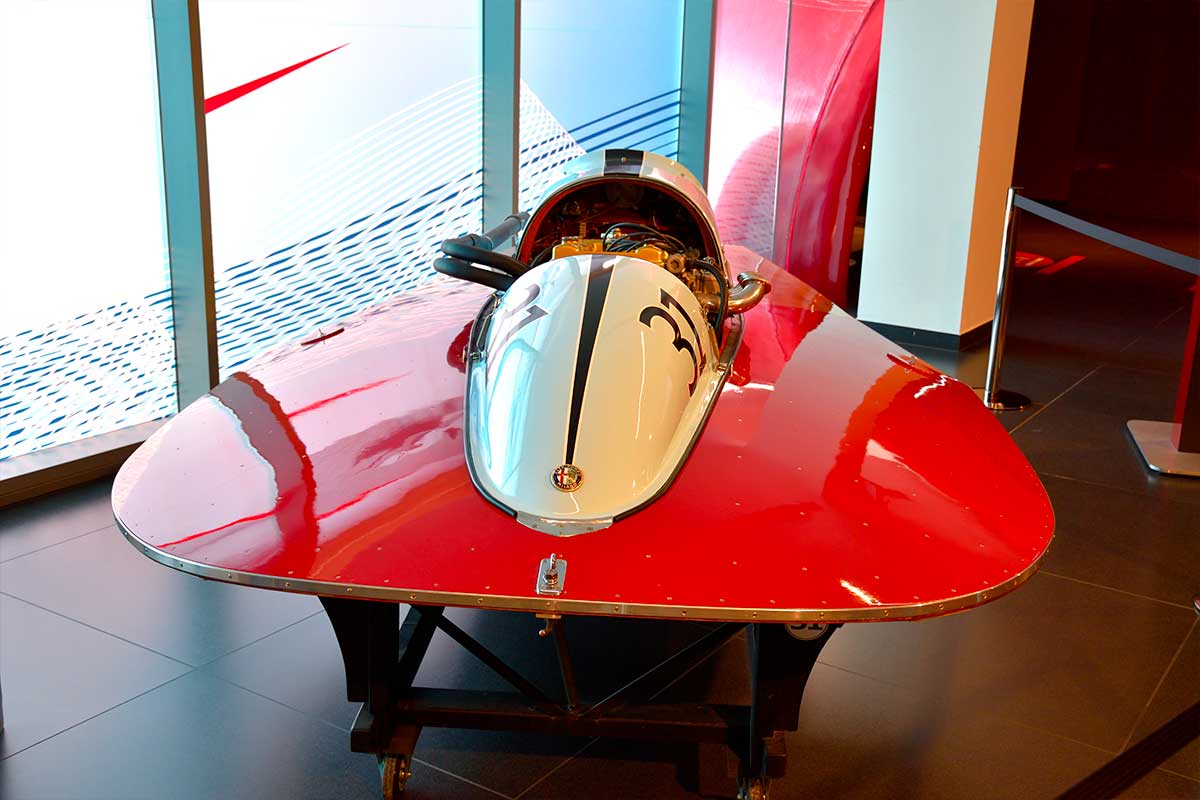
The Molinari-Alfa Romeo 2500 won the world title in 1966. Its bodywork is made of aeronautical aluminum alloy produced by the Agusta Helicopters department. To salute the collaboration with this sector, the stern was painted in the colors of Alitalia's airliners.
The 1970 «Celli» is the first of 4 2500 boats powered by the Montreal-Autodelta nautical engine. It was piloted by Antonio Pietrobelli, a famous racer and winner of Italian, European and world track titles for over a decade.
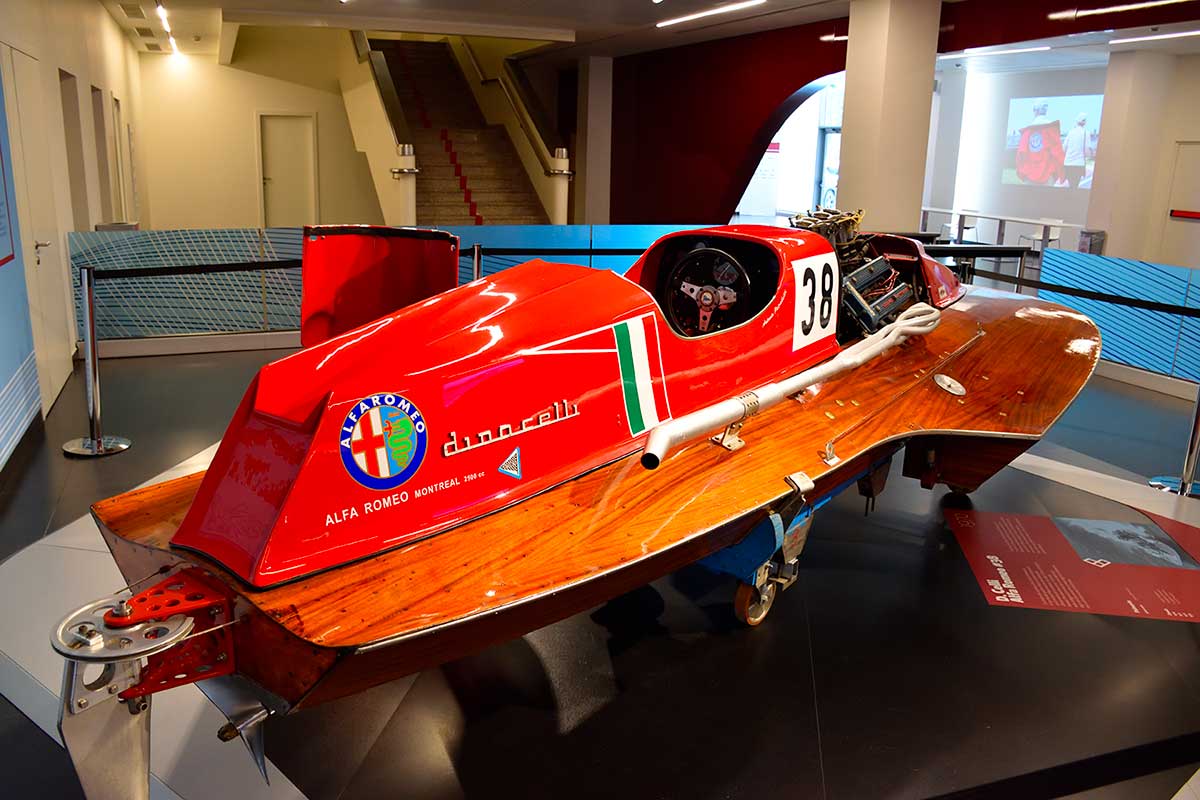
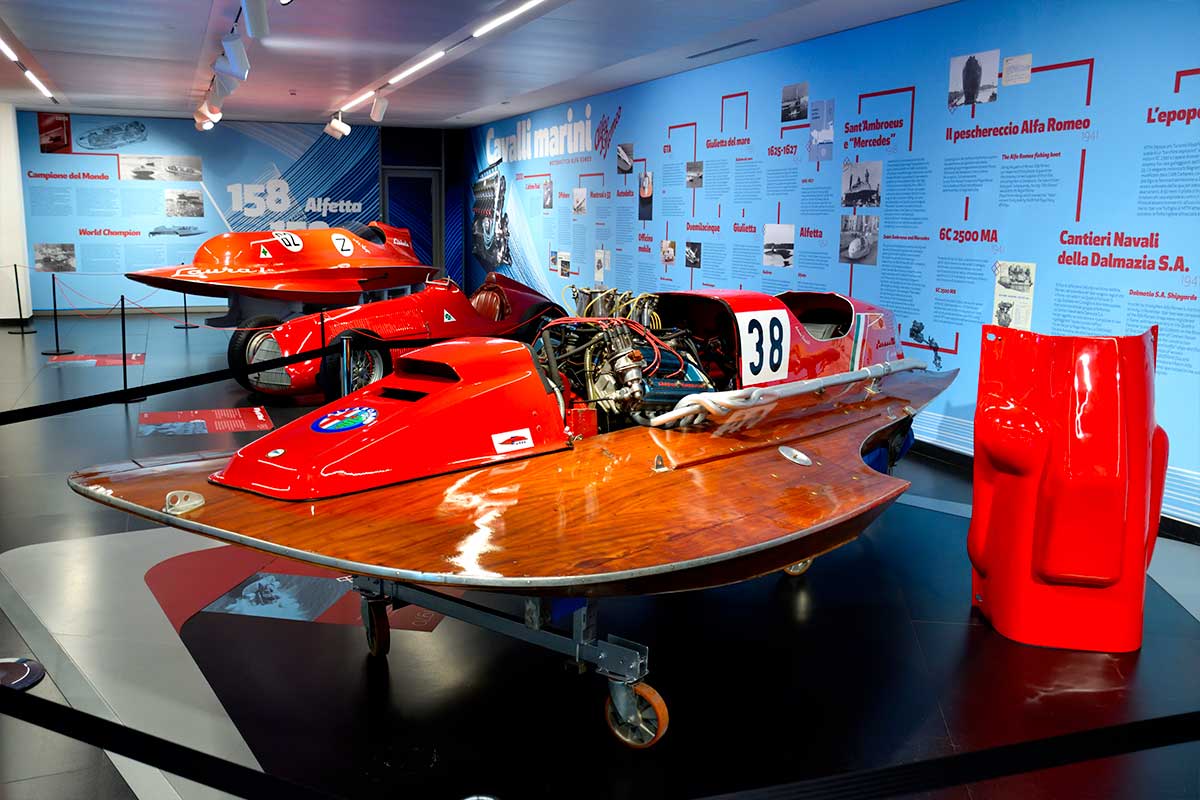
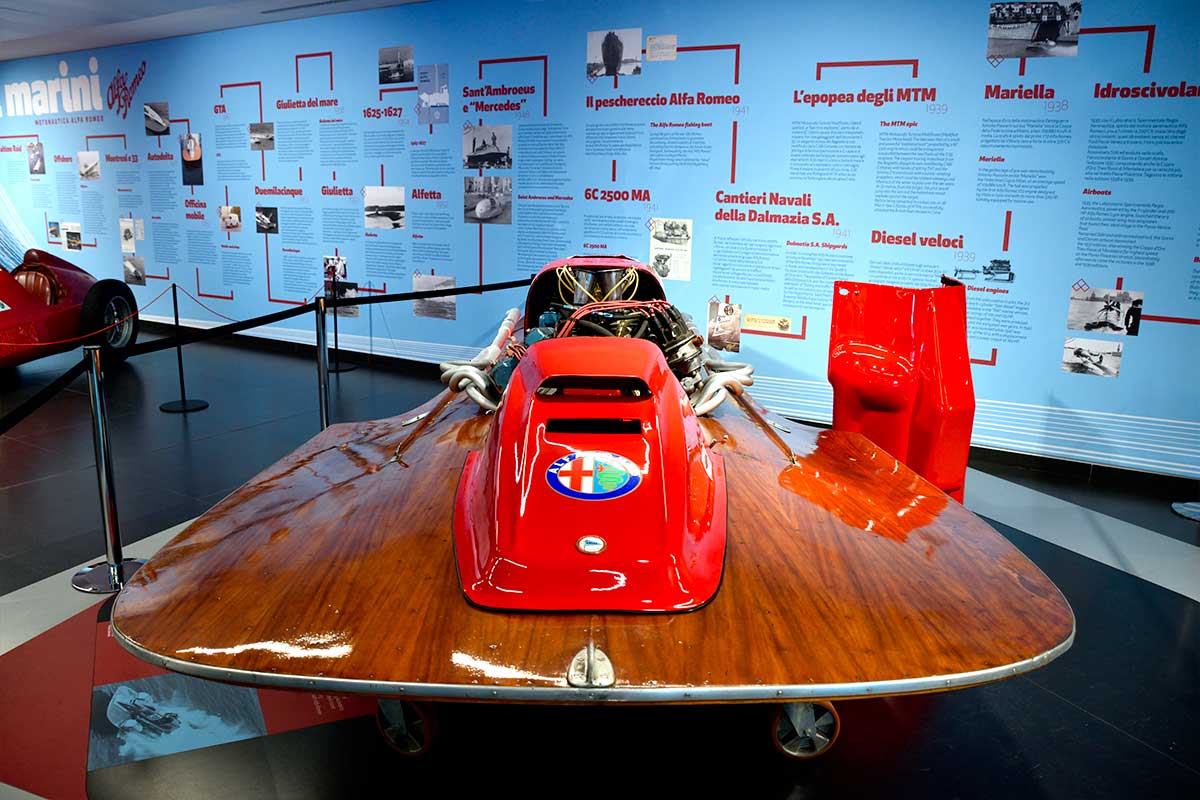
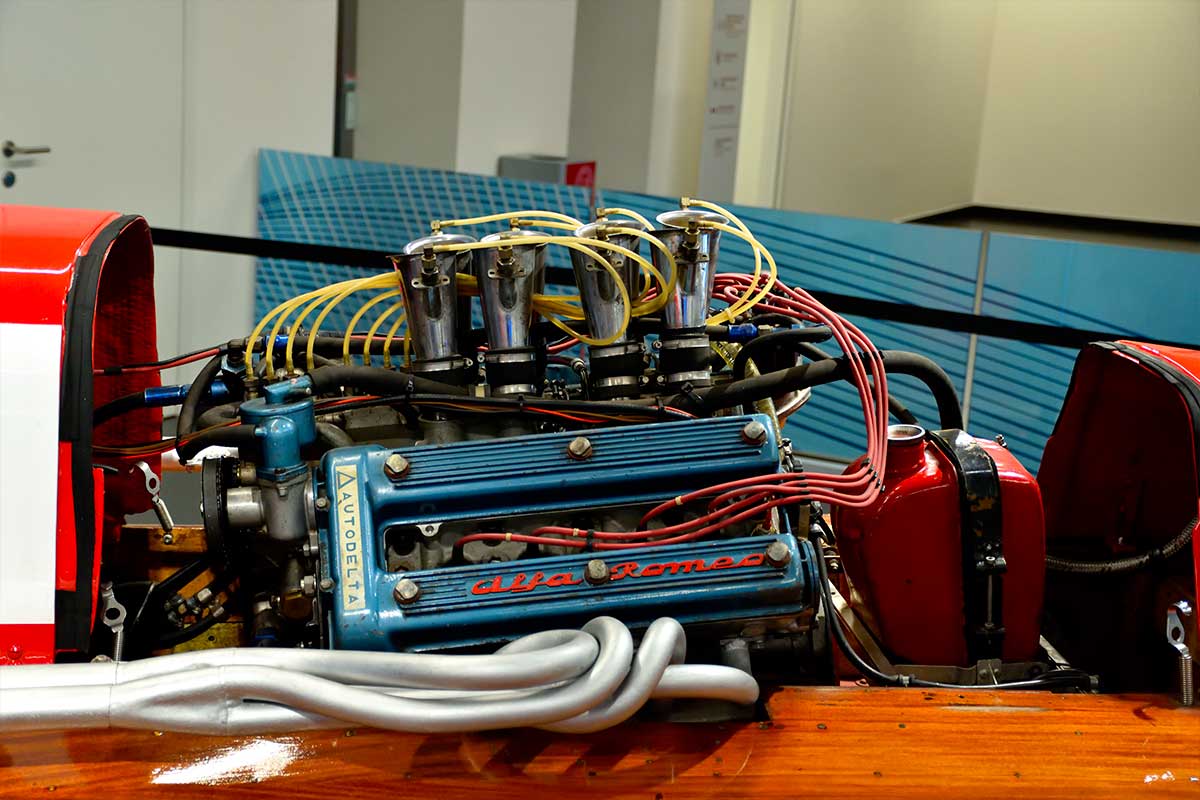
The «Dalla Pietà - Alfa Romeo» won 3 European titles and two Italian titles in the European Runabouts / Inboard sport class between 1968 and 1970. A unique example, it was designed for Luigi Raineri, a famous Alfa Romeo motor racing engine designer.
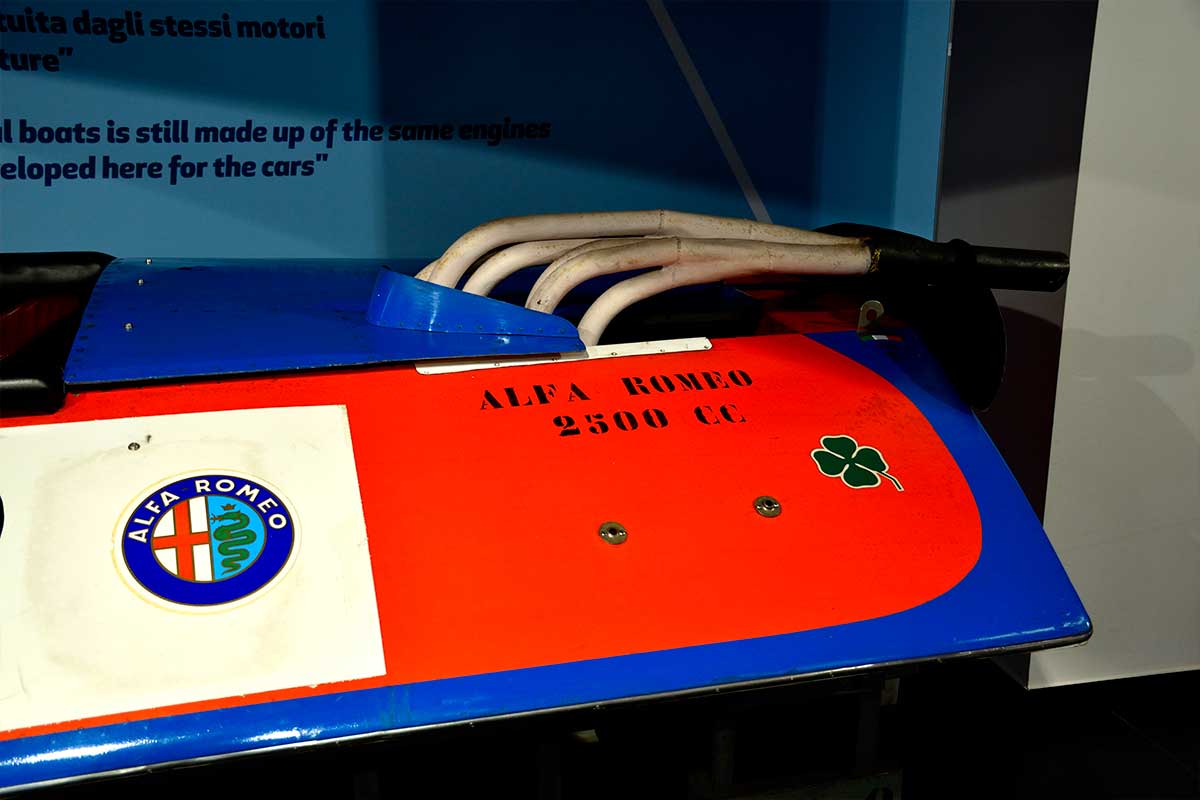
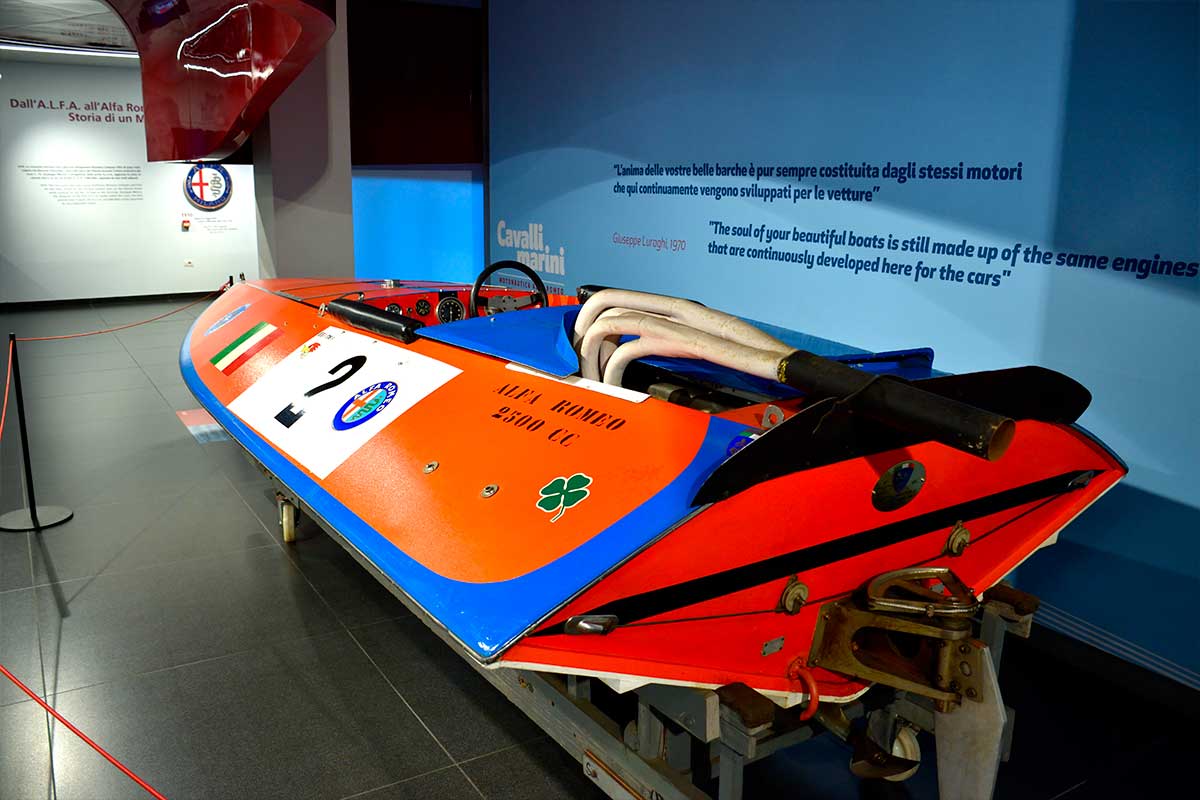
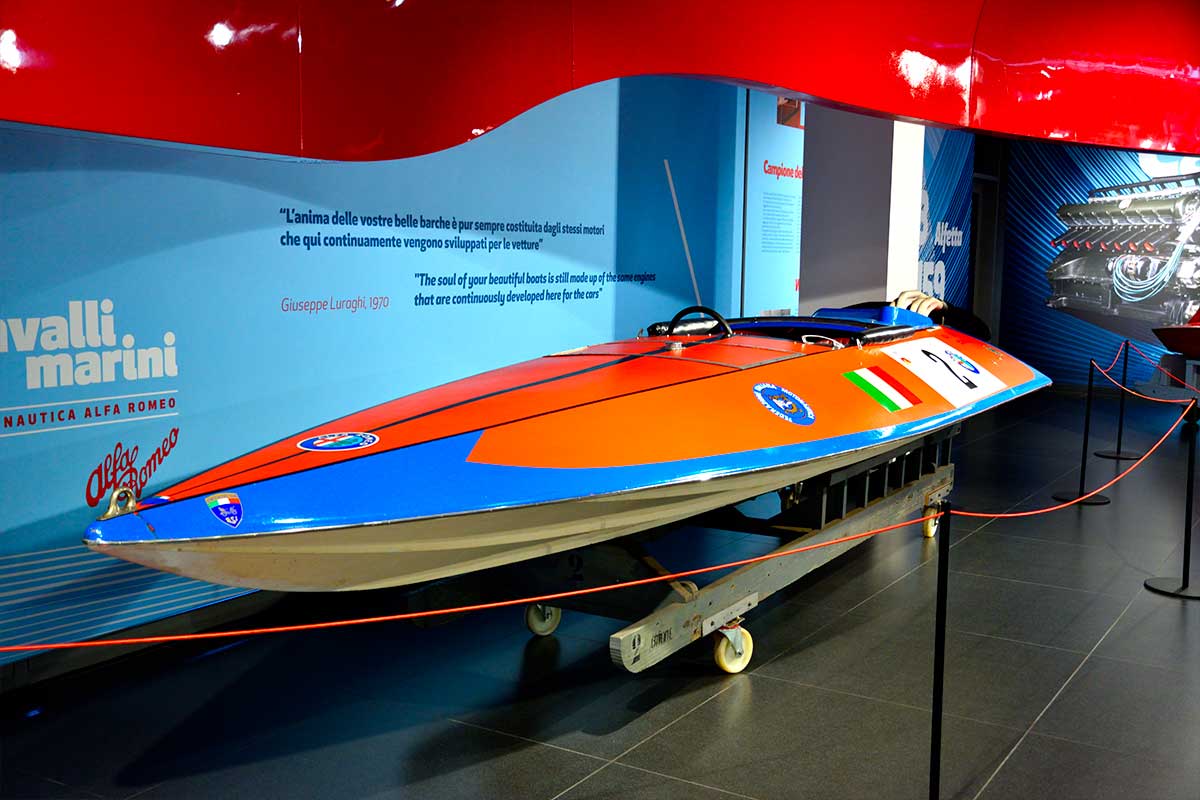
The «Molivio - Alfa Romeo GTA», piloted by Leopoldo Casanova: pilot and record-holder at the helm of inboard boats powered by Alfa Romeo Autodelta engines. Between 1968 and 1972, he won a European title, 4 Italian titles, and broke the world speed record four times in 3 different categories.
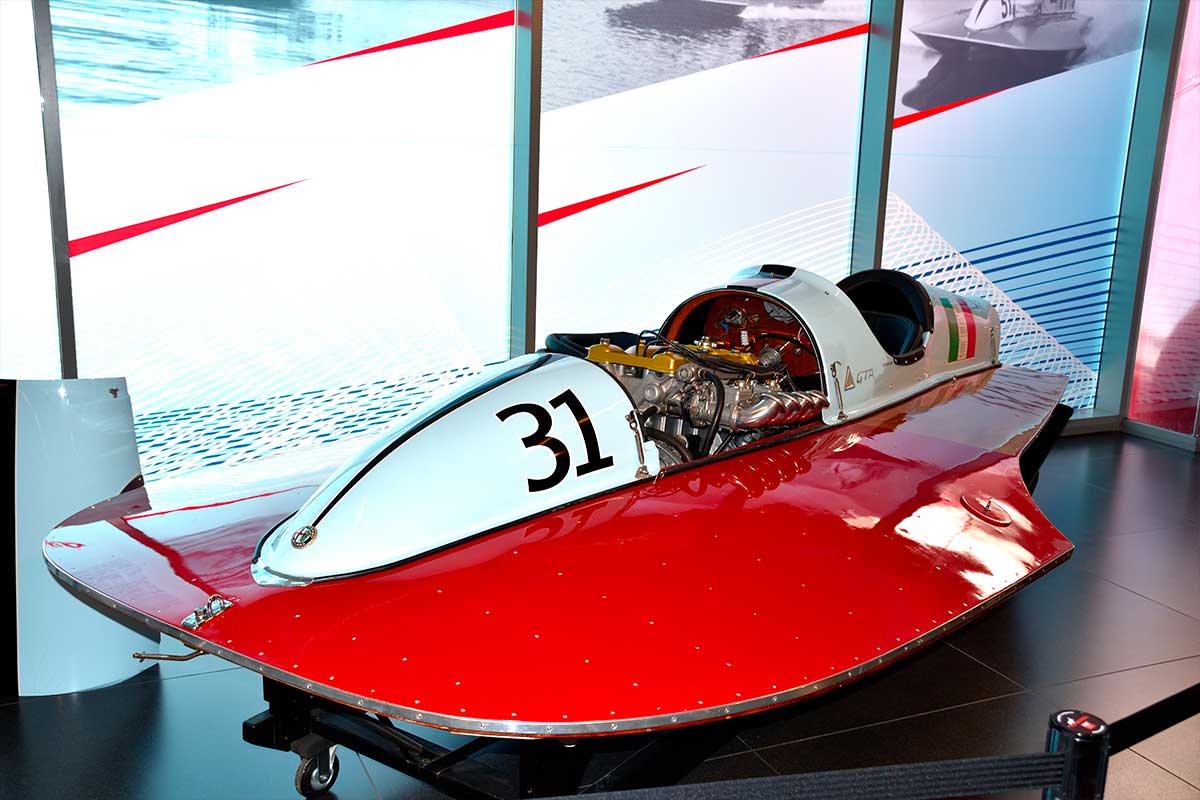
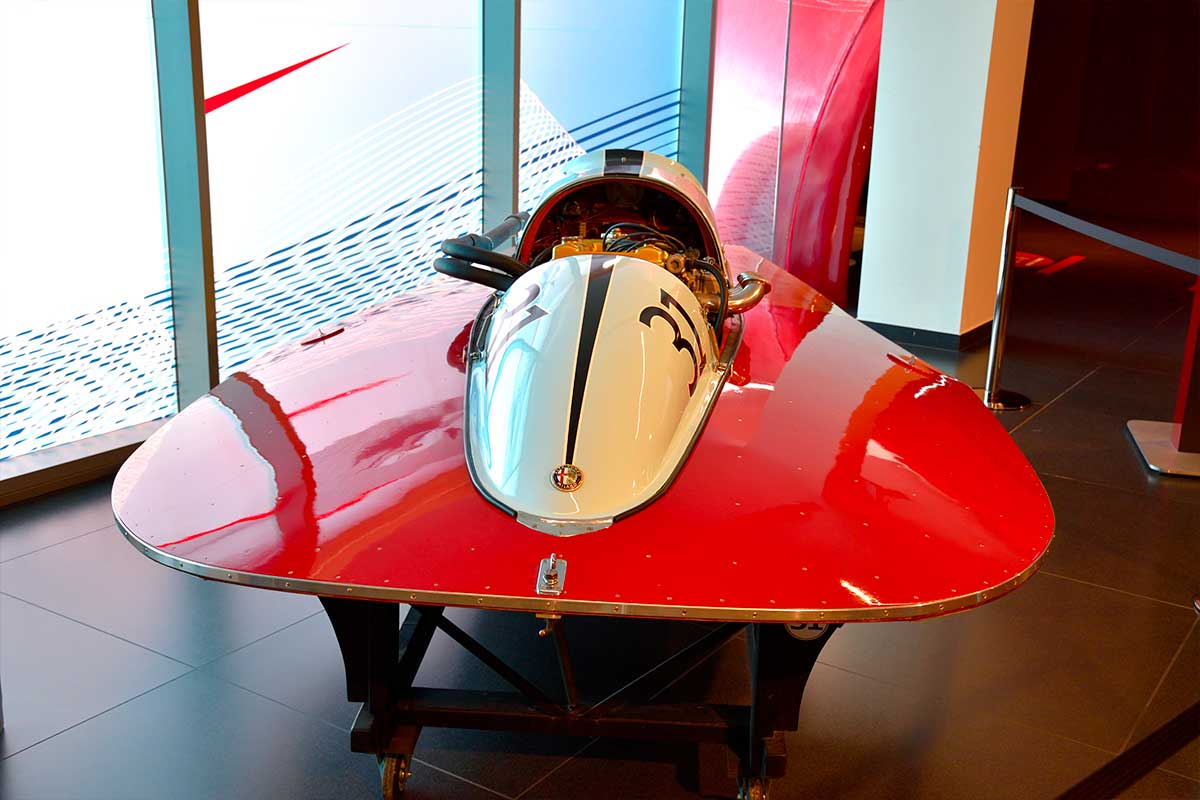
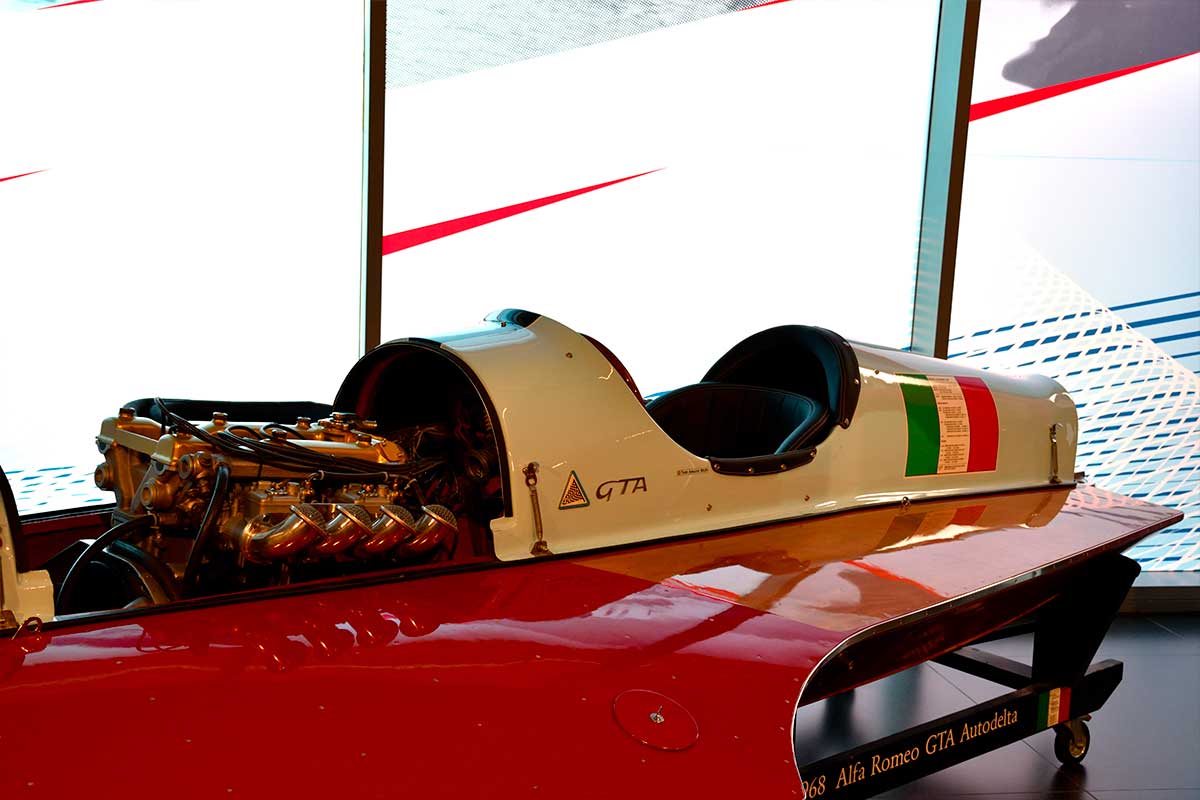
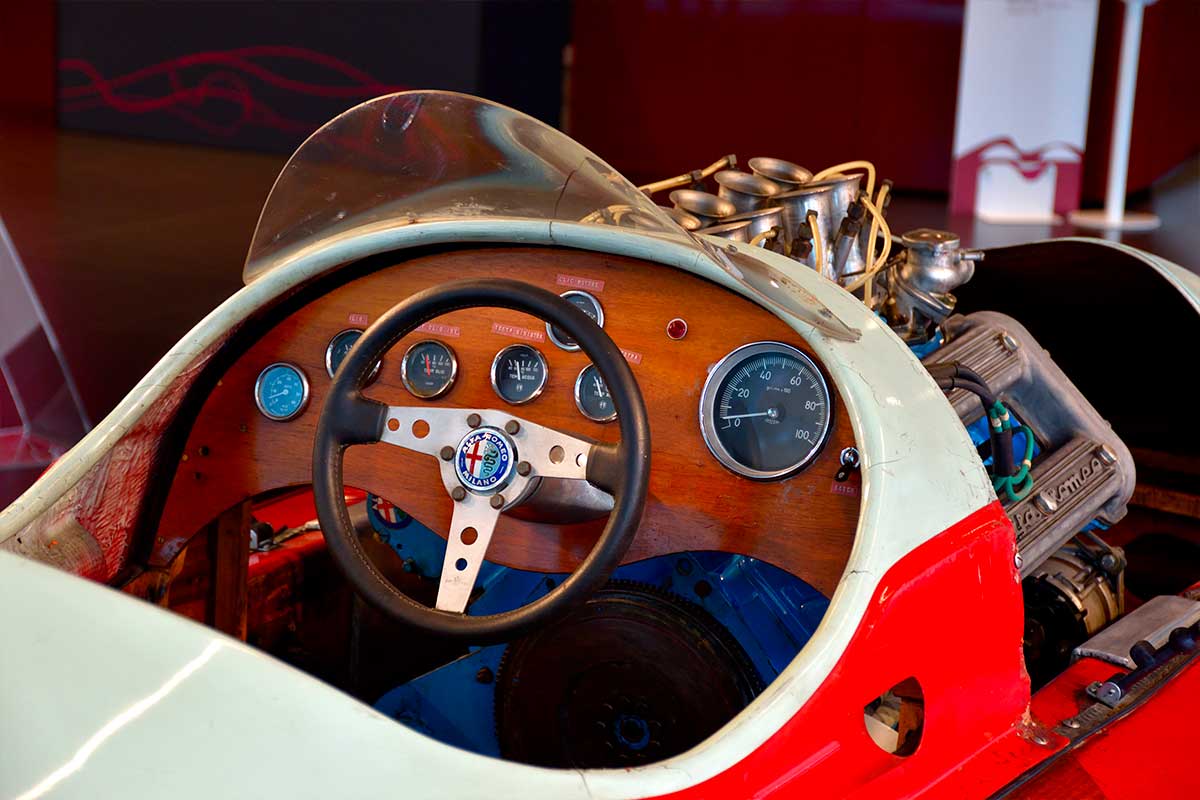
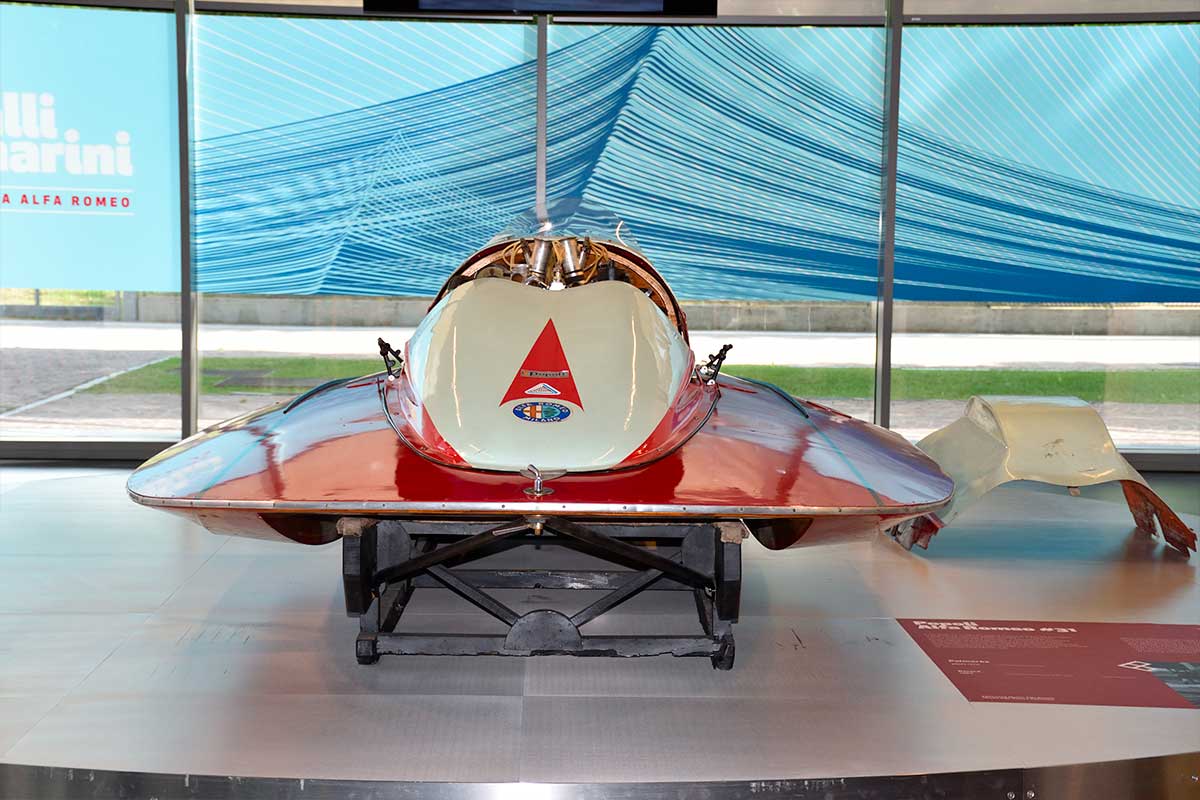
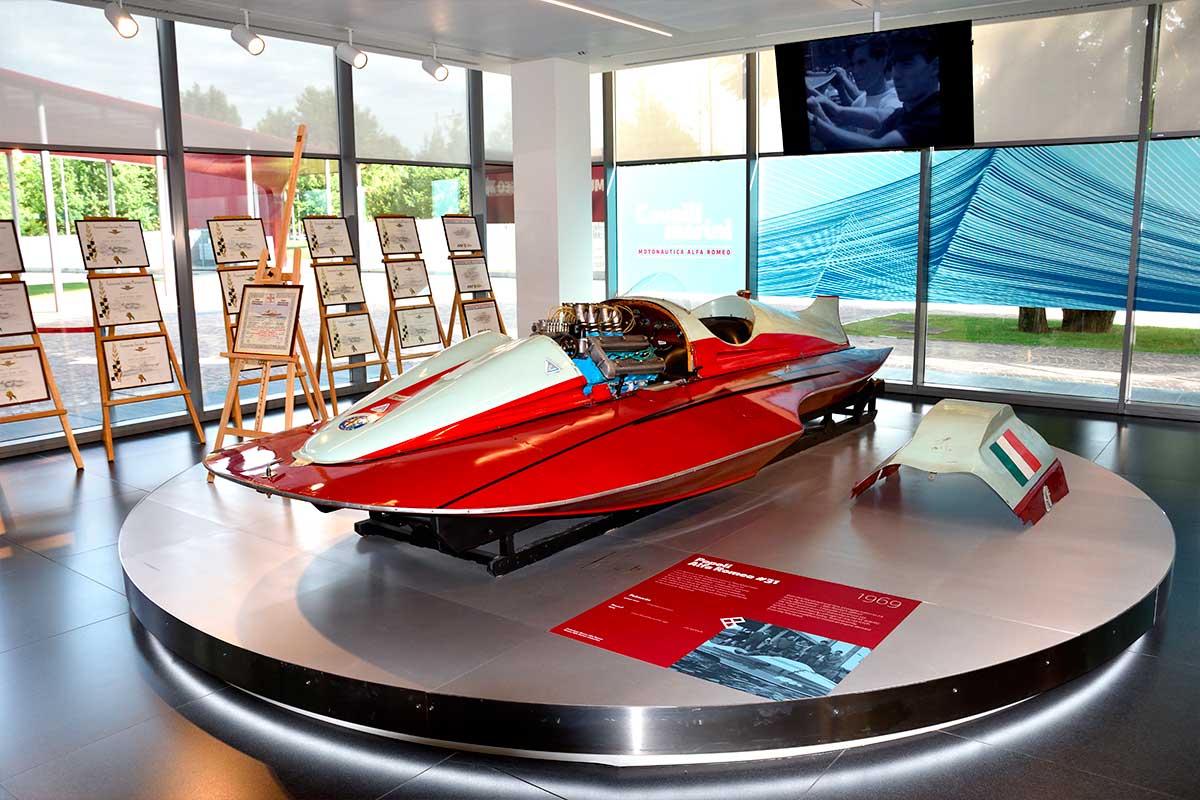
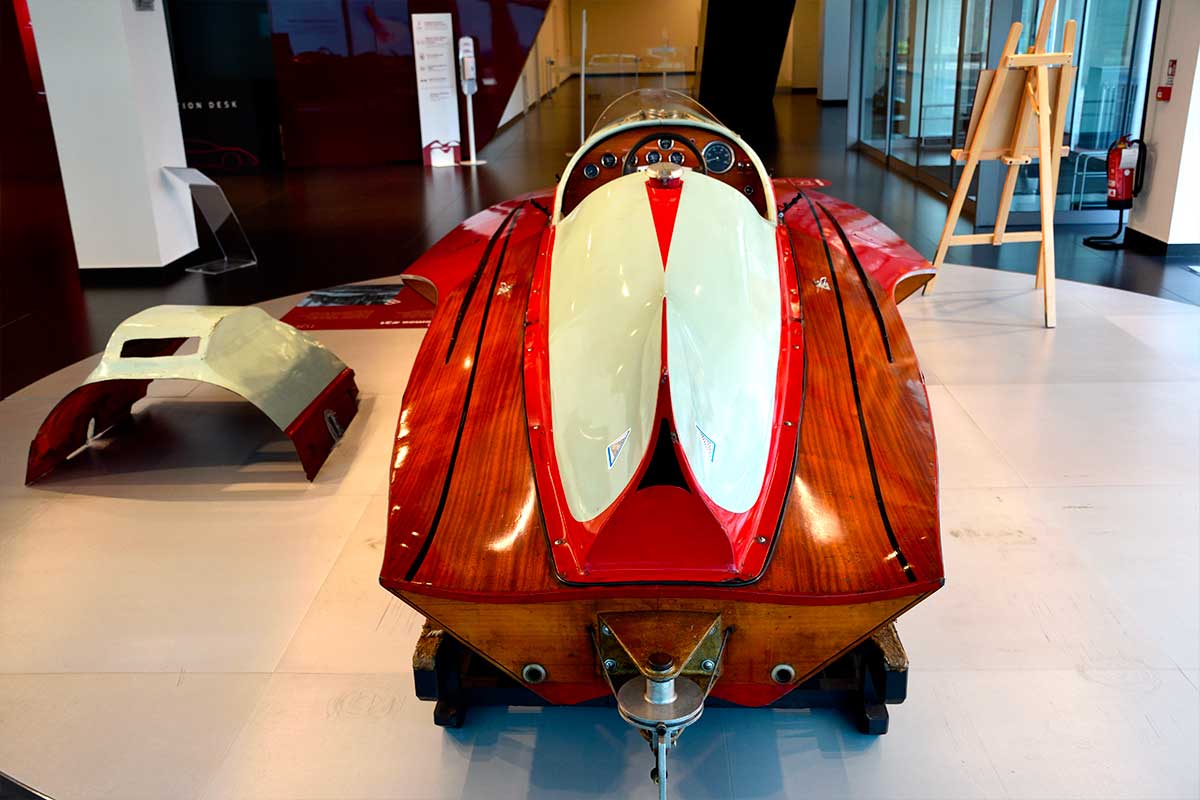
Finally, the «Popoli-Alfa Romeo» used a Type 33 engine, upgraded to two and a half liters by Autodelta, Leopoldo Casanova set the world speed record in the 500 KG KC class, which remains unbeaten to this day, with an average speed of 225.145 km/h.
 English
  French
  Italian
  Spanish
  Portuguese
  German
  Japanese
  Turkish
  Dutch
Dutch