

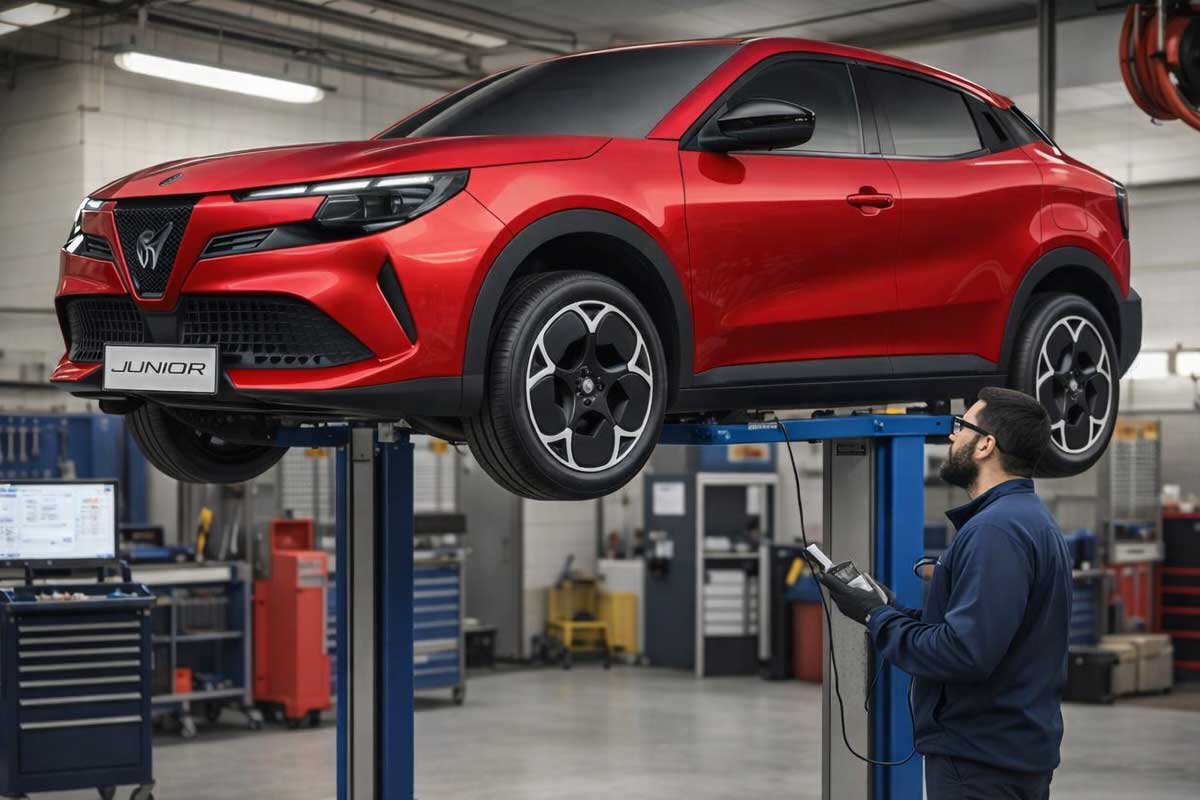
The debate between electric car and combustion-powered cars is no longer limited to range or purchase price. As the fleet evolves, another question comes to the fore: how much does maintenance really cost over time? A recent study by ADAC, the powerful German motorists' association, sheds concrete light on this often neglected point.
Real cost discrepancies during inspections
To conduct its survey, ADAC analyzed inspection quotations for comparable electric and combustion-powered vehicles in three major German cities (Hamburg, Cologne and Munich) and their surrounding areas. A total of 120 requests were sent to official dealerships of five manufacturers: BMW, Dacia, Hyundai, Mercedes-Benz and Volkswagen (sorry, no Italian brands!). Of the 94 responses received, the price differences were sometimes spectacular.
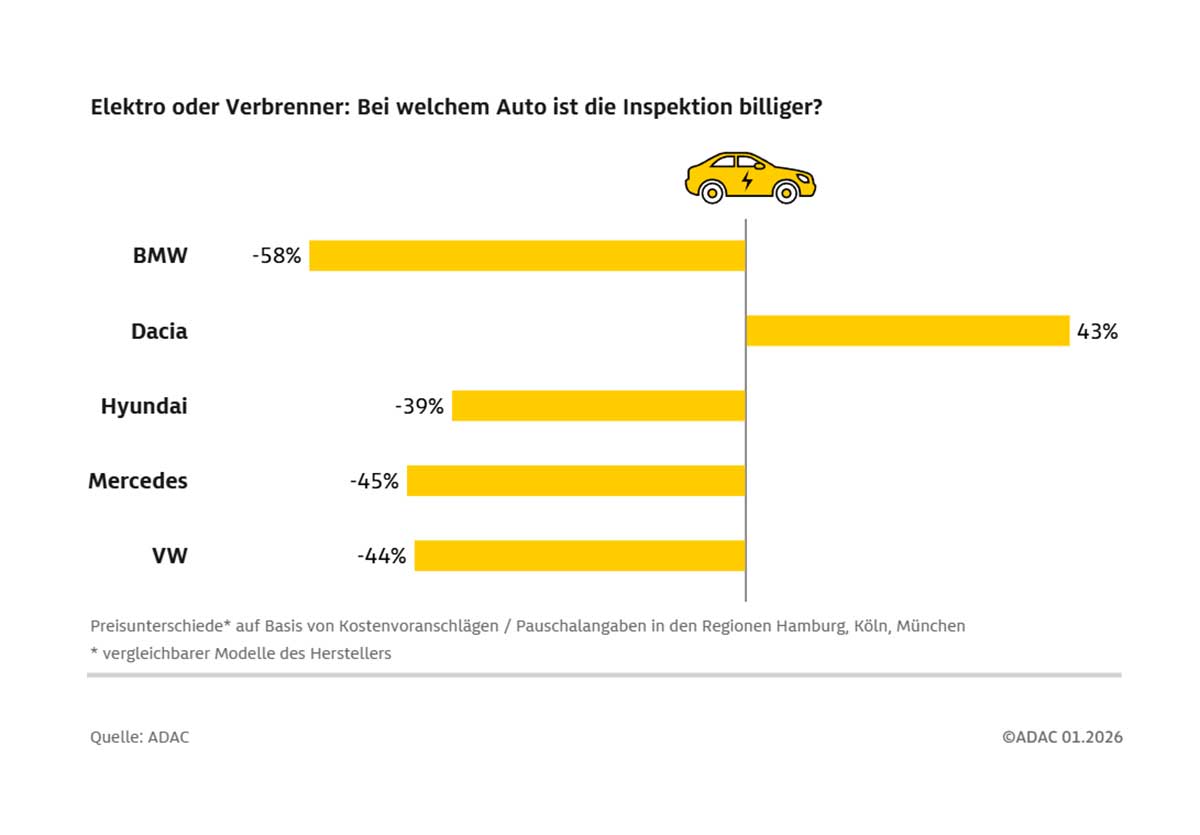
The first reassuring observation for electric car drivers is that, in almost all cases, servicing an electric model costs considerably less than that of a combustion-powered equivalent. On average, inspections on combustion-powered cars are at least a third more expensive, a difference that reflects the technical reality.
The difference in cost can be explained quite simply. An electric car has far fewer mechanical parts subject to wear and tear. There are no oil changes, oil filters, spark plugs or exhaust systems to check and maintain. The result: fewer interventions, fewer parts to replace and, logically, lower bills.
The study even shows that for some manufacturers, the difference is particularly marked. At BMW, for example, the inspection of an electric model costs on average 58 % less than that of a comparable internal combustion model. Mercedes-Benz, Volkswagen and Hyundai also have a clear advantage, with differences of between 39 and 45 %. The only notable exception is Dacia, where maintenance of combustion models remains less expensive than that of electric versions. How strange!
City or country: location makes the difference
In addition to motorization, ADAC highlights another determining factor: dealership location. Workshops located in city centers almost systematically charge higher prices than those on the outskirts, sometimes only a few dozen kilometers away. BMW is a case in point. In Hamburg, the inspection of a BMW M440i internal combustion engine costs on average 10 % more in the city than in a rural area. For its electric equivalent, the BMW i4, the difference is even 41 %. A difference that clearly invites motorists to compare offers beyond urban boundaries, even within the same brand network.
Paradoxically higher hourly rates for electric vehicles
Another more surprising finding of the study is that in almost every second workshop that provided a detailed quotation, the hourly rate applied to electric cars is higher than that charged for combustion models. On average, this «electric surcharge» reaches 17 %. A paradox that is difficult to justify technically, since work on electric cars is generally simpler and quicker. According to ADAC, this practice tends to erase part of the natural economic advantage of electric vehicles, when their maintenance costs could, in theory, be even lower.
In the end, this survey reminds us of one essential thing: the purchase price only tells part of the story. In use, the electric car retains a clear economic advantage in terms of maintenance, even if certain pricing practices sometimes limit the benefits.
 English
  French
  Italian
  Spanish
  Portuguese
  German
  Japanese
  Turkish
  Dutch
Dutch
After a while... It should «catch on» with private customers?
バッテリーがあがった時はどうするの?
ハイブリッド車でもバッテリーがあがりやすくて私はもう5ヵ月もクルマを動かせないでいる。
ドアも開かないし。
もしガソリン車なら簡単にバッテリー交換ができる。
Gestern die erste (12500km(!)) Inspektion bei meinem Mokka. Kosten zahlt Leasingfirma. Hat ca. 45min gedauert. Warum muss der alle 12 Monate oder alle 12500(!!!) km zur Werkstatt?
Und einen Folgetermin für 3 wichtige Updates (die nur im Werkstattinterface angezeigt werden). Ladesteuerung Hauptbatterie, Keyless-Go und noch was. Dauert 5-6h.