

The social crisis at the Tychy plant in Poland reaches a new level. After announcements of massive layoffs and direct appeal to group shareholdersemployee representatives are now going on the offensive in the legal arena. The Solidarnosc union is clearly threatening Stellantis of legal action, denouncing a stalled social dialogue and commitments deemed misleading.
A class-action suit to challenge the elimination of the third post
On Wednesday January 21, union representatives at the Tychy plant officially filed a class action against their employer. At issue: the decision to cut the third production shift as of March. This measure is part of the vast reorganization plan announced at the beginning of January, and could result in the departure of around 740 employees, including fixed-term contracts and temporary workers. For Solidarnosc, this figure only imperfectly reflects reality. The social impact, the unions warn, could be far greater if the local industrial ecosystem is taken into account. Tychy works with dozens of subcontractors, and the drop in volumes threatens an entire region already weakened by previous restructuring in Poland's automotive industry.
"We feel cheated
The union's tone is particularly harsh. "We feel cheated," says Grzegorz Maslanka, Solidarnosc's president at the plant. According to him, the way the plan was announced has definitively broken the trust between management and employees. The union accuses Stellantis of having made no real progress in negotiations, despite several formal meetings. Maslanka warns that time is now against the company. If no agreement is reached within seven days, legal proceedings will be fully engaged. A prospect with far-reaching consequences for a group already under industrial and political pressure in Europe.
At the heart of the conflict: voluntary redundancies and compensation
At the heart of the dispute is the voluntary redundancy program. Solidarnosc believes that the conditions offered at Tychy are far inferior to those in place at other Group sites. Worse still, the union fears that the "voluntary" nature of the scheme is merely a facade, with employees forced to choose between a supervised departure or a less favorable dismissal at a later date. The disagreement is particularly marked on the amount of compensation. The unions are calling for up to 36 months' salary, a level they consider consistent with previous Stellantis redundancy plans. The company, for its part, is proposing a maximum of 24 monthly payments, reserved for the most senior employees. Workers' representatives consider this unacceptable, particularly for employees close to retirement or those who are the sole breadwinner in their household.
Proposed seniority and indefinities :
- 1 year - 5 months' salary,
- 2 to 3 years - 6 months' salary,
- 4 to 8 years - 8 months' salary,
- 9 to 10 years - 9 months' salary,
- 11-12 years - 12 months' salary,
- 13-14 years - 14 months' salary,
- 15-16 years - 16 months' salary,
- 17-18 years - 18 months' salary,
- 19 years - 20 months' salary,
- 20-29 years - 22 months salary,
- over 29 - 24 months' salary.
Stellantis stalls and denies any blockage
When asked about this escalation of legal proceedings, Stellantis stated that it had not officially received any class-action suits at this stage, and denied that discussions had reached an impasse. In a press release, a spokesperson for the group in Poland assures us that negotiations are continuing "in order to define the best possible exit conditions for the employees concerned, as quickly as possible". The Group also claims to be putting in place support measures, in conjunction with local authorities and employment services, to facilitate the professional retraining of affected employees. However, this is hardly reassuring for the unions, given the deep rift that now seems to exist between the two parties.
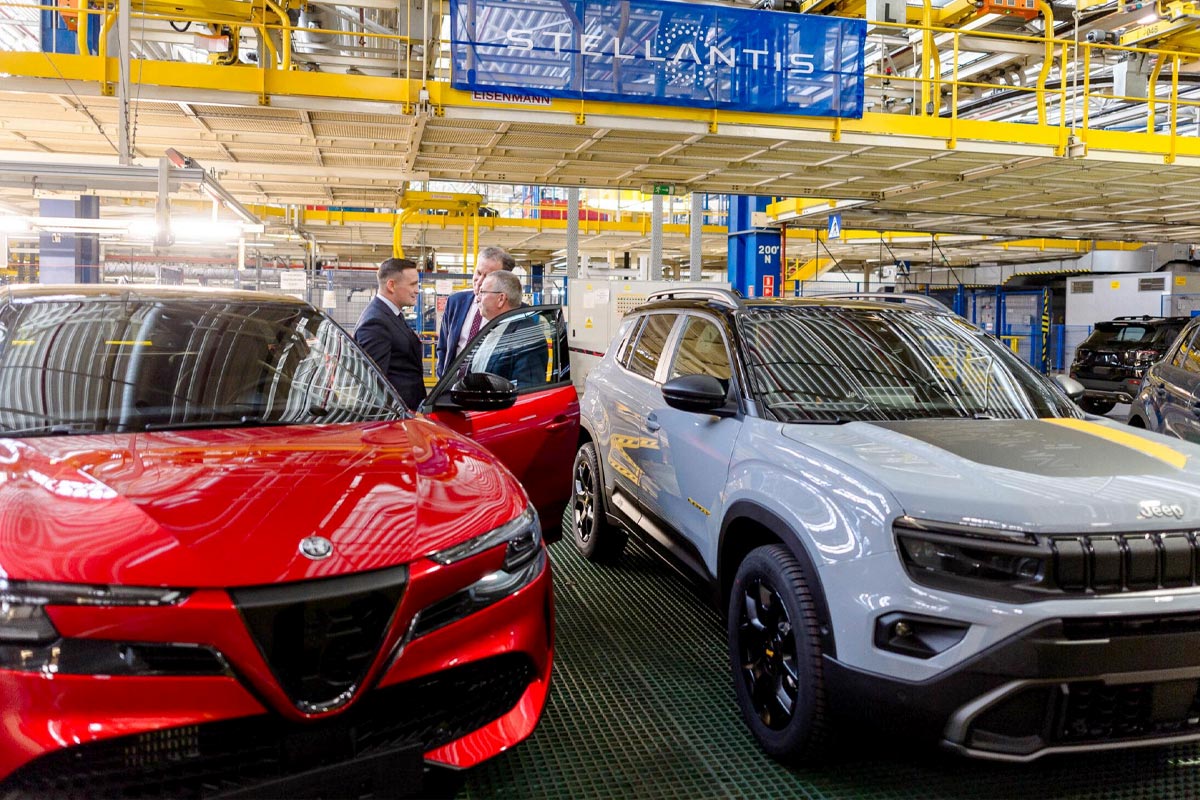
Beyond the Polish case, the Tychy conflict illustrates the tensions that are currently running through Stellantis in Europe. The plant assembles strategic models such as the Alfa Romeo Junior, the Fiat 600 and the Jeep Avenger, which are supposed to represent the Group's core volumes. That even this type of site is affected by massive job cuts sends a worrying signal about the real state of the market and the Group's ability to secure its industrial base in the medium term.
 English
  French
  Italian
  Spanish
  Portuguese
  German
  Japanese
  Turkish
  Dutch
Dutch
With Stellantis it's going to end badly
I don't understand what the European automotive unions are waiting for to organize giant demonstrations, including in Brussels, since it's the EU that's destroying their jobs. A real scandal.
You dirty leftist 😄
Bouh, you dirty leftist!
And to think that Tychy was the most productive plant under FCA. Cruel irony.