

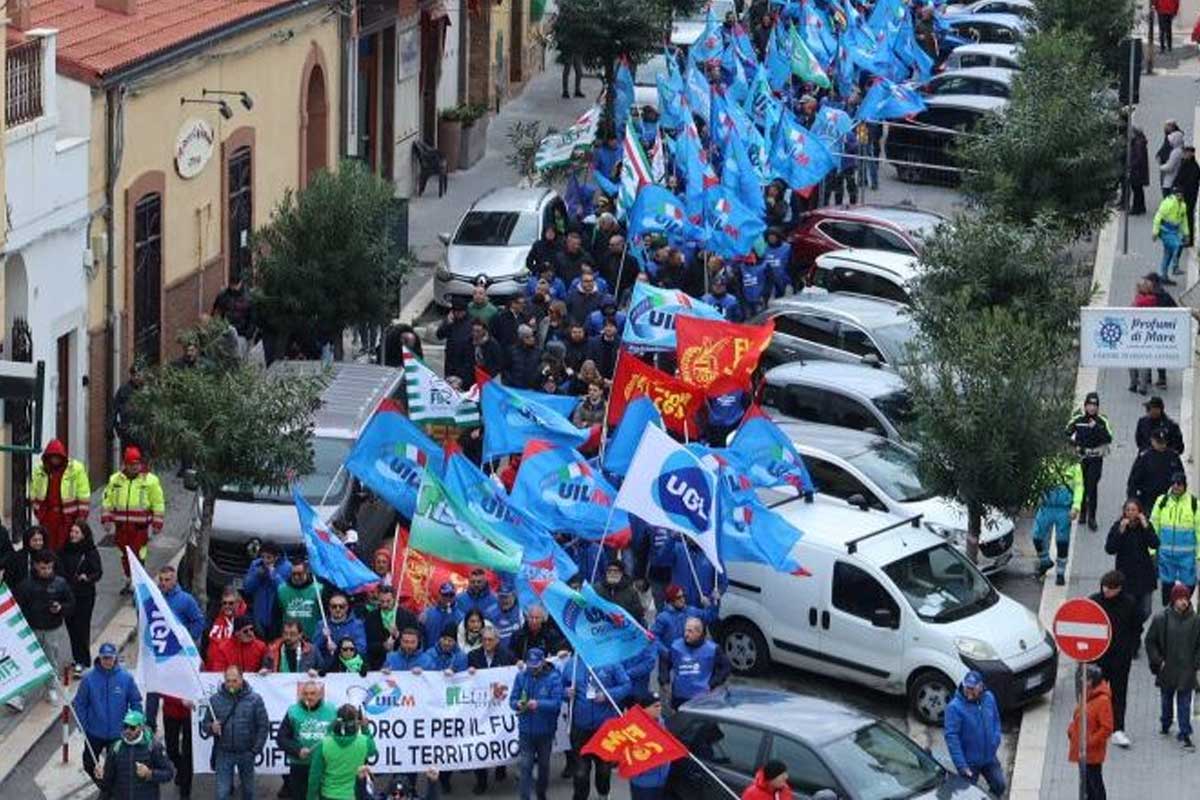
In Termoli, in the Molise region of Italy, tension has risen a notch. What began as a diffuse unease has become open anger. On November 29, over a thousand people marched through the town's streets to defend the future of the Termoli engine plant. Stellantis and, more broadly, that of an entire region that has depended on this historic site for decades. Workers, local councillors, families, trade unions: an entire region mobilized to refuse a slow industrial death sentence. Behind the banners, slogans and speeches, the same concern: Termoli is losing its promises. And perhaps its future.
The gigafactory dream recedes
Until recently, Termoli was destined to become one of the symbols of Italy's industrial conversion to electric vehicles, thanks to a mega-battery factory supported by Automotive Cells Company, the joint venture between Stellantis, TotalEnergies and Mercedes-Benz. A project presented as strategic, capable of securing thousands of jobs and giving new impetus to the site. But as the months went by, postponements kept piling up. And in mid-November, a piece of information revealed by the Italian press had the effect of a sledgehammer: ACC is on the verge of definitively abandoning its Termoli gigafactory.. The causes were serious technical difficulties, financial weaknesses, an increasingly blurred industrial strategy and, above all, the disappointing performance of the Douvrin pilot plant in France.
The French plant, which has been operational since 2024, is said to have scrap rates of 15 to 20 %, production limited to around 15,000 to 20,000 battery packs by the end of 2025, and costs more than 20 % higher than those of Asian manufacturers. A model that has become difficult to defend. Meanwhile, Spain is stepping up the pace. In Zaragoza, Stellantis has already sealed a partnership with CATL to produce LFP batteries, which are cheaper, simpler and more robust than the NMC batteries used by ACC. The investment exceeds 4 billion euros, the first works have been launched, and 2,000 Chinese workers expected for construction. In Termoli, the feeling of abandonment is total.
"Here, engines have always been well made".
The November 29 demonstration crystallized this sense of injustice. Behind the union flags, the words were harsh. Very harsh. "We're not against the ecological transition," union representatives hammered home. "But not at any price. Not by sacrificing thousands of jobs. Not by letting entire regions die."
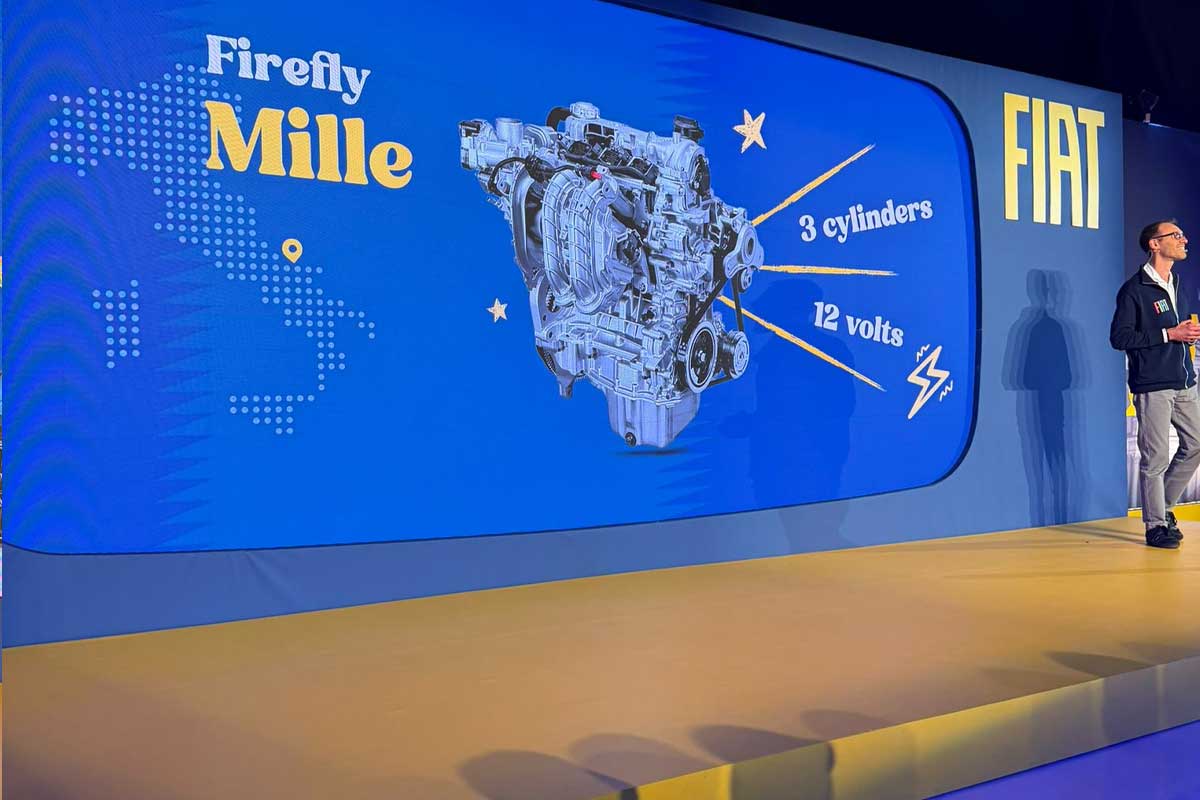
Then an even more frontal message, which left a lasting impression: "The transition will involve hybrids for another fifteen years. And these engines must be made in Termoli. [...] Engines made here have always been of good quality, unlike French engines which are proving unreliable." A sentence revealing deep resentment. Behind it lies the impression that Italy is paying for the industrial mistakes of other countries, while its production tools are gradually being taken away. In Termoli, over 1,800 families depend directly on the site. And the entire local economy depends on it indirectly. The plant is not just an employer: it's the very backbone of the town. We also heard the same talk of reliability recently at the presentation of the Fiat 500 hybrid, where it was proudly announced that the Firefly engine had a problem rate of less than 0.3 %.
A gutted factory
In the field, the signals have long been alarming. The chain for the legendary FIRE 16V engine has already been dismantled. GSE (FireFly) engines, although still in use, are running well below capacity. The GME 2.0 turbo engine looks set for partial relocation to the USA. As for the eDCT project, although confirmed for 2026, it would only concern around 300 jobs, far from compensating for the loss of a genuine large-scale industrial activity. For the unions, Stellantis' strategy lacked coherence. The decision to abandon combustion engines as early as 2030, five years ahead of the European deadline, is deemed "catastrophic". It was too abrupt a shift, poorly anticipated, and left sites like Termoli without a clear vision.
 English
  French
  Italian
  Spanish
  Portuguese
  German
  Japanese
  Turkish
  Dutch
Dutch
You made a mistake in your article: the CATL battery plant in Zaragoza, Spain, will not employ Spanish workers. It was recently revealed that CATL will employ exclusively Chinese workers out of the 2,000 jobs planned, and that there will be no technology transfer....
Hello, I'm not making a mistake, since I'm one of the only people to have talked about it... on italpassion! Chinese workers will help build the plant and then train Spanish workers to operate the plant once it's built. No technology transfer when this plant is owned by Stellantis and CATL, and workers will be trained? I doubt it. Yes, battery r&d won't be in Spain, but there will still be a lot to learn about production.
I can confirm that GSE fire fly engines are powerful and durable. My Tipo Cross is currently equipped with the 1.0 l and I really regret the discontinuation of this engine.
Well, since it's the Chinese who are building the factory and supplying the batteries, let's cut to the chase: let's buy their cars!
Mdr 🤣 Technology transfer will happen automatically, the Chinese learn almost by themselves, very quickly and very well! And why bring in Chinese when there are so many unemployed? It does sting a bit though!
Pero justo dice eso, que va a emplear trabajadores chinos.
"Engines manufactured here have always been of good quality, unlike French engines which have proved unreliable."
This sentence from Termoli's employees says it all.
Installing the PureTech engine in Fiat, Alfa Romeo and Lancia instead of the Firefly is a scandal. It's time to reconsider Tavares' mistakes, instead of destroying everything, jobs in Italy and the reputation of Italian brands.
It's indeed quite fascinating Stellantis kept all-in with the Puretech engine which has a terrible market reputation and sort of given-up on the Firefly engine which has been consistently good.
It's very simple: Fiat had no motor that was compatible with the UE environmental standards. Fiat, Alfa, Lancia, Maserati were nearly dead in Europe when they married with PSA.
👍🏼👏
Sono pienamente d'accordo con te Stanislas! I motori Firefly dovrebbero rimpiazzare i Puretech.
Which one ? the Firefly that is in the new Fiat 500 ? It's a joke ?
Yes 1000 agreed!
Well said. Italian car. Italian engine. Ask any enthusiast. Ask anyone with any intetest in cars. Shared technology maybe. French engine in Italian cars with such history. Just shows it's about the bottom line. Not the brand. Not the customer. Utter disgrace. Fiat/Alfa/Lancia/Abarth/Maserati.
Save their souls.
Unfortunately, Fiat's workers are out of their depth when it comes to attacking PSA's workers. Even if the puretech engine has had its share of problems that C.Tavares didn't see fit to deal with properly, FCA abandoned Fiat Europe long ago, because none of the engines destined for Europe were ecologically efficient. FCA preferred to concentrate on countries like the US and Brazil, where technological competition is at a much lower level than in Europe.
But that's what everyone thinks, it's just that Tavares and the shareholders have led Stellantis into another dimension where logic has no place. Short-term profitability was the only thing that mattered, and they didn't give a damn about anything else. Now Carlos sips his port in the quietest of moods, and makes the occasional media appearance to try and get himself recycled. He's the Manuel Valls of the automobile world.
@Stanislas: Sie haben 100% Recht, mehr muss man dazu nicht sagen!
Ein italienisches Auto braucht ein italienisches Herz!
Let us keep the Italian engines are much better when you take a French engine Peugeot I think it is the 1.2 the timing belt bathes in oil with time the belt dries and broken here is still a big error of this is engine attention with the junior it is French engines the belt bathes in oil silk saying which have a larger belt 🤣🤣🤣
I think they're absolutely right.
This has affected all the Group's brands/models. We regularly read in the media that the Stellantis group has bad engines, but this only concerns Peugeot engines, not Firefly, 2.0 or Multije engines from Fiat.
Quid de STELLANTIS EN ALGERIE, LES MOTEURS SONT -ils sont-ils Firefly ou non,merci
☝️ Dromad-Air engine!!! 🤣
No Firefly is ecologically efficient, and hasn't been for many years. In Europe, Fiat bought pollution rights from its competitors on a massive scale.
I've had Fiat and Lancia for 35 years, and now a Peugeot 5008, vehicles I've always serviced myself. What a pleasure to work on FTP (FIAT) engines, and what a drag on this PSA of M'💩 !!!! NOTHING is accessible!!! 😕😏
The Italian engines were top-notch (only the crates were rotten). Peugeot engines are a problem.
Peugeot 307 hdi turbo at 120 kms me
Peugeot 207 hdi turbo at 140 kms. Me
Peugeot 208 purteck unsellable my daughter
And now blue hdi engines
For me, pigeot is over
I've always owned Italian cars from Alfa Romeo and Fiat, and I can confirm that Italian engines have always been of the highest quality. They also have a unique personality. I still appreciate the 1.4 engine in my Bravo 2 T.JET, which is 17 years old and has never had a single breakdown of any kind.
Bravo, the Italian workers are right, it's a strategic mistake for Tavares not to have kept the Firefly engines on the Fca, Fiat, Alfa, Lancia and Jeep brands, even though they are much more reliable than the Puretech.
FCA's engines didn't meet the new standards, which led to the use of ex-PSA engines, but above all FCA didn't have any sufficiently modern platforms, which forced the group to use ex-PSA platforms.
Without it, there would have been no new Fiat Alfa or Lancia vehicles.
You're 100% right, it's outrageous to destroy fiat's image, because the French have done shit with their puretech engine.
It's not just Tavares who is responsible for this situation. It's Elkann, who has no visibility and no industrial strategy.
The responsibility lies with Tavares, who headed Stellantis, while Elkan is Chairman of the Group's Board of Directors.
No, because FCA had long ago abandoned Fiat Europe in favor of other regions of the world.
Yes, well, he reported to the Stellantis Board of Directors - of which he was a member. It's the Board that validates the roadmap or not. So, he's not wrong, Elkann has his share of responsibility in this fiasco.
Finally, a clear-sighted comment!
By the way, I read Tavares' book. It explains a lot about FCA's situation at the time of the merger. At the time, FCA was run by a pro-US (ex-Chrysler) 80% board of directors, which generated 2/3 of the group's profits. This explains why FCA Europe, i.e. the ex-Fiat division, was abandoned and invested in, and why PSA took control of it after the merger.
FIAT was dropped long before Stellantis by Elkann.
Tavares, Elkann and the rest of the Board of Directors (who didn't have the courage to face up to the shareholders) are all responsible.
El Khann has always preferred to rake in juicy profits on the financial markets than give the FIAT group's car plants a sustainable future!!!! Hence the current miserable range: Panda + 500,e basta! 😏
Yes, I'm very disappointed by the purtech engine, nothing beats the old 4cyl engine.
☝️ A 3-cylinder, 4-stroke engine will always be a MECHANICAL ABERRATION. Cylinders #1 and # 3 are constantly in phase opposition. Generating destructive vibrations over time!
All 3 cylinders fire 240 degrees apart. Not 180 degrees. This is simply wrong.
I motori puretek francesi sono stati la rovina di Stellantis, la Fiat ha da sempre fatto i migliori motori nelle cilindrate medio piccole
Anche i oppure ottimi diesel Multijet. La FIAT e il primo costruttore da avere proposte il diesel con injezione diretta sulla Croma nei anni 80. Un invenzione della Magnetti-Marelli, gruppo FIAT!
☝️ La cinghia nel olio, chi e il cretino degenerato che ha trovato quest'idea STUPIDISSIMA !!! 🤣
Problem ist immer das unausgereifte wo der Kunde Testfahrer ist,überall wird gespart,egal ob billige französische Motoren oder dann aufwendige italienische Motoren wo wieder der Rotstift schreibt.Die Autos von heute werden von Konzernen ohne Ingenieurswissen und Herzblut rausgeklatscht.Ohne Adam,Ferdinand,Robert,Carl bleibt das so.
Tavares is by no means solely responsible! When Stellentis was created, there was virtually nothing in the pipeline based on a Fiat engine! In short, Tavares used the Opel method to produce vehicles as quickly as possible. And if Alfa still exists, it's thanks to that!
Fiat engines could easily be upgraded to pass the standards.
The 3-cylinder Puretech models are disastrous in terms of comfort and reliability.
Heb een pure tec motor,veel miserie en veel olie verbruik.Is er een fabrieksfout bij Peugeot heb de kosten zelf kunnen dragen.Fransen zij. Moeilijke mensen om ha ndel mee te drijven.De fiat motoren zijn beter,nooit mog Franse rommel.
it's clear.
No need to speak in the conditional tense, Peugeot has never saved anything. Ask Citroën or Opel...
Bravi, rimanete convinti di questo. Ci vediamo fra qualche anno con la nuova Alfa Lomeo e Maselati, per gli italiani rimane l'Ape.
Der Tavares hat nichts gutes hinterlassen. Er selbst hat ein Werk nach anderen geschossen. Aufgebaut hat er nichts. Es war mir klar das Italiens Automarken ihre Werte verlieren. Stellantis baut alle Marken nur ein 1,2l Motor der nichtmal einpaar jahre hällt. Wer Opel oder Jeep kauft die gleiche Autos.
Wenn Stellantis nicht schnell wie möglich von Tavares Plänen abweicht, wird nicht von Stellantis übrig bleiben...
Sus autos en la región de latino América nunca an podido competir con los japoneses y korianos tienen mucha deficiencia en poder conseguir repuesto y cuando los hay cuestan como si tuvieras un audi de alta gama Fiat en mi país Panamá tiene muy mala representación y la garantía con la agencia es un mito todo lo quieren cobrar alegando mal manejo
Sus autos en la región de latino América nunca an podido competir con los japoneses y korianos tienen mucha deficiencia en poder conseguir repuesto y cuando los hay cuestan como si tuvieras un audi de alta gama Fiat en mi país Panamá tiene muy mala representación y la garantía
of course Italian engines are superior in terms of quality and reliability are we the ones who learned the tecnique from the golouses: Gordini, Bugatti exteraàaaaaa
Vero!!! 👍👌👌👌🇮🇹 😊
Es incomprensible y están hundiendo las marcas, Tabares debe ser aliado chino, pudretech a cambio de los irrompibles motores diésel italianos no lo entiende nadie
Están hundiendo las marcas, Tabares debe ser aliado chino, pudretech a cambio de los irrompibles motores diésel italianos no se entiende
Yo lo tengo claro, no me gustan las lavadoras con ruedas, no tienen alma de automóvil, he trabajado con motores eléctricos 40 años y si no puedo tener un vehículo de combustible me apaño con transporte público, a mi no me doblegan las políticas woke.
Clearly, Tavares has been worse than Marchionne, and has finished scuttling the Fiat group, when he could have turned it around by preserving its DNA. The engines powering the Fiat and Alfa were very good and reliable, whether diesel or petrol.
What's more, Tavares left with a big cheque, which is scandalous.
Was ist aus diesem stolzem Unternehmen geworden.
Fiat war in den 60er Jahren der größte Autohersteller in Europa.
Jetzt ist ein Trümmerhaufen.
Wer ein Fiat oder einen Alfa kaufen möchte, möchte einen reinrassigen Italien und keine Mischkultur.
Erst wenn sie vollständig am Boden liegen, werden sie sich auf ihre traditionelles Können und auf ihre Kultur des Autobauens besinnen und die Franzosen aus den Chefetage verbannen.
Igual que en Estado Unidos ,los cambio son festivos y sin importar el factor humano se impone el económico y de los Priveligiados ,sin importar familias ,pueblos o en este caso ciudades enteras.
Detroit es un claro ejemplo de ello ,la ciudad industrial fantasma...
Triste pero es la realidad
Vivo en Argentina. Tengo un Renault Mégane con casi 30 años. Sin services oficiales ni repuestos originales y usando GNC, (gas natural comprimido) con un equipo conversor de 3ra generación y con nafta y lubricantes que no tienen la calidad europea. Tiene recorridos más de 600.000 kms y aún funciona muy bien. Aquí, los autos más accesibles pero que más tiempo están en los talleres mecánicos son los Fiat.
Dije los que menos duran y están más tiempo en los talleres para reparación son los Fiat. El moderador cambió el final.
Hola lo único qué está consiguiendo el coche eléctrico es la destrucción de puestos de trabajó en toda Europa, para mi parecer es una estafa el coche eléctrico y los automóviles qué se fabrican hoy en día malísimos y de muy mala calidad y carísimos no se fabrican automóviles se fabrican lavadoras .com ruedas.
I. Become old 70 years in 2026 I make my car last as long as possible and then I will go to China or Japan for my future vehicle I am sad to see where we have arrived in our automotive industry, obsolescence is no longer in washing machines it is everywhere in the products we buy.
Per Fiat Alfa e Lancia è ora di uscire da Stellantis, un gruppo di incompetenti, finché sono in tempo se vogliono che questi marchi storici non muoiano.
Stellantis really doesn't know what it's doing. They're as bad at electrics as they are at internal combustion! Their Dongfeng electric platform is Methuselah old! It's completely outdated today! Just like their multi-energy STLA, which was poorly designed from the outset!
They're creating a gigafactory that only produces NMC batteries, while LFP has been the standard for ages! Pathetic!
Stellantis is a freewheeling company that only makes bad decisions and systematically makes the wrong strategic and technological choices! It's frightening for the future!
È tempo che il governo italiano intervenga a difesa dell' industria nazionale e dei posti di lavoro.
As the only one of a company that has been running fiat doblo and ducato vans for years.
No engine has given the trouble free reliability of the 2.3lt ducato engine.
The later 2.2lt is troublesome and even the dealers are reluctant to sell them to fleet customer's.
When vehicle sales keep dropping stelantis will forced to act.
La fiat deve produrre la pyhlla per le città e non solo
You're forgetting an important point: if the Puretech was chosen, it was because it was already installed in the platforms, which was not the case with the Firefly engines.
In Brazil, this doesn't seem to be a problem. The truth is that in 2020, the firefly emitted too much CO2 compared to the puretech. This is now the case with the 500 hybrid and its 120g for 65hp.
Is that why Fiats are known as : Fix it again Toni
Oh, so original. NOT. But then again you are merican
Hello. I was a peugeot customer for over 30 years.
Up until the 407 petrol I was very satisfied with my cars but since peugeot buys its engines from those crooks stelantis who don't know how to build an engine properly. I've turned to a real manufacturer that doesn't steal from its Toyota customers.
No more peugeot.
They don't buy anything, Stellantis engines like the PureToc or the BlueHDI ARE Peugeot engines...
Puretec motoren zijn Franse rommel, nooit nog zulks een motor voor mij.